Favorites Friday: Romantic Couples, Revisited

I was planning to finish up my Wrath of Khan spoof this week…but then it occurred to me that Valentine’s Day fell on Friday, and it just didn’t seem appropriate.  A couple years ago I did a post on Favorite Romantic Couples, and since I’ve read some wonderful romantic stories in recent years, I thought another list would be in order!

I don’t think any of these are big surprises within their books, but if you’re particular about spoilers, this post will give away everything about who ends up with whom.  I warned you!

Heir to SevenwatersClodagh and Cathal, Heir to Sevenwaters by Juliet Marillier

Marillier is one of my favorite authors for truly lovely romances.  And this book features a romance between two of my favorite archetypes: the dark hero with a good heart, and the “ordinary” woman who has to find her strength.  Besides being good characters individually, these two simply fit together so beautifully.

Return of the King

Eowyn and Faramir, Return of the King by J. R. R. Tolkien

It shocks me that Tolkien got a couple on this list.  But I love these two characters–and to be honest, after the whole trilogy with barely a woman in sight, Tolkien had set the bar low.  The fact that he spent any time on the romance was thrilling.  And, well, the credit should really probably go to Peter Jackson, since the extended edition of the movie features the world’s most beautiful forty-eight second love story.  It works because I’m assuming this isn’t their first conversation–and because both characters are so beautifully developed and complex that I can see why they belong together without needing to be told.

Magicians and Mrs. QuentThe Magicians and Mrs. Quent by Galen Beckett

This is the extraordinarily rare book (trilogy, for the full picture) with a love triangle where I actually managed to get enthusiastic about both romantic pairings.  Details feel more spoilerific here than for the other books, so perhaps I’ll just leave it there…
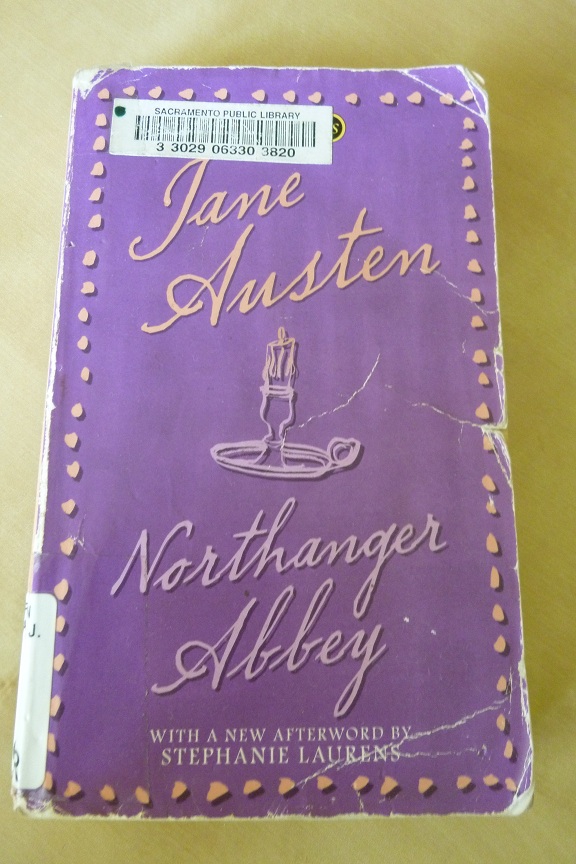
Northanger AbbeyCatherine Morland and Mr. Tilney, Northanger Abbey by Jane Austen

I know everyone’s favorite is supposed to be Mr. Darcy–but Mr. Tilney actually smiles!  And is witty and personable!  And has a first name (Henry) that comes up more than once!  And I suppose I just like a romance between two people who meet, like each other and go on liking each other.  Sure, there’s a fight in there, but basically, they just like each other.  It’s refreshing.
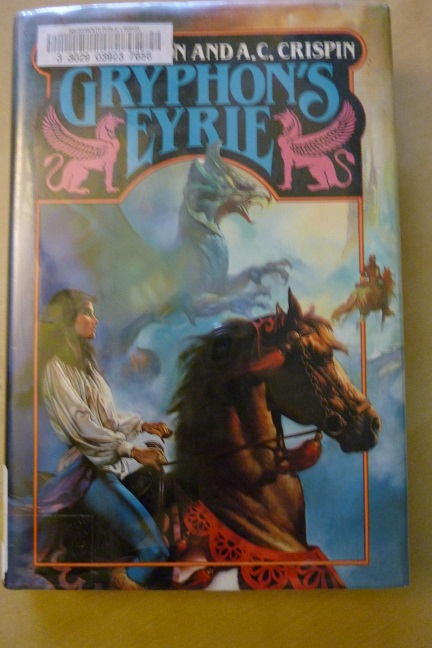
Gryphon's EyrieJoisan and Kerovan, The Crystal Gryphon Trilogy by Andre Norton

On the other hand, even though these two so clearly need each other and belong together, they still take an entire trilogy to quite sort things out.  However, even if I find Catherine and Mr. Tilney refreshing, I suppose I also have a soft spot for romances between two people who both care about each other but need to do some growth as individuals and as a couple before getting to the happily-ever-after part.

Thrawn TrilogyHan and Leia, Star Wars

I don’t usually think of romance when I think of Star Wars, but I just read the Thrawn Trilogy and Han and Leia really are a wonderful couple.  Typically, books seem to focus on the falling-in-love part.  This trilogy, and other Star Wars Extended Universe novels, give us that rare story, a happily married couple!  And there’s also the aspect of Leia being so amazing, and Han being so unthreatened by that.  He remarks at one point in the book trilogy that some men might be uncomfortable with a wife who can think faster than they can, but he wouldn’t have it any other way.  AWW!

Your turn–what romantic stories do you like?  Any suggestions on ones I should read?

Favorites Friday: Stories in Paintings (d’Orsay Edition)

A couple of years ago I did a Favorites Friday centered around paintings, and I thought it would be fun to revisit the theme.  I’m a slightly compulsive museum visitor, in that I like to write down the names of the paintings I like best.  I have a long list of paintings that resonated with me when I visited the Musee d’Orsay in Paris, and I thought I’d share a few today.

As may not surprise you, I tend to like paintings best when I can find a story in them…

611px-Degas_-_Tänzerinnen_in_blauDanseuses Bleues by Edgar Degas – This is a nice little moment backstage among the dancers of the Opera Garnier, and I think we know I have a particular interest in that area, yes? 🙂  I do love how Degas captures human moments of the dancers, yet with that ethereal style too.

501px-Pierre-Auguste_Renoir_099Julie Manet with Cat by Auguste Renoir – I’ve felt attached to Julie Manet ever since I became fascinated by a different painting of her, Julie Dreaming, painted by her mother, Berthe Morisot.  In fact, the heroine of The Wanderers is named after her.  Considering that and the fact that The Wanderers also features a talking cat, you may see why this painting appeals to me–and Renoir is one of my favorite painters besides.

466px-Vincent_Willem_van_Gogh_034The Church at Auvers by Vincent Van Gogh – I have no high-brow reason for liking this painting (though I always liked Van Gogh).  You see, one of my very favorite episodes of Doctor Who centers around this painting.  When I was standing in front of it at the d’Orsay, I looked around at the other people gathered, and I so wanted to say, “Doctor Who fan?  Anyone?” but alas, I didn’t quite dare.  I did check for a monster in the window (there isn’t one).

526px-Louiswelden_HawkinsThe Sphinx and the Chimera by Louis Weldon Hawkins – I haven’t the slightest idea what’s going on in this painting, but wouldn’t it make a wonderful cover for a science fiction novel?  Maybe fantasy, but somehow I get a sci fi vibe from it.

It’s a very long list of paintings from the d’Orsay, but I think that will do for today. 🙂

Classic Favorites Friday: British Children’s Fantasy Classics

This week I thought I’d re-post one of my earliest “Favorites Friday” posts (creating a “Classic” about Classics), because…it bears repeating, and I feel like I have more-recently-joined readers who might have good suggestions for what else could be on this list!

**************

I think there was something in the water in Great Britain near the beginning of the last century.  Fairy dust, perhaps, because that’s when so many of the great classic children’s fantasy books were written.  There’s something about them–a style, a flavor, a spark–that marks them out as part of a very special group.

I doubt many titles or authors on this list are new to you (they are, after all, classics!) but still, here’s my list of favorite writers of British children’s fantasy classics, noting their most famous books.  Some books are earlier and some are later, but all have that particular flavor.

In no particular order:

  1. P. L. Travers – Mary Poppins series
  2. Edith Nesbit – Five Children and It
  3. J. M. Barrie – Peter Pan
  4. Frances Hodgson Burnett – A Little Princess and The Secret Garden
  5. Lewis Carroll – Alice in Wonderland and Through the Looking Glass
  6. Kenneth Grahame – The Wind in the Willows
  7. Charles Kingsley – The Water Babies
  8. George MacDonald – The Princess and the Goblin and The Light Princess
  9. A. A. Milne – Winnie the Pooh

And #10, Honorary Mention, is L. Frank Baum, who wrote the Oz series (and many others that are just as good).  He was American, not British, but somehow contrived to write books with that same magical flavor.

There must be classics I’m missing–what are some of your favorites?  And are they sprinkled with the same fairy dust?  🙂 I hope so–I’d love to find more!

Favorites Friday: L. M. Montgomery

My LMM Collection
My LMM Collection

It seems odd to me that I haven’t already written this post–but I haven’t!  And since I have Montgomery on the brain right now (more than usual) due to my rereading of the Emily trilogy, it seems like an appropriate time…

The Blue Castle (novel): This is one of my top three favorite books of all time.  It’s the story of Valancy Stirling, meek and mild and dominated by her family, who has never really lived–until the belief that she’s going to die gives her the courage to transform herself and her life.  I love Valancy’s growth, and her subsequent adventures (and romance!)  It’s full of Montgomery’s best qualities, of wit and beautiful nature and vivid characters, with a powerful message about overcoming fear and seizing life.

The Anne books (eight-book series): Anne of Green Gables, of course, is Montgomery’s most famous work, and the Anne books really are among her best.  I like to read all eight in a row, as if they were one 2,400 page novel, but some do stand out.  The first, of course, introduces us to charming, imaginative, impulsive Anne Shirley and her world.  Book Six, Anne of Ingleside, was the last book Montgomery ever wrote, and I believe she was using it as a refuge from her own tumultuous life–and it feels like a charming, lovely, welcoming refuge.  Book Eight, Rilla of Ingleside, is a powerful portrait of the Canadian World War I homefront, and brings it all to life better than any book I’ve read.

The Emily books (trilogy): Emily is dreamy and imaginative and quite different from harum-scarum Anne.  She gets into her fair share of scrapes, but she’s driven always by her desire to be an author, and she delves into deeper and darker parts of the human consciousness than Anne ever touches.  If Anne is sunlight, Emily is moonlight.  Equally beautiful, but a different flavor.

The Road to Yesterday (short story collection): I have twelve collections of Montgomery short stories, I’ve read 200 stories total (I counted) and I have lots of favorites–but this volume seems to collect favorites better than any other.  Although it wasn’t published during her lifetime, Montgomery did make the selections (that’s a long, complicated story) so perhaps that’s why.  Some of the characters and stories here feel as vivid to me as the ones from the novels, despite our much briefer acquaintance with them.

The Selected Journals of L. M. Montgomery, Volume I (journal): I’ve read every volume of Montgomery’s selected journals, but the first one, covering age 14 to 35, is my favorite.  Montgomery’s novels are, to large extent, set in the world of her girlhood, which is brought clearly to life in these early years of her journal.  Her journal writing is as vivid and descriptive as her fiction, and the more you read the more you feel you know the people in her life–and, of course, Montgomery herself.  Whether you really do, well, that’s a mystery, and one that grows more complex in later volumes.  But this first one gives me the woman behind the fiction that I think I’d always been looking for.  And then I got so attached to her that I went on a mad spree through the rest of the journals too!

Some Montgomery novels are better than others, and some short stories are mere pot-boilers (and she knew it), but I will still happily read anything she wrote.  Her world is so alive and so beautiful and I feel like I know every one of her characters–not the least Montgomery herself, who died 65 years before I was born, but still feels like a very dear friend!

Favorites Friday: Movies for the Fourth of July

I hope you enjoyed some fireworks and barbecuing yesterday!  I may be a little late with this post, but it’s still Fourth of July weekend, so I thought I’d offer up a list of movies in the spirit of the holiday…

Mr. Smith Goes to Washington (review here) is my top pick for Fourth of July, not because it has anything much to do with the revolution (although Mr. Smith’s first name is Jefferson) but because it celebrates, as only Frank Capra and Jimmy Stewart can do, all that is best in American ideals of democracy.  Mr. Smith is the dreamer who believes in honesty and fair play and a government that serves and protects the people, going up against a world that isn’t so straight-forward.

1776 is a close second, a comedic, musical look at the signing of the Declaration of Independence.  It may not always portray the Founding Fathers positively or entirely accurately (apparently the only historical record indicating John Adams was “obnoxious and disliked” is in his own writing, and Richard Henry Lee wasn’t the idiot he’s portrayed as here), but the whole thing is pervaded with a warm affection for the characters–and it’s just so much fun!  With some nice messages about ideals too.

The Sandlot has no revolution or political message, but it does have a scene on the Fourth of July.  More importantly, I think it captures a certain slice of Americana, with its innocent story of boys playing sandlot baseball, eating s’mores, making friends and getting into trouble over one long summer when anything seemed possible.

Newsies (review here) has a kind of revolution, although not the 1776 one.  Set in New York in 1899 and (loosely) based on real history, it tells the story of newsboys going on strike against the powerful newspaper publishers.  It’s a David-and-Goliath story, centers around friendship and fighting for your rights–and features a host of wonderful “rally the troops” songs and adorably enthusiastic newsboys.

National Treasure is no doubt even less historically accurate than 1776, but it’s a fun romp and adventure story based around a mystery/conspiracy theory about the Founding Fathers.  It features all sorts of artifacts and monuments, and like Mr. Smith, the main character, Benjamin Franklin Gates, is named after a Revolutionary figure.

So much for my round-up!  What do you like to watch on the Fourth of July?