
 Today’s Book Blogger Hop question is: If you read a book you ended up hating, would you stay away from future books by that author, or would you give them a second chance?
This would probably depend on why I hated a book. If it was something that seemed fundamental to the writer (bad writing, a tendency towards dysfunctional relationships…) I’d be more likely to stay away. An author who writes stilted dialogue is likely to have that persist across books. On the other hand, if the issue seems to be specific to that book (irritating main character, disappointing ending…) I’d be more likely to try again.
There are authors I love who have also written books that I hated–or at least, strongly disliked. Cynthia Voigt’s A Solitary Blue is one of the most beautifully written books I’ve ever read, and yet I dropped her Jackaroo halfway through. Catherynne Valente’s Fairyland series is THE best series I’ve found in the last ten (fifteen?) years, and yet I haven’t much liked anything else I’ve tried from her. I love Marissa Meyer’s Lunar Chronicles, and was hideously disappointed by Heartless. In all these cases, I read the book I liked first, which then led me on to the less satisfying ones–but they’re clear evidence that one bad book doesn’t make really good books impossible.
So perhaps that means I ought to give disappointing authors another chance. But that has been known to burn me! I’ve read three books by E. D. Baker, and all three had exactly the same problem (shallow characters with lack of emotional life). I should have learned my lesson after The Frog Princess, but The Wide-Awake Princess and A Question of Magic had such intriguing premises!! But never again. And Meg Cabot has gone forever on my black list after the Abandon Trilogy (well, her books–she’s probably perfectly nice).
I guess how this really plays out is that if I disliked a book, I won’t be seeking out other books by the same author (unless they were previously amazing). If I somehow encounter another book by them anyway, I’ll be wary but might be willing if there’s something about it that overcomes the bad indicators.
Do you revisit authors who have disappointed you? Or are there just too many other books out there to gamble again?
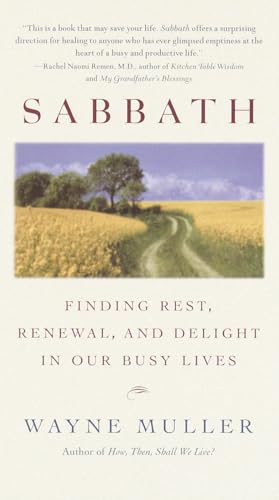 I tend to work too hard. I’m very bad at slowing down and resting, so as part of my spiritual reading for the year, Sabbath by Wayne Muller seemed like a natural choice.
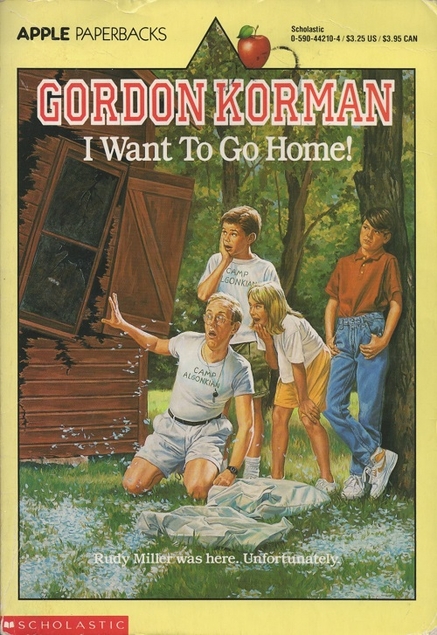 I’m a big believer in re-reading books, and I don’t think there’s any book I’ve read more times than I Want To Go Home by Gordon Korman. My guess is I’ve read it fifteen times–I lost count at twelve. Most of those times were also before the age of twelve, but I’ve reread it in recent years too, and even after all those times, it still makes me laugh.
 Tales of the Marvelous