Looking for a Journey

Looking for Marco Polo by Alan Armstrong was a fascinating read, but not for the reasons the author was hoping, I’m sure.  Mostly, I was trying to figure out exactly why it just wasn’t working for me.
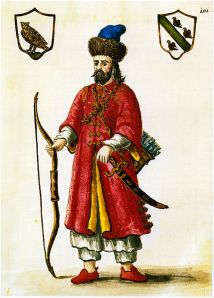
Marco Polo

First reason: faulty advertising.  Or maybe, an unclear metaphor.  I picked this up at the library, and from reading the description on the inside of the front jacket (does that description have an official name?) here’s what I gathered: Mark’s father “has disappeared in the Gobi Desert while tracing the path of Marco Polo.”  Mark and his mother go to Venice to talk to the agency that sent his father to the desert, trying to find him.  Mark meets Dr. Hornaday, who starts telling him the story of Marco Polo and “before he knows it, Mark–like his father–is on the trail with Marco Polo as he travels the Road of Silk.”

So what am I expecting: that Mark’s father is on some kind of special expedition specifically focused on Marco Polo–it says that, right?  Probably the mystery of his disappearance has something to do with that.  Mark, in turn, will find himself fascinated by whatever his father’s Marco Polo-related mission was, and end up traveling through the desert, either in the modern day or, even better, somehow going back in time.  If I’m crazy to draw those conclusions, someone tell me.

What is the book actually about?  First, Mark’s father is in the Gobi Desert, but he’s studying the people.  It’s the same place Marco Polo was in, and Mark’s father does mention that when he gives him a copy of Polo’s book, but otherwise, his expedition has no connection to Polo.  Second, and much more importantly, Mark doesn’t go anywhere beyond Venice.  “On the trail” and “looking for Marco Polo,” are metaphors.

What this really is, is Mark and Dr. Hornaday sitting in a cafe and occasionally walking around Venice, while the doctor talks about Marco Polo’s trip.  It’s not that the stories aren’t interesting–but it’s not what I was expecting.  Problem one: failed expectations.

Once I was about 150 pages in and realized this was all there was, and I should stop waiting for Mark to go anywhere, I tried to readjust to the new trajectory of the book.  And to figure out, beyond the failed expectations, why it wasn’t working.  I like the story of Marco Polo.  I chose to do a report on him in high school.  I like Venice.  The stories Dr. Hornaday is telling are good ones.

But.  Mark and Dr. Hornaday are ultimately a frame story for Marco Polo.  The trouble is, they’re a frame story that won’t go away: problem two.  Once in a while Dr. Hornaday talks for so long and in such detail that you almost forget you’re still sitting in a cafe.  Most of the time, that doesn’t happen.  I would much rather be in Marco Polo’s story, with the level of immersion and detail that would allow, rather than sitting at a surface level where it’s limited by what Dr. Hornaday can say out loud, and where every so often Mark asks a question and pulls me out of Kublai Khan’s court entirely.

I think I would have liked this book better if Armstrong had given Mark a couple of chapters to set up his world, and then Dr. Hornaday had said, “Let me tell you about Marco Polo…” and launched on a 200 page narration of Marco Polo’s life without another reference to Mark or the doctor.  That’s how a frame story should work.  That’s how The Time Machine does it, or how Burroughs wrote a lot of his books.  This telling of the two stories at once never let me really get into either one.

It was actually fascinating to observe from a literary standpoint.  It made me think a lot about frame stories and how they function–or not.  And if you want to know about Marco Polo, this does that.  There’s even a bibliography at the end.  But if you look at the description, be warned–all is not as it seems, and I don’t mean what’s going on in the Gobi Desert.

The Irrepressible Jacky Faber

I recently read the eighth book in the Jacky Faber series, and I’m wondering how long L. A. Meyer can keep this going.  And I’m hoping it will be a long while!

The series follows the adventures of Jacky Faber…sailer, soldier, pirate, fine lady, spy…oh, and Lily of the West.  Among other things.  Set around 1800, it all starts in Bloody Jack, when orphan Mary Faber decides that the way out of the gutter is to sign onto a Royal Navy ship as a Ship’s Boy.  Obviously that second word presents complications, so Mary becomes Jacky and disguises herself as a boy.

Jacky is an incredibly fun character.  She’s endlessly creative with her schemes and ideas, wildly emotive, rarely depressed no matter what life throws at her, fiercely loyal to her friends and endlessly ambitious to better her life and the lives of the people she cares about.  She has dreams of creating a worldwide shipping industry, and despite usually being only one step ahead of a vast number of people chasing her, she also manages to keep chasing those dreams.  Honestly, she’s like a cork–the world keeps trying to push her down, and she just keeps bobbing merrily up again.

Throughout the series, Jacky gathers a cast of equally memorable characters around her.  A couple of favorites: there’s Higgins, who always maintains the exemplary dignity of a gentleman’s man servant, is enormously helpful faithfully following Jacky through all her adventures, and always makes sure that she keeps her hair at least moderately clean.  And there’s Amy, a very proper young lady from Boston who is frequently shocked by Jacky but loves her like a sister anyway.

There’s also Jaimy, Jacky’s “own true love.”  To be honest, I’ve never been all that impressed by him myself, but she seems to like him.  I don’t dislike him, but (at the risk of a slight spoiler) they don’t spend a lot of time together and after the first few books I lose interest in their romance.  It actually feels like Meyer keeps contriving ways to keep them apart (not emotionally, more often physically apart) as a way to keep the adventure going.  While I approve entirely of keeping the adventure going, I wish he’d either just get them together and let them have adventures together, or break them up and move on.

However, that’s my one biggest criticism of the series.  And it’s a wonderful series–funny, suspenseful, exciting.  Jacky travels from England to America to Australia having a neverending series of mishaps and adventures.  I like to read before going to bed, and I’ve had to stop doing that with some of these because they’re too exciting and it wasn’t relaxing!

Adventure after adventure, I keep turning the pages with usually the same question: how is Jacky going to get out of this one?  After eight books, I don’t feel like the quality has dropped off–so I’ll keep reading to see how Jacky will escape from her latest entanglement.

Author’s Site: http://www.jackyfaber.com/

One of Those Books About the Civil War

Across Five Aprils by Irene Hunt is one of those books.  Not a bad kind of those books.  One of those books that shows up on class reading lists and in books reports and that everyone seems to know the title of.  I wish I’d liked it better.

Even as one of those books, I somehow never actually read it in school.  I probably listened to an oral report or two, but I don’t remember them clearly (I remember endless reports on Harry Potter, but that’s another story).  Somehow, Across Five Aprils never came my way, so I decided to pick it up recently–mostly because I knew it was one of those books and I thought maybe it would be worth forming an acquaintance.

If you’re also unaquainted, Across Five Aprils covers the five Aprils of the Civil War, told from a farm in Illinois and mostly from the point of view of Jeth, too young to go to war and thrust into responsibility for the farm when his older brothers all go to fight.

I liked the book well enough, and there were were some good parts in here, especially in connection to Mr. Lincoln.  That leaves me the task of sorting out why I didn’t like it better.  Maybe it’s the hazard of covering five years in a fairly slim volume.  By necessity you have to summarize past days and weeks and months, and only occasionally dip into more detail.  I’m left with a feeling that I couldn’t get down into this book, that it was too much summary.  Even though I know there were scenes that were more detailed, I feel as though the whole thing took place on a surface level.

Another matter probably comes down to personal preference.  When I read historical fiction, I don’t like my history to get in the way of my fiction.  I’d like to learn something, but I’d rather not notice too much that I’m doing it.  Remember that this book is set on a farm–we’re not actually out engaged in the Civil War.  And yet the story stops for paragraphs and pages at a time to discuss the progress of battles and which general has been promoted and demoted and who’s advancing where.  It’s at that point that I start to feel the history is being foisted on me.

I think a fair comparison to make here would be with L. M. Montgomery’s book, Rilla of Ingleside.  It’s set during World War I, but takes place on the Canadian homefront.  Again, we’re not on the front lines, and yet we hear about every town that is taken, every time the line moves forward or back, every decisive battle–but it works.  Because the story doesn’t stop for the narration to tell us that the Germans captured a town.  Instead, the next event in the story is when one character comes flying into the kitchen to tell the other characters what the newspaper says today.

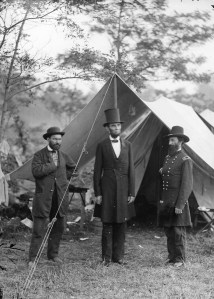
I feel arrogant saying this, when I’ve got a review from The New York Times reading “An intriguing and beautifully written book” staring up at me from the cover of Across Five Aprils, but I just don’t think the mix of fiction and history was handled all that masterfully here.  If you know a kid with an interest in the Civil War, then I do think I could recommend this book.  But you have to have that interest, because rather than fiction with a historical backdrop, this is definitely history told through fiction.

Ophelia Did Get a Rotten Deal, After All

I want to acknowledge right at the beginning that Dating Hamlet: Ophelia’s Story by Lisa Fiedler suffers from a dreadful title.  I know.  If you find it at the bookstore or the library (or look at it online) you’ll probably discover that it suffers from a dreadful cover too.  At least, the copy I read did.  They’re not necessarily intrinsically dreadful, but they give an entirely wrong impression on the book.

“Dating Hamlet” implies a book that is frivolous, shallow and a bit silly.  What you actually get, I am pleased to say, is a solid, insightful retelling of William Shakespeare’s Hamlet from Ophelia’s point of view.  There is humor at times…but there’s drama too.  And there’s a heroine who is much more capable than Mr. Shakespeare portrayed her.

Purists would probably have objections to this book, because some of the plot twists do strain credulity a bit…but that’s what I find fascinating about it.  Fiedler has done an impressive job of preserving everything that you see on stage, while turning it upside down with what’s going on behind the curtain.  By adding scenes in between Mr. Shakespeare’s, the result is Hamlet—but a Hamlet that’s very different from what you may be expecting.  I don’t want to give away the specific plot twists, but to give you an idea of the kind of twists—imagine if, in Snow White, there was an extra scene revealing that Snow White and the Huntsman were actually close friends, and he only took her out in the woods because they had agreed it was a good opportunity for her to run away from the castle.  You’d get the same essential scenes—but different meaning.  It’s a bit like that.

Knowledge of Shakespeare’s Hamlet would help with this book, but I don’t think it’s necessary.  It’s hard for me to judge, because I came to it after reading Hamlet.  Finding a good summary of the play would probably be enough, though; or you could watch the DVD of The Complete Works of William Shakespeare—Abridged (Act Two is Hamlet) by The Reduced Shakespeare Company (actually, you should watch that regardless, because it’s hysterically funny).  And you really ought to just read or watch a good version of Hamlet some time too, because that’s absolutely worth it.

But a discussion of Mr. Shakespeare’s Hamlet would be a different review.  As to Dating Hamlet, if you can get past the title, it’s a fun retelling with a compelling heroine.  A great book for anyone who ever thought that Ophelia got a rotten deal out of the whole thing.  Sorry, Mr. Shakespeare–but you were pretty rough on your tragic heroines.

You’re With The Fortunate Captain Oates

“I have been in love with Titus Oates for quite a while now—which is ridiculous, since he’s been dead for ninety years.  But look at it this way.  In ninety years, I’ll be dead, too, and the age difference won’t matter.”

This is one of my all-time favorite opening lines of a book (right up there with “All children, except one, grow up”).  I read this in a bookstore and knew immediately that I had to read The White Darkness by Geraldine McCaughrean.

The story of fourteen year old Symone’s trip to Antarctica, and how everything goes horribly wrong, is an exciting adventure in its own right.  But what I really love about this book is the relationship between Sym and Titus.

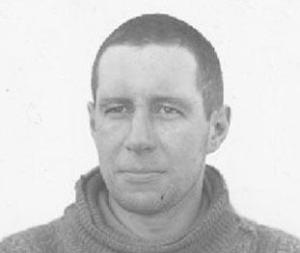
Captain Lawrence “Titus” Oates (at right, though he smiles more in the book) was an Antarctic explorer who went to the South Pole with Robert Falcon Scott.  As Sym notes, Titus has been dead for over ninety years—he died in Antarctica in 1910, with Scott and the rest of their party.  But he lives on in the present day in Sym’s head.  It’s not a fantasy—he’s not a ghost—it isn’t a time travel story—she’s not insane.  Titus is Sym’s imaginary friend.  And who wouldn’t want to be with “the fortunate Captain Oates,” as Titus describes himself in Chapter Twenty-one.  He’s charming and witty and chivalrous, the kind of friend any girl would want.

Or as Sym puts it, “He is everything, everything, everything I ever admired and wanted and couldn’t have.  He is everything I needed and couldn’t find in real life.”  And so he is her friend and confidante and loyal supporter through, first, the Hell of not fitting in at high school, and later, the Hell of the ice plains of Antarctica.

It’s hard to explain how and why a story about a teenage girl and her imaginary friend works—but it does, beautifully.  I’ve read other books featuring imaginary friends, and no one handles it as masterfully as Geraldine McCaughrean.

I also have to give a nod to the audiobook.  Ruth Sillers narrates most of the book as Sym, but Richard Morant narrates all of Titus’ dialogue.  I listened to a brief excerpt when I first found out about this.  Similar to reading that first line of the novel, I heard Morant deliver seven words and promptly handed over $25 on iTunes to buy the audio—and I don’t usually spend money easily or impulsively.  But believe me, his voice is worth following to Antarctica.  🙂

There’s a back story to Morant as narrator that I love.  Within the book, Sym describes watching The Last Place on Earth, a miniseries about the expedition, which is pivotal to inspiring her image of Titus.  And in The Last Place on Earth, Titus is portrayed by—Richard Morant.

I didn’t know much of anything about Antarctica or Antarctic explorers (sorry, Titus) before reading The White Darkness.  McCaughrean provides a helpful background on Oates and Scott, so if that’s you too, you won’t have a problem following the story.  And, like me, by the end you’ll find Antarctica much more interesting than you ever dreamed.  And while it still may not be high on your list of places to visit—it isn’t for me!—Antarctica will conjure up a magic it never had.

Author’s site: http://www.geraldinemccaughrean.co.uk/

And you can see the cover from my copy up there in the heading, towards the left.