Exploring Space and Philosophy

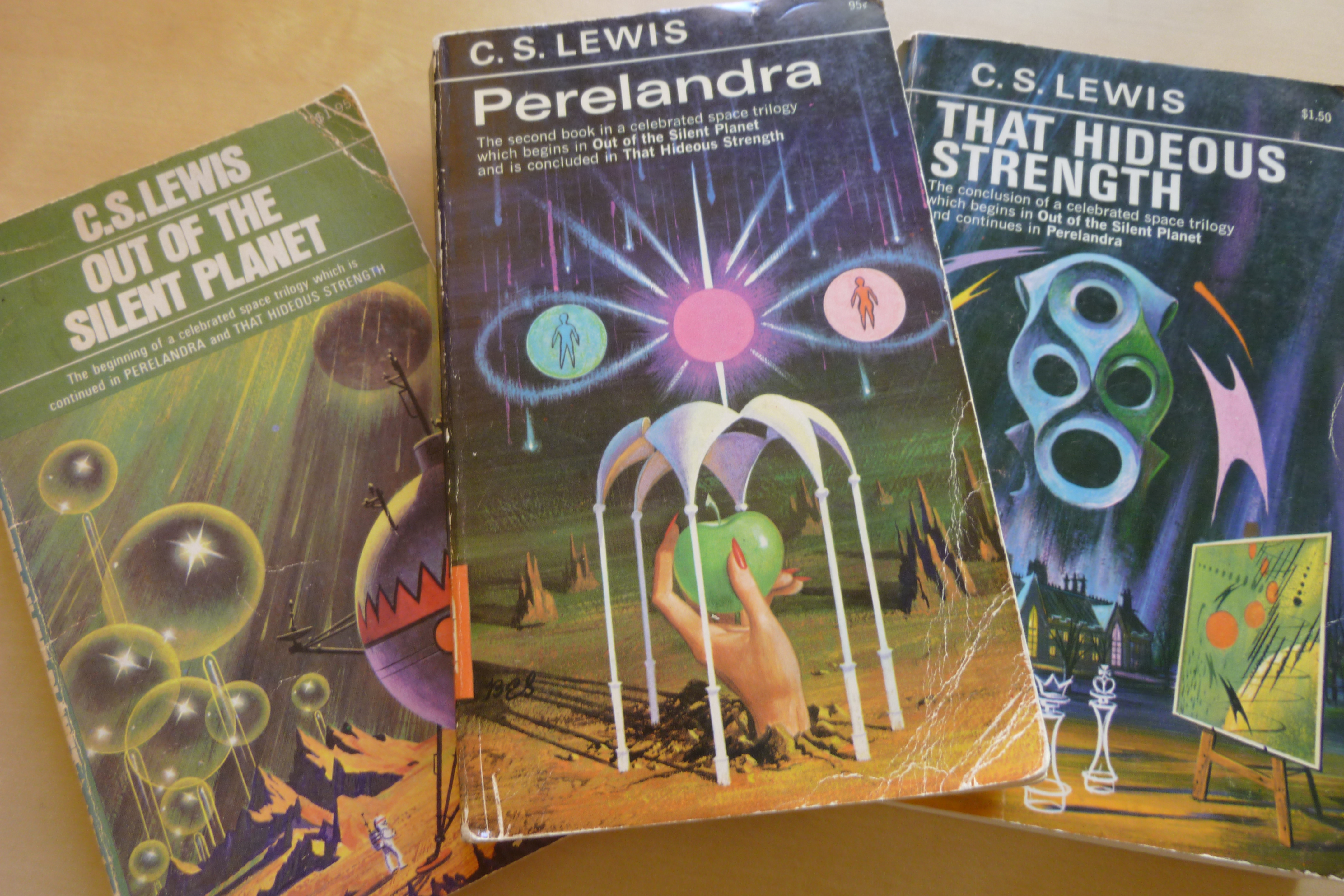
As part of my ongoing quest to finish more partially-read series, I decided to tackle C. S. Lewis’ Space Trilogy.  I read Out of the Silent Planet upwards of eight years ago, I think I read part of Perelandra, and then I never finished.  Since the first one had gone blurry, I decided I’d better reread it, and go from there.

The story centers on Ransom, a scholar who wakes up from a kidnapping to find himself on a spaceship bound for Mars.  He eventually works out that the two men who captured him intend to hand him over as a sacrifice to the Martians.  When they land, Ransom succeeds in escaping his captors.  When he actually meets the people of Mars (or Malacandra, as they call it), he finds them kinder and wiser than he expected, while almost strangely innocent of evil and content with their lives.

While the plot sounds like a sci fi adventure (and it is), the trilogy is largely concerned with philosophy and theology.  Ransom learns that Malacandra is governed by a kind of spirit, the Oyarsa.  Earth is meant to have a guiding spirit as well, but ours turned evil long ago, giving rise to the host of problems on Earth that are unknown on Malacandra.

The second book, Perelandra, sends Ransom to Venus (which the natives call Perelandra).  Here we see a world where Adam and Eve haven’t left the Garden of Eden yet.  Ransom meets this world’s Eve, and engages in a struggle with a devil character who has arrived to tempt Eve to eat the apple–metaphorically speaking.

The third book, That Hideous Strength, moves the struggle between good and evil to Earth.  Ransom is still a significant character, but the book has an ensemble cast of characters who become mixed up with an Institute intent on reshaping society in a horrible fashion.

I enjoyed the first two books in the trilogy quite a bit, and then struggled with the third.  The first two remind me of Burroughs books. though with less action and more philosophy.  The main reason for that is the landscapes and the creatures.  Lewis describes the strange worlds of Mars and Venus extensively.  The surface of Mars is uninhabitable, and all life exists in deep chasms.  There are three co-existing intelligent species, all extremely unique in features and in culture.  Venus is almost entirely covered in liquid, and most “land” is actually floating islands which move with the waves, rising up in hills and dropping down into valleys and changing every moment.  I was fascinated by the worlds, and the philosophy was interesting, if a little lengthy at times.

The third book is set on Earth, so there isn’t a new landscape to explore.  More troublingly, the tone changed.  That Hideous Strength reminded me too much of Kafka in The Trial.  The reader and the characters frequently have no idea what’s going on, no one will give a straight answer to anything, and there’s a lot of stumbling about in confusion.  Many of the characters felt more like caricatures, somehow less human and relatable than the non-human characters of the first two books.  There were also bits of Ransom’s philosophy I didn’t agree with at all–let’s just say Lewis probably wasn’t a feminist.

The third book wasn’t all bad.  It was slow and confusing for the first two-thirds, but picked up and got clearer in the end.  There’s also a fascinating and (I thought) under-developed concept about the Pendragon, England’s guardian through time, and the waking of Merlin.

Overall, I’d have to say it was a great first two books, and then the third feels more distanced from the first two, and, for me, not nearly as good.  I know that’s not a universal opinion, though, so take it as a sign of my particular taste.

It was worth reading to the end of the series, though, and not only because it’s been niggling at me as unfinished business for over eight years!

Other reviews:
Palantir Blog
Tides and Turnings
Unabridged Chick
Tell me about yours!

A Camera-Eye View of the Hunger Games

If you’ve been paying attention to entertainment news at all (and maybe if you haven’t), then you know that the Hunger Games movie came out this past weekend.  Having read the trilogy, I was eager to see it!

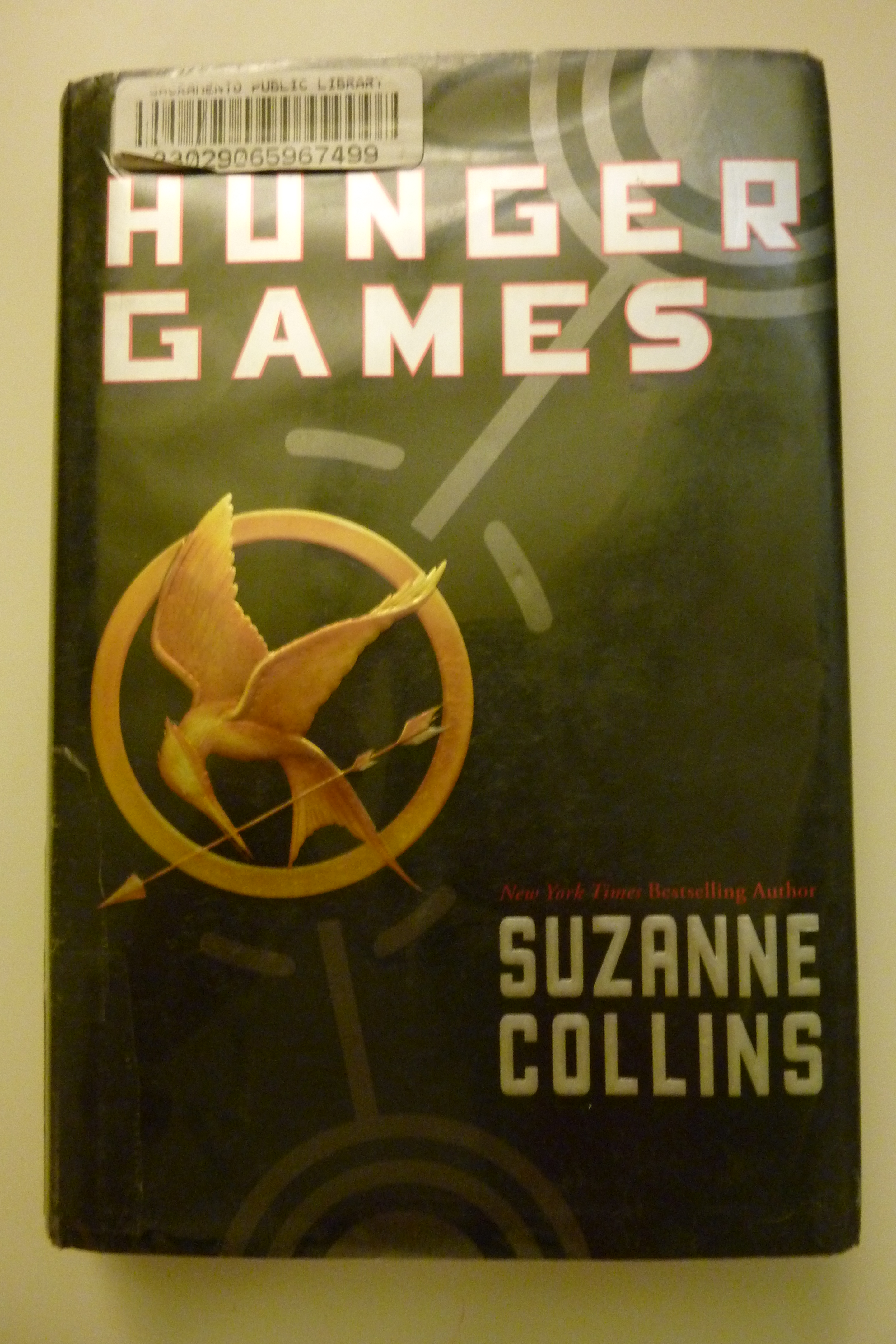
If you’d like, you can read my reviews of the three books, Hunger Games, Catching Fire and Mockingjay.  The short version is that I LOVED The Hunger Games, enjoyed Catching Fire but had some issues, and was ultimately disappointed by Mockingjay.  Fortunately, I was not disappointed by the movie!

If you’ve really not been paying attention to entertainment news, here’s the quick plot: in a future dystopian society, one wealthy Capital rules over twelve impoverished districts.  As punishment for a past rebellion, the districts must each offer up two tributes, male and female, between the ages of 12 and 18, every year for the Hunger Games.  The tributes fight to the death in an elaborate arena: 23 will die, one will survive and receive riches.  It’s all filmed; in the Capital it’s an exciting sporting event, and in the districts watching is part of the punishment.

The heroine, sixteen-year-old Katniss Everdeen, has been taking care of her little sister, Prim, ever since their father died and their mother had a breakdown.  When Prim’s name is drawn to be sent to the Hunger Games, Katniss desperately volunteers.  She’s whisked away to the terrifyingly flamboyant capital, and then thrust into the terrifyingly brutal arena, where everything is further complicated by uncertain feelings about Peeta, the boy sent from her district.

I felt in my book review and I feel again that it’s hard to give a good plot summary of this story!  It’s too complicated with too many layers.

The first question everyone has about this movie is how intense it is.  I was a little hesitant at first about seeing it (but then the trailers drew me in).  I thought some moments were more intense in the book–others were harder in the movie.  The gore was not too bad–it’s there, definitely, but I have a low threshold for gore and I wasn’t too disturbed.  The worst is probably when Katniss burns her leg.  People die swiftly, and the filmmakers weren’t too graphic about the battles.  I’m trying to avoid spoilers, but I will say they seriously toned-down the last tribute’s death, which I found to be far and away the most disturbing part of the book; it’s accurate to the book, but the creepiest parts are taken out.  It was still a very heavy, very intense movie, though.  If you read the book and were okay, I think you’ll be okay with the movie.  But if you’re doubtful, don’t say I didn’t warn you!

The first question for me on adaptations is how faithful they were to the original, and I thought The Hunger Games did very well.  Minor changes here and there to fit into the movie format, and they did change how Katniss got her mockingjay pin, but that was really the biggest change I noticed (and I understand why they did that, as it involved a very minor character).

The characters were excellent, especially Katniss (Jennifer Lawrence).  She was wonderful in the first book, and it all carried onto the screen.  She has some issues (well-justified mistrust, for one), but if I had a teenage daughter I’d rather she read about Katniss Everdeen than Bella Swan (actually, I’d want her to read about Alanna, but that’s another review).  Suffice to say Katniss is tough and courageous without being unfeeling or without sentiment.  Her kindness to Rue, another tribute who’s only twelve, is one of my favorite things about the story.  Katniss’ relationships with Prim and her best friend Gale were beautifully handled.  Like in the book, they’re out of it very quickly, but it was still very well-established in those few scenes.  Peeta (Josh Hutcherson) was good too–he just radiated sincerity and good intentions, in the middle of horrible situations.  Apart from Rue, who was lovely, the other tributes didn’t get the same development they did in the book, but in a compressed movie I can’t really fault the filmmakers for that.  And there was enough.  It worked.

With the possible exception of Katniss, my favorite on-screen portrayal was Stanley Tucci as Caesar Flickerman, the announcer for the Hunger Games.  He was incredible, hitting just the right note of delight but not sadism.  It’s hard to explain, except that he talks about kids killing each other in the same voice every sports announcer uses, makes some of the same kinds of comments and it was brilliant.  I thought in the book it was a little more clear that he had some kind of sympathy for the tributes, at least to the extent of trying to make them all look their best when he interviews them.  That wasn’t so clear, but it was still absolutely wonderful.  Awful, of course, but wonderfully done.

The only portrayal I was disappointed by was Haymitch, Katniss and Peeta’s mentor.  In the book I pictured him as a scraggly, overweight alcoholic with deep-seated problems; in the movie he was a reasonably-together man, somewhat cynical and liking to drink.  Not really the same thing, although they may have felt they needed to change him to make some of the narrative clearer.

There were points when I thought this would have benefited from a voiceover from Katniss.  Her relationship with Peeta is very complicated in the book and I don’t think it all showed.  On the other hand, I thought they completely conveyed her relationship with Rue, even though it was brief.

After all this about what was good, I do have to mention my one big problem–and it was one I can’t remember having with any other movie.  I didn’t like the cinematography.  I think that’s the right term–the camera angles, and the way the camera moved.  Particularly at the beginning of the movie, the camera wouldn’t focus on anything for more than a second before it swooped off.  And it didn’t blink to something else, it actually moved, and it moved too fast.  So suddenly everything goes blurry as it moves and my eyes are struggling to make sense of everything.

People keep telling me that this was a deliberate choice to express Katniss’ confusion, the chaos of the arena, and to avoid being too graphic with the battles.  I’ll buy all of that, except that they were doing this in the first ten minutes of the movie, long before she got to the arena; they actually stopped doing it as much (or I got used to it) once she was in the actual games.  It did seem like a good choice during one battle in the arena, but in most moments it didn’t.  I want to see this movie again on DVD, because I think this might actually be a case where a movie looks better on a smaller screen.

That was my one big problem, and it was an annoying one…although it did seem to ease off farther into the movie, and I still really loved the movie overall.  I am having an astonishing string of good movies made from books I love, which normally is so unusual.  But I’d put The Hunger Games in with John Carter and Arrietty–all excellent movies from excellent books.  The books are still better in all three cases…but these were very good movies too.

Movie Site: http://www.thehungergamesmovie.com
Author’s Site: http://www.thehungergames.co.uk

Other reviews:
Book Journey
Tor.com (in comics, with spoilers)
MeReader (also with spoilers)
AbeBooks.com
The Whole Sort of General Mish Mash
The Bookworm Chronicles
Books Without Any Pictures
And I’m sure a Google search will find you HUNDREDS more…  If you want, tell me about yours!
Lost on Mars with John Carter, and Four-Armed Green Martians

Regular readers know that one of my favorite authors is Edgar Rice Burroughs–so I was both eager and wary regarding the new movie inspired by his Mars series, John Carter.  Fortunately, in the end I think it was a well-handled retelling of Burroughs’ A Princess of Mars.  They took a few liberties, as filmmakers will, but the spirit was good.

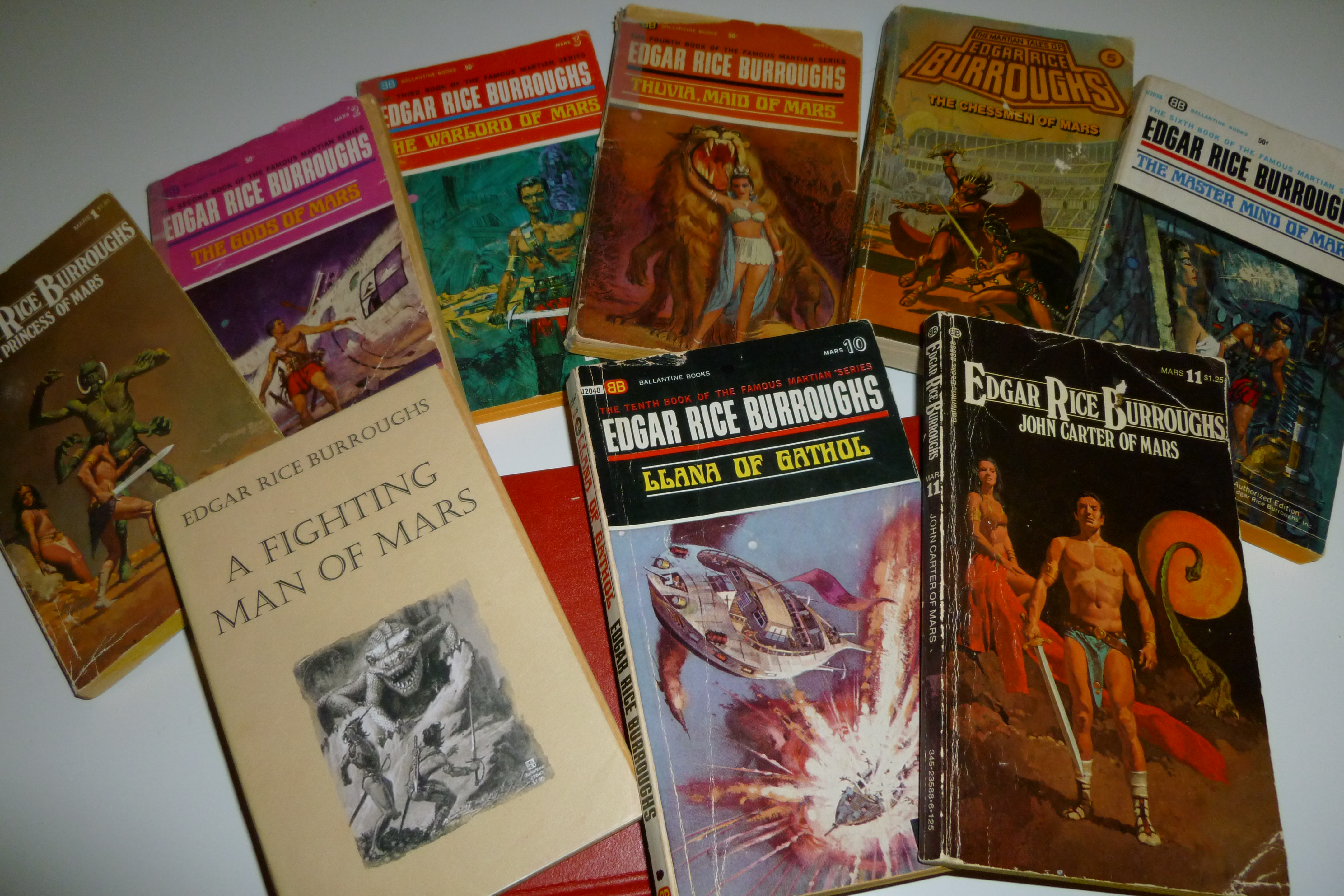
My Burroughs Mars Collection

The plot was essentially accurate to the book.  John Carter of Virginia is a Civil War veteran who goes out west prospecting.  Out in the wilderness, he finds himself mysteriously transported to a new wilderness, with a red tint.  He eventually realizes he’s on Mars (Barsoom), where he meets the Tharks, giant green men with tusks and four arms (Burroughs was the first to have green Martians, incidentally).  It isn’t long before he also encounters the beautiful Dejah Thoris, Princess of Helium.  Not green and without tusks, she’s a member of the red Martians, who look human apart from red skin.  Adventures involving swordfights, epic battles and a villain intent on marrying Dejah Thoris quite naturally ensue.

The movie kept all of that from the book, along with many other details, although they also threw in some extra bits.  I can only conclude that they felt they had to explain John Carter’s transportation, which Burroughs never does.  Part of me loves it that John Carter just looked at Mars and wished and was there, but I can see how the filmmakers felt they needed to give a more complete explanation.  So they introduced the Therns, priests of the Martian goddess Issus, who have medallions which allow them to transport between worlds; one of the medallions takes John Carter on his journey.  The Therns also tie the plot together a bit more, by giving a weapon to Helium’s enemies and presiding over the resulting destruction.  They’re brought up in the first five minutes of the movie and gave me a few bad moments–but I felt better once their mysterious goddess was named as Issus, because then I could place them.  Issus and the Therns show up (albeit in a different capacity) in the second Mars book.

I’m generally much more forgiving of movies making changes if they also demonstrate that they really, really know their source material.  Anybody who can get all the minor characters’ names right and very carefully depicts Martian animals according to Burroughs’ descriptions has earned the right to tweak things a little–and I think it was essentially effective, once I figured out what they were trying to do.

The characterization was well-handled.  They gave John Carter (Taylor Kitsch) a tragic past, to create a character who was lost in more ways than one when he lands on Mars.  He was a bit surly for a Burroughs hero, but they got a little of the Southern gentleman in, and his prowess in battle was perfect.  In a strange way, my favorite moment may have been when he turns to face an oncoming horde of hostile Tharks, buying time for the fleeing Dejah Thoris.  It’s straight out of the book, and only a Burroughs hero could plunge into an oncoming army, alone, armed only with a sword, and come out of it alive.  I’ve heard it commented before that the biggest mystery of the Mars books is how the South ever lost the Civil War when they had John Carter on their side.  The scene was well-shot too, splicing battle shots with flashes of John Carter’s past, and piling up the bodies without being grotesque (more on that in a moment).

I also enjoyed Dejah Thoris (Lynn Collins).  Heroines are not usually Burroughs’ strong point.  She was always beautiful, but she was never much else.  The movie made her both smarter and tougher.  Dejah Thoris the scientist throws me for a loop a little, but Dejah Thoris the swordfighter is pretty much awesome.

The more minor characters were well-done too, particularly among the green Martians.  Tars Tarkas, John Carter’s green Martian friend, was excellent, as was Sola, a more sympathetic green Martian female.  The green Martians were all CGI and there were excellent effects throughout.  I avoided seeing this in 3D so I don’t know how that would change things, but in 2D the effects were convincing, for creatures and landscapes and technology.  I thought the green Martians all looked a bit scrawny for a warrior race, but they did wonderful things with the four arms.  I also absolutely loved Woola, John Carter’s dog-monster.  He was delightful, and added some comedy.  Comedy is not really one of Burroughs’ strong points either, but the movie got some good moments in.

On the whole, I thought the movie picked up as it went.  The opening on Earth was not as interesting (although big points for including John Carter’s nephew, a fictionalized Edgar Rice Burroughs, who’s included in a foreword in the book) but it got better on Mars, and eventually accelerated to some wonderful epic battles and excitement by the end.  That was done perfectly and completely in the spirit of the books.  Burroughs wrote about men who lived by their swords, who would fight their way literally through armies and across planets, have clashes featuring casts of thousands and deaths of hundreds–but he wrote it all with a Victorian sensibility that never dwelled on the blood, and was never gruesome or disturbing.  This movie managed to do the same thing.

This is one of the biggest reasons I’ve always been wary of a movie version–the blood, and also Dejah Thoris’ clothes, or lack thereof to be precise.  Burroughs wrote about plenty of scantily clad women, but again, with a Victorian sensibility that kept it all very clean.  It would be very easy to make a movie with half-naked women and disturbing fight sequences, technically accurate to the book but not at all in the right spirit (and nothing I’d want to see, though I’m sure that would have a market too).  So I was so relieved to know that this was being produced by Disney; it even opens with a red-tinted view of the Disney castle logo.  I figured they’d do it right, and they did.  Dejah Thoris’ costume designer seemed to be looking at the same book covers I have; the princess was scantily clad (and for that matter, John Carter spent plenty of time shirtless) but somehow it didn’t feel exploitative either.

So, to sum: good characters, good effects, good Burroughsian spirit.  A few changes but acceptable ones.  If they do a sequel (and they always do sequels of action features, right?) I’ll be watching it.  I hear it’s not doing well at the box office, but we’ll see!

And in the meantime, there are so many exciting movies coming out this month!  Next up I’m looking forward to The Hunger Games, and after that Mirror, Mirror, a Snow White retelling.  If they live up to their potential as well as John Carter did, it’s going to be a good month at the movies.

Other reviews:
Screen Rant
Angelocracy
Eclipse Magazine
The Oregonian
Stainless Steel Droppings
More?

Another Star Trek Artform

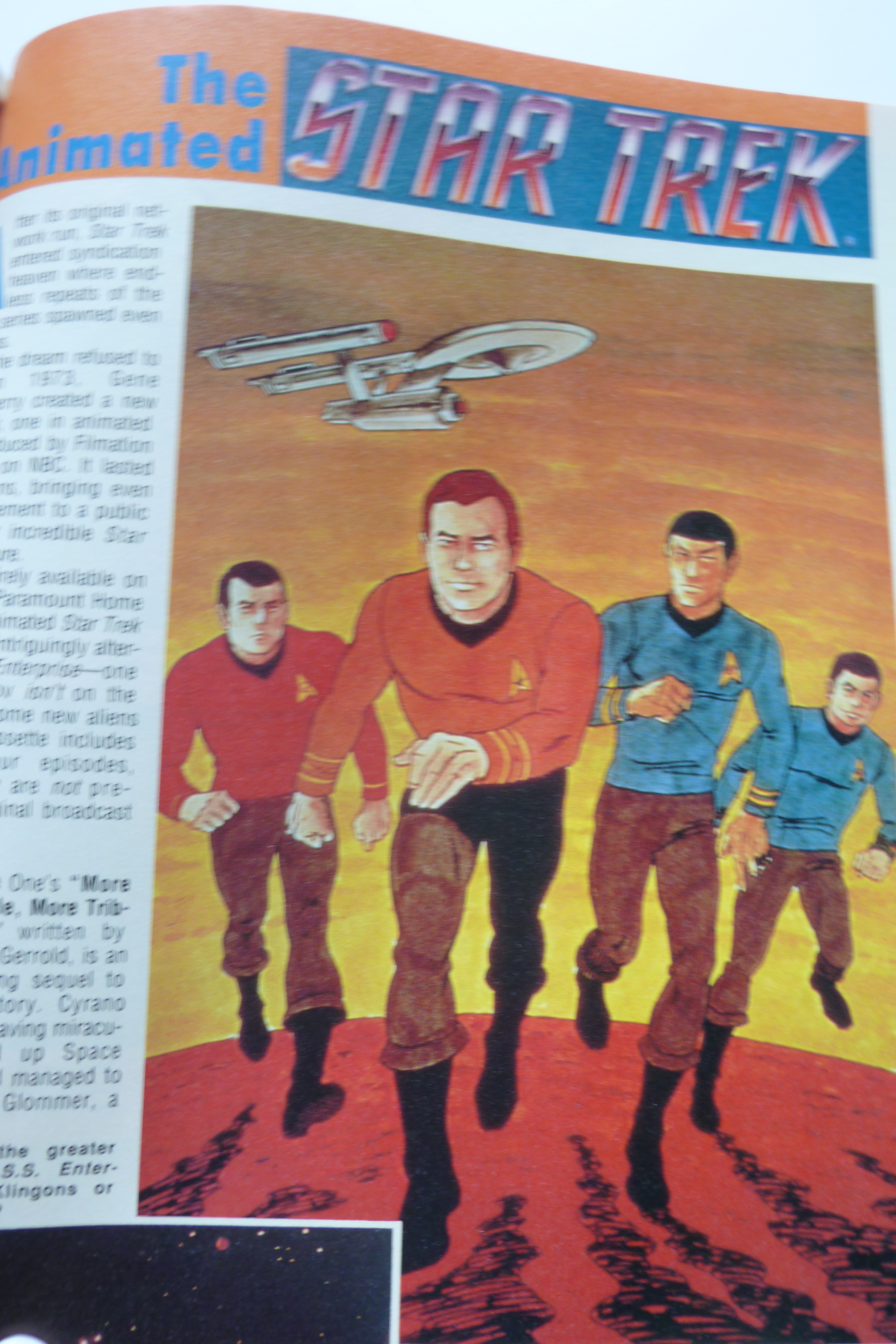
I talked about Star Wars recently, and now I want to jump over to Star Trek–but probably not a series you’re thinking of.  Lately, I’ve been watching The Animated Series.  It seems to be the Forgotten Star Trek Series.  I’ve rarely seen or heard references to it, and one of the few times I did see some discussion, I found out that it’s not considered canon, the way the other filmed material is.

But it was streaming on Netflix, and I was curious, so I watched it.  And honestly, I think it ought to be remembered again.  I mean, more adventures of the original series’ characters, voiced by the original actors, with some of the original writers contributing scripts–what’s not to love?  Well, a few things actually, but I’ll get to that later.

Things I do love include, of course, the cast of characters.  I don’t think they created any particularly memorable new characters (despite the presence of a cat-like alien assistant for Uhura, and a three-armed replacement for Chekov), but it’s fun to see the old familiar characters again.  All of the regulars are back (except Chekov), and we get to see some guest characters back too, including Harry Mudd (with a new scheme) and Cyrano Jones (with more tribbles).

Many of the episodes feel like they could have been Original Series episodes, and some even give us a chance to look deeper at a character.  Spock travels into his own past to meet his younger self in one episode, and another revisits the (hopelessly doomed) Spock/Christine romance.  Some of the plots are a bit silly–in one the Enterprise computer takes on the personality of a practical joker, and in another the crew starts to shrink.  But they’re not really much sillier than I, Mudd or The Trouble with Tribbles, and I’m all in favor of funny Trek, provided you keep the characters in character.

There are frequent strange aliens and wild landscapes.  It reminds me of very early Star Trek novels, where you can just tell the writers are reveling in the opportunity to create something that couldn’t be shown in live-action–at least not at the time, and with Star Trek‘s budget.

That brings me to some of the things not to love.  The Animated Series seems to have had an even worse budget than the original show, and it very much shows in the animation.  The drawing is somewhat simple (though all the characters are clearly recognizable), and people move as little as possible, to reduce the number of frames needed.  They also like to zoom in on shots rather than having actual movement, or to reuse the same drawings again and again.  But honestly, it didn’t bother me that much.  It just feels like a different art form.  It felt more like watching a narrated comic book in some ways.

They also couldn’t afford voice actors.  With only a few exceptions, any non-regular character was voiced by a regular actor.  If you look at Jimmy Doohan’s IMDB page, you’ll see that he sometimes did as many as seven characters in a single episode.  But I have to say I’m very, very impressed by him, because I honestly couldn’t tell most of the time.  Nichelle Nichols and Majel Barret Roddenberry were not as talented at voices, and all the women on the show tended to sound like Nurse Chapel or Lt. Uhura…

I admit that this is a show you probably only want to watch if you’re already a fan of Star Trek.  If you’re looking for really high-quality cinema, that’s not this show, and if animation is really important to you, don’t watch it.  But if it never really bothered you that the Gorn was clearly a man in a lizard suit, or if aliens with orange skin and bad wigs seemed secondary to whether they were in a show with a good plot, then you should check this one out.  Despite being the Forgotten Series, it’s a cute little show.

A Maybe-Monster, and a Monster-To-Be

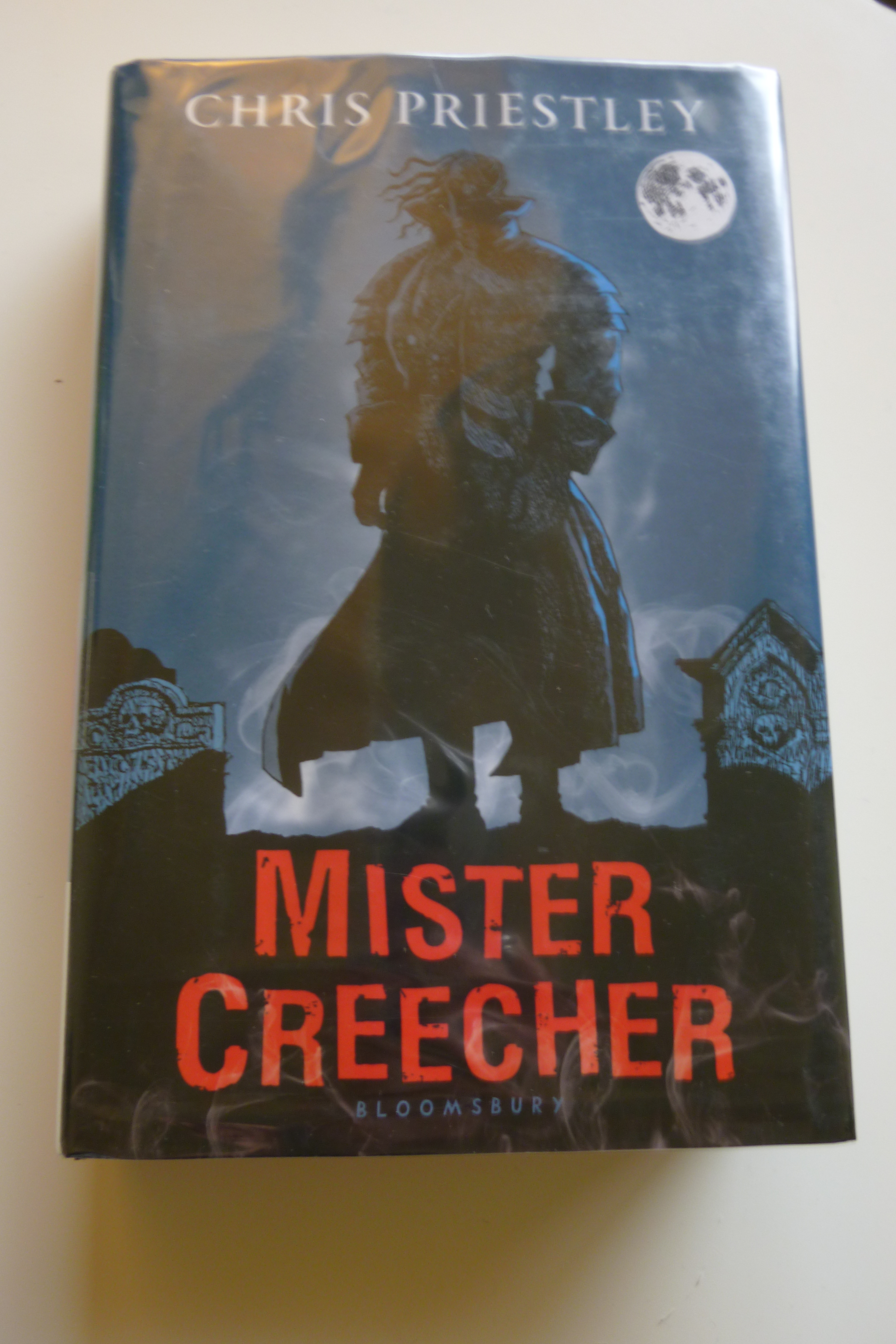
Mister Creecher by Chris Priestley, like Wicked, is another novel that takes characters from a familiar source and reimagines parts of their lives.  I read this one with the Sci Fi Experience in mind, although the library stuck a “Horror” sticker on the spine.  I guess it’s either–or both.

It’s a story about Frankenstein’s creature (see what Priestley did with the title there? 🙂 ), midway through Mary Shelley’s Frankenstein.  The story is from the point of view of Billy, an orphan pickpocket on the streets of London, who one dark night tries to pick the pockets of a dead body–only to have the body get up.  Billy and “Mr. Creecher” are thrown together by circumstances briefly, and then because Creecher wants Billy’s help to follow someone–Victor Frankenstein, who has promised to build Creecher a mate.  Partially through fear and partially through avarice, Billy finds himself pulled into a situation that is far stranger and darker than he expected.

This was an odd reading experience, because I enjoyed it while I was reading it.  And then I thought about it afterwards and decided the whole thing didn’t really work.  Most of the book is about the wary friendship that grows between Billy and Creecher.  It’s about Billy growing out of the scared pickpocket he was, and, we hope, into a better life.  Except…

Slight spoiler here.  I won’t tell you details, but I will tell you that both the friendship and Billy’s growth make an abrupt U-turn in the last portion of the book.  In a way it’s necessary–the creature’s tragedy is that he’s alone.  He has to be alone.  Having a genuine friend just won’t work.  And Billy turns out to be from another piece of classic literature, which is very clever–except that it means I’ve spent a whole book getting to like someone, who eventually grows up to be a character I’ve always hated (and still do).  I just don’t know how to feel about that.  Perhaps it was meant to be a new look at two monsters from literature.

Another problem is that this book is only the middle part of Frankenstein.  Nothing really happens except for following Victor Frankenstein around England.  So if the book isn’t about the creature finding a friend, and if it isn’t about Billy growing into a better person, and if it doesn’t cover any of the major events of Frankenstein…what IS it about?  And that, much as I enjoyed reading it while I was reading it, is the question I can’t answer.

It’s too bad, because I loved the premise.  I’ve read Frankenstein, and even though I really liked it, Victor is one of the few first-person narrators I’ve ever absolutely hated.  Frankenstein from a different point of view, especially one more sympathetic to the creature, sounds great!  I’m just not so sure about where the book actually decided to go.

On the positive side, for most of the book Creecher and Billy were both very good characters.  I’m impressed by how Priestley handled the creature.  I thought it was very true to the original, who was complicated.  It would be easy to either make him nice and purely sympathetic, or to make him the shambling, near-brainless mute of the movies.  Instead, Priestley kept him complicated.  He’s very intelligent, well-spoken, and is even reading Jane Austen at one point.  He’s deeply saddened that everyone rejects him, and he longs for companionship.  At the same time, he has a serious temper that is easily aroused, and when he’s angry, he thinks very little of killing people.  Complicated, and very well-drawn.

Billy is complicated too–he’s had some really, really rotten luck in his life, but he’s also not totally a victim in his circumstances.  He was forced into a thief’s life because he had no other options, but he also enjoys robbing people, and he isn’t too scrupulous about it (he’s really not Robin Hood).  He’s thrilled that Creecher is the perfect thief’s assistant, and actually pushes Creecher into helping him rob people.  One of my favorite moments of the book was when Billy is feeling upset about something, and Creecher asks him if he’d feel better if they robbed someone (answer: yes).  Billy has a complicated relationship with Creecher too, as his feelings fluctuate frequently.  Billy has some cynicism and some darkness, but mostly he’s sympathetic.  I will tell you that the person he turns out to be is NOT.

Maybe this was meant to be a kind of Anakin-Skywalker-to-Darth-Vader story, the birth of a villain instead of the birth of a hero.  But most of the book didn’t seem to have Billy on that trajectory, and when he did finally turn to the Dark Side, so to speak, it felt more contrived than not.

One thing that was fun about this book–Mary and Percy Shelley have cameos, and were probably the happiest people in the novel.  They were a fun little addition.

But really, the whole book was enjoyable–until I try to make any sense out of the wandering plot and the bizarre character turns.  We had a raging debate last month about my issues with Ender’s Game.  I have a feeling less people have read Mister Creecher, but if you have, and if you know what it was about, please let me know!

Author’s Site: http://chrispriestley.blogspot.com/

Other reviews (I actually found a LOT):
Bride of the Book God
The Excelsior File (contains spoilers!)
Becky’s Book Reviews
Shelly’s Book Blog
SisterSpooky
And there are others–let me know if one of them is yours and I’ll add it!