Blog Hop: Translations Lost

book blogger hopThis week’s Book Blogger Hop question: Do you read books in translation? What are the last three books in translation you read?

I really don’t read much in translation, which makes me feel, somewhat guiltily, that I am getting a very American and British view on the world.  Since I mostly get my book ideas from around the blogosphere, I’m going to try to shift responsibility for that out into the wider world!  🙂  In more seriousness, it does make me wonder about whether there are lots of books translated into English and I’m just somehow missing this entire segment of reading, or if this is a widespread gap, between what English speakers read and what the rest of the world writes.

Off the top of my head, without hunting through my book lists, the last three translated books I read were Les Miserables and The Hunchback of Notre Dame (Notre-Dame de Paris) by Victor Hugo, and The Phantom of the Opera (Le Fantôme de l’Opéra) by Gaston Leroux.  And in anticipation, I’ve been meaning to reread Around the World in Eighty Days (Le Tour du Monde en Quatre-vingts Jours) by Jules Verne.

Which seems to suggest that I’m getting an American, British and French view of the world!

Oh wait–I dip into the Brothers Grimm now and then.  German is represented too!

Your turn to confess.  Do you read many books in translation (and what do you recommend!) or do you mostly read books originally in English?

Blog Hop: Blog Reading Habits

book blogger hopThis week’s Book Blogger Hop question: Do you follow a lot of blogs but rarely read them or do you follow a few you read regularly?

Kind of…both?  I’ve mentioned on other occasions, especially while discussing how I plan my reading, that I like lists and I tend to be ridiculously organized.  It applies to my blog reading too.  I use NetVibes to subscribe to lots of blogs, and I have those subscriptions grouped into Favorite Blogs, Secondary Blogs, Tertiary Blogs (because I like the word!) and Blogs From People I Know (off the internet, I mean)  The Favorite Blogs are a relatively small number and I check them pretty carefully; ditto the People I Know Blogs.  The rest are bigger groups that I tend to skim quickly.

My particular blog-following quirk is that I never manage to make time daily to read blogs.  Usually I spend one chunk of time once a week to catch up on everything–so if you’ve ever wondered why I comment on multiple posts on your blog in one day, that’s why! 🙂

I’m pretty much terrible at checking-in with the year-long reading challenges I join (more on those next Friday, by the way!) but I do make an effort to keep up with the posts for Carl’s seasonal reading experiences.

If I ever write a best-selling novel and don’t have to work any more, I expect I’ll read more blogs more frequently…but until then, this system seems to work.  What works for you?  How do you manage your blog reading?

Blog Hop: What I Want To Know When I “Meet” Your Blog

book blogger hopThis week’s Book Blogger Hop question: When you view someone’s profile, what information do you like to see?

I presume this means blogger profiles… 😉  I would say that when I’m visiting a new blog and clicking over to the About page, I want to see something to tell me what to expect on the blog.  That includes a little sense of the blogger’s personality and perspective, and what kind of posts they typically put up (book reviews, reflections, fiction pieces…?  Oh look, I do all of those!)  For book bloggers specifically, I want to know something about what they like to read, so that I can decide if they’re likely to cover books I’ll be interested in.

I also look for something that may be a little less obvious…I want the story of the blog.  What is this a blog about?  It’s kind of contained in the stuff listed above, but not exactly.  Book blogs are usually straight-forward (it’s about books!), but could be complicated if there’s a more specific focus.  If you’re reading your way through the Newbery winners in alphabetical order, say, it would be nice to have that mentioned!

More often I run into this exploring other kinds of blogs.  I get frustrated when I click onto a random post midway through the life of the blog, find it interesting and get intrigued by vague references that are clearly part of the ongoing discussion…and then can’t find anything on the About page to explain!

For a positive example, I follow a blogger who writes about her adventures as an aspiring actress in New York, with (some) emphasis on dating.  That’s basically the story of her blog, and she makes it really clear in her header and her sidebar.  Without that explanation, I suspect I could easily click on a random post about either an odd job or a bad date, and feel lost on the context.

With an example that does it well, it seems so easy and obvious!  But it is surprising how many blogs will have no About page, or one that really doesn’t explain…well, anything!  And then I don’t know whether to read more posts, because I can’t figure out the story and whether it’s one I want to follow.

And yeah, of course I think of blogs as having a story rather than a topic or a focus or an area.  🙂  I’m a writer–life is a story!

What do you look for in a blogger profile?

Blog Hop: What’s In Your Reviews?

book blogger hopThis week’s Book Blogger Hop question: Are your reviews more of a rehash of the story or do you comment on writing style, characters, and reflection?

Well, I certainly aim to do more than just retell the story!  I generally do include a paragraph or (for very complicated plots!) two of storyline, so readers will have some context when I start talking about characters or other aspects of the book.  However, I feel like plot summaries are what the back of the book, or the Amazon description, are for.  In a sense, that’s the objective part–what happens in the book.

I feel like my job as a reviewer is to provide the subjective part.  Duly noting after our last blog hop discussion that this is just my opinion, my goal is to let you know how well the story was carried out.  Was the interesting premise actually interesting, or did it end up dragging?  Was the awesome-sounding heroine as cool as I hoped?  Did the romance hinted at in the plot summary turn out to be believable, or ridiculous?  Was the book funny, sad, or moving–sometimes the contents of a plot summary will hint at those things, but did it turn out that way?

Knowing what happens in a book does help me decide whether to read it or not–but I’ve read plenty of books that were terrible despite great premises.  Only retelling the plot means only looking at one part of a book, and only one aspect that can make it worth reading–or not.

And now I’m curious what other people are expecting from reviews!  When you read book reviews (not just mine!), are you mainly looking for a description of the story, or do you also want to know the reviewer’s subjective opinions? 🙂

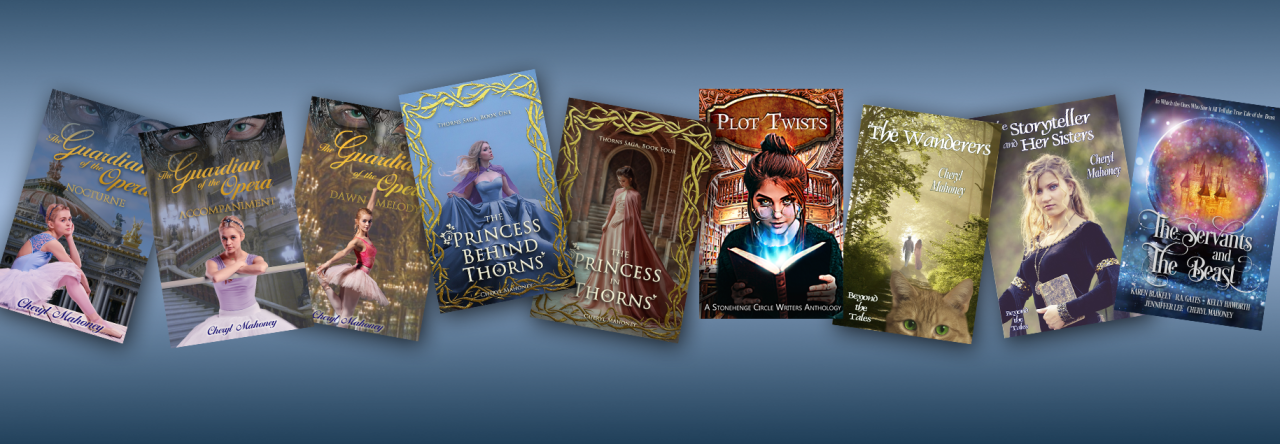
Don’t forget, you can win a signed copy of my fairy tale retelling, The Wanderers! Just put #WanderersGiveAway in your comment to enter.

Blog Hop: Objectively Good–or Bad

book blogger hopThis week’s Book Blogger Hop question is a very BIG one: To you, what qualifies a book as good or bad? Are some books objectively better than others, or is it purely a matter of opinion?

I don’t think this one can really be treated as an either/or question.  There are some qualities of a book that, generally speaking, will make a book good or bad–but there will be exceptions to every rule, and there will be dissenting opinions on every book.

Trying to be as broad as possible, I would say that, for me, a good book requires characters who are complex and believable according to human nature; an avoidance of overt stereotypes, including (perhaps especially) gender stereotypes (although archetypes are completely acceptable); a plot that is both interesting and plausible; and writing that demonstrates a command of language and grammar and (at least a smidge) of the beauty of words.

So it follows that a bad book would have flat or implausible characters who may be stereotypes, a dull or impossible plot, and poor command of words.

But I already have a problem right there, because Edgar Rice Burroughs is one of my favorite authors, and he has completely flat, stereotyped characters more often than not (but he has thrilling plots and landscapes, and a beautiful way with words).  Like I said–exceptions to the rule.

It all gets much more wobbly though, because one person’s complex character will read flat to another; one reader will find a plot gripping while another finds it dull, while a third will say it’s full of implausibilities anyway; and gorgeous prose to one person will seem incredibly dense to another.  And this doesn’t even address the subject of whether a book has something profound to say, and whether it can say it alongside good plot and characters, or at the expense of those, and whether that choice matters (I say yes, many would say no).

Whew, it makes me wonder how I dare state public opinions on any books!  I think implicit in writing a book review is the understanding shared by reviewer and reader that this is my opinion, one I hope would be shared by the majority of the people who self-identify as interested in the same kind of stories I like.

And there, I think, I stop!  Would you like to take on this question? 🙂