 I think we all know I have kind of a thing about the Phantom of the Opera… I recently did a reread of Gaston Leroux’s original novel–and since I can never keep straight what was in Leroux compared to other versions, even the third time through felt in some ways like a new experience.
The basic story is the same across most versions, and Leroux set the original pattern. A masked man with a genius for music lives under the Paris Opera House. In the guise of the Angel of Music, he trains Christine Daae in singing. When Christine falls for Raoul, the handsome Viscomte de Chagny, the Phantom wreaks havoc in his jealousy.
Leroux was originally in French, so if you’re reading a translation I highly recommend Leonard Wolf’s. Really, I can’t stress this enough–I’ve read two versions, both “unabridged,” and Wolf’s somehow has significantly more detail and better writing.
It’s always been the characters that really fascinate me in any version of Phantom–and mostly it’s Erik, the Phantom, himself. Retellings in the last century have been on a nearly-consistent quest to make the Phantom a more sympathetic, romantic figure. In the original, however, he’s a complete raving madman. Truly, the man is unhinged. He has a violent temper and (probably) kills at least three people over the course of the book. I say “probably” because he denies it himself and we don’t actually see those moments, but I think his denial is a symptom of insanity, not innocence.
There’s nothing romantic about Leroux’s Phantom. However, he does garner a certain amount of sympathy–or perhaps I should say pity. I began feeling more sad for him when the Persian (a mysterious figure rarely appearing in films) took over the narration. That’s not because the Persian portrayed Erik sympathetically, but just the opposite. He’s the closest thing the Phantom has to a friend, and even the Persian still routinely refers to him as “the monster.” We also learn from the Perisan that Erik really believed Christine loved him; the Persian himself doesn’t believe it…because Erik is so ugly. Not because he’s a raving madman with violent tendencies–but because he’s so ugly. There’s something wrong in that.
The final scene, in which Erik tells the Persian about how he parted from Christine, is absolutely wrenching. And how can you not feel sad for a man whose mother always refused to kiss him? Susan Kay does wonderful, devastating things with the idea, but it’s there in Leroux too.
The Phantom as a violent madman casts Christine in a different light too. I’m not a Christine fan as a rule. Often she’s an idiot or decidedly callous. However, it occured to me rereading Leroux that Christine and the Phantom are sympathetic in inverse relation to each other. The more rational and likable the Phantom is, the more blameworthy Christine seems for any lies and betrayals, and for ultimately choosing Raoul. The more villainous the Phantom is, the more justifiable Christine’s actions are. In Leroux, she’s still an idiot at times, but is pretty much justifiable too.
As for Leroux’s Raoul–I have to say I find it downright amusing how frequently he weeps, faints, raves or goes into a sulk. I understand what Christine doesn’t see in Leroux’s Erik, but I don’t know what she sees in Leroux’s Raoul (his bank account, possibly…)
So much for characters. The other aspect that struck me most in the novel was the structure. So much of the story happens “off-screen.” Many of the most iconic moments, including Christine ripping off the Phantom’s mask and their final parting, are only conveyed in conversations after the fact. They’re almost detailed enough to be flashbacks–but aren’t really.
We get a lot of Raoul wandering about and wondering what’s going on with Christine. We get very little of the Phantom actually present in the story. I think Leroux is one of these classic writers who didn’t really know what he had created–or didn’t know quite what to do with it. Nearly everyone retelling it has realized that the most interesting one in the story is the Phantom, and has been skewing the story his direction ever since. Leroux…not so much.
Riding solely on its own merits, I have to say that I don’t think Leroux’s Phantom is all that great of a book. It pains me to say it. And I don’t think it’s a terrible book! But it’s middling at best. It’s far more interesting from a historical perspective, from the angle of “oh, that’s how Webber changed this” or “I love how Susan Kay took this one line and wrote six chapters from it.” For me, at the end of the day, I far prefer Webber’s and Susan Kay’s versions. But it is fascinating to see where they came from.
Other reviews:
ANZ LitLovers LitBlog
The Book Mine Set
In Which I Read Vintage Novels
Anyone else?
Buy it here: The Phantom of the Opera


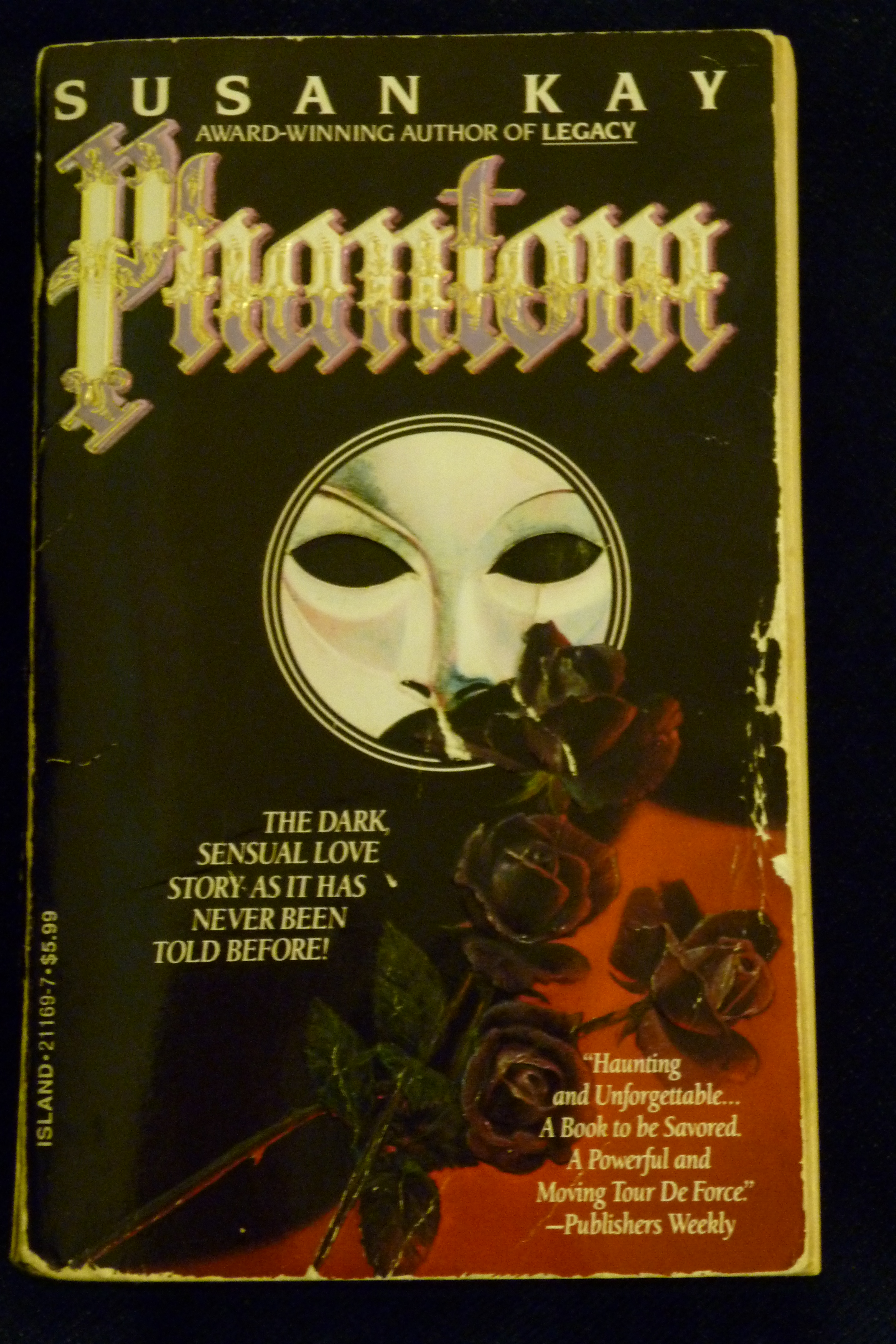
 . I read it once seven years ago, it completely blew me away, and it made such an impression that I always felt like it was too soon to reread–it was still there in my mind. And I think I was afraid that I couldn’t repeat the experience twice!


 Tales of the Marvelous