Fairy Tale Round-up: Sleeping Beauty

A look at another classic fairy tale this week: Sleeping Beauty.  Like Cinderella, it shows up in the Brothers Grimm and in Charles Perrault.  Grimm gives us a very brief story, “Little Briar Rose,” about a princess who is cursed at her christening, pricks her finger when she turns fifteen, and falls into an enchanted sleep for a hundred years, guarded by a hedge of thorns, until awoken by a prince.  Perrault gives essentially the same story in “The Sleeping Beauty in the Woods” with more detail, and an entire second act involving the prince’s evil ogre mother.  That part doesn’t seem to have filtered out quite so much!  But I have seen quite a few retellings of the first part of the story…
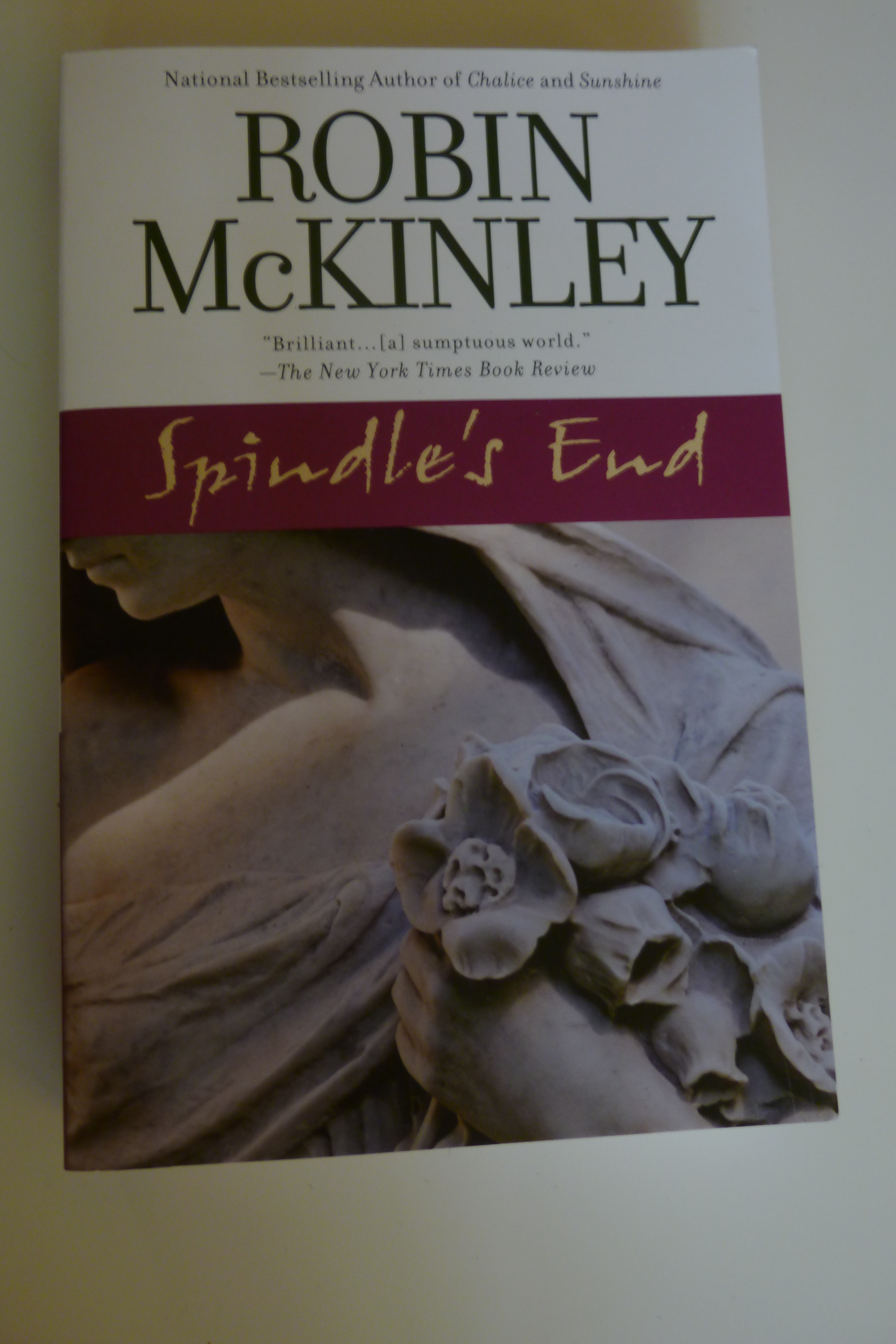
Spindle’s End by Robin McKinley is my favorite retelling.  McKinley’s princess, Rosie, has a life and a personality entirely separate from her curse.  She is defiantly herself in the face of all her christening gifts, and she deeply loves her adoptive family of fairies, who are hiding her from the curse.  I love the way McKinley plays with the elements of the fairy tale to make characters and a story that, in some ways, feel completely original.  I’m not wild about the romance, but it’s a wonderful book despite that.

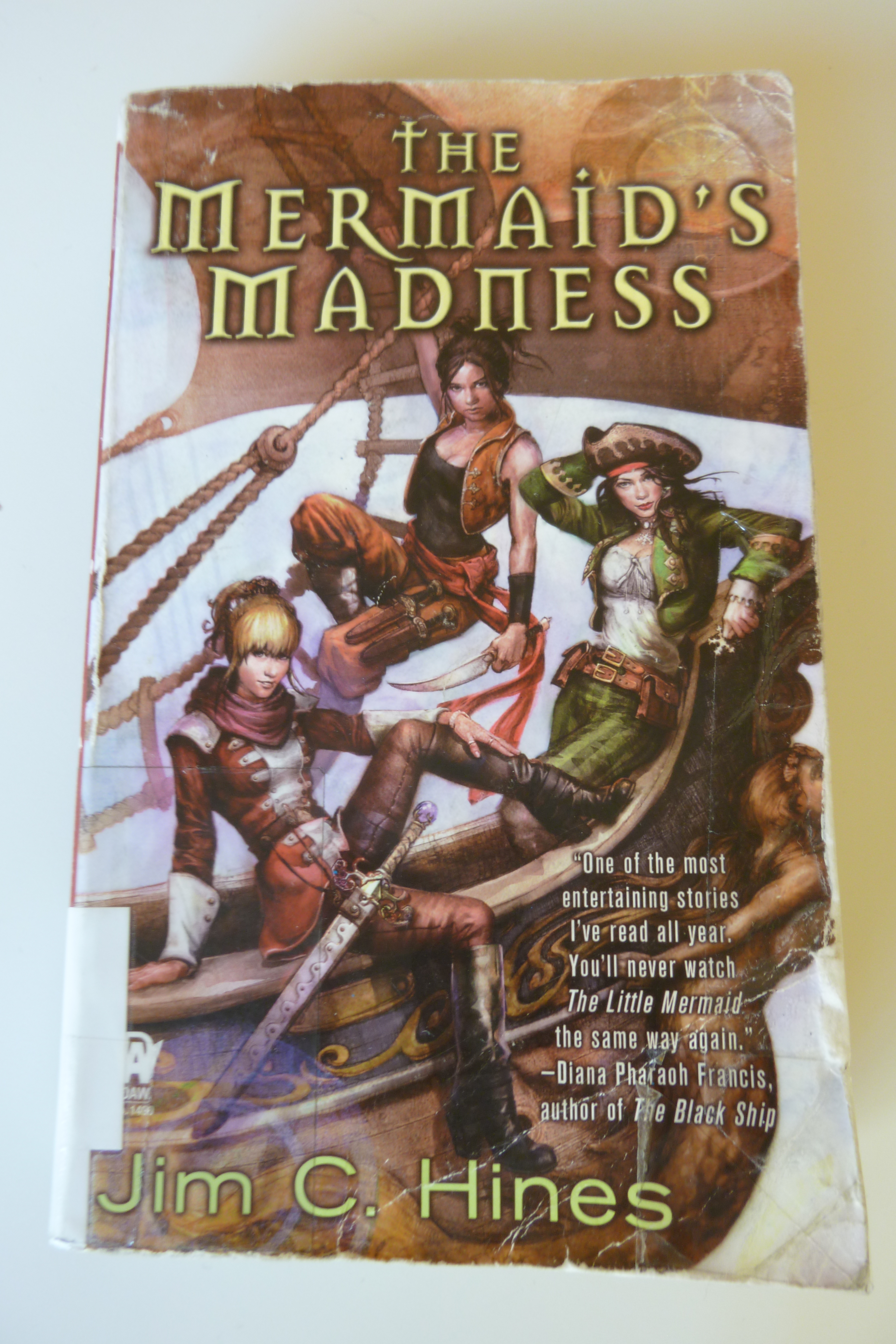
The Princess Series by Jim C. Hines features Sleeping Beauty as a major character.  His Sleeping Beauty, Talia, comes from a darker version of the story, from before the Brothers Grimm.  She does have fairy-given gifts, like grace and balance, which she uses to become a skilled warrior.  She joins up with Snow White and Cinderella, and together they’re a force to be reckoned with!  The third book in the series, Red Hood’s Revenge, while partially about Little Red Riding Hood, also delves much more into Talia’s past, and a new interpretation on the Sleeping Beauty story.
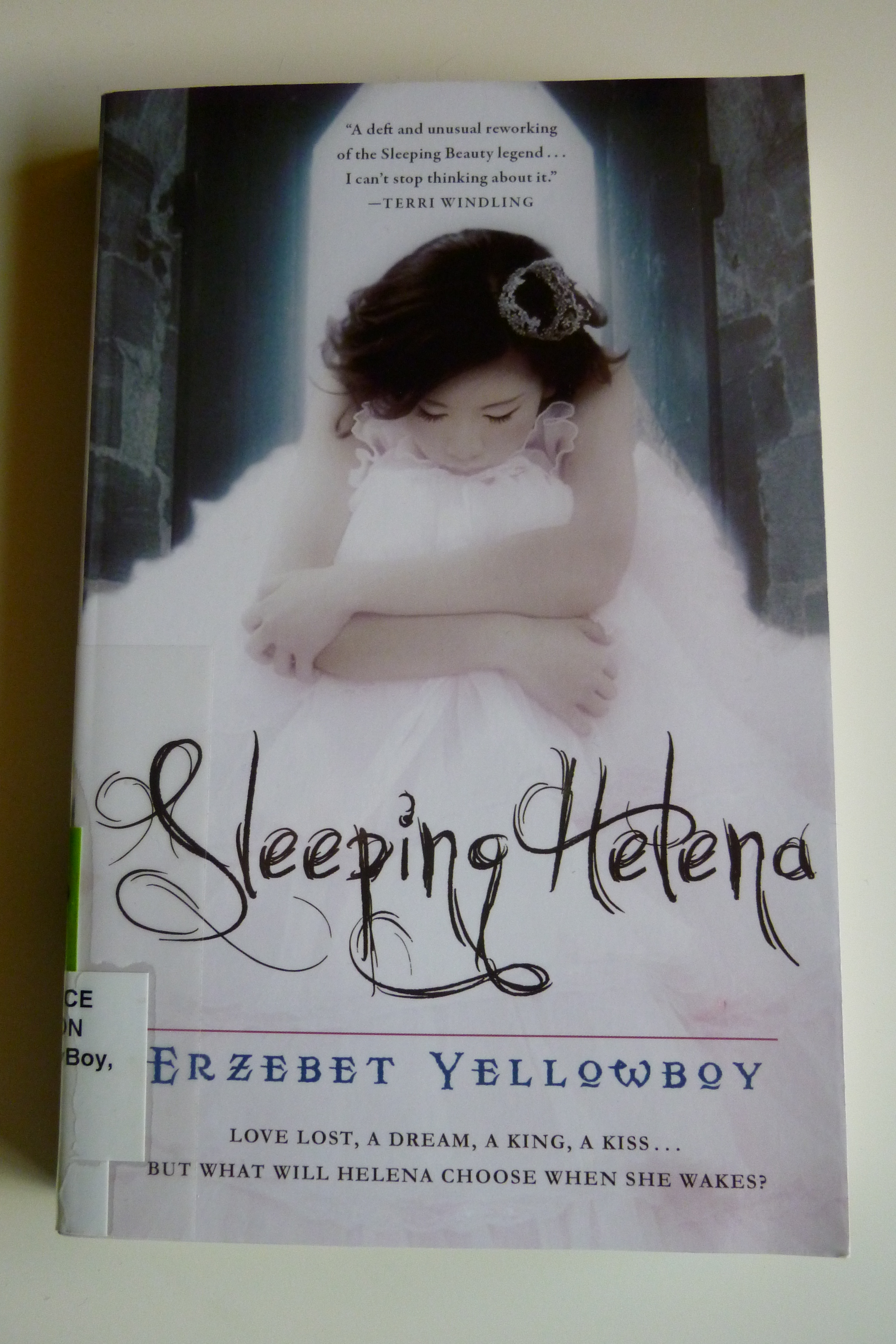
Sleeping Helena by Erzebot Yellowboy is an odd story about a family of sisters who enchant and then raise their niece, Helena.  The oddness comes in part from the fact that the aunts are all around 105 (and feel it) and partially from Helena’s own wild nature.  She’s fascinating, almost a slave to her christening gifts.  Some interesting concepts in this one, but also…well, odd.

The Wide-Awake Princess by E. D. Baker tells the story from Sleeping Beauty’s sister’s point of view.  Annie nullifies magic around her, so she’s unaffected when the rest of the castle falls asleep.  She goes questing through other fairy tales, looking for a prince to wake up her sister.  I LOVE the concept…but found the characters rather shallow and simple.  Probably a good one for younger readers, but don’t expect anything too deep.
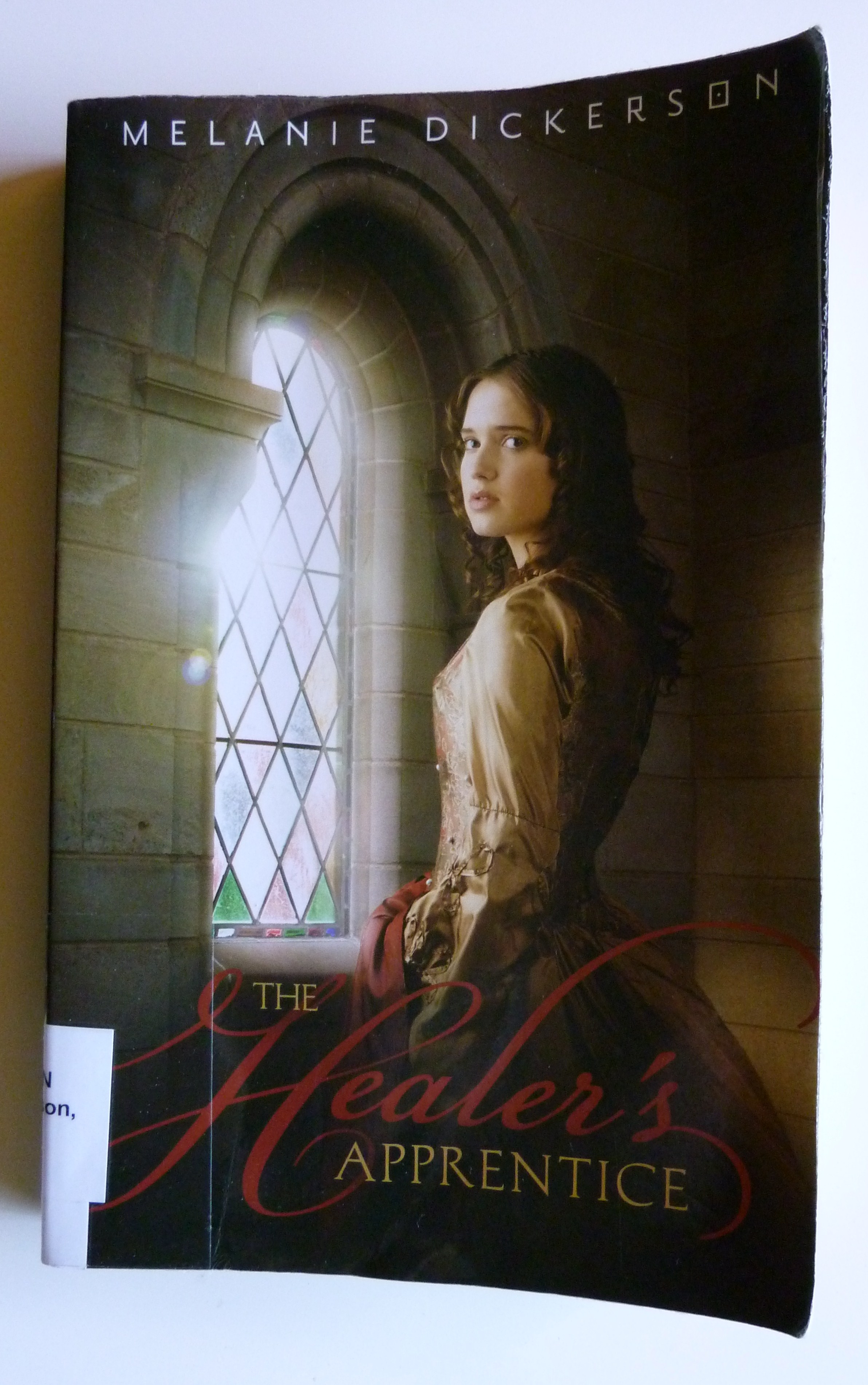
The Healer’s Apprentice by Melanie Dickerson is a very loose retelling.  Rose is the healer’s apprentice of the title, trying to decide if she really wants to be a healer, while torn between the two handsome sons of the local baron.  The Sleeping Beauty part comes in because there’s an evil magician stalking the older son’s betrothed with a curse.  The princess has been hidden away…and it’s pretty obvious right from the beginning who she’ll turn out to be.  It’s a good story in its own right, even if the Sleeping Beauty elements are more of a hint than a major focus.

The Sleeping Beauty by Mercedes Lackey, on the other hand, tosses around Sleeping Beauty elements with abandon.  This is a mash-up of Snow White and Sleeping Beauty, in a novel that’s very willing to poke at the original fairy tales and have fun with the conventions.  It’s book five of Lackey’s 500 Kingdoms series, but I somehow contrived to read it first and it didn’t seem to matter.

Disney’s Sleeping Beauty is one of my favorite classic Disney cartoons.  I like the song, “Once Upon a Dream,” and I like Prince Phillip.  I think it’s because he argues with his horse; it gives him a smidge more personality than most early Disney princes.  Although–in a very bizarre turn, Phillip doesn’t have a single line of dialogue after Rose falls asleep.  He’s in scenes, and people talk to him, but he doesn’t have a single line.  I really have to wonder about the decision process there…  But anyway, rather like Disney’s Cinderella (which is all about the mice) this one is also really about the “supporting” characters–the fairies.  They’re quite funny, and also a big inspiration for my own fairy tale world in my writing.  Watch one of their scenes some time: they are shooting sparkles out of their wands all the time.  Not just when they cast spells, but constantly.  Those women really ought to be awash in glitter…

I’m betting there are other versions of Sleeping Beauty I haven’t covered.  What are your favorites?

Fascinating Political Intrigue, Just Outside Tortall

Regular readers know that I’ve been re-reading my way through Tamora Pierce’s Tortall series for the last several months.  I’m finally down to the last two–the Tricksters series, a set of two books about political intrigue, revolution and of course some romance.

These books focus on Aly, the sixteen-year-old daughter of Alanna, heroine of Song of the Lioness.  Aly takes after her father more, George Cooper, former King of Thieves and current Assistant Spymaster to Tortall’s king.  Aly knows all about picking locks and picking apart codes, about hiding her thoughts and manipulating a situation.  She needs those skills when she’s captured by pirates and sold into slavery in a neighboring kingdom.  The stakes get higher when Kyprioth, the Trickster god, arrives to offer her a wager.

This series, unlike any of the others, is set almost entirely outside of Tortall, in the neighboring Copper Isles.  The isles’ natives, the raka, were conquered some three hundred years earlier, and have been living as slaves and second-class citizens ever since.  But there’s a prophecy that their royal line will one day be restored, and Aly finds herself in the midst of a brewing revolution.

This is maybe the most fascinating Tortall sub-series.  The intrigue and the plot twists and the thousand and one pieces Aly has to keep track of, especially in the second book, are all, well, fascinating.  It’s probably the most plot-driven series, and in some ways the most focused.

All that fascinating intrigue, however, also comes with some costs.  With a few exceptions, the characters aren’t as good.  The members of the Balitang family, which Aly is striving to protect, are all good, especially Dove, who’s wonderful.  And there’s Nawat, my favorite favorite favorite part of the book.  He’s a crow who turns into a man, and is just adorable and delightful and my favorite Pierce love interest (except George, because I also love George).  But there are also a lot of secondary characters who feel under-developed.  They’re fine for what they are, but when I compare them to secondary characters in other Pierce series, I feel like they could have been better.

As to Aly, similar to Keladry, I like her but don’t love her.  I also find her a bit less believable than the other heroines.  That’s two issues, so let me start with the first one.  Not loving her–I think she gets a poor introduction, and that first impression may be the biggest issue.  When the book opens she’s sixteen and frivolous and doesn’t get along with her mother.  That ought to be fine; plenty of sixteen-year-olds don’t get on with their mothers.  But her mother is Alanna the Lioness who I love and admire and spent years of my childhood wanting to be.  I admit, Alanna may be a very difficult mother, but if it comes to taking sides, I’m still never going to be on Aly’s side.  She is a really good, strong character and I enjoyed reading about her…but I don’t love her nearly as much as her mother.

As to believability, we meet Aly older than most of Pierce’s other heroines, and more established in her skills than any of them.  Usually, heroines go through a book or two (or three) of learning their abilities, of direct or indirect training, and only really come into their power by the end of the series.  Aly already knew everything she was going to know about spying and intrigue when we met her–and there we have a believability problem.  First, she is incredibly skillful for someone who has no actual experience.  It might be easier to believe if we had watched her learn all the theory, but we didn’t.  Second, George doesn’t want her to be in the field, and Alanna doesn’t want her to be a spy at all.  And yet…apparently George and Numair and Myles and all sorts of other intelligent characters we know from other books have been teaching her how to be a spy her whole life.  Some of it I’ll believe was meant to be games or more general skills…but George taught her how to overcome fear spells and Numair taught her how to create elaborate lies that no one could see through.  They taught her that level of skill, and didn’t expect her to use those skills?  Not quite consistent, that.

Still, despite a few issues, it’s a fascinating, intriguing, exciting, suspenseful book.  There are some wonderful twists, occasional humor, and a handful of excellent characters.  And there’s Nawat.  It’s all worth it just for Nawat, and fortunately he’s not the only bright spot of the book anyway!  I’ve also been re-reading Tortall and Other Lands, Pierce’s collection of short stories, reading the stories relevant to each series as I come to it.  One of the best is a story from Nawat’s point of view, about a year after the Tricksters series closes.  Definitely worth reading as well!

And that brings me to the end of my Pierce reading–it was a wonderful adventure, and I have corrected a great wrong in my world, that it had been ten years since I read some of these much beloved books.  If you’d like to read my other reviews, here are the links:

Song of the Lioness
The Immortals
Protector of the Small
Beka Cooper: Terrier, Bloodhound, Mastiff
Tortall and Other Lands

Author’s Site: http://tamorapierce.com/

Other reviews:
Reviews from the Hammock: Trickster’s Choice and Trickster’s Queen
Ems Reviews
Emma Michaels
Yours?

Twelve Princesses, Plus One

What if the twelve dancing princesses had another sister?  That’s the premise of The Thirteenth Princess by Diane Zahler, retelling the fairy tale of the twelve dancing princesses from the point of view of their youngest sister, Zita.

This story starts out by tackling the question of why the king and queen opted to have quite so many children.  The king desperately wanted a son (as kings usually do, in medieval-type kingdoms), but instead, daughter after daughter was born.  Finally, the queen died giving birth to the thirteenth princess, Zita.  The king blames her for the death of his wife, and the end of his hopes to have a son, and banishes her to live in the kitchens as a servant.  As she gets older, she finds ways to secretly spend time with her sisters, and when they became mysteriously ill (and their dancing slippers keep mysteriously wearing out), Zita and her friends have to investigate to save the princesses.

I have mixed feelings about this one.  It’s a cute story about a spunky girl, and it is nice to see a girl with close ties to the princesses rescue them, instead of a strange man coming in to save the day, as happens in the original. There’s some good description, especially about the damp, moldy castle–because when you think about it, a castle built over a lake probably would be moldy!

Somehow this just didn’t quite grab me, though.  I don’t think it’s only that I’ve read so many versions of the fairy tale.  There really are some issues here.  For one, while the essential concept of the youngest, semi-banished princess is interesting, it also felt contrived.  It’s hard to imagine a king actually doing this, or having his court go along without batting an eye.  The king has twelve daughters who live like, well, princesses, and one who’s banished to the kitchen.  It almost feels like a story about child neglect, with a parent who targets just one child, while a lot of good people watch this happening and don’t do anything–everyone in the castle knows what’s going on, and no one does anything.  I don’t think Zahler was trying to write social commentary, but the situation creates a strange undertone to the story.  Zita isn’t being abused, but she’s still in a dramatically different situation than her sisters, while right alongside them.  It is, at the very least, incredibly socially awkward, to an extent that I don’t feel like Zahler really dealt with.

Zita’s separation from her sisters and status as a servant are essential to the plot, but I wish Zahler had found a different way to set that up.  Create a question about her parentage (though that could be dicey in a Juvenile book), or say that her identity had to be hidden, or something…

The focus on Zita’s story also means that we spend less time on the twelve older princesses.  I’ve already seen authors with longer, more-focused books stumble over dealing with a cast of twelve princesses.  They’re often under-developed as characters, but this book is one of the worst for that.  Arguably, they were never meant to be developed, since the book is about Zita, but it’s about Zita’s relationship with her sisters, and the major conflict of the plot is how to save them…so for the book to work, we have to care about them.  Other than in a vague, general way, I don’t.  They’re perfectly nice girls, but I don’t care about them as individuals.

Zahler doesn’t help matters by giving all the princesses A names–Aurelia and Alanna and…I can’t remember any of the others.  I’m on shaky ground criticizing that decision, since when I wrote a retelling, I gave my princesses A names too (but mine all have nicknames and are rarely called by their identical-sounding A names).  The only princess who’s developed at all is Aurelia, the oldest.  The others occasionally get a comment in the narration to say that one likes to read or another is the prettiest or whatever, but none of that really goes anywhere.  I only remember there was one named Alanna because of Tamora Pierce, and I don’t remember anything about that particular princess anyway.

On the other hand, Zita is a pretty good character, marked by strong loyalty to her sisters, and she’s in an interesting place trying to figure out her role and her relationship to her family.  I don’t feel like that was explored quite as much as I’d like, but there was at least some good character development there.  Her friends are Breckin the stable boy and Babette, a witch they meet out in the woods.  They’re both reasonably good characters, if somewhat straight-forward in their friendship for Zita and their desire to help the princesses.

I think that might be the key to my reservations about this book.  There are themes and characters that could have been more complex, and weren’t.  What IS there is good, fun, interesting…but the book feels like it could have been more.  I’m sure there are those who would tell me that this is a kids’ book, so how complex does it need to be…but I’ve ranted before about how deep kids’ books can be.  This book is set up to be about parental neglect, sibling rivalry, discrimination (against magic-doers), thwarted love, and class divisions…but most of that isn’t really dealt with.

It’s a fun little story, and if you want a light, quick read, it’s a good one.  But don’t expect it to be more, and if you only have time for one novel about the Twelve Dancing Princesses, there are others I’d recommend instead.

Author’s Site: http://www.dianezahler.com/

Other reviews:
The Bookwyrm’s Hoard
Debz Bookshelf
Eva’s Book Addiction
Anyone else?

Fairy Tale Round-up: Rumpelstiltskin

Rumpelstiltskin has been gathering many fans in recent days, with his role in Once Upon a Time, so I thought I’d talk about that story this week.  The original fairy tale is in the Brothers Grimm, and like many fairy tales, doesn’t make a whole lot of sense.

The story is about a strange little man who spins straw into gold for a miller’s daughter, so that she can marry the king (who has shown himself to be a real catch by threatening to kill her if she doesn’t spin straw into gold).  The little man demands the girl’s first-born child in payment, but when he comes to collect he agrees to a second bargain, to relinquish his claim if the girl can guess his name.  Exactly why anyone is doing most of what they do in this story…well, that’s mostly a mystery.  And that makes it a good one for retellings.

In the Once Upon a Time TV show, Rumpelstiltskin has been one of the most fascinating and complex characters.  He spins straw into gold, but he also has other fantastic magical powers.  He appears as a kind of devil figure, who will grant your dearest wish…for a price.  A series of episodes have also delved into his past.  What we haven’t seen, actually, is a direct retelling of his original story!  Maybe next season.

Spinners by Donna Jo Napoli and Richard Tchen casts Rumpelstiltskin as an ordinary man who crippled himself at a spinning wheel, trying to win the girl he loves.  The girl instead marries the miller, and has a daughter who proves to be a master spinner.  And one day she catches the eye of the king…  I loved the way this novel explored the characters, giving them greater depth and motivations.  I really liked it…up until the end, and then I was disappointed.  I don’t want to give it all away, but I will say I was hoping for a happier ending than I ended up getting.

Straw Into Gold by Gary D. Schmidt is set ten years after the usual story of Rumpelstiltskin ended, but with a twist–the Queen didn’t guess Rumpelstiltskin’s name, and lost her child to him.  The protagonist is Tousle, who has been raised by a mysterious little man who spins.  Tousle may or may not be the missing prince.  I love the concept of this, but I think it would have been better if it had more clearly told the original Rumpelstiltskin story, before getting to the results.  There are a lot of complicated conspiracy things going on, and some of the characters make questionable choices which are supposed to be secretly good…but I didn’t know the characters well enough to quite believe that.

The Rumpelstiltskin Problem by Vivan Vande Velde casts Rumpelstiltskin as the villain–and the hero–and maybe he’s just an invention of the miller’s daughter.  Vivian Vande Velde looks at fairy tales the same way I do.  She asks why people are doing what they’re doing, and points out the parts that don’t even remotely add up, and wants to know what the logic of it all is.  This book has a wonderful introduction analyzing “Rumpelstiltskin,” and then she wrote six short stories taking the story in all different ways.  It’s a wonderful collection of similar-but-oh-so-different stories, and shows in a single volume how much you can do with a fairy tale.

When Princesses Take Over the Fairy Tale

I’ve read many (many) fairy tale retellings, but rarely have I come across fairy tale crossovers, mixing characters from more than one tale.  That’s exactly the premise of Jim C. Hines’ Princess Series, of which I just read the second one for the Once Upon a Time Challenge.  This also goes towards my Finishing the Series challenge (two more books in this series to go!)  Since I hate to start out by reviewing Book Two, I’ll just tell you a bit about both, and try for a minimum of spoilers for the first one.

The Princess series books (so far, at least) are about adventures after the traditional fairy tale ends.  The main character is Danielle, also known as Cinderella.  The first book, The Stepsister Scheme, opens with Danielle recently married to her handsome prince, Armand.  Her stepfamily, however, is not ready to accept defeat, as becomes clear when stepsister Charlotte attacks Danielle, and kidnaps Armand.  Fortunately, Danielle finds valuable allies ready to help her rescue her prince.  Her new mother-in-law, Queen Beatrice, likes to take princesses-in-need under her wing, and has a kind of secret service made up of Snow White, a powerful sorceress (she doesn’t like the term witch) and Talia (Sleeping Beauty), who has used her fairy-given gift of grace to become a skilled fighter.  Together, the princessess set off for the realm of fairies to rescue the prince.

Book Two, The Mermaid’s Madness, brings in another fairy tale–and this is definitely not Disney’s version.  In the original story, the little mermaid can’t marry her prince, and instead sacrifices herself to save him.  Hines’ mermaid killed her prince, and went mad as a consequence.  With Queen Beatrice mortally wounded and a war brewing between humans and merfolk, the princesses have to find a way to capture the mermaid, the only one with power to save the queen.

There’s so much to enjoy about these books.  I love the interpretation on the princesses.  Their abilities are grounded in the original fairy tales (Talia gets skills from her fairy gifts, Snow White’s magic revolves around mirrors), but reinterpreted to make the girls so much stronger and more powerful than they ever were in the originals.  I love the gender reversal of the first book–not only are these princesses not sitting around waiting to be rescued, they’re setting out to rescue the prince!  When I was around ten, I started writing a short story about a knight who was rescued by a girl.  The story never went very far, but I feel like it was motivated by some of the same impulses that make me love this series.

The girls are complex characters as well.  We get bits and pieces of backstory for them all, and it becomes clear that these girls didn’t live Disney movies, and maybe not even the Brothers Grimm stories.  Talia, at least, is coming from an even older and much darker version of Sleeping Beauty.  They have tragedies and they have complexities.  But there’s also humor in here too.  The relationship between the three girls is often a lot of fun, and it’s nice to see a story focusing on female friendship.

Much as I enjoy that, it also brings me to the one thing I don’t like as well.  I feel like Armand is under-developed as a character.  With Danielle as the lead (though occasionally Snow or Talia will narrate as well), I feel like her husband should have a bigger part!  He’s in it just enough for me to notice that he’s not in it enough, if that makes sense.  I love the focus on the girls, but I’d like a little more balance to give Armand and Danielle’s relationship some time too.

That’s a minor complaint about an excellent series, though.  If you like fairy tales and strong heroines, these are the books to read.  They’re from the grown-up section (is there a proper term for that?) and I’d probably classify them as appropriate for older YA, because of some of the darker themes.  I’d recommend starting with the first book, as a better way to get to know the characters, though the plots are independent.  I think I enjoyed the second one a bit more, but more because I was getting to know the characters better than because it was an inherently better book.  They’re both great!

Author’s Site: http://www.jimchines.com/

Other reviews:
Shiny Book Review
Bookshop Talk
Bookish
Yours?