The Quintessential Diana Wynne Jones Book

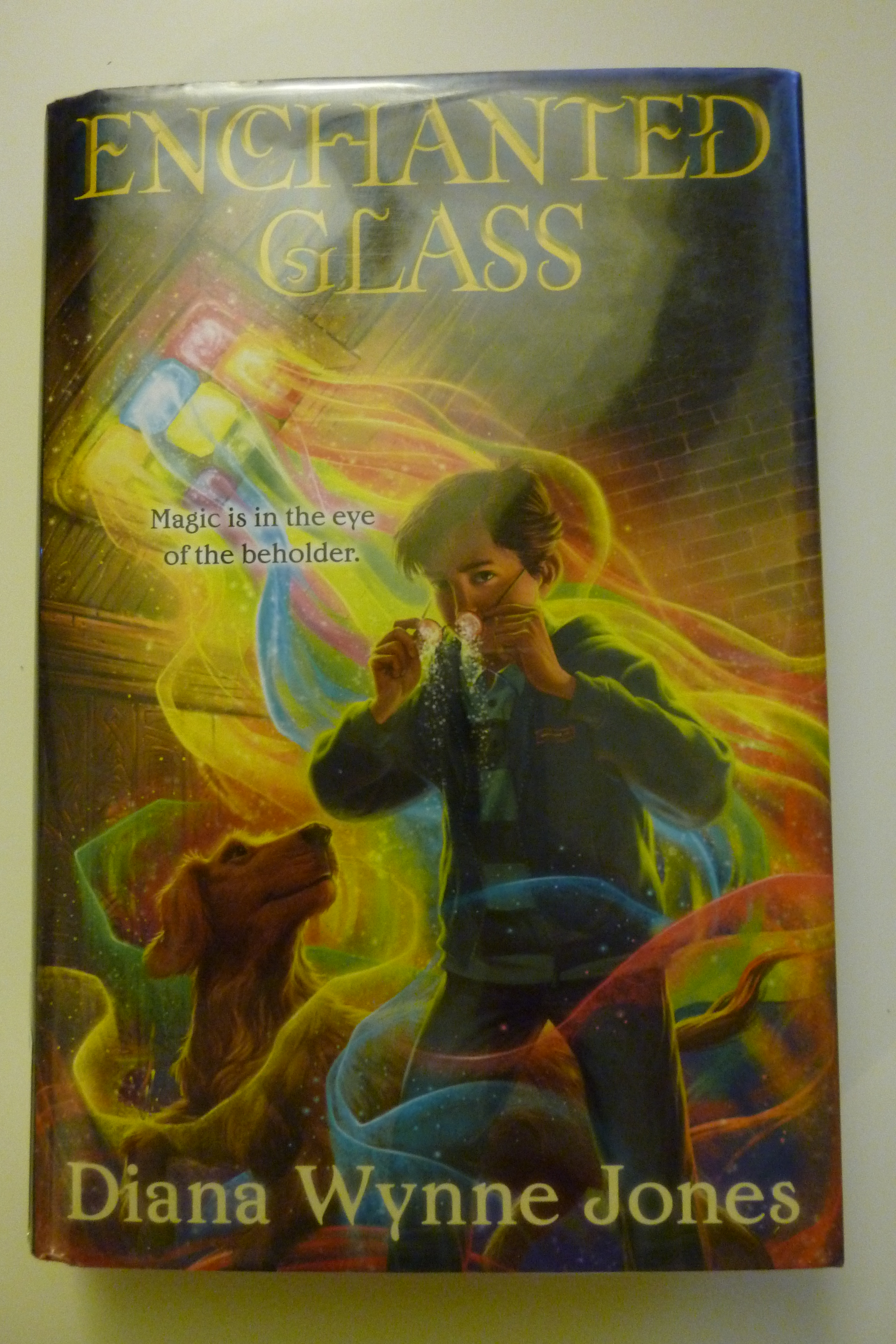
I loved reading Enchanted Glass by Diana Wynne Jones.  It was a delightful book, especially in its Diana Wynne Jones-ness.  I’ve been trying to think how to explain it.  It’s original, and new, and independent of her other books.  But so many elements I expect from her were here.

There was the earnest young boy, presently displaced, possessed of powerful magic.  There was a well-meaning though absent-minded man, also possessed of powerful magic, who holds a position of responsibility in the magical world.  There was a full cast of quirky supporting characters.  Many characters were somehow paired with others (I don’t mean romantically–in a more thematic sense).  There’s a mysterious magical threat, involving another world.  And it’s all set in an English village amidst rolling hills.

It’s like the quintessential Diana Wynne Jones book.  It all comes together to create a charming and, for fans, familiar atmosphere, while being a new book.  It makes it all rather poignant to know it was the last one published during her lifetime.

The story centers around Aidan, the earnest young boy, and Andrew, the well-meaning, absent-minded man.  Aidan is an orphan, fleeing from mysterious, magical Stalkers.  He ends up at Andrew’s big old house in the country, where Andrew is trying to figure out how to take over the magical reins from his recently-deceased grandfather.  They have adventures with magic, the Stalkers, a village fair, and an enemy neighbor with his own magic.  Also, there’s a giant, a werewolf, bizarrely large vegetables, and colored glass windows they’re sure have magic somehow.

The book is lovely–though not totally without flaws.  The point of view jumps haphazardly between Andrew and Aidan, which mixed me up occasionally.  It doesn’t help that their names have similar letters in them, making them run together sometimes so I lost track of who was thinking.

I also had a little trouble with the state of magic in this world.  Most of the characters seem to accept magic as perfectly natural–one character even mentions it when convincing Andrew to hire her as a secretary, and refers to it much the way she might refer to ability with typing.  However, I think most of the characters accept magic because they live in a particular place where magic is strong, as there are some hints that most of the rest of the world doesn’t believe in magic.  The complicated part is that Andrew has managed to forget most of what his grandfather taught him about magic.  When there’s a host of characters who think magic is ordinary, coupled with a main character who accepts magic but can’t remember much about it, I don’t know whether to view magic as ordinary or mysterious.

But both these problems, the magic and the point of view, seem to improve as the book goes on, and neither is serious enough at any point to spoil the book.  Definitely a high recommendation here.

Author’s site: http://www.dianawynnejones.com and http://www.leemac.freeserve.co.uk/
Revisiting Diana Wynne Jones

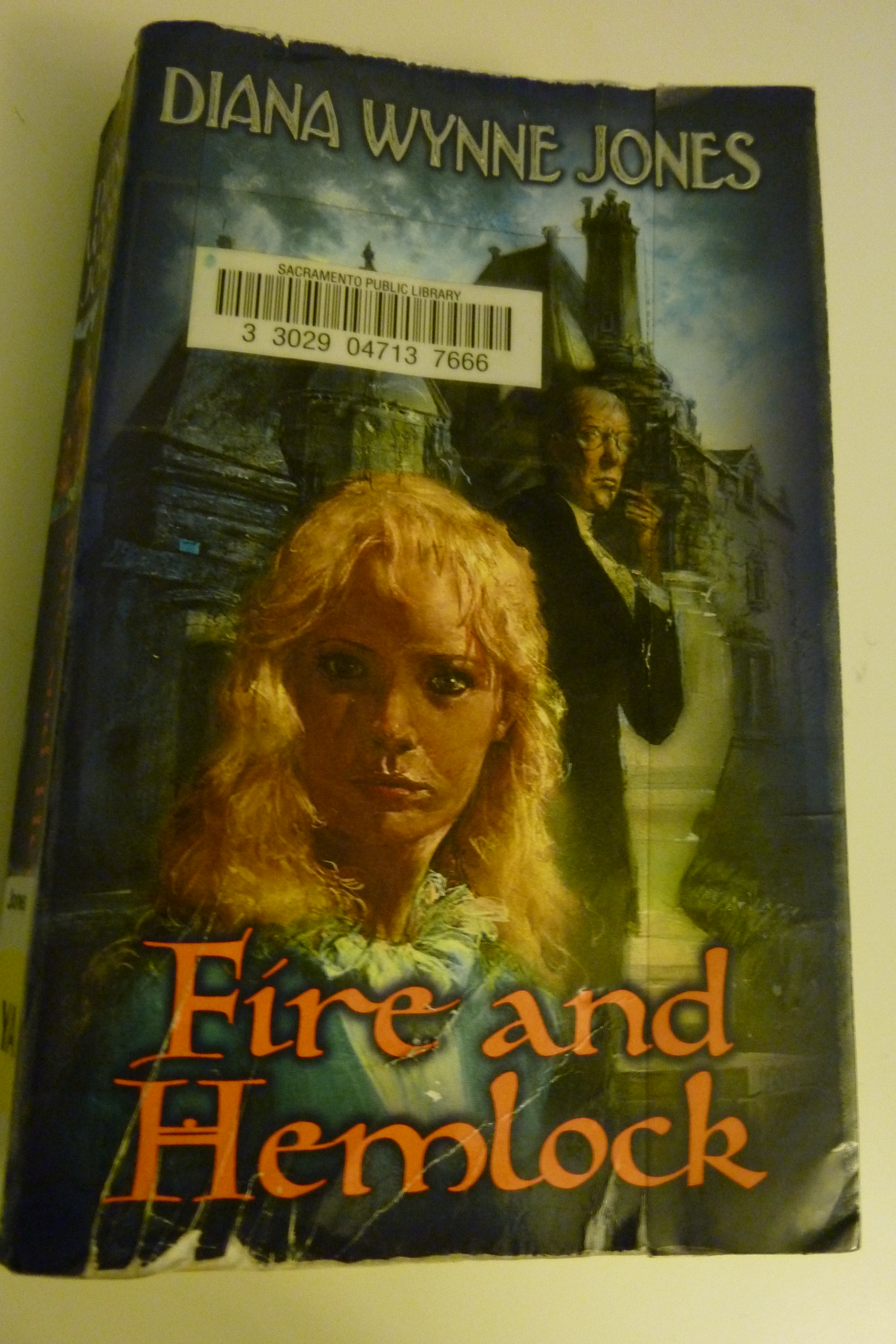
After Diana Wynne Jones’ death a few weeks ago, I–like many people–wanted to go back and read some of her work.  I decided to revisit Fire and Hemlock.  This was a reread, and I selected it in part because I had some trouble with it the first time around–but thought at the time that I might like it better on a second read.

This book is a bit difficult to describe without giving things away.  It begins with Polly, who is 19 and looking at a book of fantasy stories.  One of them, a story about a man with two sets of memories, triggers a series of hidden memories for her.  The book jumps back to when Polly was ten, and moves forward exploring these hidden memories.  They start when Polly gate-crashed a funeral at the mysterious Hunsdon House next door to her grandmother’s, and met Tom Lynn.

At this point I ought to describe Tom; this is also where I had trouble the first read-through.  Ten-year-old Polly views Tom as much, much older than her, and Diana aids and abets this impression for the reader.  I think he’s described as “stooped” at some point, he definitely is described as having an “elderly hairstyle,” and he’s a recently-divorced cello player.  None of this says “young man” to me.  The divorce alone would probably make me assume thirties at least, and everything else had me putting him as minimum mid-forties, and only the relatively young-sounding ex-wife would keep me from assuming he was much older.

I’m about to reveal what was probably supposed to be a twist–so I’m sorry for a spoiler, but it was a twist that thoroughly derailed me, and I would’ve done better had it been spoiled.  Hundreds of pages in, we find out that Polly as a child was a very poor judge of age, and Tom was much younger than she led us to believe.  This becomes important to the ending, which is why I had such trouble the first time.  This time I really tried to implant in my mental image the idea that he was young, to the point that I was mentally chanting “he’s twenty, he’s twenty” on occasion.  Later evidence in the book suggests he was probably early twenties.  So if you read this, keep that in mind–it might help.  And pay no attention to the cover, it has a horrible depiction of Tom.

Back to the plot.  Tom and Polly, despite their not-quite-as-big-as-I-thought age difference, become fast friends, making up stories about their alter ego selves who are heroes in training.  It all becomes more fantastical when the stories they make up begin to come true.  Meanwhile, the Leroys, who own Hunsdon House and include Tom’s ex-wife, have some kind of sinister hold on Tom, and continually warn Polly away.  Nineteen-year-old Polly has to solve the mystery, and determine what happened four years previously that changed, not only her memory, but apparently actual events.

I’m not really sure what kind of review this is.  Because I really enjoyed the book.  There’s so much in here that’s wonderful–characters, mystery, fantastic adventures, humor.  And yet…the end doesn’t quite pull together for me.  The basic mystery is cleared up, there’s essential resolution, but I feel like an extra twenty pages explaining what just happened would be very helpful.  I love Diana Wynne Jones’ books–love, love, love them–but every so often one of them is more convoluted and confusing than the others.

So I guess it’s a mixed review.  I recommend it…but if you try reading it, remember–he’s young!

Author’s Site: http://www.dianawynnejones.com/dwjflash.htm

And official fansite: http://www.leemac.freeserve.co.uk/

RIP Diana Wynne Jones

I saw yesterday on a blog I follow that Diana Wynne Jones died this past weekend.  For those familiar with children’s literature, you probably know the name already.  For those not, I’ve heard her described as “the queen of British children’s fantasy.”  She was an incredible and prolific author–I’ve read more than twenty of her books, and they are truly excellent.  If I’m browsing at the library and not turning up much, I’ll often wander over to her shelf.  There aren’t many authors I do that with, and she’s probably the most reliable that I’ll find something sitting there I want to take home with me.  She was still publishing–with one more due out later in this year–and it’s a wrench to realize there will be no more new books.  She’s an author I will definitely miss.

By weird coincidence, I already had a review of one of her books planned for this week.  It now seems especially appropriate.

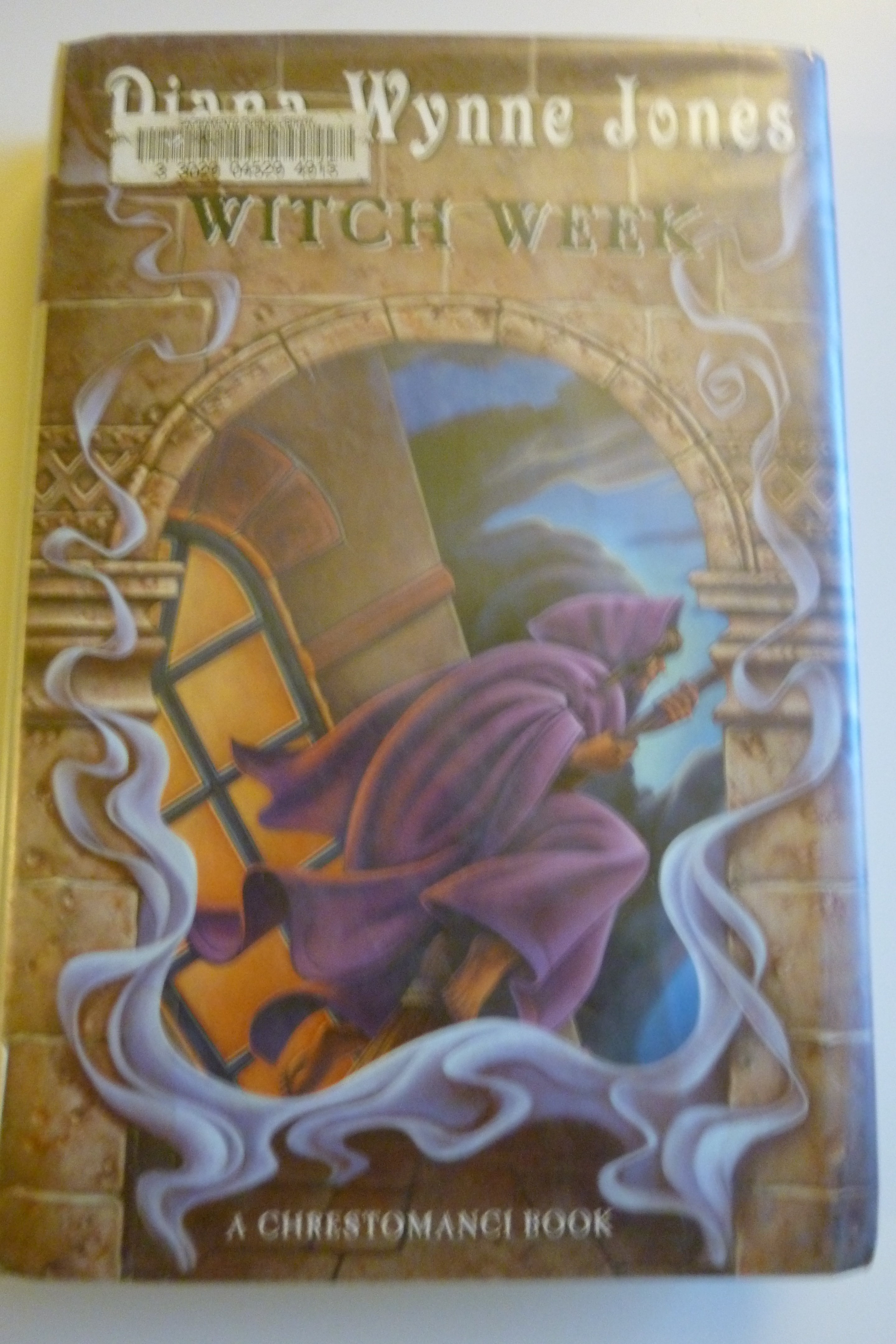
Witch Week was the first book I ever read by Diana Wynne Jones, and I read it long before I discovered her as an author.  I read it when I was young enough to not know who Guy Fawkes was when he came up (more reading of British classics solved that gap in my knowledge!)  Years later I happened across another Diana Wynne Jones book–though now I can’t remember which–and started searching for her others, thinking I had found a wonderful new author.  And she is wonderful–but not so new, as I discovered that I had already read Witch Week.  Which only leaves me to wonder why I hadn’t looked for more of her books earlier!

Witch Week is set in a world very like our own, except that some people have magic–and witches are routinely burned at the stake.  The story occurs at a boarding school, where an accusation has been made that someone in a class is a witch.

Laying out the plot makes it sound all very dark and grim, like The Crucible, perhaps.  But that’s not how it is at all.  There are a few serious moments, but the book is a comedy.  The boarding school does create a more bleak backdrop than most of Diana Wynne Jones’ books (which tend to be set in a quaint village or a lordly manor or some truly fantastical other world), but the plot is predominantly funny.

Various students discover throughout the book that they have magic, but that doesn’t mean they’re experts at using their new powers.  Riding a broomstick involves a lot of scrambling to stay on it, and arguments with the broom about where to go.  Casting a spell to summon a missing pair of shoes brings every shoe in the school raining down–thousands and thousands of shoes.  Using magic usually has funny results–and the suspense is kept up because it could have tragic results too.

Witch Week is part of the Crestomanci series, about Crestomanci the nine-lived enchanter, who keeps magic in order across many worlds.  It’s more independent than most of the books in the series though–he only has a supporting role.  And obviously I never realized it was a series the first time I read it.

Witch Week is not a bad place to start with Diana Wynne Jones.  Charmed Life is actually the first of the Crestomanci series, so you might be better served starting there.  Or you could begin with one of her independent ones–a particular favorite of mine is A Tale of Time City.  But whatever you pick up, you’re not likely to go too far wrong.  In all those books I’ve read by her, since the days when I just read Witch Week, though of course I liked some better than others, I think I can pretty well recommend them all.

Author’s site: http://www.dianawynnejones.com/dwjflash.htm

Official fansite: http://www.leemac.freeserve.co.uk/