Movie Review: Boyhood

I was intrigued by Boyhood when I heard about in theaters, but decided to wait for the DVD–and now I’ve finally watched it, and returned the DVD to the library for the other 400 people waiting for it!  You’ve probably heard the buzz about this movie, especially since it won at the Golden Globes.  I found it interesting…and yet it ultimately didn’t quite work for me.

I realized as I started watching that I didn’t know anything about the plot.  Everything I’d heard about the movie was about the very unusual filming plan.  The director (Richard Linklater) spent 12 years on this movie, coming back to film the same actors each year so that the characters, especially the boy of the title, can age throughout the movie.  After watching, I realized there was very little word about the plot because there’s very little plot.  Mostly it’s about a boy (and his sister) growing up.

The back of the DVD box described this as the “epic journey” of a boy reaching adulthood, which I think gets it completely wrong.  Half the point is that it’s not an epic journey.  It’s an ordinary boy with an ordinary life captured on screen over 12 years.  That’s not to say that there’s no drama in the circumstances: when the movie opens, Mason and his sister Samantha are being raised by their single mom (Patricia Arquette), with an absentee father (Ethan Hawke) who drifts in and out over the years.  Their mother gets married (and divorced) twice more, and Mason goes through his own romantic ups and downs once he hits high school.  But the plot is not epic, and is still secondary to the simple passage of time and the development of the characters.

Which brings me to what was both the best and most problematic part of the movie for me.  I love this concept.  I mean, LOVE it.  And it was interesting to watch, and I absolutely appreciate the movie as an artistic accomplishment.  I think Linklater successfully made the movie he was trying to make, and the aging of all the characters (not just Mason) is fascinating and so different from anything I’ve seen before.

But.  The whole point is that we’re following the characters, and especially Mason, right?  And there we come to what, for me, was the absolutely impossible to overcome flaw of the film.  I didn’t like Mason.  Continue reading “Movie Review: Boyhood”
Movie Review: Muppet Treasure Island

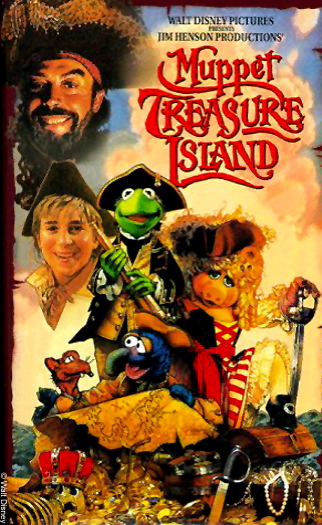
Muppet Treasure IslandThere was a year or two in high school when I knew many of the songs from Muppet Treasure Island by heart—and my group of friends may have broken into spontaneous singing on a semi-regular basis. I hadn’t watched the movie in years, but a recent re-watch was as delightful as I remembered. I may have been helped along by the memory of many in-jokes and oft-quoted lines, but I can recommend this even to those without that advantage!

The movie follows the essential story of Stevenson’s Treasure Island. Young Jim Hawkins obtains a treasure map and sets out on a sea voyage to look for buried treasure on a distant island. Along the way he meets ship’s cook Long John Silver, who soon is at the heart of a pirate mutiny. The Muppets’ chief variations are to send Jim to sea with his two friends, Gonzo and Rizzo, and of course to cast Muppet characters in key roles: Jim and Long John are human, but Kermit plays the ship’s captain, Miss Piggy is castaway Benjamina Gunn, and that crew of pirates has some very strange members (my favorites? Old Tom, Very Old Tom, and Dead Tom).

This movie is a long parade of funny moments and silly songs. There are heaps of one-liners, those pirate shanties are still pretty great, and Kermit has the most entertaining facial expressions you’re ever likely to see on a frog. You have to like your humor pretty absurd, but if you do this is enormous fun. Continue reading “Movie Review: Muppet Treasure Island”

Movie Review: Fantasia 2000

I remember very distinctly being disappointed by Fantasia as a kid.  There was so little story to it!  I had a much vaguer impression that I had liked Fantasia 2000 better, and when I noticed it streaming on Netflix, I decided to investigate.  At worst, I figured I could fast-forward any segments I didn’t like–and happily, I ended up watching everything!

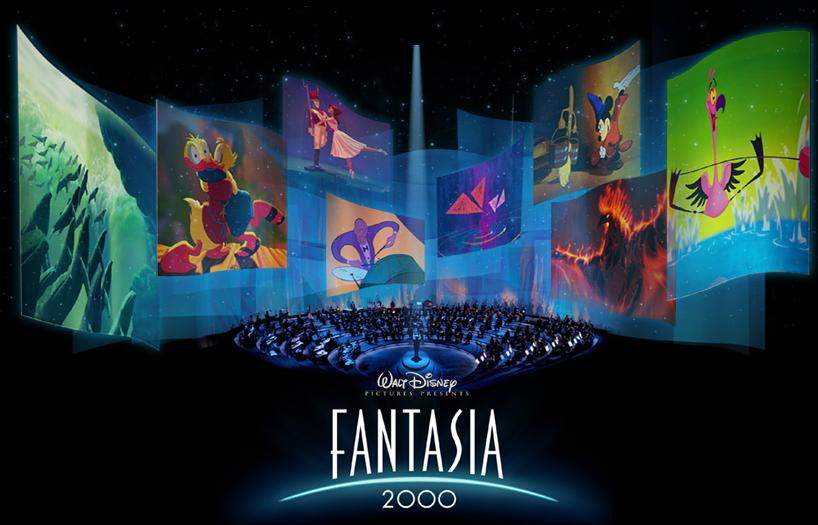
fantasia2000Perhaps I wasn’t the only one who felt Fantasia lacked story, because Fantasia 2000 definitely went in that direction.  Like the first film, the concept is animation set to classical music, except this one is far more plot-driven.  The opening piece is abstract set to Beethoven, but it’s at least very pretty abstract…and then it’s stories all the way through. Continue reading “Movie Review: Fantasia 2000”

Movie Review: Arsenic and Old Lace

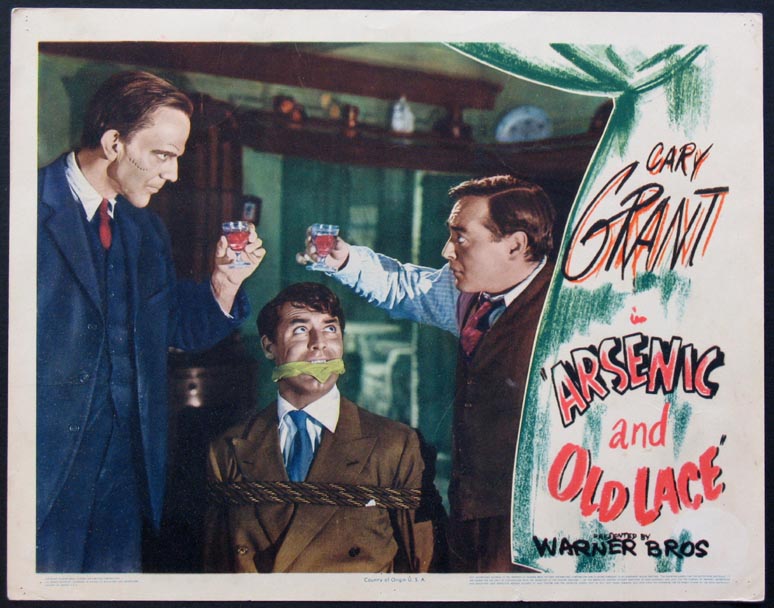
Arsenic and Old Lace 2I spent New Year’s weekend watching favorite movies, and among them, I dusted off my copy of Arsenic and Old Lace, starring the wonderful Cary Grant, directed by the equally wonderful Frank Capra.

Cary Grant plays Mortimer Brewster, whose two aunts are simply the kindest, sweetest, loveliest little old ladies you could ever want to meet. They collect toys for children, they give a hot meal to anyone who needs it, and they poison lonely old men as a charity, by putting arsenic in elderberry wine. They just want to give the poor dears peace, you see. Mortimer is stunned to find a dead body in the windowseat, and tries valiantly to explain to his aunts that this is not a nice thing to do. Happening almost in real time, the rest of the movie covers one night as Mortimer tries to get control of a situation that increasingly unravels around him.

This is black comedy at its best, macabre and ridiculous, and so absurd that you can’t be horrified. And the laughs come pretty constantly. Continue reading “Movie Review: Arsenic and Old Lace”

Book Review: Death Star

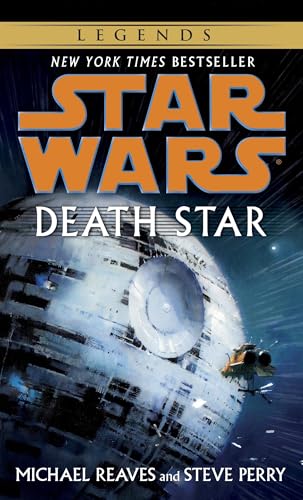
I think I’ve mentioned before that my book club tends to talk about Star Wars a lot. In one of these conversations, someone mentioned a novel that focused on minor crewmembers aboard the Death Star—and they had me at “canteen owner.” There’s a Death Star canteen? Do they have trays? And…no one in my book club had seen the Death Star Canteen sketch from Eddie Izzard, so they all stared at me blankly. So I sent them the above link, and added Death Star by Michael Reaves and Steve Perry to my “To Read” list.

As promised, Death Star focuses on minor crewmembers aboard the battle station: a TIE fighter pilot, an archivist, a low-level architect, a doctor, a security guard. The trigger man for the biggest gun in the galaxy. A criminal who conned his way aboard. And, yes, the civilian contractor running the Hard Heart Cantina. The only really recognizable figures are Grand Moff Tarkin and, of course, Darth Vader himself. The book follows a dozen or so separate strands, as various people find their way to the Death Star during its construction…and then become peripherally involved in events of A New Hope.

This is an odd book, set in an established universe but with very few of the characters who usually drive stories in that universe. Our favorite members of the Rebel Alliance do put in very small cameos, but mostly we’re hanging out with new people. And that…works and doesn’t. There are a lot of characters here, and it probably took me half the book to keep them straight—and it’s three-quarters of the book before the different strands really start coming together, apart from a vague geographic connection. But even though that seems like a problem, I enjoyed the different story lines, and the book was at least pretty good at reminding me who was who when I needed the clarification. So even though I’m intellectually bothered by the multitude of characters, I can’t honestly say it stopped me from enjoying the book.

And I do really like the concept and how it was handled. The Death Star has a crew complement of a million people, and this book digs into who they all are and how they got there—and explores questions of personal responsibility in a way that the movies largely skate past. Who carries the guilt when a planet is destroyed? The Grand Moff who gave the order? The soldier who pulled the trigger? The architect who helped design crew quarters? The cantina owner who served drinks to the soldiers? At what point does merely standing by bring you in for a share of the responsibility?

All the characters have their own paths and their own personal justifications for why they’re working for the Empire. Some are loyal soldiers. Some are apolitical, who feel no one government would be better than any other, so best to just get on. Some are prisoners, more or less literally, who justify cooperating with the enemy on the grounds of having no alternative. And these justifications come into crisis as the destruction by the Death Star grows.

All of the book was interesting, but the best part was once events began paralleling the plot of A New Hope. I love seeing stories from different perspectives, and this was an intriguing look at familiar events from a new angle. What would it be like at the Death Star’s bar the night Alderaan exploded? How would an Imperial medic view the captured Leia, or a stormtrooper view Luke and Han’s rescue attempt? I suspect this book wouldn’t work at all if you haven’t seen the movie—too many assumptions made, too many explanations missing—but if you have seen the movie, it’s pretty fascinating.

So how does it all come out when the Death Star is destroyed? Well…some characters survive. Some don’t. I won’t tell you which! But I do think that was the best way to handle the end. If every character I’d been following died, the book would have felt kind of pointless (and depressing!) If every character miraculously escaped, that would have felt contrived.

As it is, this delivered a sobering but ultimately hopeful ending, a satisfying conclusion to a book exploring war, death and the morality around both.

Other reviews:
SF Site
TheForce.net
Anyone else?

Buy it here: Death Star