What Are You Reading This Spring?

itsmondayTime to join in again for the Book Journey meme, “It’s Monday, What Are You Reading?”

I finished reading and reviewing Les Miserables, which was quite the long haul.  Read the review(s!) here: Part One, Part Two and Part Three.

I read and enjoyed the other books on my previous list, with reviews coming up in the next week.  I’ll have Scarlet up tomorrow.  (Addendum: It’s up now!)

Right now I’m in the middle of My Cousin Rachel by Daphne du Maurier, because I love her most famous book, Rebecca.  I first heard about this one years ago, and thought I didn’t want to read it because it was too much like Rebecca–another mysterious woman who may be good or may be monstrous, though in this case it’s her husband who died under mysterious circumstances.  So I put that one at the back of my mind and read three other, very different, books by du Maurier…and didn’t find them to be all that good.  Yet I’m convinced by Rebecca that du Maurier is absolutely brilliant!  And thus I’m deciding that maybe it makes sense after all to read her most Rebecca-like other book.  So far, I’m liking it better than the others!

Spring BooksAfter this one, I have a big stack of fantasy I’m eager to jump into.  The Once Upon a Time “challenge” runs every spring, and I may just start in on the fantasy a few days early.  I have a number of rereads piled up, but I want to take a new perspective on them: Chalice by Robin McKinley, because I want to look at it as a Beauty and the Beast retelling; Princess of the Midnight Ball by Jessica Day George, because it was only the second “12 Dancing Princesses” story I ever read, and now I’ve read eight or ten, and written one; The Hobbit by J. R. R. Tolkien which I haven’t read since I was maybe twelve.  And I am vowing and swearing to read Lord of the Rings this spring, and The Hobbit seems like good gateway-Tolkien.

And last, I have been meaning to read Good Omens pretty much forever.  Because, I mean, Terry Pratchett and Neil Gaiman!

I’ll let you know how it goes.  🙂  Happy Spring and Happy Reading this week!

Fairy Tale Round-Up: Beauty and the Beast

One of my favorite fairy tales is “Beauty and the Beast.”  If you read the original by Jeanne Marie Leprince de Beaumont, it has as many weirdnesses as any other fairy tale.  But it also has a heroine with more spirit than most (and who likes to read!) and a romance with at least the potential for more depth.

The story is pretty consistent, about a girl who goes to live with a Beast to save her father’s life.  She sees past the Beast’s forbidding exterior to fall in love with him, breaking the spell and turning him into a handsome prince.  And usually there are roses in it somewhere!  In the original, the Beast is kind of scary and manipulative, not to mention far too attached to his flowers.  But the retellings are some of my very favorite stories…

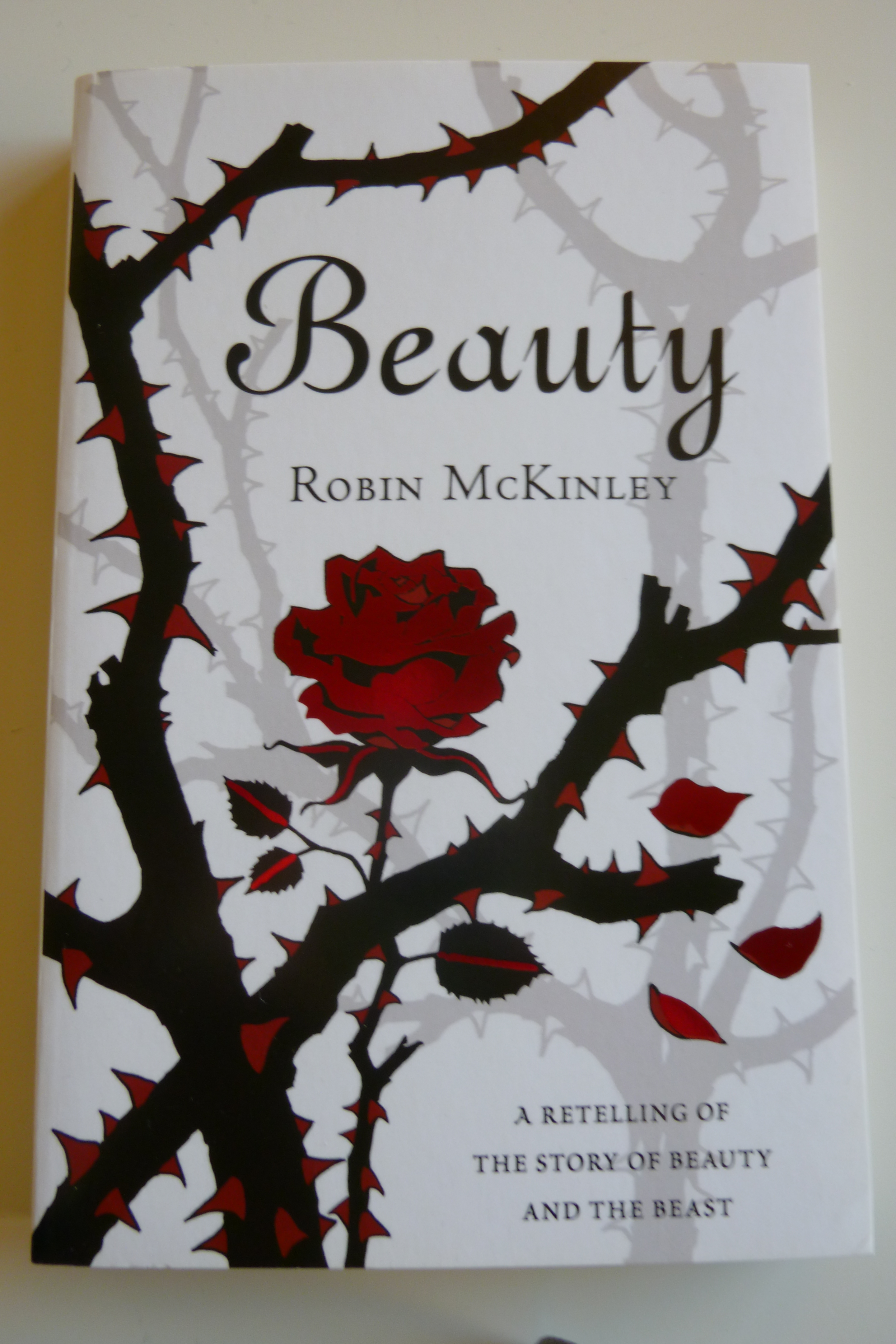
Beauty by Robin McKinley was probably one of the first fairy tale retellings I ever read.  It’s a beautiful book that’s as much about Beauty, her family and her own growth as it is about her romance with the Beast–which is still quite sweet.  The non-magical world feels very real, and even the enchanted castle, while appropriately magical, has a somewhat homey feel.  It’s a cosy book, sweet and lightly humorous.

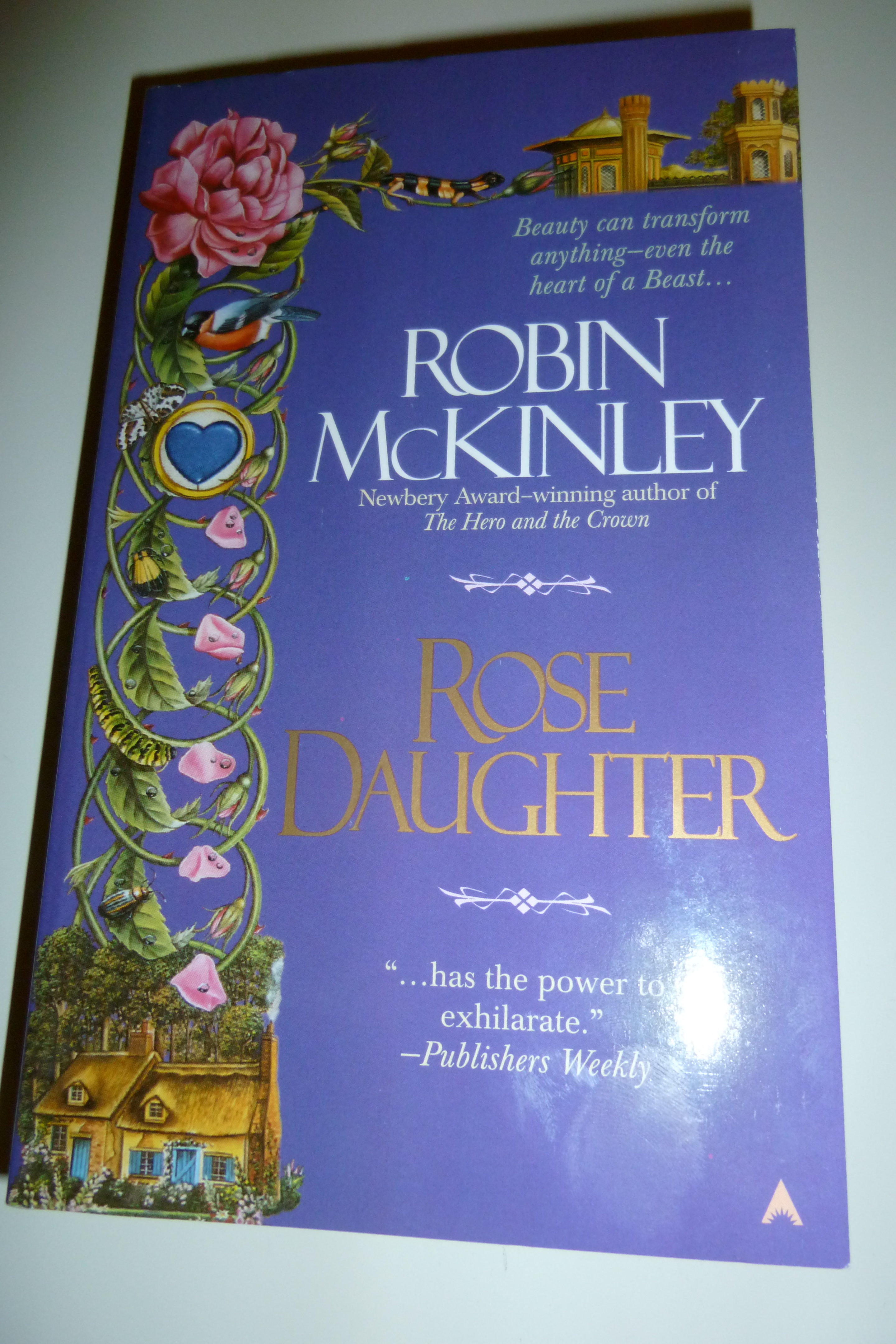
McKinley returned to the story for Rose Daughter, another (unrelated) retelling.  This version is gorgeously written, and far more surreal.  If Beauty is all pastels and greens and browns, Rose Daughter is all vivid scarlets and purples and strange shadows.  The Beast’s castle is truly another world, where rules of magic supercede little things like the rules of physics.  I didn’t like the romance quite so well and there was a lot about roses, but it’s still an absolutely lovely book.

I’m not as fond of La Belle et La Bête, Jean Cocteau’s 1946 movie version.  It has a very surreal feeling too, but to some extent that kept me at a distance from the story.  The characters felt too much like archetypes and some parts were unexplained–and I don’t think it was a problem of the French dialogue.  The sets and effects are wonderful and it’s a landmark in fairy tale films, but it’s more interesting as an academic view than as simple entertainment.

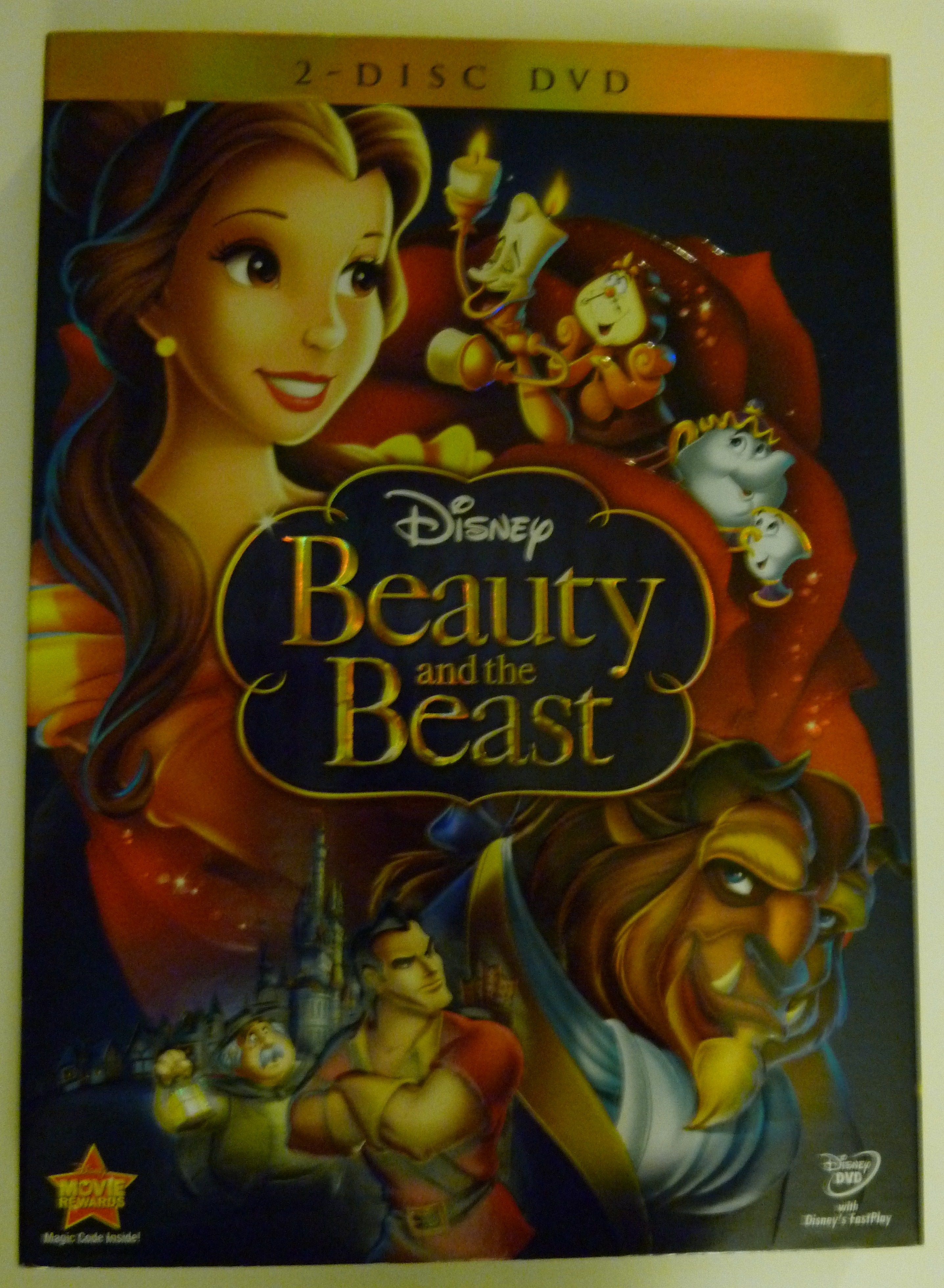
I do love the much lighter Disney Beauty and the Beast.  It has gorgeous scenery, excellent songs, and wonderful characters.  Belle, the Beast and the assortment of talking objects are all delightful characters, and the plot is much improved by the introduction of Gaston as a convincing villain.  This may be my favorite Disney cartoon (though there’s some stiff competition out there!)

Heart’s Blood by Juliet Marillier is a much looser, more mature retelling.  Caitrin comes to the castle to work as a scribe, fleeing her abusive family and an unwanted suitor.  She meets Anluan, crippled in body and even more so in spirit, and learns about his family curse that populates the fortress with ghosts.  It’s “Beauty and the Beast” only in the broad strokes, but there is an enchanted mirror and a curse to overcome–even though it’s really more about finding strength within than it is about meeting requirements to break a spell.

I’d love to find more good “Beauty and the Beast” retellings!  Any suggestions?

Fairy Tale Round-up: Sleeping Beauty

A look at another classic fairy tale this week: Sleeping Beauty.  Like Cinderella, it shows up in the Brothers Grimm and in Charles Perrault.  Grimm gives us a very brief story, “Little Briar Rose,” about a princess who is cursed at her christening, pricks her finger when she turns fifteen, and falls into an enchanted sleep for a hundred years, guarded by a hedge of thorns, until awoken by a prince.  Perrault gives essentially the same story in “The Sleeping Beauty in the Woods” with more detail, and an entire second act involving the prince’s evil ogre mother.  That part doesn’t seem to have filtered out quite so much!  But I have seen quite a few retellings of the first part of the story…

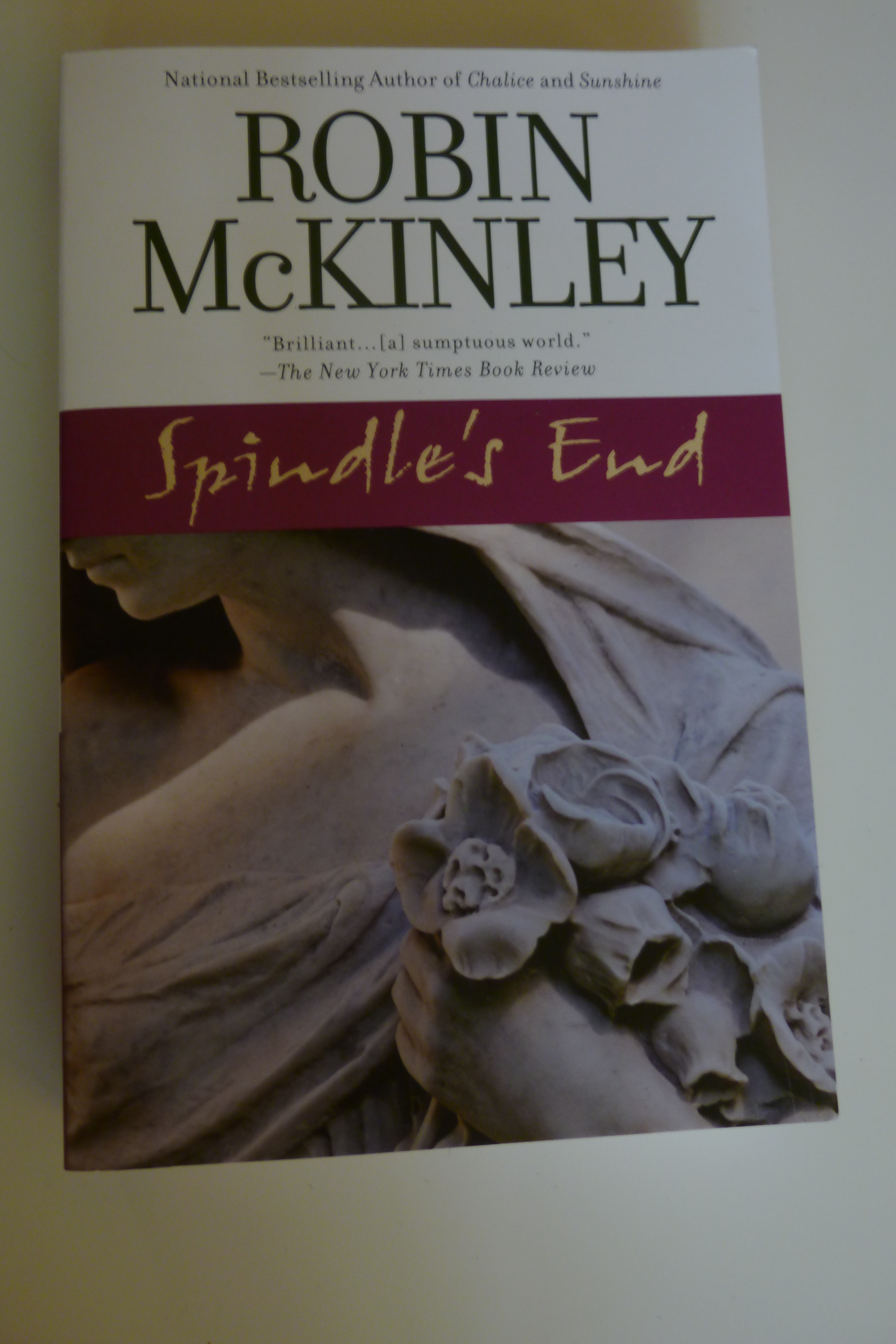
Spindle’s End by Robin McKinley is my favorite retelling.  McKinley’s princess, Rosie, has a life and a personality entirely separate from her curse.  She is defiantly herself in the face of all her christening gifts, and she deeply loves her adoptive family of fairies, who are hiding her from the curse.  I love the way McKinley plays with the elements of the fairy tale to make characters and a story that, in some ways, feel completely original.  I’m not wild about the romance, but it’s a wonderful book despite that.

The Princess Series by Jim C. Hines features Sleeping Beauty as a major character.  His Sleeping Beauty, Talia, comes from a darker version of the story, from before the Brothers Grimm.  She does have fairy-given gifts, like grace and balance, which she uses to become a skilled warrior.  She joins up with Snow White and Cinderella, and together they’re a force to be reckoned with!  The third book in the series, Red Hood’s Revenge, while partially about Little Red Riding Hood, also delves much more into Talia’s past, and a new interpretation on the Sleeping Beauty story.

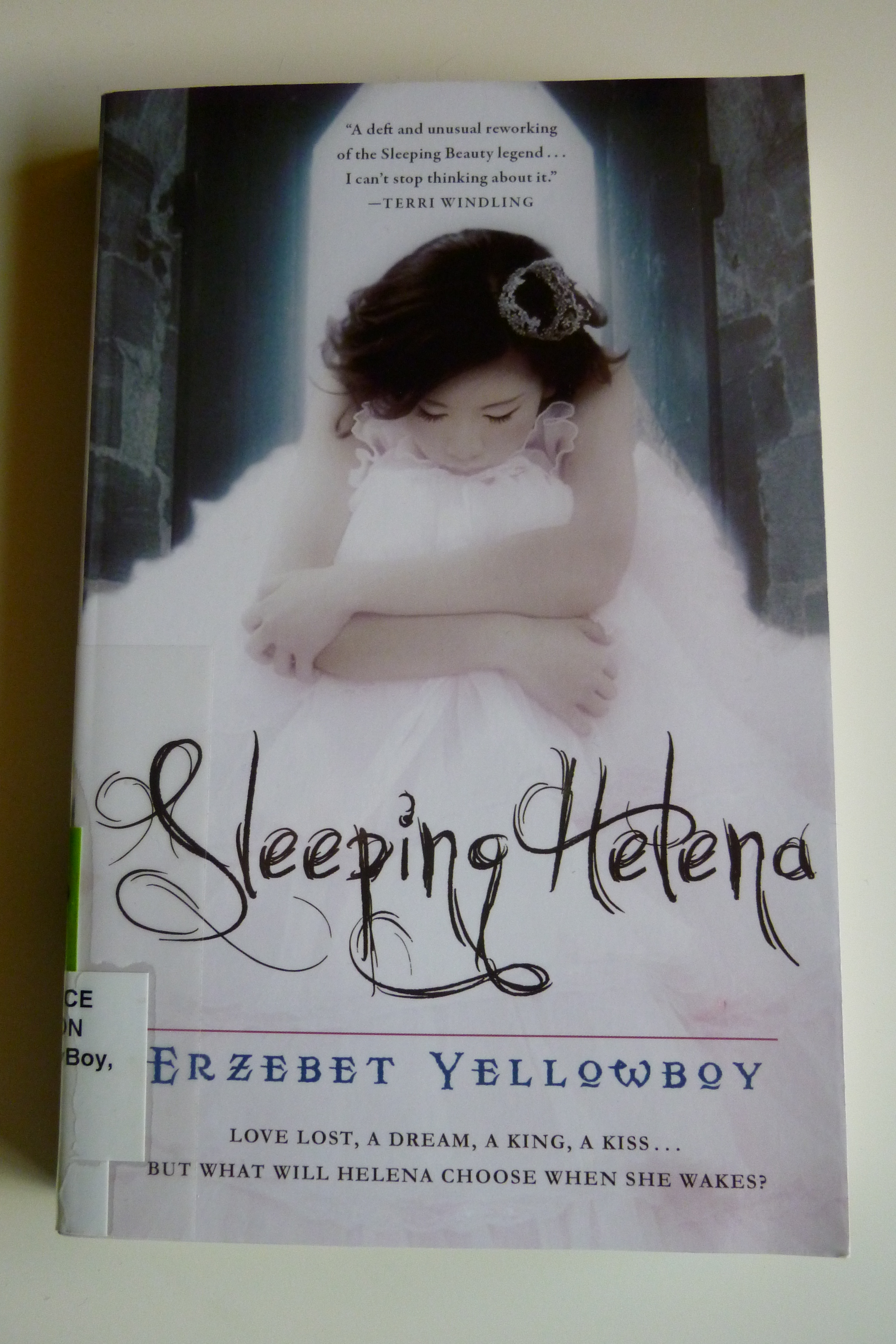
Sleeping Helena by Erzebot Yellowboy is an odd story about a family of sisters who enchant and then raise their niece, Helena.  The oddness comes in part from the fact that the aunts are all around 105 (and feel it) and partially from Helena’s own wild nature.  She’s fascinating, almost a slave to her christening gifts.  Some interesting concepts in this one, but also…well, odd.

The Wide-Awake Princess by E. D. Baker tells the story from Sleeping Beauty’s sister’s point of view.  Annie nullifies magic around her, so she’s unaffected when the rest of the castle falls asleep.  She goes questing through other fairy tales, looking for a prince to wake up her sister.  I LOVE the concept…but found the characters rather shallow and simple.  Probably a good one for younger readers, but don’t expect anything too deep.

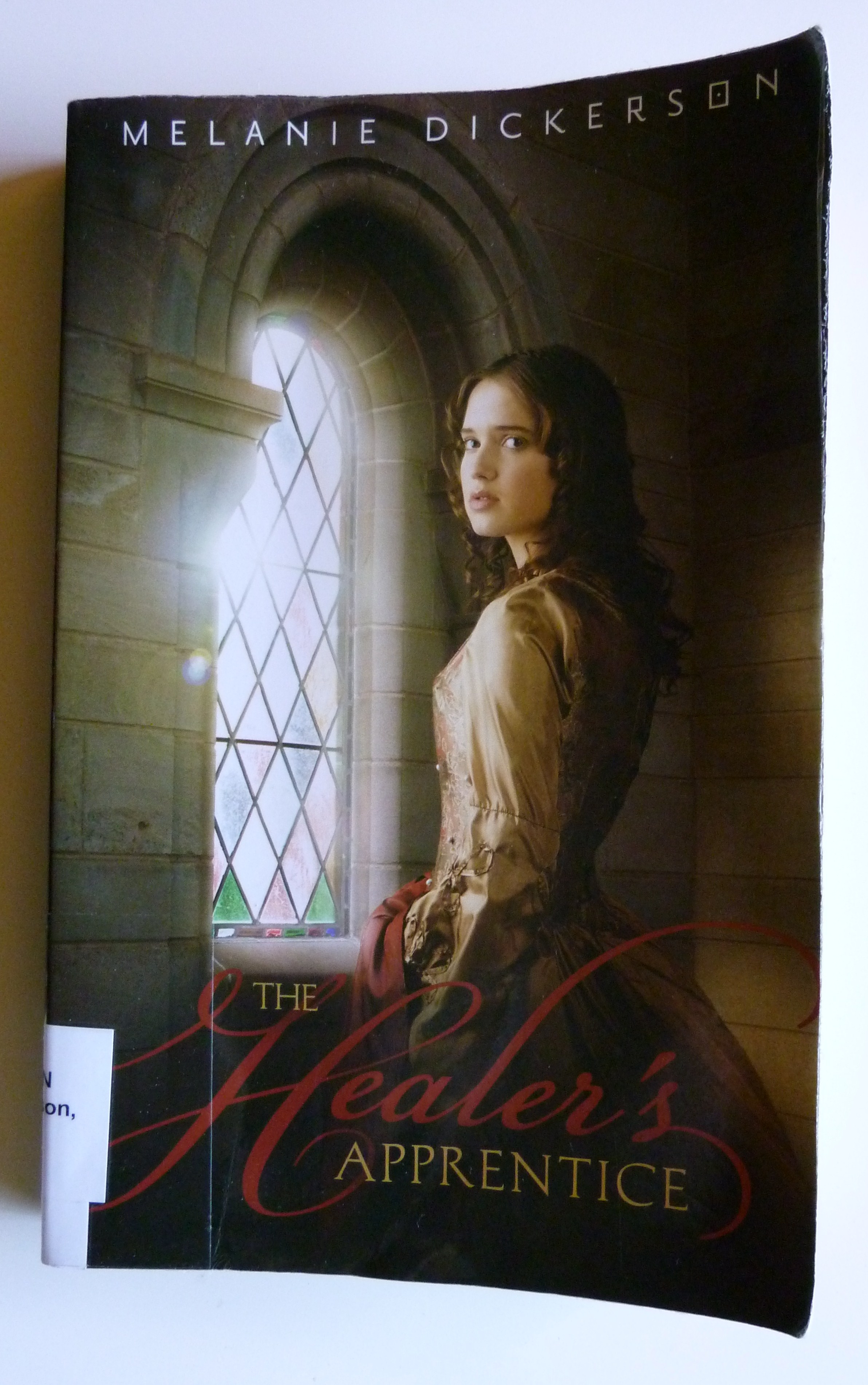
The Healer’s Apprentice by Melanie Dickerson is a very loose retelling.  Rose is the healer’s apprentice of the title, trying to decide if she really wants to be a healer, while torn between the two handsome sons of the local baron.  The Sleeping Beauty part comes in because there’s an evil magician stalking the older son’s betrothed with a curse.  The princess has been hidden away…and it’s pretty obvious right from the beginning who she’ll turn out to be.  It’s a good story in its own right, even if the Sleeping Beauty elements are more of a hint than a major focus.

The Sleeping Beauty by Mercedes Lackey, on the other hand, tosses around Sleeping Beauty elements with abandon.  This is a mash-up of Snow White and Sleeping Beauty, in a novel that’s very willing to poke at the original fairy tales and have fun with the conventions.  It’s book five of Lackey’s 500 Kingdoms series, but I somehow contrived to read it first and it didn’t seem to matter.

Disney’s Sleeping Beauty is one of my favorite classic Disney cartoons.  I like the song, “Once Upon a Dream,” and I like Prince Phillip.  I think it’s because he argues with his horse; it gives him a smidge more personality than most early Disney princes.  Although–in a very bizarre turn, Phillip doesn’t have a single line of dialogue after Rose falls asleep.  He’s in scenes, and people talk to him, but he doesn’t have a single line.  I really have to wonder about the decision process there…  But anyway, rather like Disney’s Cinderella (which is all about the mice) this one is also really about the “supporting” characters–the fairies.  They’re quite funny, and also a big inspiration for my own fairy tale world in my writing.  Watch one of their scenes some time: they are shooting sparkles out of their wands all the time.  Not just when they cast spells, but constantly.  Those women really ought to be awash in glitter…

I’m betting there are other versions of Sleeping Beauty I haven’t covered.  What are your favorites?

Fairy Tale Round-Up: The Twelve Dancing Princesses

I focus on fairy tale retellings often, and right now it’s the season for them, since I’m participating in the Once Upon a Time challenge.  I thought it would be fun–and maybe useful to someone–to spend a few Fridays gathering together lists of the retellings I’ve read.

I decided to start with a relatively minor fairy tale that has been getting a lot of press lately, “The Twelve Dancing Princesses or The Shoes That Were Danced to Pieces.”  It’s certainly not on a level with Cinderella as a cultural touch-point, but I stumbled on a number of retellings in the past few years, and then when I decided to write my own version, I started seeking them out.  It seems to be a popular story at the moment.

The Brothers Grimm story is “The Shoes That Were Danced to Pieces,” and is about twelve princesses who are wearing out their dancing slippers every night, even though they’re locked in their bedroom.  Their father the king puts out a call for champions, who will each be allowed to spend three nights in the princesses’ chamber.  If they can solve the mystery, they get to marry a princess.  If they fail, they lose their heads.  After a number of champions fail, an old soldier comes to try.  With the help of an invisibility cloak, he’s able to follow the princesses through a magic forest of silver, gold and diamonds, across a lake to a castle where they’re dancing with twelve princes.  By telling the king what’s happening, the soldier breaks the spell and marries the oldest princess.

It’s fascinating to see what is and isn’t in the original story, compared to the retellings.  There are definite trends in how the story has been retold.  The original is entirely the soldier’s point of view, but most of the retellings are from the princesses’ perspective, or from a new, female character who’s seeking to help them.  In the retellings, the king is well-meaning and at worst a bit stern; I’ve yet to read a retelling where heads are actually being chopped off.  The princes in the castle are usually cast as demons or monsters, although I personally don’t think that’s clear in the original.  And almost everyone struggles to develop twelve princesses as characters, which really is a remarkably large number to deal with.

So let’s see what’s been done more specifically…

Wildwood Dancing by Juliet Marillier was one of my first retellings, and a very loose one.  Only five girls, they’re not princesses, and they go dancing at a fairy court that is not as terrible as in most versions.  This story combines with a retelling of The Frog Prince, so that brings in some significant different elements.

Princess of the Midnight Ball by Jessica Day George is a much closer retelling, and one of the few that gives at least part of the story from the soldier’s point of view.  It does better than most at developing the relationship between the soldier and the oldest princess–and I rather love that the hero is brave and strong and also knows how to knit (soldiers have to get socks from somewhere!)  It also has some of the best-depicted princesses.

The Twelve Dancing Princesses by Marianna Meyer and illustrated by Kinuko Craft is a very beautiful picture book.  It doesn’t do anything too exciting with the story (though it is another one from the champion’s point of view) but the illustrations are exquisite.

“The Twelve Dancing Princesses” by Robin McKinley is a longish short story in her book, The Door in the Hedge.  I had such high hopes for this one (I mean, Robin McKinley!) and they were only partially met.  It’s a beautifully-written retelling with vivid imagery and all the details of description and character emotion that the Grimms always leave out.  But…there’s really nothing innovative about it either.  It’s pretty much precisely the original story (minus the head-chopping).

The Thirteenth Princess by Diana Zahler supposes that the princesses have a thirteenth sister, Zita.  Their mother died when she was born and their father banished her to be a servant in his grief.  She evades the spell that captures the rest.  It’s a cute version in some ways, although the twelve princesses are unusually undeveloped as characters.  The focus on Zita’s story means less focus on the twelve princesses’ adventure.

The Phoenix Dance by Dia Calhoun is another one that brings in a new heroine, this time the royal shoemaker’s apprentice.  Her master’s reputation is being ruined by the constantly worn-out dancing slippers–which, by the way, is a fantastic idea!  The original fairy tales never address that kind of detail.  I loved that premise, but then I didn’t love the heroine as well.  This is also a fantasy look at bipolar disease, and while I respect what Calhoun was trying to do, I actually had difficulty getting a sense of the character through the mood swings.

Entwined by Heather Dixon is one of the latest retellings, which made the rounds of all the blogs I follow.  This one more than any other I’ve read emphasized the beauty of the dancing, and played with the princesses’ love of dancing.  There are twelve princesses named in alphabetical order, which was very helpful for keeping track of the relatively bland younger nine.

The Night Dance by Suzanne Weyn meshes the dancing princesses with Arthurian legends. It’s a clever idea, but the book is hampered by some very slight characters.  They served their roles, but I can’t remember a single character’s name anymore.

Troll’s Eye View has “The Shoes that Were Danced to Pieces,” a short story by Ellen Kushner.  Mostly pretty light and silly, this captured better than any other version how annoying it could actually be to have eleven younger sisters.  The princesses are universally devoted to each other in other versions, and it was fun to see an oldest princess who finds her clamoring crowd of sisters overwhelming.

There you have probably more versions than you could ever actually want.  🙂  Recommendations…if you want a close retelling, go for McKinley’s short story.  If you want something close but more elaborated upon, read Princess of the Midnight Ball.  If you want to look at beautiful pictures, definitely get Craft’s picture book.  And if you just want to know which book is overall the best read…it’s only a loose retelling but a wonderful book…Wildwood Dancing.

And if I’ve missed a version–let me know!
Beauty and the Roses

It’s always a joy to come back to a beloved book, and find out you still love it on a reread.  But it’s even better when you find out you love it even more.  That happened to me with Rose Daughter by Robin McKinley.  I’ve read it at least once–maybe twice–and I always liked it.  But this time I really loved it.

Rose Daughter is a retelling of Beauty and the Beast, and my first book for this year’s Once Upon a Time Challenge.  I was excited to jump into the challenge, which is why you’re getting a third book review this week!

I don’t have a lot to say about the plot, because mostly there aren’t surprises here (except when there are, and that’s too far into the book to discuss without ruining it with spoilers!)  There’s a ruined merchant and his three daughters, there’s a mysterious castle with a mysterious Beast, and there are roses.  Lots and lots and LOTS of roses.

You may be thinking–didn’t McKinley write another story with this plot?  A few less roses, but still the same story?  She did–Beauty.  But the amazing thing is how different the books felt to me, even though they are essentially the same plot.

I’ve said before that I am hugely impressed by the different writing style in McKinley’s different books, and that’s very true in these two.  Beauty is practical.  There’s magic, but it’s magic that exists in a very reasonable, understandable world, with real people and commonplace concerns.  Even the magic has a slightly homey feel to it, from winds that scold and candles that whisper “Psst, wake up!” when one of their number forgets to light.

Rose Daughter is surreal.  The Beast lives in a constantly changing castle where laws of time and space simply don’t apply.  The magic is somber and imposing and a deeply serious business, powerful and ominous.  Even the world outside the castle feels more like something wild and strange, a world where everyone’s names reflect who they are (Beauty’s sisters are Jeweltongue and Lionheart), and there are mysteries and magic and curses.

While I always liked Rose Daughter, I also preferred practicality to surrealism.  I’m not sure what happened since my last reading, if it’s just that I got older or if it’s that I read more Brothers Grimm, but I loved the style of Rose Daughter this time.  It really may be that I came to it shortly after writing my own Brothers Grimmesque stories, and this is a Brothers Grimmesque book: the names, and flowery ornateness of the writing, smack of the Brothers Grimm (even though they didn’t write a version of “Beauty and the Beast”).

The writing is just gorgeous.  I love the descriptions, of feelings and flowers and smells.  There are long passages about flowers, but don’t be offput by that.  I’m not even fond of roses, but I never got bored by the book–and it kind of made me want to have a love affair with roses, even though I’ve been in a very happy relationship with daffodils for years.  Based on other reviews, it seems to make many people want to go out and plant rose bushes.

I think, in my heart of hearts, I do still love Beauty better.  I like that Beauty a bit better than this one, and I definitely like her romance better.  Much as I love Rose Daughter, the relationship with the Beast just didn’t appeal to me as much.  But I do love Rose Daughter, and it is a truly, truly beautiful book.

McKinley wrote an Author’s Note about the inspiration that led to Rose Daughter, and mentions that it came twenty years after Beauty–so maybe the story will come back to her in a new form in another twenty years.  That was in 1996, so if that prediction comes true, we only have four years to wait!  If I could, I’d put in my preorder today.

Author’s Site: http://www.robinmckinley.com/

Other reviews:
Angieville
Dodging Commas
Fyrefly’s Book Blog
Others?