Favorites Friday: Author Blogs

Somehow it never occurred to me to look for author blogs until I started writing a blog myself.  One of the best parts of all this has been reading other people’s blogs, and it’s been so fun to find that several of my favorite authors have blogs.  Today, here are some favorite ones from favorite authors, with links if you want to check them out.

Patricia C. Wrede has a very valuable writing-focused blog.  She posts Sundays and Wednesdays, and discusses both the craft of writing and the complexities of publishing.  Most often I feel like I see either the art OR the business, so this is a great place to get information on both.  She offers solid advice across a range of writing topics, gives funny examples at times, and makes references to her own books, which is always fun too.

Gail Carson Levine also writes about writing, mostly the craft.  I think her target age group is middle school, but her advice is good regardless of your age.  The middle school aspect mostly comes out in that her writing prompts revolve around school or parents or topics like that.  Levine posts every Wednesday, and while her topic is sometimes more basic than Wrede’s, she still drills into great areas and often gives me a new idea or a new angle on something (say, Point of View) that I felt like I already knew a lot about.  She also makes frequent references to her own books and writing process; I’m fascinated by how writers write, so I love knowing that background to her books.

Robin McKinley posts every day; her blog requires a certain amount of wading.  She tends to write stream-of-consciousness about whatever is going on in her life, and some of it seems like it would have, er, niche appeal.  I usually read her posts a week at a time, and I skim until I find a section that looks good.  On the so-so (for me, at least) days, she talks about her knitting, her singing lessons, and the intricacies of bell-ringing.  On better days, she talks about her garden, her hellhounds, and her fights with recalcitrant technology.  On the best days, she talks about her writing.  And then there was the Great Bat Catastrophe (my name for it) last spring, when she had bats nesting in her attic and finding ways through into her house…terrible for her, I’m sure, but so funny to read about.
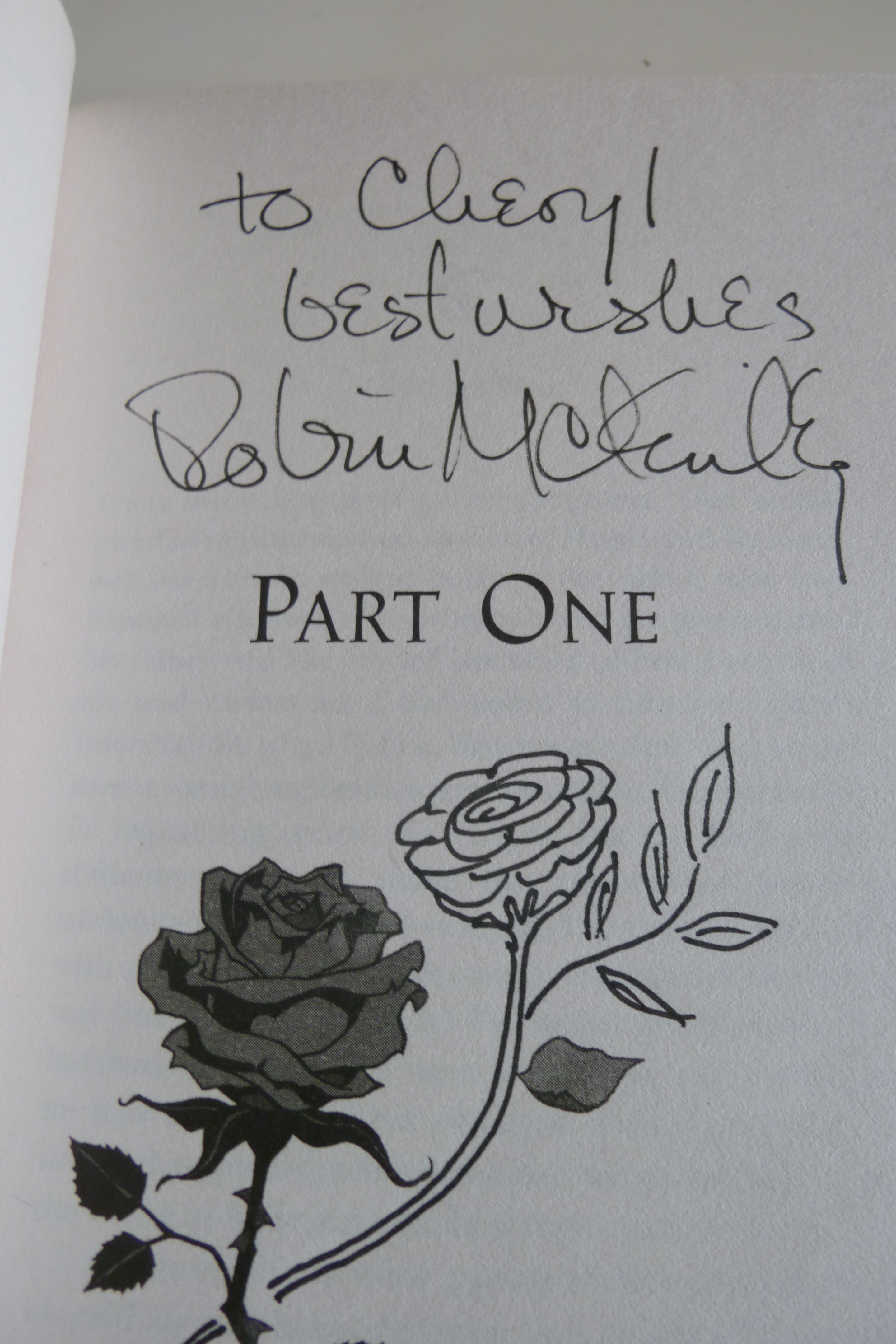
The thing with McKinley’s blog is–when she’s dull, she’s very dull (unless you’re interested in bell-ringing, perhaps).  But when she’s good, she’s VERY good.  The thing about reading blogs by favorite authors is that they’re good writers.  McKinley can be very funny and very engaging, and once you’ve been reading for a while you get used to the groove of her life and it’s fun to stroll through.  Then when I read her book Sunshine, I felt like I could see her personality coming through in the book, which added a whole new layer to it.  And it’s great to be up on the key events in her writing–I knew about it when she switched the book she was working on, and I got to order a personally signed (and doodled) copy of Beauty when she had an auction!

Other favorite authors with blogs include Gordon Korman and Geraldine McCaughrean, but they post very rarely, and Tamora Pierce, who posts sporadically, usually about news items.  I also hear good things about Neil Gaiman’s blog, though I haven’t followed him regularly.

Who are your favorite authors who blog?  Or favorite blogs that are by authors?  Almost the same thing…but maybe not always.
Hunting a Lost Prince

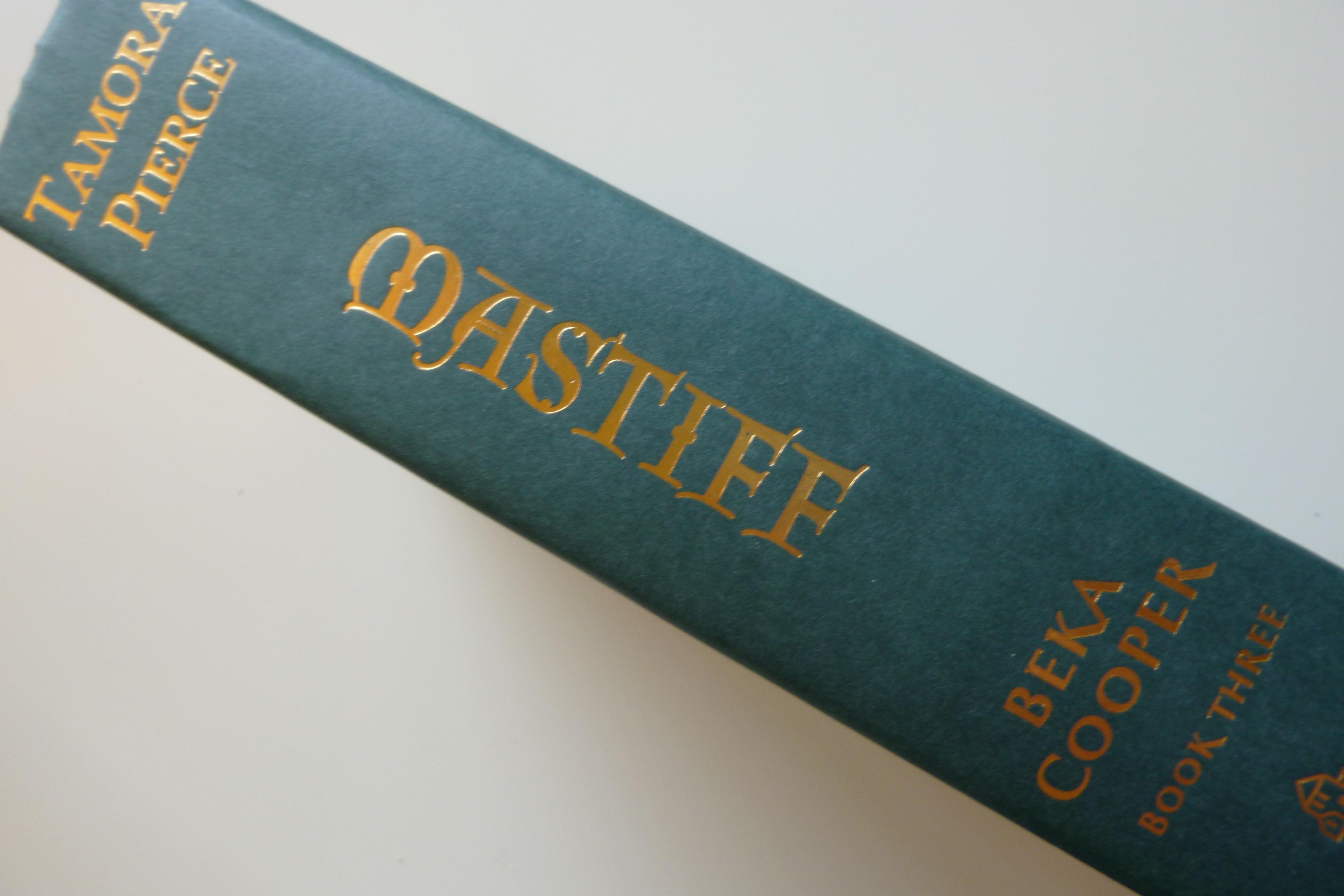
I’ve been promising a review of Mastiff, the final book in the Beka Cooper Trilogy by Tamora Pierce.  It was a good resolution to the story, an exciting adventure that tied up plenty of ends.

It begins a few years after the previous book, as Beka mourns the death of her never-before-mentioned fiance (more on him later).  It turns out she was on the verge of breaking up with him, and she’s glad of the distraction of a new Hunt–slang for a case to be solved.  In some ways this is the most focused book of the trilogy–Beka and her friends are on the trail of a kidnapped prince, and the entire book centers around this journey.

There are some strong villains in here, and I loved Beka’s friends too.  The lady knight, Sabine, had a bigger role in this book, and we had more of Pounce, Beka’s black cat.  There’s also Farmer, a new character who’s a very interesting mage.  I love it that he’s very powerful, but hides that behind a bumbling, cheerful exterior–although he really is wonderfully cheerful!

Despite a very cheery new character, this is darker than Pierce’s earlier books.  Dark things have always happened–death, slavery, violence, kidnappings.  The Beka Cooper Trilogy has always got more into the grittiness of it, though, and that’s very true here.  There’s more detail and more description of the disturbing elements.  One scene about a dead slavegirl is enough by itself to make this upper Young Adult, while Pierce’s earlier books often bounce between the Juvenile section and YA.

On the more positive side, there’s eventually some romance here, although it takes a while.  Though considering my chief problem with Bloodhound was that the romance was too fast, I won’t complain about this one!

Actually, the romance I wish there had been more of was the one with the dead fiance.  The book begins with the fiance already dead, and we only get hints about Beka’s relationship with him.  I was hoping for some kind of extended flashback, but it never came.  The hints are enough to suggest that it may have bordered on an emotionally abusive relationship, and in a strange way I think that would have been a wonderful story for Pierce to tell.  Her stories about strong women are so inspiring, and it would have been so valuable to portray one of these strong women getting emotionally mixed up and into trouble.  Beka is very capable in some ways, but she has uncertainties about relationships.  I would never believe that she’d stay with a man who hit her, but I could believe that she could be emotionally manipulated, and that would be so good for girls to see–that you can be strong and capable and still get into a bad relationship, and it doesn’t make you pathetic or worthless.

But that’s my idea, and evidently not Pierce’s vision for the book, and I can’t really criticize her for not taking the story the direction I wanted it to go.  One more serious objection I have involved a traitor in Beka’s group.  They realize someone is probably betraying them as they travel, but Beka doesn’t give much attention to that.  When the traitor’s identity finally comes out, it didn’t ring true to me.  It feels more like someone acting out of character than like a shocking reveal.

Those problems aside, it’s a great adventure with strong characters and an engaging world.  And now I can go back to looking forward to Pierce’s next book!

Author’s Site: http://tamorapierce.com

Other reviews:
YA in the Second City
Sew Skate Read
Ms. Martin Teaches Media
Yours?

Following Beka to Port Caynn

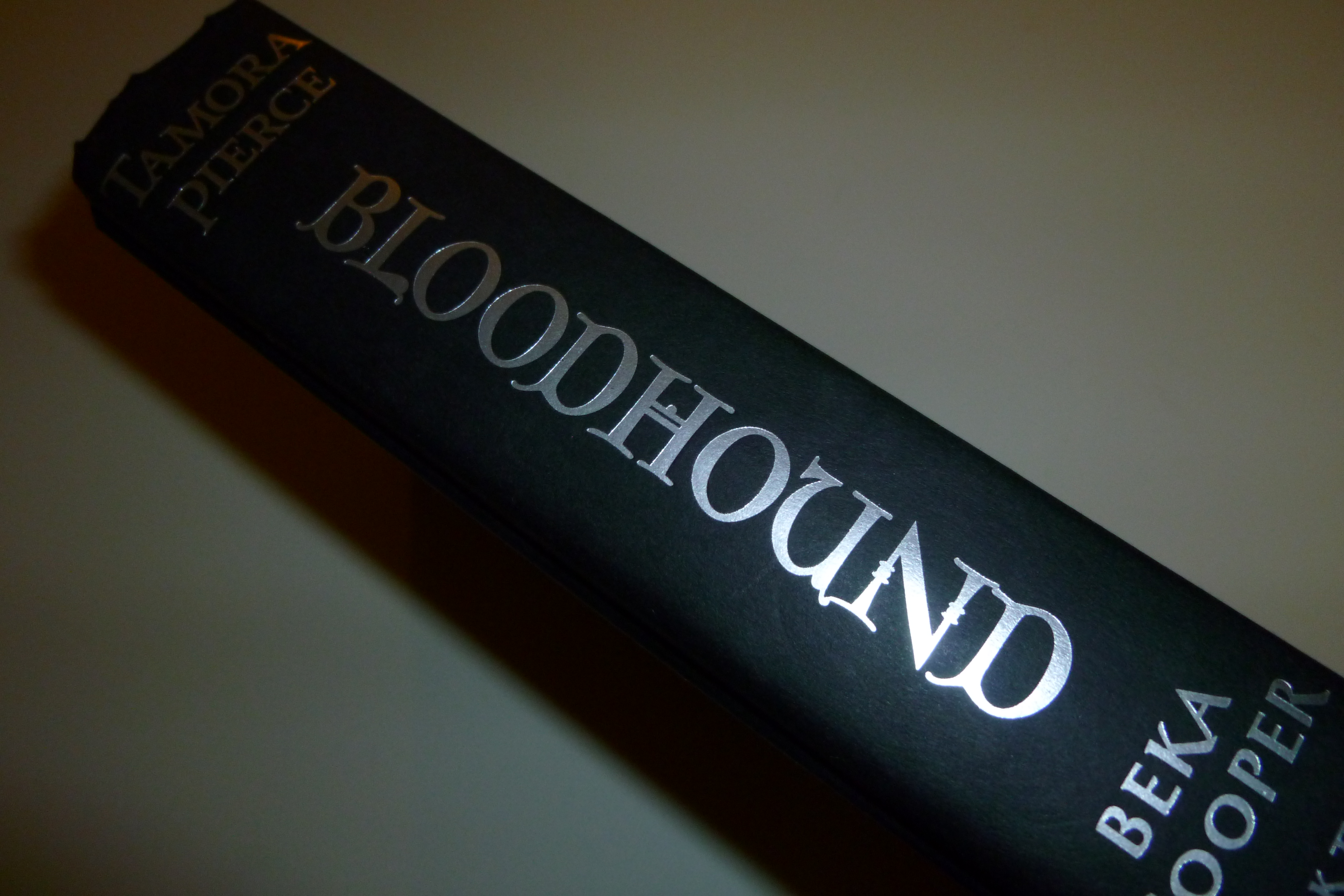
In anticipation of Tamora Pierce’s newest book, Mastiff (out last month–I’m behind in my reviews!), I recently reread the first two books in her Beka Cooper trilogy.  You can see my review of Terrier for more background.  Today, my subject is Book Two, Bloodhound.

The second book is set about a year and a half after the first.  Beka has finished her training year and is a full-fledged (though junior) City Guard, or Dog as the slang has it.  Beka is taken out of the world she’s familiar with when she and her mentor, Goodwin, are sent to Port Caynn, another city in Tortall, to track a ring of counterfeiters.

It’s a solid and exciting plot; Pierce mentions somewhere in the acknowledgments that she was afraid counterfeiting wasn’t exciting enough, but I think she does very well with it.  The dangers of inflation seem abstract in the extreme, but she manages to make it very concrete.  There’s a riot when bread prices go up, and frequent concern about food shortages and starvation.  In other words, the threat feels real.

Going to a new city means a number of new characters, many of them excellent.  The villains are particularly fascinating, and I wish some of them had been given more screen time, so to speak.  There was also a transgender character, possibly the first I’ve seen in YA fantasy.  I like it that Pierce takes a contemporary social issue and puts it into a very different setting–but any message she’s making with the character is still very clear.  It’s a perfect example of fantasy’s ability to comment on the real world–and sometimes it actually has more impact when it’s in the different setting.

My favorite new character (who was technically introduced in the last book, but just barely) is Achoo, a scenthound Beka adds to her menagerie.  Achoo is a brilliant tracker–and she’s also just lovable and adorable.  One of my favorite moments in the book is when a completely ruthless villain does a total about-face and starts fawning over Achoo.

There are probably those who would say that their favorite new character is Dale, although I disagree.  Beka has a romantic fling with Dale, and while I suppose it’s well enough, I never could get into it as a romance.  Beka doesn’t know him very well, and she doesn’t trust him, which is a problem right there.  He’s a nice enough fellow, good-looking, and he likes to gamble, but we don’t know much else about him as a character.  The relationship moves fast, and I didn’t feel like Beka or I knew Dale well enough to be going where it went.  It’s not terrible–it’s just not a great romance either.

On the plus side, Beka does seem to be shedding most of the shyness that didn’t quite work for me in the first book.  By this one, she seems to be mostly just nervous about public speaking, and it felt like a much more plausible character trait.

All in all, despite a so-so romance, it’s a very good book.  There’s plenty of excitement and tension, and many characters who were adequately developed.  I’m looking forward to diving into the conclusion of the story!  Stay tuned for a review very soon.  🙂

Author’s Site: http://tamorapierce.com/

An Urban Adventure from Tamora Pierce

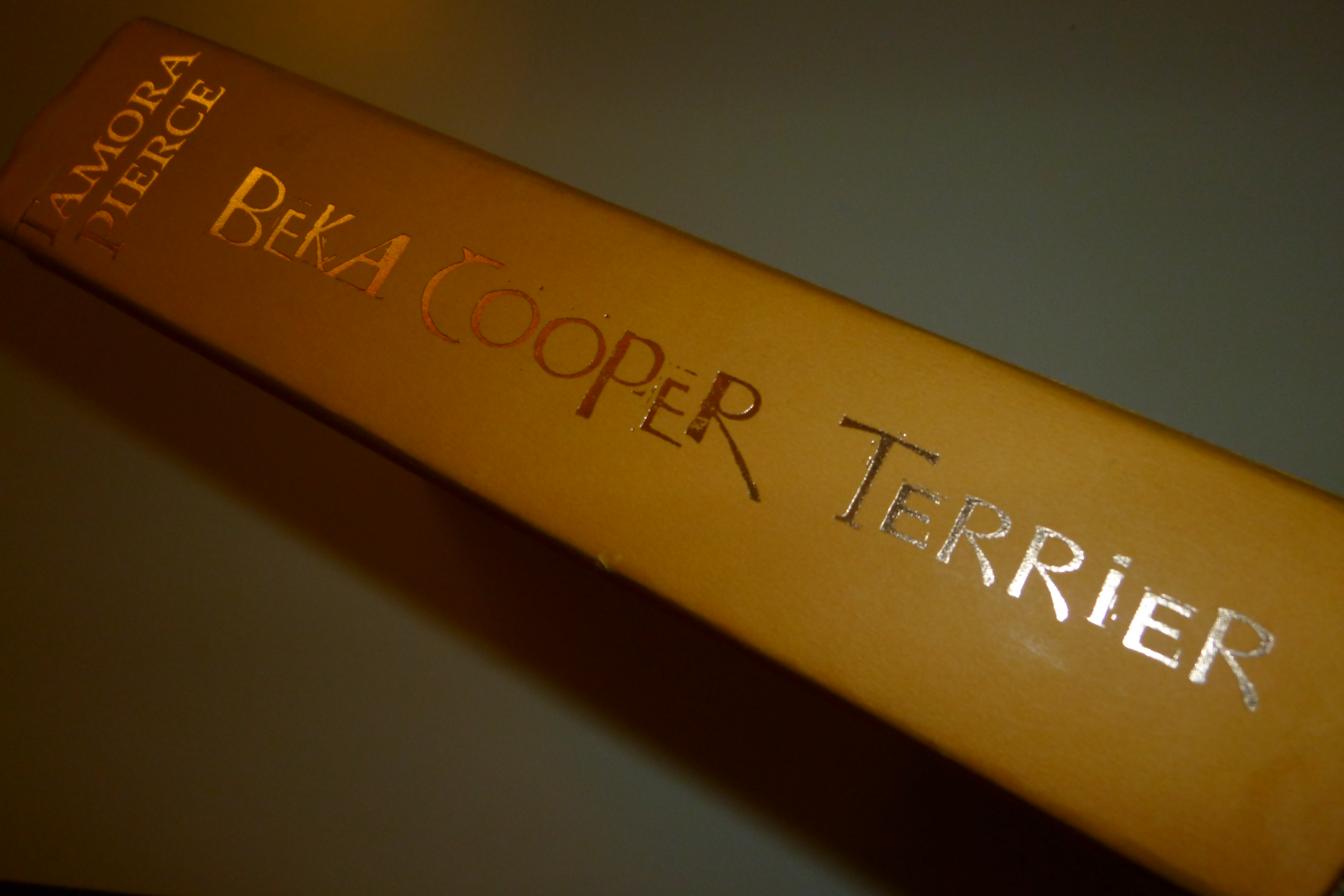
I recently reread Terrier by Tamora Pierce, in anticipation of the third book in her Beka Cooper series coming out (Terrier is the first).  As I generally expect from Tamora Pierce’s books 🙂 it’s an excellent story with a strong female lead and solid characters of both genders.

For those familiar with Pierce’s Tortall books, Terrier is set a few hundred years earlier than her usual time period.  George Cooper is a major character in Song of the Lioness and the Trickster books, and this series is about one of his ancestors.  George is the King of Thieves, but his ancestor was a…well, I suppose policewoman is the right word, though it sounds too modern.  She’s a member of the City Guard, who are a little rough around the edges but work to keep the peace in Corus, Tortall’s capital city.

Terrier is about Beka’s first six weeks or so as a City Guard, or a Dog as they’re known in the slang.  She starts out as a Puppy, assigned to two more experienced Dogs who mentor her.  Beka is from the poor Lower City, and that’s where she chooses to work too, among the people who are often forgotten.  She quickly latches on to two crimes to investigate–one involving a string of child-kidnappings and murders, another involving mysterious, magical rocks and mass-murderings of the men hired to mine them.

I love the plot of this.  Many of Pierce’s books cover a longer scope of time, and pick up more threads.  I love that too, but I also enjoy the focus of this one.  It’s essentially a weaving of two mysteries, while Beka learns the ropes of being a Dog, and grows in the process.  Some of the character growth, especially at the beginning, seemed a bit swift, but in some ways I did enjoy the compressed timeline that made things move faster.

There’s a good cast of supporting characters, from Beka’s mentor Dogs, Goodwin and Tunstall, to her friends, among the Dogs and among thieves at the Rogue’s court–the Rogue is a bit like a mob boss, who has a tacit understanding with the Dogs because he keeps order among the criminals (that’s also George’s job, a couple centuries later).  Even the villains are well-drawn characters.  And I must say, I loved Lady Sabine, another female knight.  This was long before Alanna, when girls were allowed to hold the job.

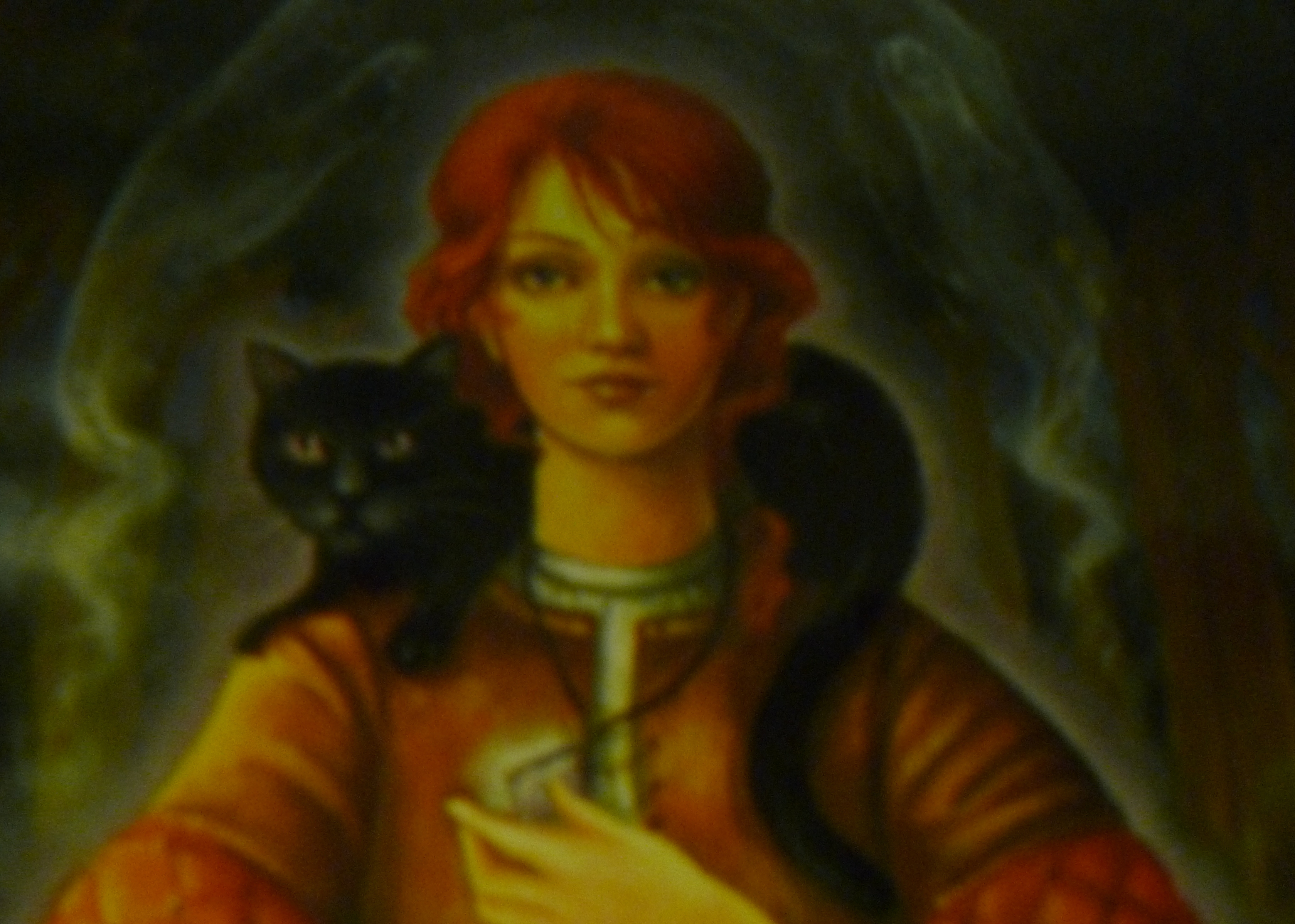
There’s also Pounce.  Pounce is Beka’s enigmatic black cat, who has purple eyes and sometimes talks.  You may remember how much I love Faithful, Alanna’s purple-eyed, talking black cat.  Definitely not a coincidence, and we get just a little more insight into Faithful/Pounce’s origins here.  Much as I love Faithful, though, I’m not sure Pounce gets developed to the same extent.  I enjoy him immensely, but I don’t think he has the same bond with Beka that he had with Alanna.

Beka, however, is another good heroine.  She has big dreams and goes after them, and she’s a strong female role model, as Pierce is so good at writing.  She’s grittier than some of Pierce’s heroines, with her Lower City background.  This is the most urban Tortall book I’ve read–I’m not sure there’s a plant in the whole novel.  Usually other books set in Corus are at the Royal Palace, and somehow I think there’s more open park around there.  Beka has magic, but a new kind–and a grittier one!  She can hear ghosts.  People left with unfinished business–often those murdered–will end up as ghosts, inhabiting pigeons.  Beka has learned to seek out these ghosts to get clues to crimes.  She also can hear voices captured by dust devils, which apparently hang out on certain corners.

I did have one problem with Beka’s character.  She’s supposed to be shy.  I’ve read this book twice now, and I just don’t quite believe the shyness.  I find it hard to accept that a girl who grew up in the rough Lower City, who wants to be a City Guard, and who can leap into a tavern brawl, baton swinging…can’t look a new acquaintance in the eye and answer a direct question.  Fear of public speaking, sure.  Fear of approaching strangers, inability to come up with quick replies to saucy comments, sure.  But Pierce takes it one too far, I think, and it just doesn’t ring true to me with the rest of her character.

But that’s one flaw in an otherwise very good book.

There’s far less shining lights and dramatic magic and epic swordfights in this book than in many of Pierce’s others.  This is more a pound-the-pavement, get into fist-fights kind of book.  In some ways it’s darker, although there have been monsters and murders in earlier series too.  And next to something like The Hunger Games, this is a cheerful book.  I like the realism of fighting to make a positive impact in a tough world, and the hopefulness that it really is possible to do that–and to make good friends, chase your dreams, and have some laughs along the way.

Author’s Site: http://tamorapierce.com/

Favorites Friday: Animal Sidekicks

After recently waxing on about Sebastian as my favorite part of The Little Mermaid, why not a look at some other favorite animal sidekicks?  Sebastian got his due time already, so here are five others:

Faithful, from The Song of the Lioness by Tamora Pierce

Faithful is Alanna’s cat, a mysterious creature with black fur, purple eyes and an uncanny degree of intelligence.  He can talk, but only Alanna understands him–unless he decides otherwise.  I think Faithful is rather the way I imagine all cats would be, if they ever decided to let us past their air of mystery and find out how smart they really are.


Dug, from Up

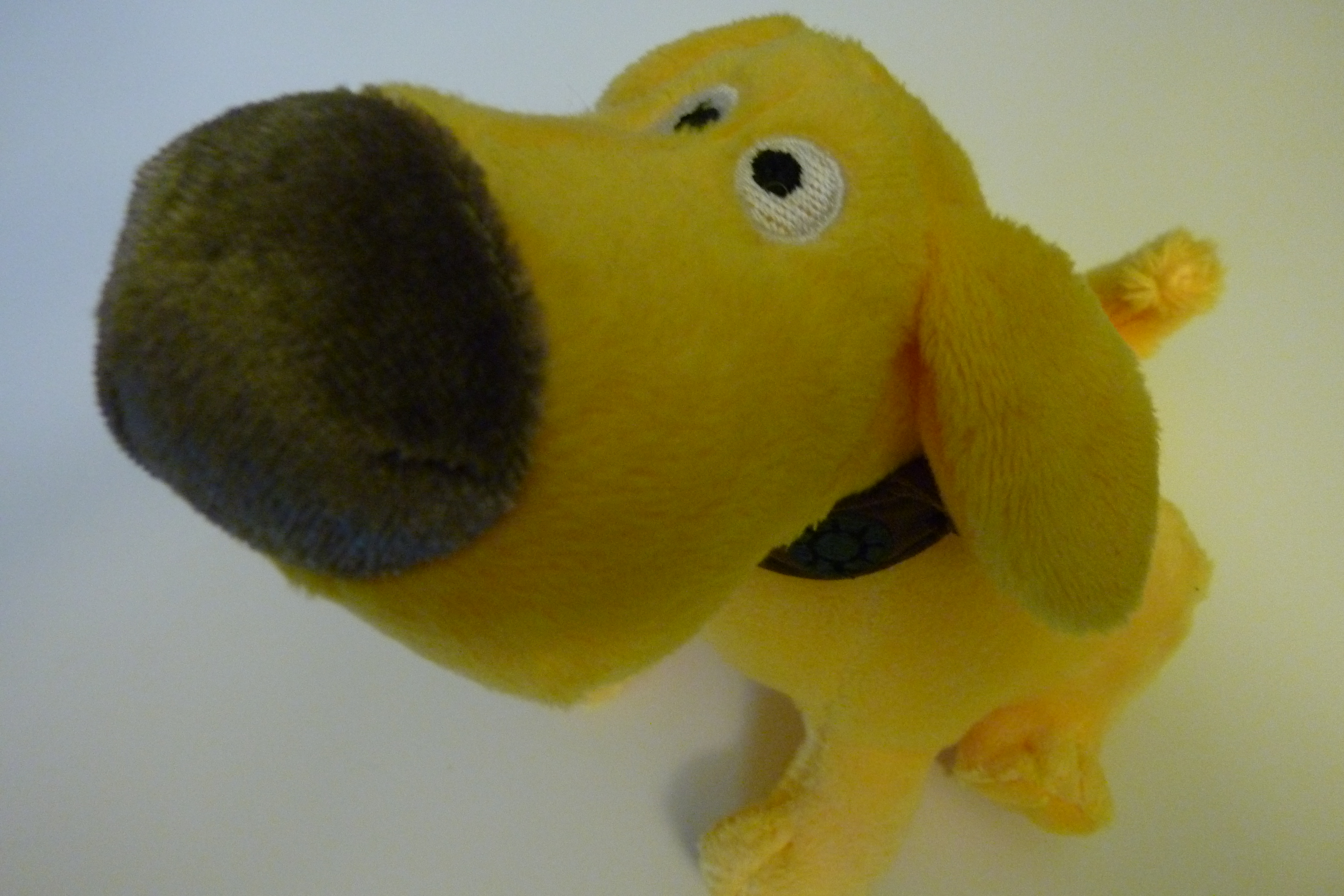
Dug the talking dog is the best part of a really wonderful movie.  I’m so wildly amused by all the dogs’ dialogue.  “My master made me this collar so that I may speak–SQUIRREL!”  So much fun.  And he’s a really sweet character too; he does so ever want to please everyone, and he’s so very bad at it…


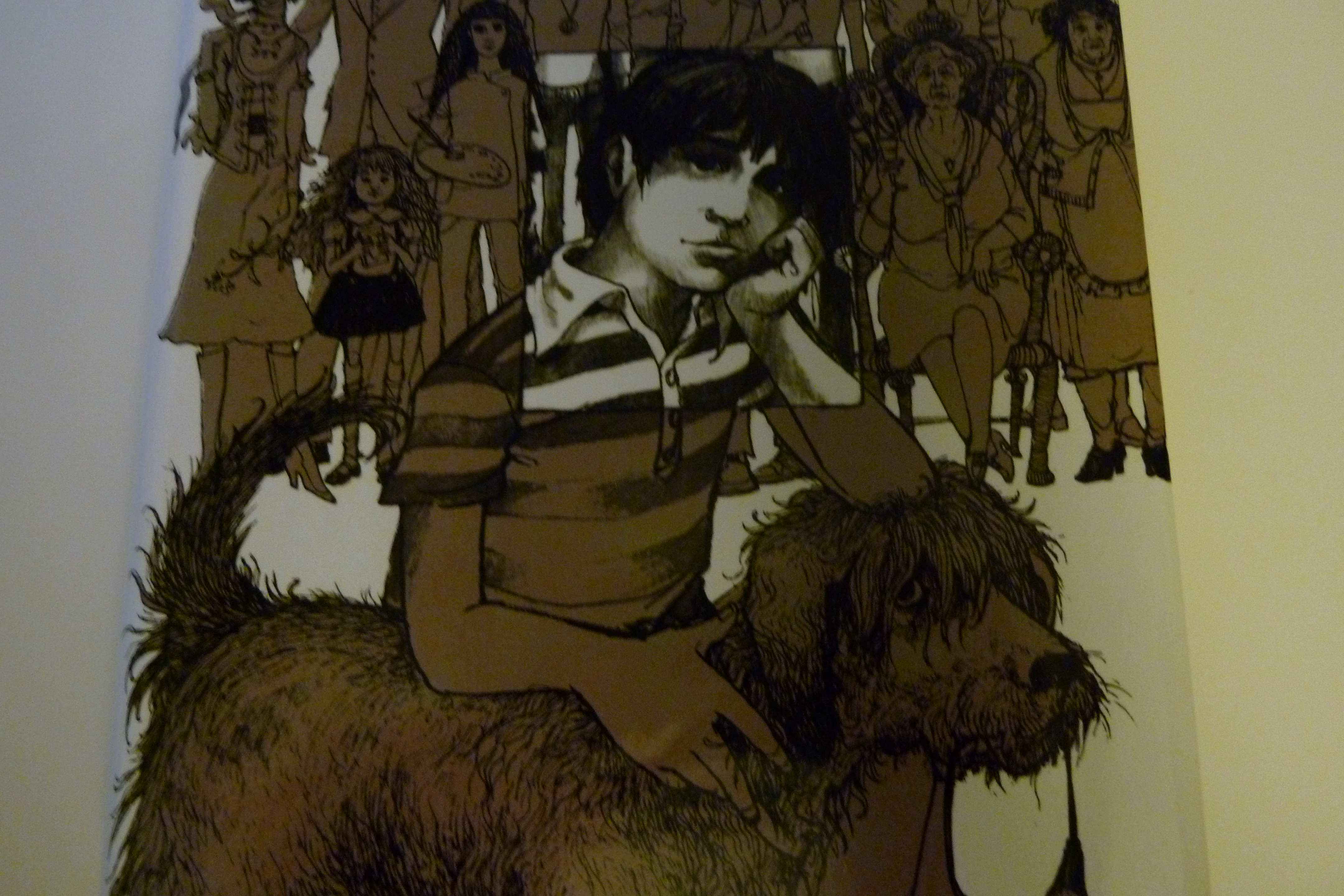
Zero from Ordinary Jack by Helen Cresswell

Zero is an utterly unremarkable dog.  Unlike Dug, he doesn’t talk, and he’s not very good at learning tricks (unless they’re demonstrated for him).  But he’s still the beloved companion of Jack, who is frequently worried about Zero’s self-esteem.  Jack tries to build up his self-confidence, which he judges by watching the way his ears are drooping.  For being an ordinary dog, he’s a lot of fun.


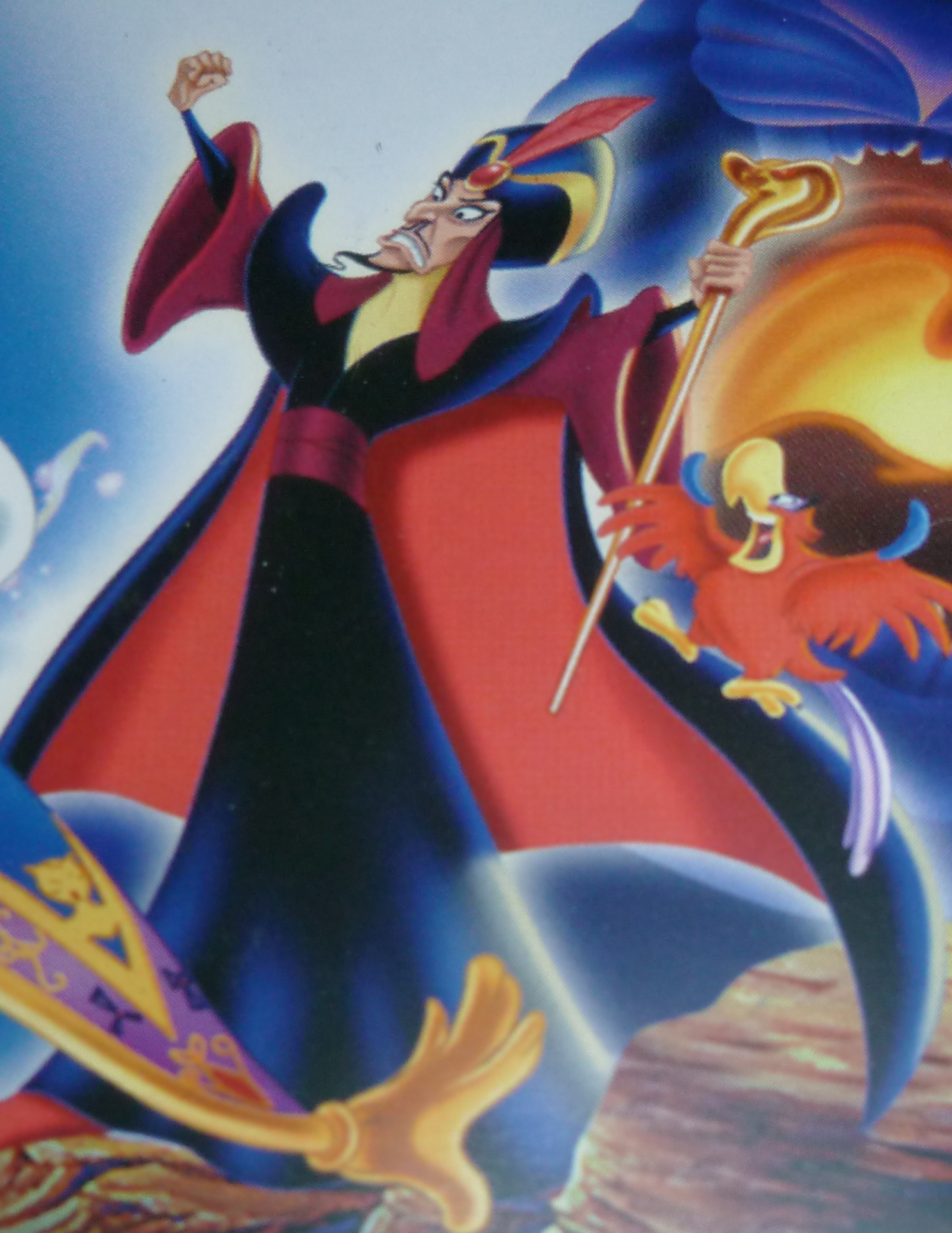
Iago from Aladdin

The only side-kick to a villain on the list, Iago the parrot is a hilarious, sarcastic, very amusing part of Aladdin.  I rewatched this recently, and found that all of Iago’s dialogue sounded far more familiar than everything else–I think I memorized most of it as a kid, and obviously it made a big impression.  There was at least one line in there that I’ve been quoting for years without realizing it started at Iago.


Fire lizards from The Chronicles of Pern by Anne McCaffrey

None of the individual fire lizards ever stood out to me all that much, but the concept is so cool I have to include them en masse.  Really–pet dragons!  Very loyal pet dragons who deliver messages and like to sing and will sit on your shoulder.  I want one.