Introducing the Twelve Dancing Princesses

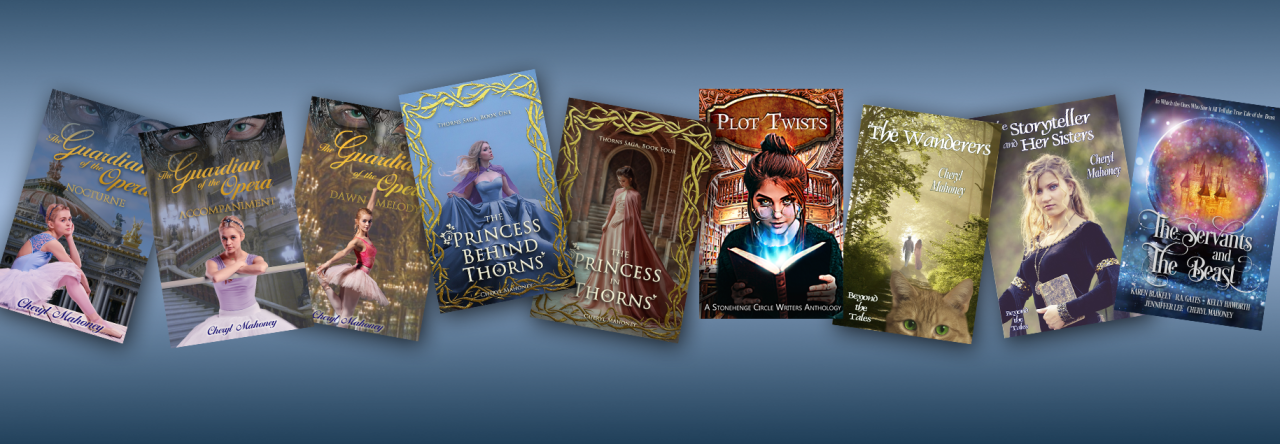
Long-time readers may remember that for NaNo 2011, I wrote the first draft of a novel based around the fairy tale of The Twelve Dancing Princesses (or The Shoes That Were Worn to Pieces).  I’ve finally completed a revision of my other major writing project, The Wanderers, and I’m now about a month into revising the princesses’ novel, The Storyteller and Her Sisters.

Since it’s rather occupying my life 🙂 how about an excerpt?  You can read this post if you want more context on the fairy tale, but you don’t really need it.  This is roughly Page 3 of the novel, and begins to introduce some of the principle characters…

*****************

I think the real beginning of the story, for my sisters and me, was the day the Gate opened.

On that day, Vira, the oldest, was twenty-four.  The youngest, Talya, was fifteen.  I was seventeen.  We are each spaced a neat year apart, except for the two sets of twins.

It was evening when the Gate opened, and though that evening proved momentous, I remember little about the day that preceded it.  I assume it was the usual round of embroidery, penmanship and dancing lessons—we are all excellent dancers.  Whatever we did, it had to have been inside my father’s castle.  We were never allowed to leave.  The day no doubt closed with supper in the banquet hall with Father.  Such ran every day.

And in the evening, all my sisters were in our bedroom, brushing hair, pursuing hobbies, and chatting about a thousand different topics.  Rather like most girls, I think—not that I’d had a great deal of experience with a great many girls.  But I had read things.

Twelve of us shared a single bedroom, and there were days when it felt incredibly cramped.  In reality it was a large room, long and with a high ceiling.  There was a door at one end and a fireplace at the other, beds stretching in two rows down the length of the room.  I suppose we didn’t undergo that much hardship in our living conditions—though I defy anyone to share a bedroom with eleven sisters for fourteen years and not come up with a few complaints.

Such as the problem of eternally being interrupted in the good parts of stories. Continue reading “Introducing the Twelve Dancing Princesses”

Healing the Twelve Dancing Princesses

Two of my favorite fairy tales are “The Twelve Dancing Princesses” and “Beauty and the Beast.”  So of course I was intrigued by a novel that promised to retell both of them.  The Princess Curse by Merrie Haskell lived up to the promise, and it was a great book.

This is another version that tells the “Dancing Princesses” story from the POV of a girl removed from the curse itself (that is, not one of the princesses).  Reveka is the herbalist’s apprentice at the princesses’ castle, and dreams of one day having an herbary of her own.  She thinks she sees the way to achieve that dream by curing the princesses of their curse, and accepting the promised monetary reward.  As she uses her herbcraft and her wit to delve into the mystery, she finds that things are much less black and white than they seem, and that, of course, all of this will have very unexpected consequences for her.

As always with fairy tale retellings, I love the unique touches.  I love that there’s a monetary reward for women who solve the curse; most versions don’t consider how limiting a reward a princess’ hand in marriage really is.  The curse has an added dimension because people who stay in the princesses’ room either fall asleep, unable to waken, or disappear entirely.  That adds so much more risk to the story (and means that the King doesn’t have to behead anyone, something every re-teller finds a way around).  I love that there’s a handsome friend who’s in prime position to be the love interest…but it’s all more complicated than that.  And Reveka’s father–well, I should have figured out his role in the story much sooner than I did!

I felt drawn to Reveka as a heroine at once.  I’m realizing that strong girls who are unappreciated by the adults in their life immediately pull me in.  I want things to be better for them.  Reveka has a difficult (but normal for her time) past, and big dreams for her future.  She wants to solve the curse to help herself, but also to help the sleepers, so she has a realistic blend of motivations.

I liked the handling of the princesses as well.  Most blend together as an amorpheous mass (there are twelve of them, after all) but it works, because I don’t feel like I’m supposed to know who most of them are.  There are two that emerge as larger characters, and the rest mostly hover in the background.  Since they’re rarely brought forward, I’m not struggling to place them as I read, and it doesn’t bother me that I don’t know who they are.  Beyond that, they’re interestingly complex, neither the saints of most retellings or the (possible) villains of the original.  They’re real girls who are making difficult choices, and while they may do some villainous things, I don’t feel that they’re heartless or evil.

This is obviously a fantasy, but it also has a historical fiction feel.  It’s set in a fictional country, but one which is firmly planted in 15th-century Eastern Europe.  There are references to convents and saints, and a lot of historical herb-lore.  The herb-lore is never overwhelming or superfluous, and I think it serves a purpose to ground the story.  That level of detail and Reveka’s level of knowledge about it gives her more maturity and depth and gives the story more…solidity is the only word I can think of.  The premise (of the first half at least) reminds me of The Thirteenth Princess, but that one felt lighter and less plausible, and the heroine felt shallower.  The historical grounding isn’t the only thing making the difference here, but it helps.

The story wraps up in the end, but leaves some questions unanswered and…well, I can’t fully explain without a spoiler, but I wanted a more complete wrap-up.  So now I very much want a sequel!  Apparently I’m not the only one, because Merrie Haskell mentions the subject on her website–but all she says is that she promises a sequel if the publishers decide to put one out.  How very inconclusive!  So I’m hoping, and in the meantime, it was an excellent addition to my list of Dancing Princesses retellings!

Author’s Site: http://www.merriehaskell.com/

Other reviews:
Fairy Layers
Books Before Bed
Bookalicious
Maestra Amanda’s Bookshelf
Anyone else?

Twelve Princesses, Plus One

What if the twelve dancing princesses had another sister?  That’s the premise of The Thirteenth Princess by Diane Zahler, retelling the fairy tale of the twelve dancing princesses from the point of view of their youngest sister, Zita.

This story starts out by tackling the question of why the king and queen opted to have quite so many children.  The king desperately wanted a son (as kings usually do, in medieval-type kingdoms), but instead, daughter after daughter was born.  Finally, the queen died giving birth to the thirteenth princess, Zita.  The king blames her for the death of his wife, and the end of his hopes to have a son, and banishes her to live in the kitchens as a servant.  As she gets older, she finds ways to secretly spend time with her sisters, and when they became mysteriously ill (and their dancing slippers keep mysteriously wearing out), Zita and her friends have to investigate to save the princesses.

I have mixed feelings about this one.  It’s a cute story about a spunky girl, and it is nice to see a girl with close ties to the princesses rescue them, instead of a strange man coming in to save the day, as happens in the original. There’s some good description, especially about the damp, moldy castle–because when you think about it, a castle built over a lake probably would be moldy!

Somehow this just didn’t quite grab me, though.  I don’t think it’s only that I’ve read so many versions of the fairy tale.  There really are some issues here.  For one, while the essential concept of the youngest, semi-banished princess is interesting, it also felt contrived.  It’s hard to imagine a king actually doing this, or having his court go along without batting an eye.  The king has twelve daughters who live like, well, princesses, and one who’s banished to the kitchen.  It almost feels like a story about child neglect, with a parent who targets just one child, while a lot of good people watch this happening and don’t do anything–everyone in the castle knows what’s going on, and no one does anything.  I don’t think Zahler was trying to write social commentary, but the situation creates a strange undertone to the story.  Zita isn’t being abused, but she’s still in a dramatically different situation than her sisters, while right alongside them.  It is, at the very least, incredibly socially awkward, to an extent that I don’t feel like Zahler really dealt with.

Zita’s separation from her sisters and status as a servant are essential to the plot, but I wish Zahler had found a different way to set that up.  Create a question about her parentage (though that could be dicey in a Juvenile book), or say that her identity had to be hidden, or something…

The focus on Zita’s story also means that we spend less time on the twelve older princesses.  I’ve already seen authors with longer, more-focused books stumble over dealing with a cast of twelve princesses.  They’re often under-developed as characters, but this book is one of the worst for that.  Arguably, they were never meant to be developed, since the book is about Zita, but it’s about Zita’s relationship with her sisters, and the major conflict of the plot is how to save them…so for the book to work, we have to care about them.  Other than in a vague, general way, I don’t.  They’re perfectly nice girls, but I don’t care about them as individuals.

Zahler doesn’t help matters by giving all the princesses A names–Aurelia and Alanna and…I can’t remember any of the others.  I’m on shaky ground criticizing that decision, since when I wrote a retelling, I gave my princesses A names too (but mine all have nicknames and are rarely called by their identical-sounding A names).  The only princess who’s developed at all is Aurelia, the oldest.  The others occasionally get a comment in the narration to say that one likes to read or another is the prettiest or whatever, but none of that really goes anywhere.  I only remember there was one named Alanna because of Tamora Pierce, and I don’t remember anything about that particular princess anyway.

On the other hand, Zita is a pretty good character, marked by strong loyalty to her sisters, and she’s in an interesting place trying to figure out her role and her relationship to her family.  I don’t feel like that was explored quite as much as I’d like, but there was at least some good character development there.  Her friends are Breckin the stable boy and Babette, a witch they meet out in the woods.  They’re both reasonably good characters, if somewhat straight-forward in their friendship for Zita and their desire to help the princesses.

I think that might be the key to my reservations about this book.  There are themes and characters that could have been more complex, and weren’t.  What IS there is good, fun, interesting…but the book feels like it could have been more.  I’m sure there are those who would tell me that this is a kids’ book, so how complex does it need to be…but I’ve ranted before about how deep kids’ books can be.  This book is set up to be about parental neglect, sibling rivalry, discrimination (against magic-doers), thwarted love, and class divisions…but most of that isn’t really dealt with.

It’s a fun little story, and if you want a light, quick read, it’s a good one.  But don’t expect it to be more, and if you only have time for one novel about the Twelve Dancing Princesses, there are others I’d recommend instead.

Author’s Site: http://www.dianezahler.com/

Other reviews:
The Bookwyrm’s Hoard
Debz Bookshelf
Eva’s Book Addiction
Anyone else?
Twelve More Dancing Princesses

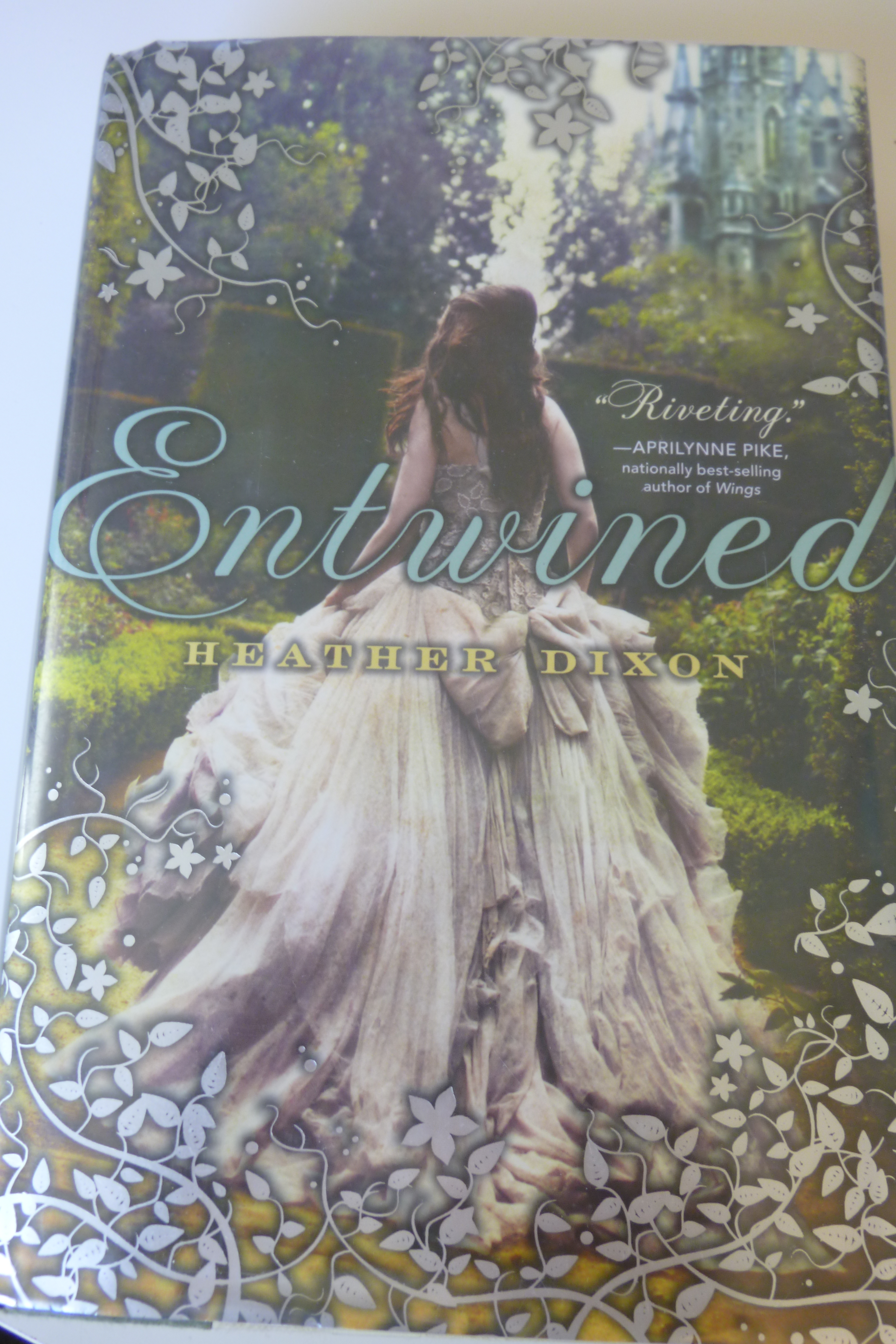
Entwined by Heather Dixon is one of those books I saw make the rounds of several blogs I follow.  And of course I was intrigued–it’s another retelling of “The Twelve Dancing Princesses.”  I reserved this at the library months ago, but the hold list was so long, it finally looked like it was about to come in during November.  Since I was spending November writing my own retelling of the same story, I didn’t want to read this then–I was sure I’d end up subconciously plagiarizing something!  So I put my request on hold, and finally read it in January, after finishing my own novel.

Entwined centers on Azalea and her eleven sisters, all named for flowers or plants and helpfully in alphabetical order: Azalea, Bramble, Clover, Delphinium and so on.  I frequently had to run through the alphabet to figure out the approximate age of, say, Jessamine or Kale.  The princesses’ mother dies early in the book, and the official rules of mourning restrict them from dancing for a year (among other things).  The girls discover a hidden passage leading off their room, relic of a magician-king from two hundred years ago.  They find an enchanted silver forest and a pavilion, whose guardian, the Keeper, tells them they are welcome to come and dance every night.

This book started slow for me.  The first half was only so-so, but it did pick up in the second half.  The turning point for me was when Keeper started threatening the soul of Azalea’s mother, to force Azalea to free him from captivity in the magic pavilion.  It was the first time Azalea seemed to have any significant motivation, and also when she finally figured out how creepy Keeper was–which had been pretty obvious to me from the beginning.  Prior to that, really wanting to dance just didn’t seem like adequate motivation to defy their father and go dancing every night in a pavilion owned by a very sinister stranger.

The romances also pick up in the second half of the book, for Azalea as well as Bramble and Clover.  This actually did a lot for Bramble and Clover as characters.  Prior to that, Clover was very quiet and Bramble was very immature.

That leads me to another point–this book made me think about what is perhaps the first fundamental question of retelling this story.  Namely, which sister to focus on?  The oldest?  The youngest?  Someone in between?  This is a larger question than it might seem, because there seems to be an unwritten rule that the heroine has to be around sixteen or seventeen.  If you give your seventeen-year-old heroine eleven younger sisters, simple math tells you that most have to be children.  Making her one of the younger ones means she can have adult sisters.  In a way, it’s a choice between giving your heroine a circle of peers, or making her a baby-sitter.  The fact that I put it that way probably tells you already that my heroine is at the younger end, #9, with sisters ranging between the ages of 15 and 25 (with a couple sets of twins).

Azalea is the oldest princess, and she spends a lot of time looking after younger siblings.  Most of them completely run together for me.  Even though Bramble should be about 15, she spends the first half of the book seeming very young.  It gets better when she and Clover get a little more screen time, a little more maturity, and can serve more as equals for Azalea.

Another major arc of the book was the relationship between the princesses and their father.  The King starts out as very cold and apparently aloof, but ultimately develops into a caring father (who simply doesn’t always know how to relate to his daughters).  Sometimes that transition is jarring, but it does come together in the end.

There are things I liked about Entwined too.  Some of the description was good, and I liked the treatment of the dancing.  Dixon clearly knows something about dancing, and there’s plenty of discussion about what kind of dance the princesses are dancing, and how they feel.  I do feel convinced about the importance of dancing to Azalea, and there’s good description of what it means to her–for one thing, it’s a connection to her mother, and it also gives her a sense of freedom and of magic.  I believe dancing is important to her–it just doesn’t seem quite important enough for some of the choices she’s making.

This was a good book, with a great climax, and nothing really wrong with it (other than some bland sisters, but with twelve there’s only so much you can do).  It didn’t quite spark for me, though.  Good–but not fantastic, and not particularly distinctive compared to other versions of the story I’ve read.  Aside, that is, from the cover–definitely one of the most beautiful books I’ve read in a while!

Author’s Site: http://www.harperteen.com/authors/37209/Heather_Dixon/index.aspx

Other reviews:
Between the Stacks
Charlotte’s Library
While We’re Paused
Yours?

NaNoWriMo Revisited

As you most likely know, I spent November working on a novel for NaNoWriMo–National Novel Writing Month.  I finished the 50,000 word goal in November, but didn’t actually finish the novel.  So I set a new goal of 25,000 words in December, and promised to report back.

I ended up writing 26,000 words in December, finishing the goal and the novel on December 30th.  It actually was harder than the larger goal in November!  Part of that was holiday distractions; most of it was that I had blocked off November for novel-writing, and come December I had to catch up on other projects, splitting my time and attention.  I’m glad I did it this way, though.  If I had waited until, say, January to do another big push on the novel, I think I would have lost a lot of momentum.  As it was, I was able to keep going at a good rate (even if I was behind the word goal most of the month!) and use the long weekends around holidays at the end of the month to finish strong.

I really enjoyed writing a novel this quickly–it was more intense than my usual pace.  Also more exhausting!  But I got to know the characters in a different way.  I think there was less thought and more that was coming on instinct.  I guess I’ll see how that worked out when I do the revision…  I already know there are some big changes to make (like working in a character I didn’t realize needed to be there until 3/4 of the way through the book!) but I think it’s a decent first draft.

Before I revise The Twelve Dancing Princesses story (76,000 words, but I still don’t have a title…), I’m going to go back to my novel about a wandering adventurer (also title-less; it’s a problem) to do revision there.  For one thing, I need to bring some of the overlapping chapter into line with changes made while writing about the dancing princesses.

But that will probably wait until February.  If I don’t write I get depressed, so I don’t believe in fully taking time off.  However, I think I will take a month to recover from the fast pace of the last two months by doing some low-pressure writing.  I really enjoyed writing short stories for my storytelling character, so I may write more.  Or I may dip into some fanfiction, which is pretty much no-pressure, since I’m never going to publish it.

Anyway, it’s been a fun journey, and thanks for coming along.  🙂  I’ll probably share a few more excerpts from the NaNo novel for future Fiction Fridays, so stay tuned!