
You’re With The Fortunate Captain Oates

“I have been in love with Titus Oates for quite a while now—which is ridiculous, since he’s been dead for ninety years.  But look at it this way.  In ninety years, I’ll be dead, too, and the age difference won’t matter.”

This is one of my all-time favorite opening lines of a book (right up there with “All children, except one, grow up”).  I read this in a bookstore and knew immediately that I had to read The White Darkness by Geraldine McCaughrean.

The story of fourteen year old Symone’s trip to Antarctica, and how everything goes horribly wrong, is an exciting adventure in its own right.  But what I really love about this book is the relationship between Sym and Titus.
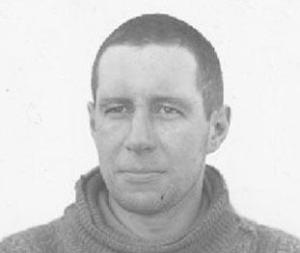
Captain Lawrence “Titus” Oates (at right, though he smiles more in the book) was an Antarctic explorer who went to the South Pole with Robert Falcon Scott.  As Sym notes, Titus has been dead for over ninety years—he died in Antarctica in 1910, with Scott and the rest of their party.  But he lives on in the present day in Sym’s head.  It’s not a fantasy—he’s not a ghost—it isn’t a time travel story—she’s not insane.  Titus is Sym’s imaginary friend.  And who wouldn’t want to be with “the fortunate Captain Oates,” as Titus describes himself in Chapter Twenty-one.  He’s charming and witty and chivalrous, the kind of friend any girl would want.

Or as Sym puts it, “He is everything, everything, everything I ever admired and wanted and couldn’t have.  He is everything I needed and couldn’t find in real life.”  And so he is her friend and confidante and loyal supporter through, first, the Hell of not fitting in at high school, and later, the Hell of the ice plains of Antarctica.

It’s hard to explain how and why a story about a teenage girl and her imaginary friend works—but it does, beautifully.  I’ve read other books featuring imaginary friends, and no one handles it as masterfully as Geraldine McCaughrean.

I also have to give a nod to the audiobook.  Ruth Sillers narrates most of the book as Sym, but Richard Morant narrates all of Titus’ dialogue.  I listened to a brief excerpt when I first found out about this.  Similar to reading that first line of the novel, I heard Morant deliver seven words and promptly handed over $25 on iTunes to buy the audio—and I don’t usually spend money easily or impulsively.  But believe me, his voice is worth following to Antarctica.  🙂

There’s a back story to Morant as narrator that I love.  Within the book, Sym describes watching The Last Place on Earth, a miniseries about the expedition, which is pivotal to inspiring her image of Titus.  And in The Last Place on Earth, Titus is portrayed by—Richard Morant.

I didn’t know much of anything about Antarctica or Antarctic explorers (sorry, Titus) before reading The White Darkness.  McCaughrean provides a helpful background on Oates and Scott, so if that’s you too, you won’t have a problem following the story.  And, like me, by the end you’ll find Antarctica much more interesting than you ever dreamed.  And while it still may not be high on your list of places to visit—it isn’t for me!—Antarctica will conjure up a magic it never had.

Author’s site: http://www.geraldinemccaughrean.co.uk/

And you can see the cover from my copy up there in the heading, towards the left.

The People the Fairies Forget

First, a Happy Guy Fawkes Day to everyone!  And an acknowledgment to Edith Nesbit and her book, The House of Arden, which taught me the November 5th rhyme before V for Vendetta made it trendy.  I’ll review Nesbit another day…

…but today is Friday, and on Fridays I plan to share my own writing.  For my first “Fiction Friday,” I thought I’d start with my biggest current project.  As you know if you’ve glanced at my “About the Author” page or my user profile, I’m an aspiring novelist, and right now I’m mostly aspiring with The People the Fairies Forget.

I love novels that retell fairy tales, so I wrote one myself.  It follows the adventures of Tarragon (or Tarry, for friends), who is an unusual fairy–no sparkles, no little wings, and did I mention he’s male?  Also unlike his sparkly fairy colleagues, he’s much more interested in ordinary people than in royalty (for one thing, commoner girls are more willing to dance at a party).

Tarry tells us his tale as he tries to help the ordinary people who end up as the unintended victims of familiar fairy tales–the kitchen maid who falls asleep with the rest of the castle when Sleeping Beauty pricks her finger…the girl who gets stuck engaged to the prince when Cinderella’s slipper fits her, even though she’d rather marry someone else…Beauty’s brother, who’d rather not be whisked off to live at the Beast-turned-Prince’s castle.  The stories are familiar, but the focus is different, as new stories lurking in the corners of the fairy tale emerge into the spotlight.

The People the Fairies Forget is a completed novel, so if you know an agent or a publisher who might be interested, I’d love to hear from you!  My email address is cherylmahoney42@gmail.com.  Here’s the first five pages–which are also available at the link above.

********************************************************************************

            If I’d had the sense to stay away from the royal christening, it might have saved a great heap of trouble.  But I never could resist a good party, or the excellent food people invariably serve at good parties.

            I made my way through the crowd at the christening, brushing past silks and satins and trusting that my hair was shaggy enough to hide my pointed ears.  That always makes it easier for me to mingle among humans.  I was trusting to the size of the crowd to keep anyone from noticing that I hadn’t been invited.  A lack of an invitation never bothers me.  Unlike some fairies I could name if I cared to, I don’t launch curses just because someone forgets to add me onto the guest list for their festivities.  Besides, there’s nothing like a curse to kill a mood and spoil everyone’s appetite, which wouldn’t help me enjoy the party at all. Continue reading “The People the Fairies Forget”

Quotable Peggy Christian

“A page of print is like a secret passage that leads you to worlds so far away, you cannot imagine them until the magic of reading carries you there.”

Peggy Christian, in The Bookstore Mouse

A Sunlit and Practical Camelot

Who was King Arthur’s greatest knight?  I haven’t polled anyone, but I have this feeling that if I did, the answer would come back as Lancelot.  But not if I asked Gerald Morris.  He’s of the opinion that it was Sir Gawain–and after reading his Camelot series, I’m in his camp on this one.

The first in the series is The Squire’s Tale.  The squire in question is Terence, and, as you no doubt expect, he is squire to Sir Gawain.  From Camelot to the fairy realm of the Other World, the two embark on a series of adventures, some hilarious and others suspenseful.

Terence is one of those heroes who is charmingly unassuming.  I’m sure it never occurs to him to think of himself as a hero–after all, he’s “only” a squire.  Sir Gawain probably knows he’s heroic–he’s got the horse and the armor and the sword, after all, along with the knighthood.  But he’s also wonderfully down to earth and practical.  For instance, when he encounters a knight who wants to fight anyone crossing a river, Gawain wants to know why, and doesn’t the man have anything better to do with his time?

I think I love Morris’ books, not only for the wonderful characters, but equally as much for the world they live in.  Morris tells Camelot the way it ought to be–Arthur is wise and noble, his knights are brave and loyal, there are recreant knights to fight at every crossroads, and mysterious magical beings (including one bearing a marked resemblance to Puck) lurk behind the trees.  And all of it with that practical bent that pokes a little fun at the more absurd parts of the legends.  I suppose there’s a place for stories of the darker side of Camelot, but I like Morris’ sunlit version.

And it’s not that there aren’t villians and danger, or that anyone is so saccharinely good that it gets dull.  The adventures are exciting, the characters are human, and watching Gawain and Terence grow as people and as friends adds more depth to the story too.  I love stories about comrades in arms–people who have fought together and struggled together and would die together if it came to that.  Except it probably won’t, because they’re good at what they do, and they’re even better together.  That’s why I like Star Trek too.  But that’s another review.

At the end of each book, Morris includes an author’s note about the Arthurian legends he drew on for his story.  Terence is original, but many of the other characters and plot elements come from older tales.  Some are familiar, and others are very surprising–especially some of those more absurd ones.

And if you’re wondering where the Green Knight is…that’s the second book in the series.  And another review.  🙂

Quotable Neil Gaiman

“Stories you read when you’re the right age never quite leave you.  You may forget who wrote them or what the story was called.  Sometimes you’ll forget precisely what happened, but if a story touches you it will stay with you, haunting the places in your mind that you rarely ever visit.”

–Neil Gaiman, in the introduction to M Is For Magic, which, contrary to its title and designation, is not really appropriate for children

Gaiman has written multiple novels for children and for adults, as well comic books.  Some of his best known books are Stardust, American Gods and Coraline.  I particularly recommend The Graveyard Book.