Author: cherylmahoney
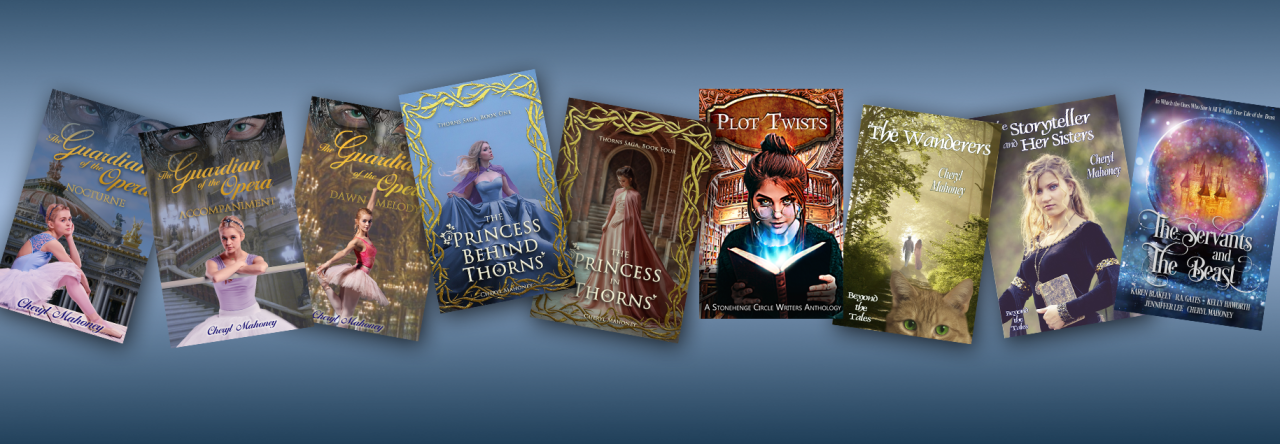
I'm a book review blogger and writer. I have published four novels, The Wanderers; The Storyteller and Her Sisters; and The People the Fairies Forget; and The Lioness and the Spellspinners. All can be found on Amazon as an ebook and paperback. In my day job, I'm a Marketing Specialist. Find me on Twitter (@MarvelousTales) and GoodReads (MarvelousTales).
Tarzan and an Unexpected Jane
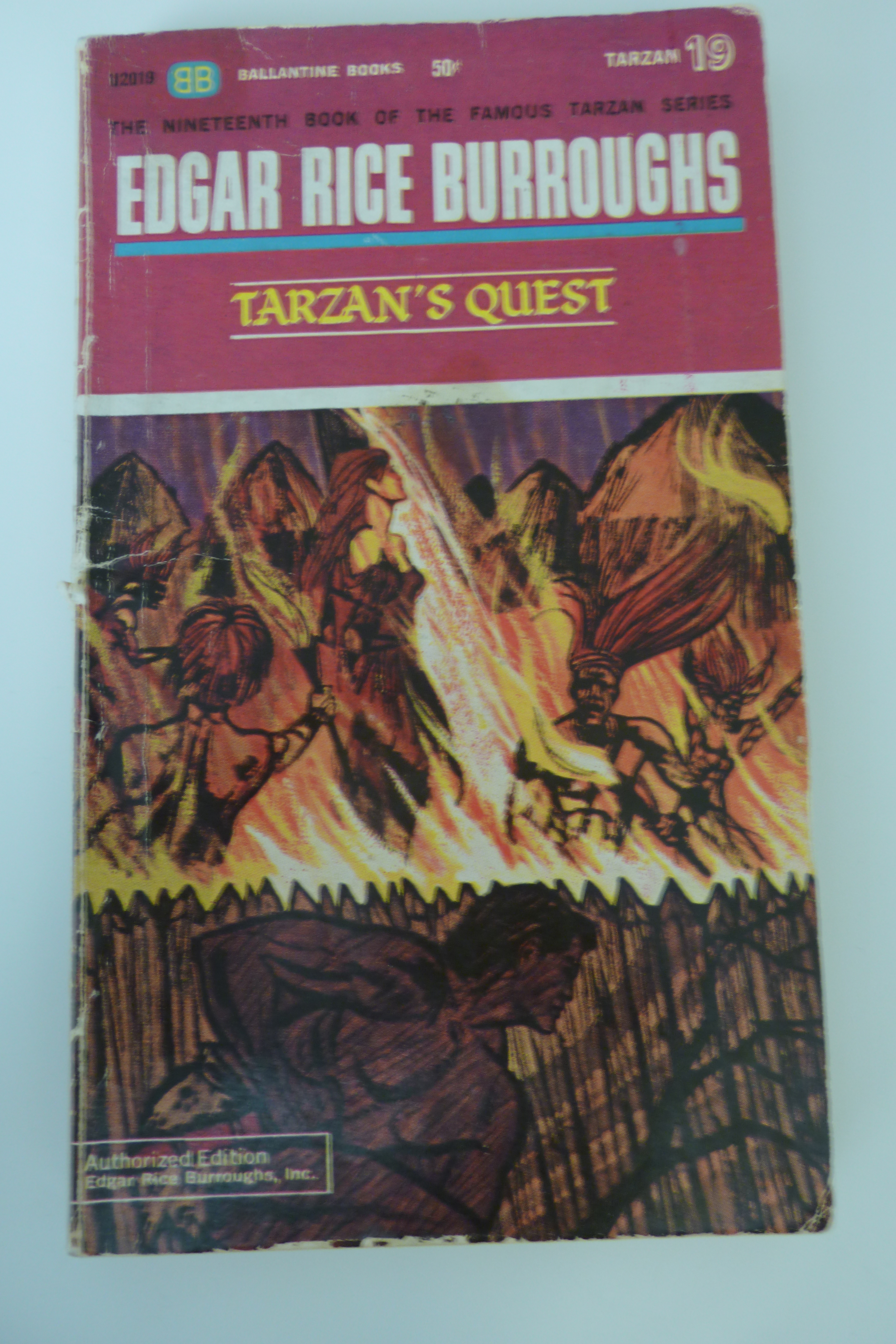 I’ve read over 40 books by Edgar Rice Burroughs, so it’s really saying something when I say that he managed to surprise me in Tarzan’s Quest, my most recent foray into his world.
Tarzan’s Quest is the 19th book in the Tarzan series, and as you might guess, by that point (a lot earlier, actually) they were all starting to look alike. Burroughs’ usual plotline is “girl gets kidnapped or is otherwise in distress, hero rushes to her rescue.” The Tarzan books often like to also throw in an element of “questing through the wilderness, usually to find a lost civilization.” To some extent, this is another book of the usual pattern.
It opens with Jane in London. She and Tarzan are married, but currently apart–he’s off in Africa, and she’s about to fly to meet him. She ends up traveling with friends, a delightfully flighty society woman and her nasty husband. They’re caught in a storm and forced to make an emergency landing in the African jungle. Meanwhile, Tarzan is out swinging through the trees with his pet monkey, Nkima, looking for a mysterious tribe who has reportedly been kidnapping girls–and who may have the secret to eternal life.
Tarzan’s story is pretty much the usual Burroughs fare. It’s Jane’s story that surprised me–and Jane herself. This was #19, and as far as I know Jane had dropped out of sight since #8 or thereabouts. We only knew she was still alive because Tarzan heroically resisted the advances of all the beautiful princesses from lost civilizations who fell in love with him. Suddenly Jane’s back, and as a very different character. This Jane is actually capable.
Burroughs sets Jane up as a contrast to her flighty society friend, Kitty, who screams and moans and can’t handle anything at all in the jungle (and to be fair to her, it’s probably a more realistic reaction to the situation!) Jane takes charge of her lost band, goes clambering about in trees, makes a bow and arrow out of the materials at hand, tracks prey by scent, and shoots down a leopard. It’s all kind of amazing.
Admittedly, in some ways it’s bad storytelling because this is never how Jane was before. She’s been lost in the jungle in previous stories and survived, but she seemed to be subsisting rather than excelling. She’s been married to Tarzan for 18 books, but in all the previous books she’s been very much the fine Lady Greystoke, whose husband happens to have this odd thing for the jungle. I probably should object to her sudden metamorphosis into the jungle girl–except that it’s so fun! The Jane in this book is actually an appropriate match for Tarzan, able to embrace the jungle-side of his personality, not just the Lord Greystoke part. Plus, it’s so hard to find a capable heroine in Burroughs that I will applaud whatever I can get.
Jane’s story also involves a quite brutal murder which is not something I expect in Burroughs. Blood, yes, always, but the victim and the circumstances here are very different than the usual Burroughs swordplay.
The serum for prolonging life is also an interesting element here. It’s treated fairly lightly by the characters, but seems to be Burroughs’ rather belated solution to Tarzan and Jane never aging. They have a grown son by book 4, but then go on seeming no older than 30 for the next twenty books. Perhaps we shouldn’t assume the books take place chronologically in the same order they were written. Very few give any indications re: time period, and placing this one early on would certainly explain that age issue.
On the whole, it was a fun Burroughs adventure, and Jane’s character made it stand out from some of the others. If you’re curious about it, don’t feel obliged to read the previous 18 books first. The first five are best read in order, and after that it doesn’t much matter–and once you’ve read the first two, I think you could jump to any book from #6 on.
Other reviews:
Jcomreader
Not surprisingly, not many out there. Let me know if you find another!
After Waking the Princess
 What happens after the hero kisses the sleeping princess? It’s far more complicated than “they lived happily ever after,” especially when the hero is from the modern world and knows nothing at all about swinging swords or fighting evil witches!
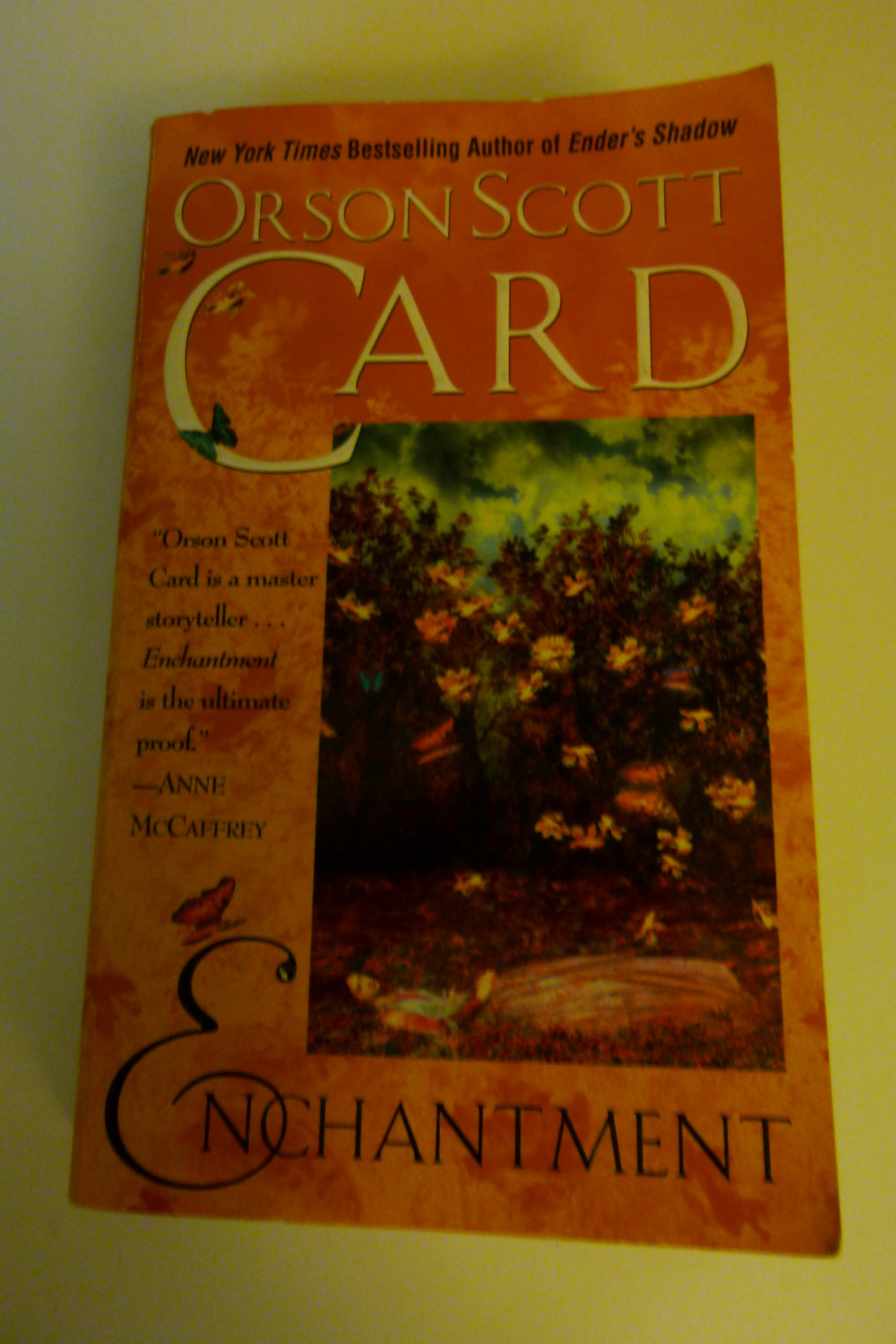
Enchantment by Orson Scott Card was my second book for the Once Upon a Time Challenge, and it also goes towards my Dusty Bookshelf challenge. Abridged background: I picked it up at a book swap my book club did, I think roughly last summer. I picked it up because, well–Orson Scott Card! At the time I actually hadn’t read anything by him, but I had been hearing about Ender’s Game forever (which I did finally read). I was also intrigued by the plot summary: as a child, Ivan sees a sleeping princess in the forest one day, and runs away. But then years later, he comes back…
That was all that was in the summary, and it turns out to be only the very beginning. It also wasn’t clear until I turned to Page One that Ivan lives in the modern world. He’s from Eastern Europe, though his family emigrates to America when he’s a child. He returns to Ukraine to work on his dissertation on fairy tales, and ends up drawn to a clearing in the woods, where he finds the sleeping princess he had convinced himself he imagined. He fights the bear guarding her and wakes up Katerina, a princess from the 9th century. He ends up back in her time, where the imminent threat of Baba Yaga is just part of his troubles.
I love the concept of this one. It gets at some great questions about the original fairy tales, and points up a fundamental problem usually ignored–the man waking the sleeping princess is not necessarily at all suitable to be king, or to marry the princess! Ivan goes through a lot of trials trying to deal with the society of the time, from his lack of prowess with a sword to disconcertingly different views on nudity. I especially liked it that Ivan goes into this with a scholar’s knowledge–his focus is old fairy tales, so he knows how the stories work, a fair bit about the history, and also what Disney says about it. One of my favorite moments is when he arrives in Katerina’s village and is trying to reconcile what he’s seeing with his historical knowledge, and with Disney’s Sleeping Beauty.
I did have some trouble getting into this book. The beginning is spent on Ivan and his life in the modern world; it’s necessary, but it also dragged a little. It picked up when he woke up Katerina. I liked the part in the past (although I think I liked the IDEA a little more than the actual handling of it). The book really got good for me when Ivan and Katerina come back into the modern world (slight spoiler, but it’s only halfway through). Besides how interesting it is to watch Katerina deal with the modern world, there are some fascinating revelations about Ivan’s family and, perhaps most important, the story gets much more focused on the fight with Baba Yaga.
The characters didn’t make a huge impression on me, good or bad. Katerina and Ivan’s relationship was ultimately satisfying, although at times I thought Card was a little heavy-handed about it. They spent much of the book misunderstanding each other, and there was a little too much of “Oh, I thought he meant THIS but what if he meant THAT and in that case maybe I’ll feel THIS way instead of THAT way…” Less explanation and analysis probably would have been preferable.
Despite being a fairy tale, this is definitely an adult book. It’s adult-level writing, and also Baba Yaga has a thing for torture. There isn’t huge detail, but there’s enough.
On the whole, a good book. I liked it. I didn’t love it. I don’t plan to keep it because I don’t see myself as likely to revisit it–but it was good to read once.
Author’s Site: http://hatrack.com
Other reviews:
Breathing Fiction
Wynter Adelle
Semicolon
Anyone else?
Saturday Snapshot: A Cathedral Tour
Happy Easter! I was hunting for photos with a religious theme for Saturday Snapshot this week, and finally hit on sharing cathedrals. I have visited a LOT of churches on various trips. Whether you’re religious or not, they tend to be such centers for culture and history, especially the older ones. Here is a smattering, mostly England because I didn’t have a digital camera on some of the other trips!
First, St. Paul’s Cathedral in London, where the bird woman sells her birdseed and “the saints and apostles look down,” according to Mary Poppins.

Next up in London, Westminster Abbey, where you can’t walk without stepping on the grave of someone you recognize.

Salisbury Cathedral in (you guessed it) Salisbury, England. If it appears to be tilted, it wasn’t the camera. It really is a little bit off-vertical.

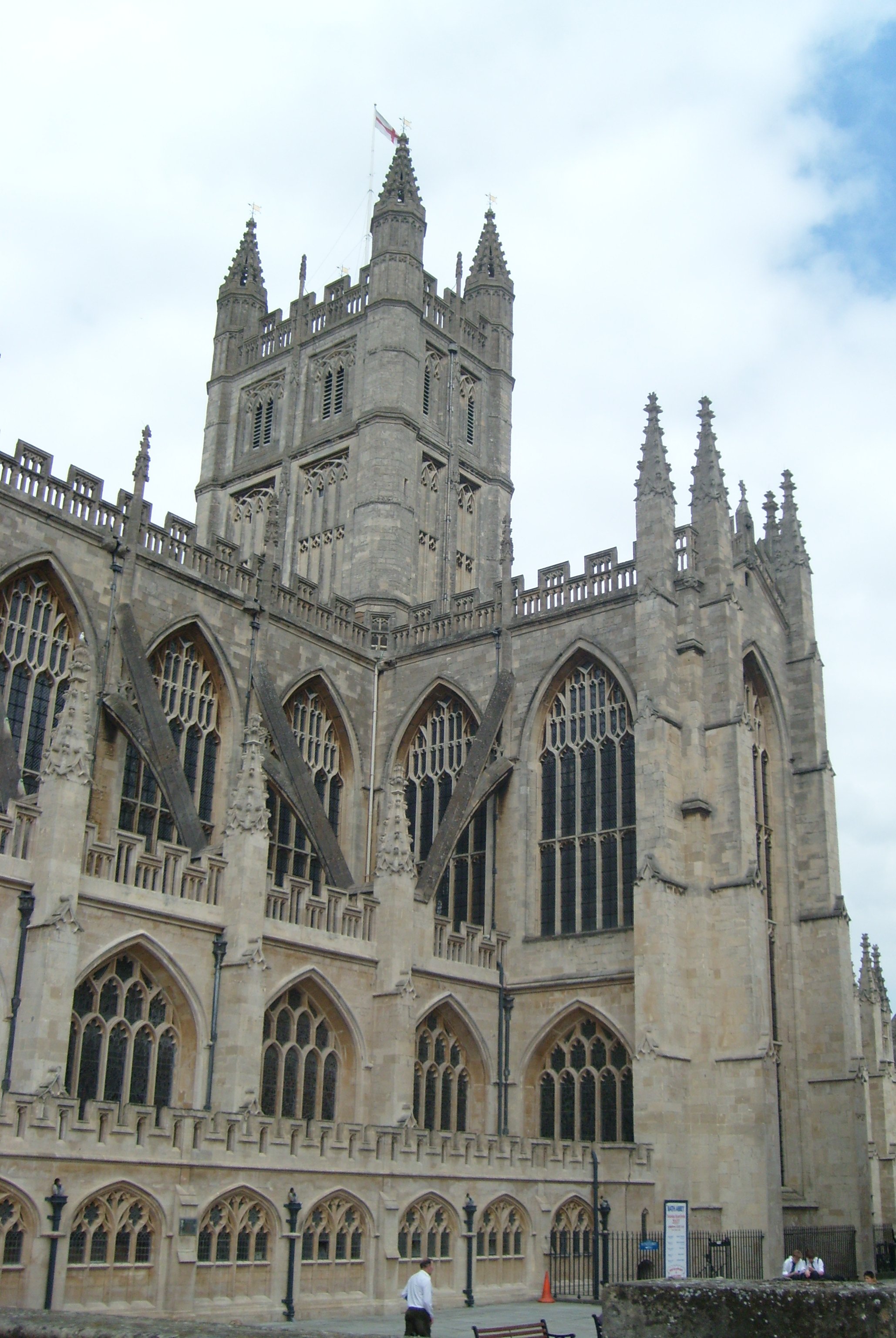
Bath Abbey in, of course, Bath. This is from the back–I just love those arches.
Church of St. John the Divine in New York. It was completely impossible to get it all within the camera lens–it’s enormous. And I couldn’t photograph the best part, because inside someone was playing the most beautiful organ music.

I have not actually been to Notre Dame Cathedral in Paris, but my parents took this picture, and I’m hoping to go myself this fall. I want to see Quasimodo’s bell towers!

What are the most beautiful churches you’ve seen?
More Songs About Following Your Dreams
I love big, loud, inspiring songs about pursuing your dreams–whatever dream matters most to you. Apparently quite a few other people do too, because my post on the subject has been one of my most popular. So I thought–why not a follow-up?
My last post featured two of my favorites, “A Piece of Sky” sung by Michael Crawford, and “Santa Fe” from Newsies. Here are a handful of other particularly inspiring ones! As usual with songs, links will take you to a song video.
 “It’s a Long Way Up” by Barry Manilow
If Barry Manilow has any recurring theme in his songs besides “I loved her and I lost her” it’s about chasing dreams, and “It’s a Long Way Up” is just about perfect–loud, defiant, determined.
“Don’t give up the dream, you know it’s dark before the dawn.
When you think you just can’t take it, you see, that’s when you’ll make it.
But you got to fight a little harder, you got to push a little more,
You got to gamble everything you’ve got to get you through the door,
‘Cause it’s a long way up when you’re coming from nowhere.”
Just apply it to whatever you’re struggling with, and sing it loudly!
“Just Around the River Bend” from Disney’s Pocahontas
I love Pocahontas’ exhilarated singing as she thinks about choosing a safe path, but can’t resist the call of her dreams somewhere in her future – “why do all my dreams extend, just around the river bend?”
“Before the Parade Passes By” from Hello, Dolly
A large-scale production number about stepping out and embracing life: “I need a goal again, I need a drive again, I want to feel my heart coming alive again…before the parade passes by.” In this clip, Streisand doesn’t get properly enthused until 3:40 into the video, but it was the only one I could find.
“Don’t Rain on My Parade” from Funny Girl
Another Streisand song, this is all about charging ahead even if you fail–and don’t let anyone deter you: “Don’t tell me not to fly, I’ve simply got to. If someone takes a spill it’s me and not you. Who told you you’re allowed to rain on my parade?”
 “Defying Gravity” from Wicked
This song did more to make me like and understand Elphaba, the Wicked Witch of the West, than Maguire’s entire 500 page book. Elphaba has decided to cast off ties, cast off restraints, and set out to change her life and the world, defying all limits along the way.
“I’m through accepting limits because someone says they’re so.
Some things I cannot change, but ’til I try I’ll never know…
And so if you care to find me, look to the Western sky.
As someone told me, they believe everyone deserves a chance to fly.
And if I’m flying solo, at least I’m flying free.
To those who’d ground me, take a message back from me–
Tell them how I am defying gravity.
I’m flying high, defying gravity!”
A surprising predominance of soundtracks, which I didn’t realize until I assembled this list–maybe it means I need to look farther afield. What would you recommend? 🙂

