Ordinary–But Charming

I’ve read several books about ordinary princesses.  The danger is that ordinary can sometimes be only half a step from boring, and when you set out to make your heroine ordinary, you sometimes end up with a heroine who is so very ordinary that she’s not at all interesting or distinctive.  But, on the other hand, sometimes it works.  There’s nothing at all boring about Amy in The Ordinary Princess by M. M. Kaye.

I have to love a book that begins “Long and long ago, when Oberon was king of the fairies, there reigned over the fair country of Phantasmorania a monarch who had six beautiful daughters.”

Amy is born seventh, and is cursed–or blessed?–at her christening by a fairy to be ordinary.  Unlike her blonde-haired, blue-eyed and breathtakingly beautiful sisters, Amy has mousy brown-hair and a turned-up nose, is not the least bit graceful, and is, well, ordinary.  But she knows how to climb down the wisteria vine growing by her window and go off into the forest to climb trees and make friends with squirrels, and she has a wonderful practical bent.  Of one of her sisters’ suitors, she thinks, “He may be very good-looking, but I’m quite sure he has never giggled one good giggle in his life!”

When Amy’s turn comes to get married, the royal family is at an utter loss to find an interested prince, so they decide the solution is to bring in a dragon.  That will of course tempt some prince to come kill it, and then he’ll have to marry the princess.  Not wanting a dragon to lay waste to the country, Amy decides to run away.

She goes on to have quite ordinary adventures, in the forest and later as a kitchen maid at another castle, where she falls in love with a man-of-all-work.  They’re ordinary adventures in the most charming way.  The writing is very good, and Amy is a sweet and endearing heroine.  She somehow seems utterly unlike a lot of the brown-haired, tom-boyish, clumsy “ordinary princesses” that populate other books of this sort, even though point by point she has a lot in common with them.  Maybe it’s simply better writing.

I love practical, pragmatic, humorous stories loosely inspired by fairy tales, and this one’s a favorite.

Looking for a Journey

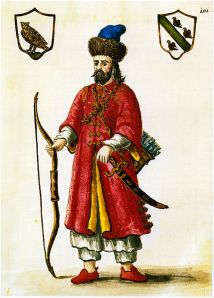
Looking for Marco Polo by Alan Armstrong was a fascinating read, but not for the reasons the author was hoping, I’m sure.  Mostly, I was trying to figure out exactly why it just wasn’t working for me.

Marco Polo

First reason: faulty advertising.  Or maybe, an unclear metaphor.  I picked this up at the library, and from reading the description on the inside of the front jacket (does that description have an official name?) here’s what I gathered: Mark’s father “has disappeared in the Gobi Desert while tracing the path of Marco Polo.”  Mark and his mother go to Venice to talk to the agency that sent his father to the desert, trying to find him.  Mark meets Dr. Hornaday, who starts telling him the story of Marco Polo and “before he knows it, Mark–like his father–is on the trail with Marco Polo as he travels the Road of Silk.”

So what am I expecting: that Mark’s father is on some kind of special expedition specifically focused on Marco Polo–it says that, right?  Probably the mystery of his disappearance has something to do with that.  Mark, in turn, will find himself fascinated by whatever his father’s Marco Polo-related mission was, and end up traveling through the desert, either in the modern day or, even better, somehow going back in time.  If I’m crazy to draw those conclusions, someone tell me.

What is the book actually about?  First, Mark’s father is in the Gobi Desert, but he’s studying the people.  It’s the same place Marco Polo was in, and Mark’s father does mention that when he gives him a copy of Polo’s book, but otherwise, his expedition has no connection to Polo.  Second, and much more importantly, Mark doesn’t go anywhere beyond Venice.  “On the trail” and “looking for Marco Polo,” are metaphors.

What this really is, is Mark and Dr. Hornaday sitting in a cafe and occasionally walking around Venice, while the doctor talks about Marco Polo’s trip.  It’s not that the stories aren’t interesting–but it’s not what I was expecting.  Problem one: failed expectations.

Once I was about 150 pages in and realized this was all there was, and I should stop waiting for Mark to go anywhere, I tried to readjust to the new trajectory of the book.  And to figure out, beyond the failed expectations, why it wasn’t working.  I like the story of Marco Polo.  I chose to do a report on him in high school.  I like Venice.  The stories Dr. Hornaday is telling are good ones.

But.  Mark and Dr. Hornaday are ultimately a frame story for Marco Polo.  The trouble is, they’re a frame story that won’t go away: problem two.  Once in a while Dr. Hornaday talks for so long and in such detail that you almost forget you’re still sitting in a cafe.  Most of the time, that doesn’t happen.  I would much rather be in Marco Polo’s story, with the level of immersion and detail that would allow, rather than sitting at a surface level where it’s limited by what Dr. Hornaday can say out loud, and where every so often Mark asks a question and pulls me out of Kublai Khan’s court entirely.

I think I would have liked this book better if Armstrong had given Mark a couple of chapters to set up his world, and then Dr. Hornaday had said, “Let me tell you about Marco Polo…” and launched on a 200 page narration of Marco Polo’s life without another reference to Mark or the doctor.  That’s how a frame story should work.  That’s how The Time Machine does it, or how Burroughs wrote a lot of his books.  This telling of the two stories at once never let me really get into either one.

It was actually fascinating to observe from a literary standpoint.  It made me think a lot about frame stories and how they function–or not.  And if you want to know about Marco Polo, this does that.  There’s even a bibliography at the end.  But if you look at the description, be warned–all is not as it seems, and I don’t mean what’s going on in the Gobi Desert.

A Window in Thrums

I bought A Window in Thrums because L. M. Montgomery recommended it to me; she mentioned it in her journals.  She mentioned a lot of books she read in her journals, and since this one was by J. M. Barrie I decided to try it.  But this isn’t a book review, this is a Fiction Friday post.

I recently wrote about books as objects, especially pieces of history, and mentioned my copy of A Window in Thrums.  It’s a good story, but one of the most interesting aspects of my copy is the inscription on the flyleaf: “For Grandma from Mary Eunice, December 25th, 1898.”  I don’t know who Mary Eunice or her grandmother were, since I bought the book used online only a few years ago.  But shortly after buying it, I decided to write a story imagining who they might have been, and who else might have owned the book over the years.

************************************

A Window in Thrums

            “Do you think Grandma will like it?” Mary Eunice asked, hugging the book to her chest.

            “Of course she will, dear,” her mother said firmly, continuing briskly down the row, eyes on the baskets of fruit for sale.

            Mary Eunice frowned, the frown of a girl just old enough to start questioning firm parental assurances.  “But will she really like it?” she persisted, hurrying after her mother.  “I want her to like it because she really likes it, not just because it came from me.”

            Her mother absently picked up an apple, put it down, and went on to the oranges.  “There’s never anything really fresh this time of year,” she muttered.

            “But, Mother, will she?”

            “What?  Oh, the book.  Yes, of course, you know she likes Mr. Barrie’s novels.”

            “That’s true,” Mary Eunice said thoughtfully, feeling reassured.  She watched her mother walk down the row but stayed where she was, to look at the book in her hands.  She enjoyed the proud thrill of ownership for at least the twelfth time in the last ten minutes since they’d walked away from the bookstore.  It was the first book she’d ever bought with her own money.

            Mary Eunice thought it was the prettiest little book she’d ever seen.  The cover was dark blue, with silver curls and swirls and a scattering of pink flowers.  The spine was the same, the back pale gray, the pages crisp and white.  Mary Eunice ran her fingers lightly across the silver title stamped on the cover: A Window in Thrums.  She checked on her mother, saw she hadn’t gone very far, and carefully cracked open the book.  She turned a few pages and found Chapter I.

            “On the bump of green round which the brae twists, at the top of the brae, and within cry of T’nowhead Farm, still stands a one-storey house, whose white-washed walls, streaked with the discoloration that rain leaves, look yellow when the snow comes.”

            Mary Eunice stopped reading with a puzzled frown and closed the book.  “Oh well,” she whispered to it, “I still think you’re the prettiest little book I ever saw, even if I don’t know what a brae is.  And Grandma likes Mr. Barrie’s writing.  That’s what matters.”

Continue reading “A Window in Thrums”

The Irrepressible Jacky Faber

I recently read the eighth book in the Jacky Faber series, and I’m wondering how long L. A. Meyer can keep this going.  And I’m hoping it will be a long while!

The series follows the adventures of Jacky Faber…sailer, soldier, pirate, fine lady, spy…oh, and Lily of the West.  Among other things.  Set around 1800, it all starts in Bloody Jack, when orphan Mary Faber decides that the way out of the gutter is to sign onto a Royal Navy ship as a Ship’s Boy.  Obviously that second word presents complications, so Mary becomes Jacky and disguises herself as a boy.

Jacky is an incredibly fun character.  She’s endlessly creative with her schemes and ideas, wildly emotive, rarely depressed no matter what life throws at her, fiercely loyal to her friends and endlessly ambitious to better her life and the lives of the people she cares about.  She has dreams of creating a worldwide shipping industry, and despite usually being only one step ahead of a vast number of people chasing her, she also manages to keep chasing those dreams.  Honestly, she’s like a cork–the world keeps trying to push her down, and she just keeps bobbing merrily up again.

Throughout the series, Jacky gathers a cast of equally memorable characters around her.  A couple of favorites: there’s Higgins, who always maintains the exemplary dignity of a gentleman’s man servant, is enormously helpful faithfully following Jacky through all her adventures, and always makes sure that she keeps her hair at least moderately clean.  And there’s Amy, a very proper young lady from Boston who is frequently shocked by Jacky but loves her like a sister anyway.

There’s also Jaimy, Jacky’s “own true love.”  To be honest, I’ve never been all that impressed by him myself, but she seems to like him.  I don’t dislike him, but (at the risk of a slight spoiler) they don’t spend a lot of time together and after the first few books I lose interest in their romance.  It actually feels like Meyer keeps contriving ways to keep them apart (not emotionally, more often physically apart) as a way to keep the adventure going.  While I approve entirely of keeping the adventure going, I wish he’d either just get them together and let them have adventures together, or break them up and move on.

However, that’s my one biggest criticism of the series.  And it’s a wonderful series–funny, suspenseful, exciting.  Jacky travels from England to America to Australia having a neverending series of mishaps and adventures.  I like to read before going to bed, and I’ve had to stop doing that with some of these because they’re too exciting and it wasn’t relaxing!

Adventure after adventure, I keep turning the pages with usually the same question: how is Jacky going to get out of this one?  After eight books, I don’t feel like the quality has dropped off–so I’ll keep reading to see how Jacky will escape from her latest entanglement.

Author’s Site: http://www.jackyfaber.com/

Books As Objects

I’ve lost track of how many conversations I’ve had over the subject of e-books.  Wonderful new revolution in books?  Horrible travesty attacking the very nature of reading?  Well, I’m not sure I’d come down quite at either of those extremes.  But it has made me think about books as books.  Not as keepers of stories, though they’re that of course, but books as objects.
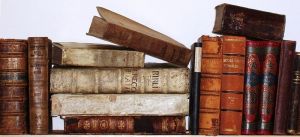
Books, by their very nature of being books and not e-books, function in a completely different way.  And I don’t mean function in the sense that you turn pages.  I mean their physical shape, what they look like, the space they take up, the markings they hold, and all that means.

Looking over my bookshelves, some are very marked-up.  Not marked by me–I rarely write or highlight in books–or even marked by anyone else trying to note favorite passages.  But I love buying used books and I’m a frequenter of my library’s sale section, so I have quite a few books that look as though I ought to be paying late fees on them.

This isn’t true of every book I’ve bought from the library, but a number have been sold with all their library stickers and designations still intact.  So I can look along the shelves and tell you that this book used to belong to the Rancho Library, and that one came from McKinley.

I enjoy that, maybe because 95% of the books I read come out of a library.  With the volume of books I read, I would be very poor if it weren’t for the institution of libraries.  Since most of the books I’m holding from day to day have stickers on their spines and stamps on their tops, somehow I feel fond of the ones I own that look that way too–even though I’m sure it would lower their resale price.

This also says something about books as remembering objects.  Somewhere I read a quote–and I can’t remember where–about objects having value for their ability to connect us to the past, and to the future.  Books are the main objects I own that give me that feeling.  I like being able to hold a book and know that it has existed through past years.  Most of my books were bought used, so they’ve been read by other readers before me.

Those library stickers give the books history.  Rancho was my library growing up.  McKinley is my library now.  I don’t have any books with stickers from the libraries I went to in college, but I wish I did.

I love books with history, either mine or their own.  Whenever I’m buying an old book, I try to find the oldest edition I can (provided the prices are reasonable!)  I always hope to find a used book with an interesting inscription written on the flyleaf, especially something with a very old date.  I have two that are particularly good.

I have a copy of Poems by Robert Browning.  It was my grandma’s, and from the inscription I know one of her best friends gave it to her on her 18th birthday.

I also have A Window in Thrums by J. M. Barrie, published in 1897.  The inscription reads, “For Grandma from Mary Eunice, December 25th, 1898.”  I’d so love to know who Mary Eunice was, and who else owned the book in the last century.

Those are my most extreme “books as pieces of history.”  Most of my books don’t have such a colorful past.  But most have some story behind them, if only “I bought this/received this as a gift/somehow acquired it at this time for this reason and I wanted it because…”  And I like it enough to carry it around with me ever since, and here’s the history of my life during the time I’ve had it.

I gave thought to the physical appearance of a lot of my books before I bought them.  Do I like the cover, or does the main character not match my image of her?  I just passed up a very cheap copy of a book at a library sale because it was the movie cover edition, rather than the original cover (and it’s not a very good movie).  I’ve bought new copies of some books because all my other books in that series are new, and bought used copies of other books because all my books in that series are used.  I once gave away a new copy of a Burroughs book and bought a used edition because the new copy was disrupting my set of battered 1960s paperbacks.  I’ve created my own covers for paperbacks that have cover images I don’t like, and discarded the dustjackets of hardbacks that look better without them.

I went searching for a beautiful copy of Peter Pan when I already owned a battered paperback, and bought the edition with illustrations by Scott Gustafson.  When I bought copies of Alice in Wonderland and The Wind in the Willows, they had to meet the same criteria of beauty.

I’m not against e-books to a 100% extent.  I think they’re a nice idea for text books, for travel, and for anyone who doesn’t feel any of the things that I’ve written about today.  And not everyone does.  If you hold on to your history another way, then perhaps you don’t need physical books.

But I, and I think a lot of readers, do need physical books.  Because I can’t imagine any way that e-readers will ever duplicate what I’ve been writing about.  It’s hard to imagine scrolling through an e-book collection on a Kindle or a Nook or an iPad and thinking, oh, I remember I bought this back when…and I’ve transferred it from device to device…  Maybe.

But I’m never going to look at inscriptions in e-books and wonder what little girl gave it to her grandmother more than a century ago.  I doubt my granddaughter will be keeping an e-book that belonged to me as an heirloom.  An e-book will never connect me to the past or to the future.  I’ll never line e-books up on a shelf and feel satisfied with how nice they look.  Can I choose an e-book based on its illustrations?  Maybe, but not for the weight of its paper, the shininess of its pages, or the size of it.  I can’t buy an e-book that was published in 1902, or a 1914 copy of Anne of Green Gables (same cover as the first edition).  You can’t ask an author to sign an e-book.

It’s true an e-book will give you the story.  But a book will give you so much more.