An Enchantress or an Alien–or Both

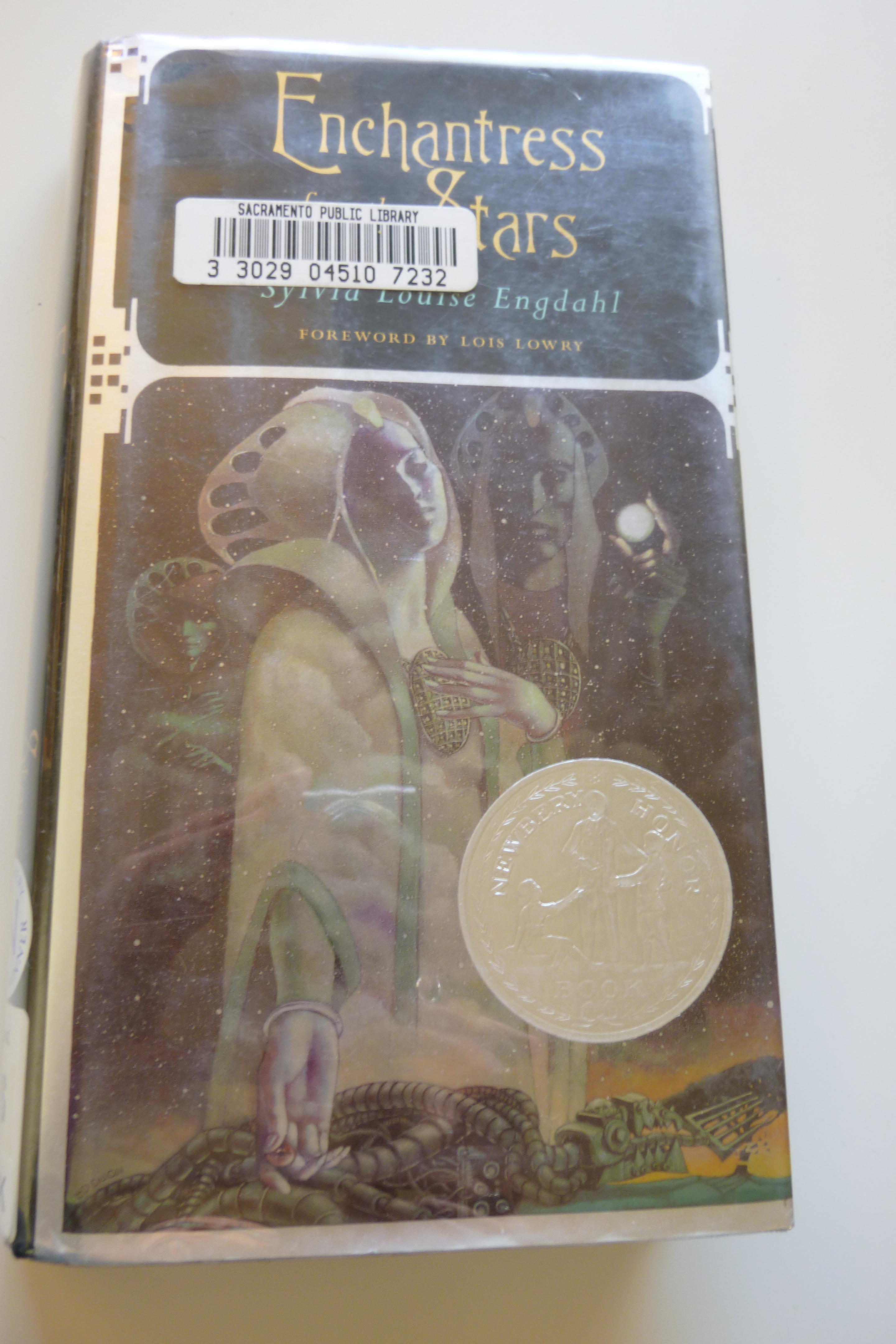
Science Fiction and Fantasy get lumped together all the time, in discussions, in “Best of” lists, in the bookstore.  But you rarely see them together in a single novel.  Enchantress from the Stars by Sylvia Engdahl is a brilliantly-devised story that could be in Earth’s distant past–or even more distant future.

The story is told by Elana, who belongs to a society far advanced beyond present-day Earth.  She is part of a Federation of many planets, joined together in peaceful cooperation.  They study less advanced worlds, but have a strict non-interference policy, believing that it’s best for cultures to develop without knowing about more advanced races.

(For the Star Trek fans–I know, I know.  All I can tell you is that this was written in 1971, but feels less like Star Trek when you’re actually reading it.)

Elana is training to be one of the scientists who studies Youngling worlds, when she stows away on a mission to Andrecia.  Andrecia’s native people are at roughly a Middle Ages level of development.  Their future is threatened by colonists from another world–the Imperials have developed space travel, but have not yet achieved the level of Elana’s people, either technologically or culturally.  The Federation team’s mission is to induce the Imperials to leave, without harming either race’s culture.

Elana ends up taking on the role of Enchantress, to relate to the Andrecians in a way they can comprehend–she especially connects with one, Georyn.  She teaches him magic spells (combinations of technology and telekinesis), so that he can go fight the dragon (the Imperials’ digging machine).  The hope is that if an Andrecian uses powers the Imperials can’t understand, they’ll be convinced to give up their colony.

The brilliance of the story is that it’s told from three very different points of view–Elana, from her advanced, enlightened perspective; Georyn, who tells a Brothers Grimm-style story about a beautiful Enchantress, a dragon served by terrifying demons, and magical spells; and Jarel, an Imperial who questions what his government is doing but doesn’t know how to act–and is probably the closest to all of us who are reading.

The three perspectives are intertwined and so different, yet work so well together.  It’s emphasized, in Elana’s sections, that Georyn’s perspective on events isn’t wrong either–he simply has a different understanding, a different way of viewing what’s happening.  In some ways, he proves to be the most intelligent and the most insightful of any of the characters.

Elana is very interesting too, because we see her as the uncertain, often naive girl she is on the mission; as the strong and wise enchantress Georyn sees her as; and as the more mature voice telling the story after it’s all over.  Her character growth, throughout the story and from the after-perspective, is very excellently done.

This is a good adventure with compelling characters, and it’s ultimately a very hopeful story.  Engdahl is careful to place Andrecia, Elana’s home world, and the Imperials’ home planet all in the position of third from their stars.  It notes in the introduction that any of them could be Earth–this could be a story about our past, or a story about our future.  Ultimately, I don’t think it matters.  We’re all of them.  The hopeful part is that the book makes it clear that Georyn’s people, and Jarel’s, and us, can all learn and grow and eventually reach the wisdom of Elana’s people.

In that way I guess it is like Star Trek, as a vision of a hopeful future.  But if you want to take this as science fiction, as fantasy, as philosophy, or even as something with some of the same elements as Star Trek, it’s worth reading–it’s a wonderful book.

Author’s Site: http://www.sylviaengdahl.com/index.htm

Other reviews:
Book Snatch
Jenna St. Hilaire
Yours?  Let me know!
Hunting a Lost Prince

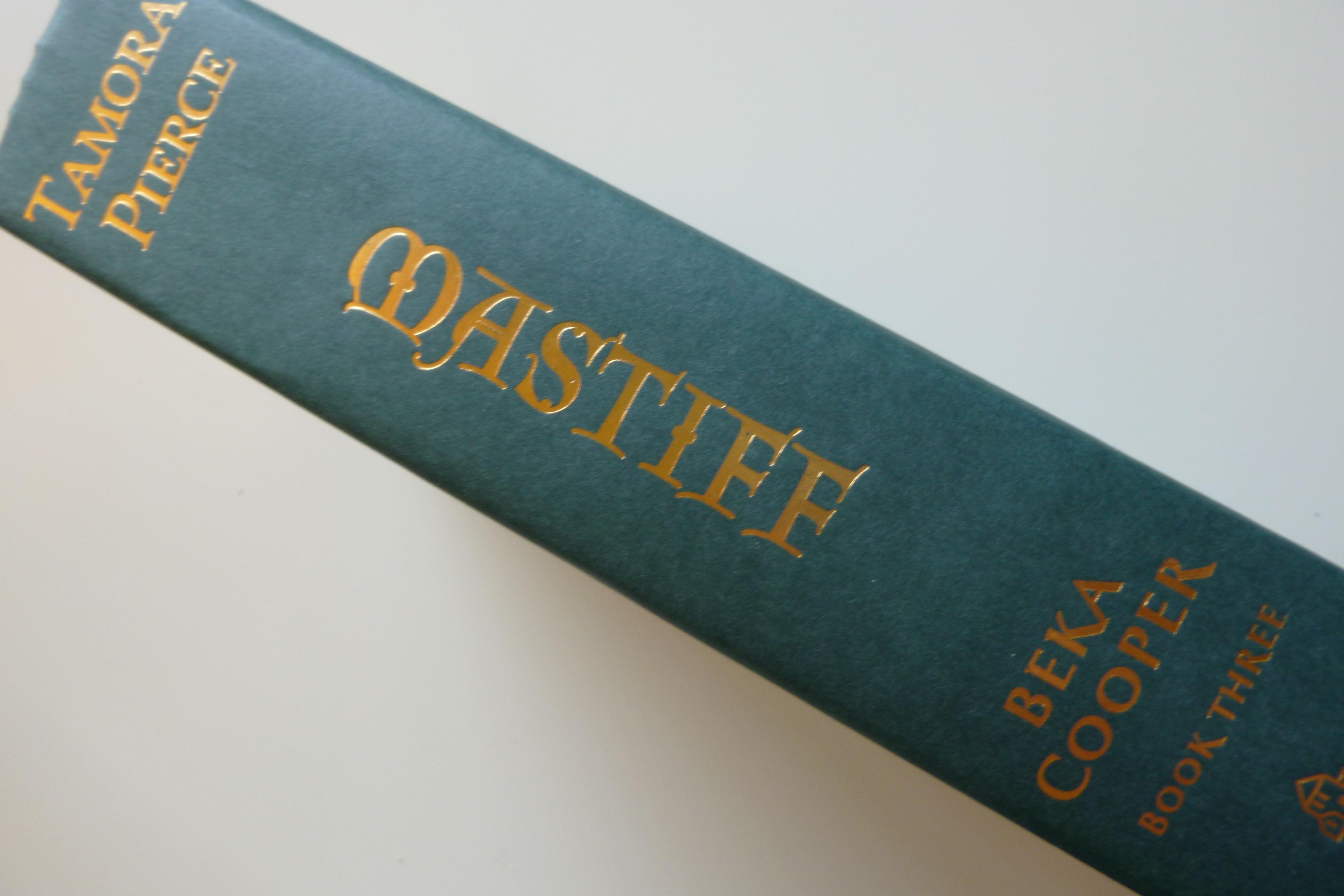
I’ve been promising a review of Mastiff, the final book in the Beka Cooper Trilogy by Tamora Pierce.  It was a good resolution to the story, an exciting adventure that tied up plenty of ends.

It begins a few years after the previous book, as Beka mourns the death of her never-before-mentioned fiance (more on him later).  It turns out she was on the verge of breaking up with him, and she’s glad of the distraction of a new Hunt–slang for a case to be solved.  In some ways this is the most focused book of the trilogy–Beka and her friends are on the trail of a kidnapped prince, and the entire book centers around this journey.

There are some strong villains in here, and I loved Beka’s friends too.  The lady knight, Sabine, had a bigger role in this book, and we had more of Pounce, Beka’s black cat.  There’s also Farmer, a new character who’s a very interesting mage.  I love it that he’s very powerful, but hides that behind a bumbling, cheerful exterior–although he really is wonderfully cheerful!

Despite a very cheery new character, this is darker than Pierce’s earlier books.  Dark things have always happened–death, slavery, violence, kidnappings.  The Beka Cooper Trilogy has always got more into the grittiness of it, though, and that’s very true here.  There’s more detail and more description of the disturbing elements.  One scene about a dead slavegirl is enough by itself to make this upper Young Adult, while Pierce’s earlier books often bounce between the Juvenile section and YA.

On the more positive side, there’s eventually some romance here, although it takes a while.  Though considering my chief problem with Bloodhound was that the romance was too fast, I won’t complain about this one!

Actually, the romance I wish there had been more of was the one with the dead fiance.  The book begins with the fiance already dead, and we only get hints about Beka’s relationship with him.  I was hoping for some kind of extended flashback, but it never came.  The hints are enough to suggest that it may have bordered on an emotionally abusive relationship, and in a strange way I think that would have been a wonderful story for Pierce to tell.  Her stories about strong women are so inspiring, and it would have been so valuable to portray one of these strong women getting emotionally mixed up and into trouble.  Beka is very capable in some ways, but she has uncertainties about relationships.  I would never believe that she’d stay with a man who hit her, but I could believe that she could be emotionally manipulated, and that would be so good for girls to see–that you can be strong and capable and still get into a bad relationship, and it doesn’t make you pathetic or worthless.

But that’s my idea, and evidently not Pierce’s vision for the book, and I can’t really criticize her for not taking the story the direction I wanted it to go.  One more serious objection I have involved a traitor in Beka’s group.  They realize someone is probably betraying them as they travel, but Beka doesn’t give much attention to that.  When the traitor’s identity finally comes out, it didn’t ring true to me.  It feels more like someone acting out of character than like a shocking reveal.

Those problems aside, it’s a great adventure with strong characters and an engaging world.  And now I can go back to looking forward to Pierce’s next book!

Author’s Site: http://tamorapierce.com

Other reviews:
YA in the Second City
Sew Skate Read
Ms. Martin Teaches Media
Yours?

Magicians, Neo-Druids, and an Orphan Waif

What if a magician in the sideshow had real magic?  It’s a great premise…and just the smallest part of Mairelon the Magician by Patricia C. Wrede.  It’s an excellent book, but it will do you no good to read the plot summary (at least on the copy I had), as it only addresses the first twenty pages.  Sometimes I wonder who writes these things…

So, as to the actual plot: Kim is an orphan on the streets of London, a girl who disguises herself as a boy to avoid the wrong kind of attention.  A stranger hires her to spy on Mairelon the Magician, who puts on the aforementioned sideshow.  Kim quickly realizes, however, that Mairelon is not merely an illusionist, but a real magician.  That’s as far as the book jacket will take you.  That’s barely the beginning, though.  Most importantly, Kim doesn’t find it at all shocking that he can actually do magic.  You see, Kim lives in a London where magic is real–it’s an academic, rich man’s profession, but it’s real.

The setting is actually very similar to Wrede’s Sorcery and Cecilia books, a magical version of Regency England, although her blog says they are not proven to be the same world.  I’d kind of like to think that they are.  🙂

Back to the plot, beyond what the book jacket says: Mairelon apparently sees something of value in Kim, and takes her on to be trained as his assistant for his magic show.  Kim quickly finds herself enmeshed in Mairelon’s quest to find the Saltash group, several silver objects that together can do powerful magic.  The quest takes them out of London and into the countryside where everyone you trip over is also chasing the same objects, though for various reasons.

It’s an often very funny story, a good mystery, and I enjoyed the characters.  Kim is a smart girl who knows how to watch out for herself, while watching for a chance to improve her lot.  She has a soft side too, and gets fond of Mairelon, even if she’s not likely to admit it.  Mairelon is one of those flamboyant characters who can be serious underneath it, who means well and is also enormously stubborn.  So is everyone, actually, including Kim and Hunch, Mairelon’s combination guard, wagon-driver, assistant and friend.

It’s the interplay between the three of them that I like best.  Mairelon’s tends to rush blithely ahead, carefully oblivious to Hunch and Kim’s attempts to restrain him for his own good.  The result is a lot of glowering, cursing and deliberate misdirections of the conversation.  I imagine you can surmise who’s doing what.  Hunch and Kim start out disliking each either, but develop a mutual respect–but one not likely to be admitted.

The other best part is the Sons of the New Dawn, a neo-druid group who have no idea what they’re doing, but whose leader is wildly adamant about finding his Sacred Dish, which is unfortunately the same as the Saltash Platter Mairelon wants.  They’re very funny all around.

The book winds up with a final scene featuring at least a dozen people and probably the best example of written hubbub I’ve ever seen.  I confess I have trouble balancing dialogue with three or more characters–Wrede somehow writes twelve people arguing with each other.

The end is somewhat marred in that she winds up the hubbub and then spends pages explaining everything that happened.  It’s the same device as a detective story, where the detective unmasks the killer and then neatly lays out all the steps of the crime and the investigation.  It goes on a bit, though, and feels somewhat forced.  On the other hand, she gets points for not leaving the reader wondering what on earth was going on–I’ve seen books that could desperately use a few pages of someone explaining it all.

There’s a sequel to the book, which I haven’t read yet–but if anything, the plot (if I can trust the summaries!) looks even better, so I’ll be tracking that down soon.  🙂

Author’s Site: http://pcwrede.com/index.html

Following Beka to Port Caynn

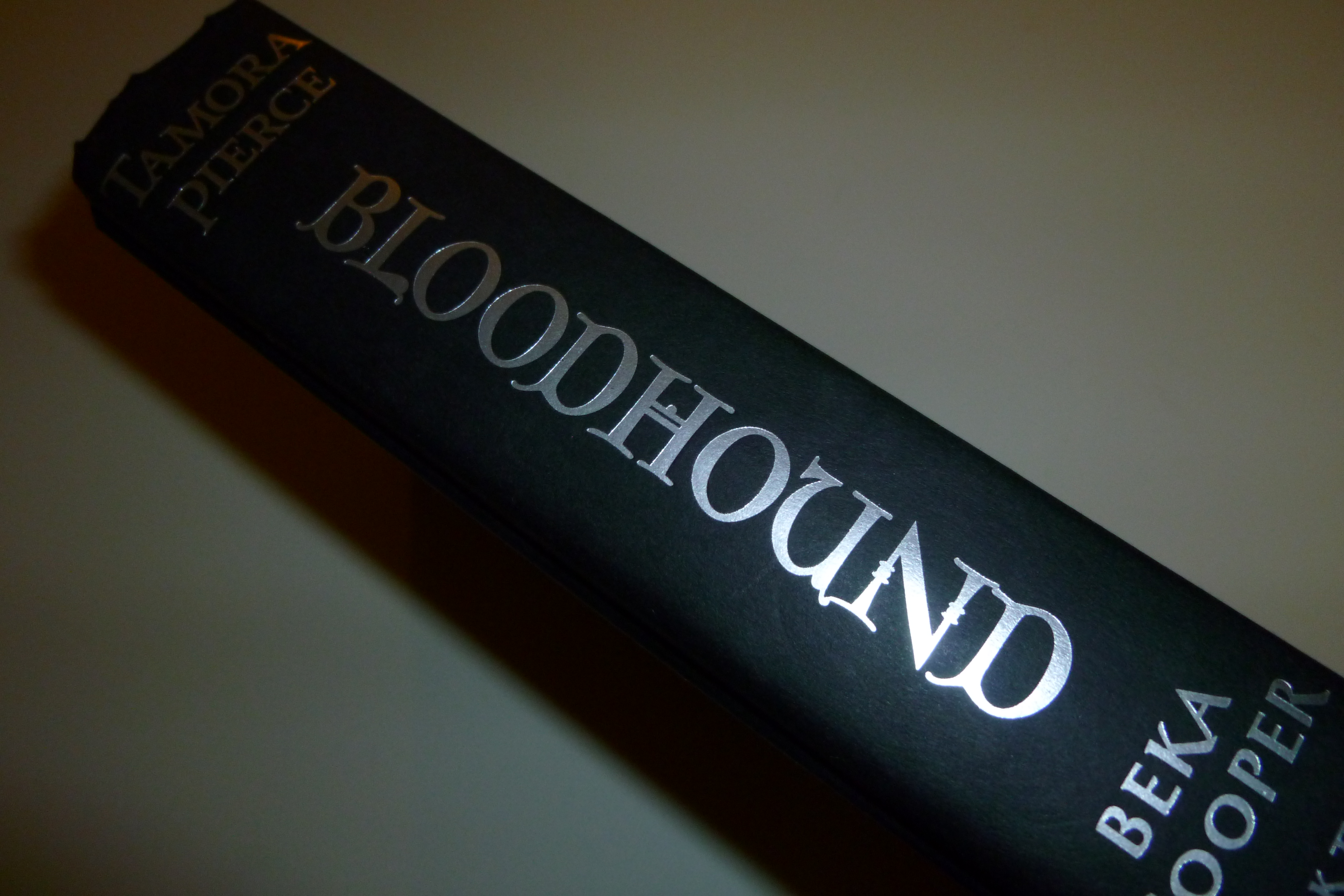
In anticipation of Tamora Pierce’s newest book, Mastiff (out last month–I’m behind in my reviews!), I recently reread the first two books in her Beka Cooper trilogy.  You can see my review of Terrier for more background.  Today, my subject is Book Two, Bloodhound.

The second book is set about a year and a half after the first.  Beka has finished her training year and is a full-fledged (though junior) City Guard, or Dog as the slang has it.  Beka is taken out of the world she’s familiar with when she and her mentor, Goodwin, are sent to Port Caynn, another city in Tortall, to track a ring of counterfeiters.

It’s a solid and exciting plot; Pierce mentions somewhere in the acknowledgments that she was afraid counterfeiting wasn’t exciting enough, but I think she does very well with it.  The dangers of inflation seem abstract in the extreme, but she manages to make it very concrete.  There’s a riot when bread prices go up, and frequent concern about food shortages and starvation.  In other words, the threat feels real.

Going to a new city means a number of new characters, many of them excellent.  The villains are particularly fascinating, and I wish some of them had been given more screen time, so to speak.  There was also a transgender character, possibly the first I’ve seen in YA fantasy.  I like it that Pierce takes a contemporary social issue and puts it into a very different setting–but any message she’s making with the character is still very clear.  It’s a perfect example of fantasy’s ability to comment on the real world–and sometimes it actually has more impact when it’s in the different setting.

My favorite new character (who was technically introduced in the last book, but just barely) is Achoo, a scenthound Beka adds to her menagerie.  Achoo is a brilliant tracker–and she’s also just lovable and adorable.  One of my favorite moments in the book is when a completely ruthless villain does a total about-face and starts fawning over Achoo.

There are probably those who would say that their favorite new character is Dale, although I disagree.  Beka has a romantic fling with Dale, and while I suppose it’s well enough, I never could get into it as a romance.  Beka doesn’t know him very well, and she doesn’t trust him, which is a problem right there.  He’s a nice enough fellow, good-looking, and he likes to gamble, but we don’t know much else about him as a character.  The relationship moves fast, and I didn’t feel like Beka or I knew Dale well enough to be going where it went.  It’s not terrible–it’s just not a great romance either.

On the plus side, Beka does seem to be shedding most of the shyness that didn’t quite work for me in the first book.  By this one, she seems to be mostly just nervous about public speaking, and it felt like a much more plausible character trait.

All in all, despite a so-so romance, it’s a very good book.  There’s plenty of excitement and tension, and many characters who were adequately developed.  I’m looking forward to diving into the conclusion of the story!  Stay tuned for a review very soon.  🙂

Author’s Site: http://tamorapierce.com/

Today, a Warning

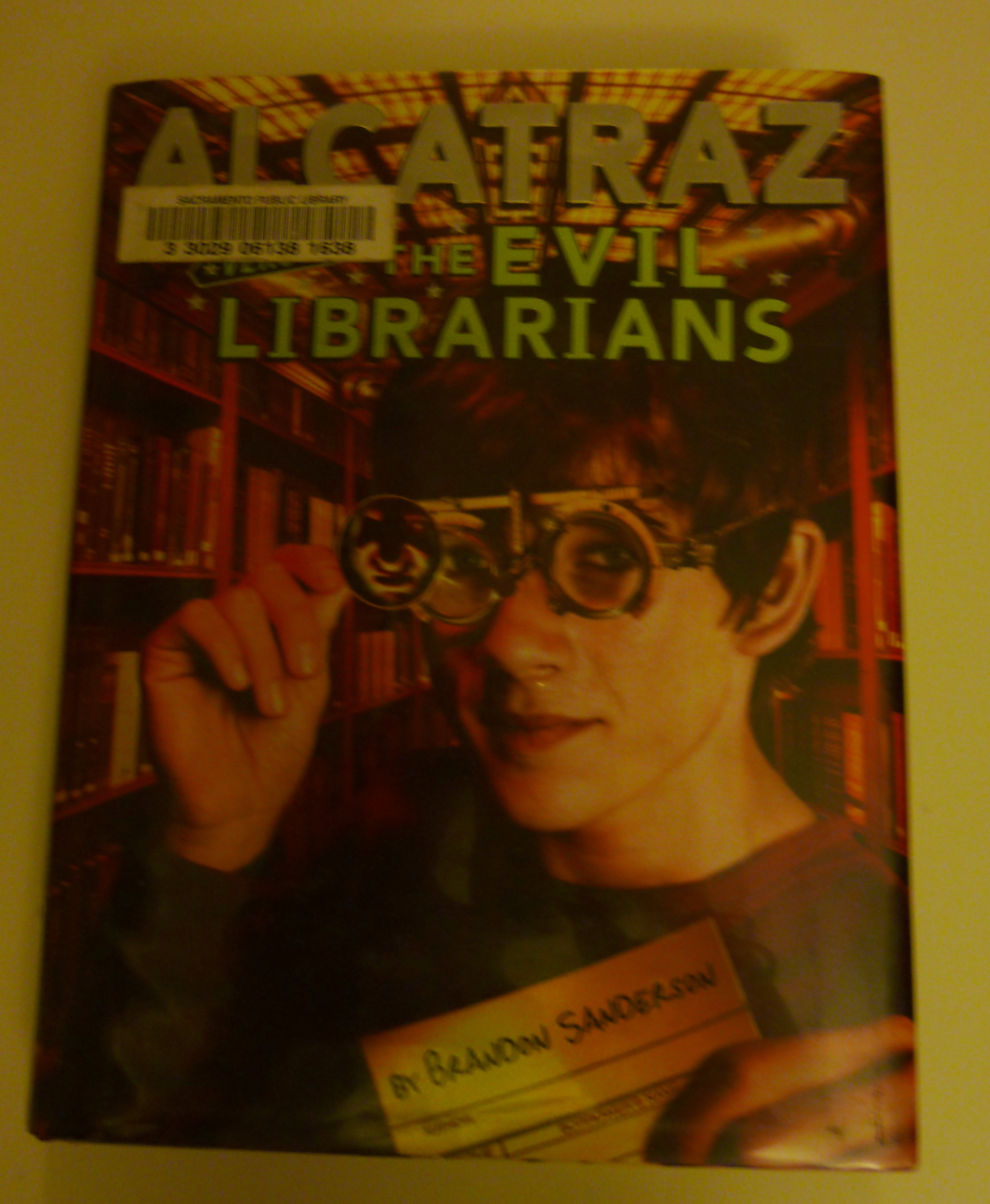
I suppose the title should have warned me.  One of my book club’s recent selections was Alcatraz vs. the Evil Librarians by Brandon Sanderson.  It was a departure from our usual genres.  I think we were all intrigued by the idea of evil librarians.

I for one was expecting it to be a group of really awesome evil librarians.  There are plenty of awesome villains out there, and a really cool group of sinister, book-wielding librarians sounds amazing.

Too bad that isn’t what this turned out to be.  First thing–Alcatraz is the lead character’s name, and the book has nothing to do with the island or the prison.  Second, and even more importantly–the evil librarians were a LONG way from awesome.  Nor were they an isolated group.  Instead, the premise of this book is that all the librarians of the world are engaged in a vast conspiracy to feed everyone misinformation.  And they’re painfully stereotypical librarians, with horned-rim glasses and buns, or bad bow ties for the men.

I cannot at all fathom why anyone would write a book insulting librarians.  I mean, they’re librarians! I may be particularly ill-suited for this premise, considering I have four friends who are librarians, and I can’t remember a time when I didn’t have an active library card.  But anyone likely to be reading this book probably likes books.  And if you like books, you probably like libraries and librarians–I mean, people who help you get free books, what’s not to love?

And what exactly is the message for kids here?  Librarians are evil and untrustworthy, libraries are dangerous, and almost any book you might pick up is both bad and foolish?  That’s the message that comes across.

Now, I do realize this book is not meant to be serious.  That comes across too.  But it never achieves quite that right tone of self-mocking to make it funny and not irritating.  It’s trying to give the reader a nice broad wink, and failing miserably.  I think it wants to be “Springtime for Hitler,” which is hilarious.  This book is not.

Not to mention, it’s just badly written.  Alcatraz is telling the story, and his goal is to prove that he isn’t actually a hero.  Rule #1 of writing is that the reader should like your lead character.  Or hate them, that works sometimes too.  If your reader is irritated and/or bored, your book is dead.  When your narrator states that his goal is to irritate the reader and he succeeds, there’s a problem.  Every chapter starts with a page or two of totally irrelevant introduction, in which Alcatraz interrupts the plot to ramble on about whether he’s a good person, whether the reader is irritated yet (answer: YES), tries to convince us everything going on is plausible and if we don’t believe it we’re just brain-washed morons, or points out the clever literary devices he’s using, for the purpose of being annoying.

Honestly, it’s like an example in how a book should not be written.

I haven’t even mentioned the plot, have I?  It’s not so bad, really.  Comparatively.  Alcatraz is an orphan with a talent for breaking things.  One day he meets his grandfather, who tells him he’s actually a member of a famous family who has special Talents, and Alcatraz begins to learn how he can use breaking things to his advantage.  His grandfather also tells him about the conspiracy of the Evil Librarians, and about an entire other society on a continent in the middle of the Pacific (knowledge of which the Evil Librarians have suppressed).  They set out on a mission to rescue a bag of really special sand that the Evil Librarians have stolen.

It’s not a terrible plot.  The Talents are entertaining, because they all sound like bad things (arriving late all the time) but turn out to be useful (the late person is constantly late for bullets, so he can’t be shot).  I like the idea of the secret continent.  I’ve often thought there was potential for a story in the idea that some basic fact is really false, but no one knows it, because how many things do we actually know from  first-hand experience?  How many of us have sailed across the Pacific?

It’s an okay plot in a terrible book.  And about that bag of sand.  The bag contains the Sands of Rashid.  You can definitely say “the sands of time” and I’ll accept “the Sands of Rashid” if necessary  But they keep on talking about the sands.  They have to rescue the sands and they have to get the sands back and the sands are really important.  “Sand” should not be plural!  It got to where I wanted to scream every time they said sands.

You know, I bet a librarian could have told Sanderson that you don’t make “sand” plural.

So why did I even finish this book?  Mostly because I knew that I’d be able to rant about it at Book Club and on my blog, and I figured I needed to finish it to be able to rant more effectively.

But you don’t need to.  Really.