Getting Simba Back to Denmark

I have a confession–I have never been a fan of The Lion King.  I loved Disney movies as a kid (still do).  But even as a kid, I didn’t like The Lion King.  It probably suffered somewhat by coming out the summer after Aladdin, which was my favorite, but it was more than that.  I guess I was already thinking like a writer, because I remember complaining that it lacked plot.

I never watched The Lion King again after it first came out, until recently.  I wanted to see if my perspective had changed with age–and with knowledge of Hamlet, which is more or less the same story and my favorite Shakespearean tragedy.
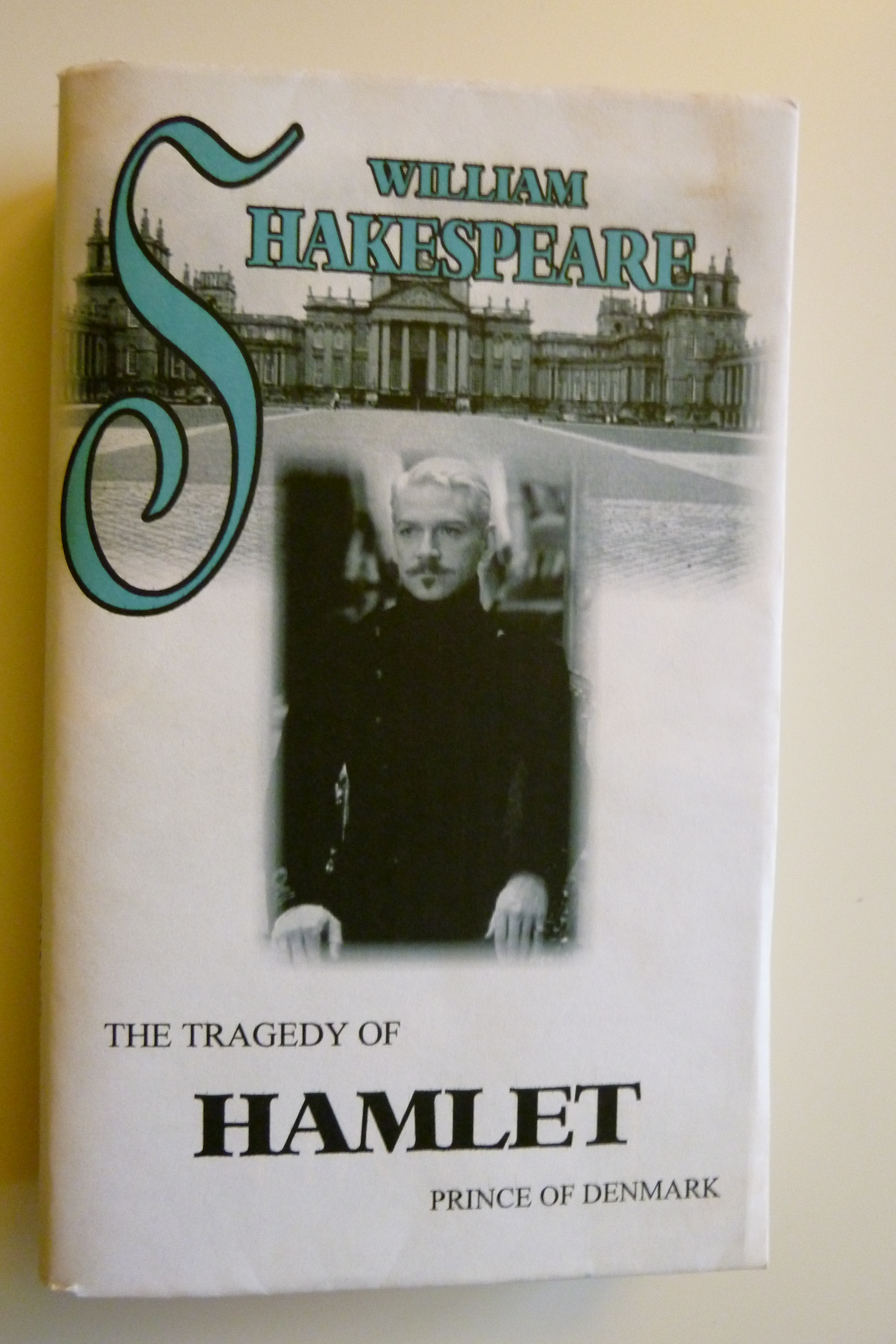
Practically the same story. Only not.

It did give me a new perspective–and I decided my younger self was right.  Only, being older and familiar with Hamlet, now I can explain what my younger self meant.  So naturally I thought I’d share with all of you!

Here’s the plot, such as it is: Simba is a lion cub, the son of Mufasa, the King of Beasts.  Simba’s evil uncle, Scar, has Mufasa killed.  Simba, feeling responsible, flees.  Everyone suffers under Scar’s rule.  Eventually Simba comes back to defeat Scar and fulfill his destiny (sorry if that was a spoiler for anyone).

It doesn’t sound so bad, as a plot.  It is a ninety-minute animated kids’ movie, after all.  Only there’s a problem.  See, it IS basically Hamlet.  The evil uncle kills the king and assumes his throne, the prince has to come back from being away to deal with the situation.  But here’s the key point–Shakespeare began his play when Hamlet returned to Denmark, and then spent four hours on the conflict with the uncle.

In The Lion King, it’s an hour and fifteen minutes before Simba gets back to Denmark, so to speak.  Which means that the main event covers only the last fifteen minutes of the movie.  And I really could feel that, when I watched it again–I was waiting for him to get to the confrontation with Scar.  And everything else felt like it was just back-story, just setting things up.  When almost your entire movie is setting things up…well, I think that’s how I ended up feeling that it didn’t have enough plot.

Maybe it’s a question of what I’m looking for.  Maybe if I could manage to view the story as being about Simba’s growth, rather than about the fight with Scar, I’d like it better.  But…I obviously haven’t managed to see it that way as a kid, or as an adult.

It was fun to see how it paralleled Hamlet, especially in the characters.  Simba as Hamlet, Scar as Claudius, Mufasa as the King, those are all pretty obvious.  Zazu is Polonius.  Nala is a mixture of Ophelia and Horatio.  Rosencrantz and Guildenstern are kind of split between Timon and Pumbaa, and the hyenas–the first are Simba’s friends, the second work for Scar (not combining those aspects makes things less compelling, by the way).  So I did enjoy the Hamlet parallels.  But I still don’t like the plot.

Great music, though!

A Dragon, an Ogre, and a Mystery

I just finished Gail Carson Levine’s latest book, A Tale of Two Castles.  I feel something of a personal attachment to this one–I read her blog with great dedication, and she’s been talking about this one coming out.  She’s also been talking about her travails right now with writing the sequel.

So I admit I was predisposed to like this one.  And it really is a fun, sweet tale.  It’s the story of Elodie, a poor farmer’s daughter who comes to the big city of Two Castles hoping to apprentice as a mansioner, an actress.  When she can’t pay for her apprenticeship, she ends up instead as assistant to the local dragon, and finds herself enmeshed in a mystery surrounding the local royalty and the local ogre.  Someone is threatening Count Jonty Um the ogre, and he enlists the dragon and Elodie to investigate.

I particularly enjoyed the dragon and the ogre.  Meenore the dragon is a detective, occasionally in the mold of Sherlock Holmes, as well as a rather creative entrepreneur, selling toasted food and heating up the blacksmith’s fire.  Meenore is referred to throughout the book as IT, rather than he or she.  Dragons apparently have gender, but don’t share the details on what he or she is, so the appropriate pronoun is IT.  I think this is a clever device that then got overused a bit, to the point that I nearly forgot Meenore had a name, IT’s referred to so often as IT.  But I like the dragon, and ITs gradually warming relationship with Elodie.

I also like the shapeshifting ogre, usually referred to as His Lordship.  I have a soft spot for characters who are feared and misunderstood by the people around them just because they’re different.  It’s that Phantom of the Opera thing.  His Lordship is kind and shy, but the people of Two Castles can’t seem to get past the fact of his ogreness.

Elodie herself is a pretty good character.  She’s only twelve, and sometimes it feels like it.  She goes off on flights of guessing about the possible solution to the mystery.  These often feel far-fetched, and I can’t quite tell if we’re meant to take them seriously, or if we’re meant to interpret them as Elodie having a wild imagination.  But aside from that she’s a pleasant girl trying to make her way in the world and do the right thing, who grows in her role as dragon’s assistant.

My library copy of this is labeled “Mystery,” and I suppose it is one, but it doesn’t really feel like it to me.  I wouldn’t recommend thinking too hard about the mystery.  If you focus instead on the book as Elodie’s adventures, which involve some mysterious happenings to solve, I think you’ll get on better.

If you’ve never read Gail Carson Levine, I have to say, go read Ella Enchanted because that one just has to be read.  If you’ve already read Ella, then by all means give A Tale of Two Castles a read!

Author’s site: http://gailcarsonlevine.com/

Hilarity Happening at MacDonald Hall

A few months ago I reviewed A Semester in the Life of a Garbage Bag by Gordon Korman, and I’ve decided it’s time I reviewed some of his other many hilarious books.  A particular favorite is the Macdonald Hall Series.  Macdonald Hall is a boarding school for boys, around middle or high school age–it’s never very specific.  Miss Scrimmage’s Finishing School for Young Ladies is directly across the road.  With a host of improbable circumstances and wonderfully quirky characters, hilarity constantly ensues.

Korman follows the same pattern he uses in A Semester in the Life of a Garbage Bag, and gives us one fairly normal main character–Boots (real name Melvin, but don’t call him that).  His best friend and roommate is Bruno, who can always be relied upon to have a big, brilliant and probably ill-advised idea, whether it’s a way to earn money for a swimming pool or a new idea for a prank.  Bruno and Boots are incorrigible pranksters who are also fiercely loyal to their school, and Korman gets plots out of both qualities.

They’re surrounded by even wilder characters.  There’s big Wilbur Hackenschleimer, who thinks only about food, and genius Elmer Drimsdale who has a brilliant scientific mind and limited social skills.  I think my favorite is Sidney Rampulsky, who is endlessly klutzy.  Playing football, he manages to trip over the 30-yard line.  Another time he trips over the headmaster’s chair, while the headmaster is sitting in it.  The headmaster is Mr. Sturgeon, popularly known as The Fish–for his name, and for his cold, fishy stare.  The Fish is stern but fair, and secretly very fond of his students–but secretly.

Across the road, Miss Scrimmage is an enormous and rather terrifying woman, who will defend her precious, defenseless girls until the end–blissfully unaware that her girls are about as defenseless as a SWAT team.  Cathy and Diane are Bruno and Boots’ female counterparts.  Cathy is always up for an adventure, and her roommate Diane is generally dragged along.

There are six books in the series; the first is This Can’t Be Happening at Macdonald Hall, which Korman wrote and published when he was twelve.  He wrote most of the others during high school, which frankly boggles the mind a bit–especially because they’re brilliant.  The first one involves Bruno and Boots being split up as roommates because they commit one too many pranks; Bruno, of course, has endless ideas on how they can convince The Fish to put them back together–mostly ideas involving new pranks.

Other books in the series feature Hollywood descending to film a movie on campus; the adventures of a hapless football team (I don’t normally like sports stories, but this one is so funny I enjoy it); and a desperate plot to make Macdonald Hall famous so they won’t be shut down.  This one features a scene with Elmer Dynamicdale and the Original Round-Robin Happy-Go-Lucky Heel-Clicking Foot-Stomping Beat-Swinging Scrim-Band performing Science Rock, which essentially consists of Miss Scrimmage’s girls creating a cacophony of noise while Elmer screams scientific facts (you have to kick him to get him started).  It never fails to make me laugh out loud.  But that happens a lot with these books…

I could probably go on and on just giving funny anecdotes, but where would it end?  Just trust me.  Read them.  They’re hilarious.

No Goddesses–Have a Child Genius Instead

Artemis Fowl by Eoin Colfer was one of those books I’d heard of, but knew nothing about.  I knew it was a popular series and…that was about it.  If I had had to guess, I would have assumed it had some relation to Greek mythology, maybe something about warriors and hunting.  I mean, toss together the Greek goddess of the hunt and a bird, what are you likely to get?

Not Appearing in This Book

An evil child genius, as it turns out.  I never did find a connection to Greek mythology (or figure out why the main character, especially a male one, is named after a Greek goddess), and no birds.  Artemis Fowl is a very wealthy twelve-year-old bent on conquering the world–or at least making even more money off of it–and isn’t scrupulous about how he does it.  His new scheme is to exploit fairies–a whole new market!

I really enjoy the concept of the fairies.  There’s a whole community, mostly living underground, hiding their existence from humans.  They have plenty of the magical and mystical powers that fairies traditionally have, but in other ways they’re treated as simply another intelligent species that sprang up on the Earth the same as humans.  I suppose that makes sense–why should fairies consider themselves myserious and otherworldly, after all?  I think you can consider this a fantasy, but in some ways it feels more like science fiction.

So I liked the idea of the fairies…but somehow I couldn’t build up much interest in the fairies as individuals.  I don’t know why, and this may be totally my thing and not relevant to someone else.  Artemis’ scheme is to kidnap a fairy, and he does–Holly Short, a member of the fairy police force.  I feel as though I should like her more than I do–she’s a tough female character trying to prove her worth in a male profession.  Put that way, she has plenty in common with Tamora Pierce’s Alanna, who has to be in my top ten favorite characters ever.  But maybe Holly felt too much like a stereotype–fine for her type, but too much a type and not an individual.

Holly’s boss (whose name I can’t remember or find!) feels even more like a stereotype: the crusty old chief with a gruff exterior and a secret heart of gold.  He’s like Perry White, minus the “Great Caesar’s ghost!”  I did enjoy Mulch, a rather creative criminal, and Foaly, a technical genius centaur with a paranoia that humans are spying on him.  But even they seemed like they should be more interesting than they were.

I liked the human characters better, although they were probably types too.  Artemis is pretty interesting.  Evil child geniuses are fun, and Colfer played a bit with the bizarre combination of a brilliant intellect in someone who really is still twelve.  There was also some nice ambiguity about how evil Artemis actually is.  Ruthless, definitely, but it wasn’t always clear whether his motivation truly was profit, or something more noble.  I like the grayness.

I also liked Butler, Artemis’ faithful sidekick and the muscle of the team.  The Butler family has been serving the Fowl family for centuries, and may be the origin of the term “butler.”  That’s fun.  Butler is enormously proficient at fighting, fiercely loyal to Artemis…but once in a while we get a glimpse that he can think for himself too.  Again, I like the grayness.

So I was up and down about the characters.  The plot was pretty good, although since it hinged on Holly’s kidnapping, it probably would have worked better if I had cared about her more.  But it was an enjoyable book, and I can see how someone else who connected better with the characters would really like it.  For myself, I’m glad that now I know what it’s about (no Greek goddesses–check) and I might pick up the next book eventually, though I haven’t rushed to get it.  But maybe some time, especially to see if the characters develop more as the series goes on.

Anyone else care to share an opinion?  🙂  I’d love to hear it!

Author’s site: http://www.artemisfowl.com/

An American Girl for an American Holiday

Happy Fourth of July!  I’ve been hunting my shelves for a good book to review that’s appropriate to the day.  I usually celebrate with movies–either 1776 or Mr. Smith Goes to Washington.  But I do have one favorite book series set around the Revolutionary War.

I loved American Girl when I was a kid.  I subscribed to the magazine for many years, and read several of the book series.  My favorite was always Felicity.  One of the best Christmas gifts I ever got was a Felicity doll, with her wardrobe of clothes and her four-poster bed, from rather indulgent grandparents.  🙂

Felicity lives in Williamsburg, Pennsylvania, at a time when tensions are beginning to rise between the British and the colonists.  Felicity loves adventure and has trouble being a proper young lady–which is probably what makes her beloved of young girl readers.  The main focus of her story is usually on school or family or friends, but the political situation furnishes a backdrop, and sometimes becomes part of the story.  At one point, Felicity is separated from her best friend, Elisabeth, because Felicity’s family is pro-revolution, while Elisabeth’s father is a Loyalist.  At another point, Felicity’s father’s apprentice considers running away to join the revolutionary army.

The books strike a balance, bringing in history without making it feel dragged in, and without distracting too much from Felicity’s adventures as a girl living her ordinary life in the 1770s.  Not every book achieves such a good balance!

The most appealing part of the Felicity stories, for me, was Penny.  Penny is a horse who Felicity tames and learns to ride, rescuing her from a cruel master.  This was directly responsible for my going through the horse phase that probably every little girl has at some point!

These are sweet books, and a lot of fun–and quite short!  Rereading them many years later, I find it takes about twenty minutes to read one book.  But Felicity and her world are nice to visit–however briefly!