The Story That Didn’t Come Before Peter Pan

I might like Peter and the Starcatchers by Dave Barry and Ridley Pearson much better if it didn’t claim to reveal the story that came before J. M. Barrie’s Peter Pan.  As an independent adventure/fantasy story, it’s perfectly decent.  As a prequel to Peter Pan, it’s a lot of claptrap and nonsense that at no point convinces me anyone anywhere involved in the project ever so much as read J. M. Barrie’s Peter Pan.

There is a wonderful story that comes before Peter Pan.  It’s called The Little White Bird and J. M. Barrie wrote it himself in 1902.  To come along a century later and claim you’re writing a prequel without apparently doing any research is ridiculous, and insulting to Mr. Barrie.  Especially when the only research really required would be to read two books.  That’s hardly an exhaustive amount.
Mr. Barrie didn’t include a lot of details about Peter’s past life, but he did include some.  As far as I can tell, Peter and the Starcatchers ignores all of them.  The basic premise of the novel is that there is something called starstuff (strongly resembling fairy dust) loose in the world.  Peter is a member of a group of orphan boys.  The orphans, the starstuff, and a couple of factions fighting over the starstuff end up on an island somewhere.  When the starstuff gets loose, the island begins to transform into a magical place, not to mention changing Peter so he’ll never grow up.

If you’re not already spotting why most of this is an utter travesty on the original book, allow me to explain.  One–Peter was not an orphan.  It is clearly related that he ran away from home very shortly after he was born because he didn’t want to grow up to be a man–and he knew he would if he stayed because he heard his parents talking about it.  Two–Peter doesn’t grow up because he doesn’t want to.  You can take it two ways: either he forever rejected the idea of growing up the day he ran away, or he continues to reject it daily and his imagination is strong enough to make it actually happen.  Either way, it’s about Peter’s choices and his imagination.  Three–it’s pretty clear that the magical dust floating around is a byproduct of fairies, not the other way around.

These are central ideas to the Peter Pan mythology, and to ignore them from the onset creates overarching problems with the entire concept of the book.

It doesn’t get better in the details.  In Peter and the Starcatchers, Peter cuts off Hook’s left hand.  Whoops–in the original, Hook’s right hand was cut off.  Perhaps that’s nitpicking, but I’d say it demonstrates something about the amount of care taken.  If the rest of the book was true to the original I’d forgive the wrong hand, but when the rest of the book isn’t, all it does is exemplify the problems.

But you know what possibly annoys me the most?  There’s a scene in Peter and the Starcatchers where starstuff is put in a bag along with a bird, and out pops Tinker Bell.

The problem?  There is NO NEED to reveal how fairies came to be.  Because Mr. Barrie already told us that!  “When the first baby laughed for the first time, its laugh broke into a thousand pieces, and they all went skipping about, and that was the beginning of fairies.”  Now, when every baby laughs for the first time, its laugh becomes a new fairy.  Given the choice between the charming whimsy of laughter becoming fairies, and the painful practicality of smothering a bird with starstuff…well, that’s not much of a choice.  And you can’t claim to be in Mr. Barrie’s magical world and then just disregard every rule he wrote for it.

I know from looking at the bookshelf at the bookstore that there are two or three more books in the series.  I haven’t read them, so I can’t comment on them.  But after reading the first, I’d be shocked if the later ones did any better at drawing from J. M. Barrie’s books.

There is room in the world for a new prequel to Peter Pan.  There’s a gap between The Little White Bird and Peter Pan, and in that gap Peter learned to fly, went to Neverland, and met Tinker Bell and the Lost Boys.  I would love to see a well-done book that reveals that story.  But Peter and the Starcatchers is not that book.
One of Those Books About the Civil War

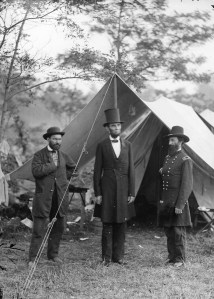
Across Five Aprils by Irene Hunt is one of those books.  Not a bad kind of those books.  One of those books that shows up on class reading lists and in books reports and that everyone seems to know the title of.  I wish I’d liked it better.

Even as one of those books, I somehow never actually read it in school.  I probably listened to an oral report or two, but I don’t remember them clearly (I remember endless reports on Harry Potter, but that’s another story).  Somehow, Across Five Aprils never came my way, so I decided to pick it up recently–mostly because I knew it was one of those books and I thought maybe it would be worth forming an acquaintance.

If you’re also unaquainted, Across Five Aprils covers the five Aprils of the Civil War, told from a farm in Illinois and mostly from the point of view of Jeth, too young to go to war and thrust into responsibility for the farm when his older brothers all go to fight.

I liked the book well enough, and there were were some good parts in here, especially in connection to Mr. Lincoln.  That leaves me the task of sorting out why I didn’t like it better.  Maybe it’s the hazard of covering five years in a fairly slim volume.  By necessity you have to summarize past days and weeks and months, and only occasionally dip into more detail.  I’m left with a feeling that I couldn’t get down into this book, that it was too much summary.  Even though I know there were scenes that were more detailed, I feel as though the whole thing took place on a surface level.

Another matter probably comes down to personal preference.  When I read historical fiction, I don’t like my history to get in the way of my fiction.  I’d like to learn something, but I’d rather not notice too much that I’m doing it.  Remember that this book is set on a farm–we’re not actually out engaged in the Civil War.  And yet the story stops for paragraphs and pages at a time to discuss the progress of battles and which general has been promoted and demoted and who’s advancing where.  It’s at that point that I start to feel the history is being foisted on me.

I think a fair comparison to make here would be with L. M. Montgomery’s book, Rilla of Ingleside.  It’s set during World War I, but takes place on the Canadian homefront.  Again, we’re not on the front lines, and yet we hear about every town that is taken, every time the line moves forward or back, every decisive battle–but it works.  Because the story doesn’t stop for the narration to tell us that the Germans captured a town.  Instead, the next event in the story is when one character comes flying into the kitchen to tell the other characters what the newspaper says today.

I feel arrogant saying this, when I’ve got a review from The New York Times reading “An intriguing and beautifully written book” staring up at me from the cover of Across Five Aprils, but I just don’t think the mix of fiction and history was handled all that masterfully here.  If you know a kid with an interest in the Civil War, then I do think I could recommend this book.  But you have to have that interest, because rather than fiction with a historical backdrop, this is definitely history told through fiction.

A Tale Told By Mr. Barrie

All children, except one, grow up.

Peter Pan Statue in Kensington Gardens

I’m going to assume that most people are familiar with the premise of Peter Pan by J. M. Barrie.  In brief: Peter Pan flies with Wendy and her brothers to Neverland, where he lives with the Lost Boys and Tinkerbell the fairy, and has adventures fighting pirates and Indians.  And, of course, he never grows older.

Peter Pan (originally titled Peter and Wendy) is the ultimate celebration of childhood.  Neverland is the best parts of childhood, and the best parts of a child’s imagination, all rolled in together with none of the bad parts.  Even the bad things–say, villainous pirates–are only exciting adventures.

The peculiar thing about Peter Pan is that I don’t actually think much of the main characters.  Tink is a nasty brat, Peter is horribly arrogant (though oddly appealing in that, I must admit), John and Michael are fairly non-entities, and as for Wendy…well, I have no use at all for a girl who goes to Neverland and spends all her time cooking and cleaning and darning socks.  Hook, actually, is a more interesting character–dastardly but elegant, and rather melancholy (not sad–melancholy).  But it’s actually all right that the characters leave something to be desired as people, because the concept is so fantastic and the book is so charming.

More on the concept in a minute, but first on the charm.  That actually brings me to my favorite character: Mr. Barrie.  He doesn’t overtly appear in Peter Pan, not even in an fictionalized role like the kindly old gentleman in The Little White Bird, and yet he is very present as the narrator.  Every so often throughout the book “I” and “you” come into the narration–“I” who’s telling the story, and “you” the reader.  There’s a clear feeling that “I” is Mr. Barrie, and that you is you personally, you reading.

(On a side note, I always felt a bit smug in some of my writing classes in college, when the discussion turned to how wonderful experimental writing is, such as addressing the reader directly–experimental, maybe, but Mr. Barrie was doing it a century ago!)

My favorite part of the book is near the end of chapter seven–everyone is on the island by now, and Mr. Barrie is debating which of their many adventures to tell (because there isn’t possibly time for all of them).  Perhaps this battle with the Indians, or perhaps that prank of Tink’s…

Which of these adventures shall we choose?  The best way will be to toss for it.

I have tossed, and the lagoon has won.  This almost makes one wish that the gulch or the cake or Tink’s leaf had won.  Of course I could do it again, and make it best out of three; however, perhaps fairest is to stick to the lagoon.

I love it.  I know he’s not sitting in a study tossing a coin.  And yet, Mr. Barrie telling you the story is almost another level of the story.

Then of course the story of Peter Pan is exciting, dramatic and endlessly appealing…because who hasn’t occasionally wished they could escape to Neverland?  Even if most of us, most of the time, are reasonably happy about being grown-ups, Neverland is a place of youth and joy and innocence, free from cares or worries.  Sometimes a little fairy dust and a trip past a star looks very good.

Besides recommending the book itself, I also have to recommend a particular edition of Peter Pan.  I decided some while ago that I wanted to buy a really beautiful copy.  After looking at different versions in different bookstores, I fell completely in love with Scott Gustafson’s illustrations.  Every picture is an incredible work of art.  Lovely.

But so is the book.

The Twisting World of Wizardry

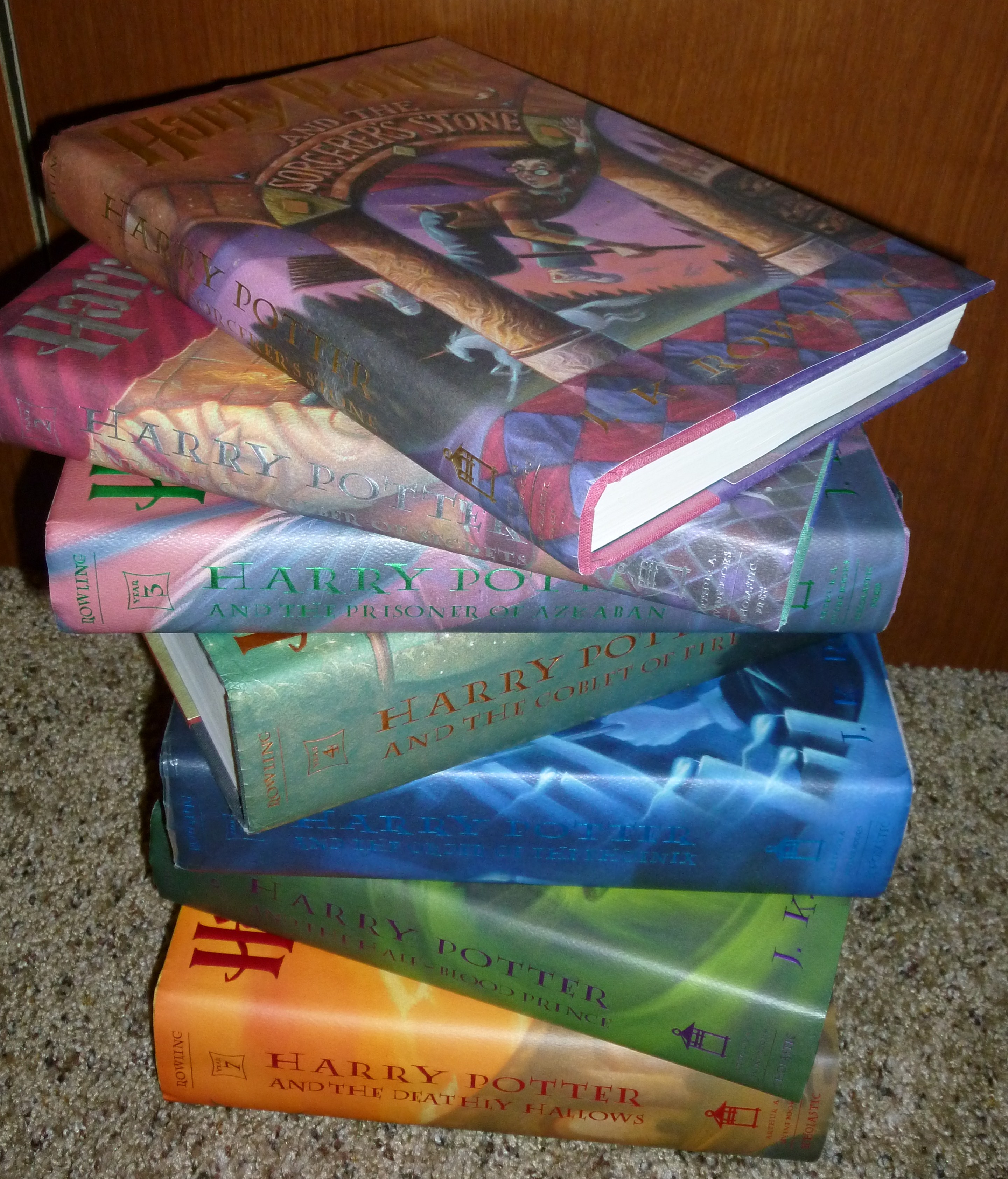
Having covered Twilight, that leaves one more young adult fantasy novel I know I have to cover–Harry Potter, by J.K. Rowling.  Unlike Twilight, I can pretty unreservedly recommend the Harry Potter series.  Oh, I wouldn’t swear that they’re excellent writing, and the first few hundred pages of Book 5 does drag a bit.  But on the whole, Rowling has created a wonderful world and very enjoyable books.

If you are somehow not familiar with the premise of Harry Potter, they’re about a boy–Harry–who finds out on his eleventh birthday that he is actually a wizard.  He goes off to Hogwarts where he learns magic with his close friends Ron and Hermione, and does battle with the evil wizard Voldemort.  Voldemort killed Harry’s parents and, though defeated in the past, is always threatening to rise again.

There are several points that I find to be the great strengths of the series.  One is the complex world Rowling creates.  It’s detailed and plainly well-thought out.  The wizarding world has their own food, their own sports, a complex history, extensive legends…and without ever coming across like a bad historical fiction novel that’s trying to drum history lessons into you.  People (and by people I suppose I mean me) love the power of a book to take you to another world, and Rowling’s world is one that is easy to enter into, because it is rich and complete.

Second are Rowling’s plot twists.  I’ve noted elsewhere that I often can see twists coming, but I rarely predicted the twists in this series.  She is particularly good at disguising who the villain of the book is.  Voldemort is supported by numerous henchmen…but some are not nearly as obvious as others.  Despite unexpected turns, these are books that usually leave me saying “Oh, NOW I see what it all meant…” rather than feeling like I was tricked or misled.

I also love the way Rowling drops a side comment in book one that becomes pivotal in book three, or introduces a character in book two who becomes important in book six…she ties things together so well, and I enjoy spotting something important on a re-read that I didn’t even notice to begin with.

A few reservations on the series…I was never that happy with the romances that turn up.  There are solid friendships here, but the romance, though present in the later books, never felt all that satisfying.  And it’s not that I want characters to end up with different people than they eventually paired off with…but we didn’t get much in the way of romantic scenes for anyone.

I also was never able to feel much for the death scenes.  I know Rowling has said she’s cried while writing them, I know other readers have been deeply moved, and I respect that…but for me personally, I don’t feel a lot of pathos.  (There is one exception to that, and to avoid giving a spoiler, I’ll just say it was the one who died with “the ghost of his last laugh still etched upon his face.”)

Still, Harry Potter‘s strengths certainly outweigh what weaknesses there are.  And one thing the books do have in common with Twilight–I tended to read them for the first time in a few days.  And usually I’d read the last part of the book straight through in a couple of hours, because another strength of the books is extremely engaging climaxes.

Author’s site: http://www.jkrowling.com/

Obedience–But With Backbone

Cinderella, in her traditional form, is a character who drives me absolutely up the wall.  Come on, woman—I know you lived in a pre-feminist culture, but don’t you have any backbone at all?  Your life’s awful—so do something about it!  And the fairy godmother—where was she all these years while Ella was being mistreated?  The fairy only shows up when the girl wants to go to a party?  (Because obviously that’s something of paramount importance.)

But, like all great fairy tales, Cinderella does have that spark of eternal appeal.  Who can’t relate to the dream of being lifted out of your ordinary or even unpleasant life, because that one person (the prince, the book editor, the boss for the dream job, the head of the club…fill in your own relevant personality) sees you and says, yes, you’re special above all others.  That’s the core of Cinderella.  But Cinderella herself is irritating.

So when you can take that eternal spark and improve on the character and the plausibility—well, as I said when discussing Wildwood Dancing, then you’ve got something.  And Ella Enchanted by Gail Carson Levine is one of the best retellings of Cinderella I’ve ever read.

Ella is cursed at her christening—if anyone gives her a command (from “eat this cake” to “go jump off a roof”) she has to obey it.  And with that one brilliant stroke, Levine has a heroine who, like the traditional Cinderella, does everything her wicked stepfamily tells her to do—but who also has a mind of her own.  No one could accuse Levine’s Ella of lacking backbone.  She obeys, but I don’t think I’d describe her as obedient.  She can think for herself and, as much as she can around the limits of her curse, takes control of her own life.

There’s a good plot, with ogres and adventures and a kind of quest in Ella’s search for a way to overcome her curse, but I think what mostly stands out in my mind are the characters.  Ella, of course.  And her fairy godmothers—both of them—her more-than-usually complex wicked stepfamily, her absentee father, and, of course, Prince Charmont—because what’s a Cinderella story without a true love, right?

Ella Enchanted probably belongs in the juvenile category, rather than young adult.  But, kind of like the original Cinderella, it has a wide appeal, even if you’re not really the target age group.  So don’t be scared off just because it’s shelved in the kids section.

I unfortunately can’t quite just ignore the movie here.  There is one, but let’s all just pretend that there isn’t.  Don’t see it.  Really.  I did, and I think I spent most of it twitching and saying, “No, no, no, that’s wrong.”  Besides getting the details wrong, it got the spirit wrong, and while I can sometimes forgive a movie for changing the facts a little, it’s much harder to forgive a movie for maiming of the spirit of a story.

Because what Ella Enchanted really is is a very practical, plausible (once you accept the existence of magic) retelling of Cinderella.  The movie isn’t.  But the book is, and it’s well-worth the read.

Author’s site: http://www.gailcarsonlevine.com/