Getting Simba Back to Denmark

I have a confession–I have never been a fan of The Lion King.  I loved Disney movies as a kid (still do).  But even as a kid, I didn’t like The Lion King.  It probably suffered somewhat by coming out the summer after Aladdin, which was my favorite, but it was more than that.  I guess I was already thinking like a writer, because I remember complaining that it lacked plot.

I never watched The Lion King again after it first came out, until recently.  I wanted to see if my perspective had changed with age–and with knowledge of Hamlet, which is more or less the same story and my favorite Shakespearean tragedy.
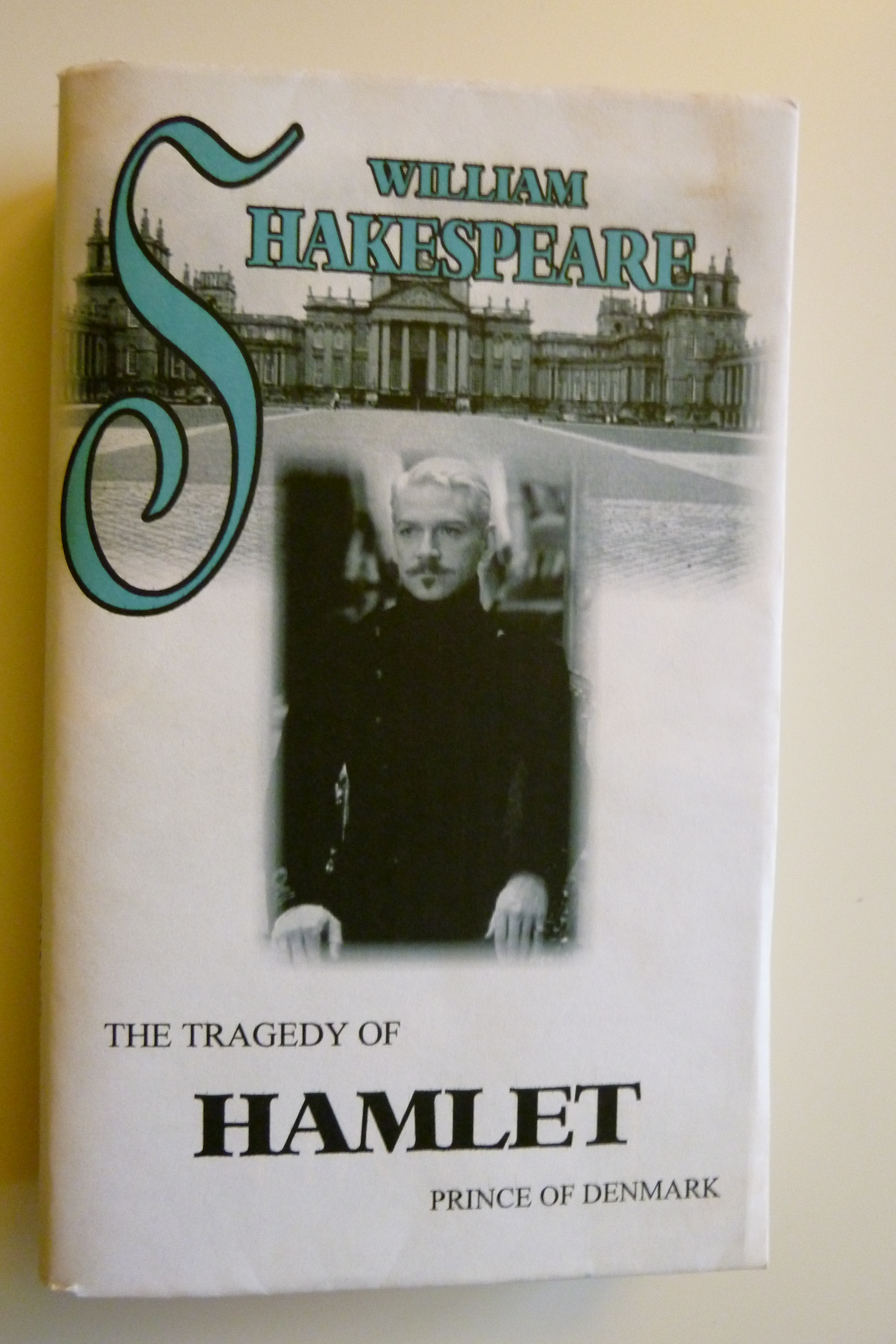
Practically the same story. Only not.

It did give me a new perspective–and I decided my younger self was right.  Only, being older and familiar with Hamlet, now I can explain what my younger self meant.  So naturally I thought I’d share with all of you!

Here’s the plot, such as it is: Simba is a lion cub, the son of Mufasa, the King of Beasts.  Simba’s evil uncle, Scar, has Mufasa killed.  Simba, feeling responsible, flees.  Everyone suffers under Scar’s rule.  Eventually Simba comes back to defeat Scar and fulfill his destiny (sorry if that was a spoiler for anyone).

It doesn’t sound so bad, as a plot.  It is a ninety-minute animated kids’ movie, after all.  Only there’s a problem.  See, it IS basically Hamlet.  The evil uncle kills the king and assumes his throne, the prince has to come back from being away to deal with the situation.  But here’s the key point–Shakespeare began his play when Hamlet returned to Denmark, and then spent four hours on the conflict with the uncle.

In The Lion King, it’s an hour and fifteen minutes before Simba gets back to Denmark, so to speak.  Which means that the main event covers only the last fifteen minutes of the movie.  And I really could feel that, when I watched it again–I was waiting for him to get to the confrontation with Scar.  And everything else felt like it was just back-story, just setting things up.  When almost your entire movie is setting things up…well, I think that’s how I ended up feeling that it didn’t have enough plot.

Maybe it’s a question of what I’m looking for.  Maybe if I could manage to view the story as being about Simba’s growth, rather than about the fight with Scar, I’d like it better.  But…I obviously haven’t managed to see it that way as a kid, or as an adult.

It was fun to see how it paralleled Hamlet, especially in the characters.  Simba as Hamlet, Scar as Claudius, Mufasa as the King, those are all pretty obvious.  Zazu is Polonius.  Nala is a mixture of Ophelia and Horatio.  Rosencrantz and Guildenstern are kind of split between Timon and Pumbaa, and the hyenas–the first are Simba’s friends, the second work for Scar (not combining those aspects makes things less compelling, by the way).  So I did enjoy the Hamlet parallels.  But I still don’t like the plot.

Great music, though!

Bradbury’s Mars

I’ve been trying to broaden my horizons in science fiction reading, and this week I broadened them all the way to Mars, by reading Ray Bradbury’s The Martian Chronicles.  I saw the movie years and years ago, remembering it only faintly, and this was my first trip through the book.

I have great respect for Mr. Bradbury…but, and I may get myself into trouble saying this, I had enormous amounts of trouble with The Martian Chronicles.

First, the essential plot: the story of humans colonizing Mars, over the recent graves of the previous civilization.  There are a series of failed exploratory missions, whose crews disappeared mysteriously.  When one finally lasts, they realize that the previous visitors infected the Martians with chicken pox and, barring a handful of survivors, the entire civilization died.  Humans get on with colonizing, but just as they’re beginning to flourish, their efforts are disrupted by atomic war back on Earth.

The presentation of the story is interesting, a series of anecdotes with no major characters throughout and only a few recurring ones.  This is almost a series of short stories, and some apparently have been published as independent stories.  I liked Bradbury’s writing, and there was something about the concept I liked.  I did feel I was reading a classic icon of a certain kind of science fiction, when there were canals on Mars and interplanetary travel could be accomplished quickly.

A few of the stories, as independent stories, were very good.  The third (failed) expedition’s experience reads like an excellent episode of The Twilight Zone, and there’s a wonderful funny story about two people who believe they’re the only man and woman on Mars.

But I had two major problems.  First, I didn’t understand the Martians.  And second, I didn’t understand the humans.

The Martians were different every time we saw them.  I couldn’t figure out what the rules were.  They’re an advanced civilization and they’re telepathic, but beyond that…  In one story they’re almost comically absurd, with names like Mr. Zzz and Miss Ggg and Mr. Iii.  In another they’re classical philosophers, with keys to the meaning of life.  In a third they’re shapeshifters, telepathically assaulted by other people’s desires, and with little control over themselves.  There seemed to be a lack of internal consistency, and I didn’t ever feel I could clearly say, this is what Martians are like.

As to the humans, I didn’t feel they behaved in a believable way.  When they emerged as individual characters they did, usually, but the attitude of the masses was baffling to me.  When the fourth (and first successful) mission lands, they realize three things: 1) Mars was home to an intelligent civilization, on an equal or more advanced level than humans; 2) this civilization died two weeks ago, because of Earth-brought disease; 3) a few Martians have survived, to disappear into the hills.

Any one of those facts should change human history.  I mean–come on!  There’s a civilization!  On Mars!  We accidentally killed them!  A few of them are still out there if we want to try to talk to them!

Every scholar, every government official, every architect, philosopher, religious leader, psychologist, scientist, visionary and dreamer should be intensely interested.  Instead, with the exception of a few characters, the overall reaction seems to be: yeah, they had nice towns.  Shame they died.  Sorry about that.  Let’s get on with building our shops and houses and roads.

No one seems to be interested in seeking the remaining Martians out.  That, at least, seems like it would be the most basic of impulses, shared by everyone.  After the mere fact of seeking them, you’d get different reactions.  I’m sure you’d get the Fear of the Other, with people wondering what weapons they have or if they’re hostile (since we did accidentally kill most of them), and some people would want to kill them before they get us.  In a more idealized world, you can’t really apologize adequately for accidental genocide, but you can at least try.  And if the Martians were willing to forgive and make friends…oh, the questions.

What’s your religion?  What are your family structures like?  What was in your history?  What do you understand about science?  What do you eat?  How do you stay out of each other’s heads, if you’re all telepaths?  And for me, I might be most interested to hear–what are your stories?  What’s your mythology?  What are your fairy tales?  Do you have Cinderella or Sleeping Beauty?  Are universal stories really universal?  What stories does every Martian child know?

But no.  The humans are more interested in building shops and installing juke boxes.

I can accept telepathic Martians who live near canals, because that’s the world Bradbury has put us in.  But I have trouble with humans who don’t behave according to what I understand as human nature.

I respect Mr. Bradbury, and I appreciate his place in science fiction.  But in the future, if I want to read about some classic sci fi Martians, I’ll be spending my time with Mr. Burroughs instead.

Author’s site: http://www.raybradbury.com/

A Dragon, an Ogre, and a Mystery

I just finished Gail Carson Levine’s latest book, A Tale of Two Castles.  I feel something of a personal attachment to this one–I read her blog with great dedication, and she’s been talking about this one coming out.  She’s also been talking about her travails right now with writing the sequel.

So I admit I was predisposed to like this one.  And it really is a fun, sweet tale.  It’s the story of Elodie, a poor farmer’s daughter who comes to the big city of Two Castles hoping to apprentice as a mansioner, an actress.  When she can’t pay for her apprenticeship, she ends up instead as assistant to the local dragon, and finds herself enmeshed in a mystery surrounding the local royalty and the local ogre.  Someone is threatening Count Jonty Um the ogre, and he enlists the dragon and Elodie to investigate.

I particularly enjoyed the dragon and the ogre.  Meenore the dragon is a detective, occasionally in the mold of Sherlock Holmes, as well as a rather creative entrepreneur, selling toasted food and heating up the blacksmith’s fire.  Meenore is referred to throughout the book as IT, rather than he or she.  Dragons apparently have gender, but don’t share the details on what he or she is, so the appropriate pronoun is IT.  I think this is a clever device that then got overused a bit, to the point that I nearly forgot Meenore had a name, IT’s referred to so often as IT.  But I like the dragon, and ITs gradually warming relationship with Elodie.

I also like the shapeshifting ogre, usually referred to as His Lordship.  I have a soft spot for characters who are feared and misunderstood by the people around them just because they’re different.  It’s that Phantom of the Opera thing.  His Lordship is kind and shy, but the people of Two Castles can’t seem to get past the fact of his ogreness.

Elodie herself is a pretty good character.  She’s only twelve, and sometimes it feels like it.  She goes off on flights of guessing about the possible solution to the mystery.  These often feel far-fetched, and I can’t quite tell if we’re meant to take them seriously, or if we’re meant to interpret them as Elodie having a wild imagination.  But aside from that she’s a pleasant girl trying to make her way in the world and do the right thing, who grows in her role as dragon’s assistant.

My library copy of this is labeled “Mystery,” and I suppose it is one, but it doesn’t really feel like it to me.  I wouldn’t recommend thinking too hard about the mystery.  If you focus instead on the book as Elodie’s adventures, which involve some mysterious happenings to solve, I think you’ll get on better.

If you’ve never read Gail Carson Levine, I have to say, go read Ella Enchanted because that one just has to be read.  If you’ve already read Ella, then by all means give A Tale of Two Castles a read!

Author’s site: http://gailcarsonlevine.com/

Watching the Hunger Games

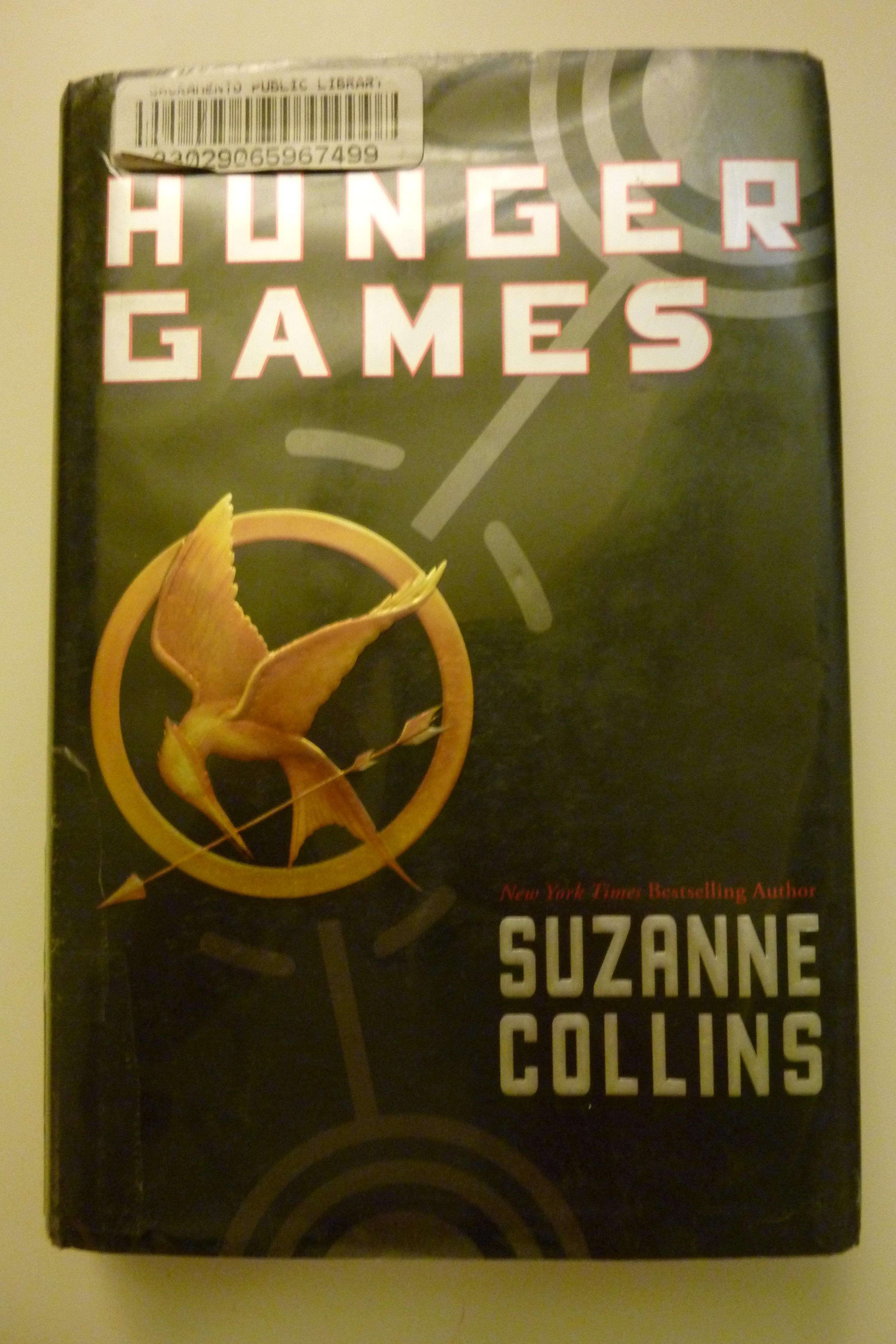
If you follow any other YA book blogs, odds are you’ve heard about The Hunger Games by Suzanne Collins.  They seem to be the latest sensation in YA literature.  I’m coming to the game (so to speak) a little late, as I finally picked up The Hunger Games just recently.  It’s darker than my usual fare–but it turned out to be excellent.

In case you haven’t heard about it, The Hunger Games is set in a future dystopia, where society is organized into one wealthy capital and twelve surrounding districts; it reminds me somewhat of ancient Rome and its provinces, and of South Africa’s townships.  Seventy-four years previously, the districts rebelled against the capital.  They were crushed, and ever since have been forced to participate in the annual Hunger Games.

A teenage boy and girl is selected by lottery from each district.  The 24 tributes are placed together in an enclosed landscape, where they have to fight nature–and each other–to survive.  Twenty-three will die.  Wealth will be showered on the single victor and his/her district.  And the whole thing is televised: entertainment for the capital, mandatory viewing in the districts.

The book centers on Katniss; when her beloved twelve-year-old sister is selected for the Games, Katniss desperately volunteers in her place.

You see by now why this seemed darker than what I normally read?  It is a very grim premise–but a brilliant book.  And not so unlike other things I’ve read; in fact, I kept getting the feeling I’d read it before.  Life in Katniss’ district (the very poor 12) reminds me of Gathering Blue by Lois Lowry.  The Hunger Games remind me a lot of Surviving Antarctica, though more cut-throat.  I’m even reminded a little of some aspects of Uglies by Scott Westerfeld.

But this one does stand out.  I think what impresses me the most are the characters, and the deft handling of multiple conflicts.

Almost every character, even the minor ones, felt vivid and alive.  Katniss is a powerful character.  Life is a struggle in District 12, and she’s been fighting to keep herself and her family alive since she was twelve.  Her father is dead and her mother provides limited material and emotional support.  Katniss is forced to be tough, and is in many ways wary of others–but she also fiercely loves her little sister, and cares about her best friend, Gale.

The conflicts Katniss is enmeshed in are many and varied.  There’s conflict on the political level–even if I hadn’t picked up information about the later books in this series, the society and the past rebellion make it clear enough that a new rebellion is coming.  That’s mostly in the background of this first book, but it’s there.

There’s the day-to-day struggle to survive, first to fight starvation in District 12, and then the even more immediate danger in the Hunger Games.  Katniss has to literally fight to survive, using knives, arrows and her wits.

And there’s the love triangle.  Did I mention her best friend Gale is a boy?  Collins develops their relationship well, as friends beginning to be something more; I’m especially impressed by how well Collins conveyed this, considering Gale is only in the early chapters, and briefly in memories and references later.  He’s left behind when Katniss goes to the Games with Peeta, the boy selected from District 12.  They play up being in love as part of a strategy for the Games–until Katniss begins to be unsure what’s the Games and what’s real.  I always like triangles best when a character is pulled equally in two directions.  When a girl’s madly in love with one boy and just really fond of the other (ahem, Twilight, I mean you), I don’t really see the point.  In this case, I really can’t tell how it’s going to come out–and no one tell me, I haven’t finished the trilogy yet!

All of the external conflicts lead to a lot of tangled internal conflicts for Katniss–wondering how she feels about Peeta, worrying about her family, resenting the capital, struggling to survive…and none of it feels foolish or superfluous.  It could very, very easily come out sounding stupid, with me yelling at the book, “Why are you worrying about romance while people are trying to kill you?!” but it really doesn’t feel that way.  The romance is given a little more weight than I’d like at the very end, but overall it’s handled beautifully in a way that feels very reasonable and natural.

This is a dark book, and I’d definitely consider it older YA.  Despite being about teenagers killing each other, most of the book is actually not too gruesome or graphic.  People bleed and die, but not too graphically.  However, there is a more disturbing scene near the end, so be warned.  Most of the book is powerful but not too far over the edge into horrible, and Collins actually manages well to throw her characters into a kill-or-be-killed scenario but keep them sympathetic and redeemable.

The televising of the Games is another element I found especially intriguing.  It’s sensationalism to an extreme.  There’s some forced comparison to Rome (officials involved in the Games tend to have Roman-reminiscent names) but I find it much more powerful to compare it to our culture.  Maybe it’s an easy comparison because I was reading this the same day Casey Anthony’s verdict came down.  Why are we, as a culture, fascinated by other people’s pain?  Why do we want to know the gory details?  It has nothing to do with our own lives–why is a murder trial in Florida front-page news 3,000 miles away in California?  All the horrible, sensationalist news stories are someone’s life, and it’s disturbing that it becomes a sort of entertainment for the masses.

The more I think about The Hunger Games, the more impressed I am by how well it’s put-together, by how clearly characters were painted in just a few strokes, by how absorbing the plot was.  I have the second book on reserve at the library–#70 in line, but there are over 80 copies in the system, so I hope to get it quickly!

Author’s site: http://www.thehungergames.co.uk/

Update: Read my review of The Hunger Games movie!

Hilarity Happening at MacDonald Hall

A few months ago I reviewed A Semester in the Life of a Garbage Bag by Gordon Korman, and I’ve decided it’s time I reviewed some of his other many hilarious books.  A particular favorite is the Macdonald Hall Series.  Macdonald Hall is a boarding school for boys, around middle or high school age–it’s never very specific.  Miss Scrimmage’s Finishing School for Young Ladies is directly across the road.  With a host of improbable circumstances and wonderfully quirky characters, hilarity constantly ensues.

Korman follows the same pattern he uses in A Semester in the Life of a Garbage Bag, and gives us one fairly normal main character–Boots (real name Melvin, but don’t call him that).  His best friend and roommate is Bruno, who can always be relied upon to have a big, brilliant and probably ill-advised idea, whether it’s a way to earn money for a swimming pool or a new idea for a prank.  Bruno and Boots are incorrigible pranksters who are also fiercely loyal to their school, and Korman gets plots out of both qualities.

They’re surrounded by even wilder characters.  There’s big Wilbur Hackenschleimer, who thinks only about food, and genius Elmer Drimsdale who has a brilliant scientific mind and limited social skills.  I think my favorite is Sidney Rampulsky, who is endlessly klutzy.  Playing football, he manages to trip over the 30-yard line.  Another time he trips over the headmaster’s chair, while the headmaster is sitting in it.  The headmaster is Mr. Sturgeon, popularly known as The Fish–for his name, and for his cold, fishy stare.  The Fish is stern but fair, and secretly very fond of his students–but secretly.

Across the road, Miss Scrimmage is an enormous and rather terrifying woman, who will defend her precious, defenseless girls until the end–blissfully unaware that her girls are about as defenseless as a SWAT team.  Cathy and Diane are Bruno and Boots’ female counterparts.  Cathy is always up for an adventure, and her roommate Diane is generally dragged along.

There are six books in the series; the first is This Can’t Be Happening at Macdonald Hall, which Korman wrote and published when he was twelve.  He wrote most of the others during high school, which frankly boggles the mind a bit–especially because they’re brilliant.  The first one involves Bruno and Boots being split up as roommates because they commit one too many pranks; Bruno, of course, has endless ideas on how they can convince The Fish to put them back together–mostly ideas involving new pranks.

Other books in the series feature Hollywood descending to film a movie on campus; the adventures of a hapless football team (I don’t normally like sports stories, but this one is so funny I enjoy it); and a desperate plot to make Macdonald Hall famous so they won’t be shut down.  This one features a scene with Elmer Dynamicdale and the Original Round-Robin Happy-Go-Lucky Heel-Clicking Foot-Stomping Beat-Swinging Scrim-Band performing Science Rock, which essentially consists of Miss Scrimmage’s girls creating a cacophony of noise while Elmer screams scientific facts (you have to kick him to get him started).  It never fails to make me laugh out loud.  But that happens a lot with these books…

I could probably go on and on just giving funny anecdotes, but where would it end?  Just trust me.  Read them.  They’re hilarious.