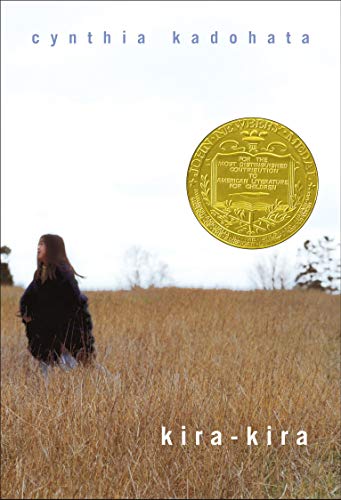
 Continuing the pattern of last year, I’m making a good run through the Newbery winners. I picked Kira-Kira by Cynthia Kadohata in part because it also serves my diversity challenge, centering on a Japanese-American family living in Georgia in the 1950s. There was some exploration of that dynamic…but it was also the most unrelentingly depressing Newbery I’ve read yet!
The narrator is Katie Takeshima, but the story really centers around her beloved older sister Lynn. Lynn is brilliant, loving, a force in the family and full of dreams for her future. You can already see where this is going, can’t you? Lynn is one of those too good to live characters, and sure enough—as the book goes on Lynn is vaguely and sporadically ill…then less sporadically…then fatally.
I don’t like stories about children dying. I’m just going to put that out there, and admit that this makes it harder for me to judge if this was a good story about a child (well, teenager) dying. I especially hate stories about children dying in slow, lingering ways, which this definitely was. I love The Bridge to Terabithia, but that’s not a book about death—it’s a book that contains a death. Kira-Kira is largely focused on Lynn’s slow decline and death, and how Katie handles it. Continue reading “Book Review: Kira-Kira”
 I love a good premise. I love good characters, but I usually pick up books because something in the premise grabs me—so how could I resist The Girl from Everywhere by Heidi Heilig? It’s a fantasy of traveling to anywhere a map records—in the present or the past, real or imagined.
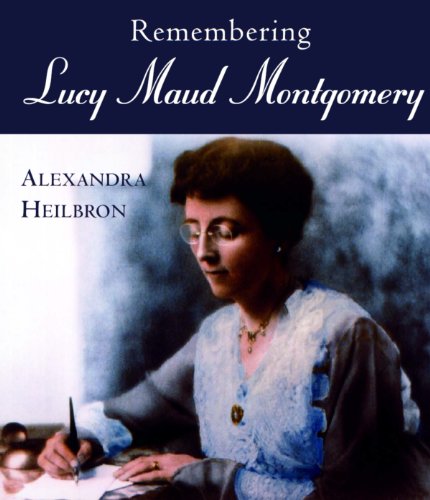 I kicked off my L. M. Montgomery-related reading challenge this year with a book that’s sat on my shelf unread for a while (I love when challenges get me to read unread books I own!): Remembering Lucy Maud Montgomery, edited by Alexandra Heilbron.
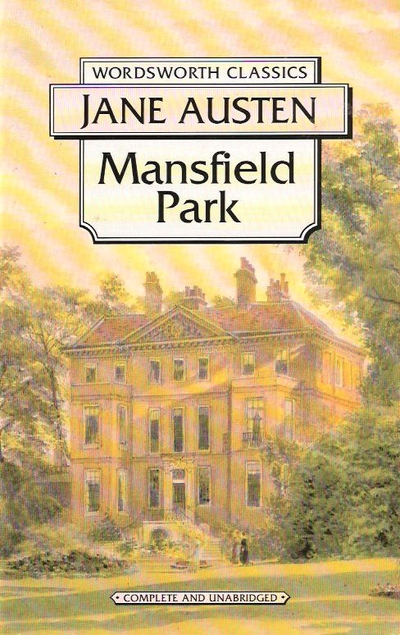 I recently reread (via audiobook) Mansfield Park by Jane Austen, one of my favorite Austen novels–although it rather surprises me that it is a favorite! As sometimes happens, rereading gave me a few more insights.
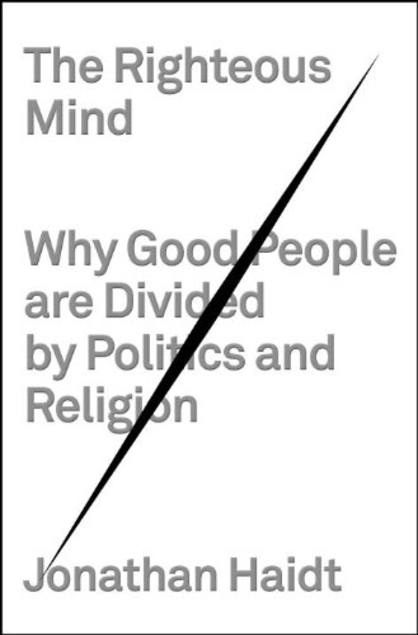 Most of the books I read now I pick up on reserve at the library, but I love it when I just stumble on a really good book. I was at the library a few weeks ago and had nothing to fill the nonfiction slot in my regular reading. So I looked up Gretchen Rubin’s Better Than Before (a favorite) in the online card catalog, then went to that shelf to see what else I could find there. And so I found Jonathan Haidt’s The Righteous Mind: Why Good People Are Divided By Politics and Religion. A book exploring why we end up on opposite sides of the political spectrum? Yes, please!
 Tales of the Marvelous