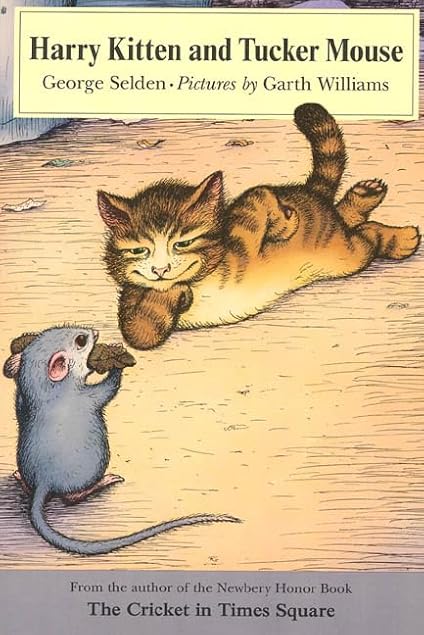
 As far as I know, my book today is pretty obscure–but you may have heard of its more famous literary sibling, The Cricket in Times Square. George Selden wrote seven books about Chester Cricket and his friends, and Harry Kitten and Tucker Mouse serves as a prequel to Cricket.
The book opens with a very young Tucker Mouse lost on the streets of New York–so young that he hasn’t even chosen a name for himself yet. When he bumps into a tabby kitten, he’s ready to fight…because that’s what cats and mice do. But Harry Kitten offers him a crust of sandwich instead, and the two become fast friends. Together, they roam New York looking for a home, from the basement of the Empire State Building to manicured Gramercy Park. But nowhere feels right until they find the bustle of the Times Square Subway Station.
This is an utterly charming series. Chester Cricket doesn’t appear in this story, but I love Harry and Tucker. Harry is always so calm, so reasonable, while Tucker is dramatic, anxious and avaricious–and usually the source of humor. They’re one of my favorite literary friendships, all the more so because it’s between two traditional enemy species. And their quest for a place to belong is perfectly familiar for humans too. Continue reading “Book Review: Harry Kitten and Tucker Mouse”
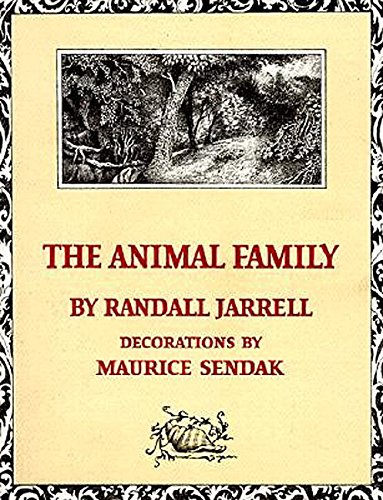 In another read for the Once Upon a Time challenge, I picked up The Animal Family by Randall Jarrell, illustrated by Maurice Sendak. It’s an old book and a Newbery Honor, but I’d never heard of it until recently. It’s a short book, fable-like and charming.
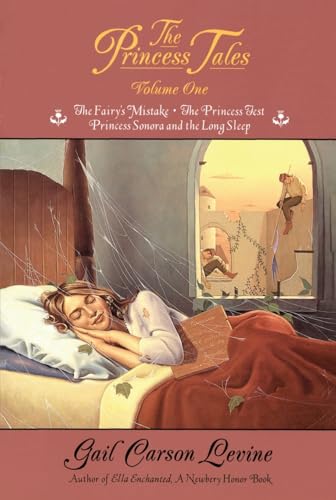 I’m a huge fan of Gail Carson Levine’s
 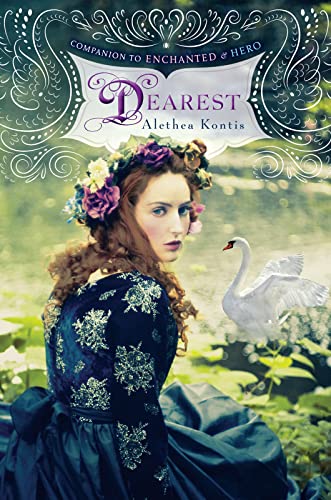 I picked up Dearest by Alethea Kontis very soon after it came out—then kept renewing my library copy, waiting for the Once Upon a Time challenge to begin. This is the third book in the Woodcutter Sisters series, with its seven sisters named for the days of the week.
 I finished out my reread of the Tillerman Cycle by Cynthia Voigt with the final book, Seventeen Against the Dealer. I’ve loved revisiting the Tillerman family, getting inside each of their heads (as Voigt does so well!) and watching them navigate and struggle with goals, identities and connections.
 Tales of the Marvelous