
I’m not actually a member of The Classics Club (whose members pledge to read 50 classics in 5 years), but I saw the June Meme question recently on Jessica’s blog. I started to comment…and realized I had so much to say that I had better write my own post!
For an example of a classic with racism in it, Tarzan of the Apes by Edgar Rice Burroughs came pretty immediately to mind. The first book is a classic, though I’ll talk about the rest of the series in the discussion as well. Throughout the series, the overall portrayal of the African natives is both negative and stereotyped (and probably contributed to later stereotypes…), and there are overt comments describing them as inferior to the white man.
Interestingly, Burroughs does make an exception for one African tribe, the Waziri, who Tarzan allies himself with. It’s still troubling in that they make the lone white man, Tarzan, into their chief, but they are at least portrayed as intelligent, valiant and strong warriors. (And just to make things more complicated, in Burroughs’ Mars books, the black Martians are secretly controlling all the other races, and John Carter, while remarking that it’s a strange thing for him to say as a Virginian, comments on the beauty of their dark skin.)
But the positive potrayals really don’t do much besides complicating matters, and the negative portrayals are clear, abundant and deeply unfortunate. There are two reasons that I personally feel like I can still enjoy these books in spite of that.
First, I think that in general, books have to be taken for their time period. That’s not to say that the racism is acceptable, but we also can’t reasonably expect a past author to have modern values. I tend to say this about Shakespeare too (usually while discussing The Taming of the Shrew!) The people and the books are a product of their times, and have to be taken as such. For that matter, our reactions are a product of our time too!
Second, and this is equally crucial or more so, I don’t feel like the racism is a core part of the Tarzan books. The racism is fully apparent, but it always felt to me like a sidenote. The focus of the series is on Tarzan, the struggles in the jungle, his efforts to rescue the frequently-kidnapped Jane, or to explore one of Burroughs’ many lost cities (which seem to crop up all over Burroughs’ Africa). The strengths of the book carry through into the present and are just as appealing now.
I want to talk about two of the later books in the series as different examples (and together they make quite a good story too…) Book Seven, Tarzan the Untamed, was written during World War I and is very anti-German. Burroughs planned to have a German officer kill Jane (although his publishers saved her life by talking him out of it!) After the war, some of the Tarzan books were translated into German and became wildly popular…until someone, without authorization, translated Tarzan the Untamed. Burroughs wound up completely blacklisted in Germany, to the point that booksellers were afraid to stock even his other books.
But Burroughs apparently learned nothing from this, because during World War II he wrote Tarzan and the Foreign Legion, which is virulantly anti-Japanese…
Tarzan and the Foreign Legion is an example where I can’t get past the racism and just accept it as a product of the time. It’s so overt and so integral to the plot that it’s actively uncomfortable to read. So while in principle I don’t think I can extend morals into the past, there are incidents where, as a modern reader, on an emotional level I can’t enjoy a book with objectionable morals. It also doesn’t help that, by Book Twenty-two in the Tarzan series, Burroughs was getting formulaic to an extreme, and the book has very little to recommend it anyway.
All of this is, of course, highly subjective. I can probably get past the racism in one book that someone else would find too uncomfortable, and another person might be bothered less by a different example I can’t handle.
Have you read any Classics with racism in them, and how did it feel to you?
And maybe some other time I’ll do a post about sexism in the Tarzan books…because that could be a whole discussion on its own!
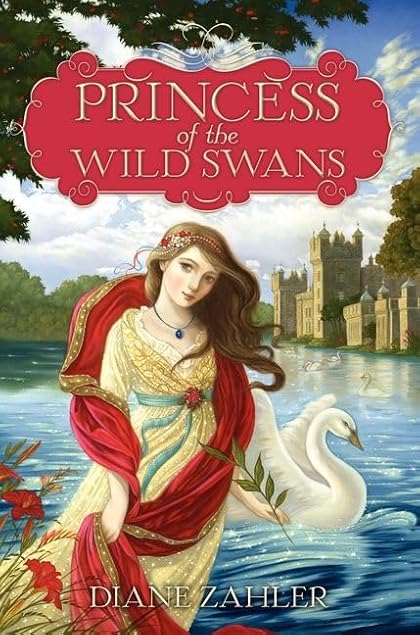
 Already the end of spring is here…and that means the end of the delightful reading challenge, Once Upon a Time, hosted by Carl at Stainless Steel Droppings. At least, the end for this year!
 Continuing my
 I found myself with a slight crisis recently, short on books and still waiting on holds, wandering the shelves of my tiny local library looking for something to carry me through the week…and was delighted to stumble upon I Shall Wear Midnight by Terry Pratchett. Discworld is the one series I somehow feel no pressure to finish–it’s too big and too rambling and I just dip in at random whenever I feel so inclined. But the Tiffany Aching subseries as always felt much more self-contained and continuous, so I have been meaning to finish that off.

