Godmothers and Fairy Tales and Tradition

I’ve been reading my way through Mercedes Lackey’s 500 Kingdom series, and I keep meaning to review each book…but I reviews piled up and I haven’t got to them.  So I thought maybe I’d better review the series on a whole.  It may be best looking at them all together anyway, because I have definite feelings–mixed.

The series has been rather hit and miss for me, both in that some books are better than others and that some aspects of books have been better handled than others.  The biggest advantage of this series is a blissfully brilliant concept–in the 500 Kingdoms (take that literally) life is constantly influenced by the Tradition, a vague, overarching, not-quite-intelligent magical force which tries to push people and events onto…well, traditional paths.  Therefore life tends to conform to familiar fairy tales, for good or for ill.  The Godmothers are a network of powerful magical women, who work through and around the Tradition, trying to create happy endings.

I love that concept.  I love all the playing with traditional fairy tales, and I love the clever ways they get retold.  I love the ways people find to manipulate the Tradition, and the sometimes silly things that have to be done to keep the Tradition happy.

Things get more mixed with the characters–from book to book, some have been strong while others have never felt fully realized.  Likewise, I have mixed feelings on the plots–some are good, but several have felt distinctly scattered.  But perhaps I’d better look at this book by book. Continue reading “Godmothers and Fairy Tales and Tradition”

Quotable Jorge Luis Borges

“I have always imagined that Paradise will be some kind of library.”

– Jorge Luis Borges

When Redshirts Fight Back

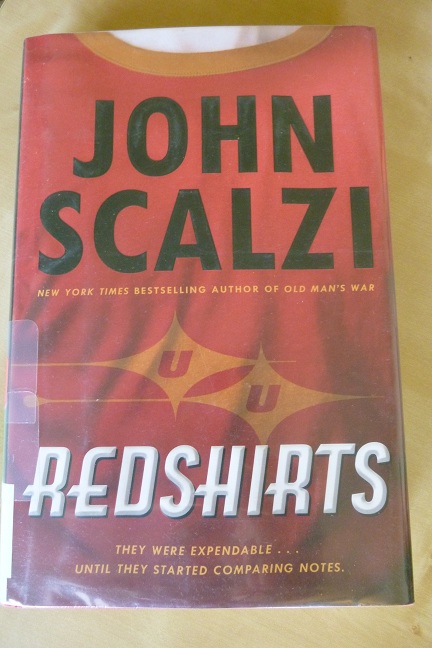
Redshirts by John Scalzi has one of the most fantastically brilliant premises I’ve ever run across.  As soon as I figured out that it really is about what I think of when I hear “redshirts,” I knew I had to read it.

Ensign Andrew Dahl and his friends are newly arrived on the starship Intrepid, and swiftly realize that there are strange things going on.  There seems to be a strangely high number of casualties among the crew, events frequently defy the laws of physics or logic, and everyone gets awfully nervous about the subject of landing parties.  Dahl eventually connects with Jenkins, a crewmember who became unhinged after his wife was killed aboard the ship, and has taken to hiding in the crawlspaces–but who seems to have a firmer grasp on what’s really going on than anyone else.  Jenkins has figured out that their lives are dictated by the scripts of a TV show–a bad one–and Dahl and his friends conclude that the only way to escape a meaningless death is to go back in time and find their writers.

Two brilliant things here: this book takes all the weird absurdities of the original Star Trek and sci fi shows like it, drags them out to be even more extreme, and then has characters actually realize how irrational it all is.  Second, this is so meta–characters inside of a story have to deal with what it means to be characters.  I’m not sure if it’s applicable philosophy,  but it’s certainly intriguing philosophy.

Two criticisms: this will sound nitpicky, but Scalzi has a speech tag problem.  For non-editors, those are he said, she replied, he asked, etc.  Generally authors drop them when they can without losing clarity.  Scalzi keeps them, particularly in ‘s a scene near the beginning with two characters swapping dialogue back and forth and a speech tag at the end of every line.  It may be a deliberate stylistic choice, but it still made me twitch.  Second, and this is very ironic–I couldn’t keep Dahl’s friends straight.  They’re all redshirts, all with carefully crafted paragraph-long backstories, and I struggled to remember who was who, or see any depth in most of them.  Again, maybe deliberate–or Scalzi fell into the same trap he’s parodying.  We’ll say it was deliberate…

I did really enjoy Dahl as a character, as well as Jenkins.  In some ways I think I felt for him the most.  And then there was Kerensky, one of the TV show regulars.  He’s the regular character who gets injured or threatened but pulls through–again and again and again.  He’s also incredibly arrogant and very entertaining.

The main story comes to a close with a strange number of pages left in the book, because it’s followed by three codas.  The first is supposed to be the blog of one of the TV show writers.  I had trouble with this story.  The writer is very argumentative, and I’ve never liked narrators who come across as hostile to the reader.  The second is…harder to explain, but suffice to say it’s in second person (so the main character is “you”) and I couldn’t get into that somehow.

The third story, though, is about the actress who played Jenkins’ deceased wife, and I really liked her story.  She’s trying to grapple with this revelation about the characters of the Intrepid, and with larger life questions and…really fascinating.

All in all, for whatever its quirks and misfires, this book is still worth reading for that so fantastically amazing premise.  If you’re a Star Trek fan, at least.  I mean–the redshirts figure out what’s going on and try to save themselves.  And it’s fast-paced and funny and–well, how could that not be fantastic? 🙂

Author’s Site: http://scalzi.com/

Other reviews:
Stainless Steel Droppings
Little Red Reviewer
Tia’s Book Musings
Anyone else?
Favorites Friday: Short Story Collections

I haven’t done a Favorites Friday for a while, what with NaNo and other features, so I thought I’d come back to that for this week.  Today, let’s look at a different-than-usual medium, and talk about short stories.  I don’t read a LOT of short stories, but there are a few collections near to my heart.

To start with an author I’m pretty sure I’ve never mentioned–I love O. Henry’s short stories.  I had a habit in high school: if I finished my book during school, I’d run to the library between classes and pick up an O. Henry book for the rest of the day.  Because I couldn’t be bookless for three hours!  I have no particular favorite collection, but O. Henry in general is excellent.  I always enjoy his twist endings–even when you’re expecting them, he still surprises.

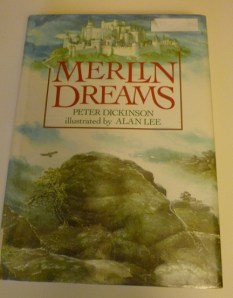
MerlinDreams1Merlin Dreams by Peter Dickinson is a book I’ve reviewed before.  It was a beloved favorite at the library through my childhood, and I finally bought it myself last year.  He tells semi-Arthurian stories about love and loss and honor and falling prey to your own tricks, all in a frame story about Merlin sleeping through the centuries somewhere below the moor.  The stories are haunting, with characters and ideas that have woven themselves into my mind.  And I about fell off my chair when I realized that Robin McKinley was married to Peter Dickinson–the Dickinson of Merlin Dreams!  And that’s definitely how I thought of him… 🙂

An author I often talk about 🙂 is L. M. Montgomery, so you must have expected she’d be here too!  She’s best known now for her novels, but she also wrote hundreds of short stories.  I’ve read 199, all of the ones presently available.  My favorite collection is The Road to Yesterday, with three of my favorite Montgomery short stories.  “Fancy’s Fool” is about dreamy Esme, who long ago went into a secret part of a garden and met a ghost boy she can’t forget.  “The Cheated Child” is about Pat Brewster, who must choose which of an awful assortment of relatives he’s going to live with…until one day he breaks free and finds himself at beautiful Sometyme Farm.  “Fool’s Errand” is about Lincoln Brewster, who reckons he’d better get married but dreads the thought–and ends up going in search of a girl he met on a beach one long ago day in his childhood.  With the possible exception of Esme’s story, these aren’t fantasies–but they’re magical.

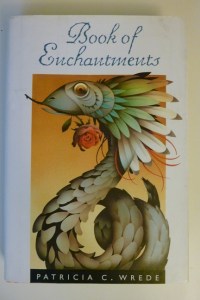
Book of EnchantmentsMore directly magical, I so enjoy Patricia C. Wrede’s Book of Enchantments (my review here), with fantasy stories that are funny or sad, traditional or modern, silly or profound.  And yet somehow, they all fit together too.  There are even two excellent short stories connected to her truly excellent Enchanted Forest quartet–which is such a treat for fans!

I’m open to reading more short stories, so…any recommendations?

The Fairy Tale Behind the Ballet

The holidays are creeping up on us!  I always like thinking about favorite books and movies to help put me in the spirit.  This year, I was fortunate to find a new (to me at least) book with a Christmas theme: Nutcracker by E. T. A. Hoffman, illustrated by Maurice Sendak.
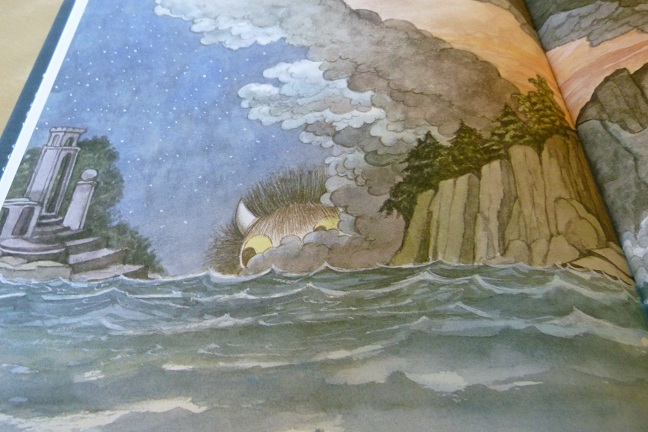
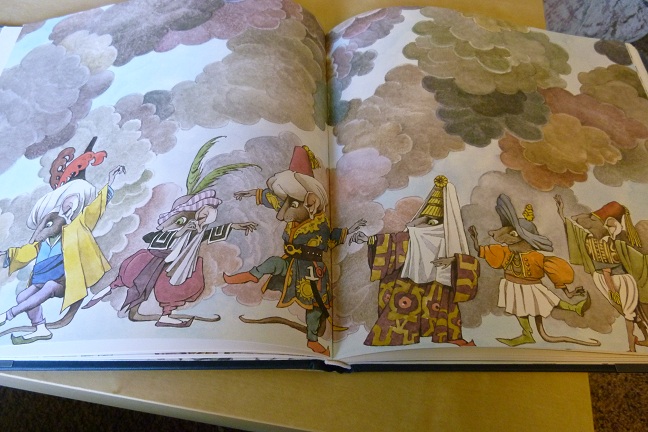
You may be familiar with the Nutcracker ballet–and this is not quite that.  The ballet is based on the story, and you can certainly see the same outlines.  But as often happens when stories are translated from one medium to another, things changed along the way!  The plot is a bit different and, in this particular edition, so is the atmosphere created by Sendak’s illustrations.

Like the ballet, the story begins with Christmas Eve, as Marie (or in the ballet, Clara) and her brother Fritz open their Christmas presents.  Marie’s favorite is the wooden Nutcracker.  That night, after everyone else has gone to sleep, Marie is in the parlor with the toys.  She witnesses a fight between the toy soldiers led by Nutcracker, and the fearsome, seven-headed Mouse King–or did she just dream it?  Here the story diverges from the ballet.  Marie is injured in the fight (or did she just put her arm through a glass cabinet?) and while she’s sick in bed, Godfather Drosselmeier tells her a fairy tale story of how the Nutcracker was cursed, and the roots of his enmity with the mice.

This is a lovely Christmas tale, with much the same charm and feel as the Brothers Grimm (though maybe less grim than their darkest!)  The book is really a novella, including the long story-within-a-story in the middle.  The odd story about the cursed princess who can only be cured when a magic nut is cracked is great fun, and Marie has her share of adventure too.

The illustrations are obviously a big part of this book, and there are some beautiful ones.  Don’t expect the tinsel and glitter of most productions of the ballet, but Sendak brings the characters to life with his own unique style–and with particularly elaborate costume details.  There are many full-page spreads, including a series of pages in a row when Marie and Nutcracker travel to the magic country.  There’s even what looks like a “Wild Thing” peering around a rock in one of those pictures!

My favorite thing about the book may be the charming narrative voice.  J. M. Barrie has won my heart forever by being the most charming of narrators, and so when I say Hoffman reminded me of Barrie in some moments, it’s a high compliment.  He has the same trick of addressing the reader that I enjoy so much, and there’s also some great tongue-in-cheek humor.

The edition I have was just released last October, and it’s physically a beautiful book.  It’s a large hardback, and seems designed to make a wonderful holiday gift!

Other reviews:
Rhapsody in Books Weblog
Minding Spot
A Patchwork of Books
Anyone else?

Disclosure: I received a free copy of this book from the publisher in exchange for an honest review.