Twelve More Dancing Princesses

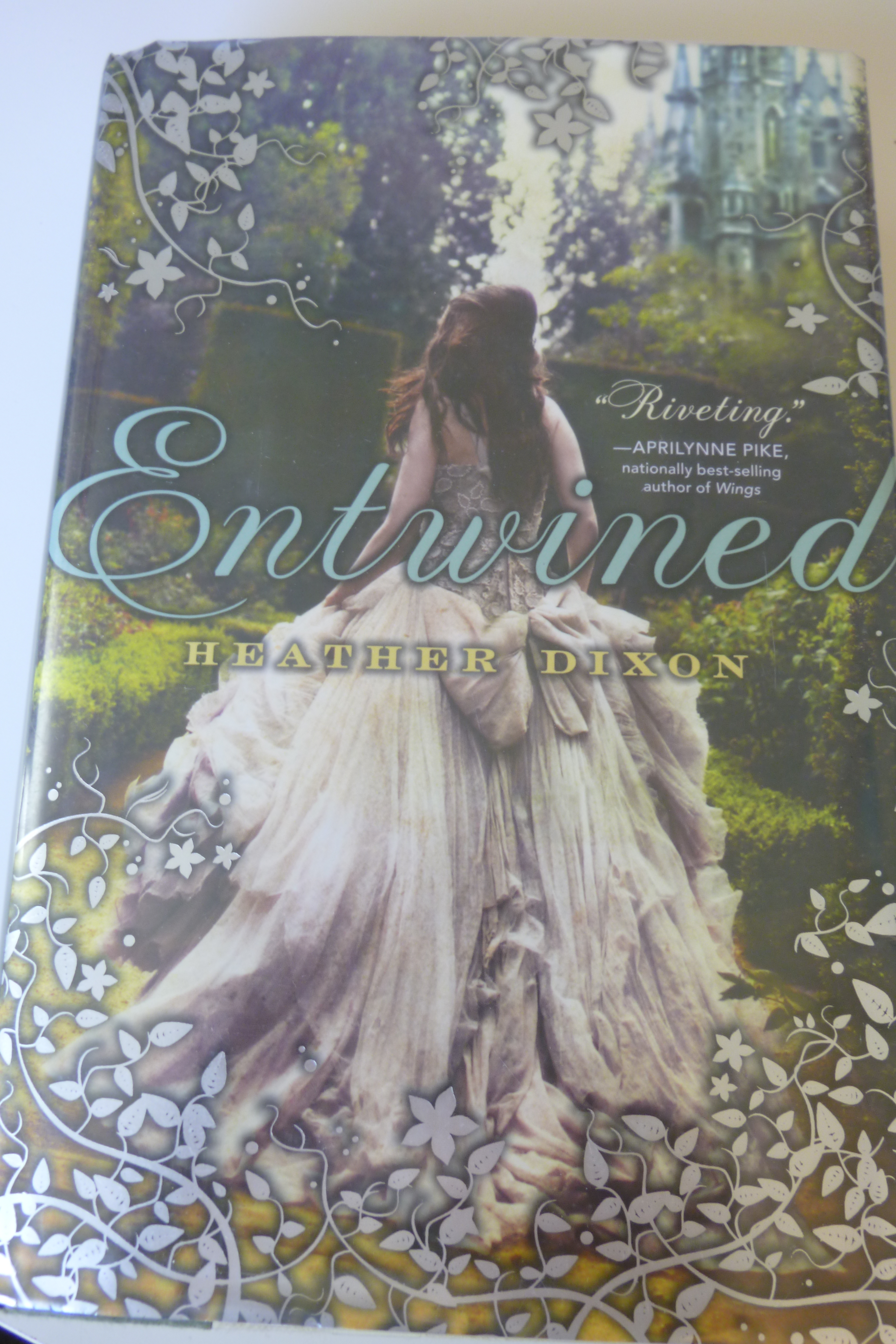
Entwined by Heather Dixon is one of those books I saw make the rounds of several blogs I follow.  And of course I was intrigued–it’s another retelling of “The Twelve Dancing Princesses.”  I reserved this at the library months ago, but the hold list was so long, it finally looked like it was about to come in during November.  Since I was spending November writing my own retelling of the same story, I didn’t want to read this then–I was sure I’d end up subconciously plagiarizing something!  So I put my request on hold, and finally read it in January, after finishing my own novel.

Entwined centers on Azalea and her eleven sisters, all named for flowers or plants and helpfully in alphabetical order: Azalea, Bramble, Clover, Delphinium and so on.  I frequently had to run through the alphabet to figure out the approximate age of, say, Jessamine or Kale.  The princesses’ mother dies early in the book, and the official rules of mourning restrict them from dancing for a year (among other things).  The girls discover a hidden passage leading off their room, relic of a magician-king from two hundred years ago.  They find an enchanted silver forest and a pavilion, whose guardian, the Keeper, tells them they are welcome to come and dance every night.

This book started slow for me.  The first half was only so-so, but it did pick up in the second half.  The turning point for me was when Keeper started threatening the soul of Azalea’s mother, to force Azalea to free him from captivity in the magic pavilion.  It was the first time Azalea seemed to have any significant motivation, and also when she finally figured out how creepy Keeper was–which had been pretty obvious to me from the beginning.  Prior to that, really wanting to dance just didn’t seem like adequate motivation to defy their father and go dancing every night in a pavilion owned by a very sinister stranger.

The romances also pick up in the second half of the book, for Azalea as well as Bramble and Clover.  This actually did a lot for Bramble and Clover as characters.  Prior to that, Clover was very quiet and Bramble was very immature.

That leads me to another point–this book made me think about what is perhaps the first fundamental question of retelling this story.  Namely, which sister to focus on?  The oldest?  The youngest?  Someone in between?  This is a larger question than it might seem, because there seems to be an unwritten rule that the heroine has to be around sixteen or seventeen.  If you give your seventeen-year-old heroine eleven younger sisters, simple math tells you that most have to be children.  Making her one of the younger ones means she can have adult sisters.  In a way, it’s a choice between giving your heroine a circle of peers, or making her a baby-sitter.  The fact that I put it that way probably tells you already that my heroine is at the younger end, #9, with sisters ranging between the ages of 15 and 25 (with a couple sets of twins).

Azalea is the oldest princess, and she spends a lot of time looking after younger siblings.  Most of them completely run together for me.  Even though Bramble should be about 15, she spends the first half of the book seeming very young.  It gets better when she and Clover get a little more screen time, a little more maturity, and can serve more as equals for Azalea.

Another major arc of the book was the relationship between the princesses and their father.  The King starts out as very cold and apparently aloof, but ultimately develops into a caring father (who simply doesn’t always know how to relate to his daughters).  Sometimes that transition is jarring, but it does come together in the end.

There are things I liked about Entwined too.  Some of the description was good, and I liked the treatment of the dancing.  Dixon clearly knows something about dancing, and there’s plenty of discussion about what kind of dance the princesses are dancing, and how they feel.  I do feel convinced about the importance of dancing to Azalea, and there’s good description of what it means to her–for one thing, it’s a connection to her mother, and it also gives her a sense of freedom and of magic.  I believe dancing is important to her–it just doesn’t seem quite important enough for some of the choices she’s making.

This was a good book, with a great climax, and nothing really wrong with it (other than some bland sisters, but with twelve there’s only so much you can do).  It didn’t quite spark for me, though.  Good–but not fantastic, and not particularly distinctive compared to other versions of the story I’ve read.  Aside, that is, from the cover–definitely one of the most beautiful books I’ve read in a while!

Author’s Site: http://www.harperteen.com/authors/37209/Heather_Dixon/index.aspx

Other reviews:
Between the Stacks
Charlotte’s Library
While We’re Paused
Yours?

A Child Commander

Another sci fi book I’ve been meaning to read for years is Ender’s Game by Orson Scott Card.  Now that I finally have, I enjoyed it very much–and had some serious issues with it too!

The book is set an indeterminate length of time in the future, when humans have begun to venture into space but have not yet spread as in, say, Star Trek.  They also haven’t met any aliens as nice as the Vulcans–instead, they’ve met the buggers, a race of bug-like aliens who attacked the Earth 80 years before Ender’s Game opens.  The International Fleet has been preparing for a renewed war ever since, sending ships to the buggers’ homeworld that are just now getting close to arriving.  With war expected within the next several years, the IF is looking for a supreme commander to direct their forces.  And they find Ender, a six year old boy with enormous potential.

They ship Ender off to battle school, held in a space station, where Ender and the other children are meant to learn to be soldiers.  Their chief focus is the Game, a sort of combination Capture the Flag/Freeze-tag/Paintball held in zero-gravity.  The book follows Ender’s very, very swift rise, heading towards the new war with the buggers.

First, this was an extremely engaging book.  Between the outside threat to add tension and the exploration of how the school works, and how life in the space station works, it stays interesting throughout.  Even the discussions about movement in zero-gravity were fascinating.  It’s a very grim, even harsh story, but it also has a momentum and an urgency that keeps pushing the book forward.

Ender is an excellent character, very conflicted and complicated.  I think he’s basically a good person, but he’s terrified by the darkness inside of him.  And that darkness does push him to lengths that are sometimes alarming and disturbing.  Ender is a good character in almost every way–except that he doesn’t feel like a child.  And that brings me to my issues with the book.

Let me start with a different though related issue.  The book requires an enormous suspension of disbelief in its primary premise: namely, that the IF is so intent on training up Ender to be their commander.  It reads almost like a story about a prophesized Chosen One, except there’s no prophecy and it’s solely based on their assessment of his abilities.  And fine, perhaps he’s extraordinary–but they need a commander now.  I don’t want to give spoilers, but suffice to say that the ultimate fight with the buggers happens years before Ender reaches adulthood.  The IF has been planning this war for 80 years, and now at the crucial moment they want to make a child their supreme commander?  That seems, um, unlikely.

But maybe they know what they’re doing, because, as I said, Ender does not much resemble a child.  It’s not just him, either, it’s all the children at the battle school.  Officially they’re seven or nine or ten, but they behave as though they’re in their late teens at least.  Which leads me to wonder why Orson Scott Card made them so young to begin with.  It’s not a young adult book, so they didn’t have to be that young.  Perhaps it was for shock value, or a comment on child soldiers, or to emphasize their manipulation by the IF.  Those are perfectly good reasons and the book has some elements of that–but it all has much less resonance when Ender doesn’t feel seven.

I’m reminded of two other books that have parallel elements but actually handled this issue better.  In The Hunger Games, Katniss feels like a teenager.  Rue, another girl in the games, feels twelve.  They’re intelligent, strong, capable, sometimes almost ruthless, thrown into situations no child (or anyone, for that matter) should be in, but they feel like young people dealing with a grown-up situation.  I also just read a Star Wars book (more on that in another post) which had a major focus on Leia and Han’s daughter, Jaina, who’s five and has been kidnapped.  Again–brave, capable, probably genius-level intelligence, but she still seems five.  She gets scared, she wants her mother, and when she is reunited with Leia, Jaina tells her about the kidnappers but also tells her that she lost her loose tooth.  If Ender ever loses a tooth, it’s not mentioned.

I also question the battle school’s methods.  They are harsh, and intended to isolate Ender and keep him from depending on anyone.  I don’t see that as a way to make a good soldier, let alone a commander–or a person.  He’s essentially taught not to trust anyone in authority.  And how can a child who is never shown compassion or kindness, who is actually prevented from forming close ties, be expected to lead people?  They’re trying to create a tool, but they need it to be a tool that is creative, determined, and has a deep understanding for others, and I don’t see where Ender learned any of that.

And now, as tends to happen, I’ve gone on and on about the issues in a book I actually liked!  Perhaps because the ways a book doesn’t work are the most interesting to explore, trying to figure out why and how it didn’t quite fit together.  But don’t get the wrong idea here–despite the various issues I had with the book, it’s very good.  Grim, dark, sometimes bloody (I warned you!) but intense, engaging, and with some very surprising twists at the end.  And after the complete devastation of much of the book, in the end there’s a surprising amount of hope.  If you like science fiction, it’s worth the read.

I know this is a popular sci fi book–who else has read it?  Did you have any of the same issues, or can you explain why they weren’t issues for you?

Author’s site: http://hatrack.com/ (no, really–it’s not orsonscottcard.com, apparently)

Other reviews:
Book Club Babe
End of the Game
Truly Bookish
And no doubt masses more–like yours?

Favorites Friday: Shakespeare Plays

I’m a Shakespeare geek, and I own to that.  I was in Shakespeare Society in high school, and many of my best memories from high school involve the Bard.  So, today, my favorite Shakespeare plays:

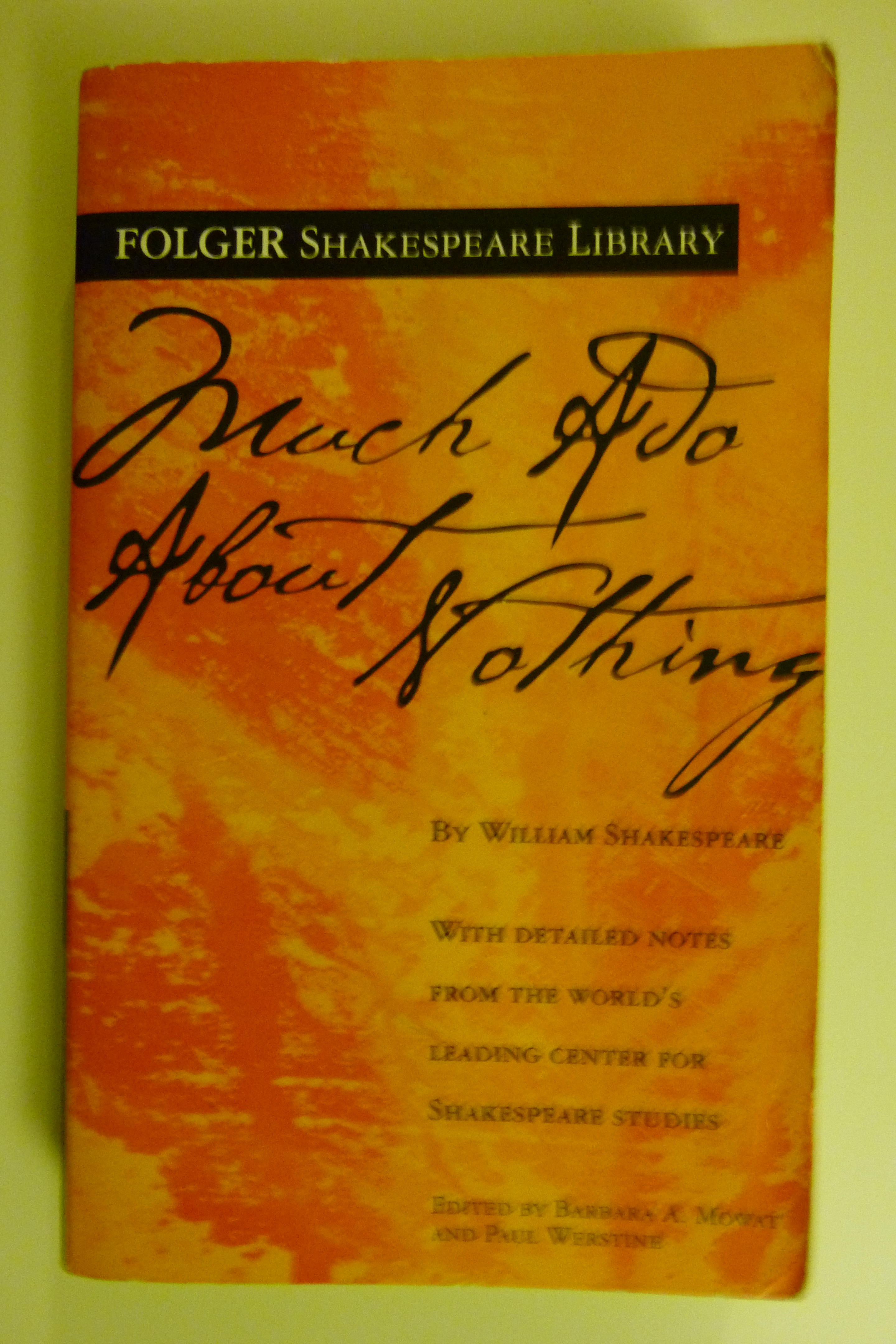
Much Ado About Nothing

My favorite Shakespearean comedy, featuring my favorite Shakespearean couple, the ever-sparring Beatrice and Benedick.  The play is enormously funny, with plenty of serious undertones too.  It’s a great gateway Shakespeare play, far less intimidating than many of his others.  And I can recommend the Kenneth Branagh movie.

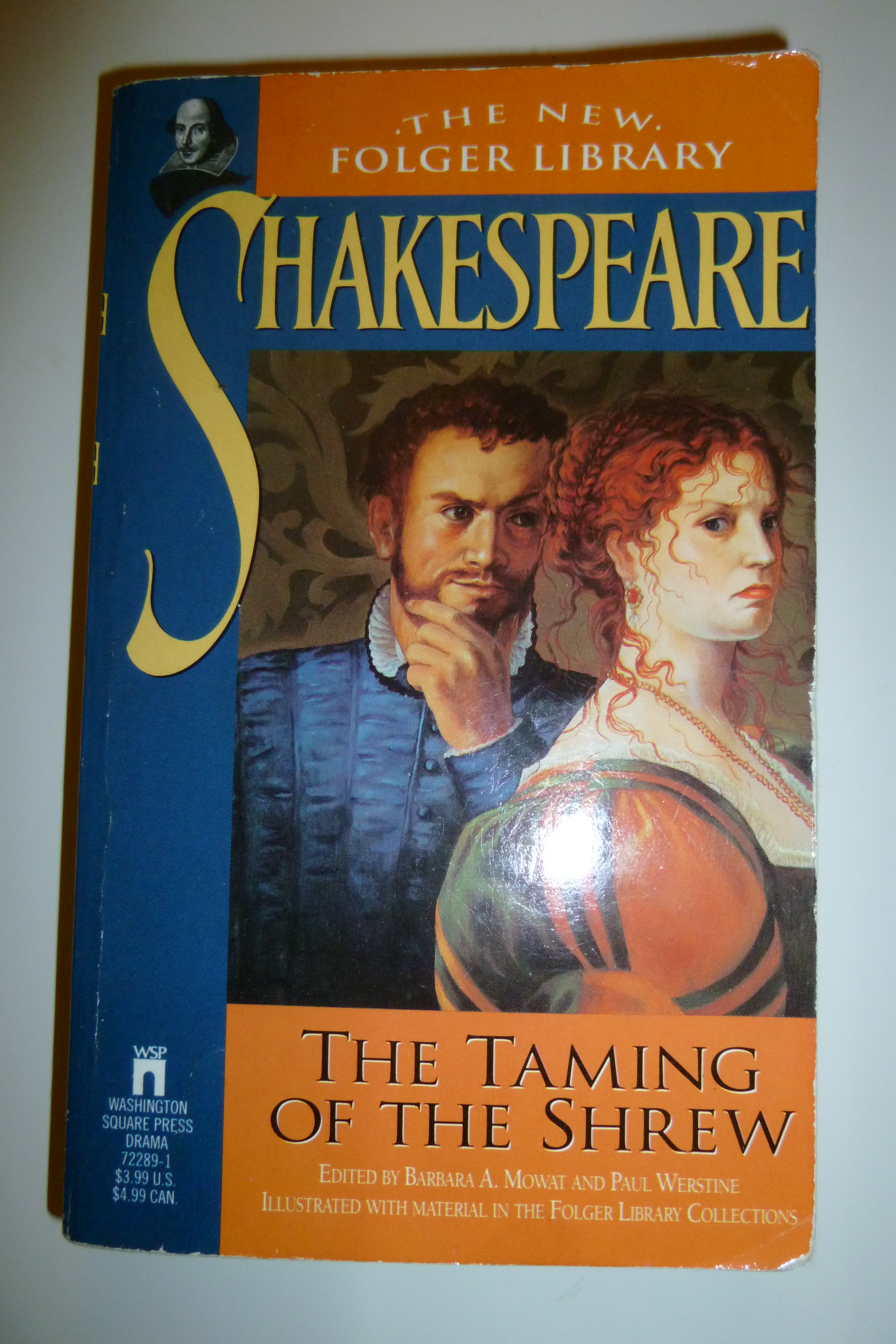
The Taming of the Shrew

Kate is, of course, a wonderful character, and I love the ambiguous ending–is she tamed?  Or not?  My favorite filmed version is the Broadway Theater Archive, which was universally known in the Shakespeare Society as “the shirtless Petruchio version.”  🙂  But it really is a wonderful example of how Shakespeare can be fun, active, raunchy, romantic, subtle, and so very, very far from the dry droning that people sometimes think Shakespeare is.

Othello

There’s something I like about the outcast character who the girl nevertheless falls for (it’s that Phantom of the Opera thing again) even if it all goes horribly awry in the end.  I’m fascinated by the character of Iago too–I think he’s more tragic than usually acknowledged.  I read Othello, and found the last act to be a page-turner.  Even if you do have to get past Desdemona talking, after being smothered.  I haven’t seen any filmed versions of Othello–any suggestions?

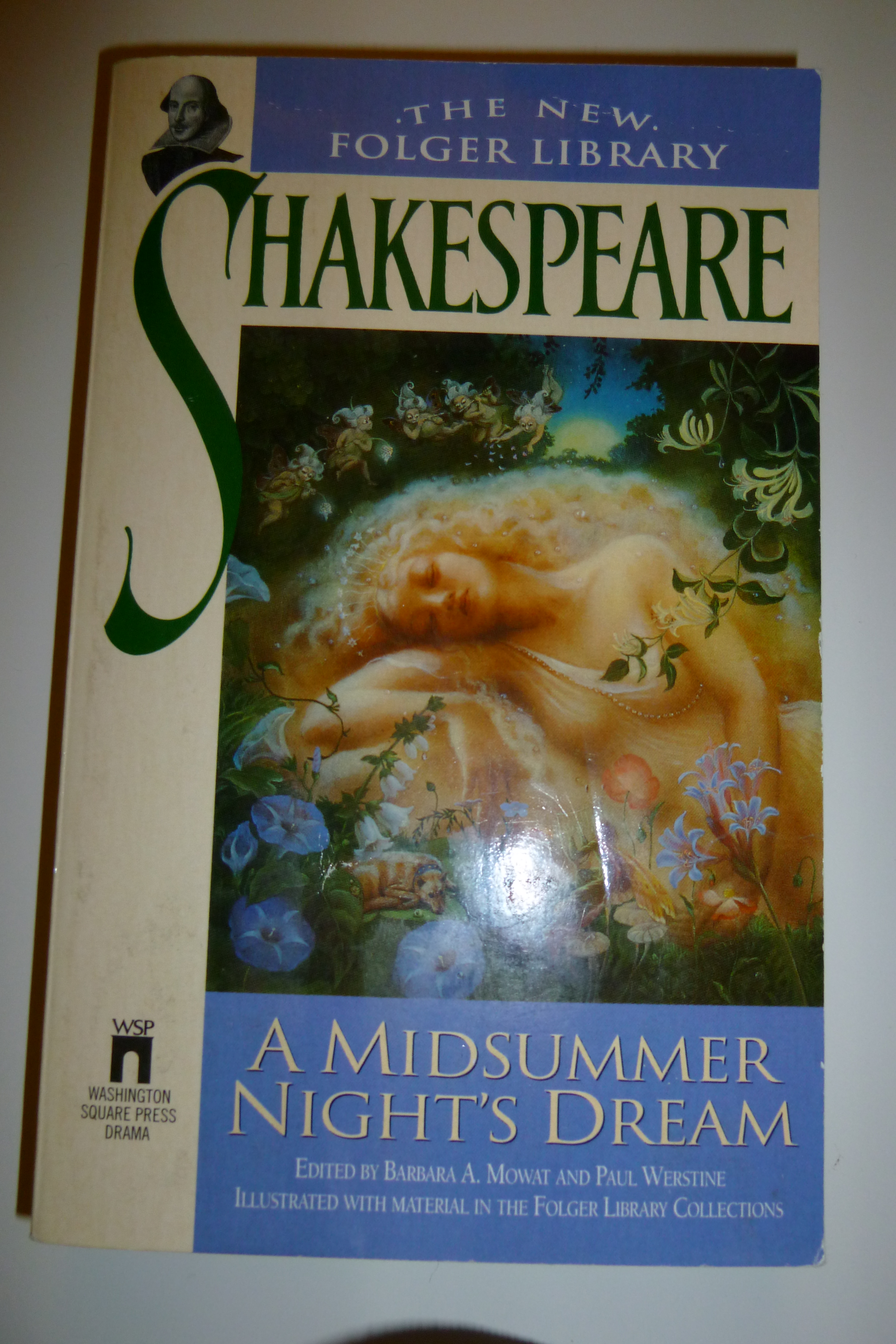
A Midsummer Night’s Dream

The four lovers lost in the forest is probably my favorite scene in all of Shakespeare.  Everyone fighting with everyone else, complete mayhem and confusion, and Puck dancing around through it all…Shakespeare at his most hilarious.  I’ve seen several movies…1935 and 1999 are both good.  If you want a bizarre trip, try the 1968 version, featuring Judi Dench, Helen Mirren and Ian Holm, when they were very young.  Judi Dench plays an entirely green, mostly nude Titania.  It’s all rather odd…

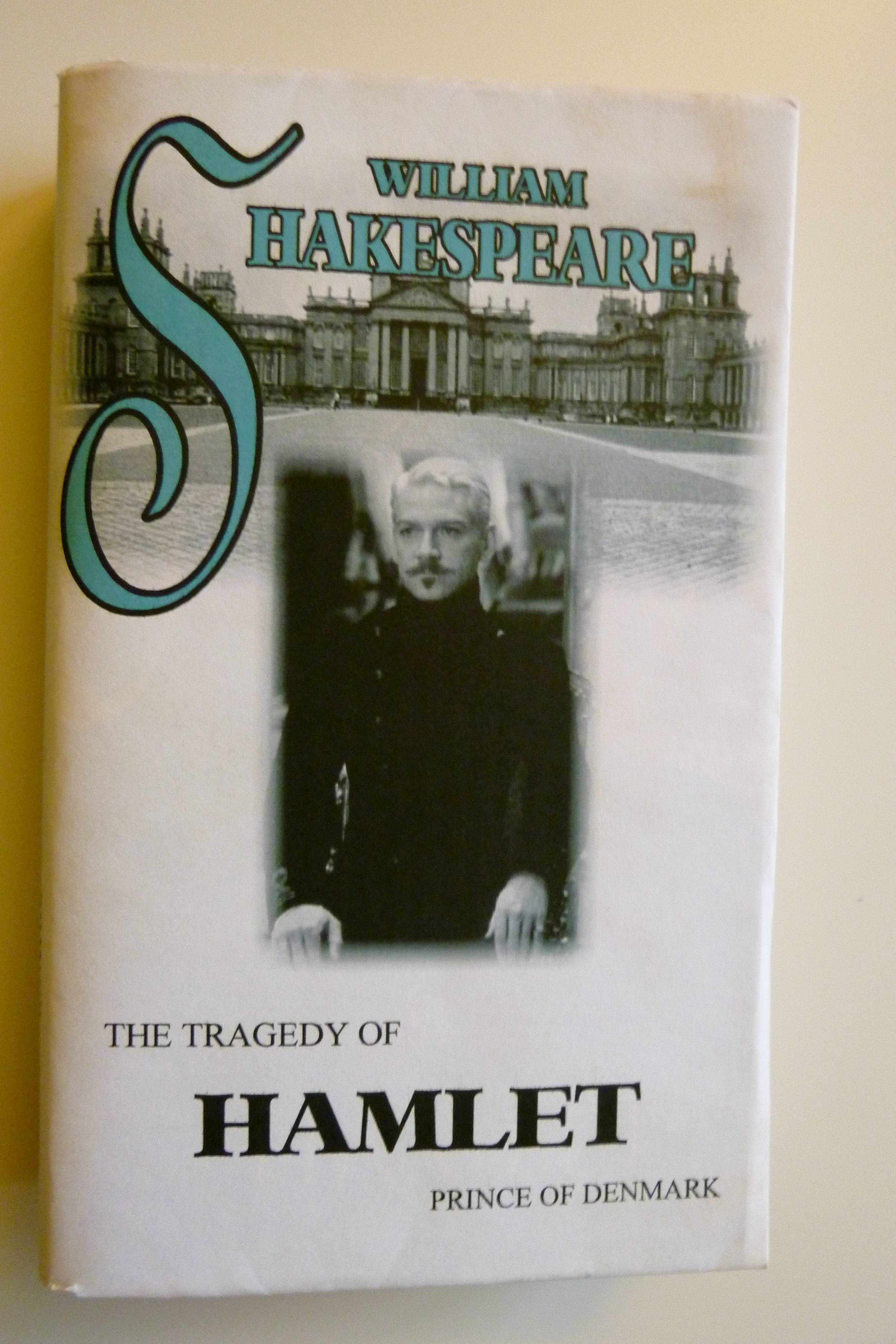
Hamlet

There’s something about the tragedy of the Prince of Denmark…I don’t know if it’s the endless quotable lines, the mix of tragedy and farce, the many retellings, or just that it was the first Shakespeare play I read and understood on my own, but somehow I love Hamlet.  I’m rather attached to the Branagh version (be warned, it’s four hours) and I also enjoyed the 2009 version with David Tennant (Hamlet) and Patrick Stewart (Claudius).  Did you know IMDB gives you 73 results for Hamlet?

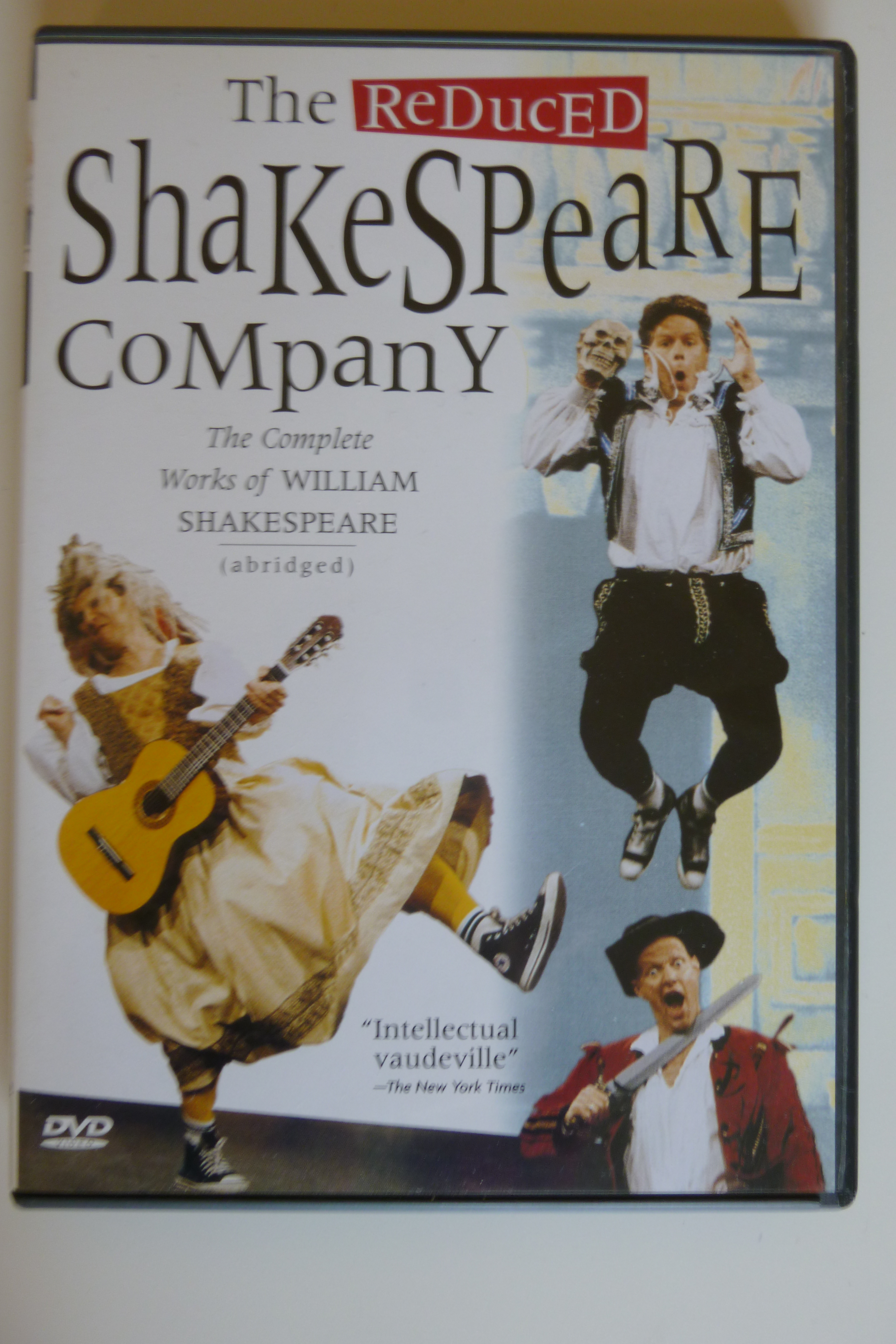
The Complete Works of William Shakespeare (Abridged)

And I can’t not mention the Reduced Shakespeare Company’s brilliant presentation of all the plays of Shakespeare: 37 plays in 97 minutes, with three men bouncing around the stage playing every role, and doing a convincing show of making it up as they go along.  It’s brilliant, it’s hilarious, and it will actually teach you quite a bit of Shakespeare.  You also will never again be able to take a number of Shakespeare lines seriously, but it’s a small price!

2011 Reading Challenges Wrap-up

It’s the end of December, and time to report on Reading Challenges (before I dive into my reading for 2012, of course).  I met all my goals this year, thanks to some careful reading in December to finish out the last few.  🙂  I really enjoyed all the challenges, and the nice feeling of accomplishment it gave to my reading whenever I read something that fit a list.  Not every book I read for the challenge was excellent, of course, but I did find some good ones, and I got to read many books (and types of books) I’ve wanted to, but tended not to get around to.

So I’m calling that a success!  A little more detailed reflection on each challenge below.

Here’s my final list for the year.  Linked titles go to my review of the book.   If you see something you’re curious about that doesn’t have a review, let me know!  If I don’t feel like I have enough to say for a full post, I’ll at least let you know what I thought in a reply-comment.  Rereads are designated with an R for all but the Library challenge, and aren’t counted.

Here’s what I’ve read in 2011 Continue reading “2011 Reading Challenges Wrap-up”

A Tribute to Libraries

One thing I’ll say for that terrible book about evil librarians, it did make me think about how much I deeply love libraries.

I think libraries are one of those things that are so omnipresent, we forget how amazing they really are.  So sometimes I try to stop and really think about it.

Imagine that you’ve never heard of a library.  You find out there’s a place where you can go and choose anything you want from thousands of books.  And you can take as many of these books away with you as you choose.  Libraries have a limit, but I’ve mostly seen it at 50, which is so high as to be nearly irrelevant.  You get to take all these books away with you completely for free.  You don’t have to pay them any money per book, or buy a membership, or give them any deposit to guarantee you’ll bring the books back.  You just show them a card (which you get for free) and they let you take armfuls of books away with you.

Most of the time, you can keep the books for a couple of months.  My library’s usual borrowing time is three weeks, and you can renew at least twice, if no one has the book on hold.

If the book you want isn’t in the library near you (and they scatter branches all over the city, so most people don’t have to go too far to get to the nearest!) you can search for another book anywhere else in the system.  Then they deliver it to any branch you choose, and they send you an email to let you know it’s ready and waiting.  They’ll keep it for you for over a week, so you can come and get it whenever you want.

My library is part of the Link+ system, so I can request books from a few dozen other library systems too.  You can’t renew those, and they come after your soul if you keep them out late (not quite, but it is a dollar-a-day late fine) but despite those drawbacks, it gives me access to even more vast numbers of books.

I couldn’t read the way I do if it weren’t for the library.  I go through twelve to fifteen books a month.  If I had to buy all of those, it would probably cost thousands of dollars a year. Even if I rented them at similar fees to Redbox or Netflix, it would cost me hundreds.  Instead, I can get brand new books, or old obscure books, and it doesn’t cost me a cent.

Sometimes I do have to wait for something popular.  But I just put my name on the list, and whenever I check my account online it tells me my number in the line, and they send me an email to let me know whenever it eventually comes.

Not to mention, libraries are the only public space I can think of that’s indoors, provides comfortable chairs and tables, and will let me sit for hours with a notebook or a laptop, completely free, without even buying a coffee.  Plus they put on activities and events, also free.

I really doubt anything I’m saying here seems like news to anyone.  But try really thinking about it.  Libraries are an amazing system.