 I’ve mentioned, haven’t I (I have), that I love classic children’s fantasy. So to those familiar with the book, it will be no surprise that I found The Girl Who Circumnavigated Fairyland in a Ship of Her Own Making
 by Catherynne M. Valente to be absolutely delightful.
The Girl Who Circumnavigated Fairyland follows the time-honored traditional fantasy plot of an ordinary child spirited away from the drab world to strange and magical lands, to meet dear friends and fight evil and have adventures. This book was a bit The Phantom Tollbooth and a touch Alice in Wonderland, with more than a little L. Frank Baum, a dash of C. S. Lewis at the end, had a narrator who could be sitting in a pleasant study somewhere with J. M. Barrie–and there was some that was just pure Valente.
The story centers on September, who lives in Omaha until one day she’s carried away by the Green Wind to go to Fairyland. In Fairyland she accepts a quest to help a witch named Good-bye, meets A-through-L, a wyverary (a cross between a wyvern, which is rather like a dragon, and a library), and finds herself pitted against Fairyland’s oppressive ruler, the Marquess.
The characters and the places September visits have all the whimsy of L. Frank Baum. The capital city of Fairyland is Pandemonium, which good Queen Mallow wove out of thread–so all the cities are cloth. September catches a ride with a herd of bicycles, and goes to Autumn, where it’s perpetually Fall. She meets a community of Nasnas, where the people are halves (right down the middle vertically), and are only whole when they join up with their twins. It’s strange and sometimes funny and very whimsical.
The narrator came from the same school of storytelling as J. M. Barrie. My favorite character in Peter Pan is the narrator, who really seems to be sitting somewhere telling you the story, complete with occasional moments when I-the-narrator directly addresses you-the-reader. Valente uses the same trick here, comparing one place to your grandmother’s house, and promising that I-the-narrator hasn’t forgotten about a subplot you may be wondering about. Like Barrie, it’s charming.
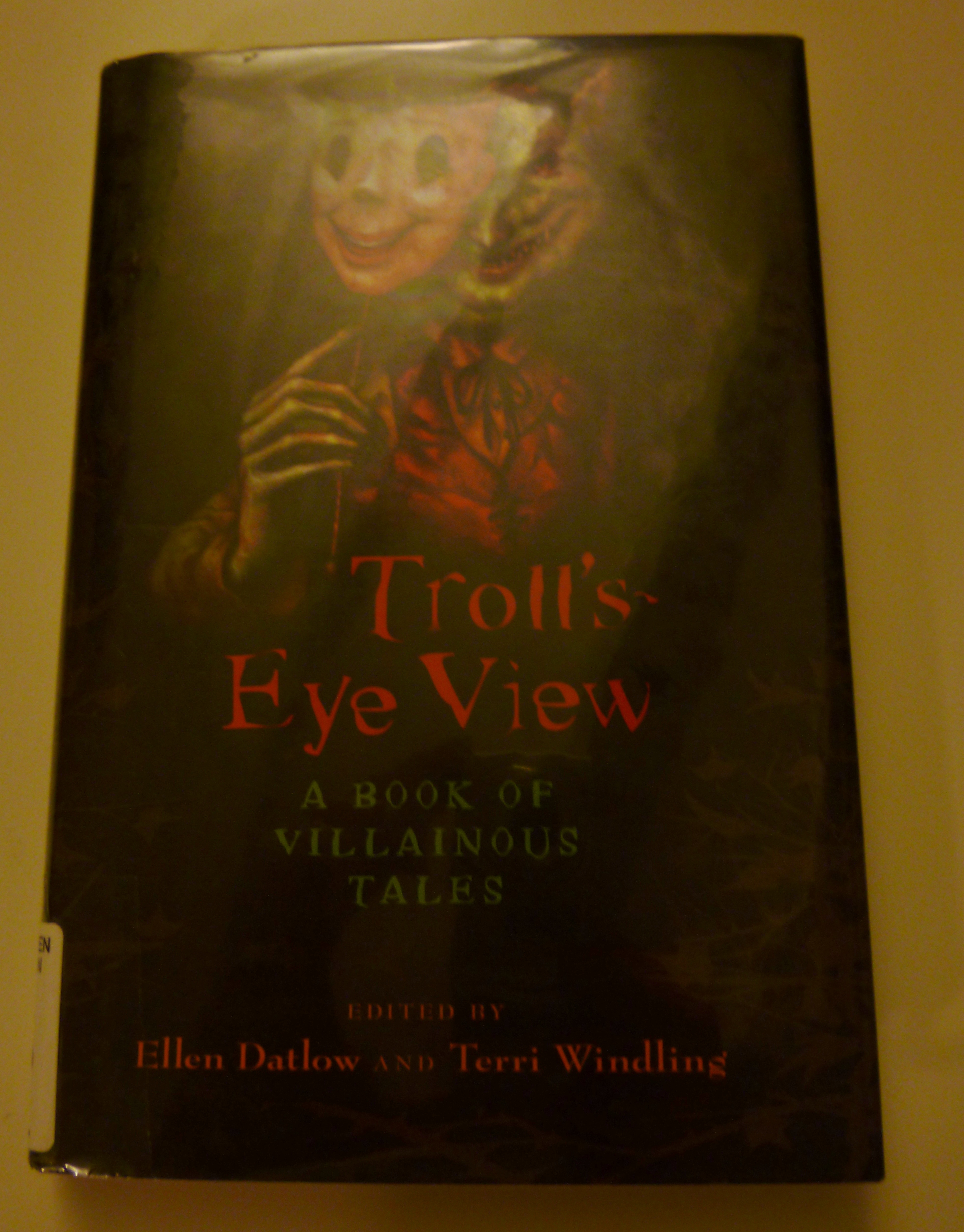
This is the first novel I’ve read by Valente, so I’m not much qualified to comment on her overall writing style–but I did read a short story, in Troll’s-Eye View, which was what led me to The Girl Who Circumnavigated Fairyland. I had heard about the book, but somehow it didn’t quite grab me. Then I was so blown away by her short story, I decided I had to try the book. The short story was beautifully written–magical, dark, creepy and wonderful. Parts of this book were dark, a bit was creepy, and a lot of it was beautiful and magical and wonderful.
The dark bits brought just a little realism into the fairy story. I love Baum and Barrie and all the rest, but no one ever bleeds, or gets really, really tired, or really, really hungry, or has to deal with deep-down-scary choices. September gets into some very hard spots. It was just enough to make me think, yes, this is what a child questing through Fairyland would really go through, without being too much and losing all the magic and whimsy. The creepy bit was primarily at one point when September starts to turn into a tree–a crumbling, winter tree, with cracking branches and shedding leaves. Beautifully written. So scary.
If you’ve read the classics, read this book. If you haven’t read the classics, read it anyway, then go read the classics. And then, hopefully, come back to Valente again–I’ve been searching her website and I can’t find a promise of a sequel there, but the book itself promises one. I think I’ll end with that quote (no spoilers)–and it’s such a beautiful line, it may do more than anything I can say to convince you of the loveliness of this book:
All stories must end so, with the next tale winking out of the corners of the last pages, promising more, promising moonlight and dancing and revels, if only you will come back when spring comes again.
Author’s Site: http://www.catherynnemvalente.com/
Other reviews:
Things Mean a Lot
The Little Red Reviewer
Tethyan Books
Tell me about yours and I’ll add a link!
 I’m participating in the Book Blogger Hop again this week, which invites book bloggers to answer a bookish question and visit each other’s blogs. Hosted at Soon Remembered Tales this week, here’s today’s question:

 Tales of the Marvelous