An Exploration on Being Dead

Halloween is coming up, and I’ve been thinking about appropriate books to review.  Halloween is one of my favorite holidays (Costumes!  And candy!), but not the easiest for me to get into thematically with book reviews, since I don’t like horror (movies are even worse than books).  But…occasionally I like something that drifts towards the spookier side, so I’ll try to give you a few reviews of books that are Halloweenish but won’t make you (by which I mean me) afraid of the dark.

Starting us off, Being Dead by Vivian Vande Velde.  What could be more Halloween-appropriate than a collection of short stories about ghosts?  In typical ghost fashion, most have unfinished business of some sort, but what and how they go about it varies widely.

The first story, “Drop by Drop,” is probably the creepiest, though it also felt a bit unfocused.  The conclusion in some way makes a lot of the rest feel irrelevant, although I don’t want to explain beyond that as it’ll give a lot away.

“Dancing with Marjorie’s Ghost” is a wonderfully traditional-feeling ghost story, the kind someone would tell around a campfire, while “Shadow Brother” takes a very different angle–the narrator’s brother died in Vietnam, and may or may not be haunting their father.

I found “October Chill” the saddest, about a teenage girl with a terminal illness who meets a ghost from the distant past.  The title story, “Being Dead” is the funniest–while having some pathos too.  It’s about a news boy who dies suddenly, and tries his hand at haunting to set a few things right before he goes on.  I think it was my second favorite.

My favorite story (and I don’t want to give you the title because there’s no way to talk about it without spoilers, if you knew which one I was talking about) started out feeling rather flat, but then had a final twist ending that was so clever I had to go back and reread the whole thing so I could see how brilliantly it was actually put together.

I enjoyed the variety of stories and the variety of takes on ghosts.  Many had a good undercurrent of creepiness or a clever twist of some kind.  None have been haunting me, and that’s a good thing!  It’s just a good collection of interesting and engaging ghost stories.

Author’s Site: http://www.vivianvandevelde.com/
To Sleep, Perchance to Dream

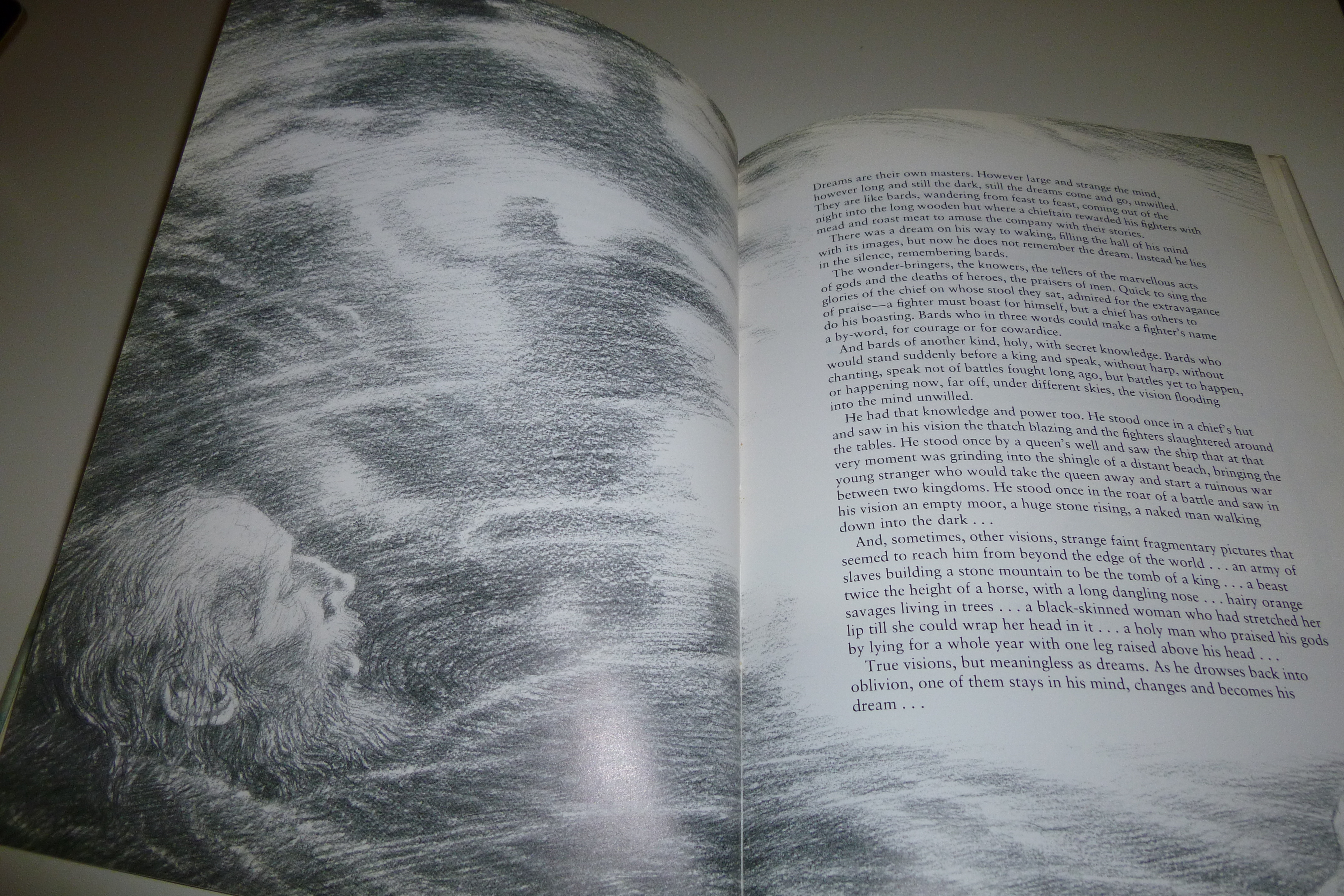
There’s an old legend that Merlin never died–that he’s imprisoned beneath a stone somewhere on the moor, sleeping through the centuries.  And while he sleeps, what might he dream?

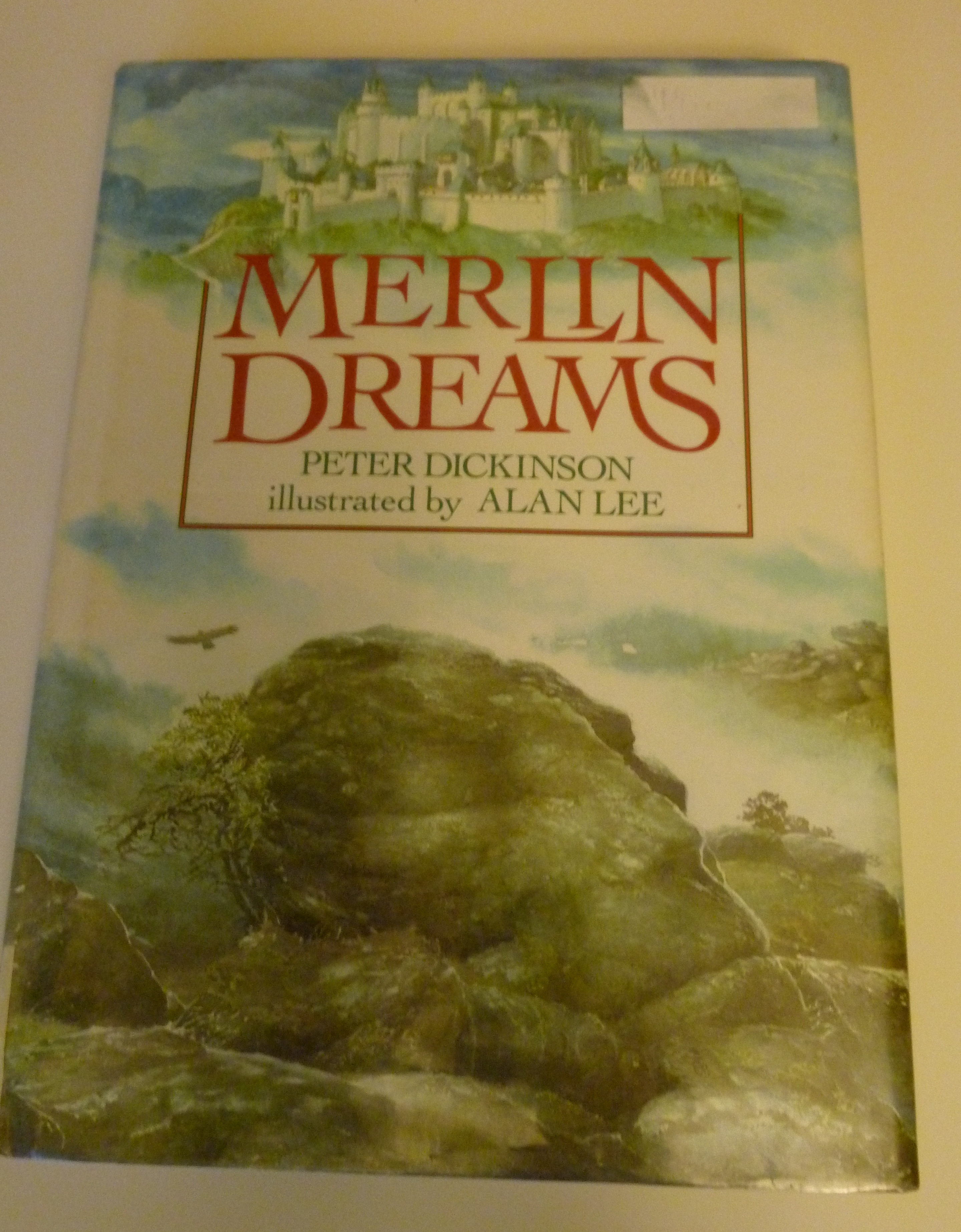
This is the frame-story for Peter Dickinson’s wonderful book, Merlin Dreams.  He tells eight stories, eight dreams of Merlin beneath his stone.  Between each story Merlin half-wakes, remembers his life or senses what goes on above him, then drifts back into sleep…and has another dream.

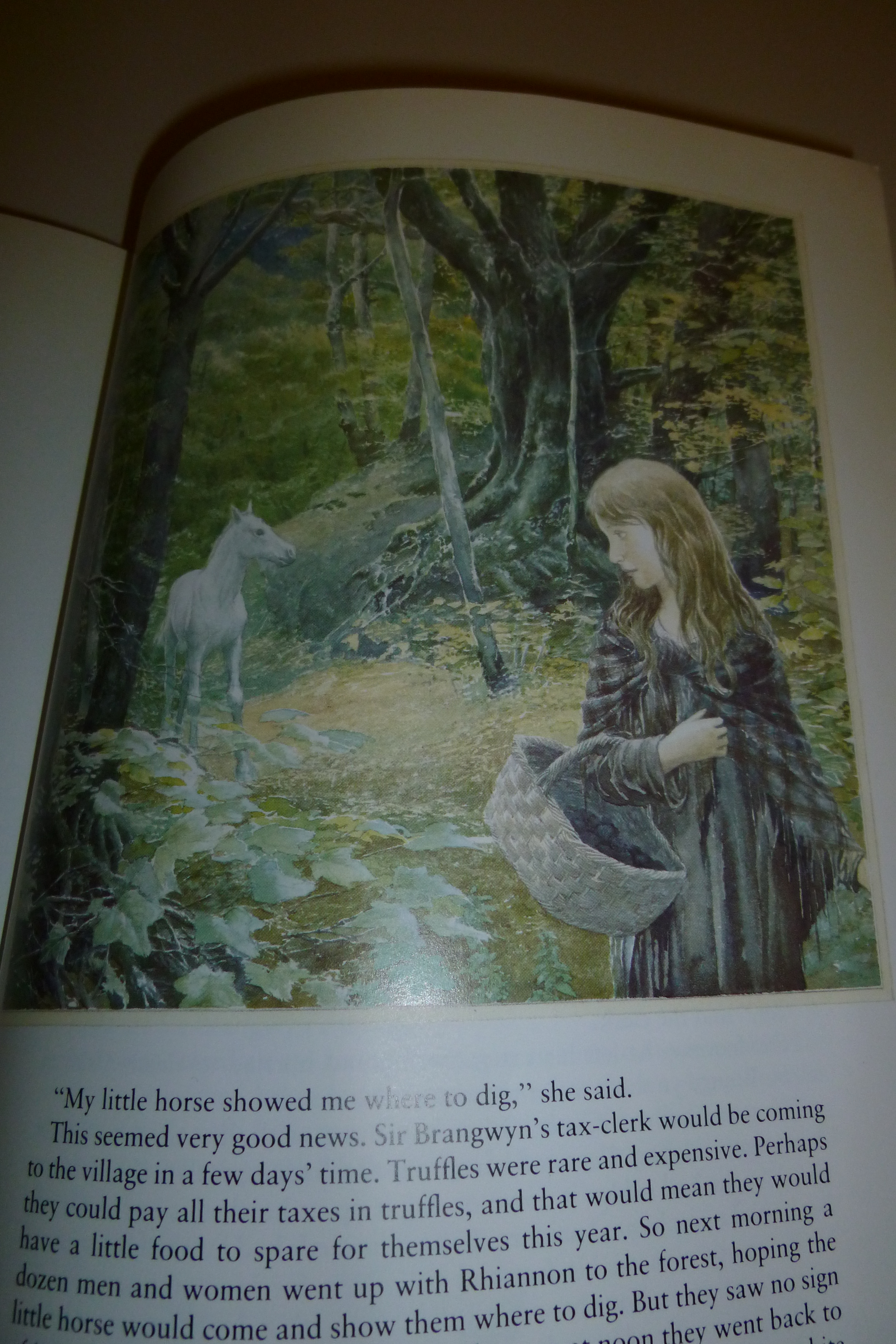
I’m fascinated by the frame story, and the short stories are excellent too.  Several have a vaguely Arthurian flare, although I don’t think any retell an actual legend.  But there are dashing (and not so dashing) knights, brave damsels and many unexpected heroes.  There’s a king, fallen from honor and strength who needs a little girl to show him the way back.  Another little girl befriends a unicorn in the woods, only to be threatened by men who want to exploit the opportunity to hunt a unicorn.  Two stories feature tricksters who put on shows for country folk they hold in contempt, only to be undone by their own tricks.  There’s a young prince who fights a dragon, and another, particularly ugly young man, who fights a sorceress.  And woven throughout, Merlin remembers his own life, and strange fragments of other scenes and stories.

There’s a wonderful magical, mystical quality to the stories.  Often all is not as it seems, and the magic holds plenty of surprises.  Even though I don’t think these are traditional stories, many have that enchanting feel to them.

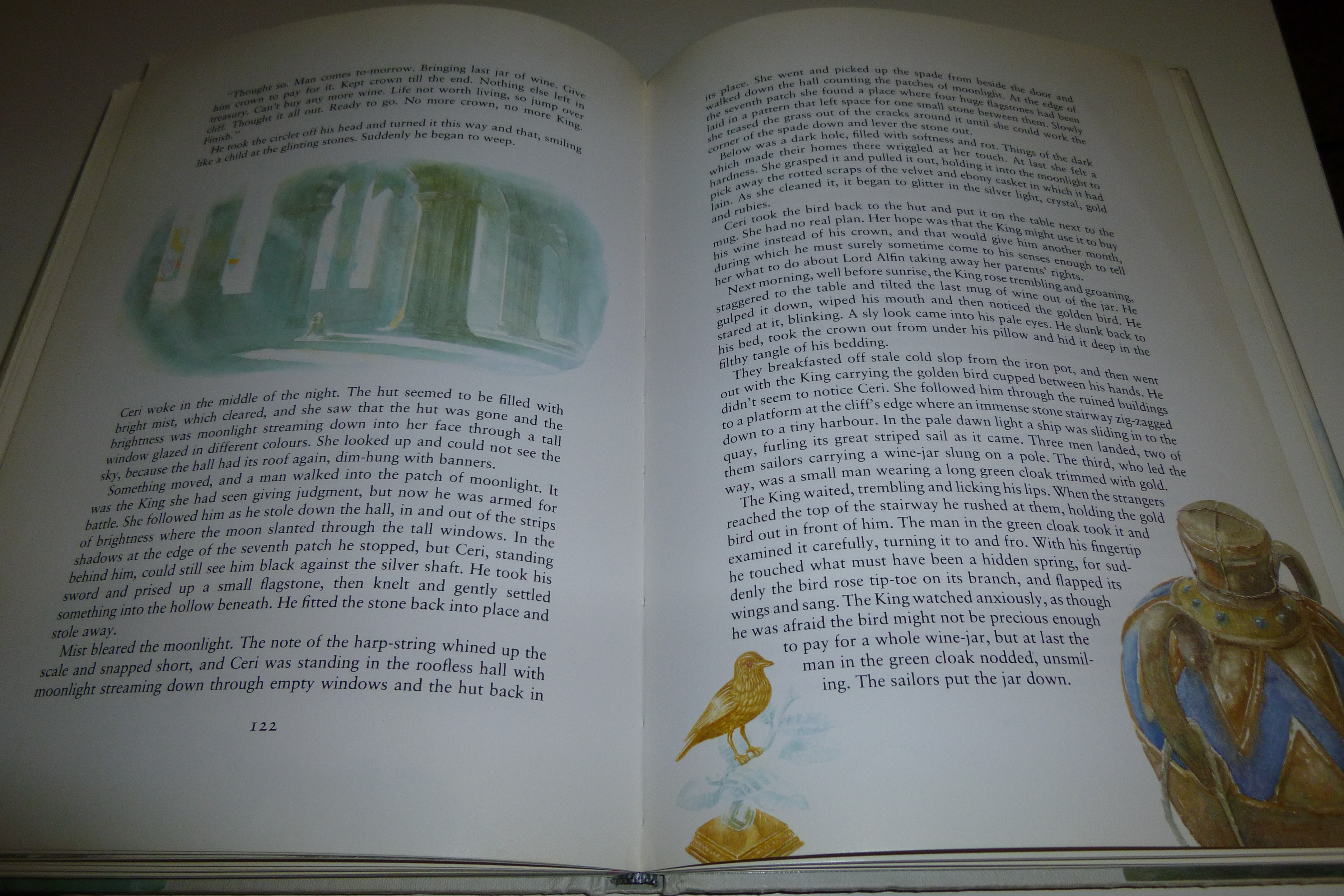
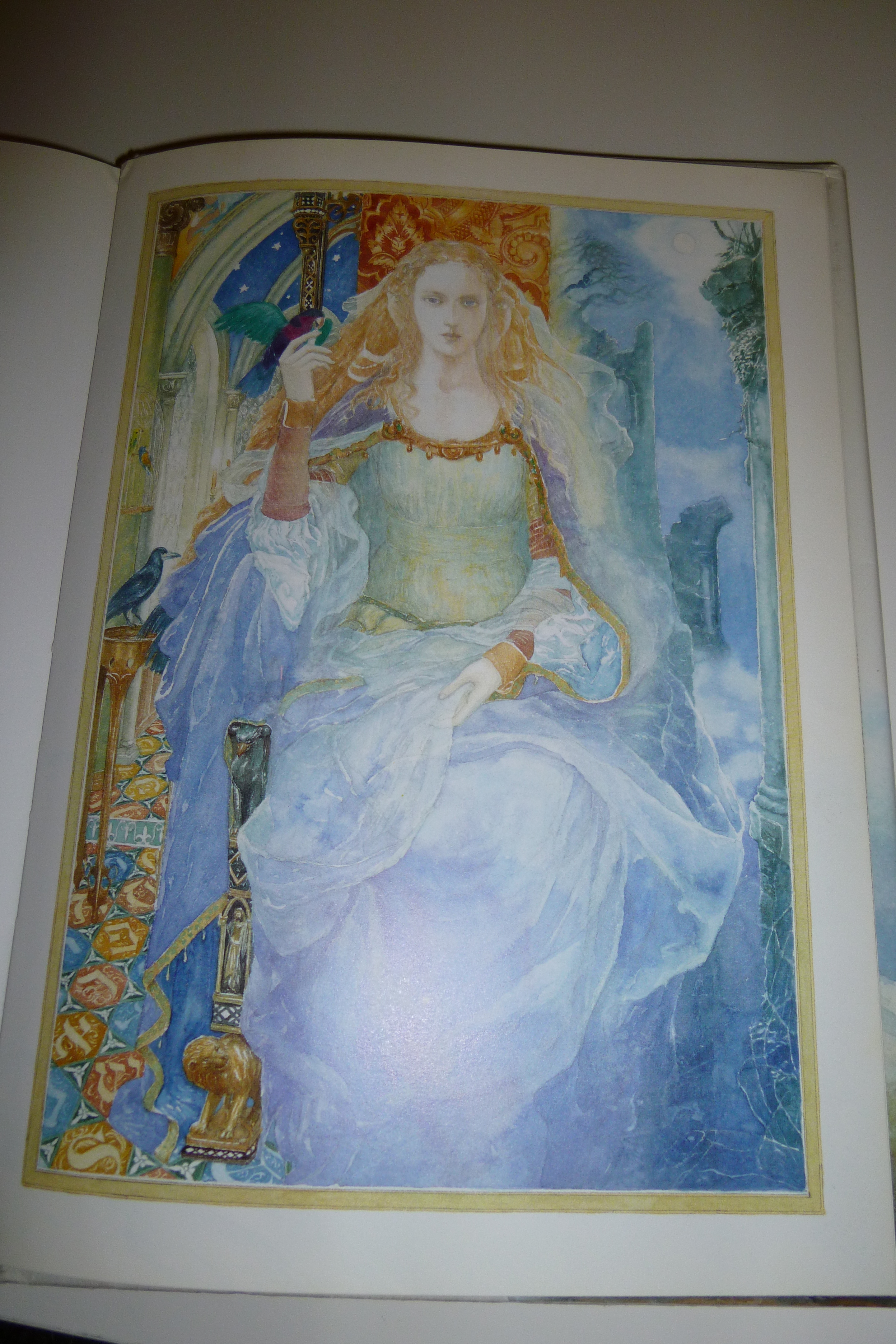
Part of it’s very much the writing.  Part of it is the illustrations too.  I honestly don’t know if there are multiple versions of this book, but if there are, make sure you get a copy with Alan Lee’s illustrations.  There are many throughout the book, some dark and shadowed, some vivid and bright.  They bring the stories to life in a new way, and many are just beautiful.

This is generally put in the kids section, and I think the short stories are definitely good for kids.  A word of warning that some of Merlin’s reflections are pretty dark.  And as beautiful as most of Alan Lee’s illustrations are, some could be disturbing for a smaller child.

There’s no Table of Contents to the book, which can be a little inconvenient at times.  But I think it fits too.  After all, it’s not just a neat line of stories.  It’s a series of dreams, and if you could line them up and list them out and easily jump to one or another, I think that would lose some of the flowing, magical quality of the book.

I can’t resist a few more pictures!  You can click on them to see them larger.


Author’s Site: http://www.peterdickinson.com/

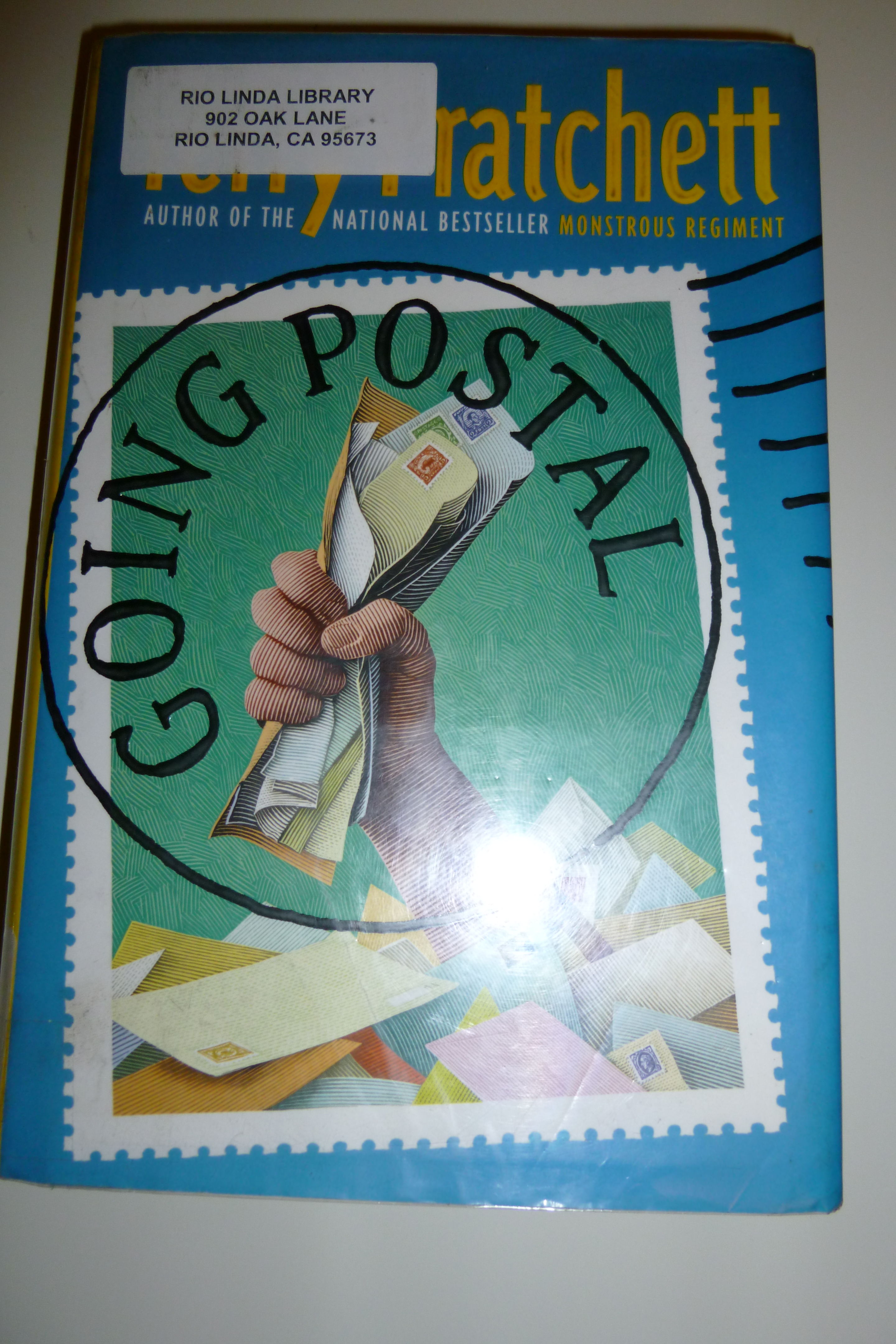
Going Postal with Terry Pratchett

I’ve mentioned Terry Pratchett and Discworld a few times recently in “Favorites Friday” posts, but I haven’t done a review yet.  Time to change that!  Part of the trick with Discworld (rather like Dr. Who) is figuring out where to start.  Discworld is one of those big sprawling series with over forty books in it.  If that sounds intimidating, don’t worry–the books are interconnected, but very few directly follow each other plot-wise, so you can read as many or as few as you feel like.

And you can probably start almost anywhere.  I’ve bounced all over the series, and while with some it was clear that there was a previous, related installment it might have helped to read first, I don’t feel like it severely hampered my enjoyment of whatever I was reading.  However, there probably are some places that are better to start than others.

I actually wouldn’t recommend starting at the beginning.  That’s The Colour of Magic, and it’s good, but Pratchett was still sorting the world out, and it’s not as brilliant as many of the later books.  One really good place to start would be Going Postal.

Going Postal stars Moist von Lipwig, a fast-talking conman who was supposed to be hanged, but finds himself revived after the gallows, and designated the new Postmaster of Ankh-Morpork.  The post office has been out of business for years, and the old building is falling to pieces–not to mention it’s literally filled with undelivered mail.  Moist finds himself trying to bring back the post, despite completely mad co-workers and violent competition from the clacks (telegraph) service.

It’s a wonderful, funny book, and it’s a good starting point because it’s stand-alone.  Moist and most of the other major characters make their first appearances here.  But you also get to meet a lot of characters who are significant in the series, but have only supporting roles here.

Vetinari, the Patrician, gets a good part; he’s a tyrant, and he’s terrifying, but he makes things work.  You get to meet a lot of the City Guard, who are my favorite group of characters (they have seven, soon to be eight, books written about them).  The Wizards of Unseen University, who are all at least little bit bonkers, make a guest appearance.  And I can’t remember for sure, but I think Death gets at least a cameo.  Death wears a big black hood and talks IN ALL CAPITAL LETTERS.  Usually someone dies at some point in every Discworld book, so Death gets to show up, and a few of the books focus on him.

So this is good for introducing characters who are important in other books, and it’s also good for giving you a feel for the city of Ankh-Morpork, and Discworld in general.  Pratchett is one of the funniest writers I’ve ever found.  He creates a crazy world (did I mention it’s a disc, which is on the back of four elephants, who are on a turtle?) filled with completely nutty and hilarious characters.  And he has a way of writing single lines which will make me laugh for days afterwards whenever I think of them.  Feeling down?  Read Pratchett.  I fully believe in self-medicating depression with Terry Pratchett books.

They’re not merely funny, though.  Pratchett is often very satirical.  Much of Ankh-Morpork is an extreme, but it’s an extreme you may recognize as based in something in our own society.  Going Postal is good satire too.

High, high recommendation for Discworld.  You won’t regret it!

Author’s Site: http://terrypratchettbooks.com/

A Suspicious Eye on Cinderella

Apologies for the placement of that sticker--I don't know what the librarian was thinking!

What ever happened to the twelve dancing princesses, after they quit dancing?  Well, according to Jessica Day George, one of them got mixed up in the plot of Cinderella.  Princess of Glass is a loose sequel to Princess of the Midnight Ball.  The plot is entirely different and so are most of the characters but the events of the previous book are mentioned so frequently, I think you’re better off reading it first–though you could probably start here if you really wanted to.

So, a quick summary of both stories, with a minimum of spoilers.  The twelve princesses are cursed to dance at the Midnight Ball, with twelve demon princes.  If you know the Grimm story, it’s no spoiler to say that a soldier breaks the spell on them, and marries the oldest princess.  The second book is about Poppy, another of the princesses, who is off to a fantasy country based heavily on England (complete with Tutingham Palace as a substitute for Buckingham).  Poppy is there as part of a royal exchange program.  When a serving girl shows up at a royal dance, decked out in finery and mesmerizing the prince Poppy had been growing fond of, Poppy and her friends have to investigate what spell is afoot.

This is a really clever and unique Cinderella retelling.  I love that we get it from such a different perspective.  And since Cinderella, as a person, completely annoys me in the original version, I love that this version is not such a sweet, innocent (and spineless!) character.  This book also addresses a key question the original fairy tale never answers–where did this fairy godmother suddenly appear from anyway?  The godmother’s ultimate motivations felt a little bizarre to me, but the things she does are so fascinating, I’ll forgive her doubtful reasons.

Poppy is an enjoyable heroine (aside from that dreadful name).  She’s tough and resourceful, but has emotional uncertainties too.  I particularly like it that she has all kinds of emotional issues when it comes to dancing–which totally makes sense, right?  Prince Christian is a sweetheart, even if not the most complex prince I’ve ever encountered.  There’s a good complement of secondary characters to round out the cast, including a Cinderella with unexpected depth.

One aspect that really sells me on this book is the description.  It’s lush and vivid, describing dresses, magical transportation, and truly strange glass shoes.

If I had to choose, I liked Princess of the Midnight Ball a bit better, but this was a very lovely follow-up.

Author’s Site: http://jessicadaygeorge.com/default.aspx

Empowerment–and Terror

I had originally been thinking of Daughters of Eve by Lois Duncan for a Halloween review.  She’s that kind of author.  But I decided it’s not really that kind of book.  In some ways it is horror, but not the Halloweenish type.  Maybe it’s too real.

The Daughters of Eve are an exclusive high school club.  The members claim each other as sisters, and are deeply loyal to one another.  This year, they have a new teacher as moderator, Irene Stark.  Irene encourages the girls to think for themselves and seize their rights–but what starts out as healthy women’s empowerment quickly becomes a terrifying brand of violent man-hating.

The character depiction is amazing.  There are ten Daughters of Eve, plus Irene.  Most of the girls have family members who appear at some point.  It’s an enormous ensemble cast, and yet I feel like the vast majority of the characters are vividly, clearly drawn–and this isn’t a long book.  The point of view (limited third person) shifts among many of the characters, which I think helps give each moments of depth and insight.

The subject of women’s empowerment is brilliantly handled.  The book was originally published in the seventies, but the gender attitudes of the town feel more like the fifties–all women become housewives, daughters help around the house while sons don’t, girls don’t need to go to college…  Duncan’s depiction of Irene is masterful, as her advice goes from positive and even inspiring, all the way to completely insane.  She’s believable–her conclusions are mad, of course, but she makes compelling, reasonable-sounding arguments, and I believe that the girls would get confused and end up following her.  Irene also has depth–she’s terrifying, but we see what in her past led her here, and in her own twisted way, she really does want to help the girls.

The male characters are realistic too.  There’s Cain, and there’s Abel.  Some are really good guys, even sweet.  One is abusive.  A lot are clearly products of being raised with gender stereotypes, but even those range from horrible to well-meaning.  Duncan demonstrates, and without feeling heavy-handed about it, exactly what Irene can’t see–that people are individuals, and can’t be judged by their gender alone, women or men.

Duncan often deals with the supernatural, or with psychic phenomena.  That’s only a small element here–one girl has special feelings and premonitions.  It enables some foreshadowing and adds tension, but it’s not a huge part of the story.

Daughters of Eve is an excellent book.  Besides for all the reasons above, it also has the simplest and yet most chilling final line I’ve ever read.  I can’t tell it to you–it’s a spoiler–but trust me, it’s brilliant!

Author’s Site: http://loisduncan.arquettes.com/