A Camera-Eye View of the Hunger Games

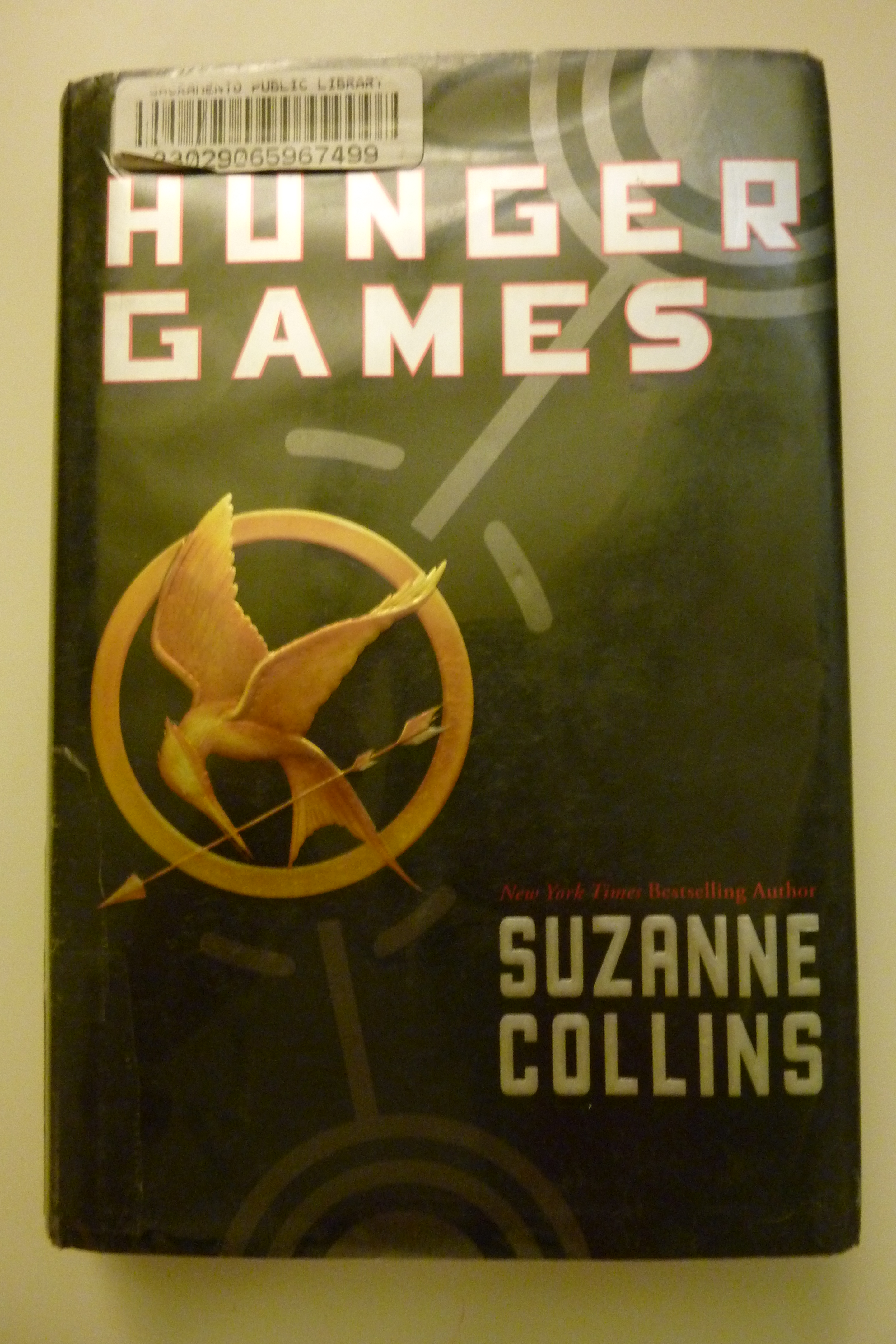
If you’ve been paying attention to entertainment news at all (and maybe if you haven’t), then you know that the Hunger Games movie came out this past weekend.  Having read the trilogy, I was eager to see it!

If you’d like, you can read my reviews of the three books, Hunger Games, Catching Fire and Mockingjay.  The short version is that I LOVED The Hunger Games, enjoyed Catching Fire but had some issues, and was ultimately disappointed by Mockingjay.  Fortunately, I was not disappointed by the movie!

If you’ve really not been paying attention to entertainment news, here’s the quick plot: in a future dystopian society, one wealthy Capital rules over twelve impoverished districts.  As punishment for a past rebellion, the districts must each offer up two tributes, male and female, between the ages of 12 and 18, every year for the Hunger Games.  The tributes fight to the death in an elaborate arena: 23 will die, one will survive and receive riches.  It’s all filmed; in the Capital it’s an exciting sporting event, and in the districts watching is part of the punishment.

The heroine, sixteen-year-old Katniss Everdeen, has been taking care of her little sister, Prim, ever since their father died and their mother had a breakdown.  When Prim’s name is drawn to be sent to the Hunger Games, Katniss desperately volunteers.  She’s whisked away to the terrifyingly flamboyant capital, and then thrust into the terrifyingly brutal arena, where everything is further complicated by uncertain feelings about Peeta, the boy sent from her district.

I felt in my book review and I feel again that it’s hard to give a good plot summary of this story!  It’s too complicated with too many layers.

The first question everyone has about this movie is how intense it is.  I was a little hesitant at first about seeing it (but then the trailers drew me in).  I thought some moments were more intense in the book–others were harder in the movie.  The gore was not too bad–it’s there, definitely, but I have a low threshold for gore and I wasn’t too disturbed.  The worst is probably when Katniss burns her leg.  People die swiftly, and the filmmakers weren’t too graphic about the battles.  I’m trying to avoid spoilers, but I will say they seriously toned-down the last tribute’s death, which I found to be far and away the most disturbing part of the book; it’s accurate to the book, but the creepiest parts are taken out.  It was still a very heavy, very intense movie, though.  If you read the book and were okay, I think you’ll be okay with the movie.  But if you’re doubtful, don’t say I didn’t warn you!

The first question for me on adaptations is how faithful they were to the original, and I thought The Hunger Games did very well.  Minor changes here and there to fit into the movie format, and they did change how Katniss got her mockingjay pin, but that was really the biggest change I noticed (and I understand why they did that, as it involved a very minor character).

The characters were excellent, especially Katniss (Jennifer Lawrence).  She was wonderful in the first book, and it all carried onto the screen.  She has some issues (well-justified mistrust, for one), but if I had a teenage daughter I’d rather she read about Katniss Everdeen than Bella Swan (actually, I’d want her to read about Alanna, but that’s another review).  Suffice to say Katniss is tough and courageous without being unfeeling or without sentiment.  Her kindness to Rue, another tribute who’s only twelve, is one of my favorite things about the story.  Katniss’ relationships with Prim and her best friend Gale were beautifully handled.  Like in the book, they’re out of it very quickly, but it was still very well-established in those few scenes.  Peeta (Josh Hutcherson) was good too–he just radiated sincerity and good intentions, in the middle of horrible situations.  Apart from Rue, who was lovely, the other tributes didn’t get the same development they did in the book, but in a compressed movie I can’t really fault the filmmakers for that.  And there was enough.  It worked.

With the possible exception of Katniss, my favorite on-screen portrayal was Stanley Tucci as Caesar Flickerman, the announcer for the Hunger Games.  He was incredible, hitting just the right note of delight but not sadism.  It’s hard to explain, except that he talks about kids killing each other in the same voice every sports announcer uses, makes some of the same kinds of comments and it was brilliant.  I thought in the book it was a little more clear that he had some kind of sympathy for the tributes, at least to the extent of trying to make them all look their best when he interviews them.  That wasn’t so clear, but it was still absolutely wonderful.  Awful, of course, but wonderfully done.

The only portrayal I was disappointed by was Haymitch, Katniss and Peeta’s mentor.  In the book I pictured him as a scraggly, overweight alcoholic with deep-seated problems; in the movie he was a reasonably-together man, somewhat cynical and liking to drink.  Not really the same thing, although they may have felt they needed to change him to make some of the narrative clearer.

There were points when I thought this would have benefited from a voiceover from Katniss.  Her relationship with Peeta is very complicated in the book and I don’t think it all showed.  On the other hand, I thought they completely conveyed her relationship with Rue, even though it was brief.

After all this about what was good, I do have to mention my one big problem–and it was one I can’t remember having with any other movie.  I didn’t like the cinematography.  I think that’s the right term–the camera angles, and the way the camera moved.  Particularly at the beginning of the movie, the camera wouldn’t focus on anything for more than a second before it swooped off.  And it didn’t blink to something else, it actually moved, and it moved too fast.  So suddenly everything goes blurry as it moves and my eyes are struggling to make sense of everything.

People keep telling me that this was a deliberate choice to express Katniss’ confusion, the chaos of the arena, and to avoid being too graphic with the battles.  I’ll buy all of that, except that they were doing this in the first ten minutes of the movie, long before she got to the arena; they actually stopped doing it as much (or I got used to it) once she was in the actual games.  It did seem like a good choice during one battle in the arena, but in most moments it didn’t.  I want to see this movie again on DVD, because I think this might actually be a case where a movie looks better on a smaller screen.

That was my one big problem, and it was an annoying one…although it did seem to ease off farther into the movie, and I still really loved the movie overall.  I am having an astonishing string of good movies made from books I love, which normally is so unusual.  But I’d put The Hunger Games in with John Carter and Arrietty–all excellent movies from excellent books.  The books are still better in all three cases…but these were very good movies too.

Movie Site: http://www.thehungergamesmovie.com
Author’s Site: http://www.thehungergames.co.uk

Other reviews:
Book Journey
Tor.com (in comics, with spoilers)
MeReader (also with spoilers)
AbeBooks.com
The Whole Sort of General Mish Mash
The Bookworm Chronicles
Books Without Any Pictures
And I’m sure a Google search will find you HUNDREDS more…  If you want, tell me about yours!
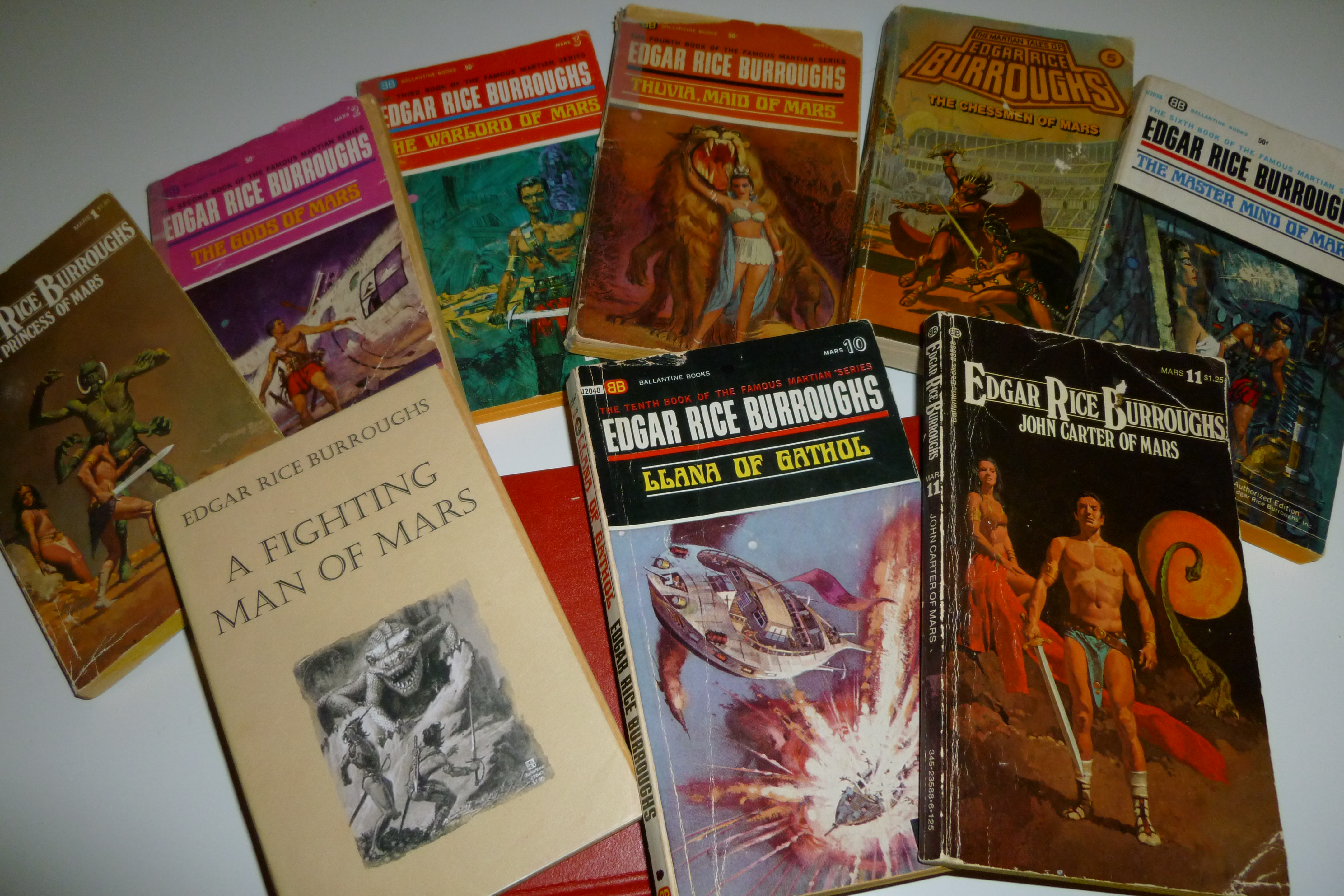
Lost on Mars with John Carter, and Four-Armed Green Martians

Regular readers know that one of my favorite authors is Edgar Rice Burroughs–so I was both eager and wary regarding the new movie inspired by his Mars series, John Carter.  Fortunately, in the end I think it was a well-handled retelling of Burroughs’ A Princess of Mars.  They took a few liberties, as filmmakers will, but the spirit was good.

My Burroughs Mars Collection

The plot was essentially accurate to the book.  John Carter of Virginia is a Civil War veteran who goes out west prospecting.  Out in the wilderness, he finds himself mysteriously transported to a new wilderness, with a red tint.  He eventually realizes he’s on Mars (Barsoom), where he meets the Tharks, giant green men with tusks and four arms (Burroughs was the first to have green Martians, incidentally).  It isn’t long before he also encounters the beautiful Dejah Thoris, Princess of Helium.  Not green and without tusks, she’s a member of the red Martians, who look human apart from red skin.  Adventures involving swordfights, epic battles and a villain intent on marrying Dejah Thoris quite naturally ensue.

The movie kept all of that from the book, along with many other details, although they also threw in some extra bits.  I can only conclude that they felt they had to explain John Carter’s transportation, which Burroughs never does.  Part of me loves it that John Carter just looked at Mars and wished and was there, but I can see how the filmmakers felt they needed to give a more complete explanation.  So they introduced the Therns, priests of the Martian goddess Issus, who have medallions which allow them to transport between worlds; one of the medallions takes John Carter on his journey.  The Therns also tie the plot together a bit more, by giving a weapon to Helium’s enemies and presiding over the resulting destruction.  They’re brought up in the first five minutes of the movie and gave me a few bad moments–but I felt better once their mysterious goddess was named as Issus, because then I could place them.  Issus and the Therns show up (albeit in a different capacity) in the second Mars book.

I’m generally much more forgiving of movies making changes if they also demonstrate that they really, really know their source material.  Anybody who can get all the minor characters’ names right and very carefully depicts Martian animals according to Burroughs’ descriptions has earned the right to tweak things a little–and I think it was essentially effective, once I figured out what they were trying to do.

The characterization was well-handled.  They gave John Carter (Taylor Kitsch) a tragic past, to create a character who was lost in more ways than one when he lands on Mars.  He was a bit surly for a Burroughs hero, but they got a little of the Southern gentleman in, and his prowess in battle was perfect.  In a strange way, my favorite moment may have been when he turns to face an oncoming horde of hostile Tharks, buying time for the fleeing Dejah Thoris.  It’s straight out of the book, and only a Burroughs hero could plunge into an oncoming army, alone, armed only with a sword, and come out of it alive.  I’ve heard it commented before that the biggest mystery of the Mars books is how the South ever lost the Civil War when they had John Carter on their side.  The scene was well-shot too, splicing battle shots with flashes of John Carter’s past, and piling up the bodies without being grotesque (more on that in a moment).

I also enjoyed Dejah Thoris (Lynn Collins).  Heroines are not usually Burroughs’ strong point.  She was always beautiful, but she was never much else.  The movie made her both smarter and tougher.  Dejah Thoris the scientist throws me for a loop a little, but Dejah Thoris the swordfighter is pretty much awesome.

The more minor characters were well-done too, particularly among the green Martians.  Tars Tarkas, John Carter’s green Martian friend, was excellent, as was Sola, a more sympathetic green Martian female.  The green Martians were all CGI and there were excellent effects throughout.  I avoided seeing this in 3D so I don’t know how that would change things, but in 2D the effects were convincing, for creatures and landscapes and technology.  I thought the green Martians all looked a bit scrawny for a warrior race, but they did wonderful things with the four arms.  I also absolutely loved Woola, John Carter’s dog-monster.  He was delightful, and added some comedy.  Comedy is not really one of Burroughs’ strong points either, but the movie got some good moments in.

On the whole, I thought the movie picked up as it went.  The opening on Earth was not as interesting (although big points for including John Carter’s nephew, a fictionalized Edgar Rice Burroughs, who’s included in a foreword in the book) but it got better on Mars, and eventually accelerated to some wonderful epic battles and excitement by the end.  That was done perfectly and completely in the spirit of the books.  Burroughs wrote about men who lived by their swords, who would fight their way literally through armies and across planets, have clashes featuring casts of thousands and deaths of hundreds–but he wrote it all with a Victorian sensibility that never dwelled on the blood, and was never gruesome or disturbing.  This movie managed to do the same thing.

This is one of the biggest reasons I’ve always been wary of a movie version–the blood, and also Dejah Thoris’ clothes, or lack thereof to be precise.  Burroughs wrote about plenty of scantily clad women, but again, with a Victorian sensibility that kept it all very clean.  It would be very easy to make a movie with half-naked women and disturbing fight sequences, technically accurate to the book but not at all in the right spirit (and nothing I’d want to see, though I’m sure that would have a market too).  So I was so relieved to know that this was being produced by Disney; it even opens with a red-tinted view of the Disney castle logo.  I figured they’d do it right, and they did.  Dejah Thoris’ costume designer seemed to be looking at the same book covers I have; the princess was scantily clad (and for that matter, John Carter spent plenty of time shirtless) but somehow it didn’t feel exploitative either.

So, to sum: good characters, good effects, good Burroughsian spirit.  A few changes but acceptable ones.  If they do a sequel (and they always do sequels of action features, right?) I’ll be watching it.  I hear it’s not doing well at the box office, but we’ll see!

And in the meantime, there are so many exciting movies coming out this month!  Next up I’m looking forward to The Hunger Games, and after that Mirror, Mirror, a Snow White retelling.  If they live up to their potential as well as John Carter did, it’s going to be a good month at the movies.

Other reviews:
Screen Rant
Angelocracy
Eclipse Magazine
The Oregonian
Stainless Steel Droppings
More?

Revisiting a Galaxy Far, Far Away

This sci fi kick I’ve been on lately has led me back around to Star Wars, which I must admit I haven’t paid much attention to for about ten years–and it had probably been that long since I watched the original trilogy.

First, a little history.  The trilogy was re-released in theaters when I was in elementary school, and me and everyone around me became Star Wars fans.  I read probably 10 or 12 Star Wars books too, but lost interest when it began to feel like every book was basically “let’s mop up the last traces of the Empire…and then the last last traces…and then this last one…”  More significantly, I also found Star Trek.  For me, the fandoms co-existed for a while, but in the end, the traveling turned out to be more interesting than the fighting (I’m convinced the difference really is all in that second word of the names).

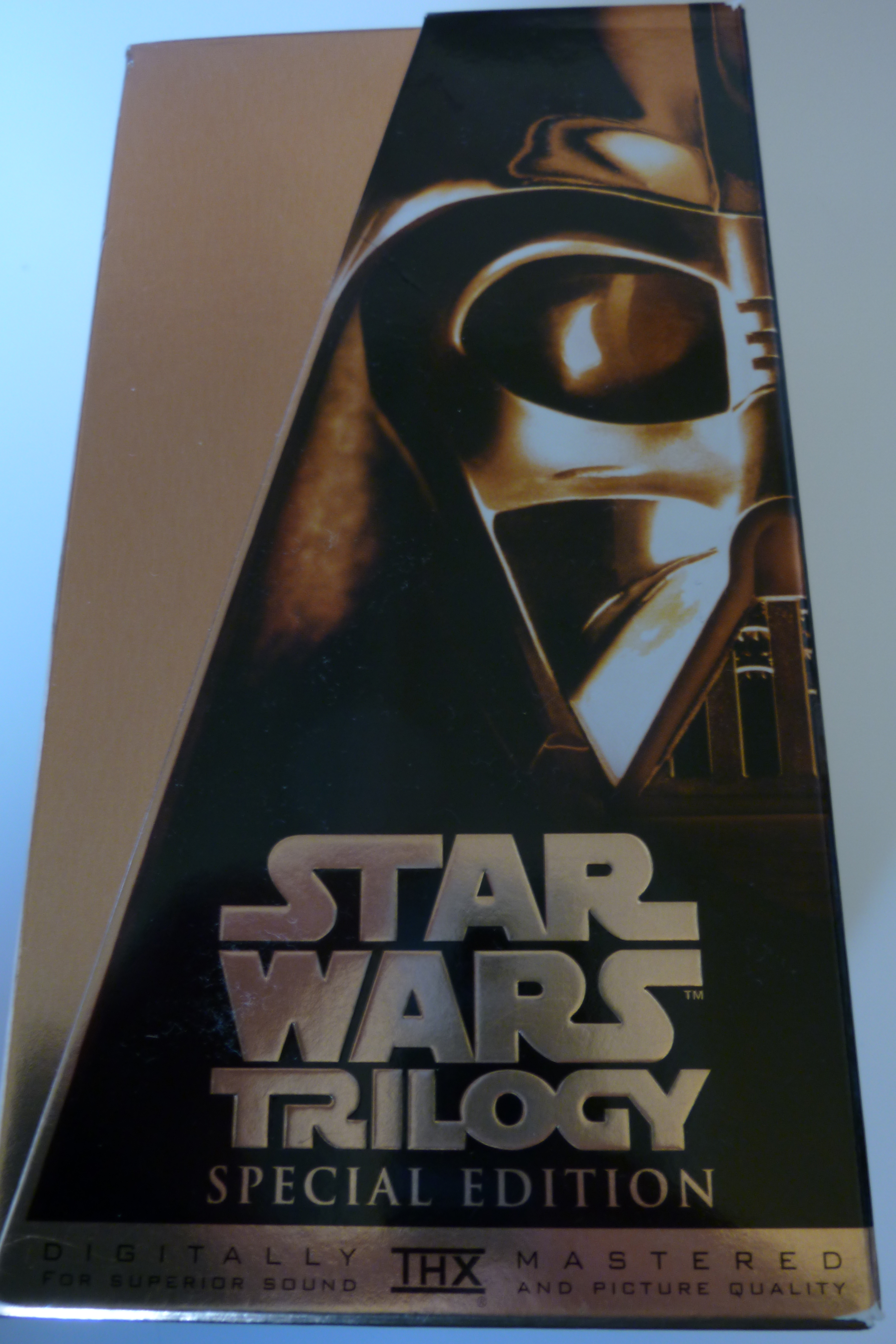
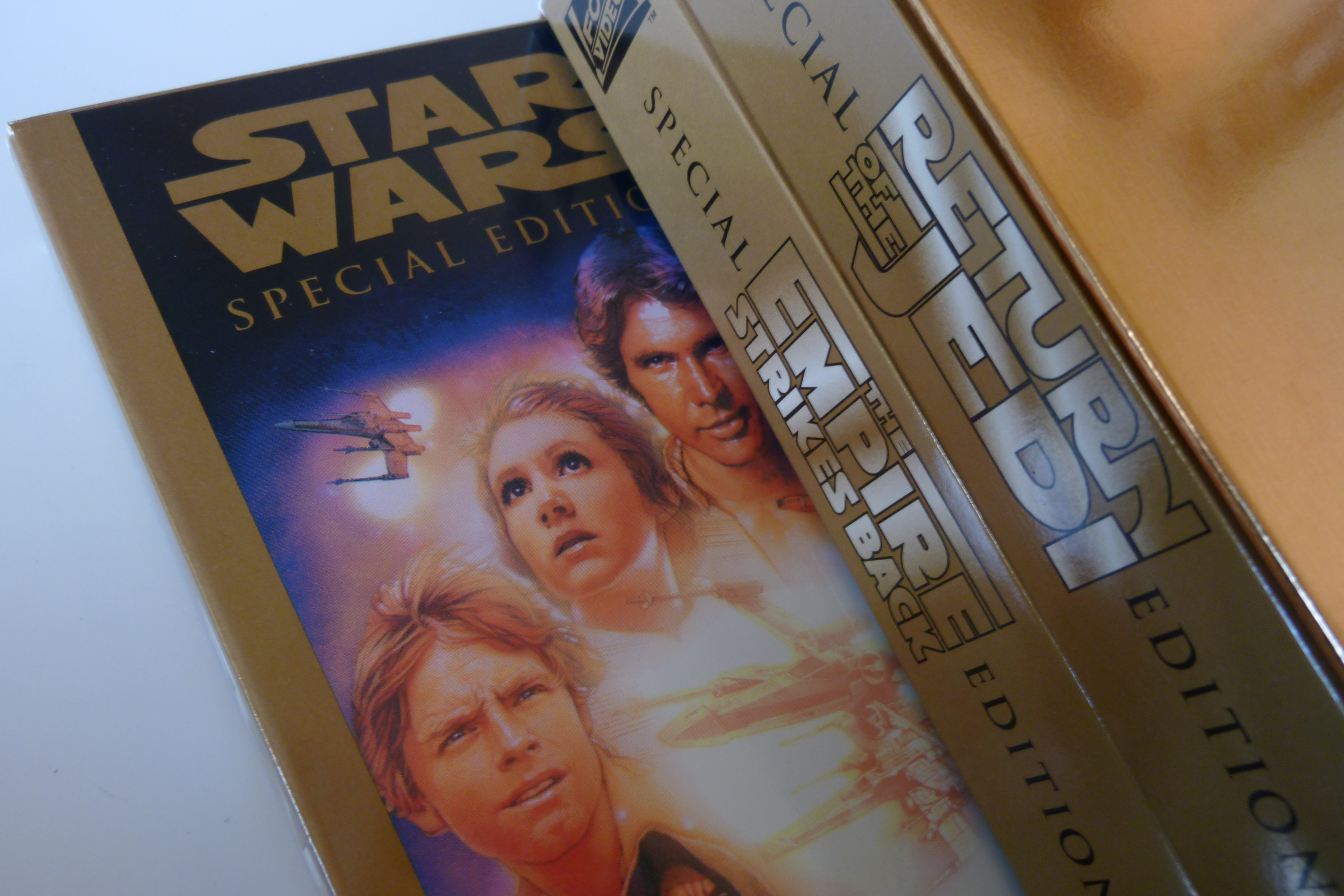
All of this is to say that I identify as a Star Trek fan, but I like Star Wars too, and there was a time when I really liked Star Wars.  And lately I’ve been thinking I’d like to revisit the galaxy far, far away.  So, over a recent weekend, I dug out my very old, shiny gold Special Edition VHS tapes of the original trilogy (a very big deal purchase when I was much younger!) and rewatched all three movies over three days.

And you know, they really are wonderful.  The characters, the strange landscapes, the magic of the Force…even the battles.  It’s often the characters that count most for me, so let’s start there.  Remember it had been ten years (or thereabouts) since I saw these movies.  The biggest “change” was Luke.  Han is right when he’s calling him a kid at the beginning!  You can’t see him the same way when you’re a kid yourself.  I think you have to be older to properly see Luke’s character arc, from a whiny kid on Tatooine (he really is whiny in spots) to the serene and confident Jedi Knight.  It’s the classic growth of a hero story, and it’s very well-done.  I enjoyed Han’s growth too, from refusing to stick his neck out for anybody, to General Solo of the Rebel Alliance–but still with some of that scoundrel edge.  The one who grows less is Leia–she’s awesome from the first moment and stays that way, whether it’s blasting Stormtroopers or making acid comments to Han.  I remembered she was great, but I think I forgot just how much so.

I thought other characters were excellent too–Threepio, with his constant worried commentary, gets some of the funniest lines.  And at the opposite end of the spectrum, you have the looming and menacing Darth Vader.  I don’t think I ever noticed before–his entrance gets more impressive with each successive movie.  I wonder if they didn’t quite know what they had in the first one.

I thought the plot rockets forward at a nice pace, and each time I finished one movie it made me want to watch the next one.  It’s fun to revisit all the iconic lines and moments, and my memory of the later two movies may have been part of why I wanted to go on to watch them.  The trilogy is also a great example of a story which is complete unto itself, despite previous events which influence the present.

Which leads me around to the newer trilogy.  I watched that as it came out, and I don’t think I had seen the original trilogy since watching Episodes 1-3.  Rewatching Episodes 4-6 largely brought home to me how irrelevant the first three episodes really are.  I don’t feel like they added anything to my viewing of the original trilogy.  It was a bit interesting to see the references in the original to the past, and to know how they expanded those references, except that mostly I don’t much like the way they expanded them.

If anything, the new episodes hamper viewing of the original; now when Leia talks about her mother, I’m stuck thinking about Padme’s really stupid death; when anyone talks about Anakin Skywalker, it’s now harder to think of him as a heroic Jedi when I’ve seen him as a sulky teenager who, after the age of nine, was never all that likable.  And even though I like Padme, seeing Leia again makes Padme look like a poor imitation.  It’s sad, really–the original trilogy points up how far the new ones fell short, and how we really already knew anything we needed to know about the backstory.

If I was going to get more backstory, I think I’d rather have it about the galaxy, not the individuals.  Star Wars has good character development, but not so much when it comes to races.  The Wookies, the Ewoks and the Jawas are the only ones I can think of who have their species name even mentioned in the original trilogy (maybe Jabba–is Hutt a species or a title?)  There are endless bizarre-looking creatures, but most of them we know pretty much nothing about.  We don’t need to know about all of them–but it would be nice to know about some of them.  I suppose that’s another reason I ended up as a bigger fan of Star Trek; there’s much more scope in exploring different alien cultures than there is in mopping up the last traces of the Empire.

But there’s plenty that’s good in Star Wars too, and I think I’m going to do a bit more revisiting.  The new trilogy added nothing to the old one for me, but what I remember of the books did.  I remember Wedge got to be a much bigger character, that Leia became a political leader, that Luke continued that character arc to found a new Jedi Academy, that Han kept trying to balance the general and the scoundrel.  I lost interest eventually in reading new Star Wars books, but I remember I liked several of the ones I did read.  So I think I’m going to track some of them down and see if they’re worth revisiting too!

As You Wish

I love fairy tales, and retold fairy tales, and fairy tale-inspired stories.  I have great success reading books like that, and sometimes I try a movie too.  More often those turn out to be very cheesy…but sometimes it works, as with one of my favorites, The Princess Bride.  It can be cheesy at times too, but in a good way, and all in all it’s a very nearly perfect movie.

There’s a book too, which I have read, and which is also truly excellent.  It’s been a long time since I read it, though, so that review will have to wait until I get a chance to re-read it.  In the meantime, let’s talk about the movie.  It’s at its twenty-fifth anniversary, so I’d like to assume everyone’s seen it…but I’ve learned not to assume that about any movie.  And I do have a friend who just saw it for the first time a month ago.

The Princess Bride starts with an adorable frame-story, about a grandfather reading the book The Princess Bride to his grandson, who had been ill.  The boy pretends indifference, but is drawn into the story.  It’s about the beautiful Buttercup, who is going to marry her beloved farmboy, Westley.  But Westley goes off to seek his fortune, is reportedly killed by the Dread Pirate Roberts, and Buttercup ends up unwillingly engaged to the nasty Prince Humperdinck.  She’s kidnapped shortly before her wedding, carried off by mastermind Vizzini, slow-witted and good-natured giant Fezzik, and brilliant swordsman Inigo Montoya.  They’re pursued by a mysterious man in black (whose identity will probably not turn out to be all that much of a shock).

And it all comes together to be a nearly perfect movie.  There’s romance, swordfights, death, miracles, your choice of heroic figures, a nasty prince, intrigue, treachery, the Pit of Despair, the Cliffs of Insanity and an enormous amount of funny lines.  The effects are not fantastic (as with the Rodents of Unusual Size, or the ROUS) but that’s a minor point.  The more major point that has me putting that “nearly” before “perfect” is Buttercup.  All this movie needs is a really strong female heroine, and Buttercup is not that.  But she serves her purpose, and everyone else is wonderful.

One of my favorite characters is Inigo.  When he was a boy, his father was killed by a six-fingered man.  Inigo has dedicated his life to learning swordplay, so that when he finds the six-fingered man he can defeat him in a fight.  He has it all planned; when he finds the six-fingered man, he will say to him, “Hello, my name is Inigo Montoya.  You killed my father.  Prepare to die.”  Out of context, it’s just a line.  In context, when he does meet the six-fingered man it’s one of the best scenes in the movie.

Not to mention, the movie features such timeless wisdom as “Never go in against a Sicilian when death is on the line,” “There’s not much money in revenge,” and “True love is the greatest thing in the world–except for a nice MLT, mutton, lettuce and tomato sandwich.”  There are endless other iconic quotes, like “Inconceivable” and “As you wish.”  And if none of this paragraph makes sense, all I can say is that it’s a sure sign you should watch the movie!

But if you have any fondness at all for swordplay and fantasy and fairy-tale-type stories, then you should watch The Princess Bride.

Movie Night in the Cornfield

When I originally wrote my Pirates of the Caribbean novel (or two-hundred-page extended-joke, as I like to think of it), the second movie hadn’t even come out yet.  The characters ended up with very different lives compared to the later movies.  At the end of my story, Captain Jack Sparrow is still sailing the Black Pearl, Will and Elizabeth are married and living in Port Royal, and Commodore Norrington is still chasing Jack and his crew.

I’ve developed a tradition of going back and writing an extra chapter when each movie comes out.  I’m not trying to fit my story to the later developments–but I really enjoy having the characters, as I left them, watch the movie and comment on how things are going.  It’s that kind of story where you can do that sort of thing.

Since the fourth movie just came out a few weeks ago, I went back to the cornfield to write a new chapter in response.  If you haven’t seen Pirates of the Caribbean: On Stranger Tides, this is your warning that this has spoilers!  And probably won’t make any sense at all anyway.

But if you’ve seen the movie, I hope you’ll enjoy the POTC characters commenting on POTC.

*******************

It was movie night in the cornfield.  Movie nights were rare—although, considering this was a time hundreds of years before movies were invented, they were less rare than you might expect.  Every few years, the characters of the cornfield would gather to see what the latest developments were in their canon lives.  Tonight—On Stranger Tides.

“A brilliant piece of cinema,” Jack pronounced, after the movie—but not his Super-Extra-Large-Jumbo-Really-Big-size bucket of popcorn—had been finished.

Continue reading “Movie Night in the Cornfield”