Today also marks the end of the Readers Imbibing Peril “challenge,” so I wanted to do a round-up, and some brief reviews of creepy autumn movies I never had time to review properly.
Considering this is not my normal genre, not a bad list! Now, on to the screen…
where there’s a fair amount of overlap.
Northanger Abbey (2007): I like to watch a movie version of Austen before reading a new book by her; it’s not my usual practice for other books, but it helps me sort out Austen’s large casts of characters. I really enjoyed the movie version, which is a bit sillier than the book (and changes a few details) but is still pretty accurate–and enormous fun. I liked that it brought to life some funny moments that Austen skated past, and I loved that Sally Sparrow (Carey Mulligan) from Doctor Who‘s “Blink” was in this! It wasn’t really a very creepy movie (less creepy than “Blink”) but in a way that’s the point–it’s a creepy setting where nothing creepy is really going on.
Rebecca (1940): This is one of my favorite Hitchcock films. So mysterious, and it’s so brilliantly handled. Joan Fontaine is wonderful as the second Mrs. De Winter, Judith Anderson is terrifying as the creepy Mrs. Danvers, and I just love how Hitchcock makes Rebecca SO PRESENT, when we never see her at all. I can just imagine how awful this would be if they made it today–we’d probably get a bloody flashback of Rebecca’s death. Here, Olivier’s narration is so brilliant and so vivid. This is a wonderful movie for a cold dark night.
Murder on the Orient Express (1974): After reading the book, I was curious about the movie. I found it very accurate, in good ways and bad. Like the book, it takes some time to get started, and doesn’t really hit its stride until murder has been committed and Poirot begins his investigation and interviews. I enjoyed seeing Sean Connery and an almost unrecognizable Ingrid Bergman. Lauren Bacall was in a way lovely as well, but at the same time, terribly cast. Her character felt the most different from the book, and I liked the book version better–but I couldn’t see Bacall playing that part that way. Poirot himself seemed angrier and more forceful in some of his scenes, which I can’t say worked all that well for me. But I did love the way they handled his “here’s what happened” speech. A flashback would have been awful in Rebecca, but here it was a brilliant device to actually show the murder. Almost no blood, but it was still so creepy. This one couldn’t have been made in 1940–the censor board never would have stood for the ending.
I’m still never going to be a fan of horror movies or books…but I’ve enjoyed venturing into the shadow lands a bit! Perfect for getting me in the mood for fall.
Forgive my battered library copy…I’ll be buying a better one.
I finally got to my last goal-book for R. I. P. – Northanger Abbey by Jane Austen. There’s even a little more of a “finally” to this, considering it was a chosen book for my high school book club and I never got around to it then. But maybe it’s just as well; I don’t know if I would have found Austen as easy a read then–and I loved the book now.
Northanger Abbey is a spoof on gothic novels. I haven’t actually read many, but it doesn’t seem to matter. A lot of the concepts have slipped into the cultural awareness, and it always seemed pretty clear what Jane was poking fun at.
The book is about Catherine Morland who, the narrator tells us, doesn’t seem at all suitable to be a heroine–for instance, her father “is not in the least addicted to locking up his daughters.” Catherine loves reading about heroines, and simply adores gothic novels. Her opportunity for adventure comes when she’s invited to accompany some family friends to Bath. There she makes the acquaintance of the charming Mr. Tilney and his sister, who eventually invite her to their family home of Northanger Abbey. It’s the perfect setting for a gothic novel and Catherine’s imagination runs wild.
This book has the most delightful feel to it. It’s the lightest Austen I’ve read, with a wonderful sense of humor throughout. It’s frequently meta, with a narrator who comments on the ongoing story, noting at times how it does and doesn’t fit a gothic novel, with some lovely tongue-in-cheek observations. Austen herself feels much more present here than in her other novels that I’ve read.
The characters are vivid, and the cast is a little smaller than usual, so the characters don’t get lost among the crowd. Catherine is rather silly at times, but she’s also very honorable and good-hearted. I don’t admire her as much as Elizabeth Bennet, but I like her very much. She shows good character development as well, maturing through the novel.
And Mr. Tilney–well, with all due respect to Mr. Darcy, it takes Colin Firth five hours to crack a smile in the BBC miniseries. It’s so nice here to meet an Austen hero with a perpetual smile. Mr. Tilney makes jokes and is charming and fun. I was talking about this book with two friends, and the opinion was unanimous in appreciation of Mr. Tilney. Another note: even though I’m calling him “Mr. Tilney,” the narration actually refers to him as Henry at times, and you can’t imagine how much more human that makes him seem than the perpetual Mr. This and Mr. That we usually see in Austen.
The other major characters are Isabella Thorpe and her brother John who…well, I hate to give things away about them. But Catherine learns something about real and imagined intrigue, and the difference between books and life.
Which reminds me–there’s a splendid rant from Austen at the end of chapter five, about the poor regard for novels and how wonderful they really are. Bravi.
I think I’ll be recommending Northanger Abbey next time I’m talking to someone thinking about picking up Austen. It’s a good gateway book, distinctly Austen but lighter and a less dense read. And my new favorite!
I’ve mentioned in previous posts that I love walking around my neighborhood. Lately, neighbors have been breaking out the Halloween decorations, so with the holiday coming up next week, I thought I’d share a few!
These horrid things live next door to me. I don’t even dislike spiders, but knee-high creatures that suddenly appear as I come around a bush–yikes! First there was one, but they seem to be multiplying…
I have noticed myself having frequent conversations which involve the sentence, “Oh, you have to watch Doctor Who!” So I thought I’d do a blog post on that subject. I already did one review of the first couple of seasons of the current incarnation. For something a bit different, rather than giving you the sweeping commentary, I decided to zero in on some absolute favorite episodes–giving due attention to each Doctor and companion.
“The Empty Child” and “The Doctor Dances” – This two-parter is my favorite Christopher Eccleston (Ninth Doctor) episode, possibly my absolute favorite of the series. Rose and the Doctor arrive in 1940s London during the Blitz, looking for a crashed alien spacecraft. They find a strange little boy in a gas mask stalking London’s street children, plaintively asking for his mummy. It sounds odd–it is SO creepy. This episode also introduces the delightful Captain Jack Harkness. The first time I saw this, I was absolutely riveted. It’s scary and suspenseful, woven through with wonderful bits of humor, and the last ten minutes are so feel-good that they make me incredibly happy–even when I re-watched it on a nine-hour plane flight.
“The Girl in the Fireplace” – I think this is my favorite Rose and David Tennant (Tenth Doctor) episode. They’re my favorite pairing so it’s hard to choose–but this one has the Doctor crashing through a mirror on the back of horse. That was the moment I decided David Tennant was an awesome Doctor. With regards to this pairing, due honorable mention given as well to the episode when Rose leaves. So unbelievably heart-breaking.
“The Shakespeare Code” – Unquestionably my favorite Martha episode. I mean–they visit Shakespeare! At the Globe! And there are witches, and a mystery involving Love’s Labor’s Won! Probably my favorite destination the TARDIS ever went to. It’s where I’d want to go (after Cavendish, Prince Edward Island, circa 1907. Then Shakespeare’s Globe).
“Turn Left,” “The Stolen Earth” and “Journey’s End” – Lots to love about the Donna and David Tennant episodes, but this multi-part set is fairly mind-blowing. I don’t feel like I really appreciated Donna until “Turn Left,” and then the last two episodes…there are Daleks, and everyone unites to fight them. We get to have so many amazing characters in an incredibly epic confrontation. Love it.
Honorable mention also to David Tennant’s last episode. I really think the writers did everything they could to NOT help me deal with him leaving. I’m still not over it. But on we go to Matt Smith…
“Vincent and the Doctor” – I have more mixed feelings about the seasons with the Eleventh Doctor, Matt Smith (something for another post), but I do madly love this episode. The Doctor and Amy visit Vincent Van Gogh. I’m pretty familiar with his paintings, and it is SO MUCH FUN to see iconic paintings scattered all over Van Gogh’s living room (he apologizes for the mess). There are little bits and pieces referencing his paintings all over the episode. It’s also a beautiful, moving story about the pains and the joys of life.
If anything–anything at all–in here is catching your attention…you have to watch Doctor Who! And if you already have, I’d love to hear about your favorite episodes.
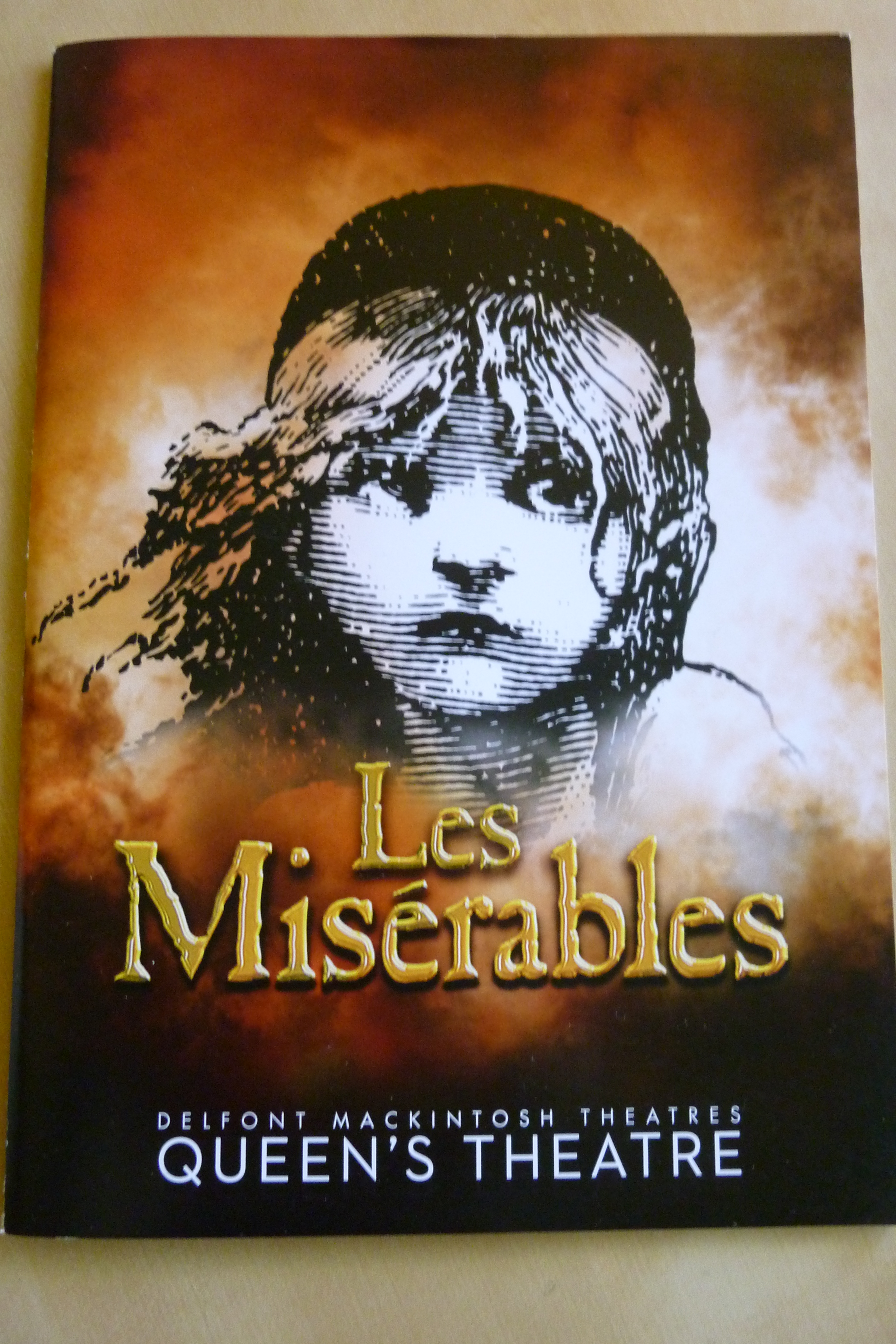
One of the most exciting things I did while I was in London in September was go to the theatre. I got to see Les Miserables for the first time after listening to the soundtrack many, many times. I thought I’d do a theatre review and share the experience! And, because this is me, make some comparisons to Phantom too–another theatre review that’s coming soon! Spoiler warning for Les Mis (mostly who dies), as it’s hard to discuss without spoilers…but I’m guessing most people have some knowledge anyway.
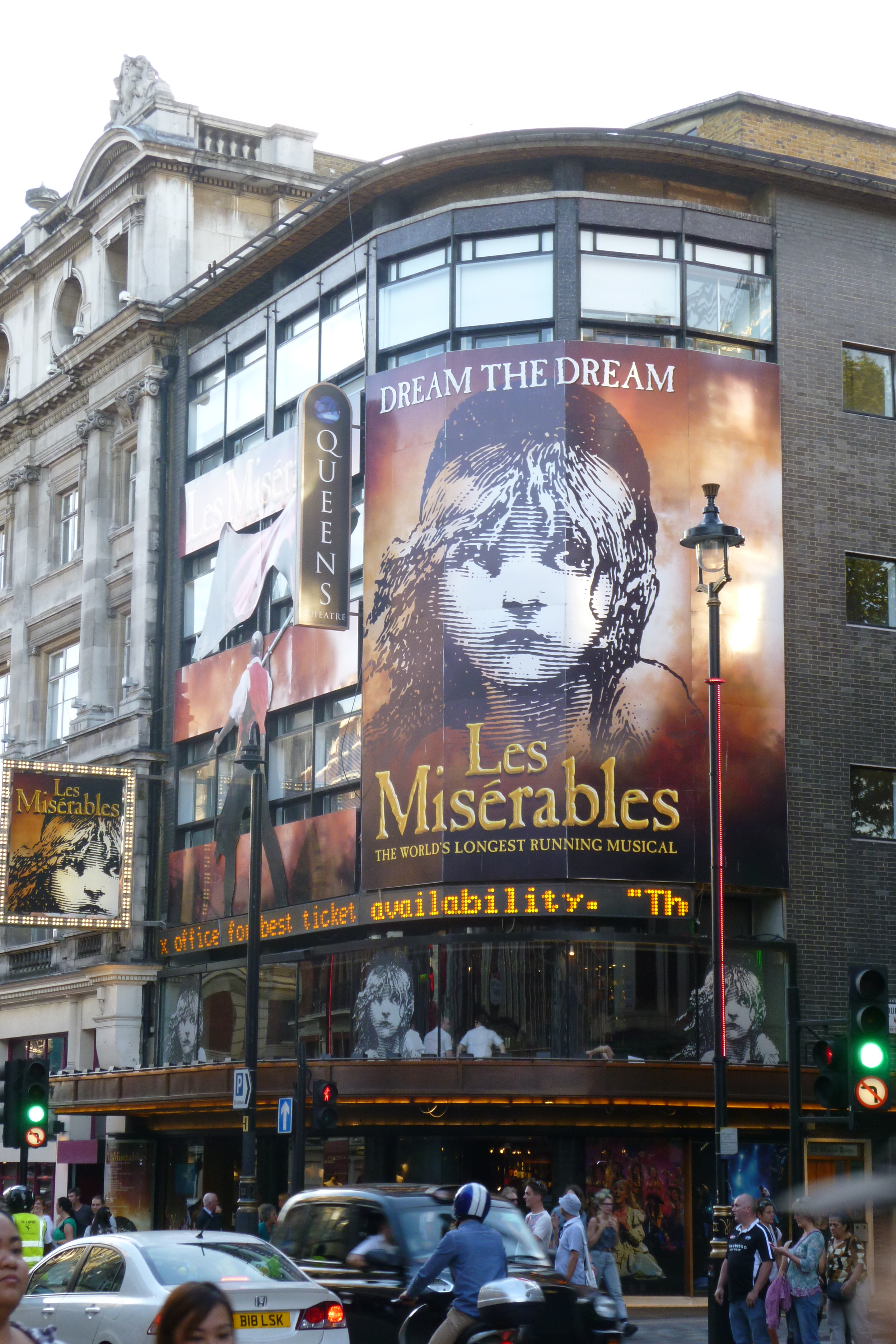
Les Mis in London is playing at the Queen’s Theatre, near Leceister Square. I set off there in the late afternoon, because I have theatre paranoia. I always have this dreadful fear that I’m going to be late to a play–fueled, I think, by the fact that some theatres won’t let you in for entire acts if the curtain is already up, and because I’m frequently seeing plays while traveling, and if I don’t see it then…I won’t see it. So I got there early, and ended up having a quick, order-at-the-counter dinner, at a place directly across the street from the theatre. And then of course I got there almost an hour early anyway!
I bought my ticket for Les Mis last May, so I was able to get a really good seat–front row and center. I decided to splurge a little, since I’d never seen the play. And once you decide you’re buying a ticket, the nice seats are not really that much higher than the so-so seats. I think almost any seat in the house would be good, though, as the theatre just isn’t that big.
The very short reaction–it was amazing. There’s so much more than is on the soundtrack. You can get most of Phantom on the soundtrack, but there are huge pieces of Les Mis that aren’t on the CD. They put all the dramatic songs on, of course, but there’s so much more dialogue, and scenes that reveal character or explain plot points. There were some bits that never made sense to me–and they do now!
The plot is complex, but basically we’re following Jean Valjean, a former convict (for stealing a loaf of bread) who broke parole to try to remake his life, but is still being sought by Inspector Javert. Valjean’s path intersects with Fantine, a woman who’s driven to prostitution in order to provide for her daughter. Valjean ends up raising Fantine’s daughter, Cosette–whose path in turn intersects with Marius, a student who is in with a group of young revolutionaries, determined to rise up on behalf of the poor and downtrodden of France. That’s as brief as I can make it, and doesn’t even mention my favorite characters–who I’ll get to in a bit.
Valjean and Javert were both excellent. They have such powerful songs, and are such complex characters. As I was leaving the play, I heard someone say, “I really like that even the villain isn’t really a villain.” It’s possible he meant Thenardier, the comic relief villain, but I think it’s more likely he meant Javert. And it’s true–Javert wants to hunt down Valjean, who the audience can see is unequivocably a good man, yet Javert is coming from a place where he’s convinced that he’s the one in the right.
There’s a very nice handling of religion in the play, because both men are motivated by a belief that they’re doing what God would want of them. Perhaps part of Javert’s trouble is that he’s sure he’s right, while Valjean realizes it’s a struggle. Anyway, they both performed wonderful songs that blew me away. Geronimo Rauch (Valjean) has also played Jesus in Jesus Christ Superstar, and I could hear it a bit. I’m guessing he did an amazing “Gethsemane.” It’s that kind of powerful drama.
The Queen’s Theatre – you can kind of guess what’s playing.
After the major characters, I should talk about my favorite. I love Eponine. She’s a girl from the streets who loves Marius, but he just never sees her. In the production I saw, Eponine was played by Danielle Hope, who’s exciting by association; she played Dorothy to Crawford’s Wizard of Oz. I thought she was excellent as Eponine–emotional, heartfelt, so powerful in her major song, “On My Own” (which you can find on YouTube, by the way…though of course it was better live).
You don’t get a lot of context on Eponine just listening to the soundtrack, so seeing the play, I realized she is so much braver and more complicated than I knew. It’s not just that Marius is oblivious, it’s also that he’s a higher social class, making her unrequited love even more poignant. Especially since he’s so oblivious, he wants Eponine to help him woo Cosette–which she does, at considerable sacrifice. Loved, loved Eponine.
Fantine was very good too, with this wonderful personal quality to her “I Dreamed a Dream.” She seemed to be appealing directly to the listener; Eponine had a bit of that too. I saw Sierra Boggess as Fantine, which was interesting because she’s Christine in the filmed, 25th anniversary production of Phantom.
The Thenardiers are much funnier in the play than on the soundtrack. They’re also more awful, so that’s a nice mix there.
I was surprisingly impressed by young Cosette. I’ve never been that fond of her song, “Castle on a Cloud,” but it becomes more remarkable when you can see how small the girl singing it is! I wasn’t all that impressed by grown-up Cosette. It wasn’t the actress’ fault. It’s just that they give Cosette SO little to do.
Which brings me around to Marius. He’s on stage more than Cosette, and is sort of more involved…but he is such a passive character. I didn’t think of this until I saw the play, but he reminds me a lot of Raoul from Phantom. Some of that may have been casting–he looked like Raouls I’ve seen–but I also think they’re the same archetype. They’re the very innocent, pure, utterly non-threatening romantic lead, uncomplicated and ultimately shallow as characters. And they can end up coming across as rather dull wimps.
To give fair due, at least Raoul tried to rescue Christine. He failed, but he tried. Marius accomplishes nothing, and attempts nothing. He needs Eponine to find Cosette for him, and to deliver his letters to her. He fights on the barricade with the revolutionaries, but that feels like he’s just being carried along by his friends–and then he’s literally carried away from the barricade by Valjean. Marius actually does…well, nothing.
Interestingly, there’s no romantic alternative for Cosette. Often the innocent romantic lead is paired with a darker, more complex and seductive figure (that would be the Phantom). Les Mis, on the other hand, gives Marius a romantic alternative in the darker, more complex Eponine. She’s had a harder life than Cosette (after age five or so), she’s smarter and more capable, and she’s not as innocent. She’s also the socially-challenging choice.
That in turn makes me question Marius’ revolutionary fervor. The revolutionaries are all about equality and raising up the lower class, yet when Marius falls in love, it’s with someone from his class (or who at least appears that way). He barely seems to realize ragged Eponine is a girl, but he falls madly in love with prim and proper Cosette, literally at a glance. Marius may come across better in the book, but I was not impressed by him in the play.
I did believe in the revolutionary fervor of the others, especially the leader, Enjolras. He was my favorite of the students. And I loved Gavroche, the little boy from the streets with an eye on everything. He’s so sweet and so clever. After the barricade is taken, there’s this moment where they turn it around and you can see the front. Gavroche is lying dead among the soldiers, and Enjolras is spread out hanging off the wall with his flag…SO SAD!
I was also (differently) sad that Gavroche didn’t get to sing “Little People.” He reprised it a couple of times with a verse or two, but he never sang the full song from the soundtrack. I’m sure that made the reprises less moving. Anybody know if that’s normal, to leave out that song?
Other thoughts…almost every song was excellent. I didn’t think they got quite enough power into “Do You Hear the People Sing?” but on the other hand, “One More Day” was breath-taking. That was the first act closer, and it was brilliant. I basically believe in the revolutionaries’ cause, but in some ways it almost doesn’t matter. The songs are so inspiring, they make you want to join the cause without worrying about the details (which is probably a dangerous commentary, actually…)
Javert’s death was a little oddly handled. He’s supposed to be jumping off a bridge into the Seine, but instead of having him literally fall, they raised the bridge behind him. And…it looked like a bridge rising, not a person falling. I would say that’s fine, maybe you can’t have someone jump down into water on stage–but Raoul does it, so I know it’s possible. Although Raoul wasn’t singing at the time.
The end of the play is SO sad. It’s like a Shakespearean tragedy, with almost everyone dead. There’s a moment with the spirits of Fantine, Valjean and Eponine smiling down on Cosette and Marius. I guess we’re supposed to be consoled by the couple’s happy ending–but it just highlights the fact that all the complex, interesting, deserving characters died. On the other hand, they died so movingly, and it was all such beautiful music, and intertwined with great ideals and complex examinations of life and class and human emotions…
It was such a good night at the theatre. Now I can’t wait for the movie version.
And on one last happy note, after the last bow, there was a cast group hug. Valjean grabbed Madame Thenardier in a bearhug, and then everyone piled in. So cute!
 Today also marks the end of the Readers Imbibing Peril “challenge,” so I wanted to do a round-up, and some brief reviews of creepy autumn movies I never had time to review properly.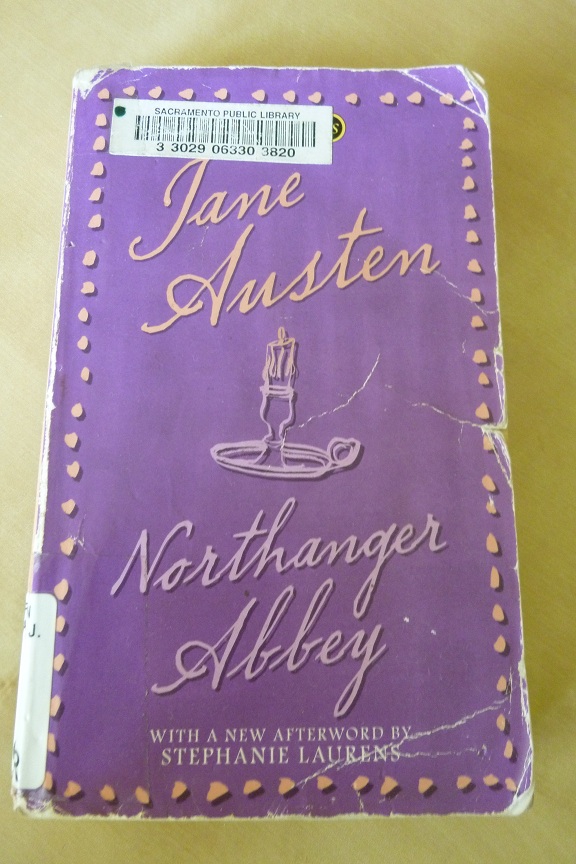
 by Jane Austen. There’s even a little more of a “finally” to this, considering it was a chosen book for my high school book club and I never got around to it then. But maybe it’s just as well; I don’t know if I would have found Austen as easy a read then–and I loved the book now.

 Tales of the Marvelous