Dancing with the Wintersmith

Terry Pratchett is one of those authors I read on a fairly regular basis, and always have a good time with!  Most recently, I read Wintersmith, the third book in the Tiffany Aching subseries of Discworld.

Tiffany is a 13-year-old apprentice witch of considerable promise (and modesty).  She attends a Dark Morris dance, welcoming winter, and can’t resist jumping in–which brings her to the attention of the Wintersmith, the spirit of winter, who finds himself suddenly enamored of this human girl.  Dealing with the chaos and destruction caused by the Wintersmith’s attempts at wooing requires all of Tiffany’s strength and ability, as well as help from senior witches Granny Weatherwax and Nanny Ogg, from the fighting, drinking and swearing Wee Free Men, and from bookish and good-hearted Roland, who is not Tiffany’s young man.

I think I enjoy the Tiffany subseries so much because, like the City Guard subseries, they give me a sane main character (Tiffany and Vimes), surrounded by wildly eccentric characters.  Tiffany is a wonderful heroine who has been growing into her abilities (and perhaps more importantly, her identity) throughout the series.  I mentioned above she has promise and modesty, but it’s really more complicated than that.  Tiffany always does what’s needed, and doesn’t see anything remarkable in that–even if it’s rescuing her brother from the Queen of the Fairies, or confronting the Spirit of Winter.  I love a character who is flawed enough to not always do the right thing, but to always try to do what’s needed.

The other witches are wonderfully eccentric and unique, from Miss Treason who deliberately made herself a legend, to Annagramma, a somewhat New Age witch who thinks it’s all about rituals and beads.  Then of course there’s Granny Weatherwax–witches don’t have a leader, and Granny is the leader they don’t have–and Nanny Ogg, warm and cheerful and practical about all things, like using a Cornucopia of Plenty to stock the larder.

The Wee Free Men, also called the Feegles, are at their usual wild state of hilarity, endlessly cheerful and enthused, shouting and rushing about and eager to do whatever is needed to help “the big wee hag.” I love it when they attempt to sing “Row Your Boat” while crossing the River Styx, “at every possible speed and tempo and with no regard at all for the tune,” annoying Death not a little.

The funniest feature of this book may be Horace, a very lively Lancre Blue Cheese.  He’s adopted by the Feegles, given his own bit of tartan, and does his best to hum along with the singing.

Roland also gets some nice scenes in this book.  He’s not Tiffany’s young man (in rather the way Granny is not the leader of the witches) and he has to step up to be the Hero in the story, even though he’s only ever used an imaginary sword, and learned swordplay from a book.  He has some truly awful aunts and I am hoping for more of his story in the next book…

If I have one criticism of this book, it’s the first chapter.  Chronologically, it covers events which should slot in between Chapter Twelve (of Thirteen), and I frankly don’t know why Pratchett decided to start there.  It made me thoroughly confused, and wondering if I’d missed a book in the series.  So–if you begin this and don’t know what’s happening, keep reading.

Anything else…have I said much on the plot?  The plot is good, perfectly engaging and exciting in spots–but it’s more important as a vehicle for the wonderful characters and high hilarity Pratchett is so good at!

My recommendation: don’t start the series here…but do start the series. 🙂

Author’s Site: http://terrypratchettbooks.com/

Other reviews:
Tethyan Books
Science Fiction and Fantasy Book Reviews
Feeling Fictional
Anyone else?

Buy it here: Wintersmith

Blog Hop: Christmas Wishes

First of all, Happy Friday the Thirteenth!  Watch out for ladders and talking ravens. 🙂

book blogger hop

This week’s Book Blogger Hop question: What books do you want for Christmas?

You know, there are less than you might think…because I get the vast majority of my books from the library, and when I madly love something, well–I usually buy it!  And then, I’ve been working on collecting books by my favorite authors for so long, I own all the obvious ones.

However–that doesn’t mean I don’t have an Amazon wishlist…  And near the top are Cybele’s Secret and Heir to Sevenwaters by Juliet Marillier, Princess of the Midnight Ball by Jessica Day George, and (bookish if not actually a book) the Masterpiece Theatre film of Northanger Abbey.  Maybe the best would be The Bread We Eat in Dreams by Catherynne M. Valente, because I must admit I’m balking rather at the current list price (downside–it won’t actually be released until December 31st).

What books would you like to receive?  And may I suggest a really great book to put on your Christmas wish list? 🙂

Blog Wander: A Library Mama

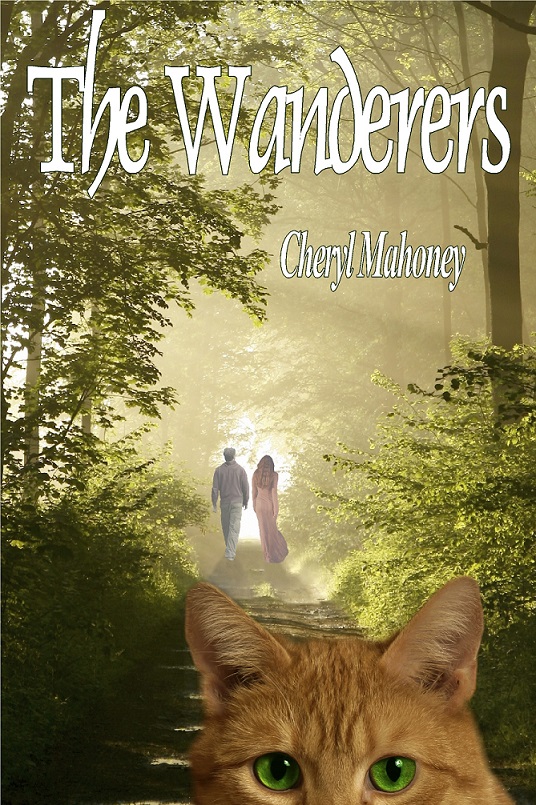
Wanderers 8 - Small CopyToday’s Blog Wander takes us over to A Library Mama with blogger Katy, for an interview about fairy tales, Walt Disney, and what to expect after The Wanderers.  Katy asked some great questions (and I hope my answers are good too!)

Katy is a “public librarian, bookworm, and mother of two, among other things.”  Her About Page has a lovely story about what inspired her to begin her blog, and the goals behind it.

Along with the interview, we’re offering an ebook giveaway, so head over to A Library Mama for the opportunity!  And come back next week for Katy’s review of The Wanderers as well. 🙂

Singing with the MasterHarper

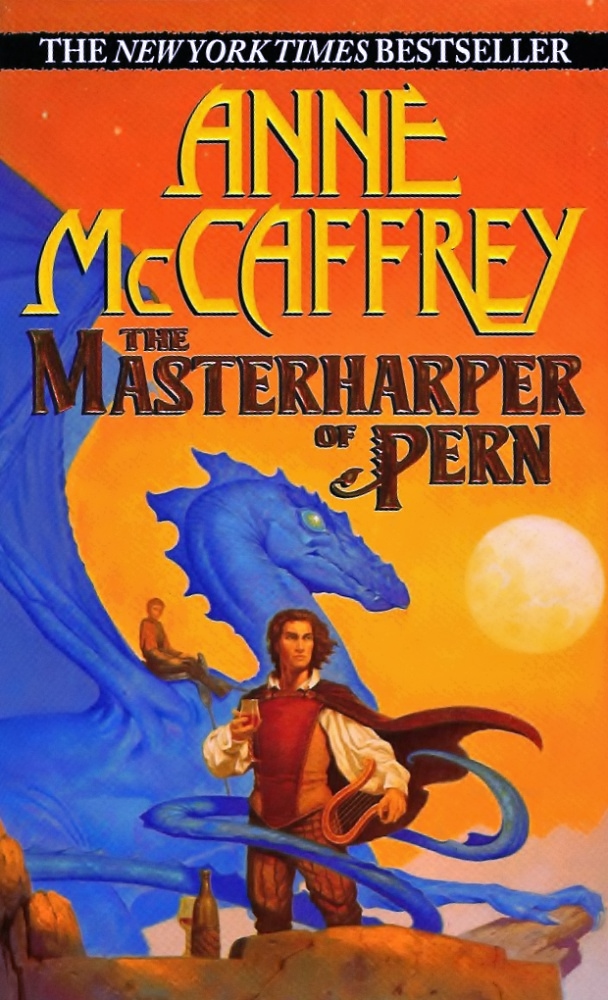
Masterharper of PernFor my first book for the Sci Fi Experience, I decided to revisit a favorite character on one of my favorite distant planets, and reread The MasterHarper of Pern by Anne McCaffrey.

As the title suggests, this is a novel centered around MasterHarper Robinton, a shining supporting character in many other Pern novels.  Covering some 50 years, the book divides roughly into three parts.  First, Robinton’s childhood and musical training, and his fraught relationship with his perfectionist composer father, Petiron.  Next, Robinton’s romantic relationship with Kasia.  And third, the rising threat of Fax, a greedy and ruthless man intent on conquering more and more of Pern.  In the background, there’s the imminent return of Thread, burning spores falling from space.  It’s a danger ignored by most, which Robinton (and the reader) knows is to their peril.

I enjoyed this read a lot, although it may be for a funny reason.  The plot was satisfactory (I think the family drama in the first part was my favorite of the three plot-threads) and the characters were universally interesting though only a few were extraordinary.  But I really loved visiting Pern.  Since this covers so many years and explores Robinton’s life from birth on, this is an excellent book for just spending time in Pern.

We get a depth and breadth experience of life in the Harper Hall that’s beyond what’s provided in the relatively time-compressed (but excellent!) Harper Hall Trilogy.  Robinton journeys to practically every corner of the continent, giving us little snippets of life in different areas.  Pern has a beautifully rich and complex culture and society, and it always feels so inviting.  I probably wouldn’t actually like living in it, but I love reading about a world where people live in rock-hewn Holds, drink klah, and learn history and lessons through Harper songs.

It occurs to me that this is probably exactly why I lost interest in this series in later books, when people rediscovered certain technology and began to remake society in fundamental ways.  When the society is the appeal, changing it takes away much of what I like about the books!

But this installment is long before any of that happens.  This is in some ways a prequel to Dragonflight, although the angle is different.  Many of the characters from that book (or The Harper Hall Trilogy) appear here in much younger forms, which was a lot of the fun of the book.  Although Robinton is a Harper, Pern’s famous dragons are still very much in evidence.  His love of dragons was a good element, and it felt convincing rather than dragged in.

There were also some drawbacks to this particular book…  After 400 Threadless turns, I found it a little implausible that certain elements of society (like respect for Dragonriders) only began to break down dramatically in the last thirty years (before everything is reshaped by the events of Dragonflight).  I understand McCaffrey wanted to tell that story within Robinton’s lifetime, but it seemed a little unlikely on timing.  More seriously, while Fax is a compelling plot-thread, the climax of the book is tied so closely to events in Dragonflight that Robinton ended up having little to do except observe…which is a somewhat disappointing choice for the ending.

Robinton himself is possibly more charming as a supporting character than as a narrator, but at the same time he has more depth and complexity as the lead.  And he is still charming and eminently likable besides.  I do love the expressive symbolism of the cover, showing him with his harp in one hand, and a glass of Benden white wine in the other!  (And I don’t care if the wine looks a little reddish, it must be Benden white.)

I wouldn’t recommend choosing this book as your starting place for Pern (you’re better off with Dragonflight, Dragonsong or possibly Moreta) but if you’ve already been to the third planet in the Rukbat system, and especially if you enjoyed meeting MasterHarper Robinton while you were there, then I can recommend this one too.

Author’s Site: http://pernhome.com/aim/

Other reviews:
265 Book Blog
And I’m finding a sad lack of reviews!  Anyone else want to share theirs?

Buy it here: The Masterharper of Pern

Back to Narnia with Prince Caspian

Prince CaspianRemember my re”reading” of the Narnia series via audiobook?  Today we’re on to Prince Caspian, book 2 (or 4, depending how you count it).  This is the second book focused primarily on the Pevensie children, Peter, Susan, Edmund and Lucy.  They make their second trip to Narnia, only to find that hundreds of years have passed during, for them, the intervening year.  They eventually join up with Prince Caspian, rightful heir to the throne, who has gathered an army of Old Narnians (fauns, talking animals, dwarfs and the like) to fight his wicked uncle, King Miraz.

This was an interesting one for getting to know the Pevensie characters better.  Peter had a bit of lordly leadership to him, but I wound up feeling pretty neutral on him, neither liking or disliking him much.  Susan was quite frankly a wet blanket.  Edmund and Lucy emerged as the most interesting and complex of the group.  Edmund has grown much more likable since his nastiness of the previous book, while that past history gives him…well, a history!  There’s still the sense that he has shadows to overcome, and that doing the right thing is, not a struggle, but perhaps a conscious choice.  Lucy of course is lovely, heart always in the right place and often having beautiful moments, but never too perfect either.

I think it was really Caspian that I liked best, or at least his story.  The Pevensies’ adventure was good, but I particularly enjoyed the flashback story of how Caspian learned the stories of Old Narnia, fled from his uncle, and met wonderful, magical creatures in the process.

I’m not quite sure how I feel about the Pevensies’ adventure in some ways…I enjoyed it, and it was thought-provoking, which is good–except that I don’t feel like Lewis explored a lot of those thoughts!  The children return to Narnia to find the crumbling, abandoned remains of the castle where they had once ruled as Kings and Queens, during the Golden Age.  They ruled for years and years, and for them all those memories are only a year ago.  To return and find that hundreds of years have gone by and the Golden Age has most decidedly past…well, it ought to prompt all kinds of sorrow about lost friends and lost times, and reflections on the meanings of our deeds, and the changes of the world.  I had some of those thoughts, but I would have liked to see the characters have more of them too!

All the same, there were some wonderful characters in here–and Aslan, of course, was a delight.  Big and solemn and immense, naturally, but we got to see him be a bit more playful now and then too. 🙂

Next on the list, Voyage of the Dawn Treader, which is one of my favorites!

Author’s Site: https://www.cslewis.com/

Other reviews:
The Bookworm Chronicles
The Overstuffed Bookcase
Living on Literary Lane
Anyone else?

Buy it here: Prince Caspian