A Humorous Reflection on Death

Today is Friday the 13th, and I’m currently hosting a Discworld reading challenge–so there’s really only one appropriate topic today.  Death.  Specifically, Pratchett’s character of Death.

There are several books with Death as a major character, and you can trust him to make at least a cameo in most of the books.  He looks rather as you might expect Death to look, a skeleton with a dark hood and a scythe.  Despite appearances, he isn’t really a frightening character.  Death never kills anyone; he appears as a guide when someone has died, which I think is an important distinction.

And did I mention also that Death is frequently extremely funny?  He talks IN ALL CAPITAL LETTERS, so you always know when he’s arrived.  He’s both insightful and a little baffled by humanity, he takes pride in his work, and he seems to be well-meaning as a rule.  One way or another, whether its telling knock-knock jokes or explaining that he really can’t take off his mask, even his briefest appearances tend to be wonderful.

The two Death-focused books that stand out the most for me are Reaper Man and Hogfather.  In the first, Death’s bosses decide he’s going soft and fire him.  He goes off to find a new job on a farm, while elsewhere no one’s dying anymore…  One of my favorites bits of the book is when he’s out cutting wheat (with a scythe, of course).  The woman who owns the farm notices that he’s very fast, but is cutting the wheat one stalk at a time.  She asks why he doesn’t cut a swathe at once, and Death is horrified.  That would be wrong–every stalk must die in its own time, with individual attention.

Hogfather is Pratchett’s Christmas book.  The Discworld’s Santa Clause equivalent goes missing (more or less) and the fabric of mythology and belief begins to unravel–despite Death’s best efforts to fill in.  This is largely focused on Death’s granddaughter, Susan.  You see, Pratchett’s Death has a family.  He has an adopted daughter, who got married and had a daughter.  Susan desperately wants to be normal, but that’s difficult when she’s inherited some of her grandfather’s talents.  There’s a movie version of Hogfather that’s very good; Susan is played by Michelle Dockery, who you might know as Lady Mary from Downton Abbey.

In other Discworld books, if a character dies you can pretty well expect Death to turn up to guide them to whatever awaits.  And odd though it may sound, it’s always fun when Death arrives.
Following a Talking Cat to a Secret Country

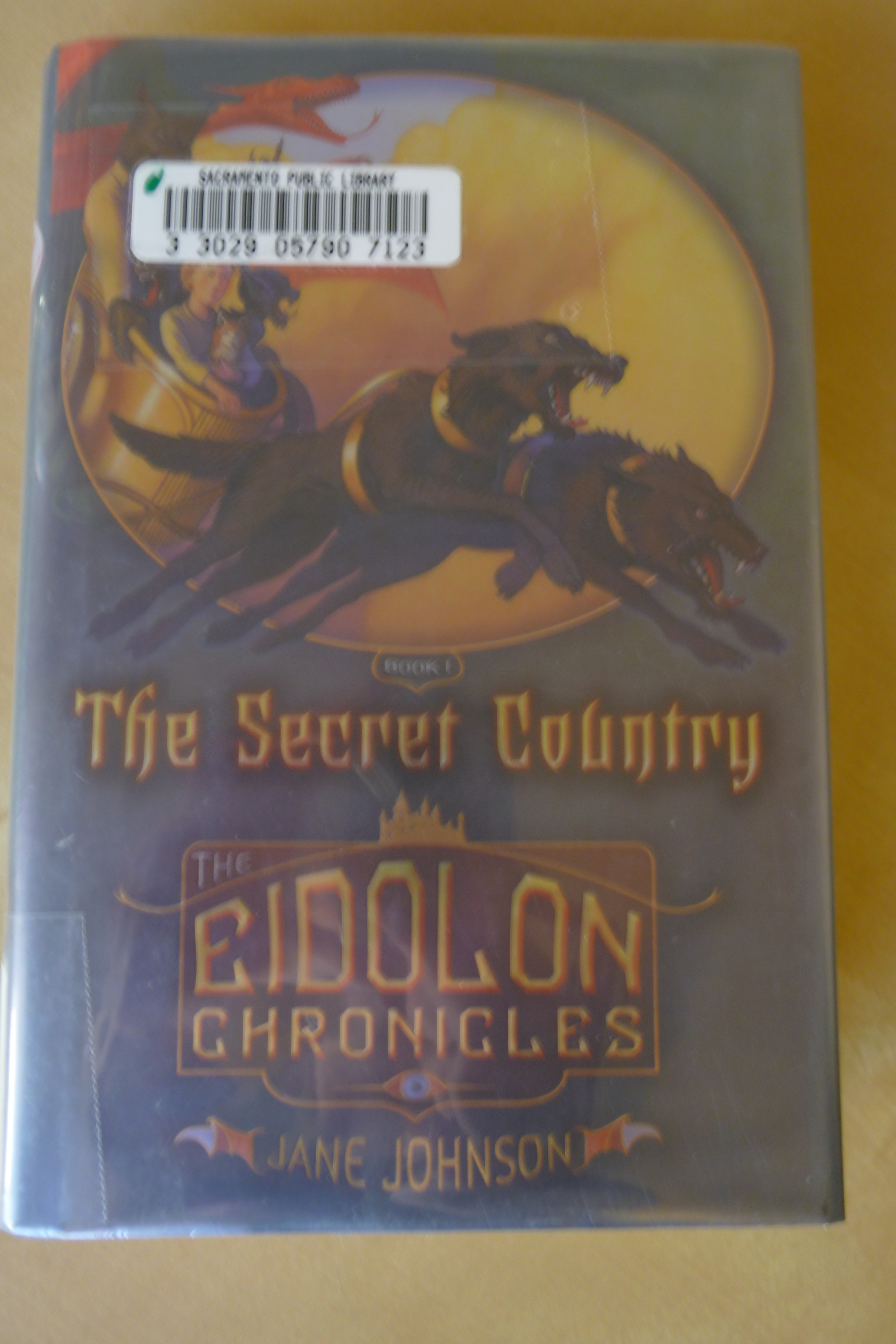
I read The Secret Country by Jane Johnson years ago–at least, I have to believe my book list when it tells me I did!  It was a book that I really couldn’t remember anything about (which is rare), except just one scene.  I decided to pick it up again, so that I could decide whether to read the rest of the books in the Eidolon Chronicles, as part of my goal to finish partially-read series.

Even though this obviously didn’t make much impression the first time 😉 I enjoyed reading it this time through.  It’s a fun kids book of a particular type–ordinary young boy confronted with magic and called upon to save a magical world.  In this case, the boy is Ben, who buys a cat at the pet store when the cat starts talking to him, demanding to be taken home.  The cat, Iggy, explains that he’s from Eidolon, also called the Secret Country, which is being threatened by an evil would-be king.  Part of the problem is that their queen is missing…and guess who turns out to be the prophesied prince.

I think talking cats always win the day.  I’m a cat person, and I’m writing a novel with a talking cat, so I’m biased–but snarky, funny cats who say out loud everything we know cats are thinking all the time…always going to be great.  I also thought Iggy had a surprising amount of depth, as a “great explorer” who knows he isn’t really very good at his profession.

Ben is a likable if somewhat generic hero, and he’s surrounded by interesting magical creatures (besides Iggy, there’s a selkie and a dragon).  Together they have to battle some truly nasty villains, and I like the way people in our world turn out to be villains in Eidolon–and they turn into horrible and creepy monsters when they change worlds.  I’m also hoping that later books in the series will have more on Ben’s sister, who so far had a very small part but has potential.

One side-note on a random point–I can’t decide whether or not to enjoy the Neil Gaiman reference when Ben is reading the Sandman comics.  I mean…yay, Neil Gaiman reference!  But at the same time, Ben is WAY too young to be reading Sandman (as is the target age group of this book).  That series was too twisted for me, and Ben is a kid.  If you’re going to reference Neil Gaiman, make it an age-appropriate book.

On the whole, a light but enjoyable read.  I am left with a question, though–the scene I thought I remembered wasn’t actually here!  I don’t think I read later books in the series…so I’m left with a mystery memory.  Does anyone remember a scene like this?  There’s a big fantasy battle, and in the middle of it a boy throws his lucky stone at the villain to protect a girl (a sister or a friend, I don’t remember), and the stone turns out to be some long-lost magical item of power.  Ring a bell with anyone?

Meanwhile, I do plan to finish out this series–maybe the scene will still pop up in a later installment after all!

Author’s Site: http://www.janejohnson.eu/

Other reviews:
The Alchemist’s Arcanabulum
Okbo Lover
Anyone else?

Going Postal Group-Read, Week One

Today is our first installment of the Going Postal group-read.  Read the details about the challenge, and see my review of Going Postal if you’d like a little more context.

We’re starting off the discussion with a few questions about the first hundred pages of the book.

1)      For those new to Pratchett or Going Postal, what are your first impressions?  For re-readers, is anything striking you this time that you didn’t notice on a first read?

I’m obviously a re-reader.  This is actually one of my first Discworld re-reads–there are so many books, I’ve mostly been seeking out new ones to explore!  I find that the satire is making a bigger impression this time around–I noticed it before, but I’m seeing it more now.  I think I get distracted by all the wonderful humor on an initial read, and while a second time through is still very, very funny, the deeper aspects of the book are coming through more clearly as well.  In just this first section Pratchett has already started touching on so many ideas, about government, truth, civil rights, collectors culture…  I’ll leave it at that for now, as I want to discuss the satire in more depth in a later post, after it’s been developed further!

2)      We’ve started to get to know our protagonist, Moist von Lipvig, by now.  What are your thoughts on him so far?

Pratchett’s makes a lot of Moist’s charm.  Everyone seems to love him, despite the fact that he’s a crook and a scoundrel–and somehow they seem to love him because of it.  I love that Moist himself directly observes this paradox.  I also feel like Pratchett is playing the reader much the way Moist plays the crowd.  We fall under the spell of Moist’s charm too.  He’s friendly, he’s pleasant, he’s completely honest about being a crook, and he has style.  I think readers always love a scoundrel, especially one who never really hurts anyone.  Pratchett makes a point early on that Moist cons people, but he doesn’t kill anyone, or even hit people over the head.  He starts out as the charming rogue that we want to root for.  Having read the book before, I know Pratchett is going to delve into this idea more, and I’m enjoying watching its initial set-up.

3)      We’ve also met quite a few rather unusual supporting characters.  Who are you most looking forward to reading more about?

Strangely enough, Moist is a relatively normal main character surrounded by even weirder figures.  Groat stands out, completely bonkers in some ways but he also has such devotion to the post office, and to the memory of how it used to be.  He’s almost a tragic figure–in a really bad toupee!

I’m also really enjoying Vetinari.  He shows up in a lot of Discworld books, and I think he gets a particularly good turn in this one.  I love that he’s a tyrant who makes things work.  I think I’m stealing that phrase from one of the City Guards books, but it describes him so well.  He’s always four steps ahead of everyone else, nothing ever ruffles him, and despite a well-deserved reputation for ruthlessness, he always makes things work for the greater good.

4)      What are your favorite quotes or moments from this section of the book?

Oh, so many…Pratchett really hits the ground running with the humor.  For instance:

Mr. Groat, re: Stanley: “Orphan, sir.  Very sad.  Came to us from the Siblings of Offler charity home, sir.  Both parents passed away of the Gnats on their farm out in the wilds, sir, and he was raised by peas.”

“Surely you mean on peas, Mr. Groat?”

By peas, sir.  Very unusual case.  A good lad if he doesn’t get upset, but he tends to twist toward the sun, sir, if you get my meaning.”

I don’t get his meaning at all, but it’s hilarious.  If he explained it, it would ruin everything.  A more philosophical favorite moment:

“It was…odd to think of all those letters heaped in that old building.  You could imagine them as little packets of history.  Deliver them, and history went one way.  But if you dropped them in the gap between the floorboards, it went the other.”

*************************************

If you’re participating in the group read, leave a comment with a link to your first post.  I can’t wait to see what everyone thinks!  And if you’re thinking you’d like to join in, it’s not a long read and there’s plenty of time still to catch up; just let me know, and I’ll send you the questions for next Tuesday’s post. 🙂

Making a Visit to Mayberry, in Honor of Andy Griffith

I was so sad last week to hear that Andy Griffith had died.  I know actors aren’t their characters, but Andy Griffith is always going to be Sheriff Andy Taylor of Mayberry for me.  The one consolation in his death is that I imagine a lot of people dropped by Mayberry last week, or have been inspired to watch the show some time soon.

I’ve actually been wandering through The Andy Griffith Show for the last several months, so I thought it would be a very timely review topic today.  I’ve probably seen almost every episode before, but it’s one of those shows I’ve caught here and there for my whole life, so I’ve enjoyed starting at the beginning and working forward through Netflix’s streaming collection.

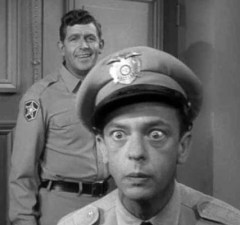
Andy and Barney

The TV show, running from 1960 to 1968, focuses on life in small-town Mayberry.  It centers on local sheriff Andy Taylor and his family and neighbors.  It’s a sweet, warm, innocent show, where the problems are real but never too big or too dark, where the characters genuinely care about one another, and where any crisis can be resolved in 25 minutes, usually through some common-sense wisdom from Andy.

The cast of characters follows one of my favorite rules for comedy, with your fairly normal lead surrounded by much funnier figures.  Deputy Barney Fife (Don Knotts) is desperate to be a real law man, intent on rules and regulations, full of big plans.  He’s at the ready with his citation pad and his gun–and one bullet, which he keeps in his shirt pocket.  Barney is a hopelessly incompetent deputy, and keeping his ego intact is an ongoing job for Andy.  Barney always tries so hard, and the feel-good nature of the show means that things always work out in the end.

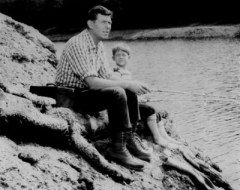
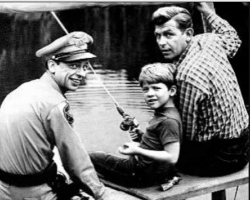
Andy and Opie

Andy is a widower with one son, Opie, played by a very young Ron Howard.  There are other shows from the same time period where the one kid character is either irritating (The Dick Van Dyke Show) or kind of a non-entity (I Love Lucy), but Opie is a genuinely good addition to the show.  He’s not just cute–he has good comedic timing, and he’s a smart kid without being unreasonably precocious.  Some of the Opie-episodes are a little saccharine, but others are really wonderful.  Sometimes Andy sets Opie straight on an issue, and other times Opie, in his child innocence, teaches Andy something.  There’s a very nice relationship between the characters, and if I was picking best TV dads, Andy would be in the top.

Other characters include the warm and kind Aunt Bea, slow but very nice Gomer Pyle, town drunk Otis Campbell (who lets himself into the jail after he ties one on of a Saturday evening), Barney’s very understanding girlfriend Thelma Lou, and a recurring host of others.  It’s an odd thing to say, but it’s really a show full of good people.  Sometimes the premise of a character-focused show is to have them fight with each other, but that’s rarely the case here.  People get themselves into trouble one way or another (Barney rushes into something, Aunt Bea is taken in by a conman, Opie and his friends have problems with a teacher), or there’s a larger conflict (the bank is robbed or Gomer loses his job), and Andy and sometimes others have to solve the problem.

It’s not supposed to be a good adjective to use, but it’s a really nice show.  It’s funny, it’s sweet and it’s positive.  It promotes good common sense values like honesty and loyalty, and while sometimes things do get gray and complicated, at the end of the day there’s right and wrong and some kind of answer.  In college, I had a roommate who liked to watch a show called Intervention, which was about exactly what it sounds like, dealing with drug users.  While she was watching that, I was watching The Andy Griffith Show, and I think we both had our world views and mental health be heavily influenced by what we were watching.  We can’t ignore the reality of the world, but we can choose what we focus on, and what entertainment populates our mental landscape.  I’d prefer to have Mayberry in mine, rather than the dark and twisted worlds that show up in a lot of modern TV.

So if you’d like to spend 25 minutes with some lovely people and enjoy a positive, simpler world, I highly recommend you visit Mayberry.  It’s streaming on Netflix, so choose any episode you like.  I suggest buying a jar of pickles and sitting down with them to watch The Pickle Story (Season 2, Episode 11), when no one has the heart to tell Aunt Bea that her prized homemade pickles are terrible…so they get stuck eating jar upon jar.  It’s one of the most popular episodes, very funny and it encapsulates the warm and caring nature of the show.  It’s a town well-worth visiting.

Saturday Snapshot: Lazy Cat Photos

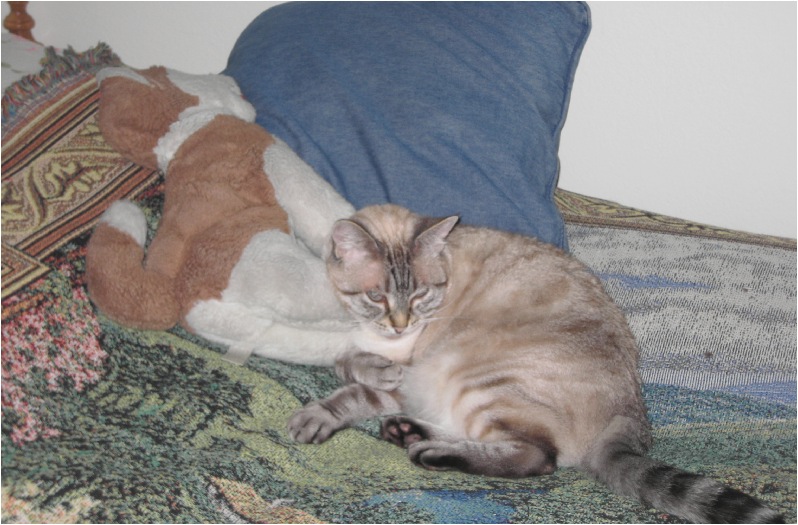
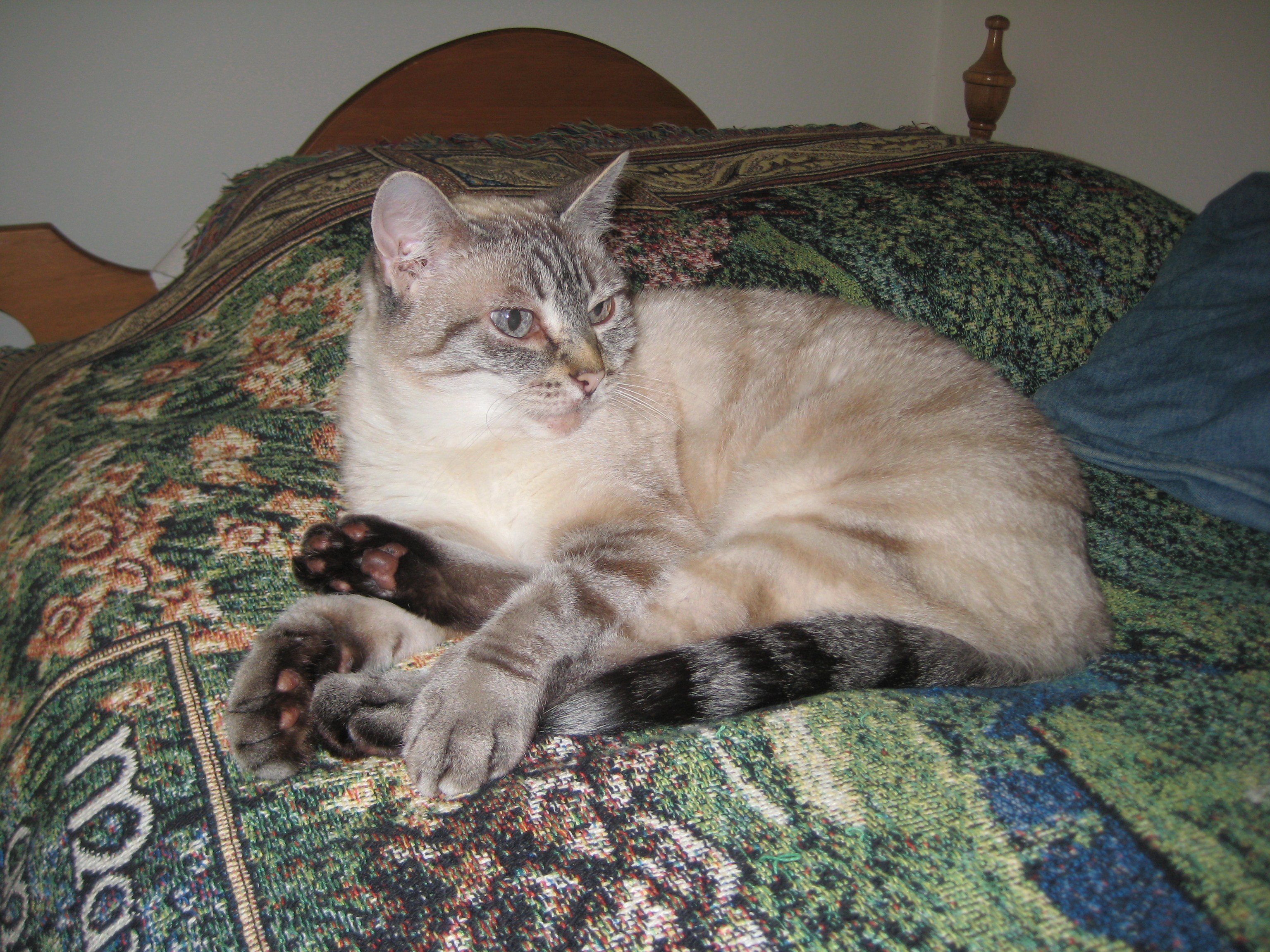
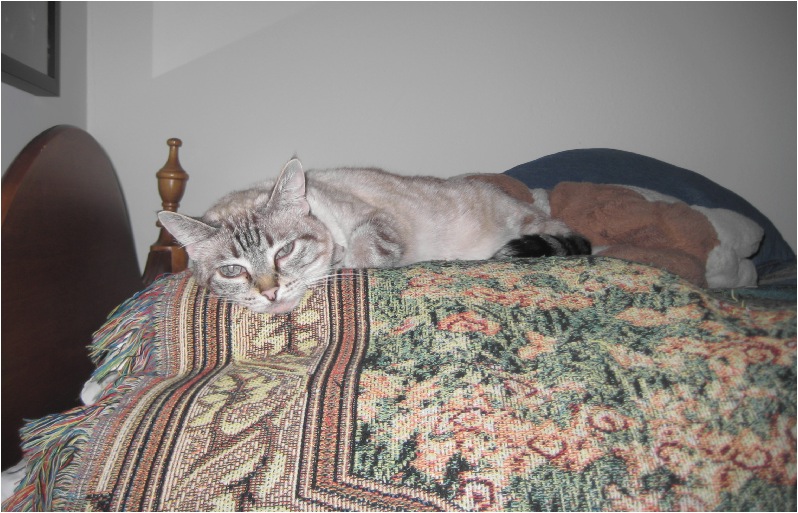
I am feeling inspiration-less with photography today.  Well, I actually have a couple of ideas, but not the time or the willpower to take the photos before I want to put this up!  So let’s have a lazy Saturday Snapshot with pictures of my cat being lazy. 🙂

Nobody here but us stuffed animals…
I don’t think I like this angle–it makes my paws look big.
Marathon napping is SO exhausting.

Check out more Saturday Snapshots on At Home with Books!