Visiting Cats

I don’t usually write about things I know.  I have never, for instance, met a fairy or a pirate.  I believe in knowing what you write–get your facts and your details straight–but drawing from my own life?  It’s rare.  So today you get a rare piece of creative nonfiction.

This is a fairly quiet piece about walking around a neighborhood–written with cat-lovers in mind.  🙂

*************************

I like to take the same walk through my neighborhood most days.  Six blocks up, left for one block, left again to go six blocks home.  It doesn’t take long to learn the landmarks—favorite houses, funny lawn ornaments, beautiful trees, fascinating gates.  And, of course, the cats. Continue reading “Visiting Cats”

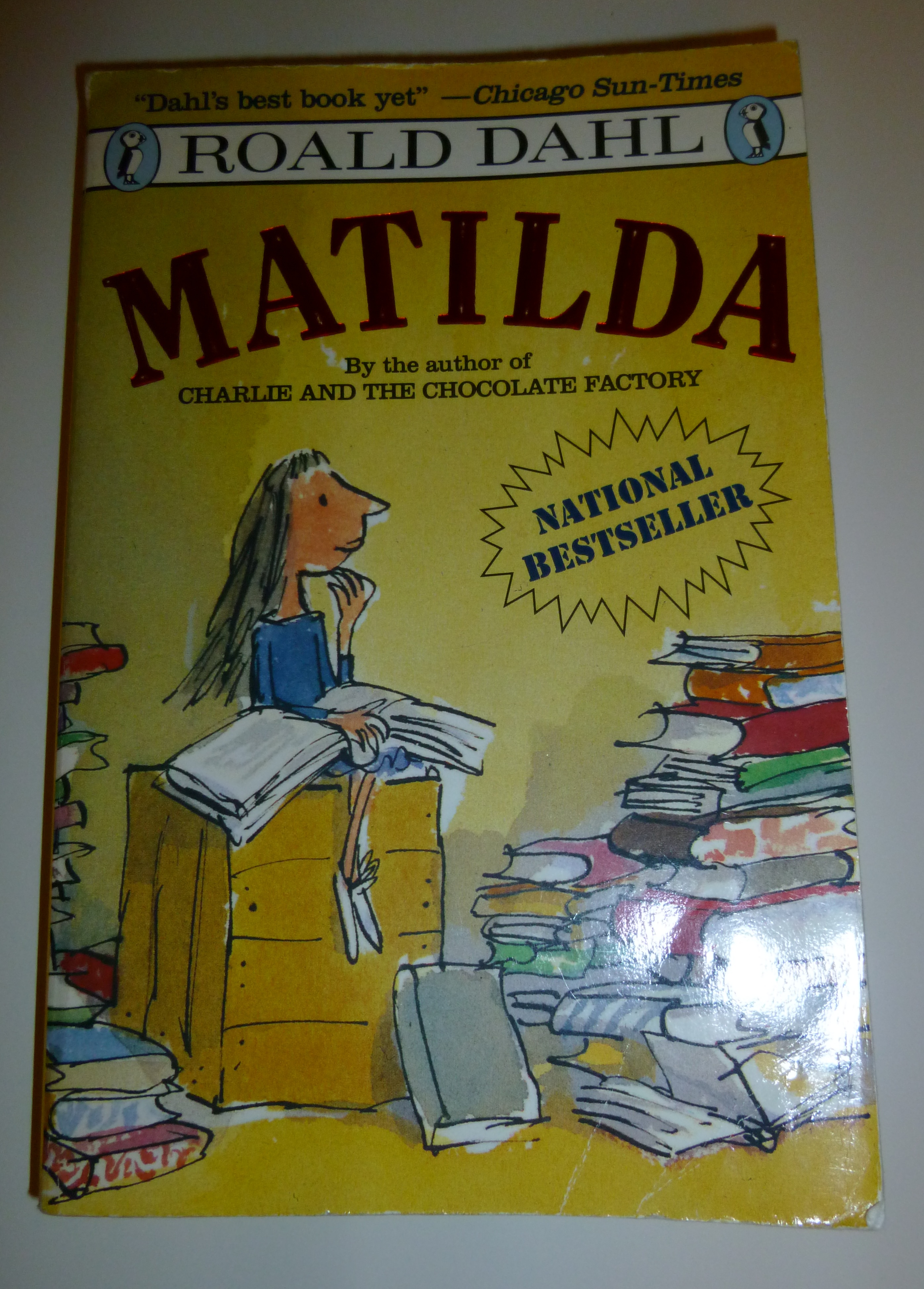
An Outrageous Tale from Roald Dahl

The books transported her into new worlds and introduced her to amazing people who lived exciting lives.  She went on olden-day sailing ships with Joseph Conrad.  She went to Africa with Ernest Hemingway and to India with Rudyard Kipling.  She traveled all over the world while sitting in her little room in an English village.

And while sitting in an apartment in California, I traveled to an English village with Roald Dahl.  The quote above is from Matilda, Dahl’s wonderful story of a very brilliant little girl.  Matilda loves books, teaching herself to read at the age of three, despite her horrid, neglectful parents who care only about television.  Matilda first shows her spirit through pranks on her parents (retaliation for their treatment of her) but really comes into her own when she goes to school.  Matilda discovers the extent of her own powers as she faces down the terrifying headmistress Miss Trunchbull, to defend her beloved teacher, Miss Honey.

Matilda must be one of those books everyone’s read, right?  If not, get thee to a library!  🙂  It’s a delightful book with Dahl’s full ability to spin out a fun and wild tale.  Everything is taken to an extreme: Matilda reads Dickens at the age of four, and Miss Trunchbull swings little girls around by their pig tails.  But that’s the comic fun of it.  Matilda’s incredible abilities make her entertaining, while her sweetness and unawareness of her brilliance make her a lovable character.  And if Miss Trunchbull was an inch more realistic, this would be a terrible book.

The handling of Miss Trunchbull, and to a lesser extent Matilda’s parents, was particularly interesting to me last time I re-read Matilda.  Maybe it’s because I just read another book about a neglectful and abusive parent–but that one was a serious treatment of the subject, and very much a drama.  Matilda is, of course, a children’s comedy.

Matilda’s parents are portrayed as being dreadful and nasty, but they don’t cause any real harm.  They don’t starve Matilda–they just make her eat TV dinners all the time.  Matilda’s mother leaves her home alone while she’s out playing bingo, when Matilda is only four.  Instead of getting hurt or kidnapped, Matilda cheerfully trundles off to the library.

At school, Miss Trunchbull never hits any children–she just picks them up by their ears, or forces them to eat monster-size chocolate cakes.  She does shut children into a cabinet, but we never see that, we only hear about it.  There’s a discussion at one point on how Miss Trunchbull can get away with everything.  Matilda explains it, “Your story would sound too ridiculous to be believed.  And that is the Trunchbull’s great secret…Never do anything by halves if you want to get away with it.  Be outrageous.  Go the whole hog.  Make sure everything you do is so crazy it’s completely unbelievable.”

I think that’s Dahl’s great secret too.  You can write about dreadful things–this is, really, a story about child abuse–but be outrageous and it becomes funny instead of disturbing.  It couldn’t really happen, it has no grounding in reality, and so it’s not upsetting.  The only time Miss Trunchbull’s actions approach reality is in her treatment of Miss Honey–and that’s what finally comes back to get her.

Whatever Dahl’s secret is, it works, and he’s given us a fun and funny story with entertaining and memorable characters.

Fantastical–and Logical

You’ve probably heard people say things like this.

“It didn’t really make sense when the character did that…but it is a story about dragons, after all.”

Or, “I thought there were some leaps in logic, but what can you expect from a story about talking mice?”

This is wrong.  When people say things like that directly to me, I argue, and I’ll tell you why.

A fantasy element and a logical flaw are two completely different things.  A story set in a world with dragons is a story in which dragons are logical.  A character who acts out of character is out of character in any world, whether they live in Brooklyn, or in a cave with dragons.

Men can’t fly.  But if Superman flies past a cry for help without stopping, the problem here is not that he’s flying.

If anything, I think fantasy and science fiction books have to be even more firm in their logic, in their reasoning, in their premise and their characters, because they are already trying to make the reader accept something which is impossible.  The reader is invited into an impossible world, and everything that goes on inside of it needs to be internally consistent and internally reasonable, or the story won’t be believable–and not because there are dragons.

A writing teacher discussed this once.  She explained certain options in what you have happen in your story:

There are impossible probabilities: men can’t fly, but if one could, we find it probable that he would use that ability to help people (or to take over the world, depending on what character we’re looking at).  It’s impossible, but once you accept the impossible, the rest is probable.

There are improbable possibilities: it’s possible for someone who has previously shown an inclination to help people to ignore someone in need–nothing in the laws of physics prevents it–but we’d find it improbable.

You can also have possible probabilities, those are well-written stories set in the real world, and improbable impossibilities, which are fantasy stories that don’t make sense.

The point is that a good fantasy has to make sense too.  Having a fantastical element in a story doesn’t excuse that story from being any less well-reasoned than the most down to earth story there is.

I think the reason this “it’s not logical but it’s a fantasy” reasoning frustrates me is that it implies that fantasy are not as well put-together as other stories.  That they’re somehow excused from having good characters and a logical plot–which is just a hop and a leap from saying that fantasies tend not to have those things.

There are plenty of fantasies out there that have solid characters and believable plots.  They’re just impossible probabilities.
Scented Flowers and Lucky Frogs

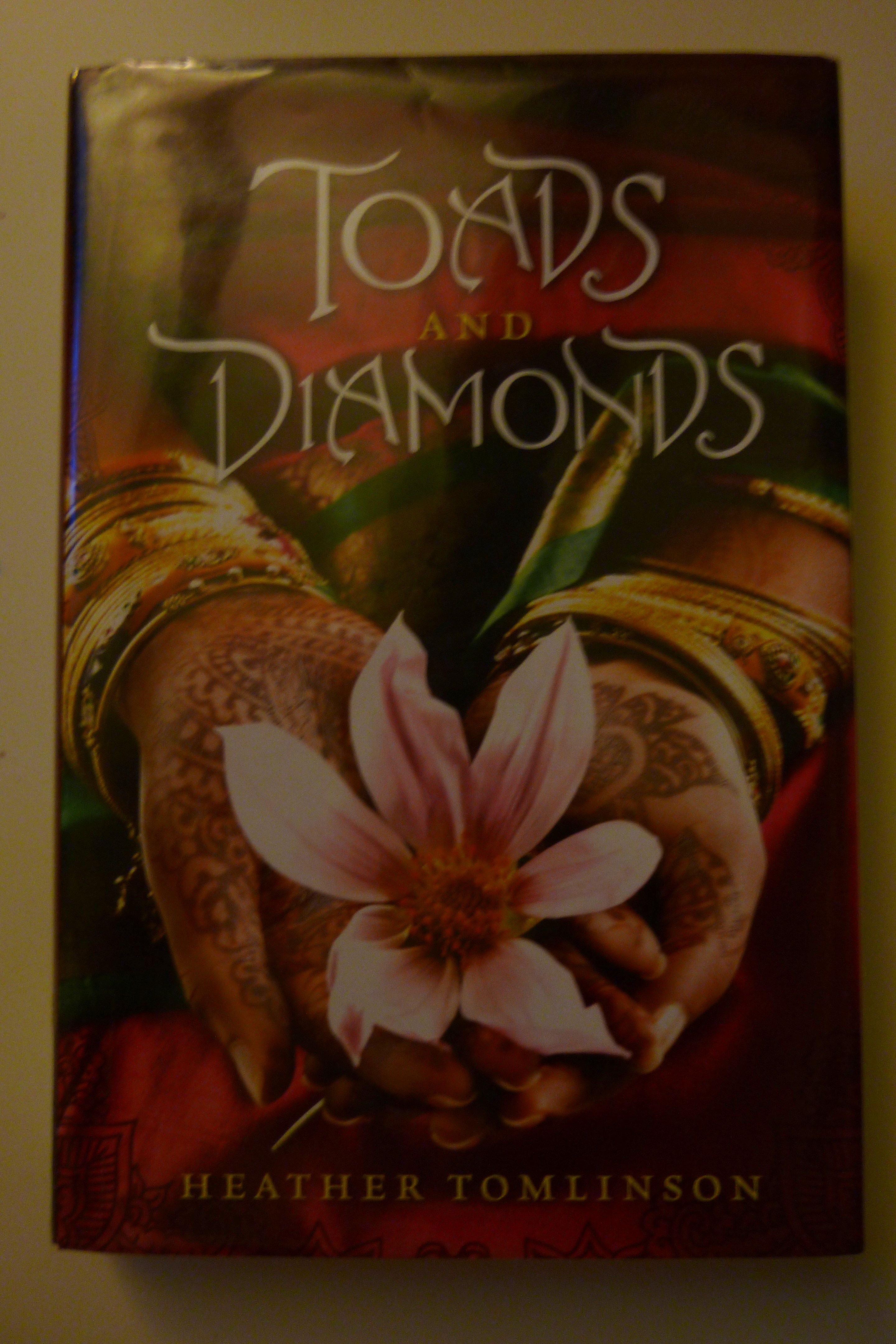
When you see a title like Toads and Diamonds on the shelf, you know you’ve found a re-told fairy tale.  I was trying to remember the title of the original–it turns out it’s usually known as “Toads and Diamonds” too (or “Diamonds and Toads”), although Perrault called it by the not at all descriptive title, “The Fairies.”

Whatever you choose to call it, the story is about two sisters (sometimes step-sisters), who each encounter a magical woman.  One sister is enchanted to drop flowers and jewels from her mouth whenever she speaks.  The other speaks, and drops toads and snakes.  Either one definitely creates a lot of opportunity for bizarre results!  I’ve read some other versions of this, and usually authors like to play with whether the enchantments are really blessings or curses.

Toads and Diamonds by Heather Tomlinson follows this trend, but does so in masterful fashion.  It follows two sisters, Diribani and Tana, who live in pre-colonial India (with some fictionalizing) and are struggling to make ends meet since their father’s death.  They’re devout followers of a fictional, polytheist religion which I think loosely resembles Hinduism.  They each encounter the goddess Naghali; Diribani begins speaking jewels, and Tana drops reptiles.

From the beginning, though, there’s a twist on the usual presentation–in their culture, certain frogs and snakes are considered lucky or even blessed.  Right from the start, it’s not so clear which sister is blessed and which is cursed.  As the story goes on, both girls find both benefits and drawbacks to their magical gifts.

I liked the character development here, as each sister comes to terms with her gift and learns about herself and her role in the world in the process.  They tell the novel in alternating chapters of limited third-person narration.  This is handled very deftly, because even though Diribani and Tana are separated for much of the book, Tomlinson keeps the two parts of the story feeling connected.  Part of that is thematically, but it’s also that each sister keeps thinking about the other, so the reader keeps being reminded of the connection.

My favorite part of this book was the atmosphere.  The Indian culture is vivid and colorful, and the details are excellently handled.  I don’t think Diribani ever speaks a jewel or a flower without a mention of what kind it is.  Potentially that could drag, but it’s not dwelled upon, just quickly described, so that you have constant images of lilies and rubies and orchids dropping past.  Tana’s snakes and frogs are described too, and we also hear about clothes, food, scents…  I love the descriptions of colors.  Rather than saying that a rug is orange and red and tan, it’s described as mango and ruby and apricot.  It brings it all much more to life, with an exotic flare.

I enjoyed seeing a familiar fairy tale put into a very different setting, especially one so vividly realized.  Highly recommended!

Favorites Friday: Male Characters

First, a bit of business: I’m going to be heading to D.C. next week (thanks to everyone who gave book suggestions!)  I scheduled posts ahead, so you shouldn’t see any drop in content.  But I won’t have internet access, so don’t be offended if I’m not responding to comments!  I’ll read them all when I get back.  🙂  Now, to today’s post…

Two weeks ago I shared five of my favorite female characters, so obviously that must mean that today it’s time for the other half of the population to have their turn.  In no particular order, a few favorite male book characters. Continue reading “Favorites Friday: Male Characters”