Romance and Religion in the Middle Ages

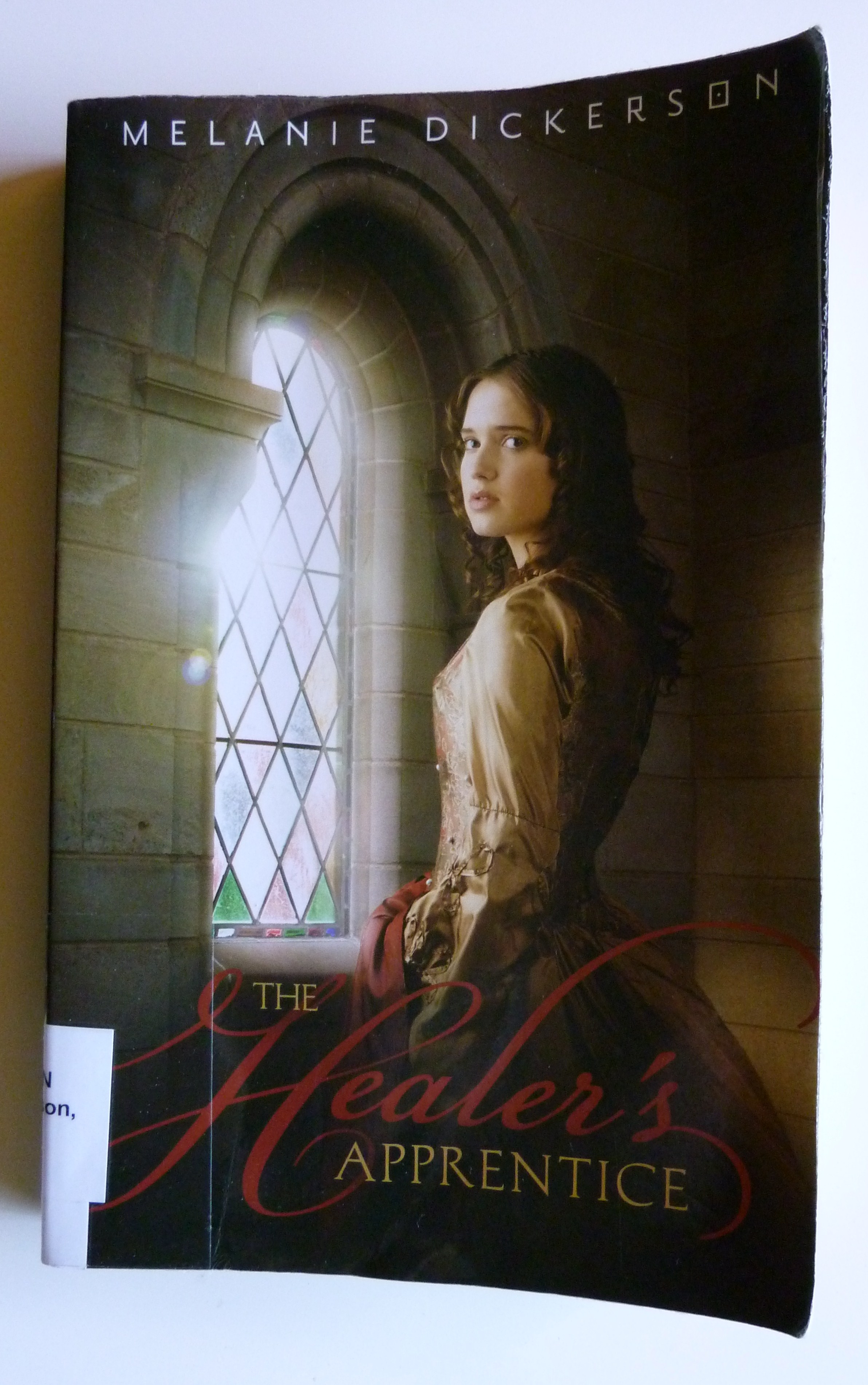
In my ongoing quest to find fairy tale retellings, I recently found The Healer’s Apprentice by Melanie Dickerson.  I’m actually not sure how, because it’s only very loosely Cinderella, and equally loosely Sleeping Beauty.  But it was a good read regardless.

The healer’s apprentice is Rose, who became an apprentice to dodge the arranged marriage her mother wants for her.  The setting is Germany, somewhere in the Middle Ages.  There’s a little bit of fairy tale in it, but it reminds me much more of Karen Cushman‘s books, which so vividly bring history to life (another review, perhaps).  Rose finds herself torn between the two sons of the local baron, Wilhelm and Rupert.  Meanwhile, she’s also trying to figure out if a healer is really what she wants to be.  In the background, there’s a story about an evil magician stalking Wilhelm’s betrothed.

There’s a little bit of a Mary Sue situation here, where every man seems to be intensely interested in Rose.  But a couple potential interests turn out otherwise, and Rose goes through enough ups and downs in her romances that it’s not too painful a Mary Sue.  Besides, I can deal with it better when the heroine is actually a decent person with some admirable character traits (unlike, say, Twilight).

Rose and especially Wilhelm struggle a lot with trying to do the right thing.  Part of this is centered around their religious faith, which I found very interesting.  You (or at least, I) don’t often see religious characters in fiction, especially not in something that has even a mild fairy tale element to it.  I thought Dickerson handled it very well, in that their religious convictions seem plausible for their time period, without feeling archaic either.  Some of the morality tales and religious beliefs of past centuries don’t sit well with modern concepts, but there was a good balance here.

On the whole I enjoyed the book–better than Sleeping Helena, not as good as Spindle’s End (although a more satisfying romance)–and all in all a good read.

Author’s Site: http://melaniedickerson.com/

A Dragon, an Ogre, and a Mystery

I just finished Gail Carson Levine’s latest book, A Tale of Two Castles.  I feel something of a personal attachment to this one–I read her blog with great dedication, and she’s been talking about this one coming out.  She’s also been talking about her travails right now with writing the sequel.

So I admit I was predisposed to like this one.  And it really is a fun, sweet tale.  It’s the story of Elodie, a poor farmer’s daughter who comes to the big city of Two Castles hoping to apprentice as a mansioner, an actress.  When she can’t pay for her apprenticeship, she ends up instead as assistant to the local dragon, and finds herself enmeshed in a mystery surrounding the local royalty and the local ogre.  Someone is threatening Count Jonty Um the ogre, and he enlists the dragon and Elodie to investigate.

I particularly enjoyed the dragon and the ogre.  Meenore the dragon is a detective, occasionally in the mold of Sherlock Holmes, as well as a rather creative entrepreneur, selling toasted food and heating up the blacksmith’s fire.  Meenore is referred to throughout the book as IT, rather than he or she.  Dragons apparently have gender, but don’t share the details on what he or she is, so the appropriate pronoun is IT.  I think this is a clever device that then got overused a bit, to the point that I nearly forgot Meenore had a name, IT’s referred to so often as IT.  But I like the dragon, and ITs gradually warming relationship with Elodie.

I also like the shapeshifting ogre, usually referred to as His Lordship.  I have a soft spot for characters who are feared and misunderstood by the people around them just because they’re different.  It’s that Phantom of the Opera thing.  His Lordship is kind and shy, but the people of Two Castles can’t seem to get past the fact of his ogreness.

Elodie herself is a pretty good character.  She’s only twelve, and sometimes it feels like it.  She goes off on flights of guessing about the possible solution to the mystery.  These often feel far-fetched, and I can’t quite tell if we’re meant to take them seriously, or if we’re meant to interpret them as Elodie having a wild imagination.  But aside from that she’s a pleasant girl trying to make her way in the world and do the right thing, who grows in her role as dragon’s assistant.

My library copy of this is labeled “Mystery,” and I suppose it is one, but it doesn’t really feel like it to me.  I wouldn’t recommend thinking too hard about the mystery.  If you focus instead on the book as Elodie’s adventures, which involve some mysterious happenings to solve, I think you’ll get on better.

If you’ve never read Gail Carson Levine, I have to say, go read Ella Enchanted because that one just has to be read.  If you’ve already read Ella, then by all means give A Tale of Two Castles a read!

Author’s site: http://gailcarsonlevine.com/

No Goddesses–Have a Child Genius Instead

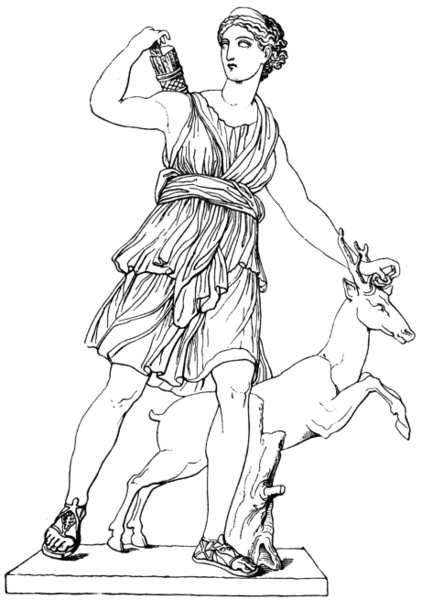
Artemis Fowl by Eoin Colfer was one of those books I’d heard of, but knew nothing about.  I knew it was a popular series and…that was about it.  If I had had to guess, I would have assumed it had some relation to Greek mythology, maybe something about warriors and hunting.  I mean, toss together the Greek goddess of the hunt and a bird, what are you likely to get?

Not Appearing in This Book

An evil child genius, as it turns out.  I never did find a connection to Greek mythology (or figure out why the main character, especially a male one, is named after a Greek goddess), and no birds.  Artemis Fowl is a very wealthy twelve-year-old bent on conquering the world–or at least making even more money off of it–and isn’t scrupulous about how he does it.  His new scheme is to exploit fairies–a whole new market!

I really enjoy the concept of the fairies.  There’s a whole community, mostly living underground, hiding their existence from humans.  They have plenty of the magical and mystical powers that fairies traditionally have, but in other ways they’re treated as simply another intelligent species that sprang up on the Earth the same as humans.  I suppose that makes sense–why should fairies consider themselves myserious and otherworldly, after all?  I think you can consider this a fantasy, but in some ways it feels more like science fiction.

So I liked the idea of the fairies…but somehow I couldn’t build up much interest in the fairies as individuals.  I don’t know why, and this may be totally my thing and not relevant to someone else.  Artemis’ scheme is to kidnap a fairy, and he does–Holly Short, a member of the fairy police force.  I feel as though I should like her more than I do–she’s a tough female character trying to prove her worth in a male profession.  Put that way, she has plenty in common with Tamora Pierce’s Alanna, who has to be in my top ten favorite characters ever.  But maybe Holly felt too much like a stereotype–fine for her type, but too much a type and not an individual.

Holly’s boss (whose name I can’t remember or find!) feels even more like a stereotype: the crusty old chief with a gruff exterior and a secret heart of gold.  He’s like Perry White, minus the “Great Caesar’s ghost!”  I did enjoy Mulch, a rather creative criminal, and Foaly, a technical genius centaur with a paranoia that humans are spying on him.  But even they seemed like they should be more interesting than they were.

I liked the human characters better, although they were probably types too.  Artemis is pretty interesting.  Evil child geniuses are fun, and Colfer played a bit with the bizarre combination of a brilliant intellect in someone who really is still twelve.  There was also some nice ambiguity about how evil Artemis actually is.  Ruthless, definitely, but it wasn’t always clear whether his motivation truly was profit, or something more noble.  I like the grayness.

I also liked Butler, Artemis’ faithful sidekick and the muscle of the team.  The Butler family has been serving the Fowl family for centuries, and may be the origin of the term “butler.”  That’s fun.  Butler is enormously proficient at fighting, fiercely loyal to Artemis…but once in a while we get a glimpse that he can think for himself too.  Again, I like the grayness.

So I was up and down about the characters.  The plot was pretty good, although since it hinged on Holly’s kidnapping, it probably would have worked better if I had cared about her more.  But it was an enjoyable book, and I can see how someone else who connected better with the characters would really like it.  For myself, I’m glad that now I know what it’s about (no Greek goddesses–check) and I might pick up the next book eventually, though I haven’t rushed to get it.  But maybe some time, especially to see if the characters develop more as the series goes on.

Anyone else care to share an opinion?  🙂  I’d love to hear it!

Author’s site: http://www.artemisfowl.com/

Why Does All the Food Have to Be Sad?

Every so often, one book seems to make its way through several of the blogs I read.  One of these books, a few months ago, was The Particular Sadness of Lemon Cake by Aimee Bender.  Since I’d already read the jacket description in Green Apple Booksellers in San Francisco when I was visiting over New Year’s and been intrigued, I decided to request it at the library.

Six months later, I finally read it.  When I joined the hold list, I was around #130 in line.  Good thing I wasn’t in any particular hurry!

It was a good book and I’m not sorry I let it sit in my hold list long enough to get all the way though the LONG line…but I’m also not sorry I didn’t buy it six months ago, despite my great fondness for Green Apple.

The book is about Rosie, who, whenever she eats, can taste the emotions of the people who cooked the food.  She discovers this talent/curse when she eats the lemon cake her mother made for her ninth birthday, and realizes that her happy-seeming mother is…well, depressed is simplifying–empty, unfulfilled, desperately seeking something else in her life and probably wanting someone else to provide it.

The book follows Rosie into adulthood, as she grapples with eating and with the hidden tensions in her family–revealed only in their food.

I love the premise–I was so intrigued by it at Green Apple.  I do feel it lived up to the promise of that premise, at least in how that part of the book was handled.  Rosie develops a complex palette for food–she can tell where the ingredients came from, has insights about every stage of the process, sees into the hidden emotions of the people who touched it all along the way, often seeing the things that they don’t know themselves.  I didn’t understand why she couldn’t cook her own food–where’s the harm in feeling your own emotions?–but when she does finally try that, it reveals hidden feelings in herself that are even more terrifying than other people’s.

I did have some problems with parts of the book, though.  People seem to only ever transmit negative emotions into food.  Maybe I’m just a hopeless idealist, but I refuse to believe that the vast majority of people are leading desperately unhappy lives, secretly or otherwise.  In all the food she eats throughout the book, I can think of only one example where the people making the food seem to be truly happy.  Rosie also finds one restaurant where she loves the food, but it’s not so much that the cook is happy as that she really loves food, and puts that into the dishes.

So I had trouble with that part.  I also don’t see why it was necessary.  Being overwhelmed by other people’s emotions every time you eat is compelling enough–being hit by other people’s positive emotions would be difficult too, and maybe even more interesting.

The second part I bumped into some problems with was Rosie’s brother, Joseph.  He possesses his own strange talents which, if you take it all at face-value, make tasting emotion in food seem comparatively tame.  At the risk of a slight spoiler, I’ll mention that he disappears most of the way through the book.  I won’t spoil how, except to say that it’s part of that strange talent.

This, odd though it may sound, is where I found the book implausible.  Not the way Joseph disappears–I was willing to accept that as the universe of the book–but the way other people react.  I’ve read other books about family members who disappear, probably kidnapped or run away, and the reaction here just didn’t feel right.  He was twenty or so when it happened, but there still should have been quite a lot of police calls, a lot of trying to hunt down anyone he had talked to or knew who might have an insight, a lot more searching.  Deciding to live in a fantasy where he’s off skiing the Alps and might come back any time just didn’t ring true to me, even for these rather odd characters.

I am probably over-exaggerating the issues of the book.  Do you ever find it’s sometimes easier to explain the parts that didn’t work than the parts that did?  Well, let me wind up by saying I did enjoy the book, and if you’re intrigued by the premise it’s worth a try.  You might want to lay in a Terry Pratchett book or two, though, in case you find yourself needing a laugh by the end.

Author’s site: http://www.flammableskirt.com/ (I don’t know what it means either…)
Making Music for Dragons

I’ve been thinking about favorite books I haven’t yet reviewed to see if I’m missing anyone important–and I thought of Pern.  The Pern books are Anne McCaffrey’s epic dragon series, and if you’re a fan of science fiction or fantasy, you probably know them.

Pern is a distant planet where survival is complicated by Threads, strange burning filaments that fall from the skies at intervals, consuming anything they touch.  Pern is protected by dragons and their riders, who burn Threads from the skies before they can touch the ground.

There are a large number of books within the Pern series, some more or less connected to each other, spanning a couple thousand years of Pern history.  My particular favorites are the Harper Hall Trilogy–and don’t worry, you don’t have to know the entire complex history of Pern to read them!  The Harper Hall Trilogy focuses mainly on Menolly, a girl living in a small fishing village.  She dreams of making music, but in her conservative village, girls aren’t supposed to become harpers.

Harpers are the musicians, teachers and historians of Pern.  The society relies mainly on oral history, and harpers write and teach the music that records Pern’s history and stories.  Every village (or hold) has a harper to teach the children and provide musical entertainment.  The harpers train at the Harper Hall, a sort of musical boarding school and university.

Menolly, forbidden to write music but unable to resist, runs away–and discovers fire lizards.  Fire lizards are like miniature dragons, and wouldn’t it be incredible to have a miniature dragon for a pet?  Menolly’s adventures with music, dragons and surviving are exciting for the first volume.  The second volume takes Menolly to the Harper Hall, to meet a new cast of excellent characters and to see more of Pern.  The third book focuses on Menolly’s friend Piemur, who has his own adventures.  I have to admit I found them less engaging than the first two books, but still good.

One of my favorite parts of the Pern books is the complex society McCaffrey has created.  Dragons and Harpers are just one part of it.  Everyone has their own place, as Lord Holders or craftsman or runners.  Pern has fairly minimal technology, perhaps on a level with the Middle Ages, but they have skilled craftsmen and their own methods of keeping society functioning–and it all seems to work!

The other books in the series are mostly targeting an older audience, so while the Harper Hall Trilogy could be in the kids’ section, the others are at least YA.  I like a lot of the chronologically-early Pern books.  In the later books in the series, Pern rediscovers its history as a very far-flung Earth colony, and begins to rediscover their lost technology.  Frankly, I think it was a mistake, because complex, fascinating Pern begins to increasingly resemble Earth–which is just not as interesting to read about.

But the Harper Hall Trilogy is wonderful.  And if you don’t want a pet dragon now, you will by the end!