I missed last year’s Murder on the Orient Express in theaters, so when I saw it at Redbox while waiting in a long line at the grocery store, the same day I was having a monthly movie night with friends–well, serendipity! I’m glad to have seen it and I enjoyed watching it, and I’m glad I watched it with my friends. Because I had some thoughts to discuss.
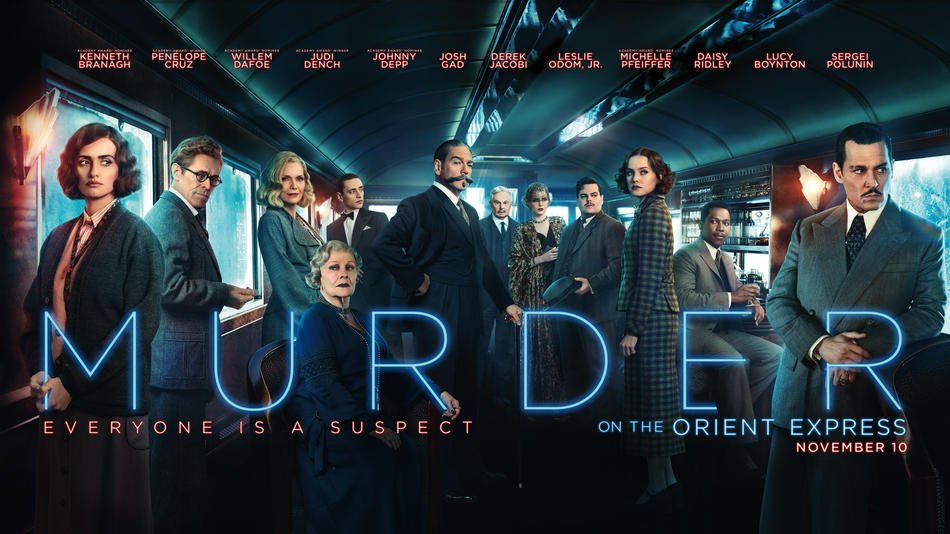
Based on the classic Agatha Christie novel, the story centers around a murder on a train, the titular Orient Express. The train is trapped by an avalanche in the middle of nowhere, so when a body is found in a sleeping compartment in the morning, it appears the murderer must be one of the passengers. Fortunately for the forces of truth, justice and mystery-writing, among the passengers is the famous Hercule Poirot, who sets out to get to the bottom of the mystery.
So much is true in the book, the recent movie, and the 1974 version (also enjoyable). This one also brings star power equal to the old one, with Kenneth Branagh playing Poirot with truly remarkable mustaches (always plural with Poirot); Johnny Depp doing a rather sinister turn as the murder victim; and Judi Dench as Princess Dragomiroff (inevitable casting, as it felt strange in the older movie that the old British dame wasn’t Judi Dench). Penelope Cruz, Michelle Pfeiffer and Daisy Ridley also appear.
Branagh played a more nuanced, less theatrical (barring the mustaches) Poirot, and I’m not sure how I feel about that. This Poirot was exhausted by the horrors of the crime-solving life, had a secret love in his past, and was probably OCD. Usually I’m in favor of more nuance and depth to characters…but Poirot’s theatricality and delight in his work is part of his charm! If I can get over the “but that’s not right…” aspect of things, it was a very good character who was interesting to follow through the movie–though I will maintain that the secret past love seemed wildly unnecessary, and an example of the movie industry trying to horn romance in everywhere. (I’m pro-romance! I’m just also pro-the occasional character who doesn’t have that motivation.)
Likewise the movie made some different choices in the nuances. There was some extra drama thrown-in, with an added stabbing and more dramatic confrontations. Which were exciting–but I rather liked the cerebral quality of the original. The motivations behind the murder also felt more intense, more emotion-driven than the considered justice of the original. None of it was bad as it was in the new movie–or as it was in the original. They’re just different.
I do prefer the way the modern movie opened compared to the earlier one (both add-ons that weren’t in the book). The old one gives away much of the mystery in the first five minutes with a kind of prologue, while the new one lets us learn connections as Poirot makes them, which I greatly prefer. The new movie instead opens with a small-scale mystery which Poirot solves within perhaps ten minutes, which provides a bit of early drama and, more importantly, effectively introduces us to the lead character in a vivid way.
So I guess the conclusion was that it was good–but different–but good. And if you’ve never read the book or seen the previous movie, then it’s just good. And contains a very clever twist on the murder that (I hope) hasn’t been spoiled for you yet!
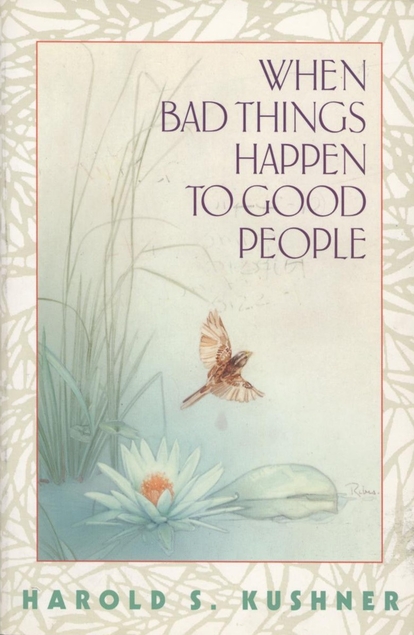 I first heard of this book many, many years ago, and it sounded intriguing. I had the title wrong, though–until I actually picked it up off a library shelf, I always thought it was Why Bad Things Happen to Good People. Now that I’ve read it, I think that title would have been too presumptuous for this thoughtful, philosophical book that doesn’t try to give easy answers: When Bad Things Happen to Good People by Harold S. Kushner.
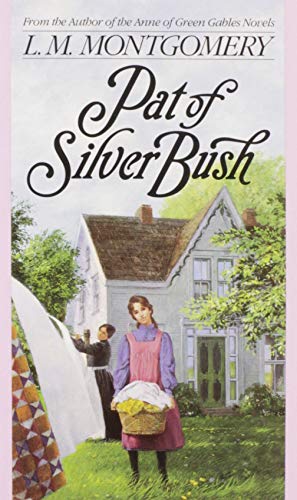 I’ve been gradually revisiting L. M. Montgomery’s novels lately, most recently her Pat duology: Pat of Silver Bush and Mistress Pat. These were two of her later books, published in 1933 and 1935 respectively, and some of the darker strains of her later life are already coming through. There’s still much that is funny, charming and hopeful, but there are definitely some deeper shadows here than in earlier books.
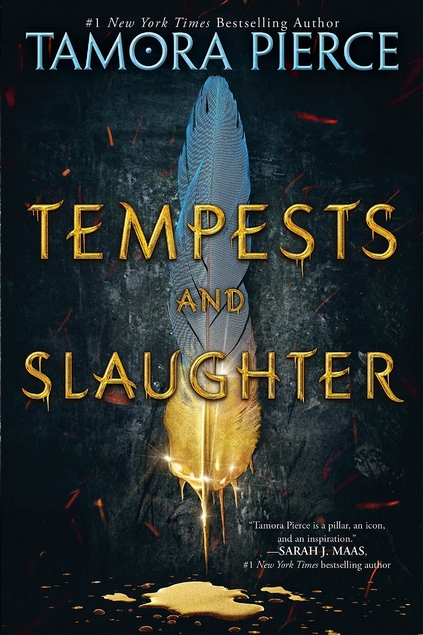 I mentioned recently that the long (loooong) awaited new Tamora Pierce book was finally out. I got it from my library, and then (because life is busy) spent a couple weeks reading it. So how did Tempests and Slaughter, Book One of the Numair Chronicles, turn out after all this time?
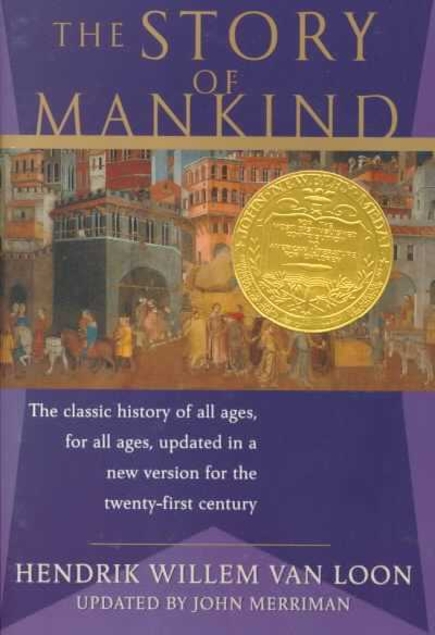 I recently confronted the juggernaut of Newbery Medals, the very first winner from 1922 and a seriously massive piece of nonfiction: The Story of Mankind by Hendrik Willem van Loon. I actually got this out from the library months ago, was decidedly taken aback by how thick it was, and returned it unread for a later day. This time I bought the audiobook on Audible (14 hours!)–and to my pleasant surprise, found it a quite engaging read.
 Tales of the Marvelous