Catching Up with Catching Fire

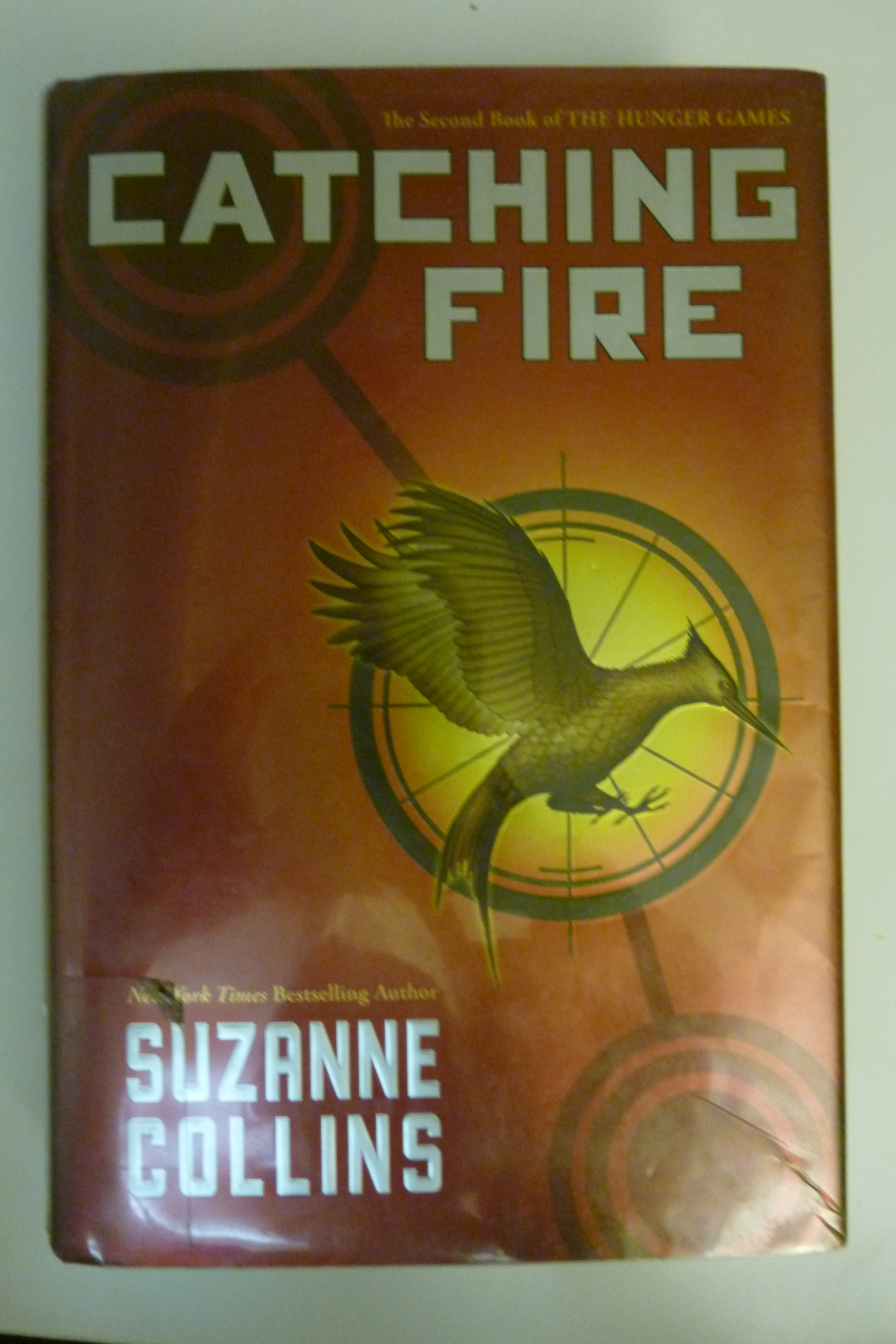
I just finished Book Two of the enormously popular Hunger Games trilogy, Catching Fire by Suzanne Collins.  Read my review of Book One here.  Be warned, there will be spoilers for the first book, going forward!

I enjoyed Catching Fire, and it had much of the same page-turning quality of the first book.  In fact, I was late for something because I wanted to finish reading the last chapter!  However, enjoyable as it was, it didn’t feel as strong as the first book.  My hope is that this is just the common fate of the Part Two’s of many trilogies.  The first one is new and different and introduces you to everything; the third one is the final epic battle.  The second one is doomed to be primarily a bridge between the two.

The book felt somewhat unfocused, and it may be because of everything it was trying to do, as that bridge for the trilogy.  It begins after Katniss and Peeta have returned to District 12 as the two victors of the Hunger Games.  Quite unintentionally on their part, their dual victory has become a symbol of resistance against the Capital.  The Districts are growing increasingly restless, with rumblings in some and actual uprisings in others.  The first part of the book is mostly about Katniss and Peeta’s attempt to carry on their (mostly) fake love affair, in an effort to present themselves as not at all trying to incite rebellion.  The second part of the book takes us through the 75th Hunger Games.  In the midst of it all, Katniss is still trying to choose between Gale and Peeta, and to decide if she even wants a romance with either, and to figure out how to keep the people she loves safe as the world gets even more precarious.

I think this book definitely succeeded in raising the stakes.  Between the beginnings of a revolution and the Capital’s much more targeted enmity towards Katniss, the scope of the conflicts seems larger.  The dangers feel bigger (and considering it was literally life and death before, that’s impressive).  The threats seem more far-reaching.  I never had to worry about Gale in the first book.  In the second book, anyone could be a victim.  In terms of building towards a climax in the third book, I think this book does do really well.

Catching Fire also carries on Collins’ skill at developing characters in pretty much no time at all.  We get to know some characters from the first book better, and get to meet a lot of interesting new characters too.

I was a little disappointed when it became clear we were going back to the arena for another round of the Hunger Games, because it felt too much like it would be a repeat.  In some ways it was, but it was also very different in very interesting ways–although I was hoping for more dramatic twists than actually developed.

As much as I liked a lot of the characters, I somehow liked Katniss less in this book, and I can’t quite put my finger on why.  Maybe it was that some of her reactions didn’t make her quite as sympathetic.  Maybe it was because there’s clearly something really big developing in terms of a revolution, and Katniss can’t quite seem to figure out how to engage with it, or even if she definitely wants to.  Maybe it’s that she still can’t quite commit definitely to Gale or Peeta, even though she has both time and opportunity (unlike in the first book).  Maybe it’s that she completely fails to see a clue to the twist ending that I found almost painfully obvious (though maybe that’s the author’s fault).  I still like Katniss–but something was a little bit off, and I wasn’t staunchly with her in the same way I was in the first book.  On the other hand, I might’ve liked Peeta better–except I can’t quite decide if he’s skirting too close to being too good.

I think it’s the unfocused plot and whatever it is that’s bothering me about Katniss that leads me to rank this one a bit below the first one.  But don’t get me wrong–it’s still better than a lot of other books!  I’m really hopeful for the conclusion to the trilogy.

And I will say this for Catching Fire–there’s a fantastic moment in here that is probably my favorite of the trilogy so far.  I don’t want to give it away for anyone who hasn’t read it, but for those who have–it’s the interviews with Caesar, especially Peeta’s.  Brilliant.

Author’s site: http://www.thehungergames.co.uk/
Romance and Religion in the Middle Ages

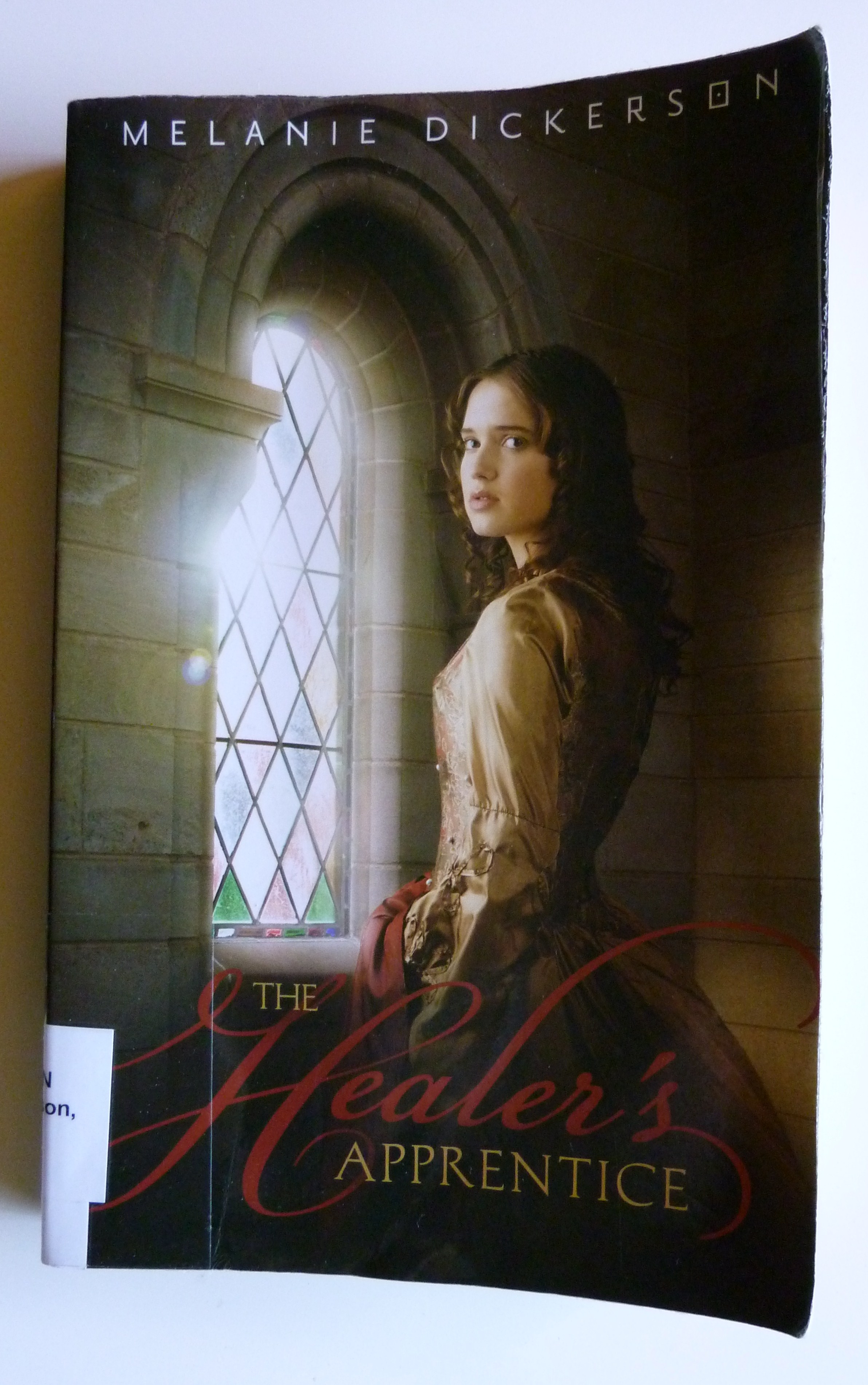
In my ongoing quest to find fairy tale retellings, I recently found The Healer’s Apprentice by Melanie Dickerson.  I’m actually not sure how, because it’s only very loosely Cinderella, and equally loosely Sleeping Beauty.  But it was a good read regardless.

The healer’s apprentice is Rose, who became an apprentice to dodge the arranged marriage her mother wants for her.  The setting is Germany, somewhere in the Middle Ages.  There’s a little bit of fairy tale in it, but it reminds me much more of Karen Cushman‘s books, which so vividly bring history to life (another review, perhaps).  Rose finds herself torn between the two sons of the local baron, Wilhelm and Rupert.  Meanwhile, she’s also trying to figure out if a healer is really what she wants to be.  In the background, there’s a story about an evil magician stalking Wilhelm’s betrothed.

There’s a little bit of a Mary Sue situation here, where every man seems to be intensely interested in Rose.  But a couple potential interests turn out otherwise, and Rose goes through enough ups and downs in her romances that it’s not too painful a Mary Sue.  Besides, I can deal with it better when the heroine is actually a decent person with some admirable character traits (unlike, say, Twilight).

Rose and especially Wilhelm struggle a lot with trying to do the right thing.  Part of this is centered around their religious faith, which I found very interesting.  You (or at least, I) don’t often see religious characters in fiction, especially not in something that has even a mild fairy tale element to it.  I thought Dickerson handled it very well, in that their religious convictions seem plausible for their time period, without feeling archaic either.  Some of the morality tales and religious beliefs of past centuries don’t sit well with modern concepts, but there was a good balance here.

On the whole I enjoyed the book–better than Sleeping Helena, not as good as Spindle’s End (although a more satisfying romance)–and all in all a good read.

Author’s Site: http://melaniedickerson.com/

Watching the Hunger Games

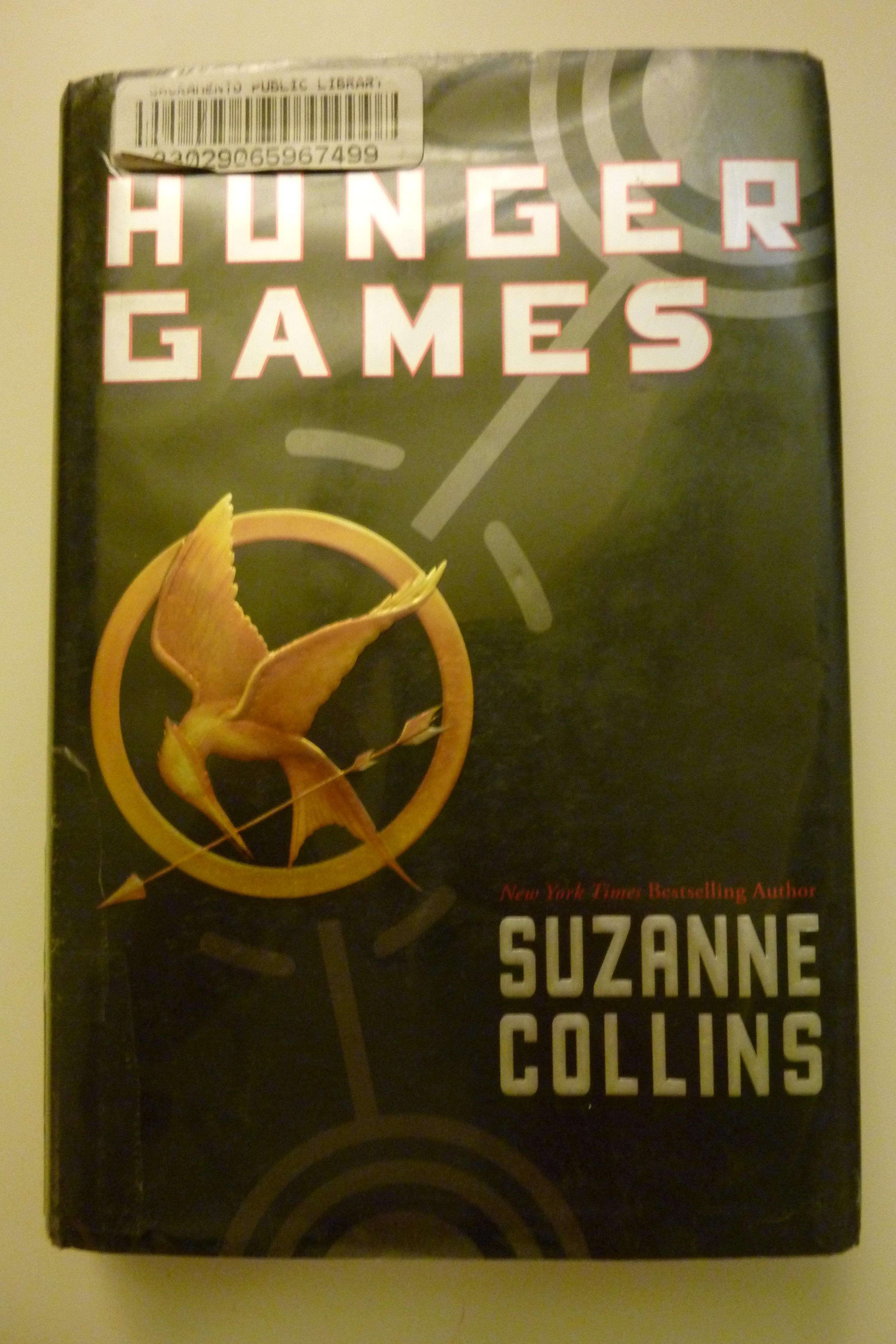
If you follow any other YA book blogs, odds are you’ve heard about The Hunger Games by Suzanne Collins.  They seem to be the latest sensation in YA literature.  I’m coming to the game (so to speak) a little late, as I finally picked up The Hunger Games just recently.  It’s darker than my usual fare–but it turned out to be excellent.

In case you haven’t heard about it, The Hunger Games is set in a future dystopia, where society is organized into one wealthy capital and twelve surrounding districts; it reminds me somewhat of ancient Rome and its provinces, and of South Africa’s townships.  Seventy-four years previously, the districts rebelled against the capital.  They were crushed, and ever since have been forced to participate in the annual Hunger Games.

A teenage boy and girl is selected by lottery from each district.  The 24 tributes are placed together in an enclosed landscape, where they have to fight nature–and each other–to survive.  Twenty-three will die.  Wealth will be showered on the single victor and his/her district.  And the whole thing is televised: entertainment for the capital, mandatory viewing in the districts.

The book centers on Katniss; when her beloved twelve-year-old sister is selected for the Games, Katniss desperately volunteers in her place.

You see by now why this seemed darker than what I normally read?  It is a very grim premise–but a brilliant book.  And not so unlike other things I’ve read; in fact, I kept getting the feeling I’d read it before.  Life in Katniss’ district (the very poor 12) reminds me of Gathering Blue by Lois Lowry.  The Hunger Games remind me a lot of Surviving Antarctica, though more cut-throat.  I’m even reminded a little of some aspects of Uglies by Scott Westerfeld.

But this one does stand out.  I think what impresses me the most are the characters, and the deft handling of multiple conflicts.

Almost every character, even the minor ones, felt vivid and alive.  Katniss is a powerful character.  Life is a struggle in District 12, and she’s been fighting to keep herself and her family alive since she was twelve.  Her father is dead and her mother provides limited material and emotional support.  Katniss is forced to be tough, and is in many ways wary of others–but she also fiercely loves her little sister, and cares about her best friend, Gale.

The conflicts Katniss is enmeshed in are many and varied.  There’s conflict on the political level–even if I hadn’t picked up information about the later books in this series, the society and the past rebellion make it clear enough that a new rebellion is coming.  That’s mostly in the background of this first book, but it’s there.

There’s the day-to-day struggle to survive, first to fight starvation in District 12, and then the even more immediate danger in the Hunger Games.  Katniss has to literally fight to survive, using knives, arrows and her wits.

And there’s the love triangle.  Did I mention her best friend Gale is a boy?  Collins develops their relationship well, as friends beginning to be something more; I’m especially impressed by how well Collins conveyed this, considering Gale is only in the early chapters, and briefly in memories and references later.  He’s left behind when Katniss goes to the Games with Peeta, the boy selected from District 12.  They play up being in love as part of a strategy for the Games–until Katniss begins to be unsure what’s the Games and what’s real.  I always like triangles best when a character is pulled equally in two directions.  When a girl’s madly in love with one boy and just really fond of the other (ahem, Twilight, I mean you), I don’t really see the point.  In this case, I really can’t tell how it’s going to come out–and no one tell me, I haven’t finished the trilogy yet!

All of the external conflicts lead to a lot of tangled internal conflicts for Katniss–wondering how she feels about Peeta, worrying about her family, resenting the capital, struggling to survive…and none of it feels foolish or superfluous.  It could very, very easily come out sounding stupid, with me yelling at the book, “Why are you worrying about romance while people are trying to kill you?!” but it really doesn’t feel that way.  The romance is given a little more weight than I’d like at the very end, but overall it’s handled beautifully in a way that feels very reasonable and natural.

This is a dark book, and I’d definitely consider it older YA.  Despite being about teenagers killing each other, most of the book is actually not too gruesome or graphic.  People bleed and die, but not too graphically.  However, there is a more disturbing scene near the end, so be warned.  Most of the book is powerful but not too far over the edge into horrible, and Collins actually manages well to throw her characters into a kill-or-be-killed scenario but keep them sympathetic and redeemable.

The televising of the Games is another element I found especially intriguing.  It’s sensationalism to an extreme.  There’s some forced comparison to Rome (officials involved in the Games tend to have Roman-reminiscent names) but I find it much more powerful to compare it to our culture.  Maybe it’s an easy comparison because I was reading this the same day Casey Anthony’s verdict came down.  Why are we, as a culture, fascinated by other people’s pain?  Why do we want to know the gory details?  It has nothing to do with our own lives–why is a murder trial in Florida front-page news 3,000 miles away in California?  All the horrible, sensationalist news stories are someone’s life, and it’s disturbing that it becomes a sort of entertainment for the masses.

The more I think about The Hunger Games, the more impressed I am by how well it’s put-together, by how clearly characters were painted in just a few strokes, by how absorbing the plot was.  I have the second book on reserve at the library–#70 in line, but there are over 80 copies in the system, so I hope to get it quickly!

Author’s site: http://www.thehungergames.co.uk/
Update: Read my review of The Hunger Games movie!

Traipsing through Greek Mythology with Hercules

As another foray on the Once Upon a Time Challenge‘s cinema quest, I’m going to review Hercules: The Legendary Journeys.  I recently watched Hercules and the Underworld, which fulfills the goal for the challenge.  It was a pretty good movie, but I think we’ll be better off here if I talk about the series at large.

If you’re not familiar with it, Hercules was a TV show in the nineties following the adventures of the mythological hero, as he journeys through ancient Greece.  There was a six-season TV show, plus five made-for-TV movie prequels, and two spin-offs (I’ll get to them later).

Hercules is basically the greatest guy you could ever want to meet.  He has super-strength from his father, Zeus, the king of the gods, “a strength surpassed only by the power of his heart,” as the opening sequence puts it.  And he’s brave, noble, thoughtful, ethical to a fault…but without ever being annoyingly nice.  Some characters come off as too good, and he’s not that–he’s just a really great guy.

Hercules’ wife and children were killed by his evil stepmother Hera (in a careful revising of the original myth), and now he’s decided to dedicate his life to fighting evil and helping people.  How exactly he makes a living at this I don’t know–but it’s great premise for a TV show.  Generally each episode features a new monster, or a new band of brigands threatening a village, or a new plot by Hera.  Hercules comes in to help, risks his life in feats of daring, and eventually saves the day…to go on to help the next group of people.  And there’s often a lot of humor mixed up in there too–sometimes campy, always fun.  The episodes rarely follow a particular myth, but they frequently weave in elements and ideas from mythology.

Usually Hercules is accompanied on his travels by another character who’ll play the major supporting role for that episode.  Sometimes it’s a character with a one-time appearance.  Most often it’s his best friend, Iolaus, who joins him fighting in battles and defeating monsters.  I was thrilled, reading Greek myths years ago, to discover that the original myth records an Iolaus who helped Hercules fight the Hydra.  I thought he was strictly an invention of the TV show.  Iolaus is a pretty great guy too–a little more flawed, a little more apt to lose his temper or do something foolish, but absolutely someone you’d like to know.

And here’s something I think is important–I think anyone watching the show can pretty clearly see that Iolaus is Hercules’ sidekick.  After all, Hercules is the one with his name in the title, and usually he’s the one who does just a little bit more, and is just a little bit better.  BUT–I don’t think Hercules knows that Iolaus is his sidekick.  I think he would maintain that he and Iolaus are equal partners.  It wouldn’t be false modesty–it would be very sincere.  I think that makes a difference in the character, and in the feel of the show.  Hercules never makes much of his own importance–he just tries to help people.  It adds a lightness to the show.  More on that later.

The other most frequent supporting character is Salmoneus, who is basically an ancient entrepreneur.  He always has a new get-rich-quick scheme, which he always wants to get Hercules involved in.  Hercules always declines (although you’d think that maybe he ought to join forces with Salmoneus some time, since he has no visible means of support himself).  It’s pretty much a guarantee of a comedic episode if Salmoneus turns up.

There’s also Autolycus, the cocky and exceedingly self-confident King of Thieves.  And of course the Greek gods turn up now and then too: particularly Ares, the surly (but very handsome) god of War, and Aphrodite, the beautiful and flirty goddess of Love.

As I said, Hercules has two spin-offs, the possibly more famous Xena: Warrior Princess, and Young Hercules.  I enjoyed Xena, but never as much as Hercules, even though it had a cool warrior girl for a hero.  I think it was that Xena took herself too seriously.  She was just never as much fun as Hercules.  And I think Xena and Gabrielle both knew that Gabrielle was the sidekick in the relationship, and I don’t like that as well as Hercules and Iolaus’ equal friendship.  Don’t get me wrong–it’s a great show too–but if you’re picking one, watch Hercules.  As to Young Hercules, it had a younger target audience so they made it more simplistic, and personally I could never get past the fact that young Hercules did not look like he could ever grow up to be Kevin Sorbo (the actor for the main show).  And I was right–he grew up to be Ryan Gosling, from The Notebook.

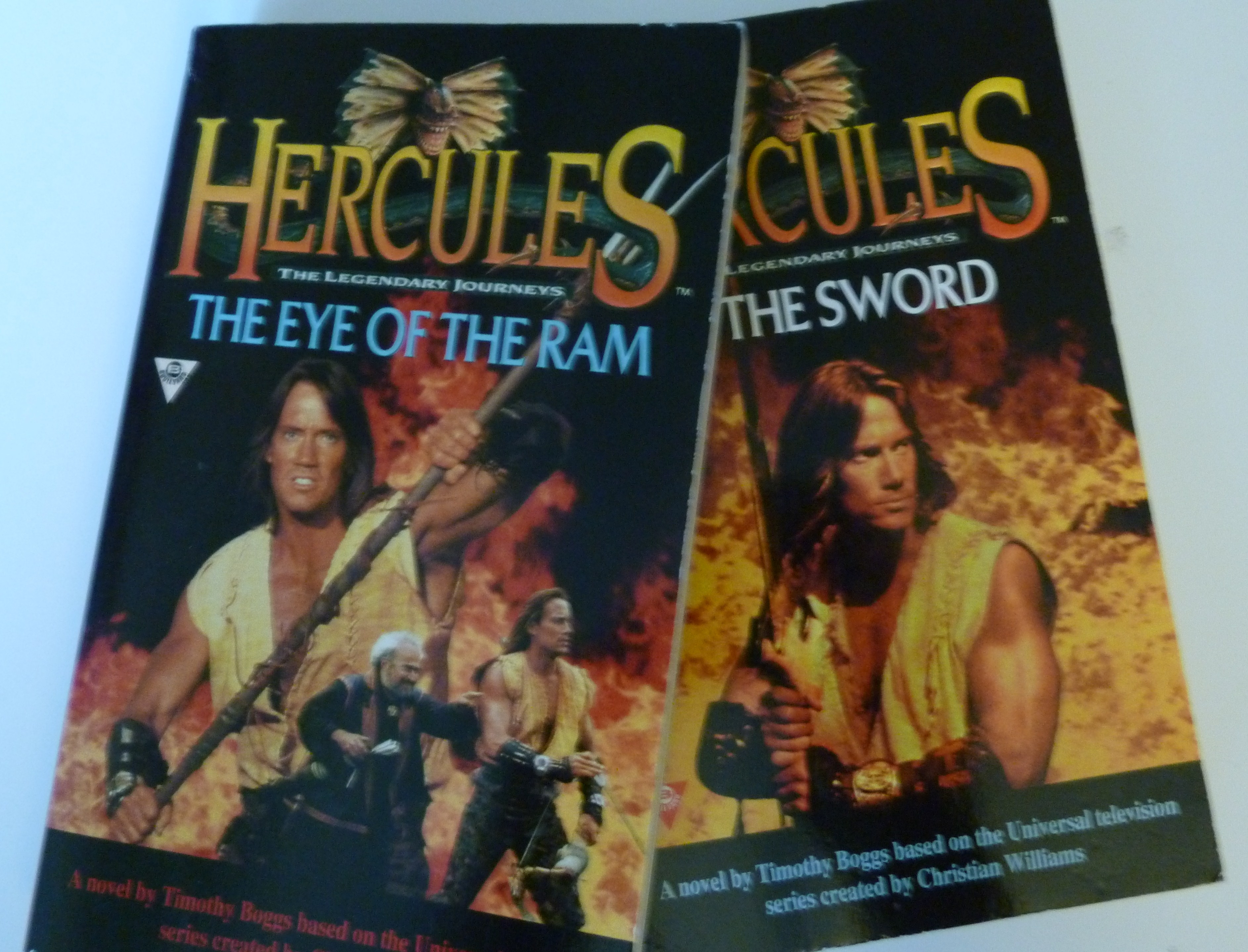
There are four novels as well, a couple of them pictured above, which are also great.  They’re not novelizations of episodes; they’re original stories, and it’s fun to get inside the characters’ heads more than you can in a TV show.

Hercules was my favorite show for a period as a kid.  I’ve been rewatching them recently, after years of not seeing them, and I’m convinced I had good taste.  🙂  They’re all available streaming on Netflix.  If you have any interest in Greek mythology, or funny adventure stories, check them out!

Cursed by Christening Gifts

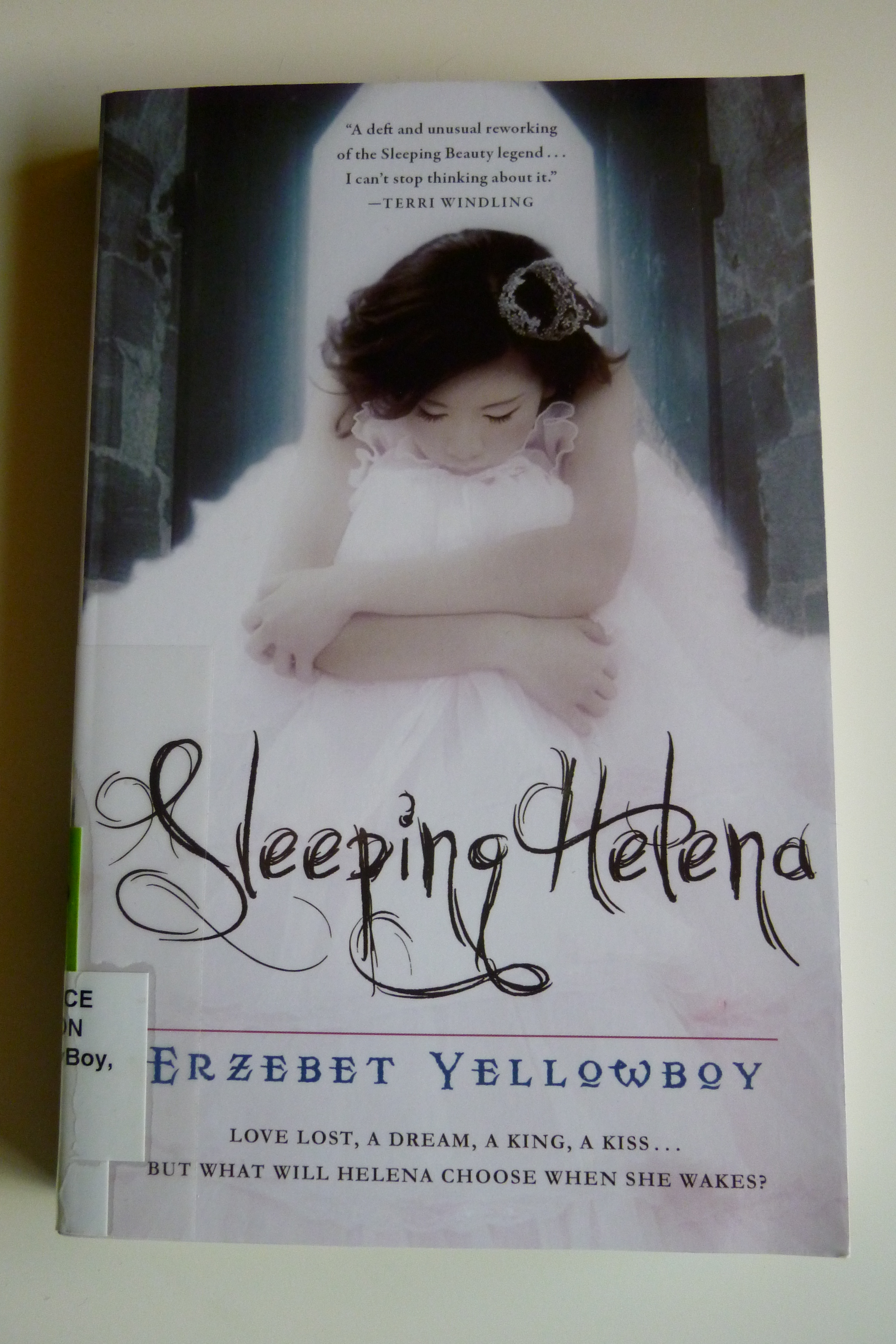
My quest for retold fairy tales most recently brought me to Sleeping Helena by Erzebet Yellowboy. As you can probably guess from the title, it was a retelling of Sleeping Beauty.  And it was…an odd one.

Helena has eight aunts, who all give her special gifts at her christening.  Six offer her well-meaning things like beauty and dancing ability.  One issues a complicated prophecy that seems to predict death.  And the eighth uses her gift to try to undo the curse.  Seven of the aunts raise Helena together, while desperately trying to protect her from the curse.  As the book goes on, we realize that the aunt who issued the curse, Katza, has more complicated motives than it seemed.  It’s all tied into the tragic death of their brother, a century before.

Yes, they have a brother who died a hundred years ago.  Everyone in the family is blessed (or cursed) with extraordinarily long life, which is the first place this starts to get odd.  It’s a little disconcerting when most of the characters are 105 or thereabouts.  Especially when they haven’t been given youth–they really are 105, and apparently feel that way.  I have nothing against elderly characters, but it makes it kind of hard to relate to.

It’s also rather depressing to think about seven sisters living together from childhood into old age, and if any of them ever got married or formed any meaningful attachments outside of their family group, we don’t hear about them.

The purpose of it is so that Helena’s sixteenth birthday can be exactly 100 years after Katza’s sixteenth birthday, which is also when their brother died tragically.  So you get Sleeping Beauty’s hundred years–but going back from the day the curse strikes, instead of forward.

Helena is the most interesting character, although more as a concept than as a person.  I love the way this examines what it would be like to have eight christening gifts.  Helena is so filled with her gifts, there’s no room in her personality for anything else (and they forgot to give her compassion or sympathy or kindness…)  She is utterly absorbed in herself and her gifts, which are constantly clamoring at her to be used–she wants always to dance, to sing, to admire her beauty, and so on.  In some ways, they seem more like curses than the curse.

This does take some interesting turns, and I particularly liked the flashbacks to Katza and her brother, Louis, when they were young.  I ended up disappointed by the ending, though.  I won’t give away the details, but essentially just when it was getting to something really interesting–it ended.

I have to come down somewhere in the middle on this one.  It wasn’t so bad that I’ll talk a friend out of buying it (The Frog Princessactually, she was going to buy one of the sequels and I convinced her it was a terrible idea) or so good that I’ll push it on friends (Robin McKinley–anything by her, really).  It was okay.  So if you have a particular fondness for Sleeping Beauty or some of the elements sound especially interesting, you could give it a try.

Author’s Site: http://www.erzebet.com/