Going Postal Group-Read, Week One

Today is our first installment of the Going Postal group-read.  Read the details about the challenge, and see my review of Going Postal if you’d like a little more context.

We’re starting off the discussion with a few questions about the first hundred pages of the book.

1)      For those new to Pratchett or Going Postal, what are your first impressions?  For re-readers, is anything striking you this time that you didn’t notice on a first read?

I’m obviously a re-reader.  This is actually one of my first Discworld re-reads–there are so many books, I’ve mostly been seeking out new ones to explore!  I find that the satire is making a bigger impression this time around–I noticed it before, but I’m seeing it more now.  I think I get distracted by all the wonderful humor on an initial read, and while a second time through is still very, very funny, the deeper aspects of the book are coming through more clearly as well.  In just this first section Pratchett has already started touching on so many ideas, about government, truth, civil rights, collectors culture…  I’ll leave it at that for now, as I want to discuss the satire in more depth in a later post, after it’s been developed further!

2)      We’ve started to get to know our protagonist, Moist von Lipvig, by now.  What are your thoughts on him so far?

Pratchett’s makes a lot of Moist’s charm.  Everyone seems to love him, despite the fact that he’s a crook and a scoundrel–and somehow they seem to love him because of it.  I love that Moist himself directly observes this paradox.  I also feel like Pratchett is playing the reader much the way Moist plays the crowd.  We fall under the spell of Moist’s charm too.  He’s friendly, he’s pleasant, he’s completely honest about being a crook, and he has style.  I think readers always love a scoundrel, especially one who never really hurts anyone.  Pratchett makes a point early on that Moist cons people, but he doesn’t kill anyone, or even hit people over the head.  He starts out as the charming rogue that we want to root for.  Having read the book before, I know Pratchett is going to delve into this idea more, and I’m enjoying watching its initial set-up.

3)      We’ve also met quite a few rather unusual supporting characters.  Who are you most looking forward to reading more about?

Strangely enough, Moist is a relatively normal main character surrounded by even weirder figures.  Groat stands out, completely bonkers in some ways but he also has such devotion to the post office, and to the memory of how it used to be.  He’s almost a tragic figure–in a really bad toupee!

I’m also really enjoying Vetinari.  He shows up in a lot of Discworld books, and I think he gets a particularly good turn in this one.  I love that he’s a tyrant who makes things work.  I think I’m stealing that phrase from one of the City Guards books, but it describes him so well.  He’s always four steps ahead of everyone else, nothing ever ruffles him, and despite a well-deserved reputation for ruthlessness, he always makes things work for the greater good.

4)      What are your favorite quotes or moments from this section of the book?

Oh, so many…Pratchett really hits the ground running with the humor.  For instance:

Mr. Groat, re: Stanley: “Orphan, sir.  Very sad.  Came to us from the Siblings of Offler charity home, sir.  Both parents passed away of the Gnats on their farm out in the wilds, sir, and he was raised by peas.”

“Surely you mean on peas, Mr. Groat?”

By peas, sir.  Very unusual case.  A good lad if he doesn’t get upset, but he tends to twist toward the sun, sir, if you get my meaning.”

I don’t get his meaning at all, but it’s hilarious.  If he explained it, it would ruin everything.  A more philosophical favorite moment:

“It was…odd to think of all those letters heaped in that old building.  You could imagine them as little packets of history.  Deliver them, and history went one way.  But if you dropped them in the gap between the floorboards, it went the other.”

*************************************

If you’re participating in the group read, leave a comment with a link to your first post.  I can’t wait to see what everyone thinks!  And if you’re thinking you’d like to join in, it’s not a long read and there’s plenty of time still to catch up; just let me know, and I’ll send you the questions for next Tuesday’s post. 🙂
A Sci Fi Retelling of Cinderella

First, a bit of business–the first post for the Going Postal group read goes up a week from tomorrow.  I contacted everyone who let me know they were interested, but there’s still plenty of time to join in–so let me know if you’d like to!  Now, on to the review…

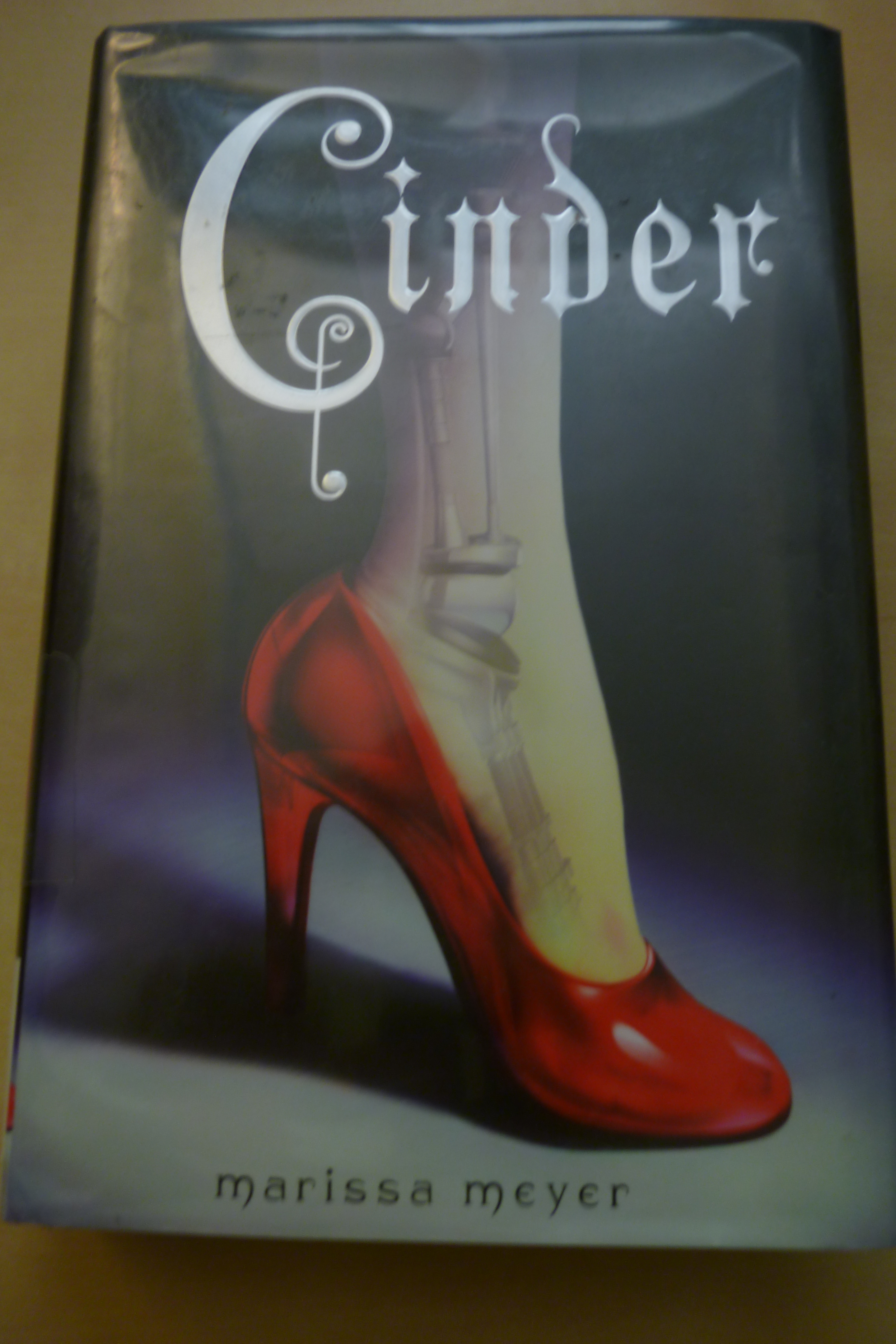
I put Cinder by Marissa Meyer on hold at the library at the beginning of the Once Upon a Time Challenge–in mid-March.  It’s only fair to say that my library usually runs through hold lists pretty quickly…but in this case, the book finally got to me in mid-June.  I managed to read it about five days before the OUaT Challenge ended!
So was it worth the wait?  Yes–because I was very curious about it.

As you may have guessed or known, Cinder is a retelling of Cinderella, though I was surprised by how loose a retelling it actually was.  Set a vague distance into the future, Cinder is a cyborg, mostly human but with a mechanical hand and leg, and circuitry in her brain.  While she is downtrodden by her (adoptive, not step) family, and there is a prince and a ball, the book mostly focuses on the search for a cure for a pandemic sweeping the globe, as well as rising tension with Lunars, the human moon-dwellers who have developed mental powers to manipulate others.

I quite liked Cinder.  She’s a strong Cinderella who’s plotting escape from her family and doesn’t actually care that much about the ball–she has bigger problems to think about.  I loved the cyborg-ness too, and wanted more of that element.  What was there was fun, from the low-tech (storing things in a compartment in her calf) to the high-tech (she can mentally connect to the internet, and her body warns her when she’s overheating).

Prince Kai was a nice guy, though a bit bland.  He served his role in the story perfectly well, and had a little more complexity in his uncertainties about how to fulfill his position as prince (and soon to be emperor), but he didn’t strike me all that much either.  In a bit of a reversal of that, my one biggest issue with the book was that I wasn’t sure why he was so struck by Cinder.  He starts singling her out almost as soon as he meets her–and I do appreciate that they meet and start developing a relationship well before the ball.  It’s just that I’m not sure what prompted him to pursue that relationship.  I mean, I like Cinder–but I’m really not sure why the prince, who has every girl in the country to pick from, decided he liked this particular one.  I’m all in favor of the idea that he saw something special in her, only I don’t feel like the book ever made clear what exactly it was, or even if there was something–I’m just assuming there must have been.

So it wasn’t a heart-stopping romance, at least not for me, but I am curious to see where it goes.  This book is the beginning of a series, and there are a lot of threads still to be explored.  There are some good tensions in Cinder and Kai’s relationship, like the political marriage he’s being manuevered into with the Lunar Queen, and the small fact that Cinder is trying to hide being a cyborg from him.  Cyborgs are looked down on as somehow less than human, in what I’m sure is intended to be a reimagining of the social structure of Cinderella’s original setting.

I would be remiss if I didn’t also mention Iko.  She (it?) is Cinder’s friend and somewhat fairy godmother-like figure, and she’s a robot.  She’s a robot who is also a hopeless romantic, quite forward, and often funny.  She wants Cinder to go to the ball more than Cinder does, and she’s really rather adorable at times.  The most moving moment in the book for me involved Iko’s personality chip–and that’s all I’m going to say, to avoid any spoilers!

So, to sum–fascinating concept, good characters (especially Cinder and Iko), okay romance, pretty good plot though at times it stretched on a bit, and one late-in-the-book twist was really obvious (maybe that was just me–but I don’t think so).  I liked the book–I didn’t love it–but I am adding it to my list of series, and plan to read the next one when it comes out!

Author’s Site: http://www.marissameyer.com/

Other reviews:
Stella Matutina
At Home with Books
Book Journey
Andrea’s Book Nook
Book Nut
I saw this on a LOT of blogs before it finally got to me…did I miss yours?

Delving into Complicated Dreams

Dreams–meaning hopes and goals and aspirations–can be a complicated business.  They usually aren’t, though, in Juvenile and YA books.  Usually the message there is that if you believe enough and work hard enough, you can achieve anything.  I believe that (to a point) and it’s a message with value.  But I was impressed that Aria of the Sea by Dia Calhoun, a definite YA book, tackles the question of dreams in a far more complicated way.
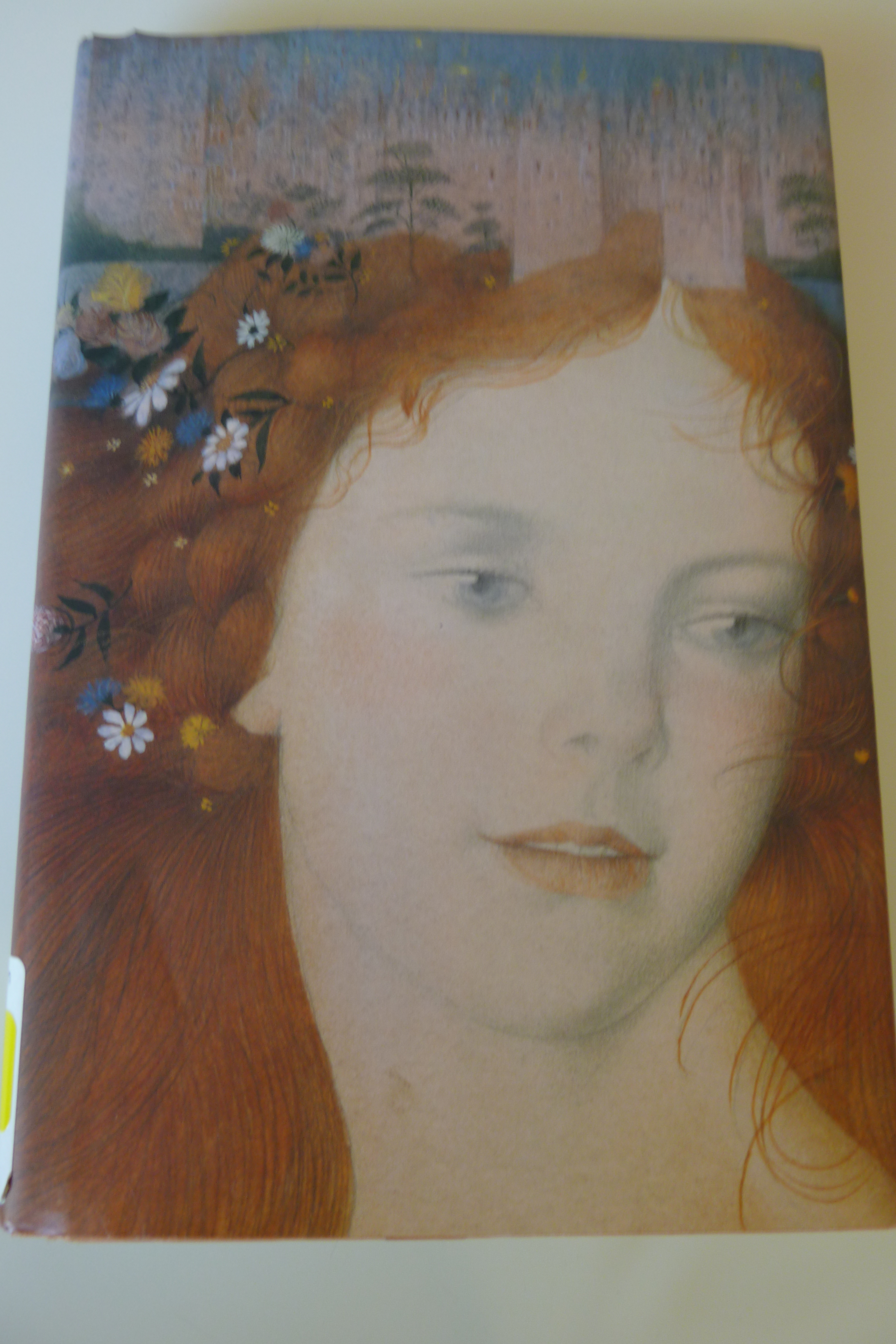
Cerinthe, the heroine, has always loved to dance.  She’s also a skilled folk healer, but when her skills fail to save her mother’s life, Cerinthe resolves to give up healing and sets off for the capital to join the Royal Dancing Academy.  After some slightly contrived difficulties getting in, Cerinthe quickly begins to shine at the Academy.  This puts her in fierce competition with Elliana, the reigning star pupil.

There’s a pretty good plotline and good characters, but it was really the setting and the themes that stood out to me.  Both the dancing school and other areas of the city are brought to vivid life through descriptions, and I enjoyed following Cerinthe through them.

It’s mostly the theme about dreams that has stayed with me after reading this book.  It’s a little more complex than this, but for discussion’s sake, let’s say that achieving one’s dream depends on three qualities–talent, passion and discipline.  Usually stories (and not only YA ones) assume that characters will have all three.  In Aria of the Sea, we see dancers who have the desire and the willingness to work hard, but simply don’t have the natural skill to succeed.  Elliana has the skill and the passion, but lacks discipline.  Another supporting character has the talent and the willpower but feels no joy in her dancing.  And Cerinthe–well, Cerinthe finds out another complicated thing about dreams.  Namely, it’s not always so easy to determine just what your dream really is.

In the old fairy tales, beauty and goodness (and conversely, ugliness and evil) are almost always equated.  A good character is always beautiful.  We’ve departed from that (somewhat), but I think there’s still a strong bias to make the good characters talented.  To some extent it just makes sense–a good heroine (or hero) is most of the time likable, and also possessed of qualities that will drive a plot, often some sort of talent.  As a rule I think it’s done because it works, but it’s also interesting to see a book that calls that correlation into question.  Elliana is deeply unpleasant but also extraordinarily talented–likability and talent don’t always equate.

I didn’t exactly love this book–the characters and plot were good but not landmark–but it was thought-provoking.  And another example of the depths that good YA can explore!

Other reviews:
Lectitans
The Reader’s Book Blog
I didn’t find many…anyone else?  Let me know and I’ll link yours!

Saturday Snapshot: Book Spreads

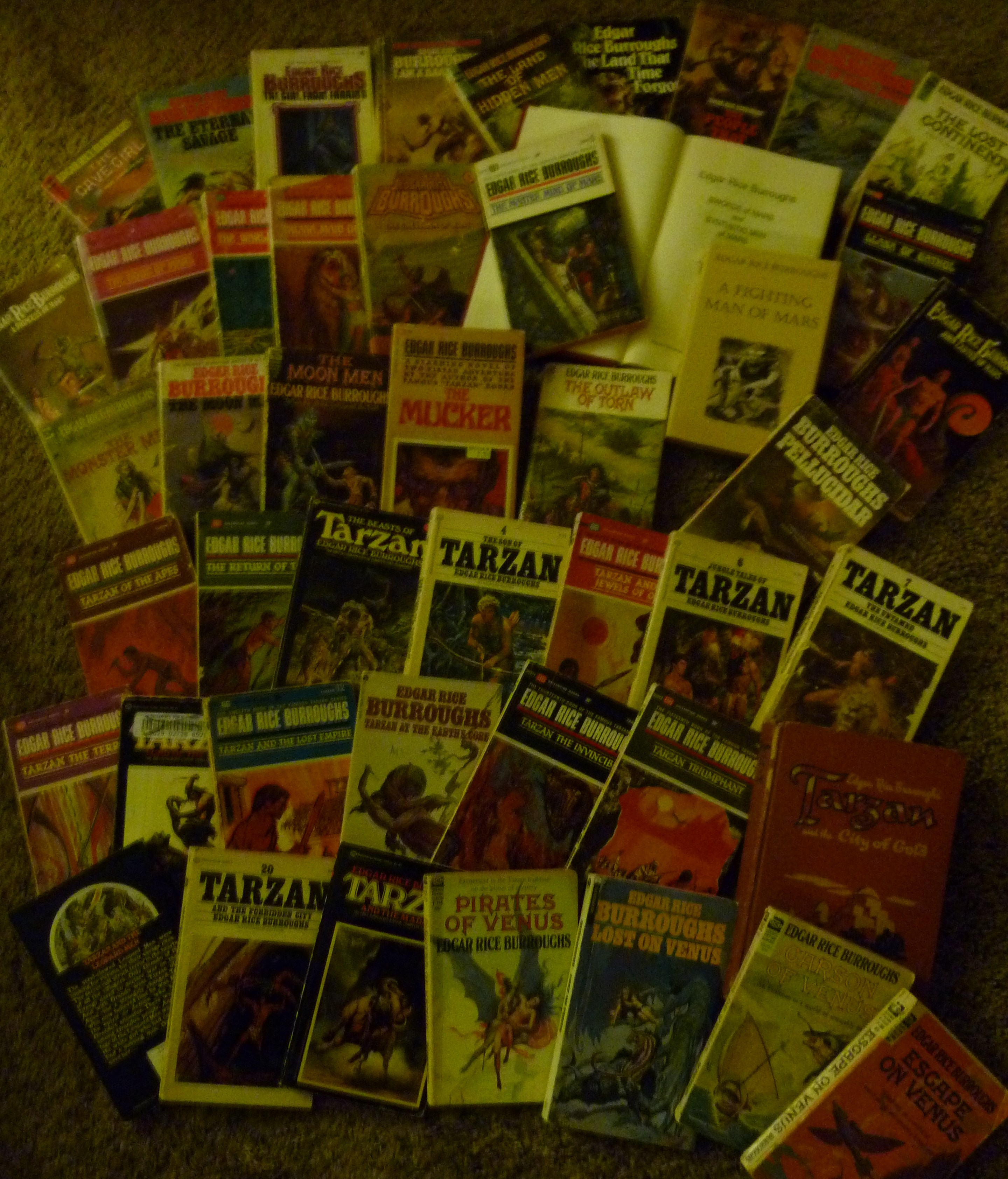
Do you ever spread your books all over the floor, to get a new look at them?  Or a possible photo opp?

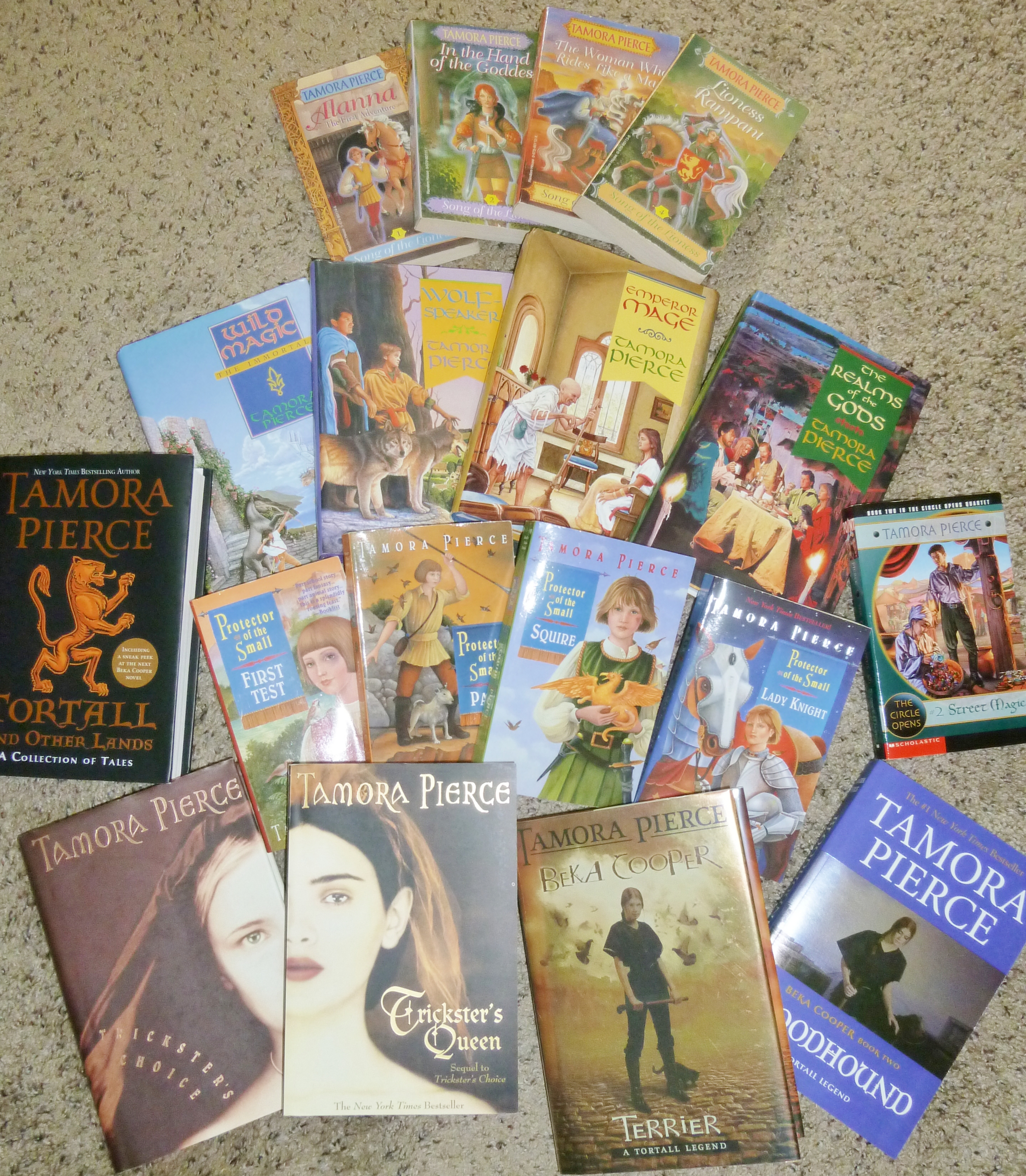
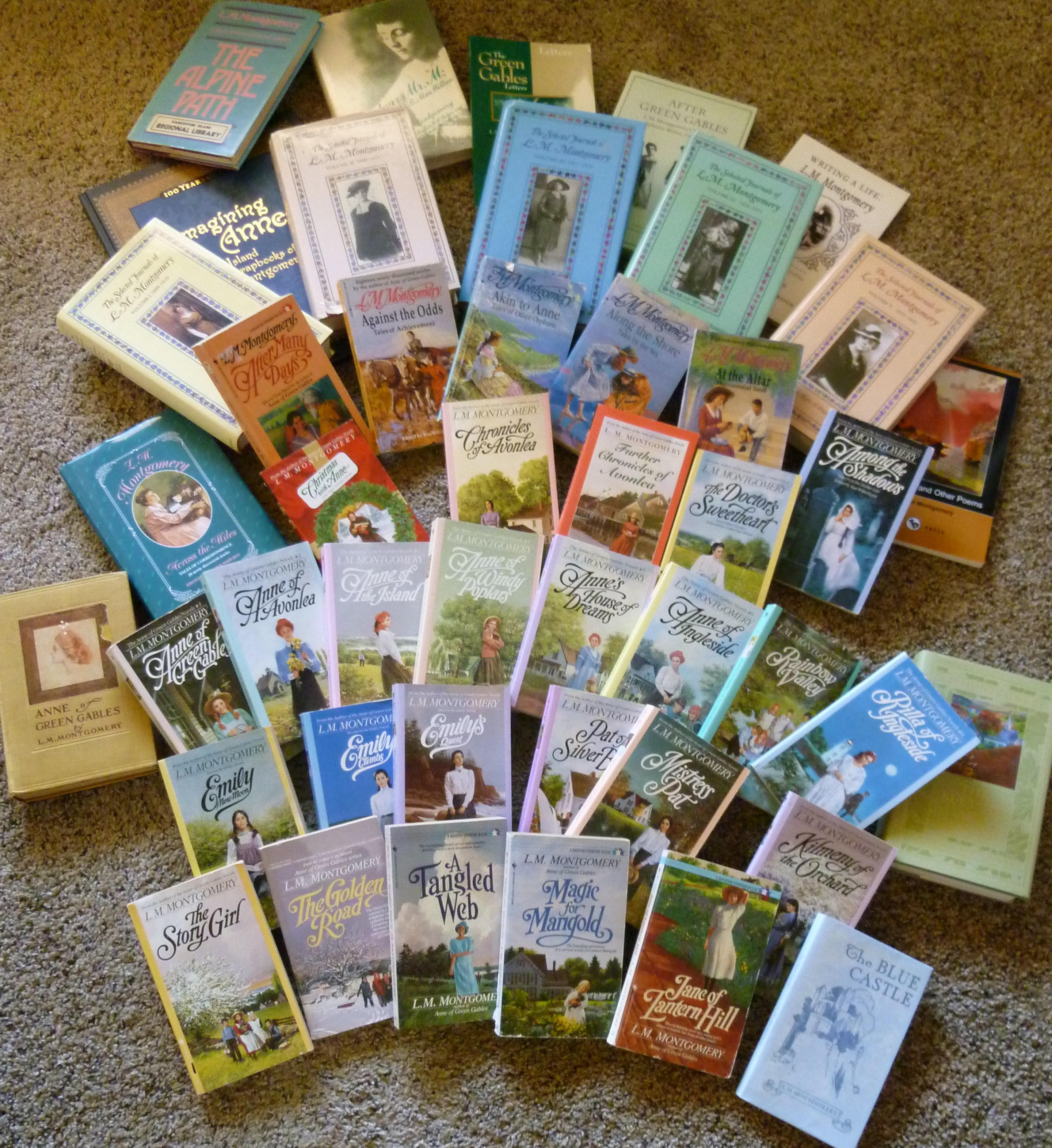
Okay, maybe that’s just me.  But at various points I’ve spread out my book collections of three of my favorite authors–and they turned into interesting photos!  In ascending order by number of books…

I have 18 Tamora Pierce books – basically her entire Tortall series (except Mastiff; I’m waiting on the paperback), plus my favorite Magic Circle book.

L. M. Montgomery accounts for 46 volumes of my book collection.  There’s one book of poetry I still need, but other than that, I own, well, everything.  If she wrote it and it’s available, I have it.  I’m kind of a completist…  But you know what’s very frustrating?  I have 199 LMM short stories.  One more would make a round 200, but you can’t get another one anywhere (they exist, but they haven’t been printed).  I live in hope that someday they’ll put out a new collection.

And the biggest collection of all – 54 Edgar Rice Burroughs books.  I’ve added a few since this picture was taken.  Burroughs was extraordinarily prolific, so I still have about twenty left to collect…  Someday I’ll have them all, and then I won’t know what to do with myself in used bookstores!

What authors do you have the most books by?  And have you ever spread them across your floor for a photo…or is that just me? 😉

Check out At Home with Books for more Saturday Snapshots!

Once Upon a Time VI – Wrap-up Post

I’m really quite sad that the Once Upon a Time Challenge has ended.  It’s been so much fun sharing reviews, and reading everyone else’s!  This challenge focuses on some of my very favorite kinds of books (fairy tales!) and I’ve loved putting the emphasis on them for the last few months.  (Although now that it’s ending, maybe I’ll finally get back to the Foundation trilogy…)

Another reason I’m sad it’s ending…I’m not done reviewing things!  Too many books and movies, and I got behind, so stick around–more reviews are coming.

For now, here’s the wrap-up of everything I read.  Links go to reviews, starred titles mean a review is coming soon.  Feel free to ask if you’d like to know more about anything!

Let’s look at this by category, shall we?

Fairy tales:

Rose Daughter by Robin McKinley (Beauty and the Beast)
Enchantment by Orson Scott Card (Sleeping Beauty)
The Fairy Godmother by Mercedes Lackey (Cinderella)
The Mermaid’s Madness by Jim C. Hines (The Little Mermaid)
The Thirteenth Princess by Diane Zahler (The Twelve Dancing Princesses)
Red Hood’s Revenge by Jim C. Hines (Little Red Riding Hood and Sleeping Beauty)
The Goose Girl by Shannon Hale
Mermaid by Carolyn Turgeon (The Little Mermaid)*
Cinder by Marissa Meyer (Cinderella)*

Mythology:

The Serpent’s Shadow by Rick Riordan (Egyptian)
Underworld by Meg Cabot (Greek) – abandoned, but I’ll tell you about why*

Fantasy:

Fairies and the Quest for Neverland by Gail Carson Levine
The Magical Misadventures of Prunella Bogthistle by Deva Fagan
Equal Rites by Terry Pratchett
Trickster’s Choice and Trickster’s Queen by Tamora Pierce
The Magician’s Ward by Patricia C. Wrede
Kenny and the Dragon by Tony Di Terlizzi
The Catswold Portal by Shirley Rousseau Murphy
The Freedom Maze by Delia Sherman
The Secret Country by Jane Johnson

Quest on Screen:

The Thief of Bagdad, 1924 (Arabian Nights, loosely)
La Belle et la Bête, 1946 (Beauty and the Beast)
Ever After, 1998 (Cinderella)
Alice, 2009 (Alice in Wonderland)*
Red Riding Hood, 2011
Puss in Boots, 2011
Mirror, Mirror, 2012 (Snow White)

A Midsummer Night’s Dream:

Lords and Ladies by Terry Pratchett
Shakespeare ReTold: A Midsummer Night’s Dream, 2005

So that’s…20 books, and 8 movies.  Like I said–this challenge exactly covers my favorite things to read!  And there were so many, many good stories.  🙂