Favorites Friday: Disney Women

You may have been seeing the buzz lately over Disney’s induction of Merida into their pantheon of Princesses–and even more buzz about the make-over that went with that.  It’s a fascinating and disturbing discussion (read more here).

It has me thinking about Disney women.  And I think it’s doubly unfortunate that Disney has a tendency to focus on the pretty, sparkly princesses, and not on the girls’ other qualities and abilities–because there are awesome Disney women.  Disney gets a fair amount of criticism in general for weak heroines, but there were already amazing Disney women before Merida–princesses and otherwise.  Here are my favorites:

Belle from Beauty and the Beast – Sure, she’s a princess, but only in the last minute of the movie.  Mostly, she’s an ordinary girl who loves to read and has big dreams.  She doesn’t let society dictate what she should be interested in (since they think she’s strange for reading) or who she should be dating (refusing to marry the immensely popular Gaston).  She sacrifices her freedom to rescue her father and stands up to the Beast when he bellows at her.  She’s brave, intelligent, inquisitive and yes, she has a pretty yellow dress…but there’s a lot more going on than that.

Katie from Darby O’Gill and the Little People – Lest you think Disney has no positive female characters before recent years, I point you to a live-action example, Katie O’Gill, whose movie came out in 1959.  She has immense force of will, there’s a clear sense that she’s running things in her family, and she’s not going to brook any nonsense from anyone, be it the local bully, her father, or the handsome Michael McBride (a very young Sean Connery, by the way).  She’s not waiting around for a prince–when Michael asks her once if she gets lonely, she remarks that she keeps busy, and seems to be sincere.  It’s not a perfect example because she doesn’t get to do much in her movie, but she has a strong personality and is a very long way from a sparkly, useless princess.

Chicha from The Emperor’s New Groove – Chicha, Pacha’s wife, is an absolute delight.  For one thing, she’s a pregnant animated character (how often do you see that?) and more importantly, she’s clearly as smart and as capable as her husband (probably more so).  To a certain extent, she’s stuck at home with the kids–but the villains come to call and Chicha swings into action.  She doesn’t wind up kidnapped or need to be rescued.  Instead, she becomes a participant in the efforts to foil the villains.  Love it.

Dejah Thoris from John Carter – I’m not denying there’s some issues with this one…like how she gets kidnapped, or her distinctly scanty attire.  But having read the original book, A Princess of Mars, I can assure you that they really tried to make her a stronger, more capable character.  I mean, she gets to use a sword–and she’s a scientist!  Big leap forward from the original source material.

Ellie from Up – Merida isn’t Pixar’s first amazing woman.  We also have Ellie, who is adventurous, daring and immensely confident in herself.  Even better, she marries a man who obviously loves those qualities in her.  It’s true she was only in the movie for ten minutes, but it seems to be a near-universal opinion that those were the most powerful ten minutes of the movie.  That’s a girl who’s having an impact.

It would be amazing if the debate around Merida sparks off some larger realizations for Disney.  Enough with the Princesses marketing campaign.  Yes, little girls like sparkles and pretty dresses and that’s fine, but Merida already has a sisterhood of Disney women who have qualities beyond their prettiness.

I think the problem is less the stories that are being told than the way the marketing campaign is handling them.  I mean, besides the women above, there’s Mulan, who rode off to war and found confidence in herself; Pocahontas, who saved John Smith from execution; and Jasmine, who inspired her father to change the law in a way that gave women more rights.  So I think it’s fair to give Disney credit for having some amazing women characters–and to hope that they’ll notice that fact!
Jesus On Screen

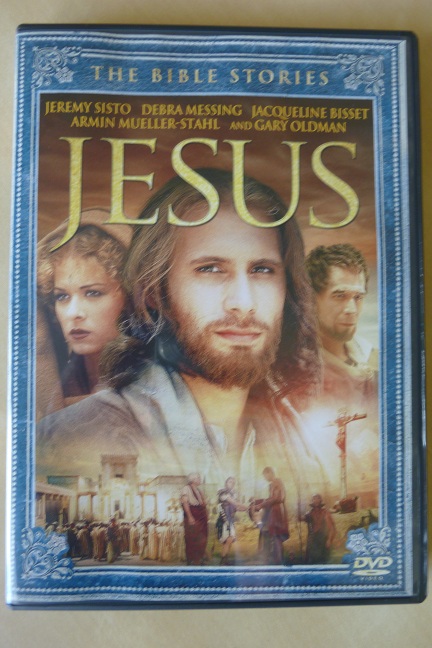
JesusI don’t usually do reviews on Friday, but today is Good Friday, leading up towards Easter Sunday, and I just watched a movie that is immensely appropriate to the day.  It has the very simple title of Jesus and was originally a TV miniseries from 1999, though it plays like a three-hour movie (and there were only a few obvious commercial breaks!)

I watched at least part of this when it first aired, but all I remembered was Jesus having a conversation with the devil, and a vague image of Jesus walking down the road and joking around with his disciples.  Not a lot to go on trying to find the movie again–but obviously it worked out.  And it turned out to be a fantastic movie–I ordered the DVD from Amazon before I even sent back my Netflix disc, and I searched IMDB to see if the director has done any other Biblical movies (he has!)

So what blew me away so much?  Oddly enough, it really may be encapsulated by that moment of Jesus joking around with his disciples.  This is the most joyful Jesus I can remember seeing in…maybe any movie.  The church teaching is that Jesus is fully human and fully divine, but the divinity seems to get more play in movies.  Usually it’s all very serious, every word he says is a solemn and profound pronouncement.  Most often, the humanity gets expressed in suffering.  I’m not saying any of that isn’t important, and this movie gives those moments too–but there are also a lot of moments where you get the feeling that it’s a good time hanging out with Jesus.  Or just that he knows how to live a normal human life, and goes through periods of learning, uncertainty and change.

The movie opens slightly before Jesus (Jeremy Sisto) begins his public ministry.  We don’t often see Jesus with Joseph, and I really liked this movie’s exploration of Jesus’ relationship with his adoptive father.  Mary figures in quite a bit too, and while there isn’t a full scene of the Nativity, Mary and Jesus do have a conversation or two reminiscing over family stories.

Jesus begins his ministry with the baptism by John, and then goes into the desert for a very interesting Temptation sequence.  This was a particularly clever Satan, who is clearly evil but convincingly persuasive.  Although, while the desert sequence was mostly good, I could have lived without the image of Jesus with a severely blistered sunburn…

Jesus then starts collecting disciples, and I love that not only is Jesus very human, real and alive, everyone else is too.  There are about six of the Apostles who get some development, and without spending a lot of time on most of them, I still got a sense of all of them as people, not just distant figures in Bible stories.

As one representative example, I’ll take the calling of Simon Peter.  Peter and his friends have been fishing and caught nothing.  Jesus tells them to take the boat out and he’ll tell them where to drop the nets to catch fish.  Peter scoffs at the whole thing (because what does this guy know about fishing anyway?), but says he’ll do it to prove a point about this supposed Messiah.  When the nets come in miraculously full of fish, Peter is completely flummoxed–and Jesus starts laughing.  There’s nothing remotely mean about it, but it’s so clear that Jesus is having fun teasing Peter.  I love that.

There are lots of moments like that.  The movie walks a nice line, because while it is fun, at the same time, Jesus is also a profound teacher who takes his mission seriously, and has an important message about love and compassion.  It’s not all just larks, there’s a spiritual depth as well.  And there are serious moments–as when Jesus cries over a Roman soldier killed by Zealots (not Biblical, I don’t think, but I like it).

One of the other major characters in the story is Mary Magdalene (Debra Messing).  Overall I thought her portrayal was wonderful, although (rather like the blisters in the desert) I could have lived without two very brief, gratuitous scenes of Mary Magdalene, um, at work.  The movie conveyed everything needed in another scene of her watching Jesus forgive the woman caught in adultery.  We didn’t need the more sensationalist moments.  The tradition of Mary Magdalene as a prostitute isn’t Biblical, but I don’t object to it generally, and the movie used it for the most part in a very profound way to convey a message about forgiveness and releasing judgment.  Another nice touch was the relationship between Mary Magdalene and Mary, Jesus’ mother.  They’re next to each other in paintings of the Crucifixion a lot, but I’m not sure I’ve ever seen it really explored.

On the villain side of the story, Pontius Pilate (Gary Oldman) and King Herod are threaded throughout the movie, rather than only coming in at the very end.  Herod has his own issues, particularly around John the Baptist, and Pilate is working political manuevers to make sure he stays in good with Rome.  By the time we reach the Passion, we know Pilate very well, and I like seeing Pilate as a human too.  Not a very nice one, but human.

The movie successfully makes the bridge from a largely light-hearted ministry to the intense end of Jesus’ life.  The Raising of Lazarus is something of a turn in the tone, I think, as it’s handled in a more solemn way, and that leads into the last week of Jesus’ life.  Satan returns in the Garden of Gethsemane, which I thought was an excellent touch.  The Passion is intense and bloody (as is probably inevitable), but it is mercifully brief.

And after the Crucifixion, there are a couple of lovely scenes with Resurrection appearances.  I don’t know why exactly, but the Passion seems to get far more focus in movies than the Resurrection (more dramatic?), which is too bad because there are wonderful Resurrection stories in the Bible.  Another ten minutes in this part would have been even better, but at least there were some wonderful moments.

I have a tradition of watching Jesus Christ Superstar leading up to Easter, but I may have to expand that tradition a bit.  Jesus is a wonderful movie, and I have to love a Bible-retelling that frequently made me smile.  And not only because it led Netflix to send me an email with the subject line, “Has Jesus arrived yet?”  🙂

Other reviews:
Charles Tatum’s Review Archive
Canadian Christianity
Anyone else?

Buy it here: Jesus

Blog Hop: Casting Your Favorite Books

Remember last fall I participated in the Book Blogger Hop a few times?  I had fun with it, but then I got distracted or something, and haven’t looked at it in quite a while.  I finally checked back in, and found some very interesting discussion topics in upcoming weeks!

book blogger hop

This week’s question is: If you could turn one of your favorite books into a film, who would you cast?

I am so immensely intrigued by this question!  And after spending quite a few minutes staring at my bookshelves and thinking…I found out I’m immensely bad at answering it.  I have a theory, though.  See, my favorite books are often my favorites because the characters are so vivid and alive–to the point that I can’t imagine any actor filling that role.

I’d love to see a movie version of Tamora Pierce’s Song of the Lioness quartet…but how could anyone possibly live up to the role of Alanna?  I don’t think it can be done.

But I did hit on one book I could cast–Peter Pan in Scarlet by Geraldine McCaughrean.  It’s a Peter Pan sequel, and practically the only sequel-to-a-classic-by-a-different-author that I actually like.  In fact, it’s excellent and I highly recommend it!  There are only three major roles–Wendy, who I think could be played very well by Chloe Grace Moretz, recently in Hugo.  She could handle a nice mix of child and seriousness.  Then there’s Ravello, the sinister but charming villain, for whom I would cast Johnny Depp (probably surprising no one!)  I struggled on who could play Peter, but finally hit on someone–Daniel Huttlestone, who played Gavroche in Les Miserables.  He could definitely play another cheeky, cocky boy.

So what book would you like to see as a film?  And who would you cast?

Sci Fi Experience on Screen: Superheroes and Extra-Terrestrials

The Sci Fi Experience seemed like the perfect time to watch a few sci fi movies I’ve been meaning to get to…old and new.  This Friday, here’s a survey on the sci fi movies I’ve watched in the last couple of months.

The Amazing Spider-Man (2012): I have to admit, I didn’t quite see why we needed another origin story movie for Spiderman (Toby Maguire just wasn’t that long ago…) and while I still kind of feel that way, this was a fun movie.  I’ve been a fan of Andrew Garfield ever since he was the adorable Antoine in The Imaginarium of Doctor Parnassus, and he’s the main reason I saw this.  He plays a wonderfully awkward Peter Parker, who also manages to have a lot of fun with his new powers.  My favorite thing about the movie, though, may be Gwen Stacy (Emma Stone).  I mostly remember Kirsten Dunst’s Mary Jane screaming a lot when things got tense.  Gwen is far tougher, keeping her head and actually being useful in a crisis.  That’s an awesome quality in a superhero’s girlfriend.

E. T. the Extra-Terrestrial (1982): I haven’t seen this one in years, so I was curious to rewatch some classic sci fi.  All the iconic moments are great, and it was so much fun seeing an incredibly young Drew Barrymore (talented even then).  One thing that struck me was how little explanation this movie has.  It’s not incomprehensible like 2001, but we never find out who E.T.’s people are, why they were on Earth, how the government knew to look for them, whether there was any communication after E. T. is picked up…  I was also struck by the moment when E. T. asks Elliot to go with him.  Yes, 10-year-old boys probably shouldn’t go off with aliens–but what a missed opportunity!

The Dark Knight Rises (2012): I kept having near-misses with this movie.  It never quite worked out to see it in local theaters…then I almost saw it while I was in Paris, at a theater a few blocks from the Paris Opera House.  But I couldn’t tell from the posters whether it was subtitled or dubbed, so I gave it up and went back to my hotel room to spend the evening writing fragments of stories involving the Phantom of the Opera, which was probably just as well.

So I finally saw this in January from Netflix.  While quite grim in spots, overall I enjoyed it–especially Catwoman.  Anne Hathaway impressed me this year as both Catwoman and Fantine…and impresses me all over again when I compare those characters side-by-side.  The villain here wasn’t nearly as much fun as the Joker in The Dark Knight, but this was still an exciting ride, and I enjoyed Joseph Gordon-Levitt (who’s been adorable ever since 10 Things I Hate About You) as the new cop trying to make good.

Batman Begins (2005): I knew I’d seen The Dark Knight, but I couldn’t remember if I’d seen this one.  After watching the final installment, I was pretty sure I hadn’t seen the first one, and felt like I ought to do something about that.  The origin story was interesting, some parts of the later movies make a good deal more sense now, and…mostly, I really liked Alfred.  And I have a nice completed feeling now.

I think that covers Sci Fi On Screen…although I may re-watch The Dark Knight soon!  Which will thoroughly complete the out-of-order-ness of it all.

Favorites Friday: Cary Grant

Most people who know me have probably gathered that I’m just a bit fond of Johnny Depp.  But today I thought I’d do a post on another favorite actor who doesn’t seem to get mentioned as often around here: Cary Grant, the dashing star of old Hollywood.  Unlike Johnny, Cary played the same role in most movies…but he’s always a pleasure to watch!  Here are a few favorites…

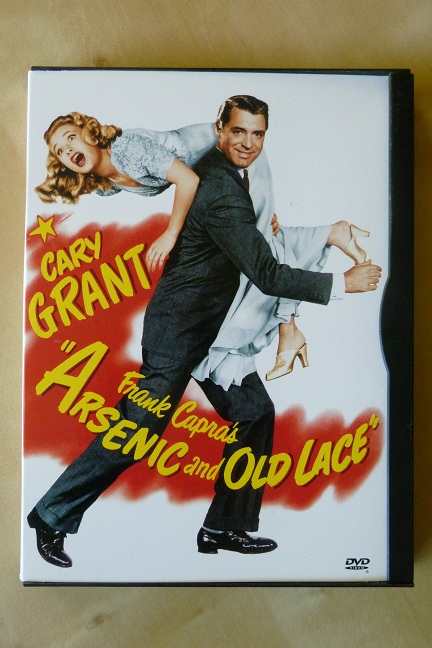
Arsenic and Old LaceArsenic and Old Lace is one of my all-time favorite movies.  Cary plays Mortimer Brewster, who’s just found out that his two beloved aunts–who are the kindest, sweetest women you could ever want to meet–poison lonely old men as a charity.  They bury the bodies in the basement with the help of Mortimer’s brother Teddy, who believes he’s Theodore Roosevelt.  The stairs are always San Juan Hill (so he yells “Charge!” every time he goes up them) and he thinks he’s digging the lock in Panama in the cellar.  Even more chaos ensues in the second half of the movie, when long-lost brother Jonathan shows up with a mad scientist and another body in tow.  This is a wonderful black comedy, full of completely mad characters.  Everyone’s funny, but it’s all worth it for Cary Grant’s double-takes alone.

Bringing Up Baby pairs Cary Grant with Katherine Hepburn.  He’s a book-bound paleontologist and she’s a madcap socialite whose adventurer brother sent her a leopard named Baby.  Cary gets pulled into her whirlwind, the leopard gets loose, and there’s a fantastic scene involving a dinosaur skeleton.  If this suffers from anything, it’s a slightly contrived romance, but…when it’s Cary Grant and Katherine Hepburn, you don’t have to work very hard to contrive something.  This movie gives us the textbook example of one of Cary’s two usual roles–the perpetually baffled man who’s trying keep his head up as life sweeps him to crazy places.

The Philadelphia Story gives us Cary Grant and Katherine Hepburn again, but we get Cary’s other persona–the suave sophisticate who’s always charming and always in control.  This was the person everyone (including Cary Grant) always wanted to be.  In this movie he’s C. K. Dexter Haven, ex-husband to Katherine Hepburn’s Tracy Lord.  Tracy is getting remarried, but of course complications ensue, and when you have Cary Grant and Jimmy Stewart both on screen, the poor fiance becomes a relatively minor point in the story.

Stepping away from the comedies, Suspicion is one of my favorite Hitchcock movies.  Joan Fontaine was so good at playing the wide-eyed ingenue, threatened by sinister forces around her.  In this case, she’s afraid that her husband, played by Cary, is plotting to kill her.  I love the way Hitchcock used Cary Grant’s reputation.  As I said, he only really has two characters, and everyone knew that–so could he really be playing the villain this time?  Hitchcock builds up the tension until you reach the point where a scene of Cary Grant carrying a glass of (maybe poisoned) milk up a flight of stairs becomes terrifying.  Cary Grant!  With milk!  And it’s so sinister.

An Affair to RememberAn Affair to Remember gives us a more dramatic role.  Cary Grant and Deborah Kerr meet on a cruise ship and fall in love, but they’re both engaged to other people.  They vow to disentangle themselves and meet again in six months at the top of the Empire State Building…but tragedy strikes first.  This is a good movie, but I must admit it’s much better if you watch Sleepless in Seattle too!

So I can’t be the only Cary Grant fan in the house…anyone else with a favorite movie?  And do you prefer Suave-Cary or Baffled-Cary? 🙂