Sailing Back to Treasure Island

I think we all know that pirates are kind of an interest for me.  So naturally I was intrigued by the prospect of a sequel to one of the great classic pirate stories, Robert Louis Stevenson’s Treasure Island.  Often I have big objections to sequels to classics, but this particular classic falls into a nice middle area, where I’m interested, but I’m not so attached that I hold it too sacred for a new author to attempt a story.

Silver: Return to Treasure Island by Andrew Motion is told by a different Jim Hawkins, the son of the original.  This Jim is eighteen years old and thoroughly sick of his father’s stories about his glory days on Treasure Island.  Nevertheless, he can’t resist following when he’s approached by Natty, the daughter of Long John Silver.  Natty’s dying father has prepared a new expedition to Treasure Island.  Jim steals his father’s map, and he and Natty set off, hoping to find a cache of silver that the last expedition left behind.

What they find are ghosts of the past–the nephew of a man the original Jim Hawkins killed; three pirates marooned by the last party, now inflicting barbarities on a group of castaways; and always the looming memories of the first Jim Hawkins and of Long John Silver.

This story stands largely on its own, with almost the entire cast consisting of new characters, and an entirely new plot.  The events of the previous book are obviously essential, though, so I wouldn’t read this without any knowledge of the original.  That said, I think even a small knowledge would be enough, such as a familiarity with a retelling (and while we’re on that subject, Muppet Treasure Island is my favorite version!)

The writing is excellent here.  There’s a formality to it that harkens back to the original book, without going too far and sounding stiff to a modern audience.  There are wonderful descriptions, particularly of nature, which is described not only in terms of appearance but very much in mood, sometimes being almost anthropomorphized.

Jim (the younger) is a thoughtful character, who explores his own feelings and motivations, and makes interesting observations on other characters as well.  Natty is a wilder character and harder to read, but there are glimpses that make her engaging and demonstrate her complexity.

We only get a little of Jim the older, and of Long John Silver, but something interesting happens with them.  I feel I have to give a little context here–in almost every adaptation I’ve seen, there’s a complicated relationship between Jim and Long John, a love-hate situation where Long John plays almost a fatherly role.  In the original, Jim pretty much sees Long John as a devious pirate and it’s all much simpler (and less interesting).  Here, Jim describes the relationship as the book tells it–but Long John seems to remember it as the more complex relationship that we see in adaptations.  It’s an interesting balance.

The adventures in the book are tense and exciting.  There are stretches that are quieter, but the action is good when it comes.  This gets pretty dark in spots, but never quite goes too far.  It’s obvious there are very horrible things happening on Treasure Island, and there isn’t much doubt about what–but we never got it in such detail as to be too awful.  It does edge up very close to a disturbing area though, so reader beware!  There are also some hints at the very beginning of something quite odd in Natty and Long John’s relationship, but that’s never elaborated on–which to be honest, I thought was just as well!

I did think the book mis-stepped in other places by not elaborating, as Motion mostly avoids the thornier issues.  Long John Silver is married to “a colored woman,” I think based on a reference in the original book, which means Natty is mixed race.  In 1802, she would have faced enormous prejudice because of that; here, it’s skated right past.  When Jim finds out, he remarks once that it doesn’t change how much he’s drawn to her, and that’s all.  While that’s certainly admirable of him (by modern standards), it feels anachronistic.  History’s attitudes may disturb a modern reader, but this reaction in a young white man of the early 1800s makes Jim almost impossibly progressive.

The situation is similar when slavery comes up (and it plays a significant part in the plot).  All the good characters are apparently abolitionists, with no need to even discuss the question–even though this is five years before England ended the slave trade, and 30 years before slavery was outlawed in the British Empire.  Of course I don’t think the immorality of slavery is a complicated question, but it should have been a complicated one for characters living in 1802, and I think Motion oversimplified.

I won’t say that the simplification spoiled my reading of the book by any means–but I think this was a good book that had the potential to delve a little deeper, and in a way that would have been more realistic.

This is definitely worth the read if you like historical fiction about pirates and buried treasure, and especially if you enjoy the original.  Which I also recommend–along with Muppet Treasure Island. 🙂

Disclosure: I received a copy of this book for free from the publishers in exchange for an honest review.

Other reviews:
Minding Spot
A Bookworm’s World
Man of La Book
The Literateur
Anyone else?
Saturday Snapshot: 221B Baker Street

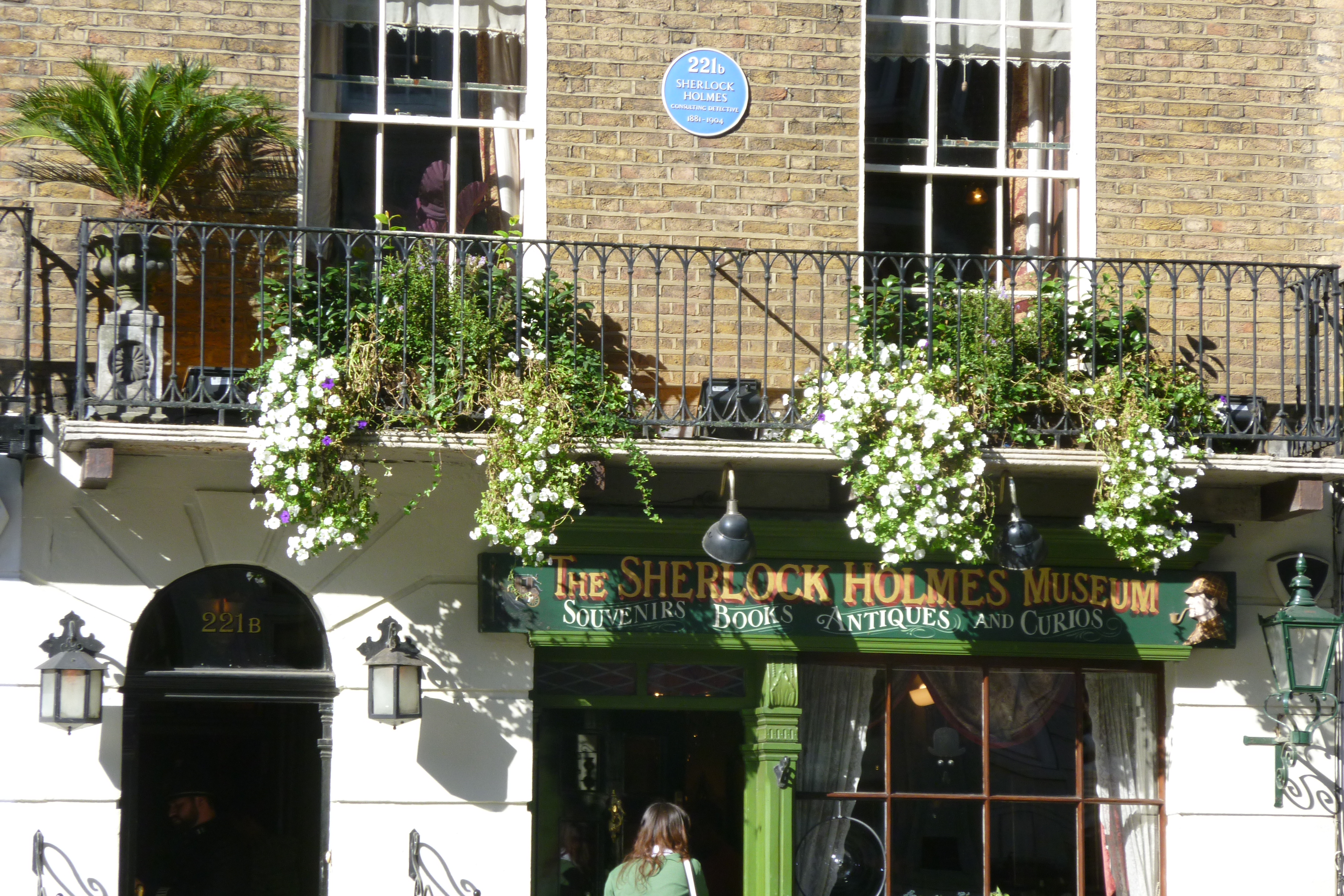
One of my many literary pilgrimages while I was in London and Paris included a trip to a very famous address–221B Baker Street, the home of Sherlock Holmes and Dr. Watson.  I had heard it was a tourist trap and was pleasantly surprised that it was better than reported.  I wrote more about it as part of a book review earlier this week, so today–pictures!

The outside of the building…
The parlor–and by far the best room. Sorry it’s a bit dark!


Holmes’ desk, and Stradivarius violin
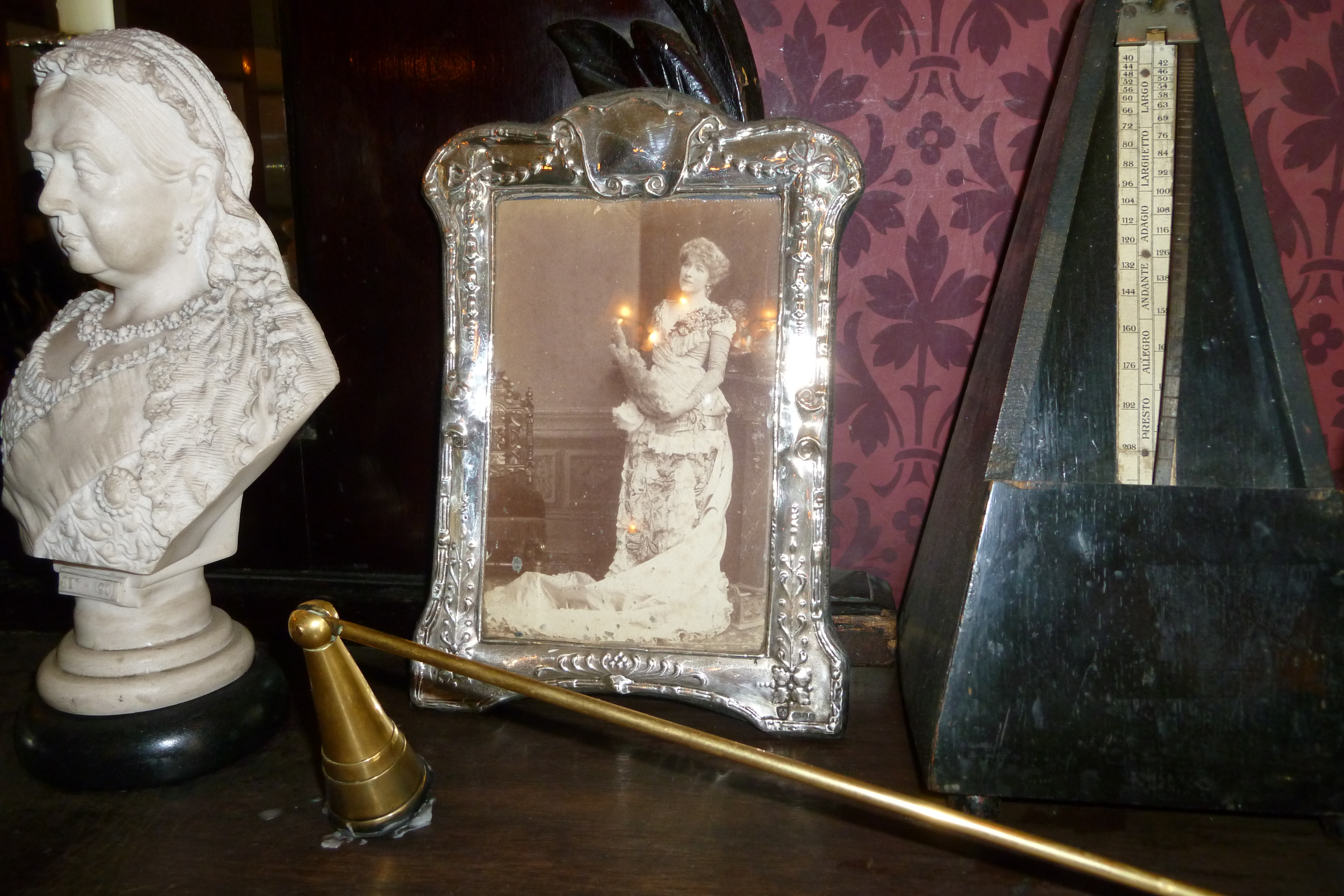
Irene Adler?
Sitting by the fire…

It all rather makes me want to read another Holmes book.

Check out At Home with Books for more Saturday Snapshots!

2012 Reading Challenges – Three-Quarters

Is it really another three months through the year?  The end of September has snuck up on me this time!  But, apparently it’s time for a new update on the reading challenges.

As usual, linked titles go to my reviews, starred titles have reviews coming, and feel free to ask if you want to know more about anything!

Continue reading “2012 Reading Challenges – Three-Quarters”

In the Footsteps of Sherlock Holmes

I brought a great stack of British books with me when I went to London, many of which I hope to share with you.  I thought I’d start off with Sherlock Holmes, which kills several birds with one stone.  It’s a good book for the R.I.P. Challenge, and also lets me share a little about my trip!

First, the book review.  I’ve read a lot of Sherlock Holmes stories and novels in the past, and to be honest, when I look at titles I’m not always sure which ones I’ve read!  But I was almost sure The Valley of Fear was a new-to-me book (and it was), so I brought that one with me to London.  It turned out to be an interesting mix of a novel.

It opens, as most Holmes stories do, with Holmes and Watson invited to look into a strange case.  A man is found dead in his home out in the country–complicating the situation, his home is an old fortress, complete with moat.  The drawbridge was up, so how did the murderer get in, and where did he go?  There are a few strange details about the crime scene and the other people in the house.  The murdered man seems to have had something dark in his past, but the only clue is a vague reference to “the Valley of Fear.”

So it’s essentially standard Holmes fare, and a good mystery with a clever resolution.  Holmes is in fine form, it’s always nice to visit with him and Watson, and all in all it’s a good Holmes story.  The biggest point of interest for me is that Moriarty is referenced here.  I had always previously thought that he was only in the single short story (and, of course, many adaptations).  There’s more about him here, which explains a lot.

The funny thing about this book is that it’s in two parts.  Part One I described above–Part Two is a flashback into one character’s past in the Valley of Fear.  I feel like I can see here Doyle’s desire to get away from Holmes, because he’s essentially given us a non-Holmes novella in the middle of a Holmes novel.  It’s interesting enough, but not as good as the section with Holmes.

It suffers also from a rather peculiar problem which is hard to discuss without spoilers.  Doing my best…there’s a twist near the end which changes almost everything that came before it.  The problem is, in order to give the impression which leads to the shocking twist, for most of the book we’re dealing with very unlikable characters.  It might have been better as a short story, when we wouldn’t have to spend quite as much time with unpleasant people.

Even so, if you’re a Holmes fan, this is definitely worth reading for the mystery in the first half, and the insight into Moriarty.  And it was a great choice for my trip, because I was in a Holmes mood.  You see, one of the places I visited was 221B Baker Street.

I had heard it was a tourist trap, but it was better than reported–at least, part of it.  As I think about it, the museum actually has a fair bit in common with The Valley of Fear.  It opens splendid and very Holmesian, and then diminishes as you go.

221B Baker Street, of course, is the home of Holmes and Watson.  It’s very vertical–you get to visit three small floors.  The first level has the parlor and Holmes’ bedroom, and this level is absolutely superb.  Every detail you could want is there, with Irene Adler’s photo on the mantel, Holmes’ tobacco in a slipper, and Watson’s medical bag on a chair.  In Holmes’ room there’s an open book on beekeeping, which he took up after he retired from detective work–it’s those little details that really impressed me.

The next floor is sort of Watson’s room and Mrs. Hudson’s room (although I never had the impression before that the landlady lived in the same apartment…)  This level is a mix of period things and Holmes memorabilia.  Both are interesting, but they do sit a little oddly together.

The third floor is fairly dreadful.  It’s all done up with mannequins meant to be characters from different stories, and for whatever reason they made choices towards the macabre and the grotesque.  It’s all rather creepy–and I was there at ten in the morning.  I shudder to think what it’s like in the dark.

But like The Valley of Fear, the museum is all worth it for the beginning.  The parlor makes you feel like you’ve stepped into the stories.

Stay tuned this Saturday for more pictures from 221B Baker Street.  I’m anticipating a Holmes-themed Saturday Snapshot!

Other reviews:
Lucy’s Bookshelf
The Literary Omnivore
The Flying Inn
Anyone else?

A Whirlwind Webber Bible Story

The only previous encounter I can recall with Joseph and the Amazing Technicolor Dreamcoat was about eleven years ago in a high school religion class.  Watching the movie again really should have been like a new experience.  Instead, I found it was surprisingly familiar.

Joseph, of course, retells the Biblical story of Joseph and his eleven brothers, who sell him into slavery for the crime of being their father’s favorite.  With his ability to interpret dreams, Joseph rises to greatness in Egypt.  Because this is Webber, there’s a lot of music and production numbers along the way.

Possibly most striking about the play was the Andrew Lloyd Webber-ness of it all.  It’s impossible not to compare it to the 1970s film of Jesus Christ Superstar–the mix of ancient and modern, mostly minimalist sets, flashy lights, over-the-top costumes, and…well, forget breaking the fourth wall, there pretty much wasn’t one.

The movie somehow has a similar feel while being very different in tone.  I find JCS to be both insightful and dramatic.  Joseph didn’t bring much new insight to the story, and it was almost never serious (with the exception of when Joseph first lands in the Egyptian jail, and sings “Close Every Door”).

But if not dramatic, it is a fun production.  Twelve brothers means plenty of production numbers, with many songs played for humor.  Meanwhile, Pharoah and his court are channeling Elvis.  My favorite songs were “Any Dream Will Do” (which I already knew, thanks to a Michael Crawford CD) and the lovely “Close Every Door.”  Apparently the soundtrack has sticking power, as many songs felt remarkably familiar for something I haven’t heard in eleven years.  Funny how songs live at the back of your brain somewhere.

This musical seems to be targeting a younger audience than most Webber plays–after all, the frame is about telling the story to a group of school children.  At least, I would assume it was a younger target, except for all the scantily-clad dancers, and that Donny Osmond spends half the movie shirtless–which at least distracts from his very silly wig. 🙂  He rises above the wig, though, and does a very nice performance.

All in all, I don’t see it being a new favorite but it’s definitely another good light-hearted musical.  And I bought “Close Every Door” on iTunes.