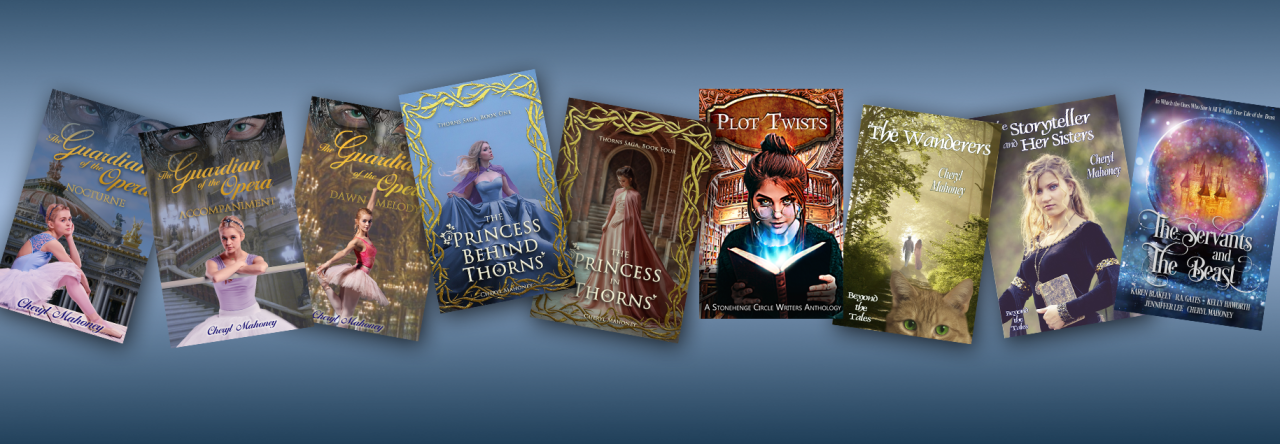
I'm a book review blogger and writer. I have published four novels, The Wanderers; The Storyteller and Her Sisters; and The People the Fairies Forget; and The Lioness and the Spellspinners. All can be found on Amazon as an ebook and paperback. In my day job, I'm a Marketing Specialist. Find me on Twitter (@MarvelousTales) and GoodReads (MarvelousTales).
I got back last week from my trip to London and Paris 🙂 and still need to do a lot of sorting through my nearly 800 photos! So rest assured, you’ll be seeing many travel photos in weeks to come…
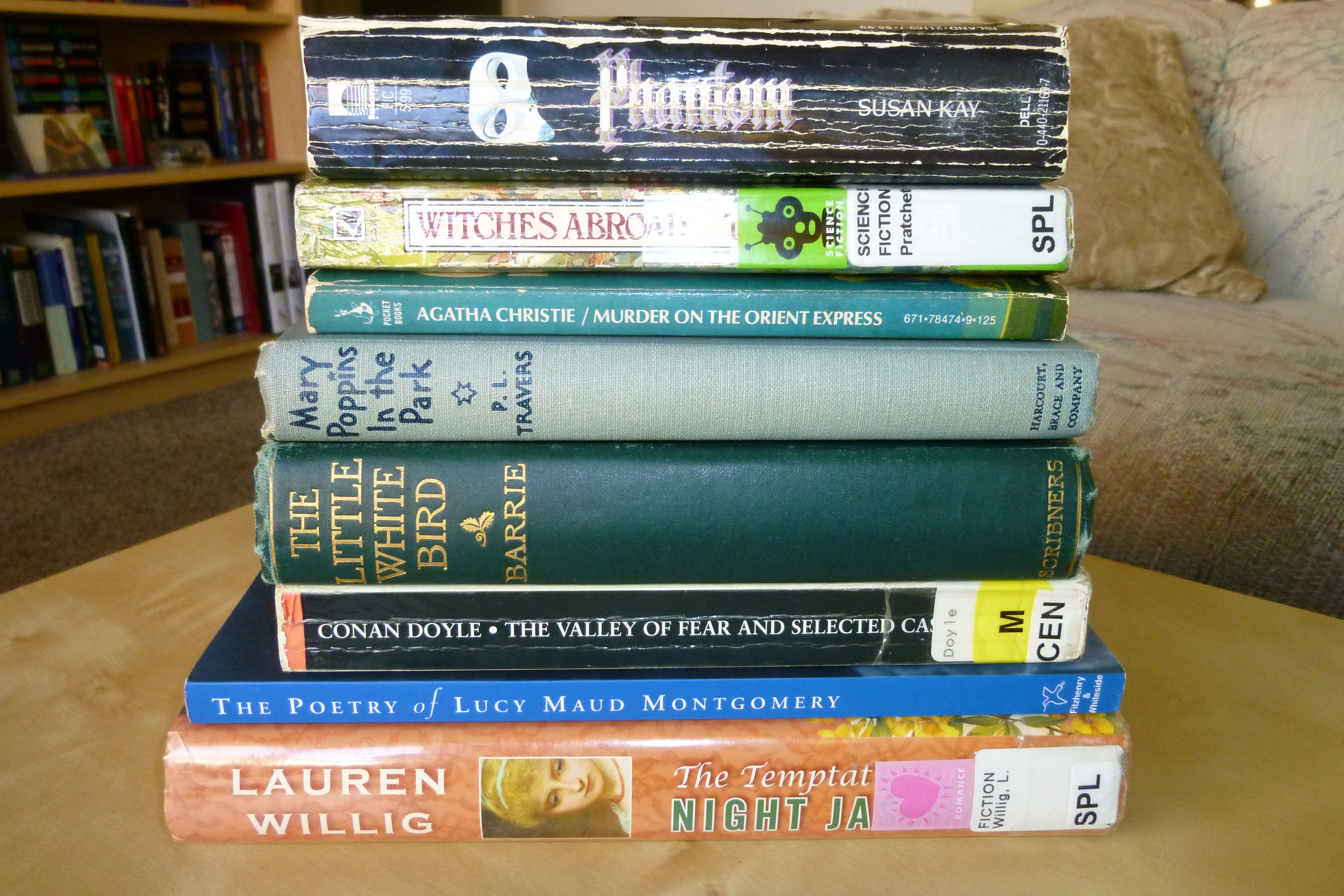
This week, because I haven’t figured out yet which shot of Admiral Nelson or which angle of the Peter Pan Statue is best, I have something travel-related but different. I asked blog readers for advice on books for while I traveled, so I thought I ought to share what I ended up reading!
It is SO much fun to sit in Kensington Gardens reading the last chapter of J. M. Barrie’s The Little White Bird or Adventures in Kensington Gardens, or to sit in the lower level of the Paris Opera House reading Susan Kay’s Phantom (while waiting for a tour, I wasn’t just prowling…)
I always try to bring books that will connect me to the cities I’m visiting. My trips tend to turn into literary pilgrimages to places I’ve read about, so it makes sense to read about the places while I’m there. Not everything in the stack is set in London or Paris, but Susan Kay’s Phantom was brilliant for setting me in Paris, and all the others are at least British–except The Poetry of Lucy Maud Montgomery which has nothing to do with anything. But L. M. Montgomery falls into the “don’t leave home without it” category.
And I had a nice time reading Montgomery’s nature poetry while on a boat on the Thames. So it all worked out.
And these were all good books, most of which I plan to review. Besides sorting photos, I have lots of book reviews to write…
Come back soon for book reviews and more photos! In the meantime, check out At Home with Books for more Saturday Snapshots.
This is one of my favorites among the short stories I’ve written. I posted it here somewhere back at the beginning of the blog, but I thought I’d share it again.
When he shut his eyes, he could almost forget he was cold. February 1882 in Paris, and in all his long experience of nine years the boy couldn’t remember a colder winter. The wind howled down the street, past the shabby buildings and across the boy’s thin cheek. He kept his eyes shut and concentrated on the music.
The violin played in counterpoint to the wind, neither quite strong enough to defeat the other. The boy ignored the constant trudge of footsteps, the mutter of voices, the whistle of the wind, and tried very, very hard to hear only the music. He opened his eyes only at the sound of coins clinking together. He looked down at the violin case open on the ground at his feet, and easily identified the one that had been added. There weren’t very many coins there. He looked up to see a tall man wrapped in a long black cloak, hat pulled low over his forehead, casting his face in shadows.
“Merci, monsieur,” the boy murmured. His eyes dropped and he continued playing his violin.
The man didn’t move, and as the moments passed the boy became perplexed. People stood and listened, once in a while, in warm weather. In the cold and the dim of a winter twilight people wrapped their coats tight around them and hurried on, heads down, intent on whatever warm fireside was waiting before them. If they dropped a coin at all it was without stopping, often without even looking, certainly without waiting for the boy’s whispered “merci.”
The moments slipped past. The violin music didn’t falter but neither did the man move and finally the boy’s eyes stole up to his face again.
I think you all know that I’m kind of an L. M. Montgomery fan. She’s my favorite author and I’ve read every bit of her available prose. So naturally I was intrigued when I encountered an Emily of New Moon television series. It’s not new, but it was new to me. Adaptations of beloved books can be wonderful or terrible, and fortunately this one was more good than bad.
Emily is an orphan who moves to New Moon farm after her aunts and uncle draw lots to see who’ll get stuck with raising her. She ends up living with sweet Aunt Laura, domineering Aunt Elizabeth, and dreamy, slow Cousin Jimmy. They don’t know quite how to handle stormy, emotional and impulsive Emily, who longs to be a famous writer. But even Aunt Elizabeth warms up in the end.
I should probably note that it’s been some time since I read the books, but I think I remember them reasonably well. It’s a funny balance here, in that the characters are very true to the book, while the plot isn’t. I was okay with that, though. I’m always more forgiving of plot changes than character changes–especially in a TV show where they obviously need more ideas than a book (even three books) will provice.
The premise, as described above, is correct, but the larger plot arc ends up diverging dramatically (though some of the early episodes draw directly from book vignettes). It’s still fun to see Emily and everyone else brought to life, and even if the things they’re doing aren’t things that happened in the book, what they do fits with their characters (with the possible exception of Aunt Laura, who’s basically right but exaggerated in some ways).
Emily is a delightful heroine, in book and television, and of course I’ve always sympathized with her dreams of literary fame. I also loved seeing her friends, wild-child Ilse, aspiring artist Teddy, and (my favorite in the adaptation) hired-boy Perry who plans to one day be governor. They’re well-drawn characters and they’re enjoyable characters, having adventures large and small.
I think the feel of the show was also right to L. M. Montgomery, though it may not be what people would expect–and it probably actually helps that I’ve read so much of her writing. The show does a lot with Emily’s second sight, especially in the first season. Emily frequently sees spirits (most of them friendly). The book was not that visual about it and it wasn’t that much of a focus, but Emily did have a few supernatural experiences–mostly visions or dreams of the past or the future. It was part of the book, and it was also part of L. M. Montgomery’s beliefs, so I think she’d be all right with it here. Ghosts also show up in some of the stories in Among the Shadows, one of my favorite collections of Montgomery’s short stories.
The series on a whole delves into some darker places and touchier social issues than most of L. M. Montgomery’s writing, but I never thought it went too far. There’s a character who struggles with alcoholism, and another who has a baby out of wedlock. It’s true you won’t see that in L. M. Montgomery’s novels, but I’ve read her journals too and she wasn’t blind to the world. I think she might have gone deeper and darker in her books if her publishers had let her. Although I don’t think she would have been as forgiving as the show towards people who broke society’s conventions!
I especially enjoyed the first two seasons. The show takes a turn in the remaining two seasons. It’s like they thought it had to be more exciting, because the plots get more dramatic and less plausible. People fall in and out of love quickly, Queen Victoria comes to visit, and there’s a strange number of dream sequences. Also, even though Emily is theoretically fifteen by the end, she still looks twelve to me, and far too young for the (reasonably innocent) romances they start her on. I’m glad I watched to the end, to see how things turn out, but I do recommend the first two seasons as better.
I think this show can be watched and enjoyed whether you have or haven’t read the books. Take it at face-value if you don’t know the source, and you have a great set of characters having interesting adventures. If you know the books, you have familiar characters having adventures. They weren’t all the right adventures, but for me at least, I liked the characters so much and enjoyed the adventures enough that it really wasn’t a problem.
A quick update today, to say that I just got back from my trip to London and Paris. I scheduled posts ahead, but if you noticed a distinct silence in the comments, that was why. The trip was amazing 🙂 and you will be hearing (and seeing) more about it soon! While I’m getting back on top of things, I have another classic review today, very relevant to my recent trip.
My hotel in London was near Kensington Gardens for a variety of reasons. It really was a practical choice. But I also stayed in that part of town because of J. M. Barrie. The author of Peter Pan, he lived near Kensington Gardens, where he met the Davies boys, the real life inspirations for Peter. He wrote another book inspired by the Davies, featuring Peter in a cameo. It’s really that book, The Little White Bird, that’s given me my fascination with Kensington Gardens.
*********************************
It really all began in the The Little White Bird. It’s very possibly my favorite J. M. Barrie book, even over and above Peter Pan.
The Little White Bird; or Adventures in Kensington Gardens is a tale about a man who befriends a little boy, and has adventures with him in London and Kensington Gardens. If you’re not already suspecting the autobiographical nature of this novel, the little boy’s name is David. Historically, J. M. Barrie befriended the Davies brothers in Kensington Gardens. Not too subtle! He also has a dog named Porthos, as did Mr. Barrie. The man in the story is left unnamed. He’s referred to as Captain W–. I somehow picked up the habit of calling him the kindly old gentleman.
A review in The Times said of the book when it was first published, “The peculiar quality of The Little White Bird…is it’s J.-M.-Barrie-ness…whimsical, sentimental, profound, ridiculous Barrie-ness…Mr. Barrie has given us the best of himself, and we can think of no higher praise.”
I couldn’t put it better. The Barrie-ness is often the best part of Mr. Barrie’s books. The charm, the whimsy, the flights of fancy, the sweet sadness…the book is funny and tragic, absurd and heartbreaking, and sometimes all at the same time. The tragedy, for the kindly old gentleman at least, is that David doesn’t really belong to him, and will one day grow up and leave him.
And there we come to the Peter Pan connection. Besides thematic connections, there are also four chapters in the middle of the book that are about Peter. They’re almost oddly unrelated to the rest, other than by geography, but I think they’re meant to be stories that the kindly old gentleman tells David. In Peter Pan, Peter tells Wendy, “I want always to be a little boy and to have fun. So I ran away to Kensington Gardens and lived a long, long time with the fairies.” And this is that story.
We read about Peter’s running away from home, find out why he doesn’t grow up, see him meet the fairies, and also meet a girl he knew long before there was Wendy. This is before Peter went to Neverland (although an island features) and the Lost Boys and Tinkerbell are yet to come on the scene, but there are other wonderful magical creatures and adventures. The four chapters about Peter, along with one chapter giving a Grand Tour of the gardens, have been excerpted and published as Peter Pan in Kensington Gardens, with lovely illustrations by Arthur Rackham.
The Baby’s Walk
The Grand Tour (and map) is especially wonderful, because if you’re ever in London, I highly recommend spending an afternoon in Kensington Gardens with The Little White Bird in one hand. It’s what I’ve done, and I spent a couple of hours going, “Oh, there’s Mabel Gray’s gate! And the Round Pond! And that must be the Baby Walk! And this is probably the weeping beech where Peter sat!” Even a century later, I was able to find almost everything J. M. Barrie described. And it’s a little easier to get to Kensington Gardens than to figure out which star is the second one to the right.
One more note on The Little White Bird–George Davies, who was the chief inspiration for David, took a copy of the book with him to the trenches in World War I. I think that’s one of the saddest and sweetest things I ever heard.
Even in much less dire reading circumstances, it’s a lovely and enjoyable book–and, of course, magical too.
 It is SO much fun to sit in Kensington Gardens reading the last chapter of J. M. Barrie’s The Little White Bird or Adventures in Kensington Gardens, or to sit in the lower level of the Paris Opera House reading Susan Kay’s Phantom (while waiting for a tour, I wasn’t just prowling…)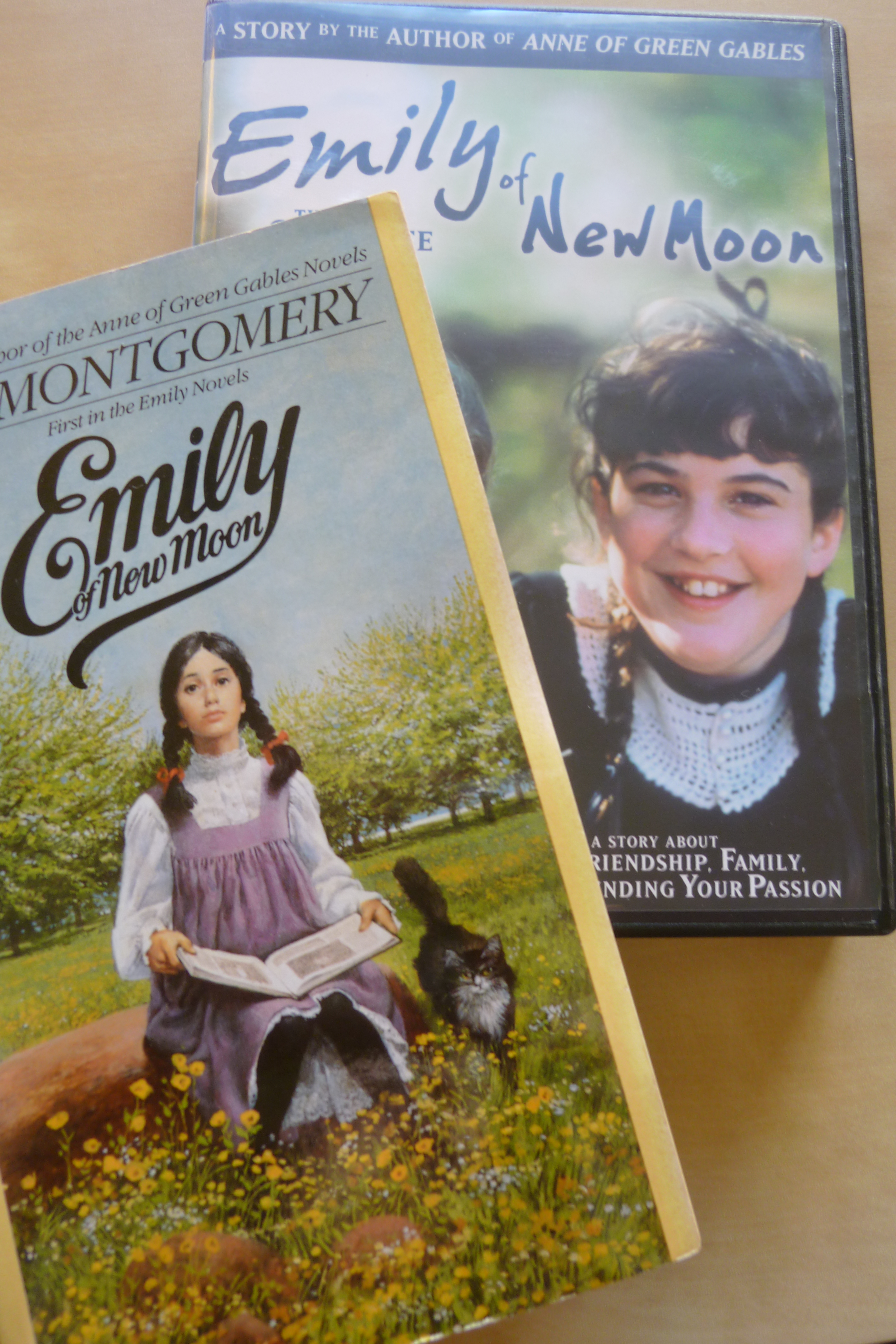
 television series. It’s not new, but it was new to me. Adaptations of beloved books can be wonderful or terrible, and fortunately this one was more good than bad.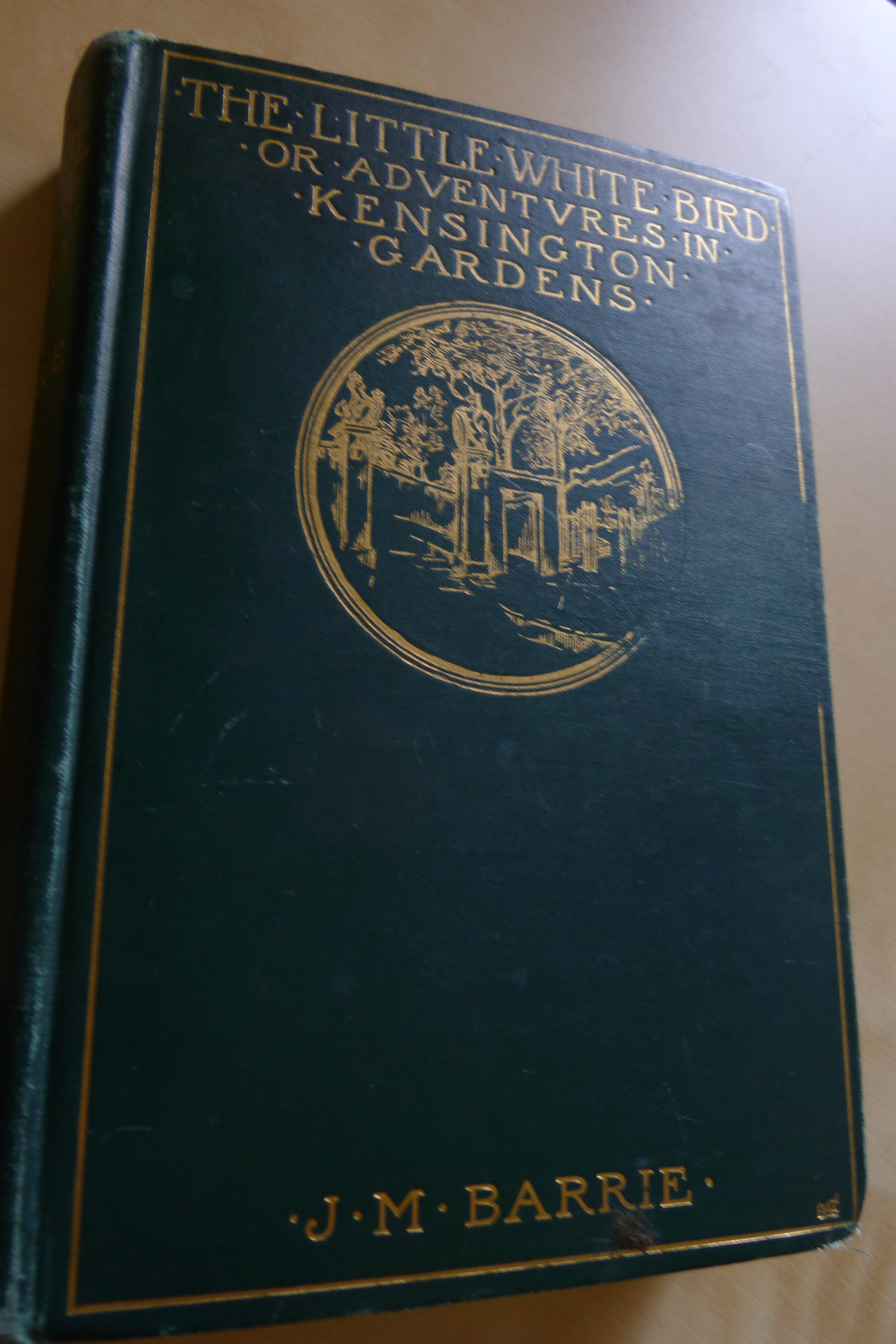
 . It’s very possibly my favorite J. M. Barrie book, even over and above Peter Pan.

