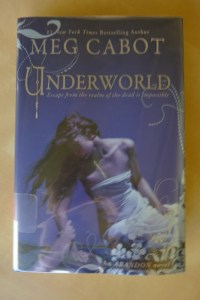
 I almost never stop partway through a book. But I got 65 pages into Underworld
 by Meg Cabot, and realized I was so irritated that there was no real point in going on. I’ve never reviewed a book I didn’t finish, but…I review when I have a reaction, and I had a reaction to the first 65 pages of Underworld. So you can view the following as venting, or as commentary on romance and female protagonists in YA fiction. Take your pick.
Underworld is the recently-released sequel to Abandon, with one more book still to come. The trilogy is a modern-day retelling of the Hades and Persephone story. In the last book (spoiler alert), we met Pierce, who had a near-death experience, met John the Lord of the Underworld, and came back to the living world with John following her, intent on making her his consort. There’s also a nasty group of Furies chasing her, and at the end of Abandon, John takes the still-living Pierce to the Underworld so that the Furies won’t kill her…which would send her to the Underworld. It seems kind of like burning your belongings so that they won’t be stolen, but…all right, Cabot’s trying to follow the myth. Fine.
I enjoyed the last book (read my review), though I thought Pierce was sadly lacking in depth, and I wanted to believe John was a brooding hero with a good heart, even though he hadn’t shown much evidence of the good heart part. But all in all, I was interested in the sequel, even if my expectations weren’t high. Low as they were, they weren’t met.
The book opens with a dream sequence (which seems like a silly place to start, for one thing). Pierce dreams that John is drowning, and as he’s swept away, she comes to the realization that she really, deeply loves him. Since books are often about the developing of feelings between characters, this seems like a strange place to open a book. Also, having your character experience an epiphany moment in a dream sequence–I don’t know, it feels like cheating.
You’d kind of expect (I would, at least), that this kind of epiphany would have an impact when Pierce wakes up. But not so much. There’s plenty of opportunity for it to immediately have an effect, since she wakes up with John next to her in bed (shirtless, something very much dwelled upon). Apparently he wasn’t there when she fell asleep; I don’t remember precisely how the last book ended. Pierce doesn’t mention her epiphany, and there follows a very fragmented conversation about their relationship and their future.
Pierce cannot seem to figure out what she’s feeling. It’s all, I love him but I don’t want to be here but I kinda want to be here but what about my mother but I don’t want to lose him but he’s also kind of pushy but maybe I shouldn’t say so and oh, he gave me a bird, that makes up for everything but then he didn’t tell me if I eat the food I’ll be trapped here and oops, I hurt his feelings, I’m a horrible person.
That’s basically a summary. And sure, I suppose she’s meant to be conflicted, but it didn’t feel like a conflicted character. It felt like we were skimming along on very shallow emotions which were never pursued, and changed so often that I was getting dizzy.
But the big problem–the really BIG problem, which you might be catching from my summary already–is the dynamic between John and Pierce. It’s scary. I mean, it’s making Edward and Bella look healthy by comparison, and that’s hard to do.
John is nowhere demonstrating to me that he has that good heart I wanted to believe in through the last book. In fact, he comes off as manipulative, controlling and emotionally abusive. He directly says that he only gets “wild” when he’s trying to protect her, which sets all my alarms going about an abusive boyfriend.
John pulled Pierce out of her life, took her away from all her friends and family, put her in his castle alone and locked all the doors so she won’t wander around…to protect her. That is SO creepy. He doesn’t give Pierce any real choice about all of this, doesn’t treat her with any respect, or like she has any right to make decisions about her own life. He actually justifies locking her into the castle, because she might foolishly decide to venture out and put herself at risk.
And the scariest part is–I don’t think he’s supposed to be the villain. I really think he’s supposed to be the romantic hero and all of this is well-meant.
CREEPY.
I know Cabot is tied into a tricky storyline from the original myth, but this didn’t have to be this bad. I’m reminded of Robin McKinley’s Beauty. The Beauty and the Beast story is similar, in terms of the Beast keeping Beauty in the castle, but I love McKinley’s Beast. They have a lovely, sweet romance. In a weird way, maybe it’s because the Beast never claims to be protecting Beauty. He’s keeping her in the castle and it’s all above-board and honest, and it doesn’t have this emotional manipulation going on.
The dynamic in Underworld gets even more disturbing. I find it most alarming that Pierce keeps blaming herself when John gets upset. She tries to mention the whole thing about him in bed with her and maybe they should set some boundaries, and he’s deeply offended–because obviously he was only there because she had a nightmare and he was trying to comfort her, and why didn’t she figure that out? And they can talk about boundaries, but it’s kind of pointless because they’re going to be together for eternity.
Then when they have breakfast, Pierce misremembers the Persephone myth, eats a pile of waffles figuring she won’t be trapped unless she eats a pomegranate, and then finds out any food ties her to the Underworld. Granted, she was an idiot and should have checked on something like that. But he also should have made sure she knew what she was doing, and “I thought you knew” is an incredibly lame excuse. When they fight about it, he storms out after misinterpreting everything she says and she ends up berating herself for hurting him. Um…what?
This is the second time I’ve seen a Cabot heroine (they don’t deserve the term–female protagonist, let’s say) fight with her boyfriend and then decide she was wrong–when she was RIGHT. I don’t mind flawed protagonists, or characters who need to grow, but I can’t escape the feeling that Pierce and John aren’t going to grow at all, because they’re supposed to be fine the way they are.
On the plus side (sort of), 65 pages of Pierce made me profoundly grateful for Alanna the Lioness and Princess Cimorene, for Valancy and Symone and McKinley’s Beauty, to name just a few of the so much better heroines out there. And, for that matter, 65 pages of John made me grateful for George Cooper, King Mendanbar, Barney Snaith, Titus Oates and McKinley’s Beast.
This is why I stopped on Page 65. By that point I wanted to throw something (maybe the book) at Pierce, and there are too many better books out there to waste time getting frustrated by a dysfunctional YA romance. And if someone else finished it and knows that the relationship or the characters vastly improve–please, I’d love to find out I’m wrong here!
Author’s Site: http://www.megcabot.com/
Other reviews:
Reading with ABC
Dark Faerie Tales
The Page Sage
I’m a Book Shark
Dazzling Reads
Hippies, Beauty and Books, Oh My
And lots more…tell me about yours!


 . I read Out of the Silent Planet upwards of eight years ago, I think I read part of Perelandra, and then I never finished. Since the first one had gone blurry, I decided I’d better reread it, and go from there.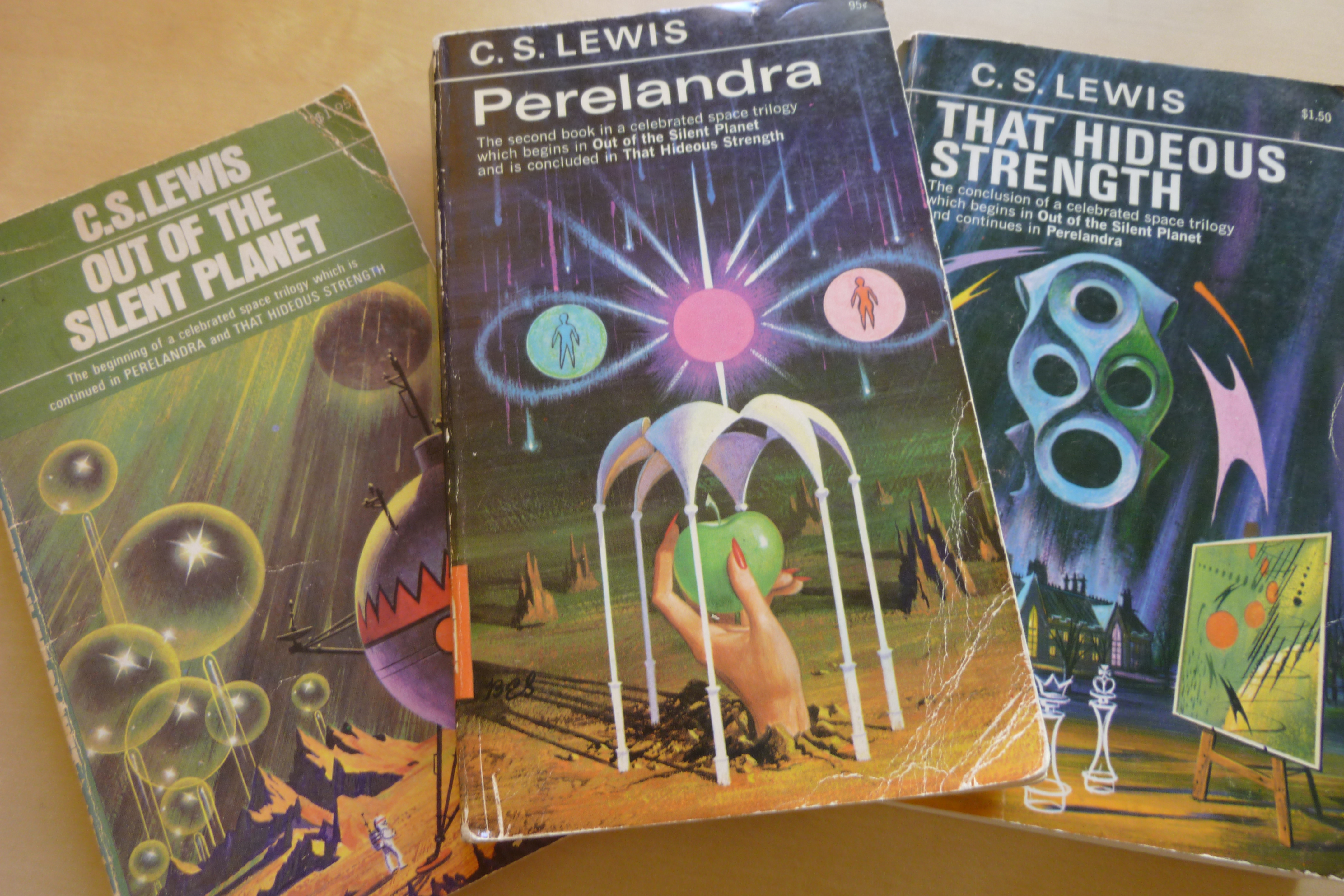


 Tales of the Marvelous