To Sleep, Perchance to Dream

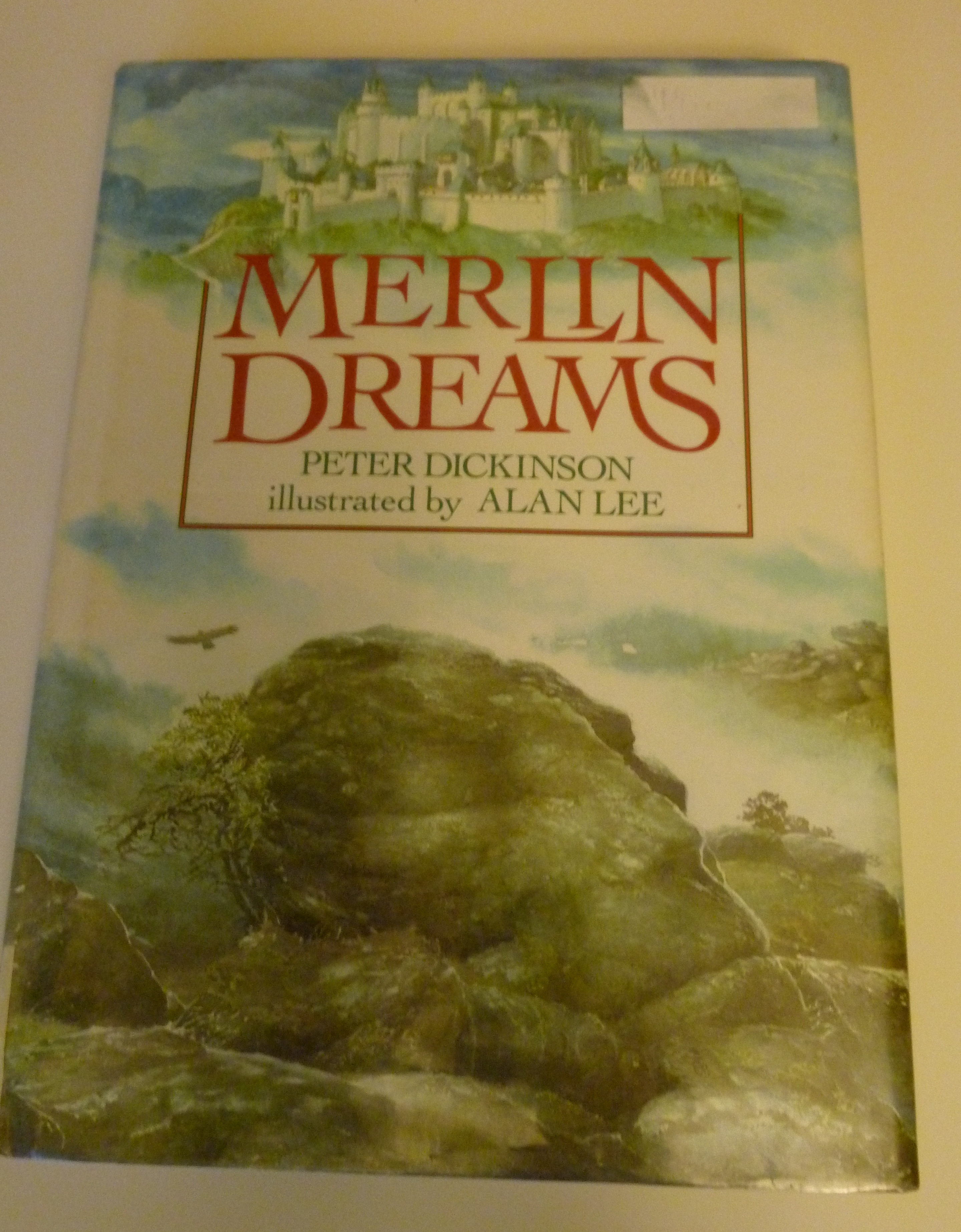
There’s an old legend that Merlin never died–that he’s imprisoned beneath a stone somewhere on the moor, sleeping through the centuries.  And while he sleeps, what might he dream?

This is the frame-story for Peter Dickinson’s wonderful book, Merlin Dreams.  He tells eight stories, eight dreams of Merlin beneath his stone.  Between each story Merlin half-wakes, remembers his life or senses what goes on above him, then drifts back into sleep…and has another dream.

I’m fascinated by the frame story, and the short stories are excellent too.  Several have a vaguely Arthurian flare, although I don’t think any retell an actual legend.  But there are dashing (and not so dashing) knights, brave damsels and many unexpected heroes.  There’s a king, fallen from honor and strength who needs a little girl to show him the way back.  Another little girl befriends a unicorn in the woods, only to be threatened by men who want to exploit the opportunity to hunt a unicorn.  Two stories feature tricksters who put on shows for country folk they hold in contempt, only to be undone by their own tricks.  There’s a young prince who fights a dragon, and another, particularly ugly young man, who fights a sorceress.  And woven throughout, Merlin remembers his own life, and strange fragments of other scenes and stories.

There’s a wonderful magical, mystical quality to the stories.  Often all is not as it seems, and the magic holds plenty of surprises.  Even though I don’t think these are traditional stories, many have that enchanting feel to them.
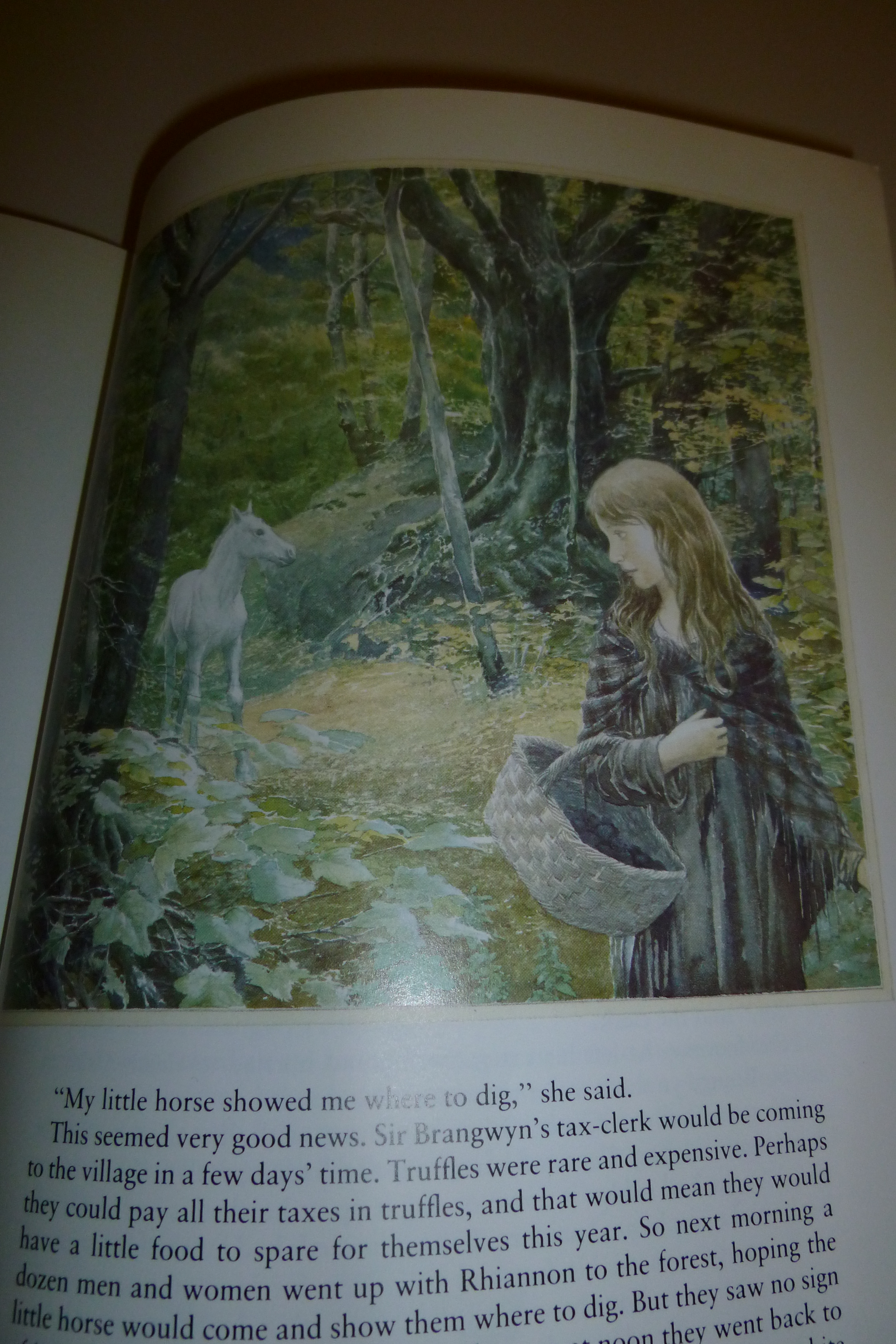
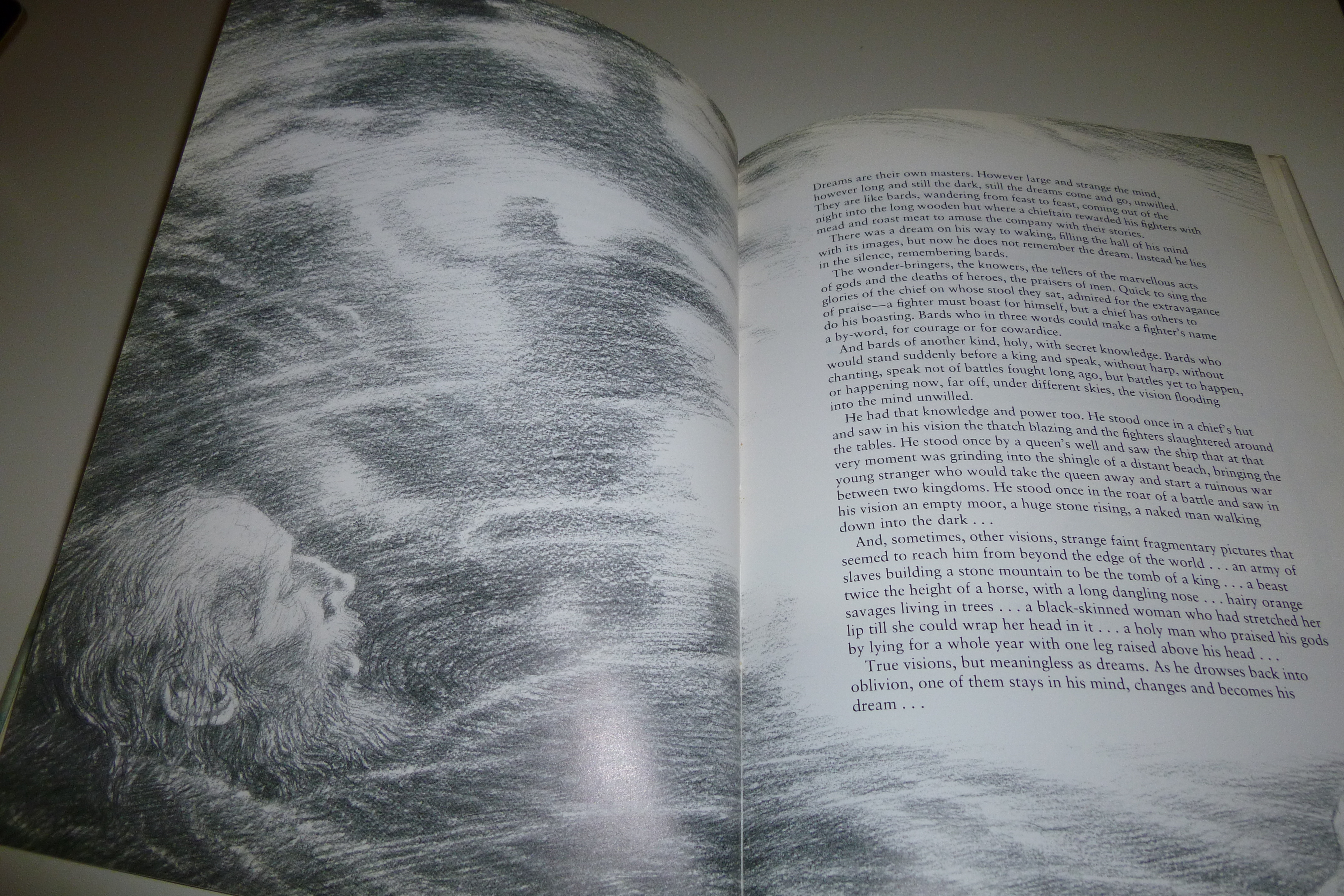
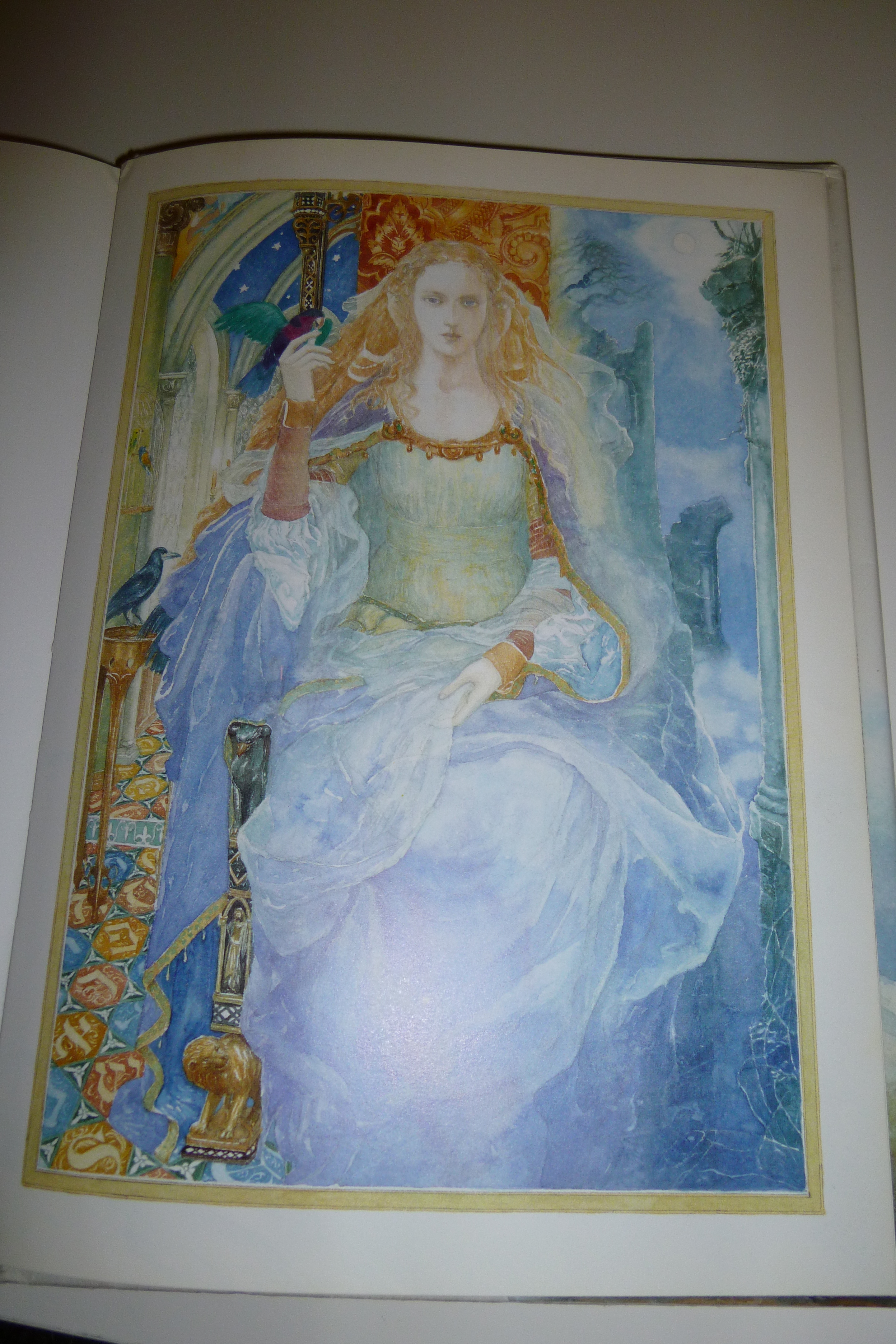
Part of it’s very much the writing.  Part of it is the illustrations too.  I honestly don’t know if there are multiple versions of this book, but if there are, make sure you get a copy with Alan Lee’s illustrations.  There are many throughout the book, some dark and shadowed, some vivid and bright.  They bring the stories to life in a new way, and many are just beautiful.

This is generally put in the kids section, and I think the short stories are definitely good for kids.  A word of warning that some of Merlin’s reflections are pretty dark.  And as beautiful as most of Alan Lee’s illustrations are, some could be disturbing for a smaller child.

There’s no Table of Contents to the book, which can be a little inconvenient at times.  But I think it fits too.  After all, it’s not just a neat line of stories.  It’s a series of dreams, and if you could line them up and list them out and easily jump to one or another, I think that would lose some of the flowing, magical quality of the book.

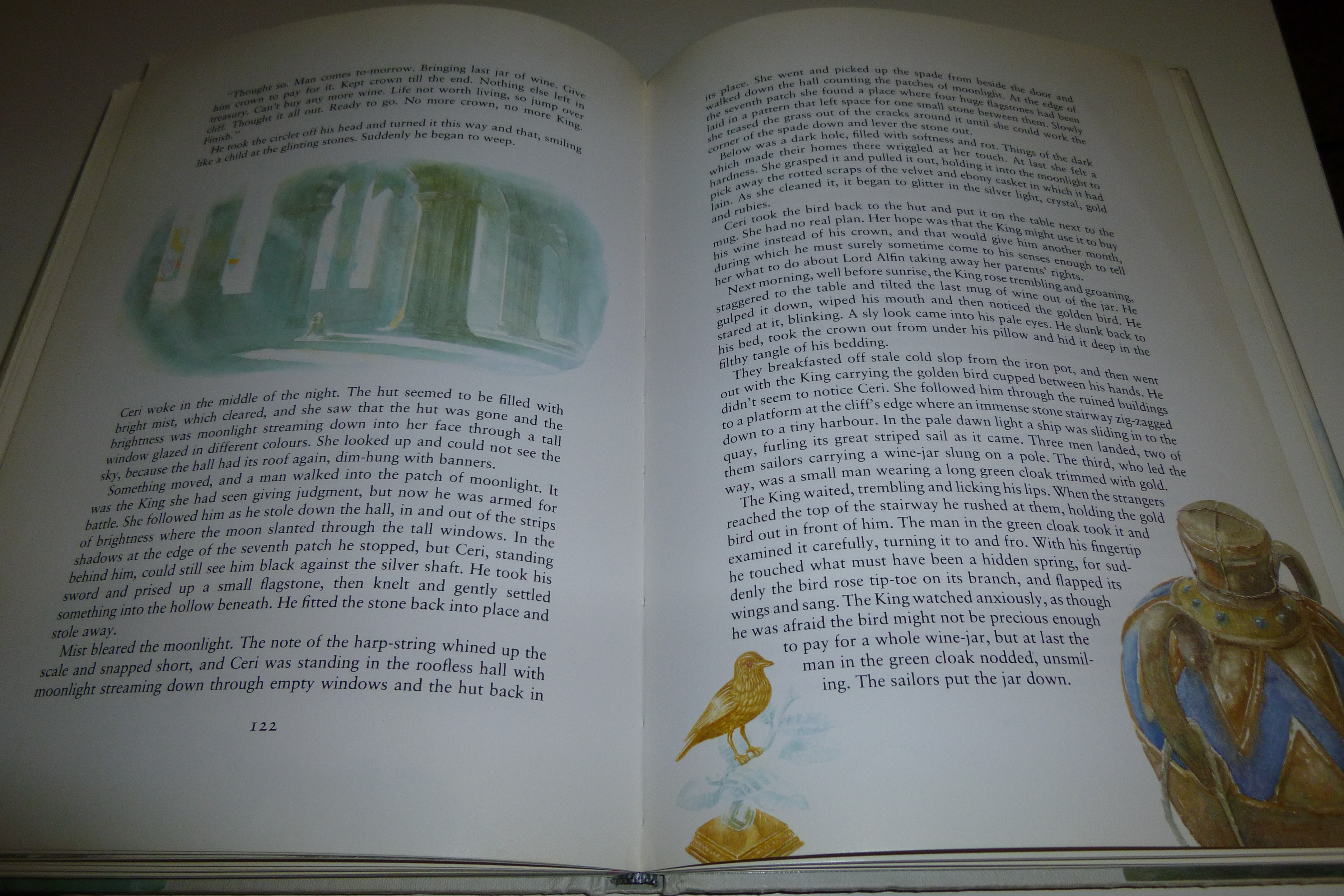
I can’t resist a few more pictures!  You can click on them to see them larger.
    

Author’s Site: http://www.peterdickinson.com/
That Dog

I’m in a writing class at the moment, a weekend thing, and we had an interesting prompt in a recent class.  We were supposed to choose from a pile of pictures cut out from magazines, and write a story about meeting the person in the picture.  I seized on the one picture of a woman with a dog, and swiftly decided that I was more interested in the dog than in her.  And who would be more interested in meeting a dog than a cat?

So I scribbled away a bit, and here’s the resulting short…

********************

I sprawled out on my front steps, and surveyed the neighborhood.  All was well in my domain.  Those annoying squirrels were being quiet for once, instead of chattering at me (you should hear the language squirrels use when they’re upset), and the birds were flocking way off in the distance, at least two blocks away, where someone had spilled some crackers.  Birds get excited about the silliest things.

Then a new presence entered the scene, and I tensed.  It was That Dog.  He was trotting jauntily down the street, tongue flopping in the breeze, at the end of a leash held by a woman I didn’t know.

But I knew That Dog.  He lived in the yard behind mine.  He didn’t usually walk onto my street, but we had met over the fence.  We had not met amicably.

That Dog is a black and white brute who fancies himself quite the hunter.  He’s also the smelliest, stupidest, creature in the neighborhood, barring possibly a particularly mangy pigeon who drifts through occasionally.

He spotted me as he and his owner (dogs have owners; cats do not) came down the street.  The ears went back, the head went up, and the peaceful quiet of the afternoon was shattered by rude and uncouth barking.  He bared his teeth and lunged at me.

I twitched the very tip of my tail, and gave one paw a lazy lick.  You see, cats are observers.  And I had observed how leashes work.

Sure enough, That Dog snapped to the end of his leash long before he got near me, and strained frantically against it, rearing onto his hind legs, barks taking on a strangled note.

“Bingo, behave yourself,” the woman said, tugging back on the leash.  “You know you shouldn’t chase the nice cat.”

I smirked at Bingo.  Nice cat, that was me.  And that name—he told me his name was Spike.  I wasn’t going to forget that one in a hurry, and neither would he.

That Dog was dragged off down the street, still yapping his fool head off, and eventually the neighborhood returned to its former peace.  If I was lucky, I could get a good nap in before the birds got tired of those crackers.

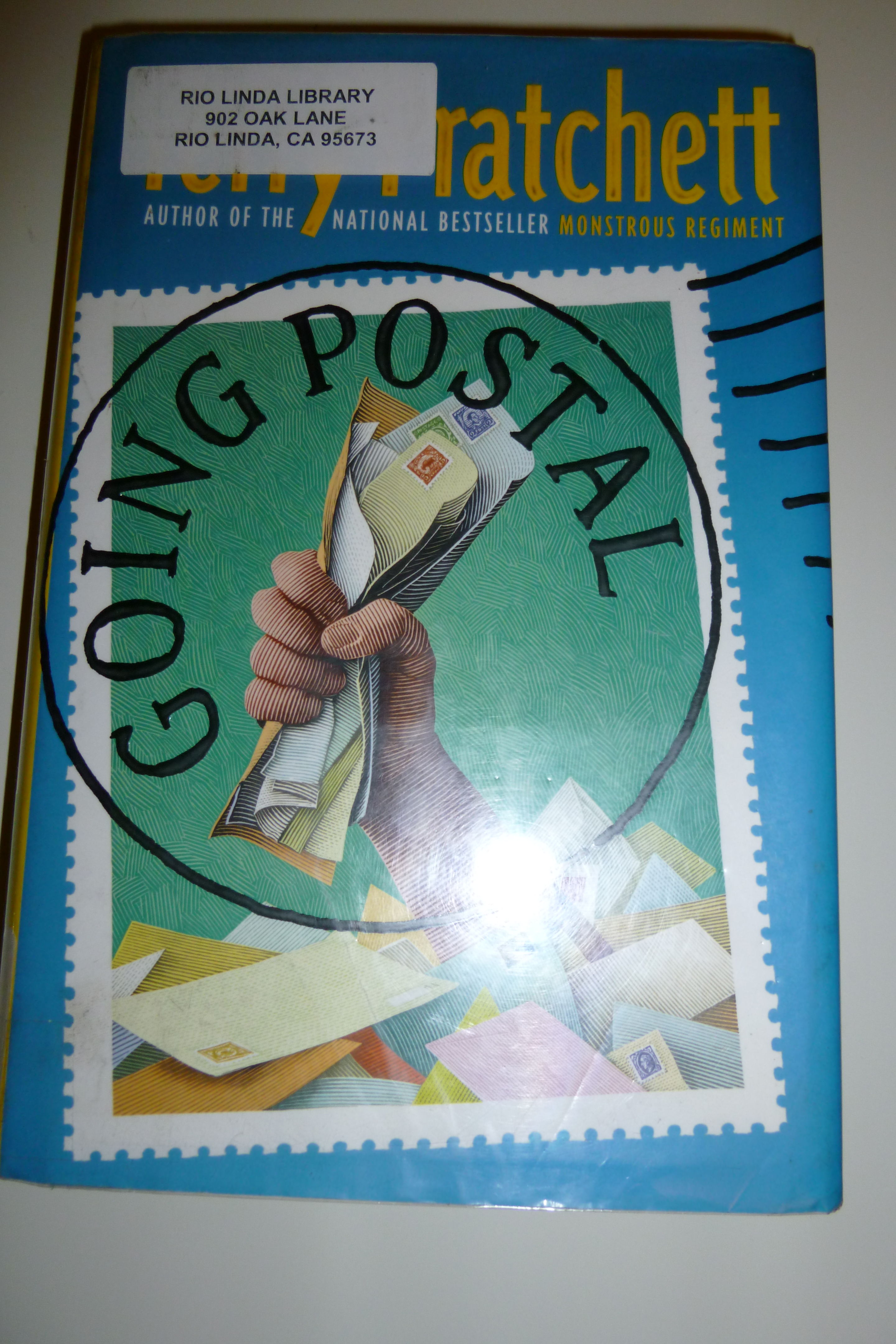
Going Postal with Terry Pratchett

I’ve mentioned Terry Pratchett and Discworld a few times recently in “Favorites Friday” posts, but I haven’t done a review yet.  Time to change that!  Part of the trick with Discworld (rather like Dr. Who) is figuring out where to start.  Discworld is one of those big sprawling series with over forty books in it.  If that sounds intimidating, don’t worry–the books are interconnected, but very few directly follow each other plot-wise, so you can read as many or as few as you feel like.

And you can probably start almost anywhere.  I’ve bounced all over the series, and while with some it was clear that there was a previous, related installment it might have helped to read first, I don’t feel like it severely hampered my enjoyment of whatever I was reading.  However, there probably are some places that are better to start than others.

I actually wouldn’t recommend starting at the beginning.  That’s The Colour of Magic, and it’s good, but Pratchett was still sorting the world out, and it’s not as brilliant as many of the later books.  One really good place to start would be Going Postal.

Going Postal stars Moist von Lipwig, a fast-talking conman who was supposed to be hanged, but finds himself revived after the gallows, and designated the new Postmaster of Ankh-Morpork.  The post office has been out of business for years, and the old building is falling to pieces–not to mention it’s literally filled with undelivered mail.  Moist finds himself trying to bring back the post, despite completely mad co-workers and violent competition from the clacks (telegraph) service.

It’s a wonderful, funny book, and it’s a good starting point because it’s stand-alone.  Moist and most of the other major characters make their first appearances here.  But you also get to meet a lot of characters who are significant in the series, but have only supporting roles here.

Vetinari, the Patrician, gets a good part; he’s a tyrant, and he’s terrifying, but he makes things work.  You get to meet a lot of the City Guard, who are my favorite group of characters (they have seven, soon to be eight, books written about them).  The Wizards of Unseen University, who are all at least little bit bonkers, make a guest appearance.  And I can’t remember for sure, but I think Death gets at least a cameo.  Death wears a big black hood and talks IN ALL CAPITAL LETTERS.  Usually someone dies at some point in every Discworld book, so Death gets to show up, and a few of the books focus on him.

So this is good for introducing characters who are important in other books, and it’s also good for giving you a feel for the city of Ankh-Morpork, and Discworld in general.  Pratchett is one of the funniest writers I’ve ever found.  He creates a crazy world (did I mention it’s a disc, which is on the back of four elephants, who are on a turtle?) filled with completely nutty and hilarious characters.  And he has a way of writing single lines which will make me laugh for days afterwards whenever I think of them.  Feeling down?  Read Pratchett.  I fully believe in self-medicating depression with Terry Pratchett books.

They’re not merely funny, though.  Pratchett is often very satirical.  Much of Ankh-Morpork is an extreme, but it’s an extreme you may recognize as based in something in our own society.  Going Postal is good satire too.

High, high recommendation for Discworld.  You won’t regret it!

Author’s Site: http://terrypratchettbooks.com/

So I Finally Watched Doctor Who…

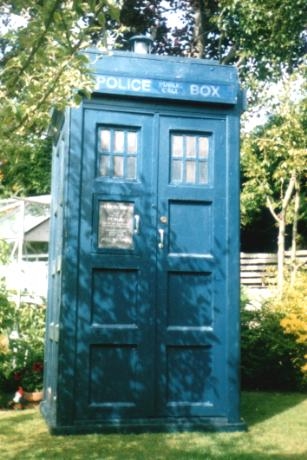
The TARDIS - it's bigger on the inside

For ages, everyone told me I had to watch Doctor Who.  So I finally did–and they were right!  I always say my main interest is stories, not exclusively books…so why not a review of a TV show with truly brilliant storytelling?  And it gives me an opportunity to be gleeful about Doctor Who!

The history of the show is complicated.  It ran on the BBC for 26 years, starting in the sixties.  One reason it took me a while to start watching is because I just didn’t know where to start.  But finally enough people told me I could just begin with the recent series, which runs from 2005-present, and that’s what I did–you can too.

The premise has to be every storyteller’s dream, because it’s so limitless.  The Doctor is the last of the Time Lords, and he travels around the universe in the TARDIS, which from the outside looks like a blue phone booth–but it’s bigger on the inside.  It has incredible power, and can travel through time and space.  So you can go into the future and have a sci fi show–go into the past and meet Queen Victoria–invent all kinds of aliens, which sometimes resemble the supernatural (which means you can have ghost stories)–and if things ever get dull, recast the Doctor and give him a new sidekick.  You see, the Doctor never dies, he just regenerates with a new face, which is how they can now be up to the 11th Doctor.  He usually travels around with a companion, but the companion is open to replacement.

So you have a premise with pretty much no boundaries.  And the show itself is exciting, witty, suspenseful, hilarious…  I’ve just finished Season Two, so I can’t yet comment on anything after that.  But the first two seasons are fantastic.

I admit it did take me a few episodes to get into the show.  The recent series opens with the 9th Doctor, played by Christopher Eccleston.  He’s a sort of goofy action hero, who will save the day, while grinning and making jokes.  At first I wasn’t sure I liked it–then I had a complete turn-around and loved it.  One cool thing about a constantly funny hero is that when he does turn serious, it means a lot.  His face goes solemn and the tension rises through the roof.

The Doctor regenerates at the end of Season One, to be replaced by David Tennant.  He’s goofy, but in a different way.  Still very mercurial, but he gets serious more often.  It took me a few episodes to forgive him for not being Christopher Eccleston, but by the time he crashes a white horse through a mirror into a French ballroom, I decided I loved him too.  He brings a whole new level of awesome to the character.

I have not yet watched enough to get to know the Doctor’s later companions, but for the first part of the series he travels with Rose.  She rises above really bad make-up to be a quite good character, and there’s excellent chemistry between her and both Doctors.   When I say “chemistry,” though, I don’t mean romance, and that’s actually something I love about the show.  The Doctor and Rose are very, very close–but they’re friends.  There isn’t even any flirting or innuendo.  They’re just really, really good friends.  You don’t see that very often in TV.

Another thing that strikes me about the show is its confidence.  I think it comes of having a forty-year history and apparently an enormous British fanbase.  I don’t quite know how to explain how a TV show can be confident–but I think it’s that they present sometimes absurd things and treat them seriously.  They don’t mean it ironically, it’s not campy, and yet instead of laughing at them–I end up believing them!  For instance, the Daleks.  They’re this alien race that’s totally ridiculous-looking, these rolling tank things that look like they belong in Lost in Space, and they roll around with funny voices saying, “Exterminate!  Exterminate!”  But the Doctor says that they’re the ultimate evil and very dangerous, and he and everyone else takes them very seriously, and I find myself looking at other alien races on the show and thinking that they’re not as threatening as the Daleks.  Really, I don’t know quite how they do it.  And sometimes, the show does know it’s being absurd, and has really funny episodes as a consequence.

Some TV series will have funny episodes, and tragic episodes, and spooky episodes.  Doctor Who manages to do it all at once.  There are terrifying aliens, really clever lines, heartbreak and hilarity.  And the show is often absolutely riveting.

Favorites Friday: Animal Sidekicks

After recently waxing on about Sebastian as my favorite part of The Little Mermaid, why not a look at some other favorite animal sidekicks?  Sebastian got his due time already, so here are five others:

Faithful, from The Song of the Lioness by Tamora Pierce

Faithful is Alanna’s cat, a mysterious creature with black fur, purple eyes and an uncanny degree of intelligence.  He can talk, but only Alanna understands him–unless he decides otherwise.  I think Faithful is rather the way I imagine all cats would be, if they ever decided to let us past their air of mystery and find out how smart they really are.


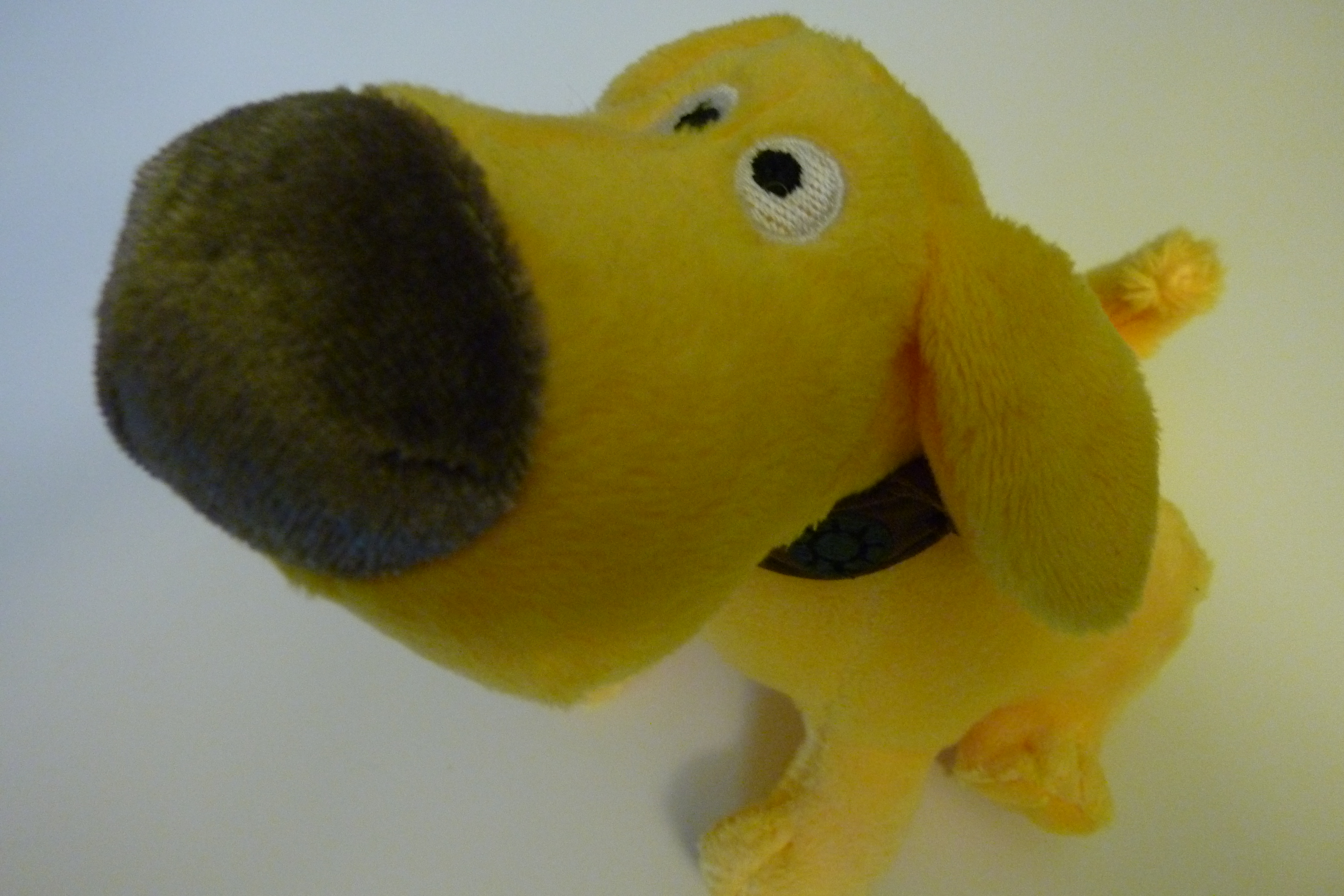
Dug, from Up

Dug the talking dog is the best part of a really wonderful movie.  I’m so wildly amused by all the dogs’ dialogue.  “My master made me this collar so that I may speak–SQUIRREL!”  So much fun.  And he’s a really sweet character too; he does so ever want to please everyone, and he’s so very bad at it…


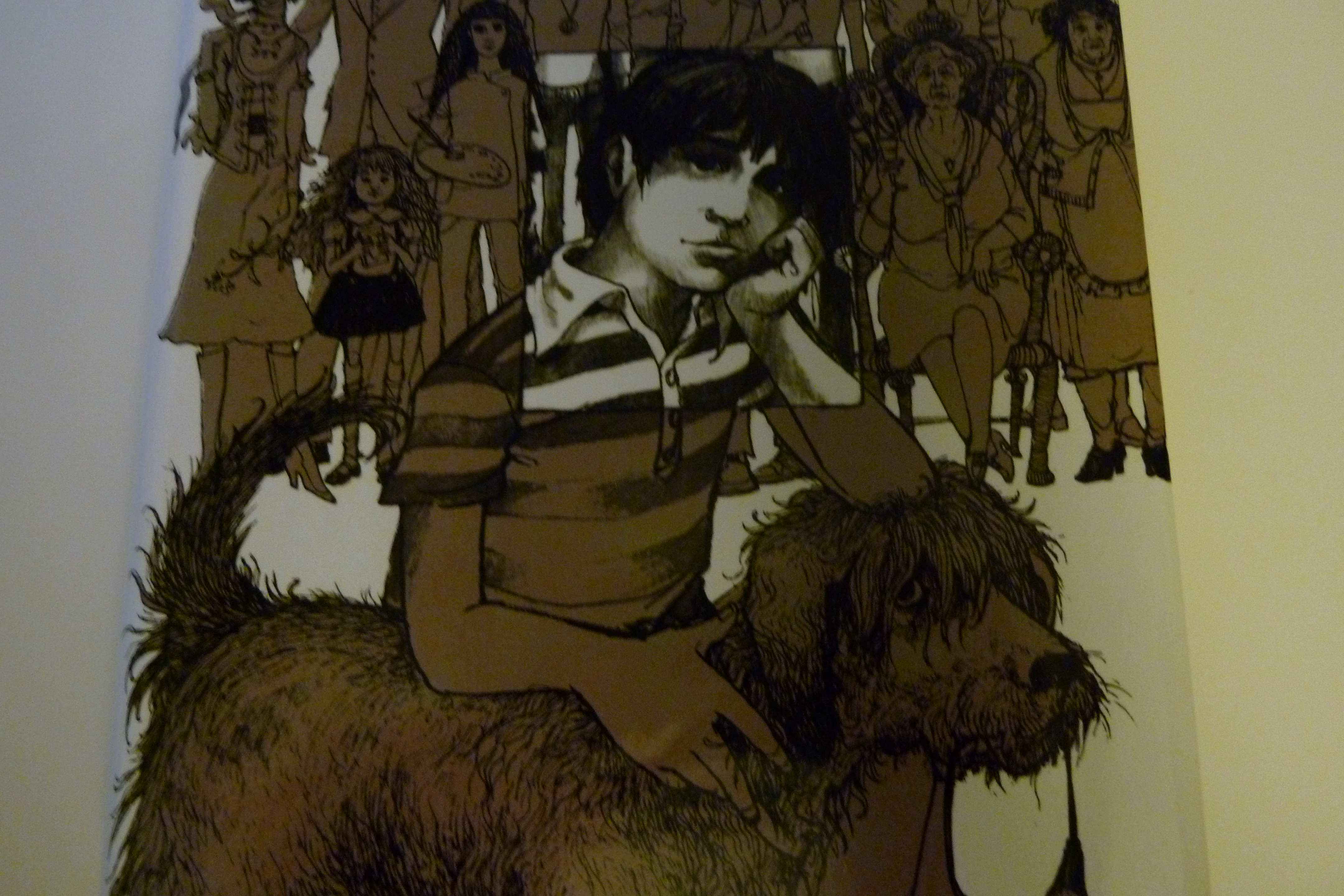
Zero from Ordinary Jack by Helen Cresswell

Zero is an utterly unremarkable dog.  Unlike Dug, he doesn’t talk, and he’s not very good at learning tricks (unless they’re demonstrated for him).  But he’s still the beloved companion of Jack, who is frequently worried about Zero’s self-esteem.  Jack tries to build up his self-confidence, which he judges by watching the way his ears are drooping.  For being an ordinary dog, he’s a lot of fun.


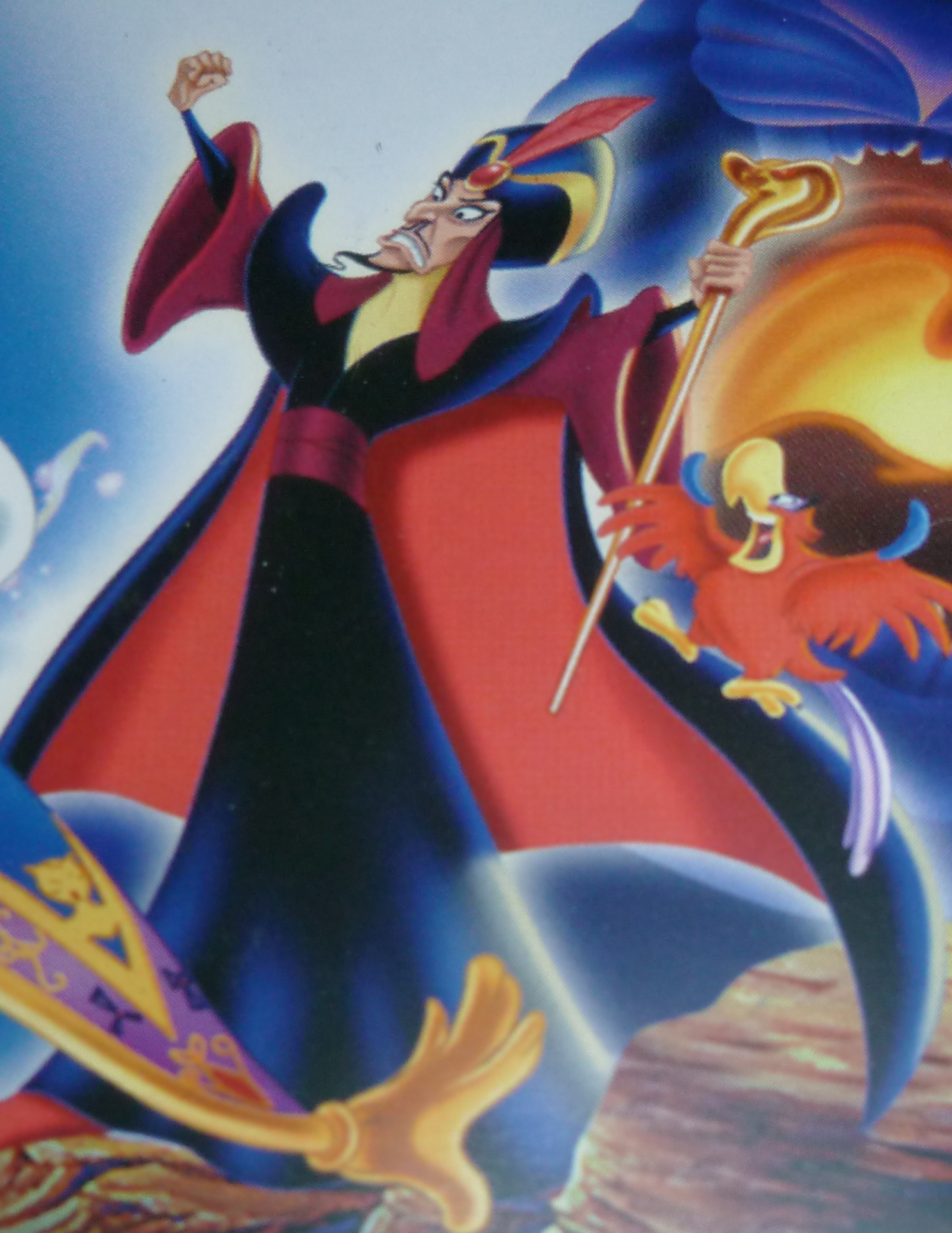
Iago from Aladdin

The only side-kick to a villain on the list, Iago the parrot is a hilarious, sarcastic, very amusing part of Aladdin.  I rewatched this recently, and found that all of Iago’s dialogue sounded far more familiar than everything else–I think I memorized most of it as a kid, and obviously it made a big impression.  There was at least one line in there that I’ve been quoting for years without realizing it started at Iago.


Fire lizards from The Chronicles of Pern by Anne McCaffrey

None of the individual fire lizards ever stood out to me all that much, but the concept is so cool I have to include them en masse.  Really–pet dragons!  Very loyal pet dragons who deliver messages and like to sing and will sit on your shoulder.  I want one.