The Secret Lives of Characters

The Great Good Thing by Roderick Townley has one of the best premises I’ve ever encountered.  Princess Sylvie lives inside a book (also called The Great Good Thing).  She and her family and friends act out their story whenever a Reader opens the book.  When the book is closed, they go on about their lives behind the scenes.  Everything begins to change for them when Sylvie breaks the rules to help a special Reader and her family.

I love this concept.  I love reading about what it’s like to be a character in a book.  I love when Sylvie rests her head on a large adjective, or goes swimming in the pool on page 36, or hides in the Acknowledgements page.  I think anyone who has ever felt a connection to a character in a book will enjoy the idea of a magic world between the book covers, where the characters live lives in and around the text we read.

The actual plot…is pretty good.  This is one of those books that leaves me thinking about how I’d take that premise and do something very different…but it is very enjoyable for all that.  I do like where it went–it’s just that with a premise like that, there are so many wonderful places to go!

One thing I’d do differently, and which I think is not just my preferences but an actual lapse in the book, relates to romance.  As it stands, there is none; that’s just not what the book is about.  But we catch glimpses of Sylvie’s story (the book within the book–let’s call it the Story for clarity).  There’s enough to tell us that at the end of the Story (and this really isn’t a spoiler), Sylvie rescues the Keeper of the Cave, who turns into a prince.  The Story being what it is, a kind of fairy tale, the natural order would be for Sylvie to get together with the prince–at least, in the Story.  But we don’t see that at all in the book we’re actually reading.  All the other characters hang out together while the book is closed, like actors who are off-stage, but we don’t see the prince (or even the Keeper of the Cave) at all.  One of Sylvie’s motivators is lack of a close companion, so I can see how a romance wouldn’t fit–but rather like showing a gun that never goes off, why have a prince at all if you’re not having a romance?

I recently found out there are two more books in this series, which I plan to read now, so maybe one of them will head in a romantic direction.  And even if they don’t, it’s still a fun story with interesting characters, and a good message about the power of a story and the importance of preserving it–and, of course, a fascinating premise!

Author’s Site: http://www.rodericktownley.com/
Favorites Friday: Female Characters

I was originally going to do a post about favorite characters in general.  But then I started going through my shelves and pulling off books and I ended up with such a big stack I decided I’d better divide this up.  So, I’ll start off with favorite female characters, and get to the men another day.  This is not exhaustive–there are simply too many–but here are the first ones I grabbed in a scan of my bookshelves.

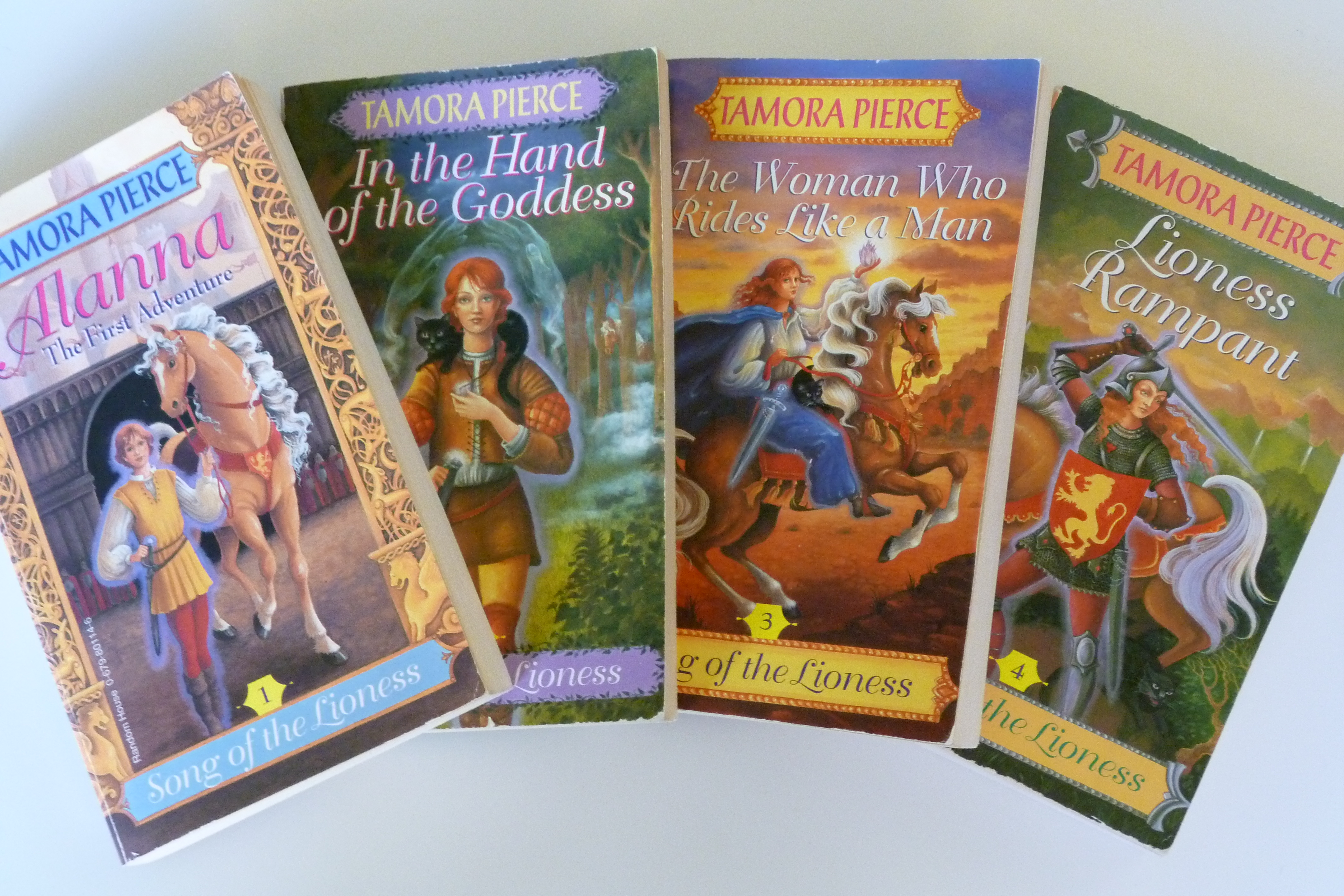
Alanna from the Song of the Lioness series by Tamora Pierce

Alanna is very possibly my favorite book character.  I think my belief that girls can do anything is due mostly to my mom, and to Alanna.  She’s a girl who wants to become a knight, in a world where girls don’t do that.  She defies the odds and does it anyway, to large extent through sheer stubbornness.  She’s strong, capable, imperfect and not always sure of herself.  And I love her.

Valancy from The Blue Castle by L. M. Montgomery

Valancy has been repressed and afraid her entire life; when she believes that she’s dying, she starts really living for the first time.  It’s wonderful to watch her seize life.  She’s always been dreamy and imaginative.  When she stops being afraid, she becomes witty and daring too.  Not to mention, she lives inside one of the most beautiful books I’ve ever read.

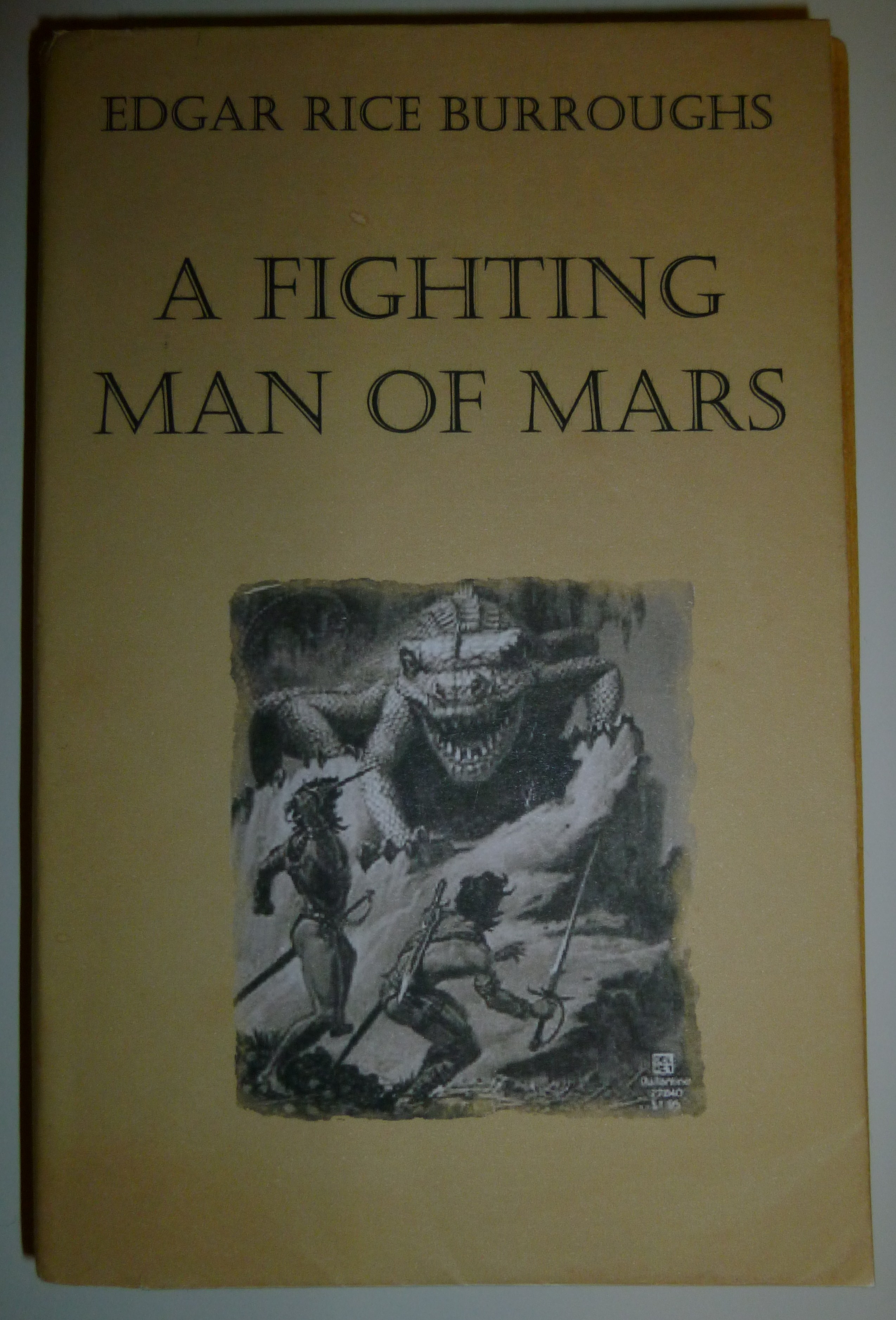
Tavia from A Fighting Man of Mars by Edgar Rice Burroughs

Tavia, like Alanna, is strong and capable and doesn’t let anything stop her–be it monsters, a war, or an unwanted suitor.  She can use a sword as well as any man, and combines her strength with depth of feeling and a self-sacrificing nature.  All in all, she’s a wonderful heroine from an author who rarely gave us more than a pretty face.

Jacky Faber from the Bloody Jack series by L. A. Meyer

In some ways I think I admire Jacky less than the other characters on this list–I certainly want to shake her more often–but she’s on here because she’s just so much fun to read about.  For sheer hijinks, she can’t be beat, and I do admire her resourcefulness and “never say die” attitude.

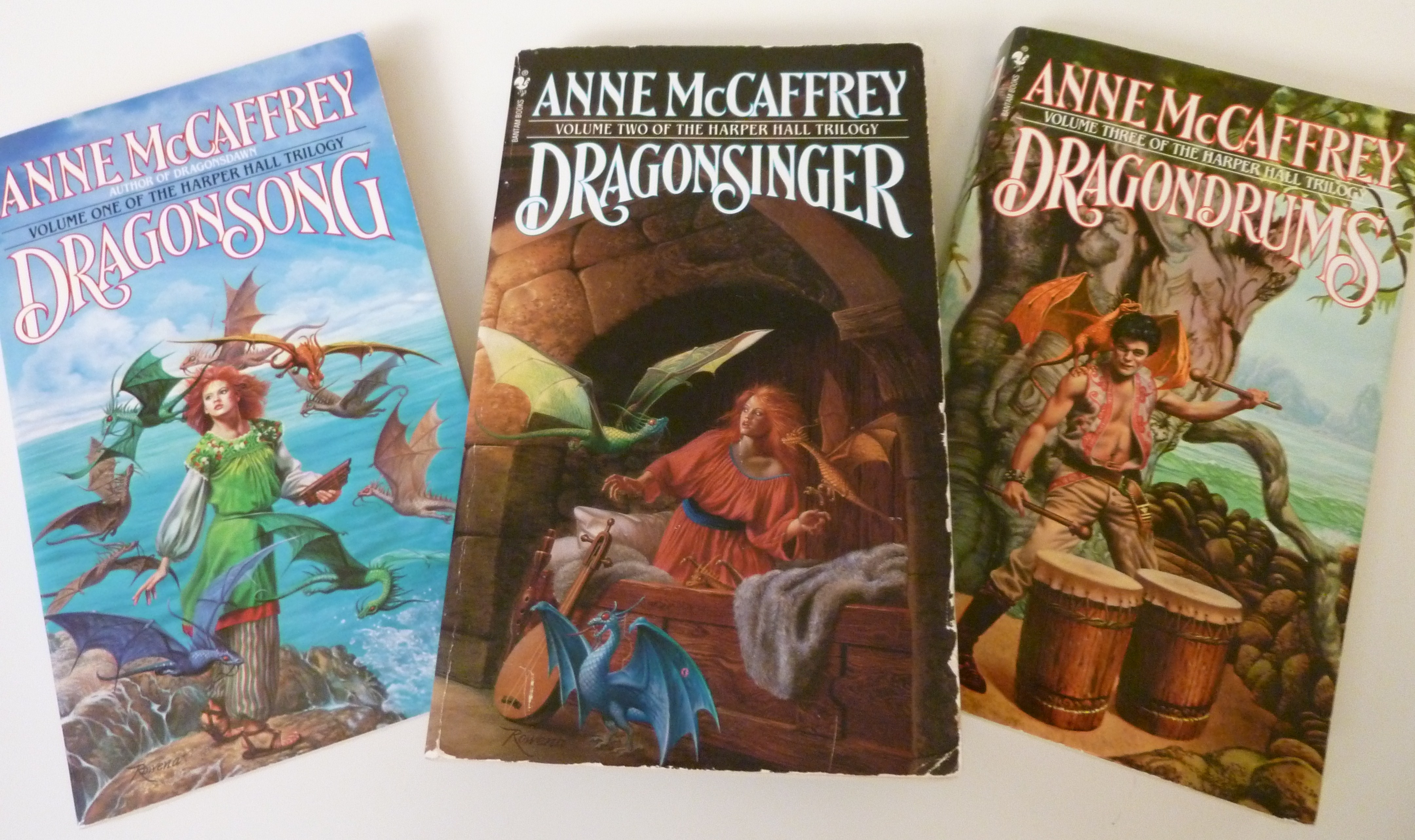
Menolly from The Harper Hall trilogy by Anne McCaffrey

Menolly is gifted with musical talent, and she’ll do anything to write music.  I love that she takes her life into her own hands, and has wonderful adventures in the process.

Stay tuned for favorite male characters!

The Power of a Library

First, a question unrelated to this book review: I’m taking a trip to Washington D.C. next month, and usually when I go on vacation I like to read a book set in the place I’m visiting.  So I was wondering–any suggestions for books taking place in Washington D. C.?  Preferably something I can find at my library…

Which leads me to today’s book review!  It may be that I have a soft spot for Jerry Spinelli’s The Library Card because I’m so fond of libraries myself.  The book is a set of four long short stories (not quite novellas, so what do you call them?)  They’re only connected thematically, and by the presence of a mysterious blue card.  Each owner of the card sees it somehow as The Library Card, and in different ways it ends up changing their lives.

Mongoose and Weasel (not their real names) are on their way to being juvenile delinquents when Mongoose finds the library card.  It brings him to the library, which opens a whole new world of information to him.  This story is especially good because of the character development.  What’s happening to Mongoose is positive, but it’s also pulling him away from Weasel.  We see some of that from Weasel’s point of view, and can feel his pain at losing his friend.  I actually end up feeling sympathy for the kid who’s really trying to lead his friend down a bad path (though not malevolently).

Sonseray is another character who prompts unexpected sympathy.  On the surface of it, he’s a complete screw-up, apt to pick fights and get into trouble.  But the reader also gets to see how much he misses his mother, who died.  The library card leads him to a book that helps him connect with her memory.

I felt less sympathy for Nanette.  The library card helps her become friends with April, but I couldn’t feel the basis of their friendship the way I could with Weasel and Mongoose.  Weasel wasn’t deliberately a jerk, but I couldn’t really see Nanette’s redeeming qualities.  This story was all right, but my least favorite.

My favorite story was Brenda’s.  She’s so obsessed with television that she has a deep emotional crisis when her parents make her turn off the TV for a week.  This one is funny, and makes a very good point.  The library card helps her realize that she has been so busy living the lives of her TV characters, she’s stopped living her own life.

The stories are sweet, funny, sometimes sad.  And they all have a good message about the power of a book to change a life.

Author’s Site: http://www.jerryspinelli.com/

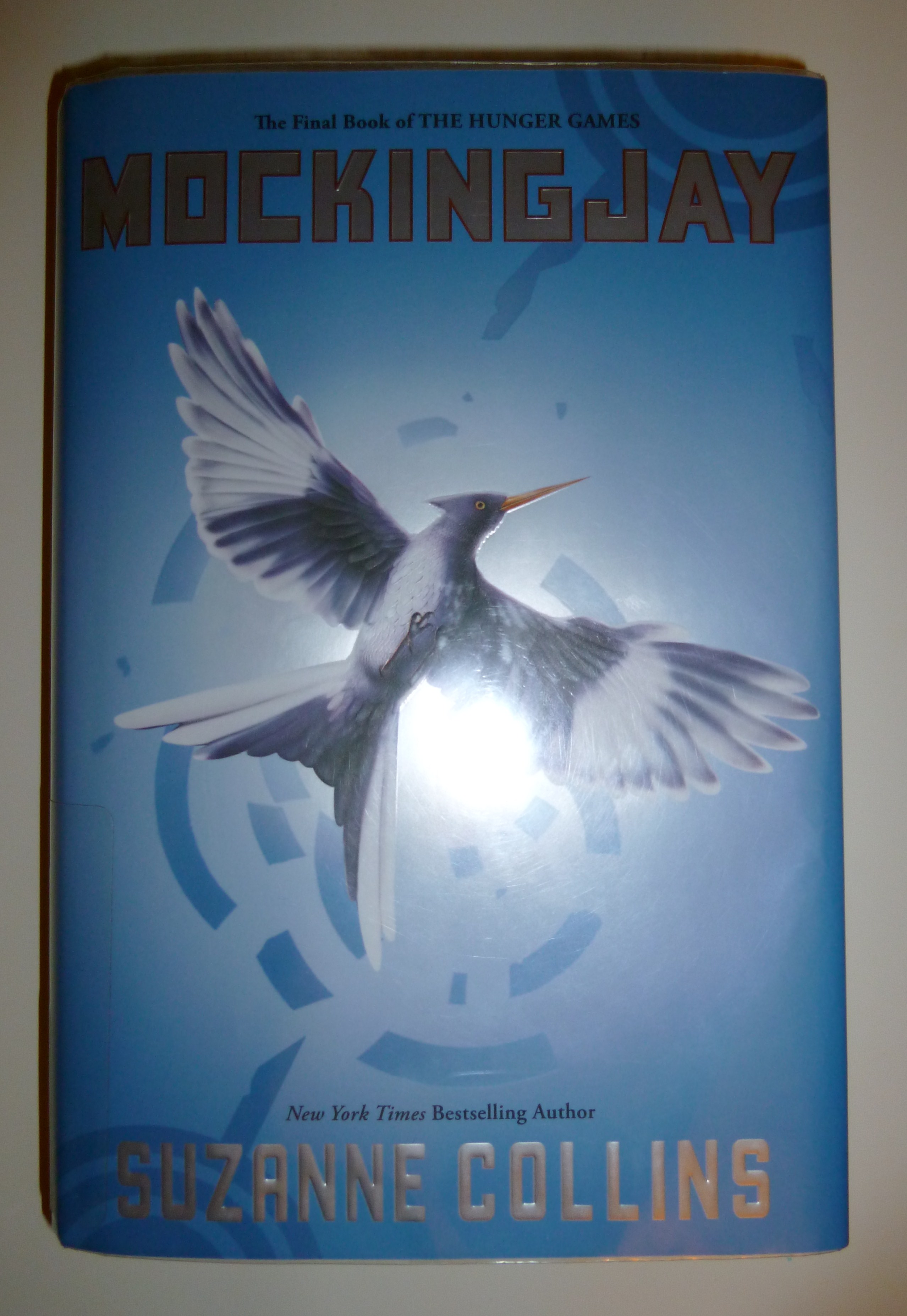
Disappointed with the Mockingjay

I am so sorry to say this, but–I was disappointed by Mockingjay.  If you read my earlier reviews, you know that I thought The Hunger Games was brilliant.  Catching Fire had flaws, but was promising.  And Mockingjay never fulfilled on the promises.

My Katniss problems of the second book magnified enormously in the third.  She carries on with her inability to figure out what to do.  I had hoped that this was a second book, bridge-segment issue, and that it was just setting up the third book’s resolution.  But no.  The rebellion is in full swing by this point, but Katniss still spends large portions of the book moping and moaning and debating what she should do.  Even after she makes some decisions, she still spends way too much time hiding in closets (yes, literally), heavily medicated, or sunk deep in depression.

Part of me wants to be understanding.  She has, after all, been through Hell, and is in some ways still there.  But so has everyone else.  And a lot of people are handling it much better than Katniss.  People are literally fighting and dying for their freedom, Katniss is in a unique position to help the cause–and she can’t seem to rise to it.

That, I think, is the crux of the problem.  I wanted the story of Katniss taking her pain and her horror, using it all to become a stronger person, and to grow into her role as the Mockingjay, the rebellion’s symbolic leader.  Instead, I feel like I got the story of how Katniss (and Peeta, Gale, Haymitch, Finnick…everyone, really) has been severely damaged by all they’ve been through, and will never fully recover.  It’s probably very realistic.  But it’s not narratively satisfying.

I find myself looking at stories from two angles.  Is it realistic–can I believe that it could be real?  Yes.  But was it a good choice for the writer to make?  I don’t think so.  Maybe Katniss really would lose it completely.  But I can’t imagine why a writer would choose to have her protagonist fall to pieces for the second half of a trilogy (starting midway through book two and going on until the end).

Another problem is that we’re so removed from the rebellion in many ways.  Katniss is a symbolic leader, but she’s not a strategic leader and she only occasionally engages with real fighting.  Mostly, she’s used by the rebel leaders for PR purposes (which actually are some of the best parts, because at least she’s doing something).  In a way it makes sense, but it also traps us in the point of view someone who is only peripherally engaged in this huge sweeping conflict.

I really liked Gale.  He does develop a ruthless streak that certainly wasn’t admirable, and he doesn’t always know the right thing to say to Katniss.  He’s flawed.  But he takes an active role in the rebellion, he engages with what’s going on and understands what they’re fighting for, and he’s still trying to protect the people he loves.  There’s a scene where the community is threatened, and it’s actually Gale, not Katniss, who makes sure that Katniss’ sister is all right.  He’s still thinking straight.  Unfortunately, he’s not the protagonist.

It’s still an exciting book, and I did find it absorbing–although one reason it was a page-turner was because I was trying to get to a more satisfying part of the book, and then I never did.  I liked the grayness of good and evil, which we saw before and was even more evident now.  The character development, so good in the others, was lacking.  When new characters were introduced, they didn’t feel as vivid as similar minor characters in the first two books.

As to the love triangle.  Well.  It was resolved, but it was resolved quickly, and ultimately I didn’t find it that satisfying.  Maybe this just wasn’t the right setting for a romance.  But the first book managed such a nice balance with that, I feel like there must have been a better way to do it.

I realize that some of what I wanted from the book may be cliches.  Maybe Collins was trying to tell something really different, that didn’t follow the normal conventions of a coming-of-age story, or of a traditional romance.  But you know something?  Some devices are used a lot because they work.

I still think The Hunger Games is one of the best books I’ve read this year, and it was worth reading the other two just to find out what happened.  I just wish I’d liked what happened!

Author’s Site: http://www.thehungergames.co.uk/

A Bit of Humor at the Opera

It’s Friday, and I thought I’d share a little more fiction from my Phantom of the Opera novel.  This is a fun scene with the managers of the Paris Opera House, Andre and Firmin.  Context: this is a while after the usual story, but all you really need to know is that, with the Vicomte de Chagny fled in the night, the Opera has a new patroness who has thoroughly taken over.  Her nickname is Madame Laissez Faire–Lady Let It Be–because she doesn’t let anythng be.  She’s determined to wage war against the Phantom.  Meanwhile, Meg Giry and Erik (the Phantom) have become friends, though he’s still mourning Christine’s leaving, and is endlessly solemn.  But not above the occasional trick all the same.

One other note: this is mostly based on Webber, but I tried to work in at least one nod to every version of the Phantom I was familiar with.  This scene has my nod to Terry Pratchett’s brilliant parody, Maskerade.

*********************************

The first thing the managers did, as they did most mornings, was to go to their office, which for a rarity was empty of their patroness.  It was also empty of everything else.

André and Firmin stood in the open doorway and stared at the empty room.  There was no desk.  No cabinets.  No files or books.  Even the half-eaten sandwich Firmin had left behind the evening before had vanished.  There was, in fact, only one item in the entire room: a single scrap of paper lying on the bare floorboards (even the rug had gone) in the precise center of the room, held in place by a single nail driven into the ground.

Merde,” Andre muttered, as Firmin entered the room and yanked up the note from the floor.  He brought the note back to the doorway and they read it together.  It was very brief.

If you can invade my private domain, I see no reason why I can’t invade yours.

The Phantom

André groaned.  “He knows we were in the labyrinth.  I knew that was a bad idea.”

“What are we going to do?  This is bad, all our records and papers and…”  Firmin trailed off with a sudden thought.  “I left my favorite coat here last night.  He stole my favorite coat!”

“That red one?”

Firmin nodded vigorous assent.

André shrugged.  “Just as well.  It made you look like a turkey.”

Continue reading “A Bit of Humor at the Opera”