Romance and Religion in the Middle Ages

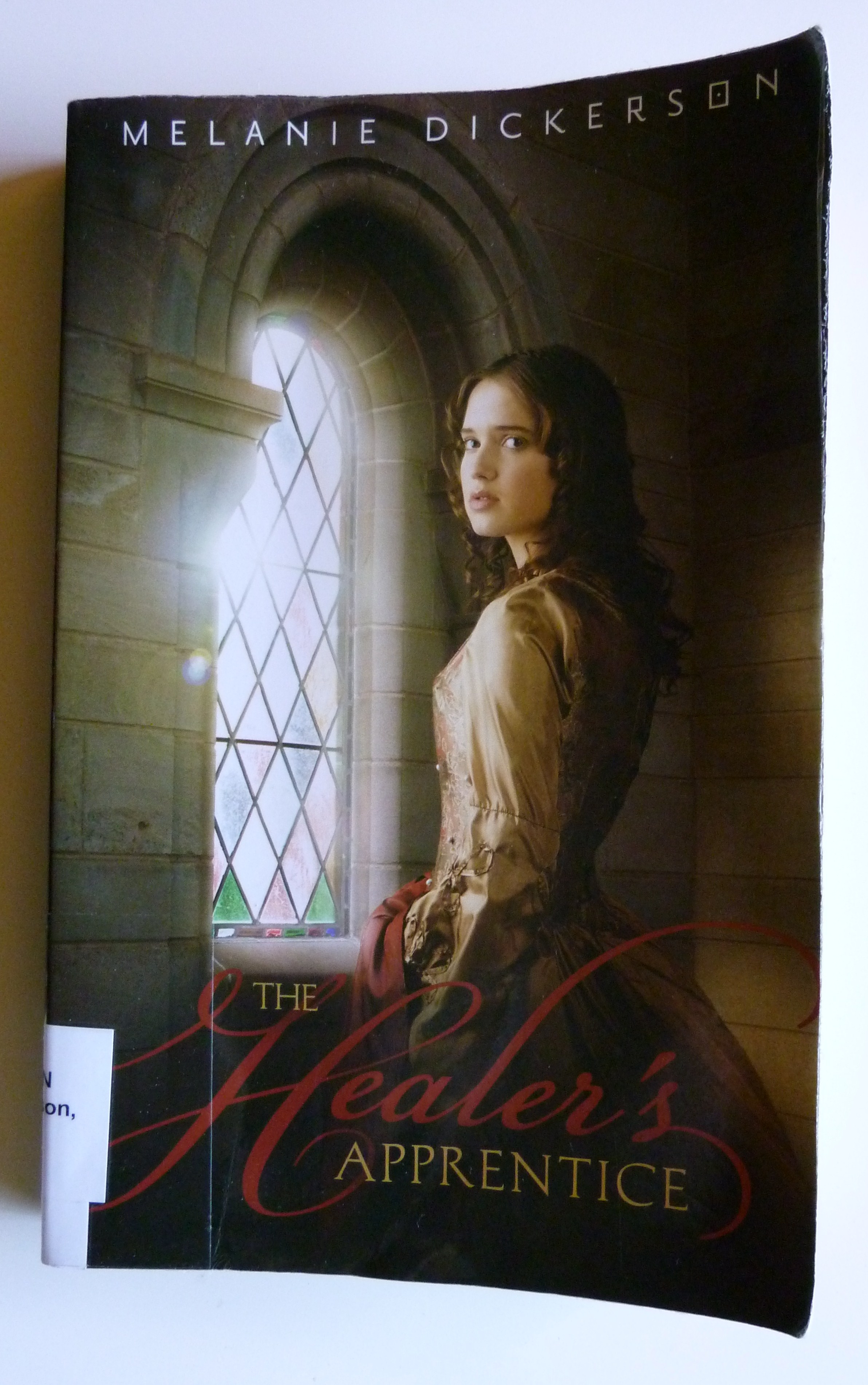
In my ongoing quest to find fairy tale retellings, I recently found The Healer’s Apprentice by Melanie Dickerson.  I’m actually not sure how, because it’s only very loosely Cinderella, and equally loosely Sleeping Beauty.  But it was a good read regardless.
The healer’s apprentice is Rose, who became an apprentice to dodge the arranged marriage her mother wants for her.  The setting is Germany, somewhere in the Middle Ages.  There’s a little bit of fairy tale in it, but it reminds me much more of Karen Cushman‘s books, which so vividly bring history to life (another review, perhaps).  Rose finds herself torn between the two sons of the local baron, Wilhelm and Rupert.  Meanwhile, she’s also trying to figure out if a healer is really what she wants to be.  In the background, there’s a story about an evil magician stalking Wilhelm’s betrothed.

There’s a little bit of a Mary Sue situation here, where every man seems to be intensely interested in Rose.  But a couple potential interests turn out otherwise, and Rose goes through enough ups and downs in her romances that it’s not too painful a Mary Sue.  Besides, I can deal with it better when the heroine is actually a decent person with some admirable character traits (unlike, say, Twilight).

Rose and especially Wilhelm struggle a lot with trying to do the right thing.  Part of this is centered around their religious faith, which I found very interesting.  You (or at least, I) don’t often see religious characters in fiction, especially not in something that has even a mild fairy tale element to it.  I thought Dickerson handled it very well, in that their religious convictions seem plausible for their time period, without feeling archaic either.  Some of the morality tales and religious beliefs of past centuries don’t sit well with modern concepts, but there was a good balance here.

On the whole I enjoyed the book–better than Sleeping Helena, not as good as Spindle’s End (although a more satisfying romance)–and all in all a good read.

Author’s Site: http://melaniedickerson.com/

The Red Badge of…Well, Something

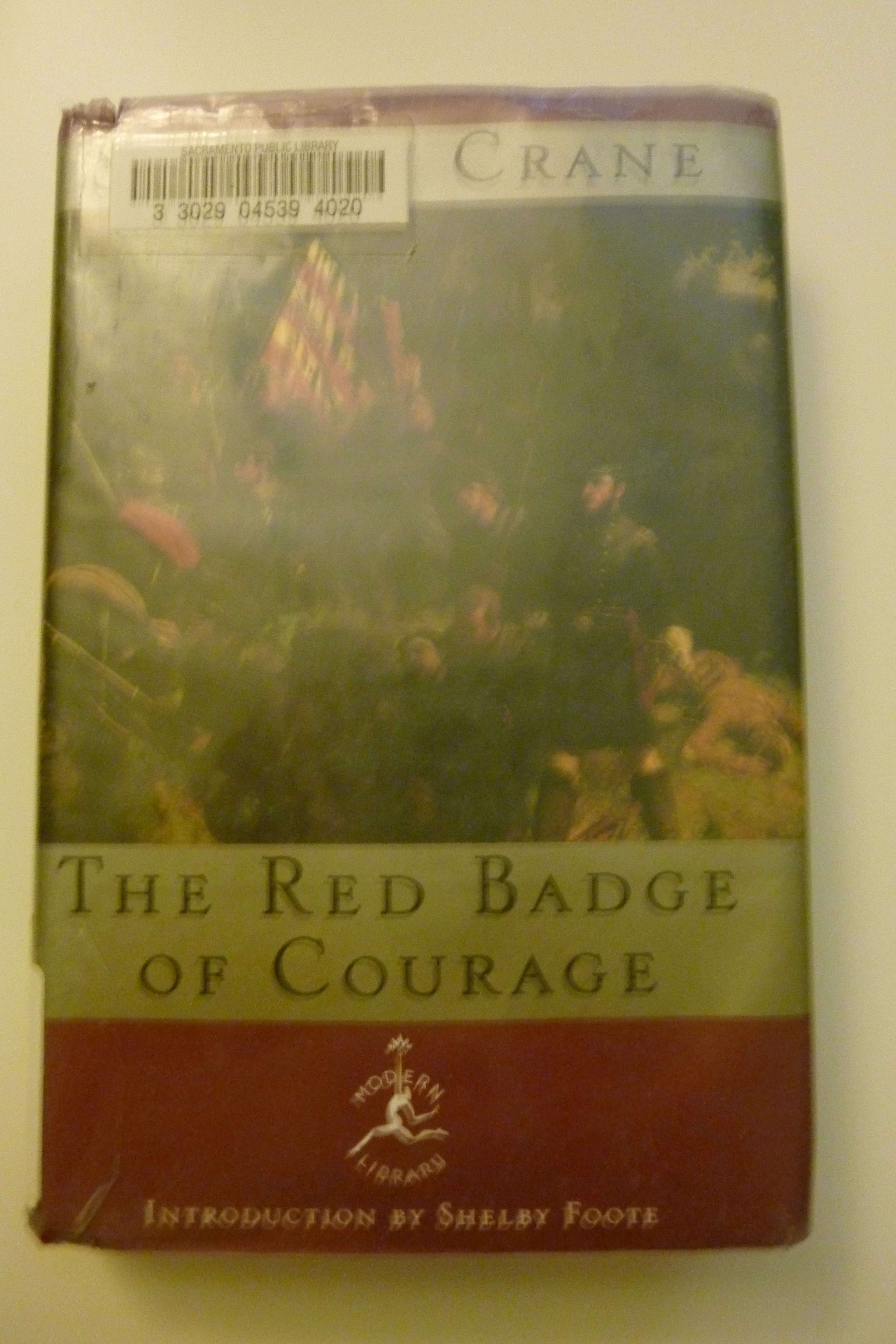
One of the most interesting parts about finally reading books I’ve always heard about is seeing how my vague impressions have differed from the actuality of the book.  Take The Red Badge of Courage by Stephen Crane.  Not at all what I was expecting when I finally read it this week.

My impression was always that it was about a boy in the Civil War, who deserted during his first battle, then returned, fought bravely in a second battle, and felt that he had earned his “red badge of courage.”

As it turns out, the hero’s not that young.  I think this mis-impression was the fault of whatever kid did an oral presentation on this book years ago, during elementary school.  And to be fair, the hero, Henry Fleming, is referred to 99.5% of the time as “the youth.”  If you’re twelve, I can see how you’d conclude that a youth is probably also twelve.  But, while his age is never really given, he and the other soldiers seem to accept him simply as another one of themselves, definitely not a drummer boy or otherwise marked out as significantly younger than the average.  Even in the Civil War, that has to mean he’s at least sixteen, and probably eighteen.

Second, this cowardice to bravery business is so much more complicated than I always thought.  The youth does run during his first battle, but so does many soldiers.  He does return, and fight in a subsequent battle, and this time he’s marked out for bravery.  But it didn’t feel like a nice, noble character growth.  In the first battle, he’s overcome by the sheer animal instinct of fear.  In the second battle, he’s swept away by the no more admirable quality of hate.  In both cases, it feels more like a kind of madness than any kind of nobler instinct.

I’m not sure if this was Crane’s point.  If his intent was to paint the reality of war, to demonstrate that it isn’t noble and courage is a very iffy thing, I think that’s what he illustrated.  Yet somehow he never quite brought it to the point that I could feel completely sure that’s what he was trying to do.  Maybe the title is the most telling part.  The youth gets his “red badge of courage.”  But the red badge turns out to be a wound, and the youth gets his when he tries to ask another fleeing soldier what’s going on, and the man whacks him one with his rifle.  There’s nothing courageous about it.

My favorite part of the book was early on, before the first battle.  The youth is really troubled about whether he’ll run when he’s put to the test.  He thrashes it out, and wonders, and worries–and looks around him and thinks that no one else feels this way.  That’s what I found most interesting.  It’s the idea of these hidden fears and worries that we’re desperate not to tell anyone, and that we think only we have because no one else expresses them…but maybe it’s just that everyone else is equally desperate not to tell about theirs.

My least favorite aspect of the book was the youth himself.  I liked him well enough in the beginning, but after the first battle I found his behavior totally repugnant–and I don’t mean the running.  I guess I don’t have the battle instinct.  I know that cowardice in the face of danger is practically the highest crime for a military man, and I certainly don’t find it admirable–but I found it easy to forgive him for getting scared and running in the complete chaos of a Civil War battle.

After the battle, though–the youth falls in with a group of wounded men, who are all trudging (as much as they can) back towards the camp.  Although he himself is unhurt at this point, the youth seems to demonstrate almost no instinct to help them.  He helps one friend in a very minimal way, but actually abandons another man.  This troubles him a little later on, but more because he’s afraid someone else will find out than because he feels any actual guilt.  I guess I can let go of the glorious battle ideal easily, but have much more trouble letting go of the ideal of comrades in arms and no man left behind.

When the youth is injured himself, a friend (who thinks he was wounded in battle) takes care of him, bandaging up the wound and giving the youth his own blanket.  The youth expresses no gratitude, very little acknowledgement even, and is in fact quite rude and contemptuous to the friend later on.  Besides which, he just begins to come off as very arrogant and unfeeling on the whole.

Maybe some of this goes back to Crane’s point about war not being glorious, and about soldiers not being saints.  But I’d rather have likable characters.

An interesting book, and I’m glad to have my own opinion on it now…but I don’t know that I’d push it on a kid if they asked for a recommendation for a book report.

Return Trip by Bus

After posting my last Fiction Friday about an adventure on Greyhound, I looked back at my writing to see if the rest of the trip felt post-worthy.  Oddly enough, I found that the part about Disneyland was not as interesting as the part about Greyhound (which is not how it felt in experience!)

Don’t get me wrong: I LOVE Disneyland.  Which may be the problem.  I wrote like mad all day, but lots of “Loved this ride” and “That ride was great” and “PIRATES!” does not really lend itself to writing anyone else will find all that interesting.

But the ride home on Greyhound–that had more to offer.  So just take my word for it that it was an amazing time in Disneyland; and then we (the slightly fictionalized “we”) got back on the Greyhound to go home…

********************************

Saturday, 10:50 am

I have definitely been waking up far too early far too often lately.  Up early again today, so as to get dressed, eat breakfast, pack up and get out.

Angela drove us to the Anaheim Greyhound station, which is very tiny.  One little room and a few chairs, just one door instead of numbered gates.  And, saints be praised, they had an intelligible intercom system.  Four Greyhound stations, and only one had announcements that could actually be understood. Continue reading “Return Trip by Bus”

Getting Simba Back to Denmark

I have a confession–I have never been a fan of The Lion King.  I loved Disney movies as a kid (still do).  But even as a kid, I didn’t like The Lion King.  It probably suffered somewhat by coming out the summer after Aladdin, which was my favorite, but it was more than that.  I guess I was already thinking like a writer, because I remember complaining that it lacked plot.

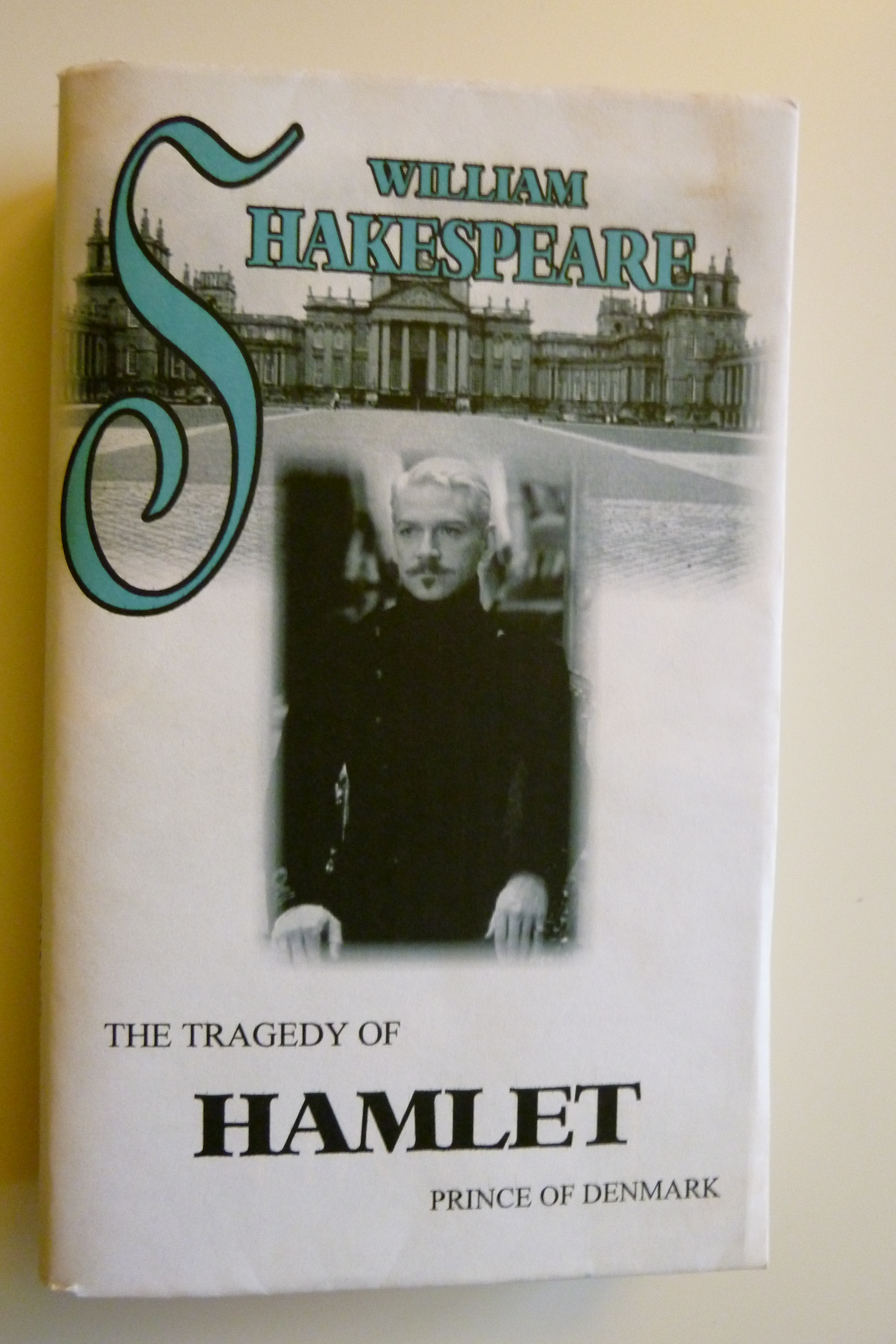
I never watched The Lion King again after it first came out, until recently.  I wanted to see if my perspective had changed with age–and with knowledge of Hamlet, which is more or less the same story and my favorite Shakespearean tragedy.

Practically the same story. Only not.

It did give me a new perspective–and I decided my younger self was right.  Only, being older and familiar with Hamlet, now I can explain what my younger self meant.  So naturally I thought I’d share with all of you!

Here’s the plot, such as it is: Simba is a lion cub, the son of Mufasa, the King of Beasts.  Simba’s evil uncle, Scar, has Mufasa killed.  Simba, feeling responsible, flees.  Everyone suffers under Scar’s rule.  Eventually Simba comes back to defeat Scar and fulfill his destiny (sorry if that was a spoiler for anyone).

It doesn’t sound so bad, as a plot.  It is a ninety-minute animated kids’ movie, after all.  Only there’s a problem.  See, it IS basically Hamlet.  The evil uncle kills the king and assumes his throne, the prince has to come back from being away to deal with the situation.  But here’s the key point–Shakespeare began his play when Hamlet returned to Denmark, and then spent four hours on the conflict with the uncle.

In The Lion King, it’s an hour and fifteen minutes before Simba gets back to Denmark, so to speak.  Which means that the main event covers only the last fifteen minutes of the movie.  And I really could feel that, when I watched it again–I was waiting for him to get to the confrontation with Scar.  And everything else felt like it was just back-story, just setting things up.  When almost your entire movie is setting things up…well, I think that’s how I ended up feeling that it didn’t have enough plot.

Maybe it’s a question of what I’m looking for.  Maybe if I could manage to view the story as being about Simba’s growth, rather than about the fight with Scar, I’d like it better.  But…I obviously haven’t managed to see it that way as a kid, or as an adult.

It was fun to see how it paralleled Hamlet, especially in the characters.  Simba as Hamlet, Scar as Claudius, Mufasa as the King, those are all pretty obvious.  Zazu is Polonius.  Nala is a mixture of Ophelia and Horatio.  Rosencrantz and Guildenstern are kind of split between Timon and Pumbaa, and the hyenas–the first are Simba’s friends, the second work for Scar (not combining those aspects makes things less compelling, by the way).  So I did enjoy the Hamlet parallels.  But I still don’t like the plot.

Great music, though!

Bradbury’s Mars

I’ve been trying to broaden my horizons in science fiction reading, and this week I broadened them all the way to Mars, by reading Ray Bradbury’s The Martian Chronicles.  I saw the movie years and years ago, remembering it only faintly, and this was my first trip through the book.

I have great respect for Mr. Bradbury…but, and I may get myself into trouble saying this, I had enormous amounts of trouble with The Martian Chronicles.

First, the essential plot: the story of humans colonizing Mars, over the recent graves of the previous civilization.  There are a series of failed exploratory missions, whose crews disappeared mysteriously.  When one finally lasts, they realize that the previous visitors infected the Martians with chicken pox and, barring a handful of survivors, the entire civilization died.  Humans get on with colonizing, but just as they’re beginning to flourish, their efforts are disrupted by atomic war back on Earth.

The presentation of the story is interesting, a series of anecdotes with no major characters throughout and only a few recurring ones.  This is almost a series of short stories, and some apparently have been published as independent stories.  I liked Bradbury’s writing, and there was something about the concept I liked.  I did feel I was reading a classic icon of a certain kind of science fiction, when there were canals on Mars and interplanetary travel could be accomplished quickly.

A few of the stories, as independent stories, were very good.  The third (failed) expedition’s experience reads like an excellent episode of The Twilight Zone, and there’s a wonderful funny story about two people who believe they’re the only man and woman on Mars.

But I had two major problems.  First, I didn’t understand the Martians.  And second, I didn’t understand the humans.

The Martians were different every time we saw them.  I couldn’t figure out what the rules were.  They’re an advanced civilization and they’re telepathic, but beyond that…  In one story they’re almost comically absurd, with names like Mr. Zzz and Miss Ggg and Mr. Iii.  In another they’re classical philosophers, with keys to the meaning of life.  In a third they’re shapeshifters, telepathically assaulted by other people’s desires, and with little control over themselves.  There seemed to be a lack of internal consistency, and I didn’t ever feel I could clearly say, this is what Martians are like.

As to the humans, I didn’t feel they behaved in a believable way.  When they emerged as individual characters they did, usually, but the attitude of the masses was baffling to me.  When the fourth (and first successful) mission lands, they realize three things: 1) Mars was home to an intelligent civilization, on an equal or more advanced level than humans; 2) this civilization died two weeks ago, because of Earth-brought disease; 3) a few Martians have survived, to disappear into the hills.

Any one of those facts should change human history.  I mean–come on!  There’s a civilization!  On Mars!  We accidentally killed them!  A few of them are still out there if we want to try to talk to them!

Every scholar, every government official, every architect, philosopher, religious leader, psychologist, scientist, visionary and dreamer should be intensely interested.  Instead, with the exception of a few characters, the overall reaction seems to be: yeah, they had nice towns.  Shame they died.  Sorry about that.  Let’s get on with building our shops and houses and roads.

No one seems to be interested in seeking the remaining Martians out.  That, at least, seems like it would be the most basic of impulses, shared by everyone.  After the mere fact of seeking them, you’d get different reactions.  I’m sure you’d get the Fear of the Other, with people wondering what weapons they have or if they’re hostile (since we did accidentally kill most of them), and some people would want to kill them before they get us.  In a more idealized world, you can’t really apologize adequately for accidental genocide, but you can at least try.  And if the Martians were willing to forgive and make friends…oh, the questions.

What’s your religion?  What are your family structures like?  What was in your history?  What do you understand about science?  What do you eat?  How do you stay out of each other’s heads, if you’re all telepaths?  And for me, I might be most interested to hear–what are your stories?  What’s your mythology?  What are your fairy tales?  Do you have Cinderella or Sleeping Beauty?  Are universal stories really universal?  What stories does every Martian child know?

But no.  The humans are more interested in building shops and installing juke boxes.

I can accept telepathic Martians who live near canals, because that’s the world Bradbury has put us in.  But I have trouble with humans who don’t behave according to what I understand as human nature.

I respect Mr. Bradbury, and I appreciate his place in science fiction.  But in the future, if I want to read about some classic sci fi Martians, I’ll be spending my time with Mr. Burroughs instead.

Author’s site: http://www.raybradbury.com/