Blog Hop: To Borrow, To Buy?

book-blogger-hop-finalToday’s Book Blogger Hop question is:  Have you ever read a library book you loved so much, you just HAD to own it, so you bought a copy for yourself after returning the library book you had already finished?

This is how I buy most of my books.  I read almost everything from the library first, then eventually buy the ones I particularly loved.  The only exceptions are authors I love so much I’ll buy their books unread (though I’ve maxed out most of them), and even those are authors I read from the library first.

I feel like this question implies a shorter time frame than usually applies in my case.  I usually don’t buy books until months or years after I read them the first time.  I’m trying to recall a book I loved so much I immediately went out and bought it…and though I’m sure it has happened, I’m having trouble thinking of an example!

Oddly, what comes to mind are movies.  I rented Jesus, a three-hour miniseries, and I think I ordered it on Amazon before I even finished it.  Both because it’s that good, and because I’d seen enough to be sure it was the one I vaguely remembered watching and liking when I was a kid.  Similarly, I rented Christopher Robin, loved it so much I meant to buy it immediately–got bogged down trying to decide how to apportion a gift card–and my husband bought it for me for Valentine’s Day maybe a week after we watched it (I promptly watched it at least twice more with other people within the following month!)

Have you read a book from the library, or borrowed somewhere else, and then rushed out to buy it?

Writing Wednesday: Plans Abound

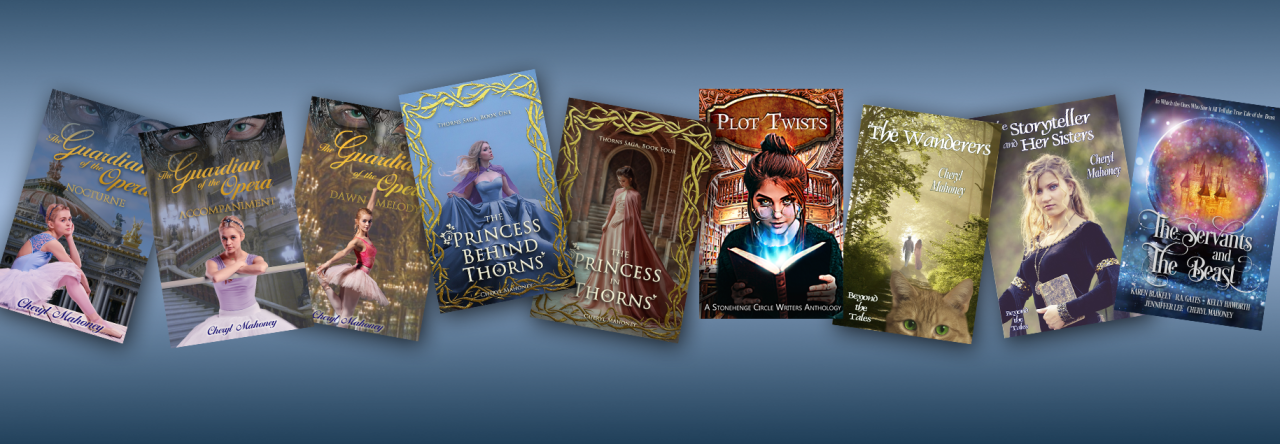
I finished (!) my big, complicated revision pass through Guardian III last week, and started again the next day in Chapter One.  Happily, this simpler revision pass is going even faster than I expected—always a pleasant surprise when that happens.

My goal was to finish revisions to prepare the book for beta-readers by the end of this weekend.  The tight timeline seemed doable originally because I am going on the Stonehenge Circle Writers annual retreat this weekend.  We get together Thursday to Sunday, do writing workshops and spend a lot of time writing.

Now that Guardian III is going even faster than I expected, I’ve started thinking about other projects to work on during the retreat.  I have an…ambitious list.

1) Finish revising Guardian III for beta-readers
2) Guardian II revisions based on second-round beta reader feedback
3) Guardian I revisions based on read-aloud review
4) First-round revisions for Thorns I, Part Two
5) Beta-read a friend’s novel (due by mid-October)
6) NaNoWriMo prep for Thorns I, Part Three
7) Continue drafting short stories for planned “Bookstore Anthology”
8) Stonehenge Circle Writers’ biweekly blog prompt short story

I know I won’t do ALL of it…but it’s nice to have plans!  Realistically, I’ll be happy if I complete 1 and start 2, I’ll probably do some of 5 for a change of pace, and I may do some work on 7 or 8 as a different kind of change of pace.  We’ll see what develops.

Friday Face-Off: September Days

FFO.jpg

It’s time again for the Friday Face-Off meme, created by Books by Proxy, with weekly topics hosted by Lynn’s Book Blog.  The idea is to put up different covers for one book, and select a favorite.

This week’s theme is: “Warm September brings the fruit” – a cover that is seasonal for Autumn/Fall

I decided to go with one that may only be glancingly fall–but the heroine is named September, this series always came out in the fall so I read it then, and the reds and golds do have an autumnal feel.  So my pick for today is The Girl Who Circumnavigated Fairyland in a Ship of Her Own Making by Catherynne M. Valente.  A relatively recent book, there seem to be only a few cover options.

This is close to the cover I’ve seen before, but with some extra swirly bits.  It’s a bit too much, although putting Neil Gaiman’s endorsement at the top is a nice touch!

Continue reading “Friday Face-Off: September Days”

Writing Wednesday: Closing Things Out

I’ve been working my way through Guardian III for what feels like forever, but I’m so, so close to the end of my current pass-through (so I can start the next, hopefully much faster one!)  I’ve been expanding my final chapter, which was originally written on the last day of NaNoWriMo 2016; there was a definite element of, “just throw something down and finish.”  So there was some work to do!

In the biggest change, I added an extra scene that I should have realized I needed years ago.  But it’s there now, so beta-readers won’t yell at me 🙂 that a crucial moment is missing.

For people who like to read the end of a book first, here’s just a glimpse of that newly added, nearly at the end scene.

**************

He stood on the stage of the Opera Garnier, the largest stage in Europe, and looked out over the rows and rows of empty seats.  They were barely visible in the shadows, with only a few safety lights burning.  It was still dark outside, though no light ever penetrated here anyway, and it was quiet in the Opera.  His mind filled in what his eyes couldn’t see in the dim light—the glowing red velvet of the seats, the gleaming gold of the decorations, the glittering, newly-hung chandelier hanging above, the sun in the sky of the Opera.

Book Review: Learned Optimism

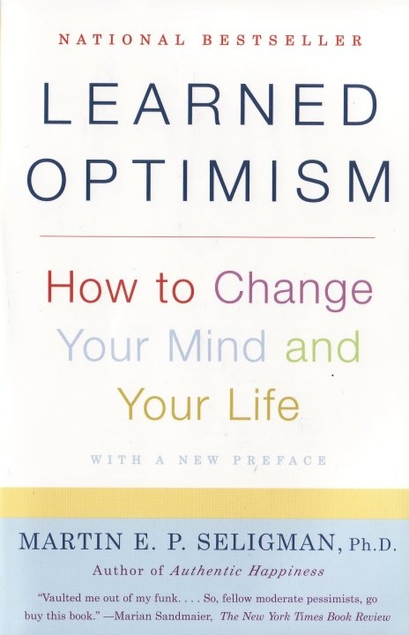
I’ve written before that one of my favorite nonfiction subjects to read is psychology–I’m fascinated by how the mind works (on the level of thoughts, not so much neurons).  I recently read Learned Optimism by Martin Seligman, Ph.D., and it was one of the most intriguing I’ve read to date.

Seligman details extensive studies he undertook and the conclusions drawn from them to define and explain pessimism, optimism and depression.  In brief, he found that learned helplessness (believing that whatever you do doesn’t change the outcome) is a key component of depression, and that explanatory style (how you explain events, especially negative ones) influences whether learned helplessness becomes prolonged and intense.  Optimists and pessimists explain their lives and events very differently, but it’s possible to learn optimism by challenging your explanations of events and consciously changing your thought processes.

This is an old book (about 30 years old) but as far as I can tell, Seligman is/was the foremost expert on the heavily related topics of learned helplessness and optimism/pessimism.  He’s the one that the later books cite, and I’m pretty sure I’ve seen him referenced in other things I’ve read.  I’d like to read something more recent to see if there’s been any updates in thought, especially regarding the causes of depression.

Continue reading “Book Review: Learned Optimism”