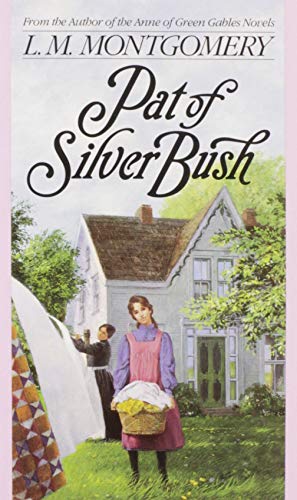
 I’ve been gradually revisiting L. M. Montgomery’s novels lately, most recently her Pat duology: Pat of Silver Bush and Mistress Pat. These were two of her later books, published in 1933 and 1935 respectively, and some of the darker strains of her later life are already coming through. There’s still much that is funny, charming and hopeful, but there are definitely some deeper shadows here than in earlier books.
Pat of Silver Bush follows Pat from childhood to girlhood, up to around age 18. Mistress Pat ranges over eleven years, bringing Pat to about 30. Pat is passionately devoted to her home of Silver Bush and her family, vowing that Silver Bush is all she needs and deeply hating any change. She is joined by two beloved friends, Bets and Jingle. The most striking character may be Judy, cook, storyteller and mother figure for Pat. More spoilers to the story below!
All of Montgomery’s heroines have some of her traits, and she mentions in her journals endowing Pat with her deep love of home and hatred of change. Pat is a bit of an odd heroine, still ecstatic in her joys (as Montgomery’s heroines tend to be) but much more wrung out by life. Emily has her dark moments, but Pat seems especially tragical. The books are not so grim that I’d call her tragic, but even with an element of humor in the mix, Pat still seems more pained by life than Montgomery’s usual heroines. Likely this is because she was written while Montgomery herself was growing more pained by the direction of her own life.
The books are enjoyable on a surface level, with Montgomery’s usual nature rhapsodies, charming depiction of home life and much humor. Judy is an absolute delight, with her Irish brogue, endless stories and parade of good food. The last quarter of Mistress Pat veers toward the truly tragic, but most of the two books is still warm and affirming. Continue reading “Book Review: Pat of Silver Bush and Mistress Pat”
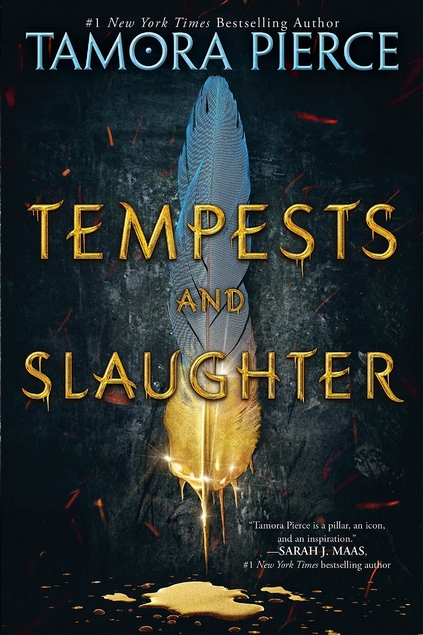 I mentioned recently that the long (loooong) awaited new Tamora Pierce book was finally out. I got it from my library, and then (because life is busy) spent a couple weeks reading it. So how did Tempests and Slaughter, Book One of the Numair Chronicles, turn out after all this time?
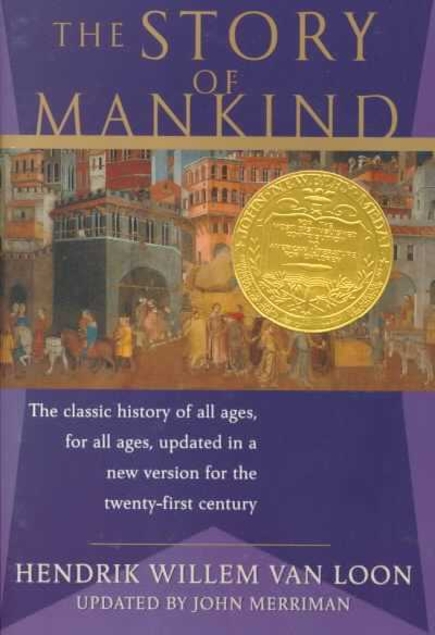 I recently confronted the juggernaut of Newbery Medals, the very first winner from 1922 and a seriously massive piece of nonfiction: The Story of Mankind by Hendrik Willem van Loon. I actually got this out from the library months ago, was decidedly taken aback by how thick it was, and returned it unread for a later day. This time I bought the audiobook on Audible (14 hours!)–and to my pleasant surprise, found it a quite engaging read.
 Tales of the Marvelous