An Exploration on Being Dead

Halloween is coming up, and I’ve been thinking about appropriate books to review.  Halloween is one of my favorite holidays (Costumes!  And candy!), but not the easiest for me to get into thematically with book reviews, since I don’t like horror (movies are even worse than books).  But…occasionally I like something that drifts towards the spookier side, so I’ll try to give you a few reviews of books that are Halloweenish but won’t make you (by which I mean me) afraid of the dark.

Starting us off, Being Dead by Vivian Vande Velde.  What could be more Halloween-appropriate than a collection of short stories about ghosts?  In typical ghost fashion, most have unfinished business of some sort, but what and how they go about it varies widely.

The first story, “Drop by Drop,” is probably the creepiest, though it also felt a bit unfocused.  The conclusion in some way makes a lot of the rest feel irrelevant, although I don’t want to explain beyond that as it’ll give a lot away.

“Dancing with Marjorie’s Ghost” is a wonderfully traditional-feeling ghost story, the kind someone would tell around a campfire, while “Shadow Brother” takes a very different angle–the narrator’s brother died in Vietnam, and may or may not be haunting their father.

I found “October Chill” the saddest, about a teenage girl with a terminal illness who meets a ghost from the distant past.  The title story, “Being Dead” is the funniest–while having some pathos too.  It’s about a news boy who dies suddenly, and tries his hand at haunting to set a few things right before he goes on.  I think it was my second favorite.

My favorite story (and I don’t want to give you the title because there’s no way to talk about it without spoilers, if you knew which one I was talking about) started out feeling rather flat, but then had a final twist ending that was so clever I had to go back and reread the whole thing so I could see how brilliantly it was actually put together.

I enjoyed the variety of stories and the variety of takes on ghosts.  Many had a good undercurrent of creepiness or a clever twist of some kind.  None have been haunting me, and that’s a good thing!  It’s just a good collection of interesting and engaging ghost stories.

Author’s Site: http://www.vivianvandevelde.com/

Picturing the Twelve Dancing Princesses

Have you ever stumbled on something and wondered why you didn’t know about it twenty years ago?  That’s how I feel about Kinuko Craft.  She did the cover for Wildwood Dancing, and since seeing that, a friend and I have both become a little obsessed with her art.  And apparently she’s been doing covers and illustrations for years!  How did I not discover this sooner?

Most recently, I tracked down a beautiful picture book, The Twelve Dancing Princesses by Marianna Meyer and illustrated by Kinuko Craft.  I’ve talked about the dancing princesses a lot in various other retellings, and this one doesn’t offer a lot that’s new in the story itself.  A slight twist on a few elements, but mostly a straight-forward retelling.  But the pictures are lovely.  Apparently this is just my week for talking about illustrations!

Almost every alternate page is a full-page illustration, with illustrated sidebars on the text pages.  The detail and intricacy of the art is wonderful.  Some pictures are relatively simple, such as a man working in a field (although even that has an entire sweeping landscape behind him).  Others are a swirl of faces and dresses, showing all twelve princesses.  One dark picture shows the mysterious castle on the far side of the magic lake; another is riot of color in a flower garden.

The hero is drawn a little cherubic for my taste, but the princesses and their dresses are beautiful.  I think my two favorite pictures are when the hero is approaching the castle, showing the stretch of mountains and water before him, and a picture showing dozens of couples dancing in a vast hall lit by chandeliers.

But why take my word on what they look like?  Better to just put up a few pictures!


Illustrator’s Site: http://www.kycraft.com/

To Sleep, Perchance to Dream

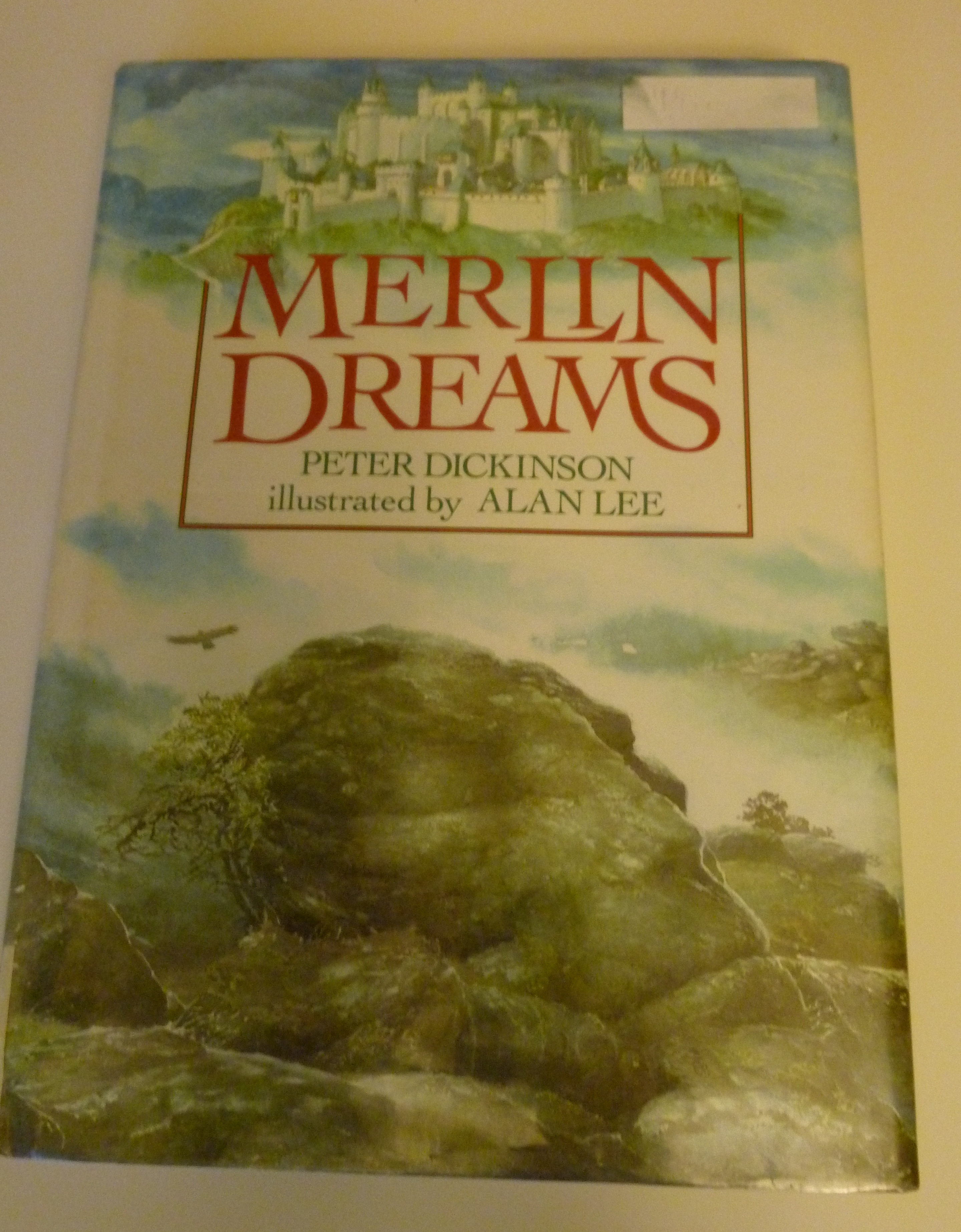
There’s an old legend that Merlin never died–that he’s imprisoned beneath a stone somewhere on the moor, sleeping through the centuries.  And while he sleeps, what might he dream?

This is the frame-story for Peter Dickinson’s wonderful book, Merlin Dreams.  He tells eight stories, eight dreams of Merlin beneath his stone.  Between each story Merlin half-wakes, remembers his life or senses what goes on above him, then drifts back into sleep…and has another dream.

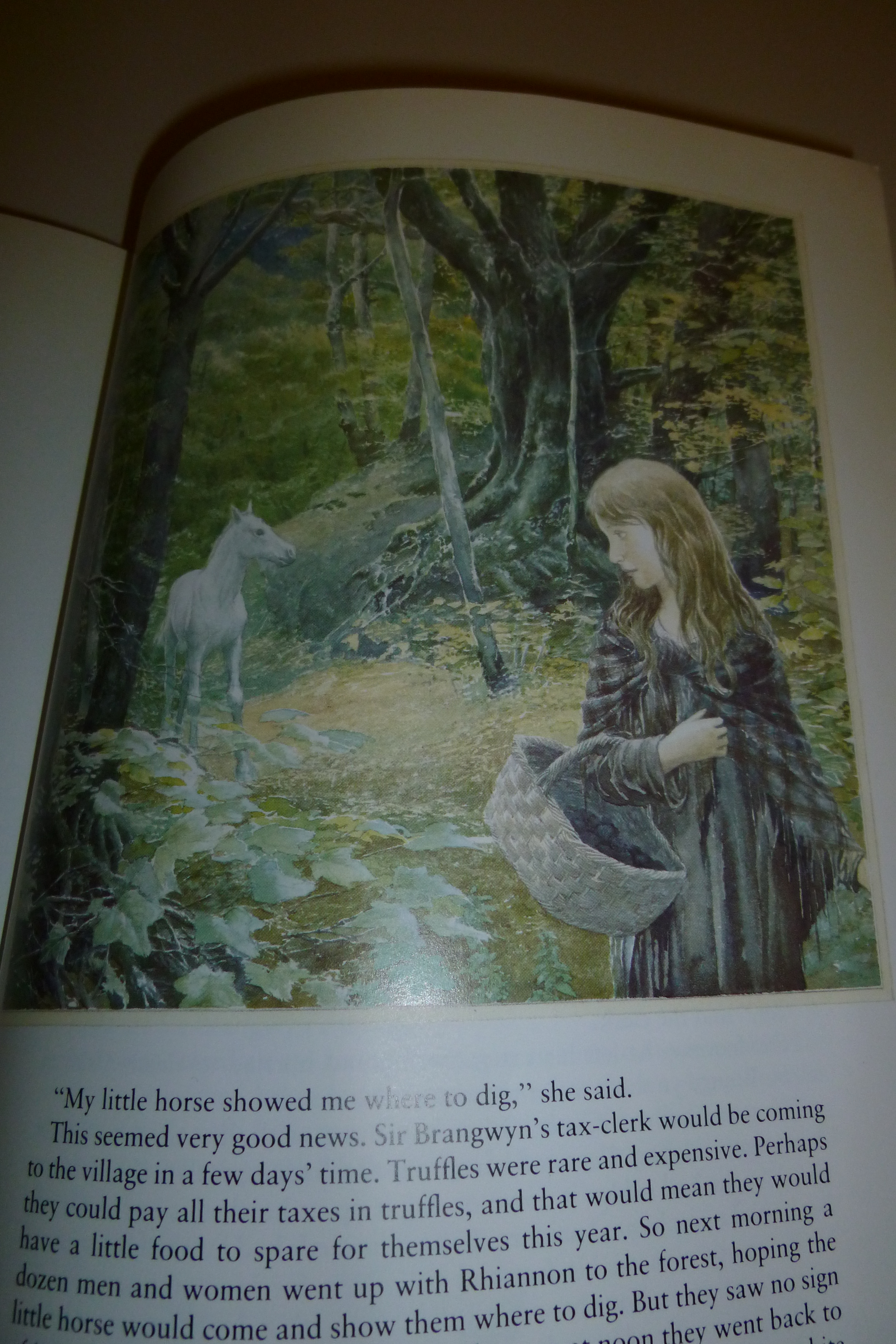
I’m fascinated by the frame story, and the short stories are excellent too.  Several have a vaguely Arthurian flare, although I don’t think any retell an actual legend.  But there are dashing (and not so dashing) knights, brave damsels and many unexpected heroes.  There’s a king, fallen from honor and strength who needs a little girl to show him the way back.  Another little girl befriends a unicorn in the woods, only to be threatened by men who want to exploit the opportunity to hunt a unicorn.  Two stories feature tricksters who put on shows for country folk they hold in contempt, only to be undone by their own tricks.  There’s a young prince who fights a dragon, and another, particularly ugly young man, who fights a sorceress.  And woven throughout, Merlin remembers his own life, and strange fragments of other scenes and stories.

There’s a wonderful magical, mystical quality to the stories.  Often all is not as it seems, and the magic holds plenty of surprises.  Even though I don’t think these are traditional stories, many have that enchanting feel to them.

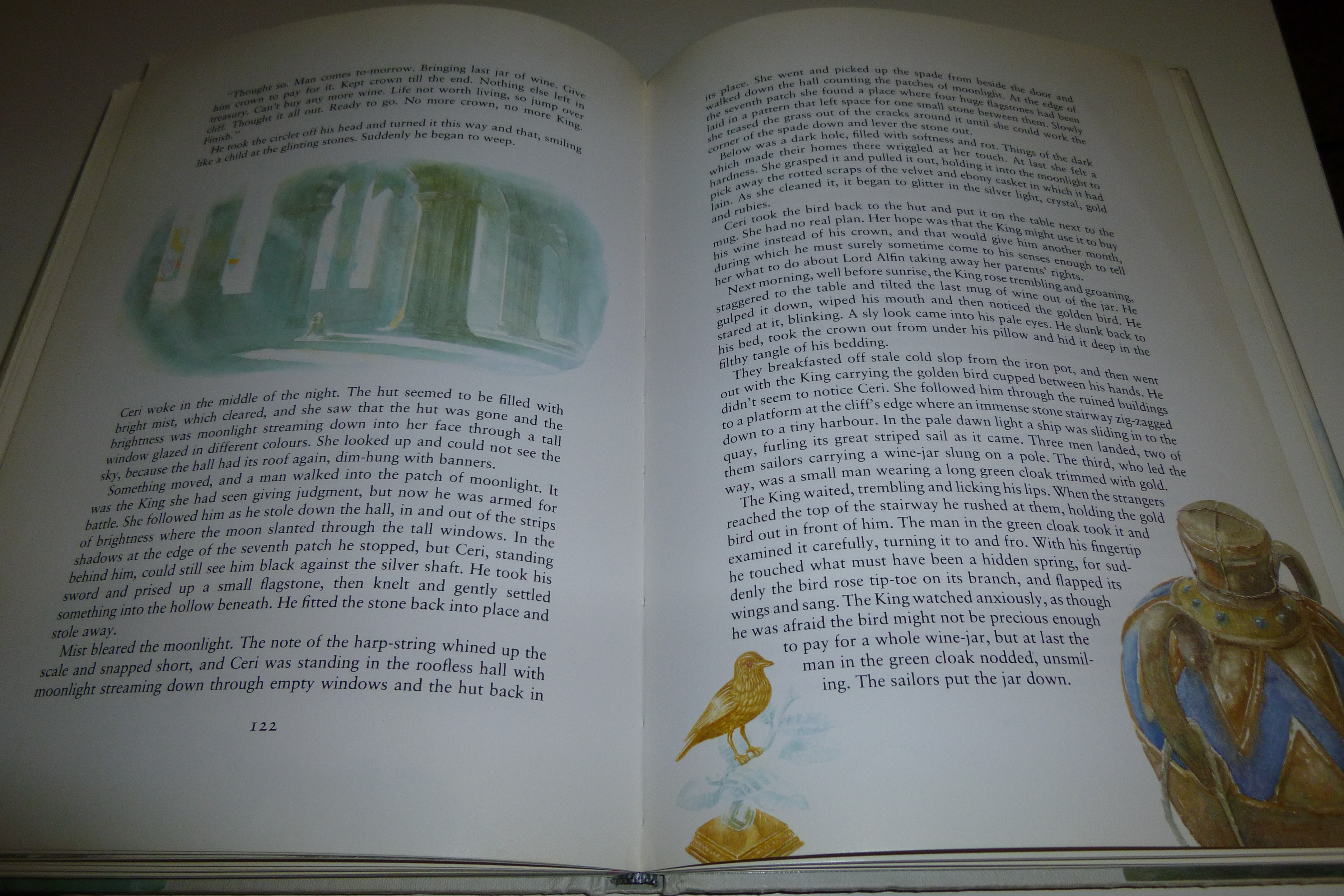
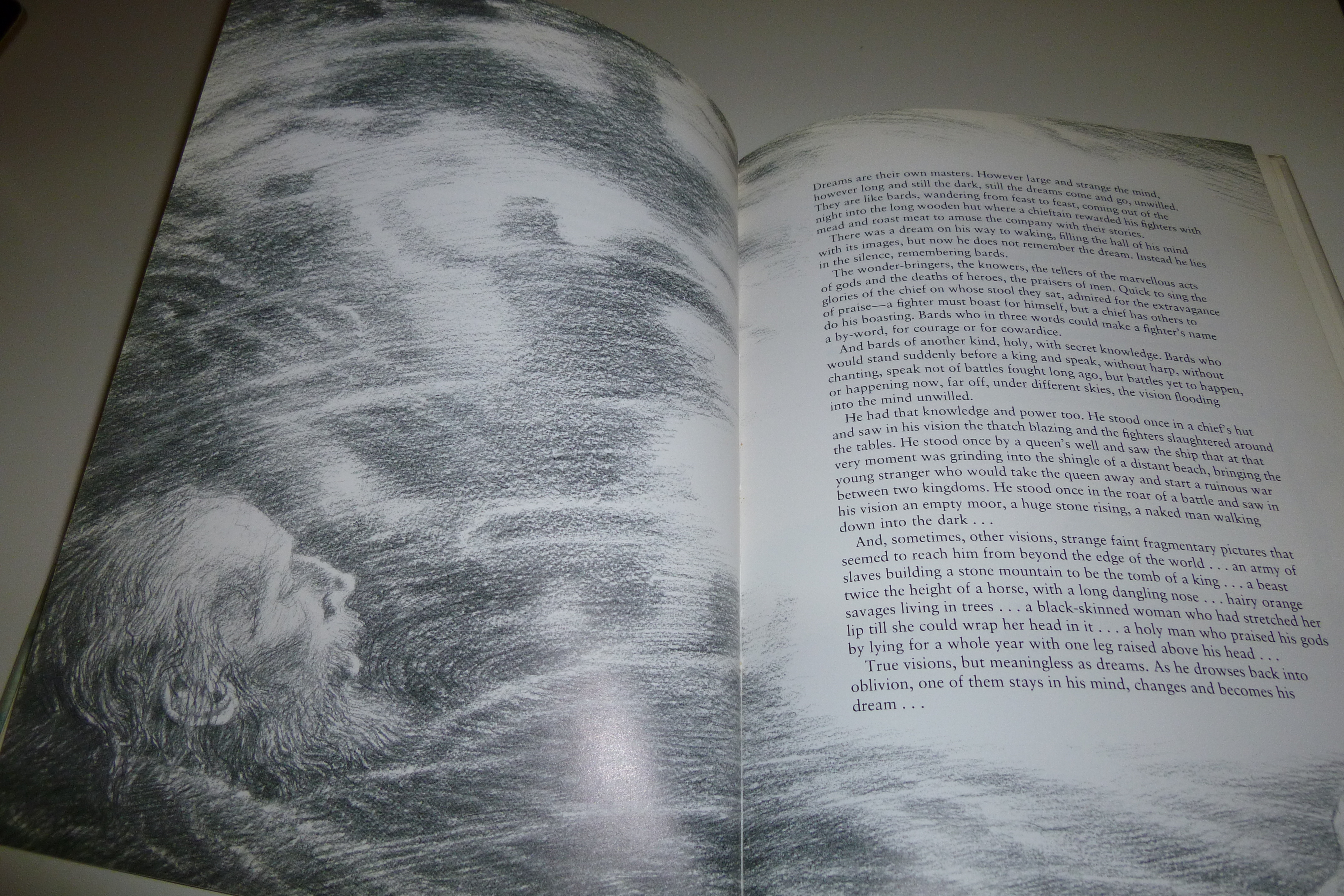
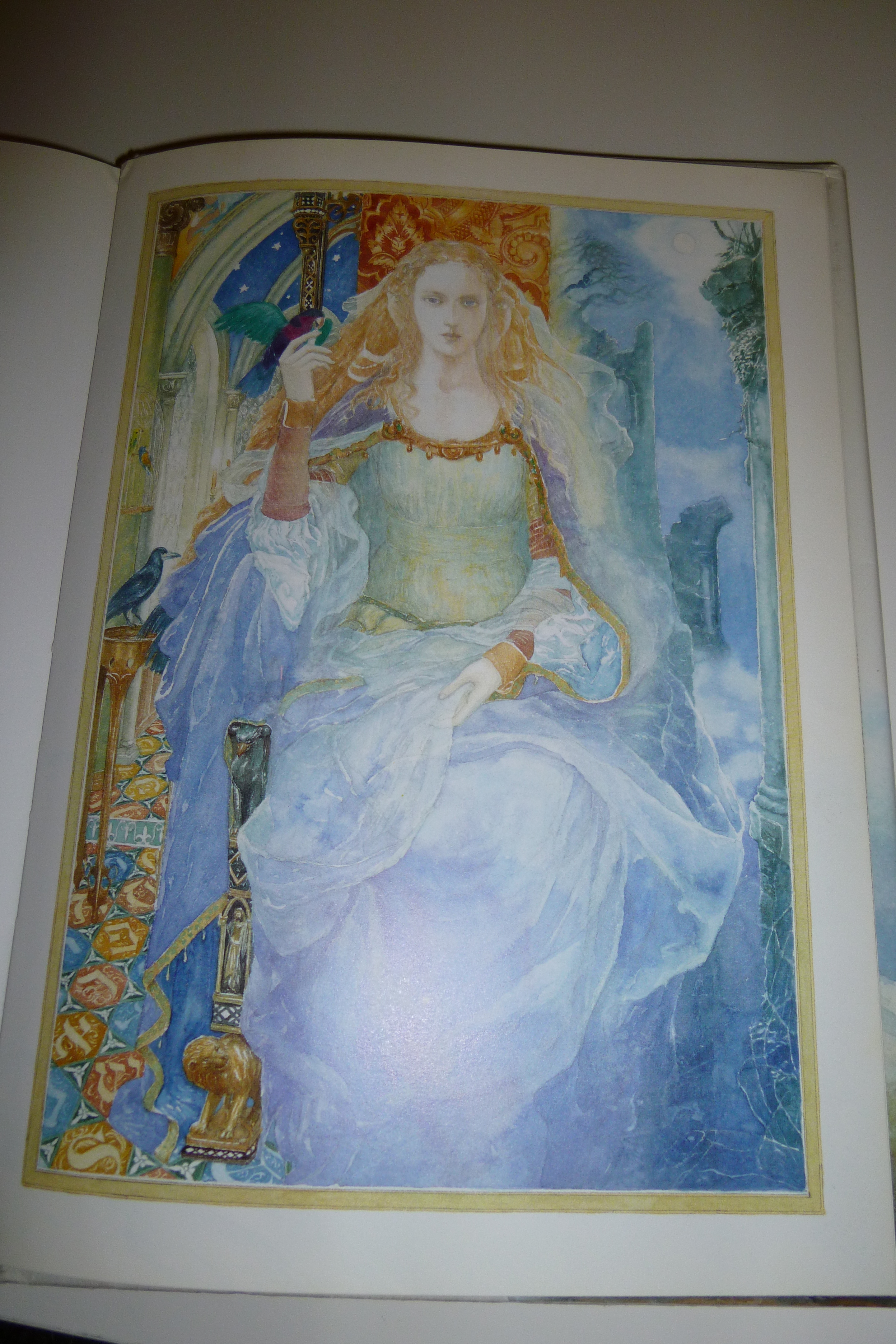
Part of it’s very much the writing.  Part of it is the illustrations too.  I honestly don’t know if there are multiple versions of this book, but if there are, make sure you get a copy with Alan Lee’s illustrations.  There are many throughout the book, some dark and shadowed, some vivid and bright.  They bring the stories to life in a new way, and many are just beautiful.

This is generally put in the kids section, and I think the short stories are definitely good for kids.  A word of warning that some of Merlin’s reflections are pretty dark.  And as beautiful as most of Alan Lee’s illustrations are, some could be disturbing for a smaller child.

There’s no Table of Contents to the book, which can be a little inconvenient at times.  But I think it fits too.  After all, it’s not just a neat line of stories.  It’s a series of dreams, and if you could line them up and list them out and easily jump to one or another, I think that would lose some of the flowing, magical quality of the book.

I can’t resist a few more pictures!  You can click on them to see them larger.


Author’s Site: http://www.peterdickinson.com/

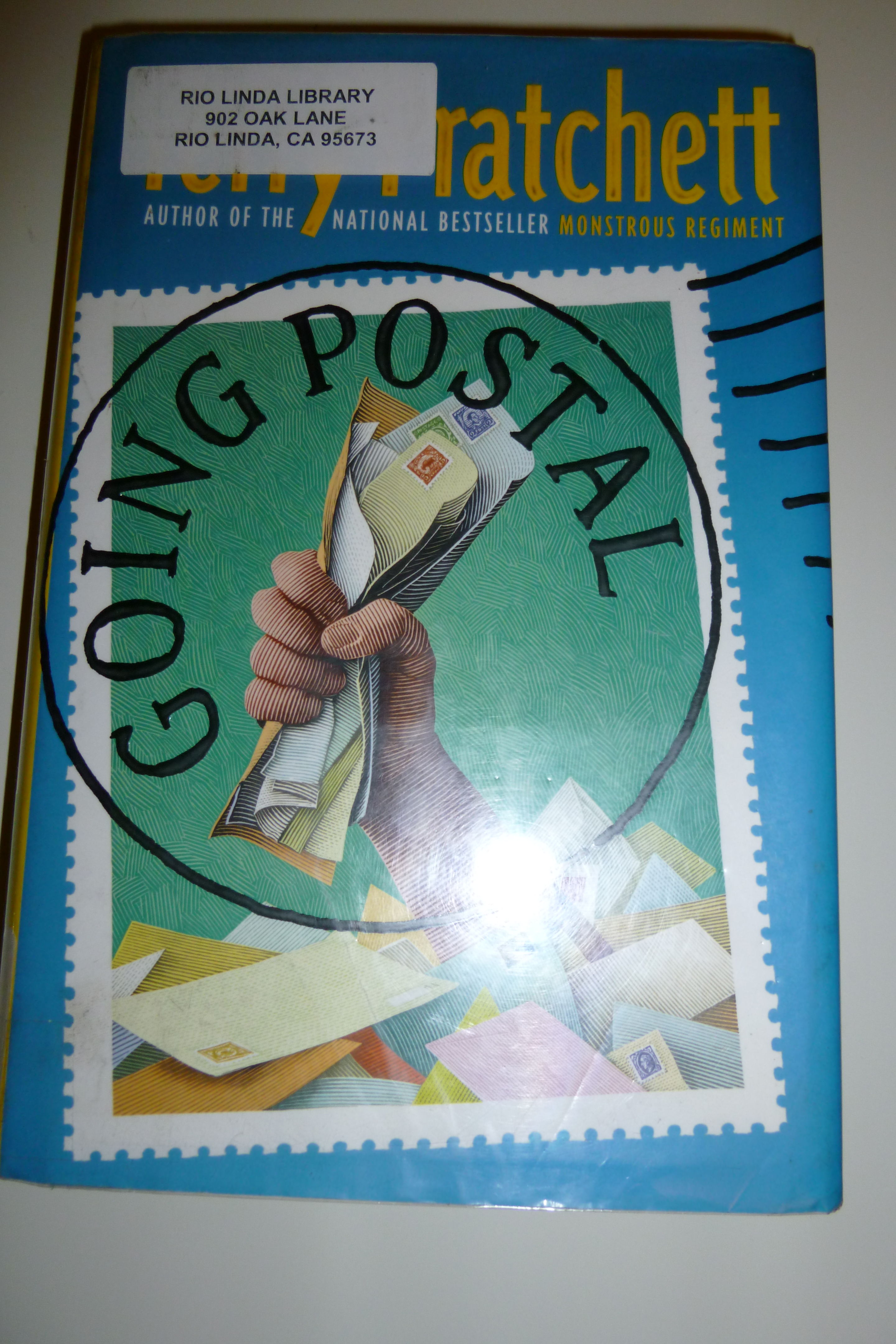
Going Postal with Terry Pratchett

I’ve mentioned Terry Pratchett and Discworld a few times recently in “Favorites Friday” posts, but I haven’t done a review yet.  Time to change that!  Part of the trick with Discworld (rather like Dr. Who) is figuring out where to start.  Discworld is one of those big sprawling series with over forty books in it.  If that sounds intimidating, don’t worry–the books are interconnected, but very few directly follow each other plot-wise, so you can read as many or as few as you feel like.

And you can probably start almost anywhere.  I’ve bounced all over the series, and while with some it was clear that there was a previous, related installment it might have helped to read first, I don’t feel like it severely hampered my enjoyment of whatever I was reading.  However, there probably are some places that are better to start than others.

I actually wouldn’t recommend starting at the beginning.  That’s The Colour of Magic, and it’s good, but Pratchett was still sorting the world out, and it’s not as brilliant as many of the later books.  One really good place to start would be Going Postal.

Going Postal stars Moist von Lipwig, a fast-talking conman who was supposed to be hanged, but finds himself revived after the gallows, and designated the new Postmaster of Ankh-Morpork.  The post office has been out of business for years, and the old building is falling to pieces–not to mention it’s literally filled with undelivered mail.  Moist finds himself trying to bring back the post, despite completely mad co-workers and violent competition from the clacks (telegraph) service.

It’s a wonderful, funny book, and it’s a good starting point because it’s stand-alone.  Moist and most of the other major characters make their first appearances here.  But you also get to meet a lot of characters who are significant in the series, but have only supporting roles here.

Vetinari, the Patrician, gets a good part; he’s a tyrant, and he’s terrifying, but he makes things work.  You get to meet a lot of the City Guard, who are my favorite group of characters (they have seven, soon to be eight, books written about them).  The Wizards of Unseen University, who are all at least little bit bonkers, make a guest appearance.  And I can’t remember for sure, but I think Death gets at least a cameo.  Death wears a big black hood and talks IN ALL CAPITAL LETTERS.  Usually someone dies at some point in every Discworld book, so Death gets to show up, and a few of the books focus on him.

So this is good for introducing characters who are important in other books, and it’s also good for giving you a feel for the city of Ankh-Morpork, and Discworld in general.  Pratchett is one of the funniest writers I’ve ever found.  He creates a crazy world (did I mention it’s a disc, which is on the back of four elephants, who are on a turtle?) filled with completely nutty and hilarious characters.  And he has a way of writing single lines which will make me laugh for days afterwards whenever I think of them.  Feeling down?  Read Pratchett.  I fully believe in self-medicating depression with Terry Pratchett books.

They’re not merely funny, though.  Pratchett is often very satirical.  Much of Ankh-Morpork is an extreme, but it’s an extreme you may recognize as based in something in our own society.  Going Postal is good satire too.

High, high recommendation for Discworld.  You won’t regret it!

Author’s Site: http://terrypratchettbooks.com/

So I Finally Watched Doctor Who…

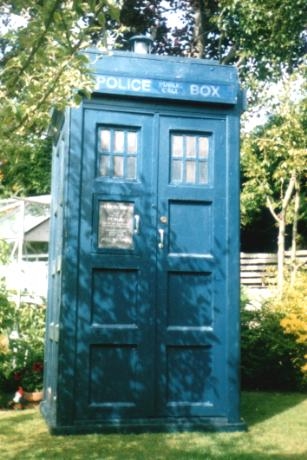
The TARDIS - it's bigger on the inside

For ages, everyone told me I had to watch Doctor Who.  So I finally did–and they were right!  I always say my main interest is stories, not exclusively books…so why not a review of a TV show with truly brilliant storytelling?  And it gives me an opportunity to be gleeful about Doctor Who!

The history of the show is complicated.  It ran on the BBC for 26 years, starting in the sixties.  One reason it took me a while to start watching is because I just didn’t know where to start.  But finally enough people told me I could just begin with the recent series, which runs from 2005-present, and that’s what I did–you can too.

The premise has to be every storyteller’s dream, because it’s so limitless.  The Doctor is the last of the Time Lords, and he travels around the universe in the TARDIS, which from the outside looks like a blue phone booth–but it’s bigger on the inside.  It has incredible power, and can travel through time and space.  So you can go into the future and have a sci fi show–go into the past and meet Queen Victoria–invent all kinds of aliens, which sometimes resemble the supernatural (which means you can have ghost stories)–and if things ever get dull, recast the Doctor and give him a new sidekick.  You see, the Doctor never dies, he just regenerates with a new face, which is how they can now be up to the 11th Doctor.  He usually travels around with a companion, but the companion is open to replacement.

So you have a premise with pretty much no boundaries.  And the show itself is exciting, witty, suspenseful, hilarious…  I’ve just finished Season Two, so I can’t yet comment on anything after that.  But the first two seasons are fantastic.

I admit it did take me a few episodes to get into the show.  The recent series opens with the 9th Doctor, played by Christopher Eccleston.  He’s a sort of goofy action hero, who will save the day, while grinning and making jokes.  At first I wasn’t sure I liked it–then I had a complete turn-around and loved it.  One cool thing about a constantly funny hero is that when he does turn serious, it means a lot.  His face goes solemn and the tension rises through the roof.

The Doctor regenerates at the end of Season One, to be replaced by David Tennant.  He’s goofy, but in a different way.  Still very mercurial, but he gets serious more often.  It took me a few episodes to forgive him for not being Christopher Eccleston, but by the time he crashes a white horse through a mirror into a French ballroom, I decided I loved him too.  He brings a whole new level of awesome to the character.

I have not yet watched enough to get to know the Doctor’s later companions, but for the first part of the series he travels with Rose.  She rises above really bad make-up to be a quite good character, and there’s excellent chemistry between her and both Doctors.   When I say “chemistry,” though, I don’t mean romance, and that’s actually something I love about the show.  The Doctor and Rose are very, very close–but they’re friends.  There isn’t even any flirting or innuendo.  They’re just really, really good friends.  You don’t see that very often in TV.

Another thing that strikes me about the show is its confidence.  I think it comes of having a forty-year history and apparently an enormous British fanbase.  I don’t quite know how to explain how a TV show can be confident–but I think it’s that they present sometimes absurd things and treat them seriously.  They don’t mean it ironically, it’s not campy, and yet instead of laughing at them–I end up believing them!  For instance, the Daleks.  They’re this alien race that’s totally ridiculous-looking, these rolling tank things that look like they belong in Lost in Space, and they roll around with funny voices saying, “Exterminate!  Exterminate!”  But the Doctor says that they’re the ultimate evil and very dangerous, and he and everyone else takes them very seriously, and I find myself looking at other alien races on the show and thinking that they’re not as threatening as the Daleks.  Really, I don’t know quite how they do it.  And sometimes, the show does know it’s being absurd, and has really funny episodes as a consequence.

Some TV series will have funny episodes, and tragic episodes, and spooky episodes.  Doctor Who manages to do it all at once.  There are terrifying aliens, really clever lines, heartbreak and hilarity.  And the show is often absolutely riveting.