Since I’m branching out from my usual fantasy into science fiction for NaNoWriMo this year, it seems appropriate to revisit one of my favorite books that exist at the perfect intersection between the two genres…
*******
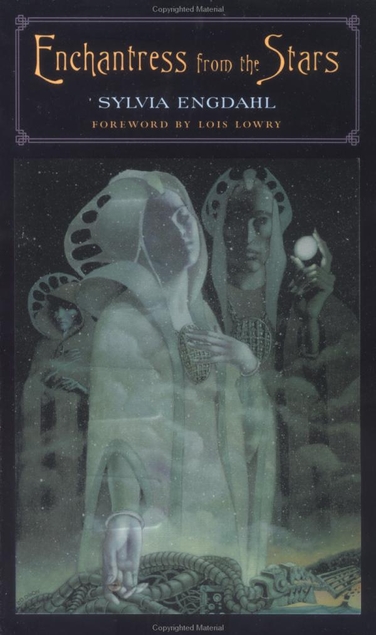 Science Fiction and Fantasy get lumped together all the time, in discussions, in “Best of” lists, in the bookstore. But you rarely see them together in a single novel. Enchantress from the Stars by Sylvia Engdahl is a brilliantly-devised story that could be in Earth’s distant past–or even more distant future.
The story is told by Elana, who belongs to a society far advanced beyond present-day Earth. She is part of a Federation of many planets, joined together in peaceful cooperation. They study less advanced worlds, but have a strict non-interference policy, believing that it’s best for cultures to develop without knowing about more advanced races.
(For the Star Trek fans–I know, I know. All I can tell you is that this was written in 1971, but feels less like Star Trek when you’re actually reading it.)
Elana is training to be one of the scientists who studies Youngling worlds when she stows away on a mission to Andrecia. Andrecia’s native people are at roughly a Middle Ages level of development. Their future is threatened by colonists from another world–the Imperials have developed space travel, but have not yet achieved the level of Elana’s people, either technologically or culturally. The Federation team’s mission is to induce the Imperials to leave, without harming either race’s culture.
Elana ends up taking on the role of Enchantress, to relate to the Andrecians in a way they can comprehend–she especially connects with one, Georyn. She teaches him magic spells (combinations of technology and telekinesis), so that he can go fight the dragon (the Imperials’ digging machine). The hope is that if an Andrecian uses powers the Imperials can’t understand, they’ll be convinced to give up their colony.
The brilliance of the story is that it’s told from three very different points of view–Elana, from her advanced, enlightened perspective; Georyn, who tells a Brothers Grimm-style story about a beautiful Enchantress, a dragon served by terrifying demons, and magical spells; and Jarel, an Imperial who questions what his government is doing but doesn’t know how to act–and is probably the closest to all of us who are reading.
The three perspectives are intertwined and so different, yet work so well together. It’s emphasized, in Elana’s sections, that Georyn’s perspective on events isn’t wrong either–he simply has a different understanding, a different way of viewing what’s happening. In some ways, he proves to be the most intelligent and the most insightful of any of the characters.
Elana is very interesting too, because we see her as the uncertain, often naive girl she is on the mission; as the strong and wise enchantress Georyn sees her as; and as the more mature voice telling the story after it’s all over. Her character growth, throughout the story and from the after-perspective, is very excellently done.
This is a good adventure with compelling characters, and it’s ultimately a very hopeful story. Engdahl is careful to place Andrecia, Elana’s home world, and the Imperials’ home planet all in the position of third from their stars. It notes in the introduction that any of them could be Earth–this could be a story about our past, or a story about our future. Ultimately, I don’t think it matters. We’re all of them. The hopeful part is that the book makes it clear that Georyn’s people, and Jarel’s, and us, can all learn and grow and eventually reach the wisdom of Elana’s people.
In that way I guess it is like Star Trek, as a vision of a hopeful future. But if you want to take this as science fiction, as fantasy, as philosophy, or even as something with some of the same elements as Star Trek, it’s worth reading–it’s a wonderful book.
Author’s Site: http://www.sylviaengdahl.com/index.htm
Other reviews:
Book Snatch
Jenna St. Hilaire
Yours? Let me know!
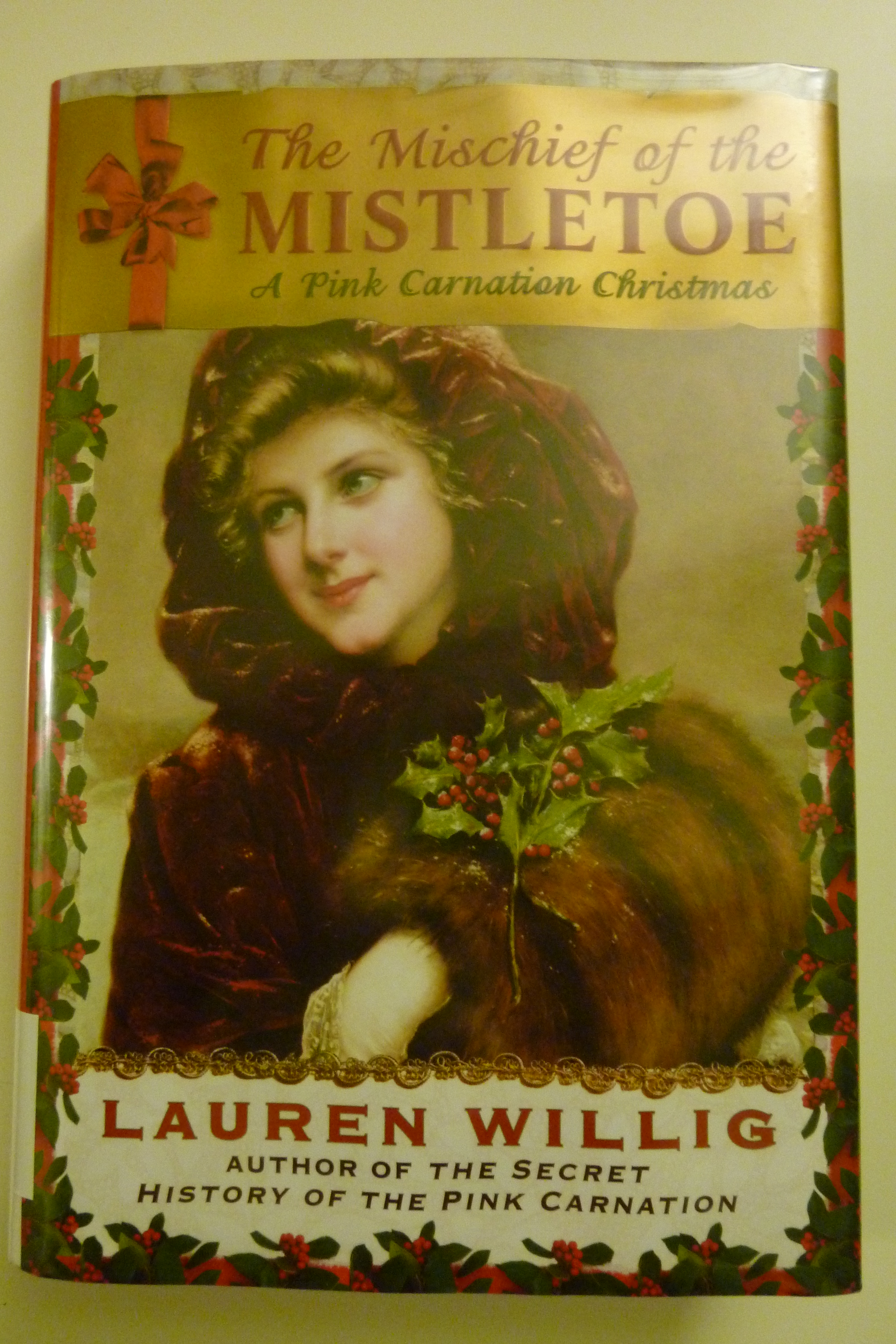 Happy holidays! My reading celebration of the day involves re-reading one of my very favorite Christmas-set novels, The Mischief of the Mistletoe. Still delightful on a third read, still one of my favorite romantic couples!
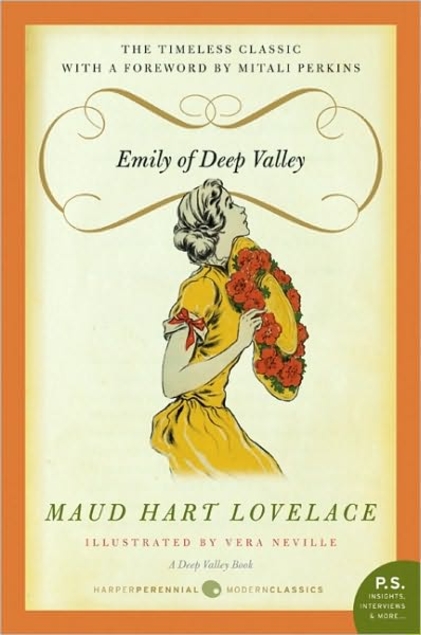 I’ve been rereading my way through the Betsy-Tacy series by Maud Hart Lovelace lately, starting with Betsy-Tacy when they’re five years old and on up to Betsy’s Wedding. I might write about the whole series some other time, but right now I want to write about one of the companion books. Ten of the books focus on Betsy (and friend Tacy), two focus on close friends of Betsy, and just one focuses on an entirely separate character who happens to live in the same small town and share a few acquaintances. And that one, oddly enough, may be my favorite.
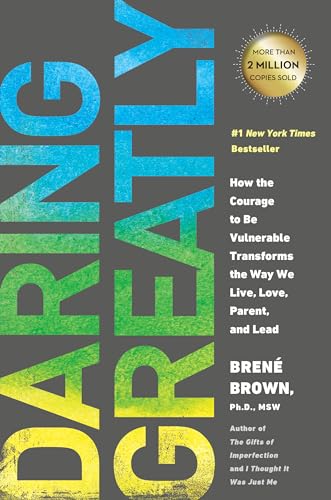 It’s rare for me to read a book that makes me want to rush out and tell everyone I know to read it—and even rarer with nonfiction. But that happened with Daring Greatly by Brené Brown.
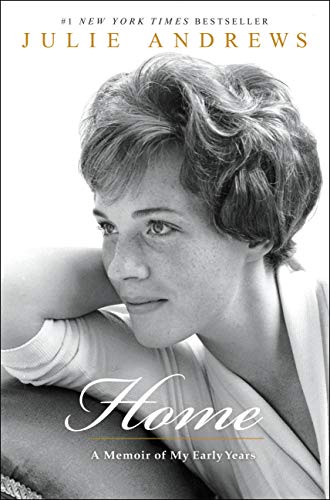 I’ve been making my way through (what I’ve been calling) the random-criteria-reading-challenge this year, and have been getting down towards the criteria I have to deliberately seek out to fulfill. Which is all to explain why I read a memoir. “Memoir” was on the list, so I set about to think what memoir I might actually enjoy. I may be unreasonably prejudiced, but I tend to expect memoirs to be terribly dark and grim and depressing (because people with happy lives don’t tend to write memoirs…) So when I remembered Julie Andrews had written a memoir, that seemed perfect—a happy life, right? Well, Home, a Memoir of My Early Years turned out to have some darker notes than I expected, but I still found it much more readable than most memoirs I’ve heard of.
 Tales of the Marvelous