If History Was Different…

I read The Explosionist by Jenny Davidson so long ago that pretty much all I remembered was that it was set in an alternate history, and there was a sequel I always meant to read.  Clearly a reread was in order before going to that sequel!
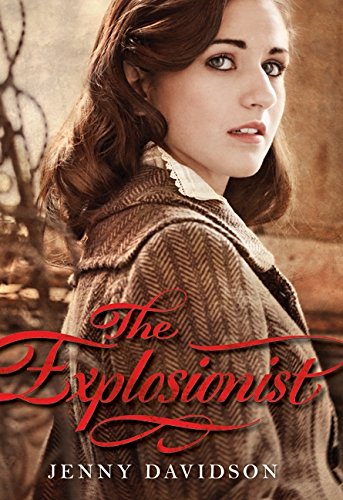
The Explosionist is set in Scotland in 1938–but this is an alternate history, where Napoleon won at Waterloo.  The Northern countries of Scotland, Scandinavia and Russia have united in the New Hanseatic League, in uneasy peace with a united but oppressive Europe.  Sophie Hunter is 15, an orphan raised by her Great-Aunt Tabitha after her parents died in an explosion at a dynamite factory.  Her world begins to unravel with terrorist bombs near her school, an unsettling encounter with a ghost through a medium who is later murdered, and hints of something sinister about IRLYNs (pronounced “Irons”), a patriotic training program for young women.

Sophie is a wonderful portrait of a very intelligent, slightly naive girl who is well-meaning yet often conflicted about what’s best.  She felt very fifteen somehow, just old enough to grasp the magnitude of the conspiracy she begins to uncover, but young enough to still think she can somehow handle it herself–with her best friend, Mikael.  There’s an intriguing thread through the book about the benefit or harm of strong emotions.  Sophie herself is a committed rationalist, who believes that doing away with extreme emotions would be all to the best…though she can’t quite manage it!

This book is part boarding school story, part murder mystery, part conspiracy theory, and part ghost story as Sophie discovers an ability to speak with the recently-dead.  All those pieces somehow balance together, creating an intriguing mystery with a series of surprises and turns.

The alternate history of it all creates some fascinating touches.  The overarching changes to history and government are intriguing, though the small details may be even more fun (if a little silly!)  Many people famous in our own history are famous in Sophie’s world–but for very different reasons, like Freud the radio host, or Einstein the poet…
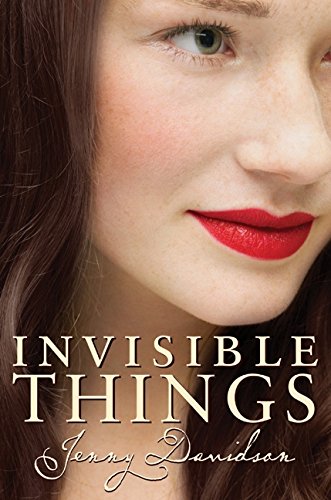
By the way, I hate this cover–it has none of the character of the first one!

The Explosionist ends with a big shift and a lot of questions still wide open, which is how it stuck in my mind that I needed to read the sequel, Invisible Things.  (Some minor spoilers for the first book to follow.)  The sequel sees Sophie in Denmark with her friend Mikael’s family, volunteering at a scientific facility headed by Niels Bohr where nuclear fission is a hot new topic.  Europe and the New Hanseatic League are rushing ever closer towards open war, while Sophie begins to uncover new truths about her family’s past.  Halfway through the book, we see an abrupt shift with a terrorist attack (using a gas that alters Mikael’s personality), a new villain, and a quest for Sophie.

I enjoyed The Explosionist a lot, but I’m not sure how to feel about Invisible Things.  Sophie, Mikael and all the rest are still likable and compelling characters.  The premise and the alternate history are still fascinating.  But while the first book had a busy and carefully balanced plot, this book feels like it lost its balance somehow.

Sophie has a very passive role for the first half of the book; there are revelations a-plenty, but Sophie herself doesn’t actually do much.  The stakes get higher and so does the interest level in the second half of the book…but that part also seems like a big departure from everything that came before, and begins to strain credulity a bit in certain ways.  The last portion of the book is a “Snow Queen” retelling, which is a cool idea–yet feels forced in places.

It’s unfortunate, because there are a lot of great pieces in here…they just fit together a little awkwardly.  Still, it was worth the read to find out the answers to some of the mysteries left by the first book, and to see the continuing development of Sophie’s story.  If you like historical fiction with a little fantasy thrown in, or enjoy slightly spooky conspiracies, these books are a fun read!

Other reviews:
Bib-Laura-graphy
Bookshelves of Doom
Frenetic Reader
Anyone else?

Buy them here: The Explosionist and Invisible Things

Dancing with the Wintersmith

Terry Pratchett is one of those authors I read on a fairly regular basis, and always have a good time with!  Most recently, I read Wintersmith, the third book in the Tiffany Aching subseries of Discworld.

Tiffany is a 13-year-old apprentice witch of considerable promise (and modesty).  She attends a Dark Morris dance, welcoming winter, and can’t resist jumping in–which brings her to the attention of the Wintersmith, the spirit of winter, who finds himself suddenly enamored of this human girl.  Dealing with the chaos and destruction caused by the Wintersmith’s attempts at wooing requires all of Tiffany’s strength and ability, as well as help from senior witches Granny Weatherwax and Nanny Ogg, from the fighting, drinking and swearing Wee Free Men, and from bookish and good-hearted Roland, who is not Tiffany’s young man.

I think I enjoy the Tiffany subseries so much because, like the City Guard subseries, they give me a sane main character (Tiffany and Vimes), surrounded by wildly eccentric characters.  Tiffany is a wonderful heroine who has been growing into her abilities (and perhaps more importantly, her identity) throughout the series.  I mentioned above she has promise and modesty, but it’s really more complicated than that.  Tiffany always does what’s needed, and doesn’t see anything remarkable in that–even if it’s rescuing her brother from the Queen of the Fairies, or confronting the Spirit of Winter.  I love a character who is flawed enough to not always do the right thing, but to always try to do what’s needed.

The other witches are wonderfully eccentric and unique, from Miss Treason who deliberately made herself a legend, to Annagramma, a somewhat New Age witch who thinks it’s all about rituals and beads.  Then of course there’s Granny Weatherwax–witches don’t have a leader, and Granny is the leader they don’t have–and Nanny Ogg, warm and cheerful and practical about all things, like using a Cornucopia of Plenty to stock the larder.

The Wee Free Men, also called the Feegles, are at their usual wild state of hilarity, endlessly cheerful and enthused, shouting and rushing about and eager to do whatever is needed to help “the big wee hag.” I love it when they attempt to sing “Row Your Boat” while crossing the River Styx, “at every possible speed and tempo and with no regard at all for the tune,” annoying Death not a little.

The funniest feature of this book may be Horace, a very lively Lancre Blue Cheese.  He’s adopted by the Feegles, given his own bit of tartan, and does his best to hum along with the singing.

Roland also gets some nice scenes in this book.  He’s not Tiffany’s young man (in rather the way Granny is not the leader of the witches) and he has to step up to be the Hero in the story, even though he’s only ever used an imaginary sword, and learned swordplay from a book.  He has some truly awful aunts and I am hoping for more of his story in the next book…

If I have one criticism of this book, it’s the first chapter.  Chronologically, it covers events which should slot in between Chapter Twelve (of Thirteen), and I frankly don’t know why Pratchett decided to start there.  It made me thoroughly confused, and wondering if I’d missed a book in the series.  So–if you begin this and don’t know what’s happening, keep reading.

Anything else…have I said much on the plot?  The plot is good, perfectly engaging and exciting in spots–but it’s more important as a vehicle for the wonderful characters and high hilarity Pratchett is so good at!

My recommendation: don’t start the series here…but do start the series. 🙂

Author’s Site: http://terrypratchettbooks.com/

Other reviews:
Tethyan Books
Science Fiction and Fantasy Book Reviews
Feeling Fictional
Anyone else?

Buy it here: Wintersmith

On Fairy Tales and Masks

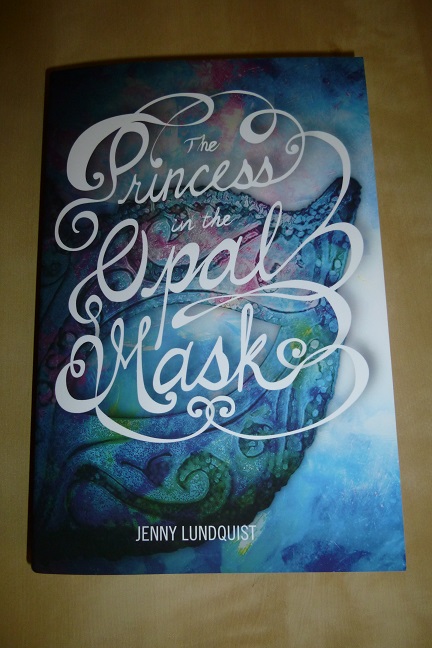
Princess in the Opal MaskA couple of common threads around here include retold fairy tales, and the masked Phantom of the Opera…so The Princess in the Opal Mask by Jenny Lundquist, with its Cinderella spin and masked princess, seems tailor-made, no?  🙂  It also turned out to have strong female characters, a well-developed world and an excellent fantasy feel, all things I enjoy in a book!

The story alternates narration between two girls: Elara who has a Cinderella-like existence among her adopted family, and no knowledge of her birth parents; and Wilha, a princess who has never been allowed to show anyone her face, not even her own father.  And…it’s hard to say more without spoilers, but suffice to say both girls end up central players in a tentative and uncertain peace treaty with a neighboring kingdom.  There’s intrigue and romance and backstabbing and conspiracies–and Wilha’s mask is only the most visible one.

I really loved the idea of the princess in the mask, and was so intrigued by the mystery–even Wilha herself doesn’t know why she has to wear a mask all the time.  All sorts of rumors fly, that her face is cursed or blessed, and the book explores Wilha’s own confused feelings and fears.  The Phantom of the Opera at least knew why he was hiding his face–Wilha has no answers, except a fear that showing her face will mean death for anyone who sees her.

Wilha also struggles to be seen as a person, not as The Masked Princess.  Most of us don’t go around in physical masks all the time (or hardly ever…) but the struggle to be seen as our true selves is much more universal.

Clearly I warmed to and related to Wilha right away.  Elara took longer–part of her struggle is that she doesn’t want to let anyone get close to her.  Considering her life, that does make sense.  Unfortunately, I felt like I couldn’t get close to her as a reader either.  However, she emerged more in the second half of the book, making more connections to others–and me!

The worldbuilding is another very strong element of the book.  Much of what happens, particularly with the neighboring kingdom, is grounded in the country’s history.  Lundquist does a nice job conveying a lot of information about past events, without getting bogged down or dry.

Description is a strong element here too.  Those masks may be imprisoning Wilha…but they’re beautiful too.  I want an illustrated version of this, mostly just to see the masks.  The cover is pretty, but it really doesn’t do justice to the elaborately-described masks!

There were plenty of unexpected turns in here, and it genuinely kept me guessing in the romance department.  A sequel has been promised for next Fall, and I’m looking forward to it!  Wilha and Elara are both on paths towards claiming their own lives and I can’t wait to see where they go next–and I’m hoping the sequel will pick up some threads (romance included) that were left unresolved here.  If this book was any indication, more twists and mysteries will be in store!

Disclaimer: I received a copy of this book from the publishers in exchange for an honest review.

Author’s Site: http://jennylundquist.com

Buy it here: The Princess in the Opal Mask

Plants and Stones and Magic

Battle MagicTamora Pierce’s latest book, Battle Magic, takes us back to the Circle of Magic universe, to revisit familiar characters and explore new countries and magic.  Although I get more excited for her Tortall books, this one promised a new adventure with some of my favorite this-universe characters, Briar, Rosethorn and Evvy, so I was still anticipating the read–and it didn’t disappoint!

Briar and his teacher, Rosethorn, are plant mages; Briar’s student Evvy possesses stone magic.  All can speak to and control the forces they have magical affinity with.  They’re on a long journey away from their home country, first to the welcoming and magical-laden country of Gyongxe, and then to the wealthy and ambitious country of Yanjing.  Yanjing’s emperor initially welcomes the group, but he is cruel, ruthless and power-hungry.  Soon armies are marching, and Rosethorn, Briar and Evvy are enmeshed in warfare.

Slotting this one into the rest of the series, Battle Magic is set after Street Magic and before The Will of the Empress; Briar is 16, Evvy is 12. This is more or less stand-alone, but I think there are a lot of references that would be hard to sort out without reading the earlier books (at the least, Briar’s Book and Street Magic).

I was most looking forward to revisiting favorite characters, and that was a great part of the book.  I always enjoy Briar’s plant magic, and it was interesting to watch the characters’ growth, especially because of the way this fit in between the other books.  The relationship between Briar, Rosethorn and Evvy is really lovely.  They’re essentially a family unit, if an unconventional one.  I love the way Briar sometimes jokingly calls Rosethorn “Mother,” and she does mother both Briar and Evvy–in her own stern, undemonstrative way.  At the same time, Briar is fiercely protective of both “his girls,” and even Evvy has moments of defending the others.

I also love the magic.  I prefer the Tortall books in general, but I really love the way magic works in the Circle of Magic series.  Pierce does so well dealing with things outside of normal senses, describing how Briar and Rosethorn understand and engage with plants, and Evvy with stone.  And I always love massive, impressive displays of magic.  As you might expect from the title, the magic in this book is mostly used in warfare, in remarkably creative ways–like when Briar or Rosethorn cause wooden weapons of the enemy to start sprouting leaves, or even develop into full-grown trees in seconds.

Pierce’s books have in some ways grown more violent in recent years.  There were always swordfights and hostile magic, even in the original Song of the Lioness quartet, but the violence has become more real and less vague epic-battle.  This book is no exception.  I think it still falls under the YA category, but it is, after all, called Battle Magic.  It’s not too graphic in its goriness, but there is a lot of fighting and a lot of dead bodies (not all soldiers–or humans, if animal death particularly bothers you).  There’s also one torture scene of a major character, which I don’t think is quite as bad as the phrase “torture scene” implies, but it’s definitely clear and unpleasant.  If you’ve read Pierce’s recent books, there’s nothing shocking here, but if you’re jumping from earlier books, be warned.

I would have liked something a little less war-focused, but this did have the strengths I look for in Pierce’s books–strong, well-developed characters, fascinating magic, complex cultures and interesting magical creatures.  Another solid installment from a favorite fantasy author.

Author’s Site: http://tamorapierce.com/

Other reviews:
Bookyurt
My Life Is a Notebook
Homewood Public Library
Anyone else?

Buy it here: Battle Magic

Soaring Over Fairyland with September

Girl Who Soared Over FairylandYou may have noticed–or guessed–that I was eagerly awaiting the new installment of Catherynne M. Valente’s Fairyland series, The Girl Who Soared Over Fairyland and Cut the Moon in Two.  I jumped (flew?) in as soon as the book arrived, and was so very happy to find that it was once again delightful!

Fairyland 1 (review here) introduced us to September, a girl from Omaha who flew away to Fairyland, where she met a Wyverary named A-through-L and a Marid (a kind of sea genie) named Saturday, and fought the wicked Marquess.  Fairyland 2 (review here) brought September back to Fairyland a year later, to confront her own shadow, who was stealing shadows and magic from Fairyland.

Fairyland 3 picks up again a year later.  September is beginning to grow up, with new responsibilities, including learning to drive.  She’s only fourteen, but I suppose the driving-age rules were lax in rural Nebraska, in the 1940s (or possibly 1910s–I’m not positive which World War September’s father fought in).  She still has no hesitation when the opportunity presents itself to return to Fairyland, this time chasing the Blue Wind who has carried off a neighbor’s automobile.  September lands in Westerly, the city of the winds, and makes her way to Fairyland’s moon, where she reunites with Ell and Saturday, and sets off to fight a fearsome moon-Yeti.

Valente continues the lush and beautiful writing style of the previous two books.  There are so many beautiful turns of phrase and twists of thought.  We’re still guided along by Valente’s sly narrative voice, who if anything is a little more present here than previously.

I was desperately anxious to start reading this book, but once I did, I didn’t feel any need to keep hurrying through.  This is not a page-turner, and I mean that in a good way.  I normally devour quickly books I enjoy, but this one required savoring.  As I read, I was also looking forward to rereading, because I felt like I couldn’t take it all in on one read!  These aren’t books driven by the plot and the need to know what comes next–it’s more like a delightful opportunity to linger with September and her friends and enjoy the sights of Fairyland.

There may have been a little too much lingering in the first portions of the book.  September meets several new characters, and while they’re interesting, I kept waiting to reunite with familiar ones.  Ell and Saturday do eventually come in, but I would have liked them sooner–though I can imagine that on a reread, when I know where the book is going, this may bother me much less.

The growth from Fairyland 1 to Fairyland 2 continues here, as September continues to grapple with what it means to grow up.  In particular, she’s trying to work out what she’s coming to feel for Saturday (and realize that he feels for her), and both September and Saturday have to deal with the question of Fate vs. choice.

We get to visit more wonderful landscapes here, including a city (and people) made out of paper, and a photography city all in black and white and two dimensions.  This series would be amazing in an animated movie!

So I got this far without gushing…let me just wind up by saying this is a lovely, lovely series, and while you shouldn’t start on Fairyland 3, if you haven’t read the first two, go read them!  And if you like classic children’s fantasy and brave heroines and fantastical landscapes and poetical writing style, move them to the top of your to-read list!

And with a cliffhanger at the end of Fairyland 3 which may (or may not) change the structure of future books, and with loose threads from Fairyland 2 still left loose, I am now anxiously awaiting Fairyland 4…

Author’s Site: http://www.catherynnemvalente.com/

Other reviews:
Sturdy for Common Things
Consumed by Books
Bunbury in the Stacks
Tell me about yours!

Buy it here: The Girl Who Soared Over Fairyland and Cut the Moon in Two