Blog Hop: From Screen to Page

book-blogger-hop-finalToday’s Book Blogger Hop question is: Do you read tie-in novels to movies or television series? If so, which ones?


I have been known to read books based upon the universes of TV shows or movies–I put it that way deliberately, because I only read ones that are novels in their own right.  I’ve never been very interested in companion books that are only retelling or commenting upon the screen story.

I’ve read great swathes of books in the Star Trek universe (almost exclusively TOS) and the Star Wars Expanded Universe.  To large extent, my mental conception of those worlds and their major characters are actually shaped more by the books than by the screen versions.  Separated from the sometimes cheesy acting of the TV show, or the complete disruption of the recent movies, it’s the Captain Kirk of the books that I really love.  And I’m deeply invested in the romance of Leia and Han as portrayed in the Expanded Universe (stable and supportive), and particularly in the later lives of Leia (Jedi, diplomat, leader of the New Republic, wife, mother of three) and Luke (founder of the New Jedi Order).  The seeds are on the screen, but all this is so much more developed in the books.

This creates some complications, of course, when the powers that be go back to the screen and disregard the books.  This happened rather famously recently with Star Wars, but has happened with Star Trek too, contradicting specific books (like Federation and Prime Directive, both disrupted at one go through First Contact).  I’m very comfortable, however, keeping the book version in my head as the “proper” story (for me, at least) and the screen version as an alternate universe.

Outside of those two particularly vigorous book tie-in series, I’ve also read a few Doctor Who novels…but those tend to be a bit simpler than I want in books, so my preference here is very specific–audiobooks only, and only the ones about the 10th Doctor read by David Tennant.  Because…David Tennant!  Reading the Doctor!  It’s kind of halfway to a TV episode right there.

I’ve also held onto two Smallville novels from my high school fondness for the show, and I have the complete Hercules: The Legendary Journeys novel series…which is only four books–but they’re good ones.  I also read a lot of Sabrina: The Teenage Witch novels in high school.  I can’t claim those are mostly high quality (not bad for the target age, but not great literature) but though I’ve culled that collection dramatically over the years, I still have several on my shelf for sentimental fondness.

I think that covers it.  Star Trek and Star Wars are the big ones…but those are the big powerhouse fandoms, so it’s not too surprising!
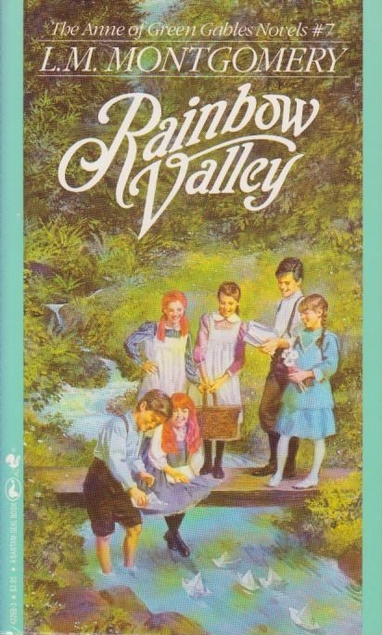
Book Review: Rainbow Valley by L. M. Montgomery

I’m continuing my way through a reread of the Anne of Green Gables series, and continue to have more thoughts.  This time I’m thinking about Book 7, Rainbow Valley.  Rather like certain Oz books, this is the Anne book that isn’t an Anne book.  But it’s very much a Montgomery book, with certain of her attitudes on full display.
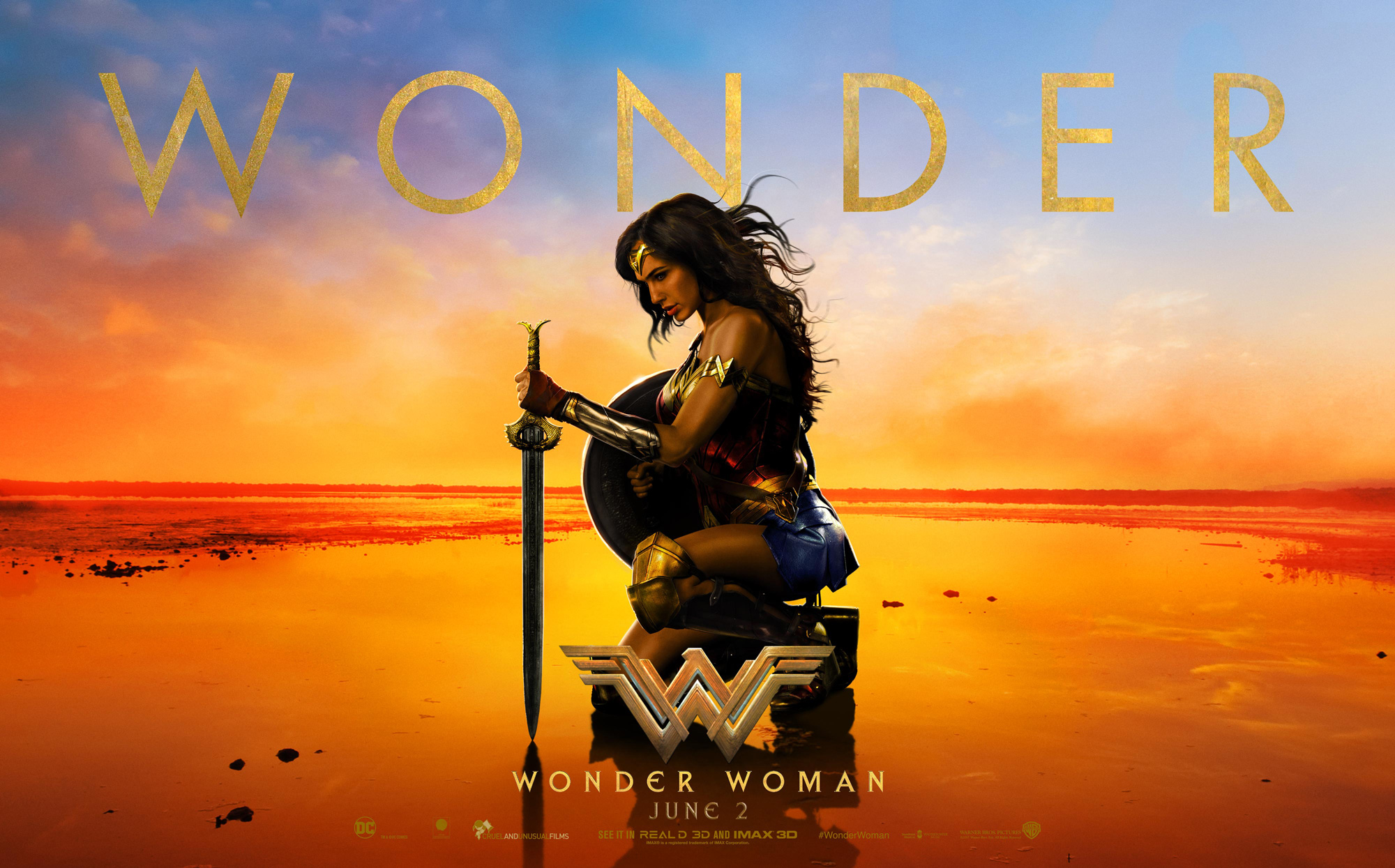
By the time Montgomery wrote Rainbow Valley, I really don’t think she wanted to write about the Blythes anymore.  This was her fifth book (4 and 6 were written later), and because she wrote it before Anne of Ingleside, it was the first with Anne and Gilbert’s children.  With the partial exception of Walter, Montgomery doesn’t seem very interested in the Blythe children.  She gave Anne a happy ending, Anne’s children grow up in the midst of said-happy ending, and Montgomery was not yet at a point in her life when taking refuge in that happy ending was welcome to her (as in Anne of Ingleside).

So she did what other authors have done–billed the book as next in a popular series, then proceeded to write an almost original novel.  We get about two chapters of Anne and her family, then the focus shifts irrevocably to elsewhere in the neighborhood, to tell the story of the less fortunate and more interesting (to Montgomery, and by narrative convention) Meredith family.  I have to admit, the bait and switch has taken me many reads to get over.  I think this is the first time I’ve managed to really accept that this is not and was never going to be a Blythe novel, rather than feeling that we somehow got cheated out of the story that was meant to be here in the series.  And you know, after getting past that, this is a good novel! Continue reading “Book Review: Rainbow Valley by L. M. Montgomery”

Blog Hop: Toxicity

book-blogger-hop-finalToday’s Book Blogger Hop question is: Have you ever read a book or books you would consider ‘toxic’ because of the effect it (they) had on you? If so, which one(s)?

Ooh, what an interesting question!  There are definitely books I’ve found disturbing.  Lolita comes to mind–it was assigned in a class (on American Literature, which I still don’t understand considering Nabokov was Russian) and to this day I’m glad that I got it at the library and didn’t spend money on it.  If you’re (fortunately) unfamiliar with the book, it centers around an adult man’s sexual obsession (and relationship) with an adolescent girl, and it would be less disturbing if Nabokov was a less talented author.  One classmate described it as like watching maggots feed–compelling and horrible both at once.

The Da Vinci Code is toxic in a different way.  It makes me angry–I have an entire rant on the subject of mixing historical fact with theory with utter fiction, sometimes all in one paragraph, without any distinguishing between them.  On the other hand, the phrase “giant albino monk” gets funnier every time I say it.  Not a funny character, but the sheer absurdity of it lightens my mood.

In general I’m disturbed by books that feature sexual violence or child abuse, although I’ve discovered I find those more disturbing in fiction than nonfiction (it’s a stylistic difference).  I can read more in analytical texts (usually taking it on from a psychological analysis) than I can in fiction, though that depends on the level of detail.  And I think we all know that I’m deeply disturbed by fiction involving abusive relationships presented as romantic!

I also have a particular tic against books that address the reader in a hostile or belittling way.  I love books that talk directly to the reader if they’re friendly, but if the narrator is nasty or insulting to the reader?  Yeah, I know not to take it personally, but I still don’t like how it feels.  Part of the appeal of books is that they aren’t judgmental or unfriendly.

Have you read books that feel toxic to you?  What characteristics would make a book toxic?

Movie Review: Wonder Woman

I was late to the game for Wonder Woman, only getting to the theaters to see it after it had been out several weeks.  That meant there was plenty of time for me to see all the Facebook comments and have all the conversations about how amazing it was, and how empowering my female friends found it.  And to be honest, I heard all that and thought, yeah, okay, cool, I like strong women stories.  Then I saw the movie.  And they were ALL SO RIGHT!!  There are other (not enough) strong female characters in movies, but this one was something special.

Wonder Woman gives us the origin story of Diana (Gal Gadot), daughter of the Amazon Queen, who grew up in an entirely female community on a magically-shrouded island.  She grows up among female warriors who fight for peace, and is trained by their greatest fighter (Princess Buttercup–I mean, Robin Wright).  When Steve Trevor (Chris Pine), an American spy pursued by German ships, breaches the island’s secrecy, Diana learns of World War I raging across the planet.  Convinced Ares is behind the conflict, she leaves with Steve, intent on ending the war by destroying Ares.

Diana is amazing–but I think the real hero(ine) of this story may be Patty Jenkins, the director.  Like I said, there are other strong women in film, but this one felt different–and I think it’s the female director, making different choices. Continue reading “Movie Review: Wonder Woman”

Year to Date…

I went looking for a bookish topic for this Friday’s post, and found that Top Ten Tuesday‘s last post (before a summer break) was about the best books you’ve read so far in 2017.  And I thought…I’m reading some really cool books and I haven’t reviewed them all.  So let’s do a brief look-in on some of them.

In backwards chronological order of reading, just because…

1) How to Be a Normal Person by TJ Klune – Hysterical, brilliant writing, exceptional characters, adorable romance.  Some content advisory required though, so read the full review.

2) The Star-Touched Queen by Roshani Choksi – A beautiful fantasy with Indian influences.  There’s a powerful heroine, a mysterious hero, and fascinating fantasy landscapes.  Also, gorgeous imagery!

3) Notorious RBG by Irin Carmon and Shana Knizhnik – A biography of Ruth Bader Ginsberg, it’s inspiring and enlightening.  Great writing that made even legal briefs interesting, and a powerful commentary on the struggle for gender equality.

4) Hillbilly Elegy by JD Vance – Deeply compelling and engaging, this memoir brought me into a part of American culture I don’t know at all.  I read it to try to understand certain…recent events.  Not quite as conclusive as I hoped, but fascinating.

5) We Have Always Lived in the Castle by Shirley Jackson – Masterful, creepy, terrifying.  Wonderfully done.

6) The Girl from Everywhere by Heidi Heilig – Maps to sail through time.  Need I say more?

7) Holding Up the Universe by Jennifer Niven – Still two of my favorite characters met this year, each with an unusual perspective to bring.

8) I’d Say Yes, God, If I Knew What You Wanted by Nancy Reeves – One of the best, most enlightening, spiritual books I’ve probably ever read.

9) The Sun Is Also a Star by Nicola Yoon – If a book can be real-time, this one is.  It’s a brief, compelling romance, that also provides a lot of social commentary in a natural, non-heavy-handed way.  Made me think, while having compelling characters and plot.

10) The Righteous Mind by Jonathan Haidt – This book really, really helped me understand some things about how we as a society view right and wrong, and why we keep stumbling into problems communicating.  So, so helpful, and I keep recommending it to friends.

So it appears that when looking for the best books of the year, I have managed to review many of them after all.  Kind of reassuring!  And intriguing, how many of the best have been nonfiction.  That is a new trend in my reading.  I don’t feel sure it will continue (fiction and I go way back, after all) but that seems to be where I am now.

How has your reading been so far this year?  Any trends or favorites emerging?