Wonderland Turns Urban

I’ve been meaning to review Alice for literally months–I watched it during the Once Upon a Time Challenge and have had it on my “To Review” list ever since.  But don’t take the long delay as a bad sign about the movie.  It’s actually excellent.

Alice is a version of Alice in Wonderland by Lewis Carroll, retold for adults with a more urban, modern feel.  It definitely feels like it’s targeting adults, although as I think about it, nothing’s really inappropriate for a younger audience.  At the same time, it’s not the light-hearted, happy Wonderland of Disney.  The real deciding factor on the target age-group may be Alice’s age.  This Alice is a grown-up, and one with much more purpose than the wandering child of Carroll’s story.

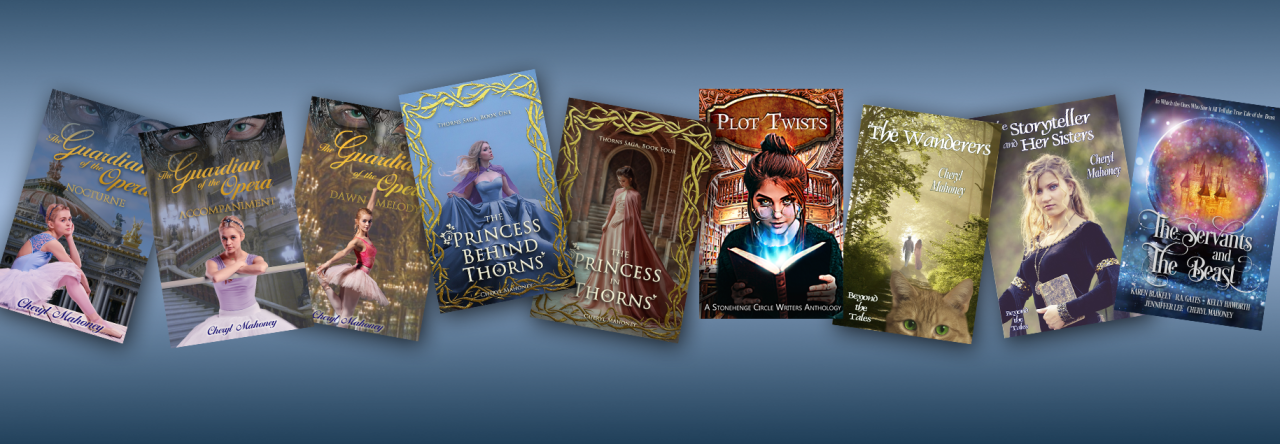
Alice (Caterina Scorsone) is from the modern world we all recognize.  Her life takes an unexpected turn when boyfriend Jack is abducted, right after giving Alice a mysterious and valuable-appearing ring.  A strange man tries to steal the ring and when Alice chases him, she falls through the Looking Glass into a very odd Wonderland.  She finds out that people from our world are being captured and taken to Wonderland, where the Queen of Hearts drains their emotions, which she uses to pacify Wonderland’s inhabitants.  Alice joins forces with the Hatter (Andrew Lee Potts), who says he can connect her with a resistance movement who’ll help her find Jack.

As I type this, I realize it sounds very convoluted!  Basically, Alice goes journeying through adventures in Wonderland looking for Jack, with Hatter and, later on, a White Knight as companions.  Along the way, they get tangled up in much bigger forces opposing the Queen of Hearts.

The characters are wonderful here.  Almost all the characters from the original are here in some capacity, but given a modern twist.  Everyone’s human, but somehow embodies the original characters as well.  Alice is tough, but vulnerable.  Her father disappeared when she was young and she never stopped looking for him, something that gives her good depth as a character.  She has trust issues and insecurities, while being a strong lead who takes an active role in her adventures.

The Queen of Hearts is a delightfully insensitive villain, played by Kathy Bates, paired with Colm Meaney as the King of Hearts.  If the name doesn’t mean anything to you, you might know him as Chief O’Brien from Star Trek.  If you can’t picture him as a villain, that’s okay, he’s not exactly.  He really just wants to make his wife happy, and it’s just rather unfortunate that his wife is so horrible.

My favorite character, though, is the Hatter.  Not at first, but he’s one of those who grows on you.  And I’m such a sucker for heroes who claim they don’t care about anything even though it’s SO not true.

There are some dark moments in here, but also a lot of comic ones.  There also must be quite a bit of CGI, because Wonderland is very bizarrely laid out.  It’s sort of…vertical.  I don’t quite know how else to explain it.  A whole city of terraces and chasms but not even as logical as that makes it sound.  Whatever it is, it’s really quite interesting.

This was originally a SyFy channel miniseries, with two hour-and-a-half episodes.  I saw it on DVD and it was just put together as a three-hour movie, so I’m not sure what the original break between episodes was.  Despite that, I do think the second episode was better.  It’s good from the beginning, but it’s also a little haphazard at first.  The second half has more focus, and the characters (well, Hatter) have become more engaging by that point.  So if you start it and have doubts, stay with it!

There are a lot of Alice in Wonderland retellings out there, and this was a very different one.  If you like Alice or if you like urban fantasy (because that’s definitely the feel), I’d recommend giving it a try!

Other reviews:
Fray’s Movie Reviews
Love Romance Passion
Divergent Musings
Anyone else?

Abandoning the Abandon Trilogy

I almost never stop partway through a book.  But I got 65 pages into Underworld by Meg Cabot, and realized I was so irritated that there was no real point in going on.  I’ve never reviewed a book I didn’t finish, but…I review when I have a reaction, and I had a reaction to the first 65 pages of Underworld.  So you can view the following as venting, or as commentary on romance and female protagonists in YA fiction.  Take your pick.

Underworld is the recently-released sequel to Abandon, with one more book still to come.  The trilogy is a modern-day retelling of the Hades and Persephone story.  In the last book (spoiler alert), we met Pierce, who had a near-death experience, met John the Lord of the Underworld, and came back to the living world with John following her, intent on making her his consort.  There’s also a nasty group of Furies chasing her, and at the end of Abandon, John takes the still-living Pierce to the Underworld so that the Furies won’t kill her…which would send her to the Underworld.  It seems kind of like burning your belongings so that they won’t be stolen, but…all right, Cabot’s trying to follow the myth.  Fine.

I enjoyed the last book (read my review), though I thought Pierce was sadly lacking in depth, and I wanted to believe John was a brooding hero with a good heart, even though he hadn’t shown much evidence of the good heart part.  But all in all, I was interested in the sequel, even if my expectations weren’t high.  Low as they were, they weren’t met.

The book opens with a dream sequence (which seems like a silly place to start, for one thing).  Pierce dreams that John is drowning, and as he’s swept away, she comes to the realization that she really, deeply loves him.  Since books are often about the developing of feelings between characters, this seems like a strange place to open a book.  Also, having your character experience an epiphany moment in a dream sequence–I don’t know, it feels like cheating.

You’d kind of expect (I would, at least), that this kind of epiphany would have an impact when Pierce wakes up.  But not so much.  There’s plenty of opportunity for it to immediately have an effect, since she wakes up with John next to her in bed (shirtless, something very much dwelled upon).  Apparently he wasn’t there when she fell asleep; I don’t remember precisely how the last book ended.  Pierce doesn’t mention her epiphany, and there follows a very fragmented conversation about their relationship and their future.

Pierce cannot seem to figure out what she’s feeling.  It’s all, I love him but I don’t want to be here but I kinda want to be here but what about my mother but I don’t want to lose him but he’s also kind of pushy but maybe I shouldn’t say so and oh, he gave me a bird, that makes up for everything but then he didn’t tell me if I eat the food I’ll be trapped here and oops, I hurt his feelings, I’m a horrible person.

That’s basically a summary.  And sure, I suppose she’s meant to be conflicted, but it didn’t feel like a conflicted character.  It felt like we were skimming along on very shallow emotions which were never pursued, and changed so often that I was getting dizzy.

But the big problem–the really BIG problem, which you might be catching from my summary already–is the dynamic between John and Pierce.  It’s scary.  I mean, it’s making Edward and Bella look healthy by comparison, and that’s hard to do.

John is nowhere demonstrating to me that he has that good heart I wanted to believe in through the last book.  In fact, he comes off as manipulative, controlling and emotionally abusive.  He directly says that he only gets “wild” when he’s trying to protect her, which sets all my alarms going about an abusive boyfriend.

John pulled Pierce out of her life, took her away from all her friends and family, put her in his castle alone and locked all the doors so she won’t wander around…to protect her.  That is SO creepy.  He doesn’t give Pierce any real choice about all of this, doesn’t treat her with any respect, or like she has any right to make decisions about her own life.  He actually justifies locking her into the castle, because she might foolishly decide to venture out and put herself at risk.

And the scariest part is–I don’t think he’s supposed to be the villain.  I really think he’s supposed to be the romantic hero and all of this is well-meant.

CREEPY.

I know Cabot is tied into a tricky storyline from the original myth, but this didn’t have to be this bad.  I’m reminded of Robin McKinley’s Beauty.  The Beauty and the Beast story is similar, in terms of the Beast keeping Beauty in the castle, but I love McKinley’s Beast.  They have a lovely, sweet romance.  In a weird way, maybe it’s because the Beast never claims to be protecting Beauty.  He’s keeping her in the castle and it’s all above-board and honest, and it doesn’t have this emotional manipulation going on.

The dynamic in Underworld gets even more disturbing.  I find it most alarming that Pierce keeps blaming herself when John gets upset.  She tries to mention the whole thing about him in bed with her and maybe they should set some boundaries, and he’s deeply offended–because obviously he was only there because she had a nightmare and he was trying to comfort her, and why didn’t she figure that out?  And they can talk about boundaries, but it’s kind of pointless because they’re going to be together for eternity.

Then when they have breakfast, Pierce misremembers the Persephone myth, eats a pile of waffles figuring she won’t be trapped unless she eats a pomegranate, and then finds out any food ties her to the Underworld.  Granted, she was an idiot and should have checked on something like that.  But he also should have made sure she knew what she was doing, and “I thought you knew” is an incredibly lame excuse.  When they fight about it, he storms out after misinterpreting everything she says and she ends up berating herself for hurting him.  Um…what?

This is the second time I’ve seen a Cabot heroine (they don’t deserve the term–female protagonist, let’s say) fight with her boyfriend and then decide she was wrong–when she was RIGHT.  I don’t mind flawed protagonists, or characters who need to grow, but I can’t escape the feeling that Pierce and John aren’t going to grow at all, because they’re supposed to be fine the way they are.

On the plus side (sort of), 65 pages of Pierce made me profoundly grateful for Alanna the Lioness and Princess Cimorene, for Valancy and Symone and McKinley’s Beauty, to name just a few of the so much better heroines out there.  And, for that matter, 65 pages of John made me grateful for George Cooper, King Mendanbar, Barney Snaith, Titus Oates and McKinley’s Beast.

This is why I stopped on Page 65.  By that point I wanted to throw something (maybe the book) at Pierce, and there are too many better books out there to waste time getting frustrated by a dysfunctional YA romance.  And if someone else finished it and knows that the relationship or the characters vastly improve–please, I’d love to find out I’m wrong here!

Author’s Site: http://www.megcabot.com/

Other reviews:
Reading with ABC
Dark Faerie Tales
The Page Sage
I’m a Book Shark
Dazzling Reads
Hippies, Beauty and Books, Oh My
And lots more…tell me about yours!
Exploring Space and Philosophy

As part of my ongoing quest to finish more partially-read series, I decided to tackle C. S. Lewis’ Space Trilogy.  I read Out of the Silent Planet upwards of eight years ago, I think I read part of Perelandra, and then I never finished.  Since the first one had gone blurry, I decided I’d better reread it, and go from there.
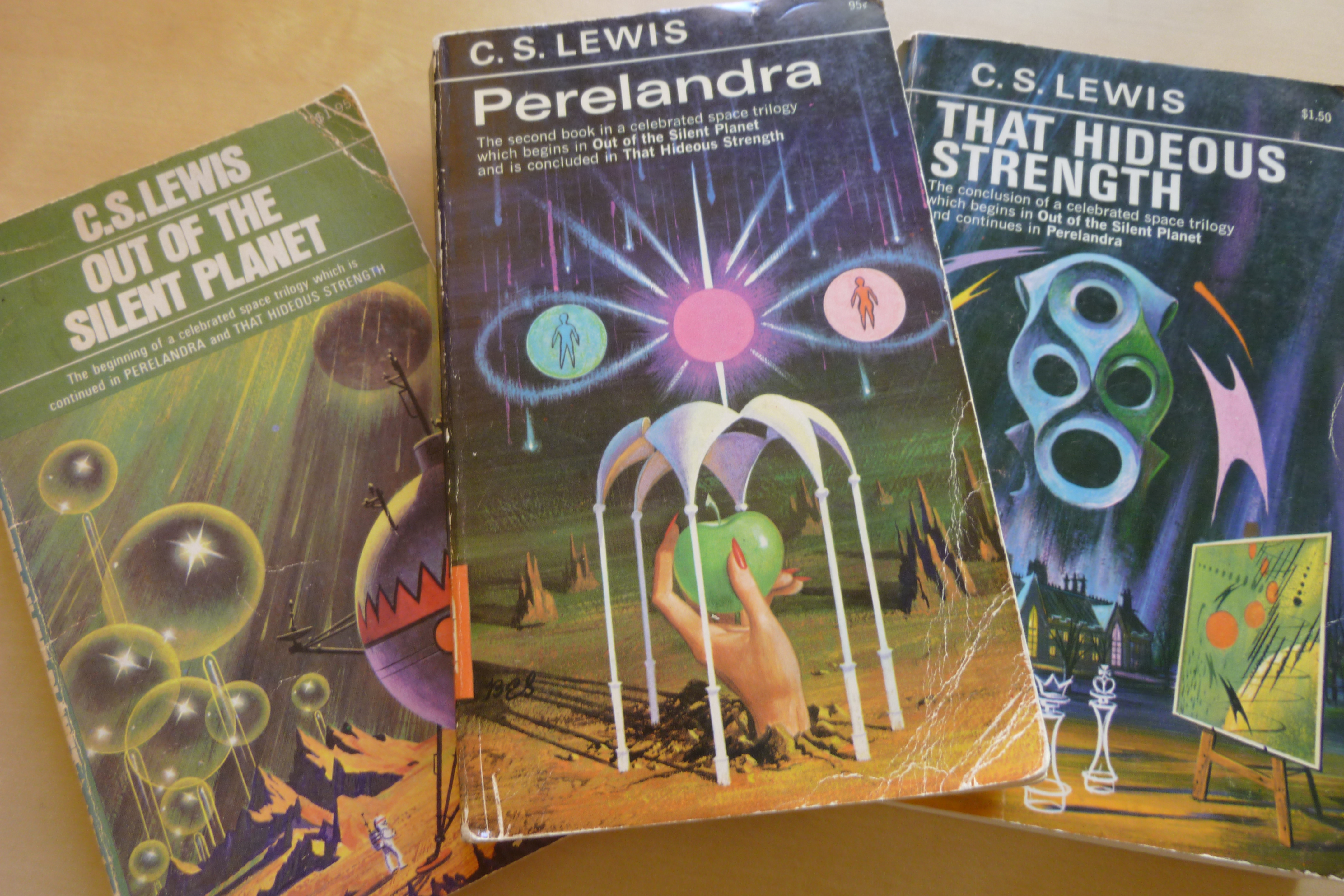
The story centers on Ransom, a scholar who wakes up from a kidnapping to find himself on a spaceship bound for Mars.  He eventually works out that the two men who captured him intend to hand him over as a sacrifice to the Martians.  When they land, Ransom succeeds in escaping his captors.  When he actually meets the people of Mars (or Malacandra, as they call it), he finds them kinder and wiser than he expected, while almost strangely innocent of evil and content with their lives.

While the plot sounds like a sci fi adventure (and it is), the trilogy is largely concerned with philosophy and theology.  Ransom learns that Malacandra is governed by a kind of spirit, the Oyarsa.  Earth is meant to have a guiding spirit as well, but ours turned evil long ago, giving rise to the host of problems on Earth that are unknown on Malacandra.

The second book, Perelandra, sends Ransom to Venus (which the natives call Perelandra).  Here we see a world where Adam and Eve haven’t left the Garden of Eden yet.  Ransom meets this world’s Eve, and engages in a struggle with a devil character who has arrived to tempt Eve to eat the apple–metaphorically speaking.

The third book, That Hideous Strength, moves the struggle between good and evil to Earth.  Ransom is still a significant character, but the book has an ensemble cast of characters who become mixed up with an Institute intent on reshaping society in a horrible fashion.

I enjoyed the first two books in the trilogy quite a bit, and then struggled with the third.  The first two remind me of Burroughs books. though with less action and more philosophy.  The main reason for that is the landscapes and the creatures.  Lewis describes the strange worlds of Mars and Venus extensively.  The surface of Mars is uninhabitable, and all life exists in deep chasms.  There are three co-existing intelligent species, all extremely unique in features and in culture.  Venus is almost entirely covered in liquid, and most “land” is actually floating islands which move with the waves, rising up in hills and dropping down into valleys and changing every moment.  I was fascinated by the worlds, and the philosophy was interesting, if a little lengthy at times.

The third book is set on Earth, so there isn’t a new landscape to explore.  More troublingly, the tone changed.  That Hideous Strength reminded me too much of Kafka in The Trial.  The reader and the characters frequently have no idea what’s going on, no one will give a straight answer to anything, and there’s a lot of stumbling about in confusion.  Many of the characters felt more like caricatures, somehow less human and relatable than the non-human characters of the first two books.  There were also bits of Ransom’s philosophy I didn’t agree with at all–let’s just say Lewis probably wasn’t a feminist.

The third book wasn’t all bad.  It was slow and confusing for the first two-thirds, but picked up and got clearer in the end.  There’s also a fascinating and (I thought) under-developed concept about the Pendragon, England’s guardian through time, and the waking of Merlin.

Overall, I’d have to say it was a great first two books, and then the third feels more distanced from the first two, and, for me, not nearly as good.  I know that’s not a universal opinion, though, so take it as a sign of my particular taste.

It was worth reading to the end of the series, though, and not only because it’s been niggling at me as unfinished business for over eight years!

Other reviews:
Palantir Blog
Tides and Turnings
Unabridged Chick
Tell me about yours!

A Castle with a Mind of Its Own

What if a castle was alive?  That idea is the big draw for me in Tuesdays at the Castle by Jessica Day George.

The castle of the title would be a very confusing place to live, but it’s great fun to read about.  The castle doesn’t talk and it rarely takes immediate actions like slamming doors, but it has a clear presence.  And it has a habit of changing itself when it’s bored, or wants to make a point.  So rooms shift around, new towers appear, and you never quite know where you’re going.  The castle also arranges and furnishes the rooms of its inhabitants to make some none-too-subtle points.  People the castle likes gets lovely rooms, while people the castle hates find their rooms getting increasingly smaller and more unpleasant.  The castle has to approve of each king and heir, and changes their rooms to reflect its feelings.  It’s all a wonderful concept.

We wander the castle with Celie, the youngest princess and the castle’s favorite.  The feeling is mutual; Celie’s greatest goal is to create an atlas of the castle (which strikes me as quite impossible, but good for her for trying). The plot gets into motion when Celie’s parents and older brother are ambushed on a journey and disappear, presumed dead.  Celie, her sister Lilah, and her brother (and crown prince) Rolf have to band together when conspiracies between the royal council and a foreign prince threaten their kingdom.  Fortunately, Celie and her siblings have the castle on their side…

This is a cute book aimed at a fairly young audience.  The characters are likable and well-defined, if not terribly complex.  Lilah is quite proper, Rolf is striving to live up to his role, and Celie is creative and daring and determined to fight back.  She’s a good heroine who I think younger readers will very much identify with and enjoy.

The plot moved along well, although the ending did feel ultimately a bit contrived and convenient.  Still, it’s the kind of happy ending I want from a kids’ book, so that’s a fairly mild complaint.

The castle was my favorite part.  The rest was a pleasant but not particularly striking kids’ fantasy novel.  The castle was the unique bit, and I’d love to see more stories with this setting!

I think this would be a great read for younger readers, and it’s fun for older readers too, if you’re looking for a light story without a great deal of depth.  It wasn’t irritatingly and unreasonable shallow, as some books are, but it does feel like it’s targeting kids.  Which is okay–it was a fun read!

Author’s Site: http://jessicadaygeorge.com/

Other reviews:
Charlotte’s Library
Raiding Bookshelves
Once Upon a Twisted Tale
Anyone else?

A Mermaid and a Princess

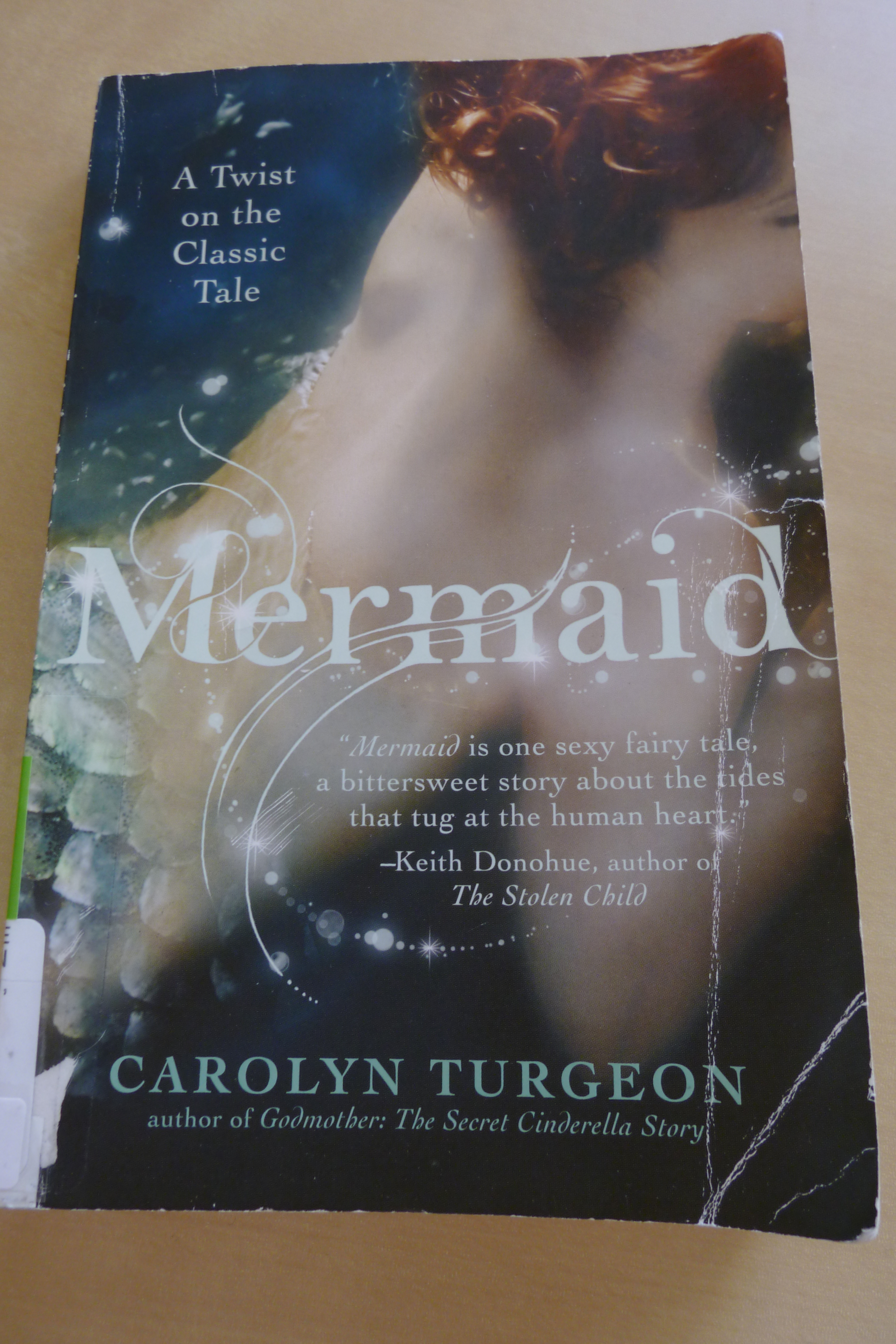
Since it’s hard to ignore Disney while talking about fairy tales, perhaps I should begin by saying that this is not a review of The Little Mermaid.  It’s not a review of Andersen’s fairy tale either, but that’s a closer relative.  Mermaid by Carolyn Turgeon is a re-imagining and expansion on the Andersen tale, with all the dark parts retained and deeper characters developed.

The original story is about a mermaid princess who falls in love with a human prince.  She gives up everything and goes through torture to gain legs and be with him, only to lose him to a human princess in the end.  This book looks at the story through the eyes of both the mermaid and the human princess, bringing an added dimension to the tale.  It’s definitely an adult version of the fairy tale, both for the sensuality and for the torment the mermaid goes through.

The story opens when Princess Margrethe, hidden at a convent to protect her from her country’s enemies, sees a mermaid drag a human man onto the shore below.  Mermaids are mythical creatures in this land, and Margrethe is drawn in by all the magic that the mermaid represents.  She feels sure that the mermaid brought the nearly-drowned man to her for a reason, and is shocked when she finds out the handsome stranger is the prince of an enemy country.  Meanwhile, Lenia the mermaid princess has always been fascinated by the land, and now can’t stop thinking about the man she rescued.  She seeks a way to be with him, while Margrethe looks for a way to prevent war.  Unfortunately, they’re both sure that destiny is calling them to the same man.

Margrethe and Lenia are the center of this book, telling their stories in alternate chapters.  While they’re both in love with Prince Christopher, the dynamic between the two women has in some ways a stronger emotional impact.  Margrethe especially is drawn to the magic and mystery that Lenia represents.  I very much enjoyed Margrethe’s character.  She’s not a passive princess, but rather one who sets out to arrange destiny herself.  She doesn’t wait for the prince or get dropped on him by her father, but rather actively orchestrates events, even when that means taking risks and making difficult choices.

Lenia is an intriguing character as well, with her divided longings for both the sea and the land.  She also takes active steps (literally and metaphorically) to take the destiny she wants.  She goes through far more torture than Disney’s Ariel.  She gives up her voice, but not as a pretty ball of light–instead her tongue is cut out.  Once she gains feet, walking inflicts terrible pain.  All this is in the original, and wasn’t too gruesome…but definitely dark!

Christopher is a handsome, reasonably charming prince, though less complex than the two women.  It would be easy to not like him, because in some ways he does take advantage of Lenia once she arrives on shore.  However, I actually found myself not holding that against him.  While I don’t think it was particularly admirable, I do think he was operating from a culture where there’s an expectation about relationships between princes and commoner girls, and it simply never occurred to him that Lenia wouldn’t have that same understanding.  And he does show quite a bit of loyalty to her at points in the story.

I was not totally satisfied with the ending, and it’s a little hard to explain without spoilers.  In some ways it tied up too neatly, with characters deciding they can accept things they previously couldn’t, and yet in other ways it didn’t give me quite the happy romantic ending I wanted.  The whole premise is set up so that someone has to be disappointed, and instead of giving a happy ending to one girl and a tragedy to the other, we ended up with an ending where both are kind of settling…which works, but I think I might have preferred something a bit sharper.

Still, this was a very solid retelling of Andersen’s story.  I recommend reading the original first, and then picking up this one for all its added depth and details.

Author’s Site: http://carolynturgeon.com

Other reviews:
Anita Book
Postcards from Asia
Fairy Layers
Anyone else?