As You Wish

I love fairy tales, and retold fairy tales, and fairy tale-inspired stories.  I have great success reading books like that, and sometimes I try a movie too.  More often those turn out to be very cheesy…but sometimes it works, as with one of my favorites, The Princess Bride.  It can be cheesy at times too, but in a good way, and all in all it’s a very nearly perfect movie.

There’s a book too, which I have read, and which is also truly excellent.  It’s been a long time since I read it, though, so that review will have to wait until I get a chance to re-read it.  In the meantime, let’s talk about the movie.  It’s at its twenty-fifth anniversary, so I’d like to assume everyone’s seen it…but I’ve learned not to assume that about any movie.  And I do have a friend who just saw it for the first time a month ago.

The Princess Bride starts with an adorable frame-story, about a grandfather reading the book The Princess Bride to his grandson, who had been ill.  The boy pretends indifference, but is drawn into the story.  It’s about the beautiful Buttercup, who is going to marry her beloved farmboy, Westley.  But Westley goes off to seek his fortune, is reportedly killed by the Dread Pirate Roberts, and Buttercup ends up unwillingly engaged to the nasty Prince Humperdinck.  She’s kidnapped shortly before her wedding, carried off by mastermind Vizzini, slow-witted and good-natured giant Fezzik, and brilliant swordsman Inigo Montoya.  They’re pursued by a mysterious man in black (whose identity will probably not turn out to be all that much of a shock).

And it all comes together to be a nearly perfect movie.  There’s romance, swordfights, death, miracles, your choice of heroic figures, a nasty prince, intrigue, treachery, the Pit of Despair, the Cliffs of Insanity and an enormous amount of funny lines.  The effects are not fantastic (as with the Rodents of Unusual Size, or the ROUS) but that’s a minor point.  The more major point that has me putting that “nearly” before “perfect” is Buttercup.  All this movie needs is a really strong female heroine, and Buttercup is not that.  But she serves her purpose, and everyone else is wonderful.

One of my favorite characters is Inigo.  When he was a boy, his father was killed by a six-fingered man.  Inigo has dedicated his life to learning swordplay, so that when he finds the six-fingered man he can defeat him in a fight.  He has it all planned; when he finds the six-fingered man, he will say to him, “Hello, my name is Inigo Montoya.  You killed my father.  Prepare to die.”  Out of context, it’s just a line.  In context, when he does meet the six-fingered man it’s one of the best scenes in the movie.

Not to mention, the movie features such timeless wisdom as “Never go in against a Sicilian when death is on the line,” “There’s not much money in revenge,” and “True love is the greatest thing in the world–except for a nice MLT, mutton, lettuce and tomato sandwich.”  There are endless other iconic quotes, like “Inconceivable” and “As you wish.”  And if none of this paragraph makes sense, all I can say is that it’s a sure sign you should watch the movie!

But if you have any fondness at all for swordplay and fantasy and fairy-tale-type stories, then you should watch The Princess Bride.

100 Years Ago at the South Pole

Scott and Party at the Pole, Jan 17, 1912

On January 17, 1912, Captain Scott and his team of explorers reached the South Pole, 100 years ago today.  They weren’t the first ones there–Roald Amundsen’s Norwegian team beat them there by a month.  Scott also found that getting there was the easier part.  All five of the men who reached the Pole died trying to get back again.

So why am I telling you this depressing story?  I suppose because I don’t actually find it depressing.  Tragic, yes; depressing, no.  They did fail–but that’s usually not how the story is told.  They died martyrs to the adventure and heroes of history, proving the length of man’s endurance and determination, pushing out the frontier and chasing the impossible dream.

Also, Titus Oates, one of Scott’s men, has a major role in one of my favorite books, The White Darkness by Geraldine McCaughrean.  I freely admit that most of my impression of Scott and his journey came from her book.

So in honor of the anniversary, here’s to impossible dreams (hopefully with better planning!) and I’m re-posting my review of The White Darkness.  It was only the third book review I ever posted here, so most of you probably weren’t here to read it the first time anyway.  🙂

**********************

“I have been in love with Titus Oates for quite a while now—which is ridiculous, since he’s been dead for ninety years.  But look at it this way.  In ninety years, I’ll be dead, too, and the age difference won’t matter.”

This is one of my all-time favorite opening lines of a book (right up there with “All children, except one, grow up”).  I read this in a bookstore and knew immediately that I had to read The White Darkness by Geraldine McCaughrean. Continue reading “100 Years Ago at the South Pole”

Once Upon a Snow White Retelling

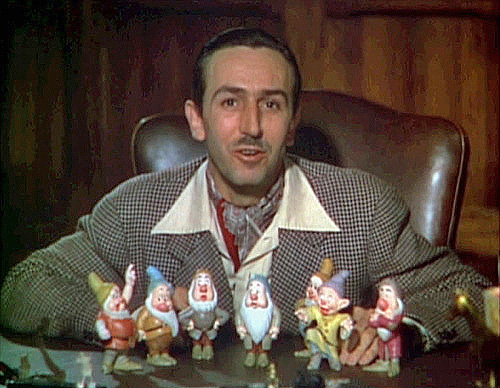
Walt Disney and the Seven Dwarfs

Has anyone else noticed a sudden explosion of interest in Snow White?  It’s always been Cinderella and Sleeping Beauty who get all the press, but the powers that decide these things seem to have finally noticed Snow White too.

Since you know how much I enjoy retold fairy tales, I’m sure it won’t surprise you that I’m watching and enjoying ABC’s show, Once Upon a Time.  It’s a story about fairy tale characters living in the small town of Storybrook, Maine.  They were cursed by the Wicked Queen from “Snow White,” trapping them in our world with no memory of who they really are.  The Queen is running the town as Mayor, and Snow White’s daughter, Emma, who escaped the curse and is now grown up, has to fulfill a prophecy to fight the Queen and bring everyone’s memories back–even though, so far at least, she doesn’t really believe all of this either.

The episodes generally follow a pattern of two related stories, one in our world, one in the past in the storybook world.  And by the way–there are Disney references galore!  They’ve been going through origin stories for the major characters, and they’re doing just what I love most about retold fairy tales–filling in the bits the Brothers Grimm ignored, fleshing out the characters and answering the questions that the original fairy tales will make you ask.

How did Snow White meet the Prince?  How did Jiminy Cricket become a cricket?  Why does Rumpelstiltskin want babies?  Why did the Huntsman agree to kill Snow White to begin with?  Why did the Queen hate Snow White?  All the parts that don’t make sense are where fairy tale retellings can do wonderful things.  Once Upon a Time has answered some questions, and is still teasing about others.

It’s been a great show so far, often exciting and funny, and with some good mystery to it too.  I’m really enjoying the characters.  Snow White is very sweet but also strong.  Her prince gets much more character development than he did in the original Disney movie.  Emma is tough, with a chip on her shoulder and the occasional hint that she’s hiding something softer under her hard exterior.  Rumpelstiltskin is wonderfully smarmy, and the evil Queen is, well, evil.  There’s also a sweet boy named Henry who has complicated connections to everyone, and more understanding of what’s going on than any of the adults.

If you haven’t watched the show, it’s not too late to catch up.  Six episodes are streaming on ABC.com–it’s not all of them, but they seem to have kept the ones you’d need to catch up with the larger storyline.

When I said Snow White is getting a sudden surge of popularity, I didn’t just mean this show, though.  There are also two movies coming out!  There’s Snow White and the Huntsman, with Charlize Theron as the Queen and Kristen Stewart as Snow White.  And there’s Mirror Mirror with Julie Roberts as the Queen and Lily Collins as Snow White.  I’ve seen trailers for both; Snow White and the Huntsman looks like it’s trying to be really, really epic, and just coming out kind of strange.  Mirror Mirror appears to be going for humor, and looks much more like it’s succeeding; that one I’m excited for.

But neither one is out yet.  If/when I see them, I’ll have to let you know how they were.  🙂

In the meantime, watch Once Upon a Time.  That one I can say is excellent.

Robotic Psychology

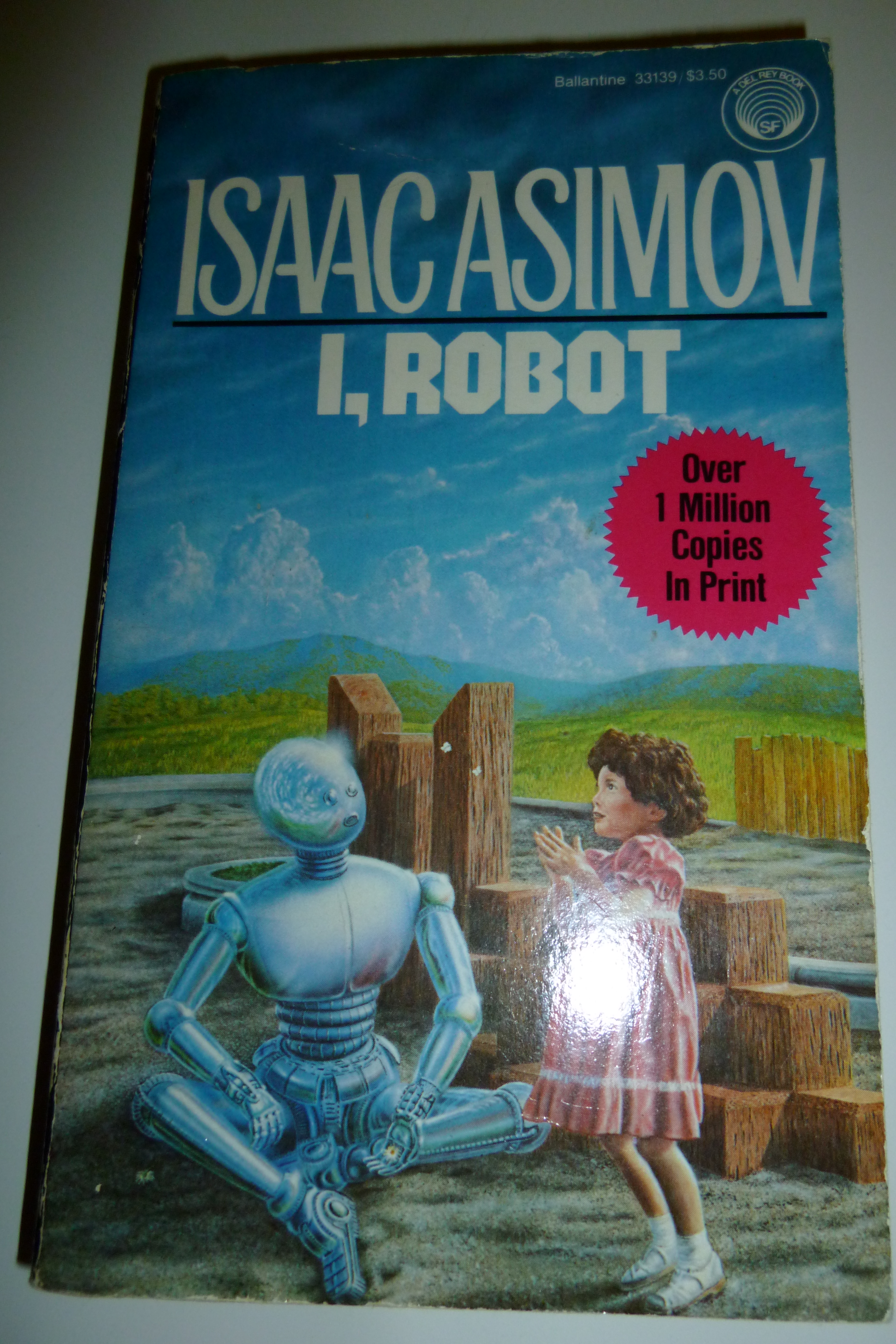
For my second Sci Fi Experience book, I read I, Robot by Isaac Asimov.  It hasn’t been sitting on my shelf, but it is one I’ve been meaning to read for ages.  And as with a lot of books like that, it turned out to be a faster read than I expected–and not much like my preconceptions of the book.

I always thought this was a collection of short stories, and it is, but they’re far more inter-connected than I had expected.  They’re set in what, at the time of writing, was the future (although we’ve since caught up).  It’s a world like ours, except humans have built advanced robots.  They’re exactly what you’d expect of science fiction robots (maybe they set some of the expectations!)–metallic, roughly humanoid, capable of walking and talking and performing a surprising amount of what at least looks like independent thought.  They’re governed by the famous Three Laws of Robotics.

In brief, the laws are: First, no robot can harm a human or allow a human to come to harm through inaction; Second, robots must obey human orders, unless they conflict with the first law; Third, robots must preserve themselves, unless that would be in conflict with the first or second laws.

The stories, not surprisingly, are mostly about robots that are malfunctioning or otherwise acting oddly, often because of an issue involving the Three Laws.  The stories are loosely linked by a frame-story, an interview with Dr. Susan Calvin, the leading robopsychologist.  She recounts stories from the history of robotics, primarily focusing on two groups of characters: either Powell and Donovan, two scientists who keep getting into trouble with robots on the fringes of civilization; or Dr. Calvin herself and the executives at U.S. Robots Inc.

The Three Laws seem straight-forward enough, but Asimov finds plenty of ways for their application to become confused, contradictory or otherwise corrupted.  There’s a robot who gets drunk when he can’t figure out which law to obey; another takes literally the order to go lose himself.

Characters, even though they are recurring, are not really the strong point of this book.  Most of the humans are not very distinctive.  It’s the robots who make the book interesting–and sometimes have more developed personalities than the humans!  One of my favorite stories is about a robot who doesn’t believe it when humans say they built him, and decides to reason out the truth of the world himself; he swiftly creates a kind of religion for robots, with himself as its prophet.

In some ways, the level of personality in the robots became a little disturbing.  This book is primarily about protecting humans from robots.  There’s nothing about protecting robots from humans–and when you have robots with independent thought, who appear as fairly developed characters, it gets hard to not look at them as people.  In particular there was one scene where Dr. Calvin was interviewing a robot.  She starts addressing the robot as “boy,” while the robot is calling her “ma’am.”  Suddenly you have the language of slavery, and it feels strange.  I know Asimov wrote other Robot books; I’ve read “Bicentennial Man,” which is largely about robot rights, so it’s not an entirely ignored issue…but it would be nice to see it addressed somewhere in this book too.

My favorite story is the first one, “Robbie.”  It’s certainly the sweetest, and is the one depicted on the cover.  It’s about a little girl and her beloved robot nursemaid, and what happens when her parents try to take the robot away.  (That makes it sound like Bradbury’s story, “The Veldt,” and it’s actually not at all like that!)

My last sci fi read made me think about humanity.  This one felt more like it was genuinely about the psychology of robots.  And how we relate to them, and what they say about us…but mostly how their minds work.  But that’s all right, because they work in fascinating ways!

And I think I can safely say that this one is not only classic sci fi, it’s a sci fi classic.  🙂

Other reviews:

Eclectic Reader Book Review
Expressions
Running Forums

Yours?

A Look at Humanity Through Sci Fi Lenses

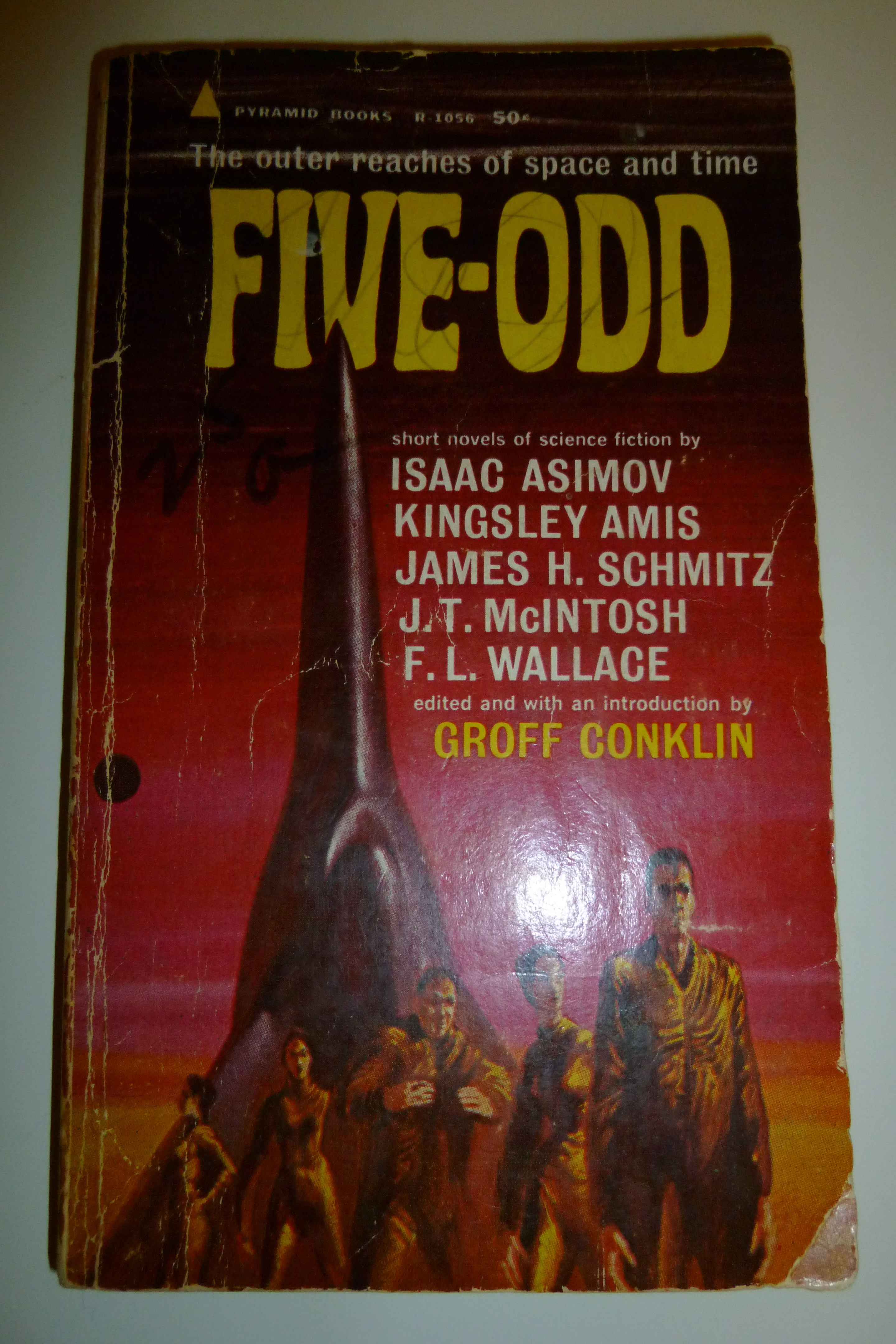
I finished my first book of 2012 and, feeling very virtuous, I managed to make it one which applied to two of my challenges!  Five-Odd, a collection of five (longish) short stories, edited by Groff Conklin, applies to both the Sci-Fi Experience and the Dusty Bookshelf Challenge.

I’ve decided Dusty Bookshelf reviews deserve a little back-story.

How long has it been on my shelf? Since August, 2011, so about four months.

I almost never buy unread books, so how did I get it? My Book Club had an all-holiday party in August (because there aren’t any major holidays in August), and I picked this up at the White Elephant gift exchange.

Now that I’ve read it, am I keeping it? I haven’t decided.  I liked it–but I have high standards about what books I own.  I’ll see how I feel about it when I have a little distance–say, next month.

Five-Odd is a nice mix of intriguing technology and of philosophy.  It’s definitely not action-adventure sci fi.  Most of the stories are about futures not so different from our present, except for some crucial advance in technology, and changes in thought because of it.  Almost every story made me think about some aspect of the world and, more often, of humanity.

Isaac Asimov’s “The Dead Past” asks whether the past really is dead, while also looking at government repression and the end of privacy–but not at all the way that sentence makes it sound.  The story centers around a fascinating device that will let anyone look at past moments.

“Something Strange” by Kingsley Amis felt like the weak link here to me.  It’s about four people living together on a small space station, but the characters were too surreal in some ways, and then the story ended just as it felt like it was coming to the most interesting part.

J.T. McIntosh’s “Unit” addresses a question about identity.  It then veers off into a story more about prejudices, piracy and collaborative intelligence, which was also interesting though I would have liked more about the idea the story started with–about people who choose to wipe away their entire past, and be entirely remade as new people with new personalities.

“Gone Fishing” by James H. Schmitz is about a conman who thinks he’s going to steal a transporter device from a befuddled scientist, only to wind up stranded on a distant planet for five years.  The transporter was interesting, but more interesting was the idea of how he would cope with five years of solitude.

“Big Ancestor” by F. L. Wallace is set the farthest in the future, when humans from Earth have reached the stars, and met humans from a hundred other planets.  A team of scientists from various planets goes in search of their common ancestor.  There’s an excellent twist to this, and I recommend not reading Conklin’s introduction, which blatantly hints at it.  There’s also an interesting passing line here, when one human mentions that most of the human races discovered space travel on their own, and then they helped the ones that didn’t.  After all my years of hearing about Star Trek‘s Prime Directive, General Order Number One, to never ever ever ever interfere with less developed races, this was shocking.  And yes, I know Star Trek does it all the time anyway 🙂 but it felt very different hearing it as an accepted thing!

I felt a little doubtful about reviewing this one because I wondered how easy it would be for anyone to find it.  But it turns out it’s available cheap on Amazon if you do want it (and no one paid me for that link!)  If you like philosophical sci fi, it’s a good read.  The stories were written in the ’50s and ’60s and have that flavor.  I don’t know that I’d call them sci fi classics, but they are classic sci fi…if you see the distinction there!  🙂